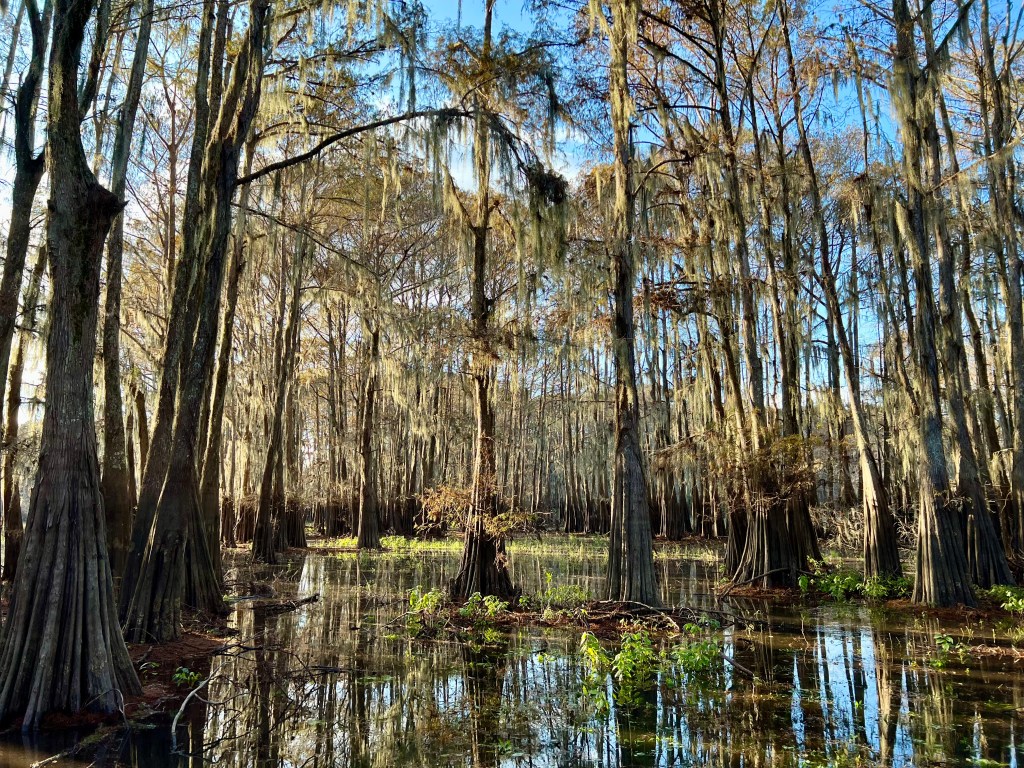
Before starting this newest chapter of our travels, we first have to rewind to one of our previous destinations.
The story of how we ended up in Louisiana actually begins much farther north, in Nova Scotia.
While we were there, I had a few memorable conversations with a man named Doug.
Doug was one of those people who seems to have lived several different lives, each one more interesting than the other. At one point he had been a bush pilot in Alaska. He had made his way there from California and, if I remember correctly, hitchhiked much of the journey. The kind of story that makes you pause and realize there are far more ways to live our lives. After more than a decade in Lafayette, Louisiana, Doug had plenty of stories to share. His descriptions of his life there and the places his wife and he cherished inspired us to look more closely at the destination and, eventually, make the journey south.
Doug said something during one of our conversations that has stayed with me: “The difference between adversity and adventure is your attitude.”
Such a simple sentence. Yet, it completely shifted how I saw this newly embarked travel lifestyle. Instead of viewing uncertainty as something to control, I began to see it as an invitation to something potentially meaningful. A reminder that what defines a person isn’t just what they do in life, but how they choose to live their lives. Sometimes, it’s the experiences, the risks, and the stories gathered along the way that shape us the most.
Traveling from Nova Scotia to Louisiana felt fitting, since their history is so intertwined.
Nova Scotia was the homeland of the Acadians. In the 1700s, many of them were deported during the Great Expulsion and eventually made their way to Louisiana.
Over time, the word Acadian evolved into Cajun, partly because the English struggled to pronounce the original French name.
And with that bit of history in mind, Lafayette suddenly felt like the perfect place to explore.
Not long after leaving Arkansas, the landscape began to change. The forests gave way to small palm trees, the air felt heavy with humidity and the roads slowly dropped into the flat, watery lowlands of southern Louisiana. We had officially entered bayou country.
Our arrival, however, did not quite match the romantic image I’d conveniently made up in my mind.
During the first week, it rained. And rained. And rained.
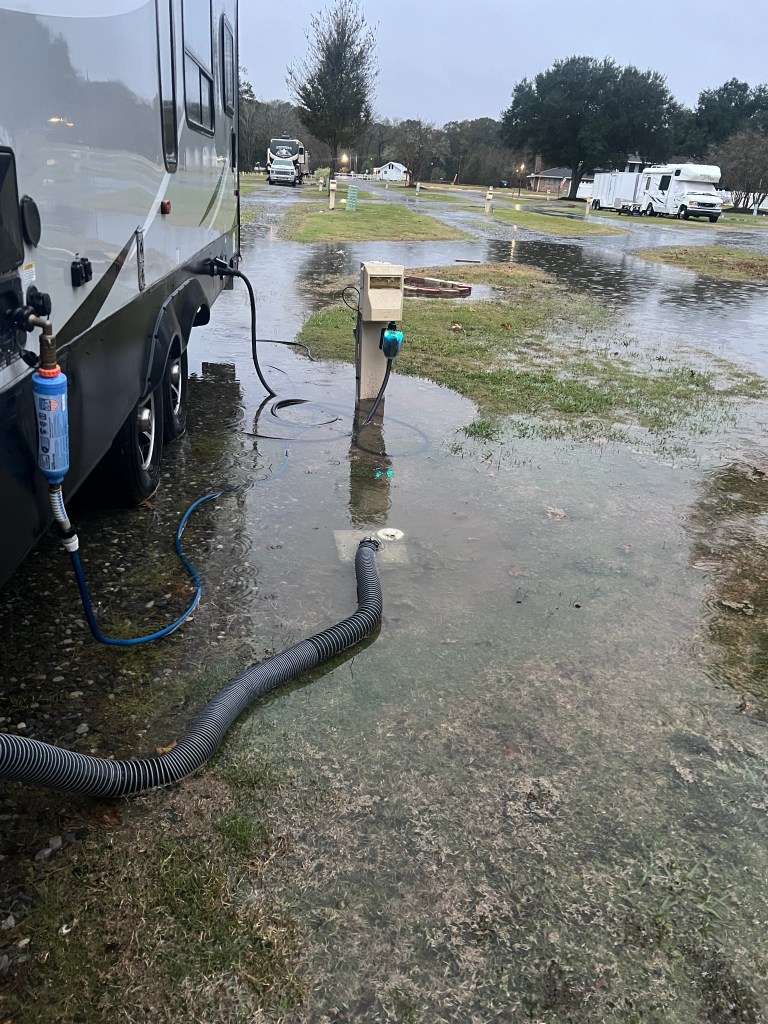
What started as a few wet days quickly turned into a relentless stretch of gray skies and steady downpours. The campground flooded and pools of water surrounded the trailers. Exploring was limited, and for a little while it felt like the weather had burst the bubble of adventure we had imagined. Instead of wandering through Cajun towns and bayous, we spent a lot of time inside the trailer, watching the rain fall and advancing our cribbage playing streak.
Once the weather cleared, we started discovering just how rich this corner of Louisiana really is.
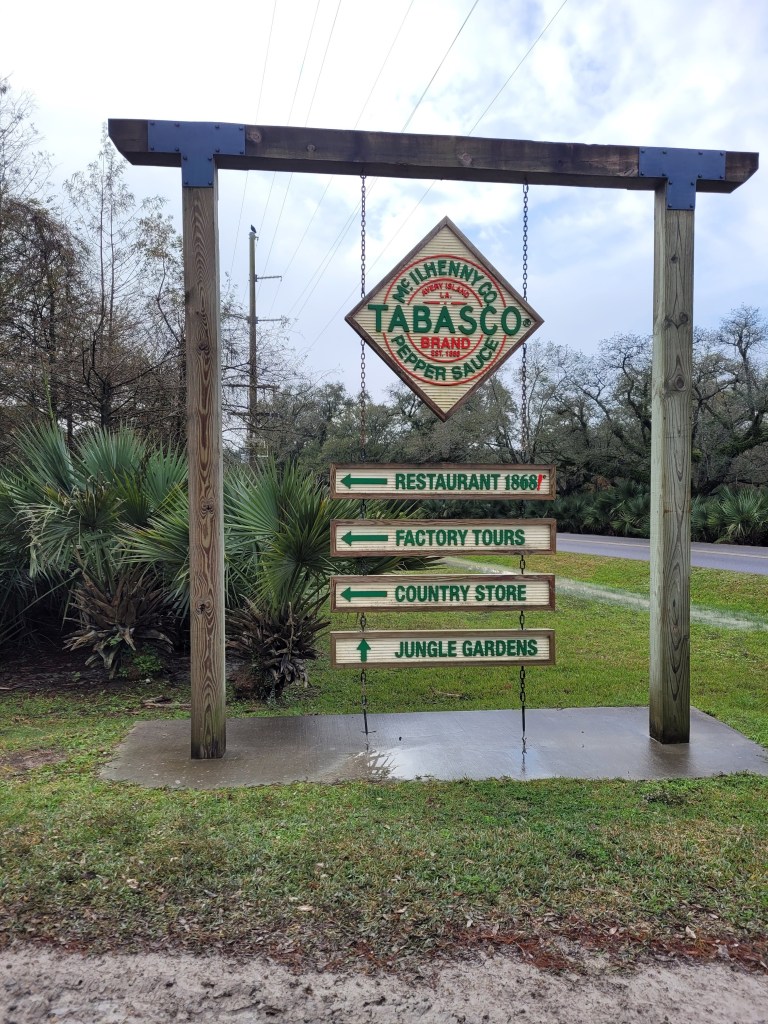
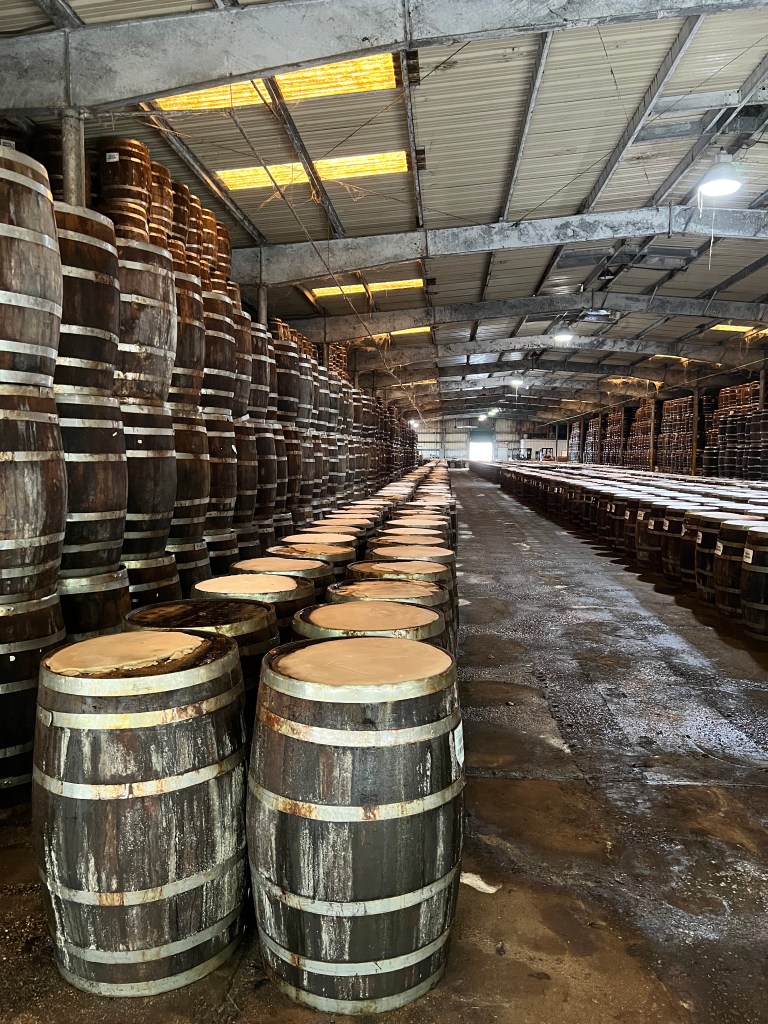
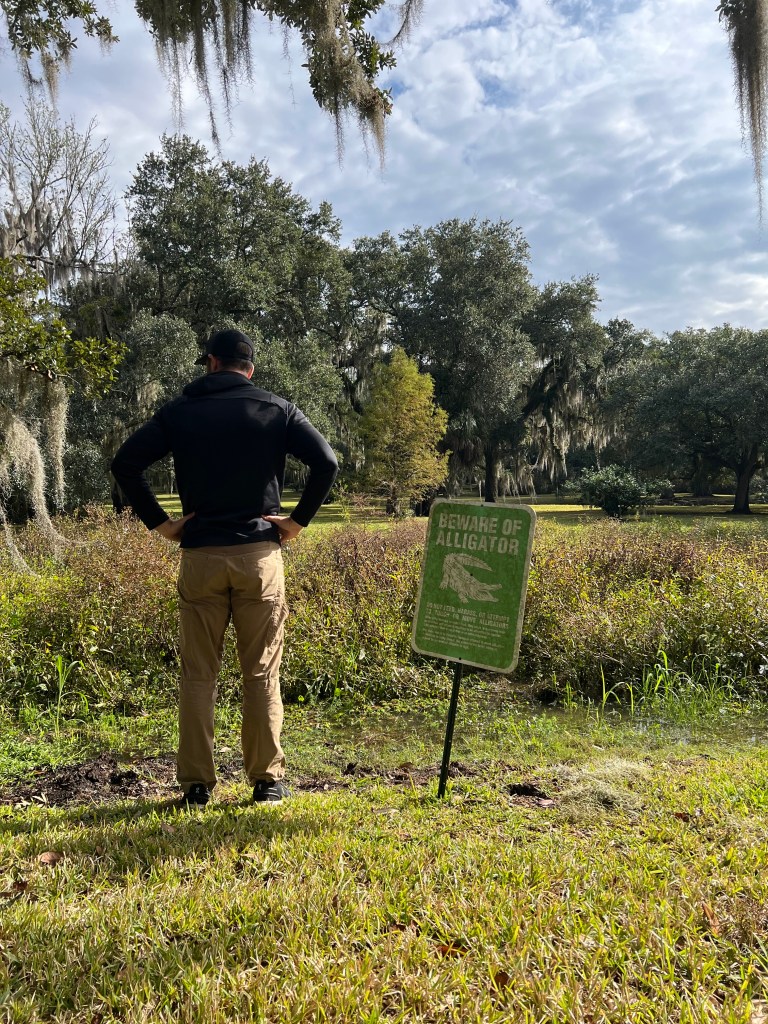
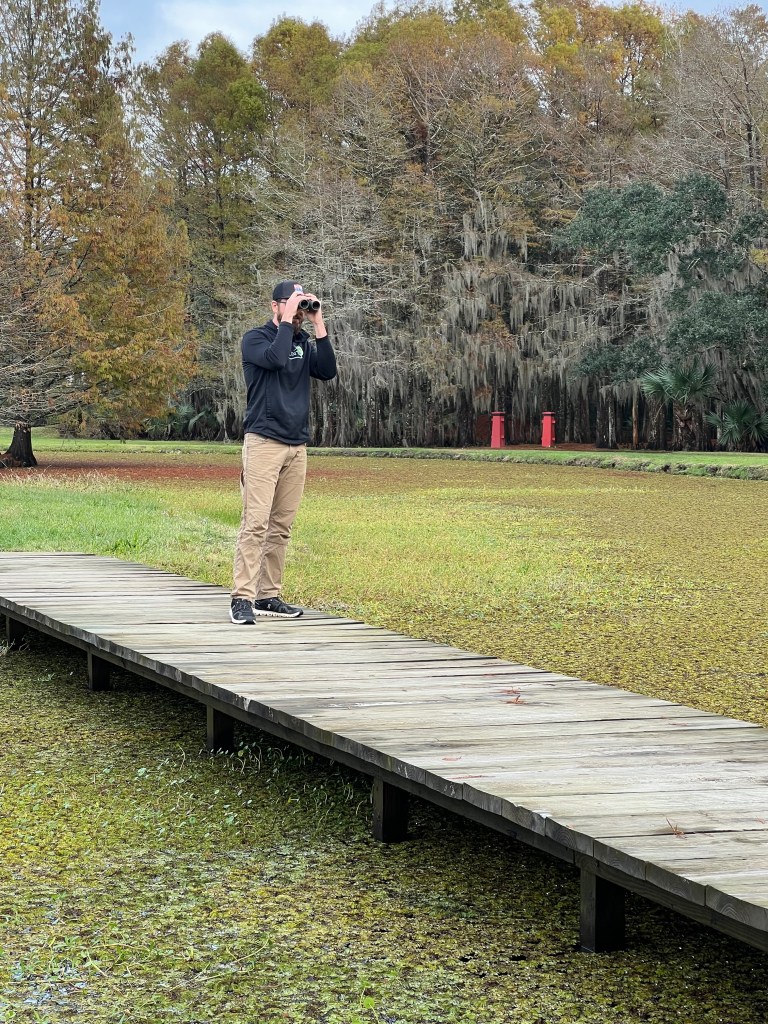
One morning we crossed Avery Island to tour the Tabasco factory. The smell of peppers in the air was impressive as we learned how the famous sauce is fermented and aged for 3 years before being bottled and shipped around the world. After the tour, we wandered through the Jungle Gardens, where quiet roads wind beneath massive oak trees and past ponds dotted with birds and the occasional small gator. Chris had been on a mission to spot one ever since we arrived in Louisiana, so I couldn’t help but laugh at how quickly he whipped out his binoculars, scanning the swamp like a seasoned wildlife tracker. I didn’t even know he’d packed them. It was the beginning of what would become our running joke: “Chris and his knockers.”
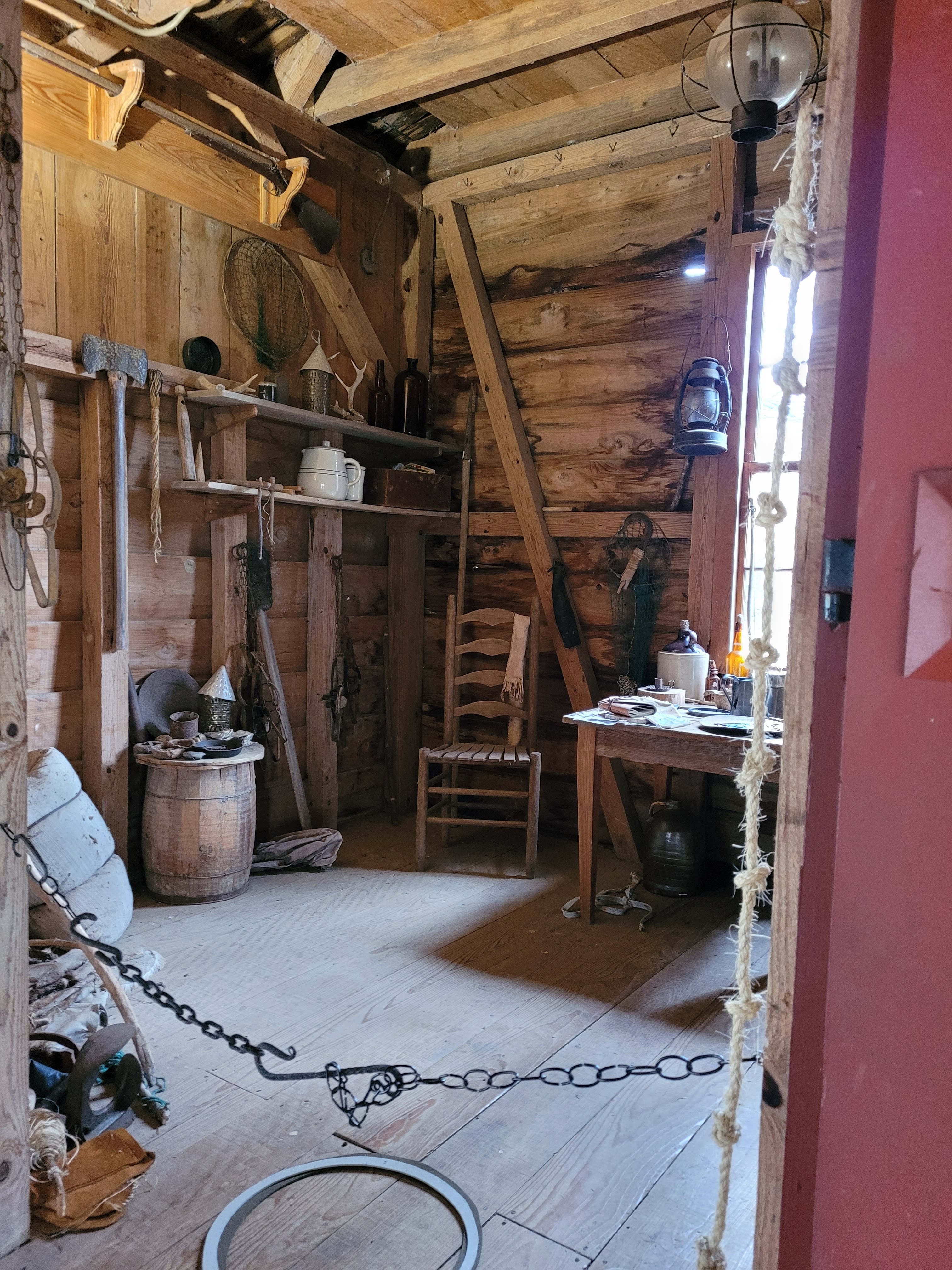
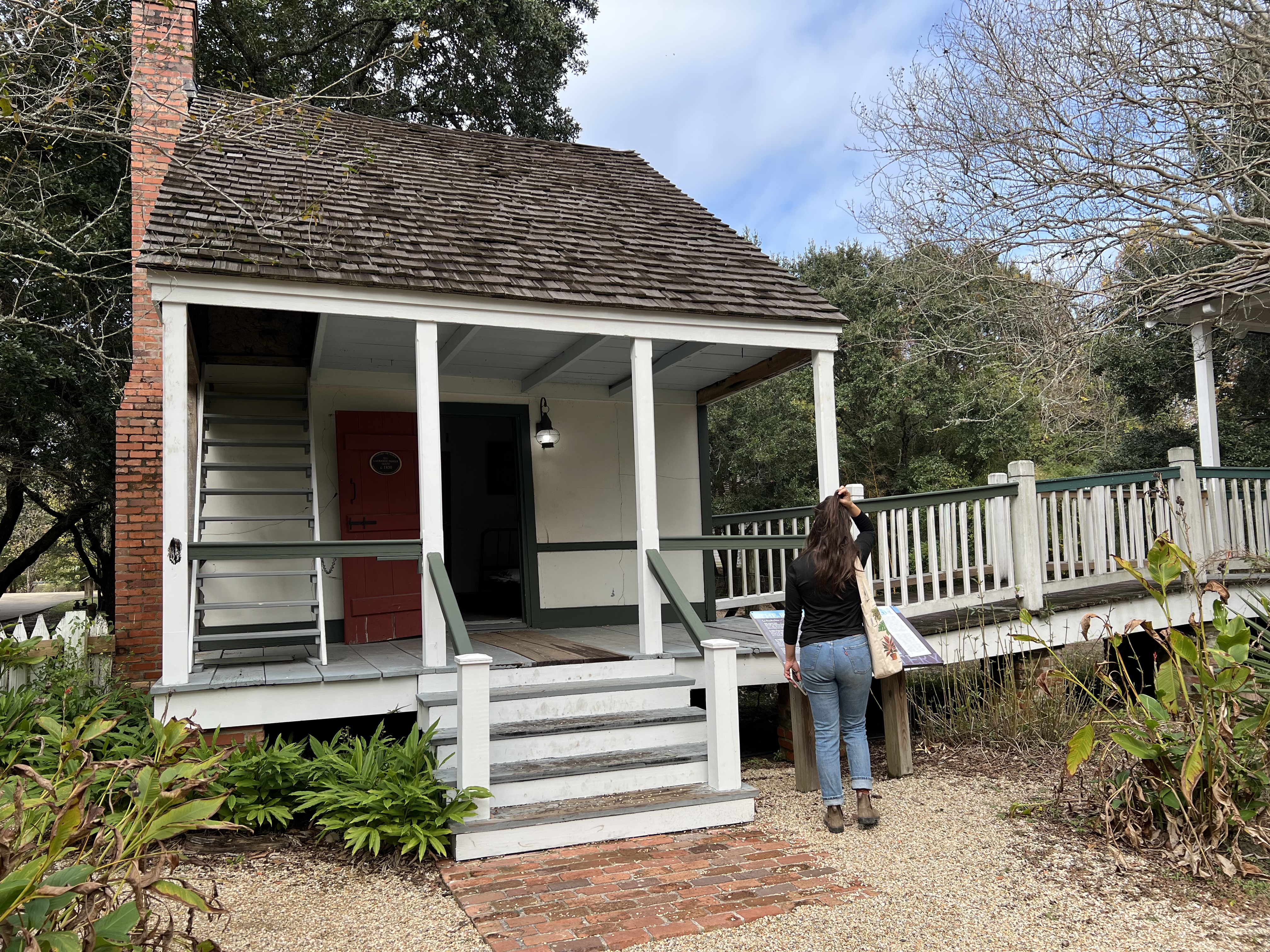
Another memorable day was spent at Vermilionville Historic Village, a living history village preserving Cajun and Creole heritage. Walking through the restored homes along the bayou felt like stepping into another slow, quiet century that was deeply rooted in tradition. And yet, just across the water, someone was fishing with loud rap music blasting, the bass thumping through the air. The contrast was impossible to ignore. Imagine standing inside an old forge with no modern amenities, while the beat of today’s music quite literally vibrated through the walls.
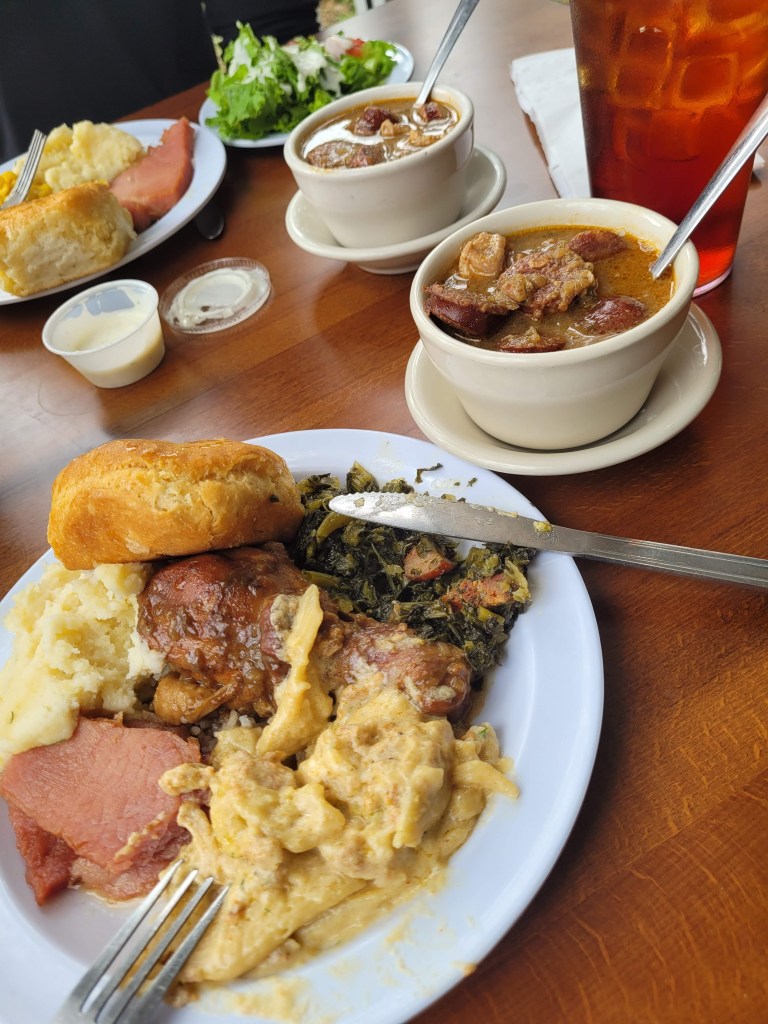
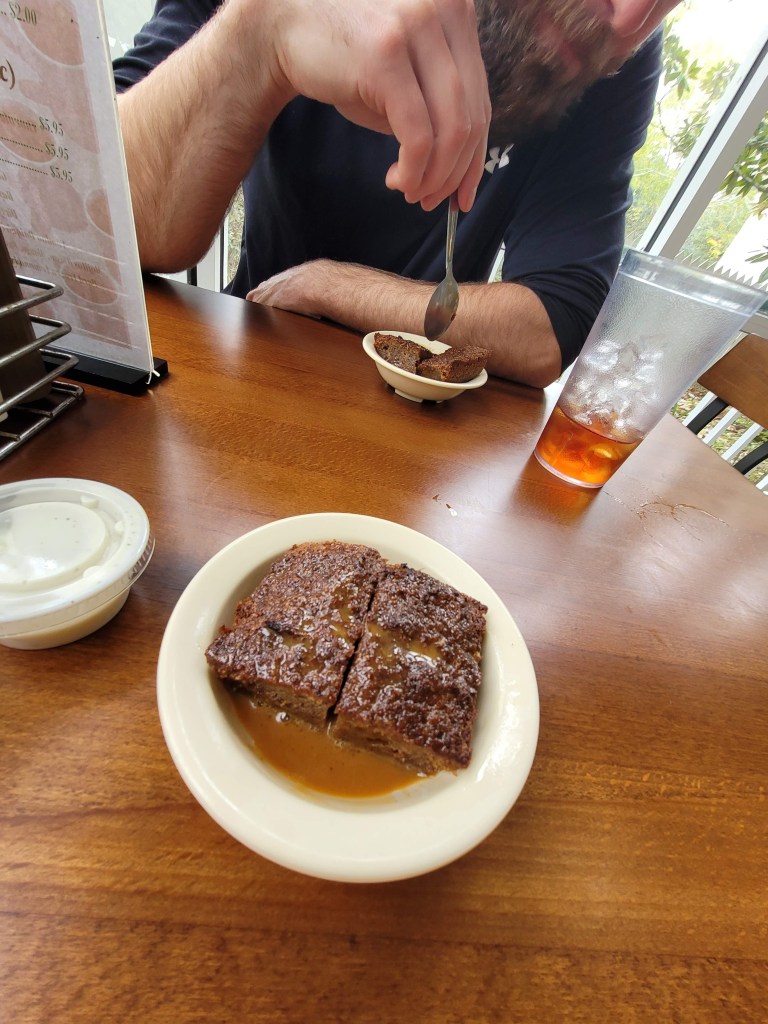
We stopped for lunch at La Cuisine de Maman (Mom’s Kitchen), where Chris swears he had the absolute best bread pudding of his entire existence. Afterwards we wandered into the dancehall where a zydeco band had started playing. Before long the dance floor filled with locals, many of them older couples who moved with effortless rhythm. Watching them spin and laugh across the floor felt like a window into everyday Cajun culture.
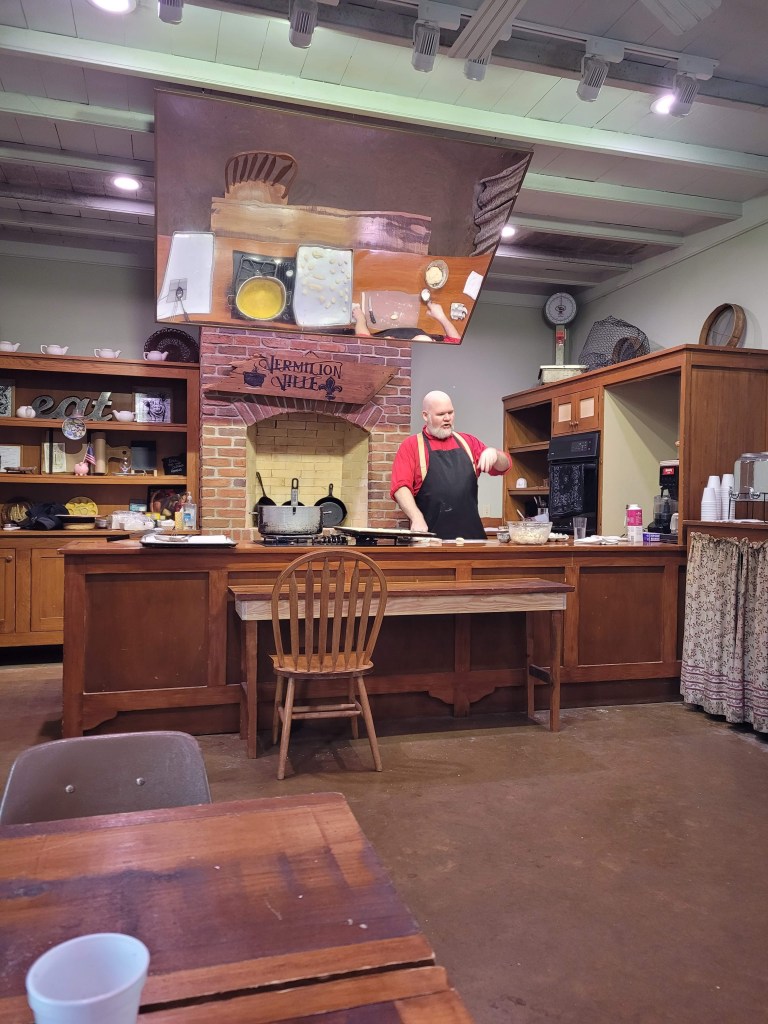
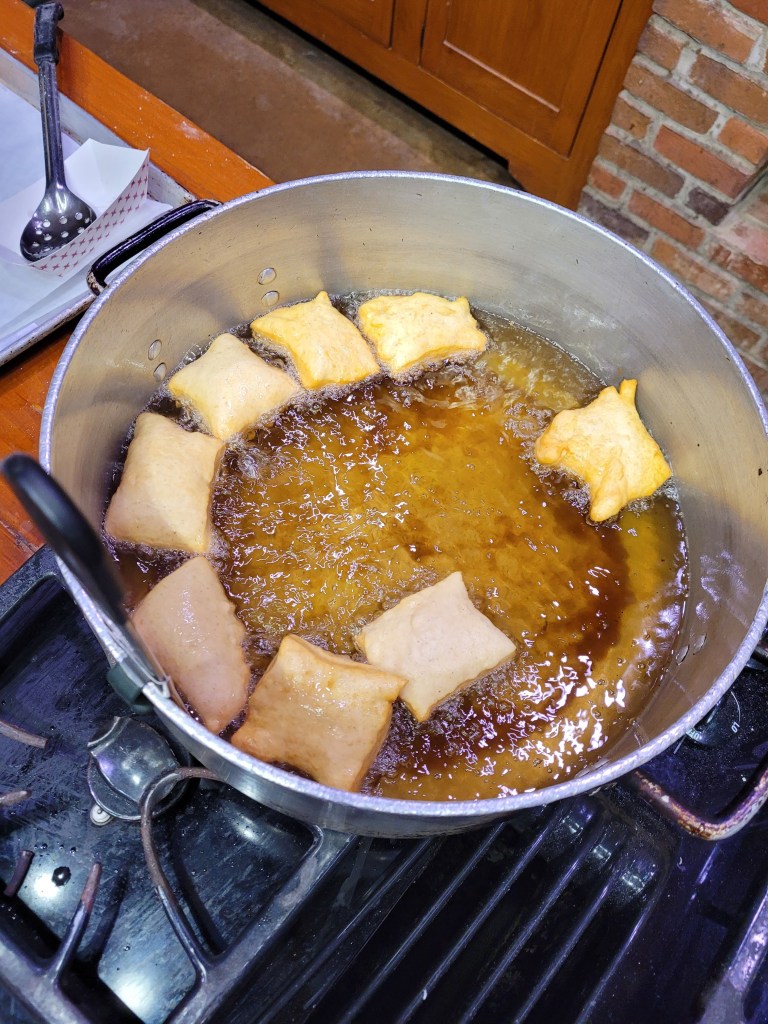
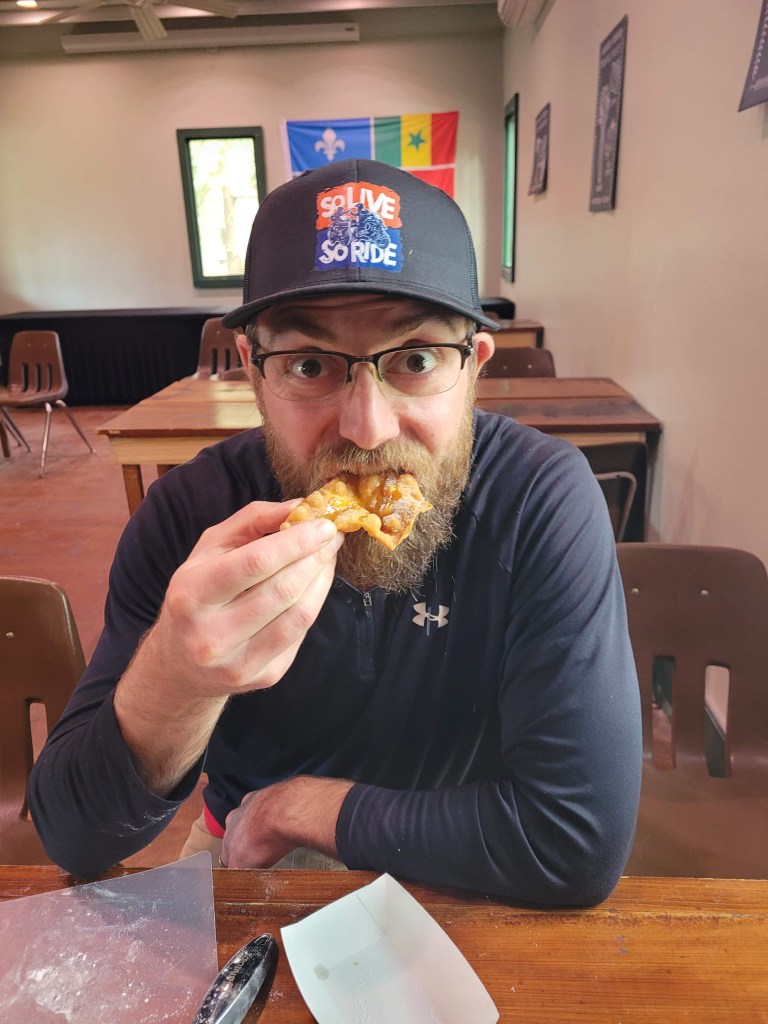
Our main reason for visiting Vermilionville was that I’d signed us up for a Cajun cooking class. We experienced heritage cooking at its finest, with a Hands-On Beignet Making Demo. Our food historian and beignet-maker supreme, Jay, guided us as he explained the origins of the famous beignets as we created delicious little dessert treats. By the end of the class, the room smelled like warm, fried dough and powdered sugar.
Louisiana: Where The Food Doesn’t Disappoint
Food, of course, quickly became the main gateway into Cajun country’s history.
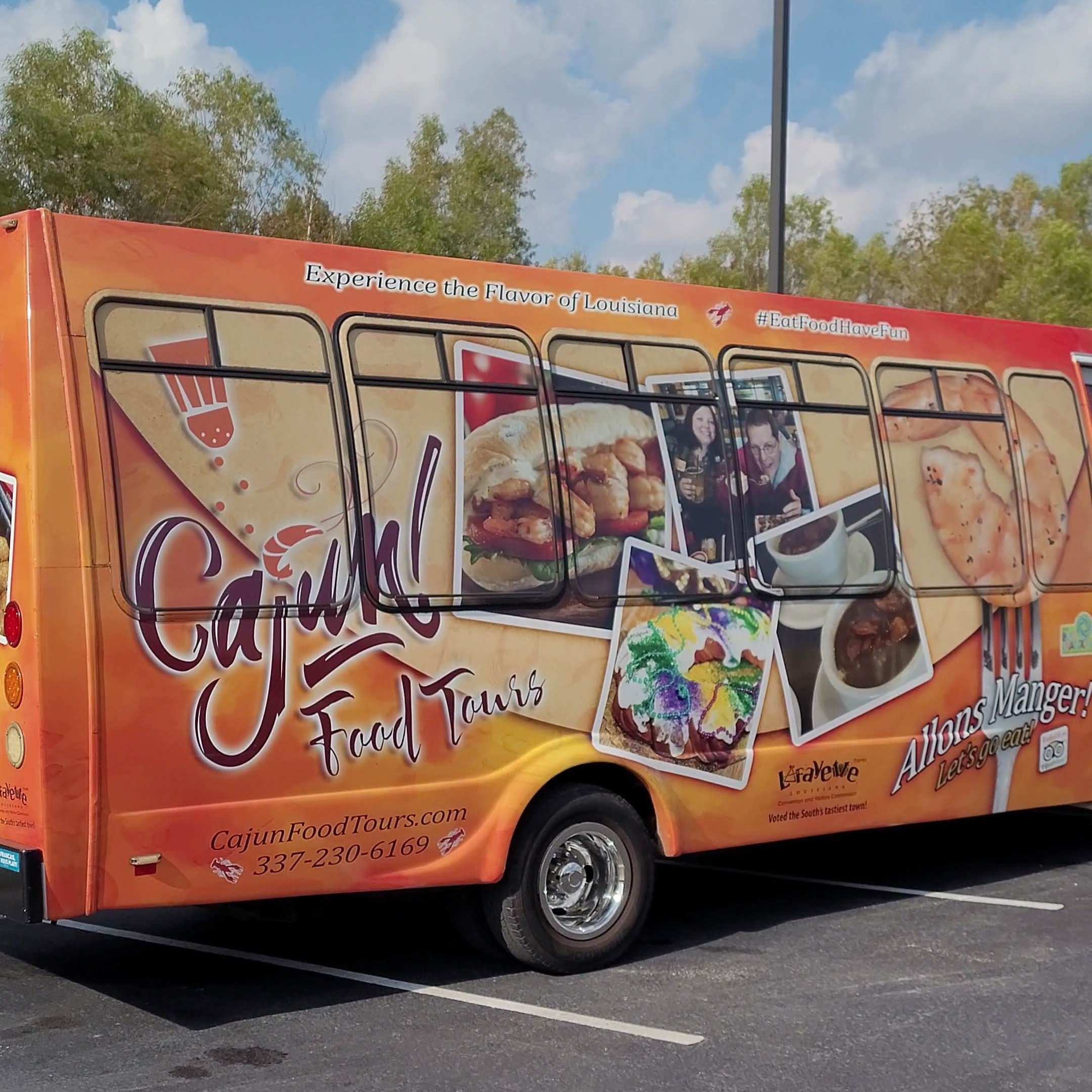
One day we joined a Cajun food tour that turned out to be part history lesson, part feast. We drove to the meeting point and climbed aboard a bright red bus decorated with cheerful Cajun touches. Our guide Marie, a former history teacher, quickly set the tone. As we rolled through Lafayette and the surrounding towns she told the story of the Acadians, Le Grand Dérangement, and how settlers from Europe and Nova Scotia shaped the food culture of southern Louisiana.
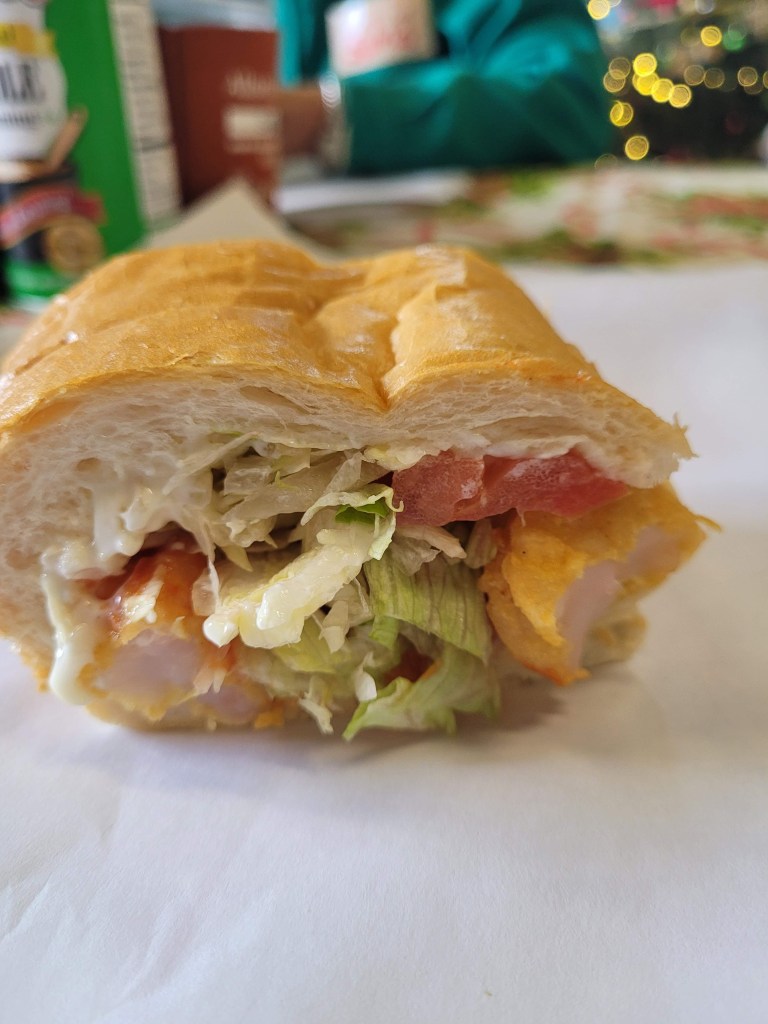
Our first stop was Broussard and Ton’s Drive, where we tried gumbo served with potato salad. This sparked one of the great Cajun debates. Do you keep the potato salad separate, mix it into the gumbo, or dip each spoonful? (In case you’re curious Chris and I are both dippers.) Next came BJ’s, where we sampled a shrimp po’ boy. The sandwich itself carries a bit of history.
During a streetcar strike in New Orleans in the 1920s, restaurant owners created large sandwiches to feed the unemployed workers who came in for free meals. They would call out, “Here comes another poor boy,” and the name eventually stuck.
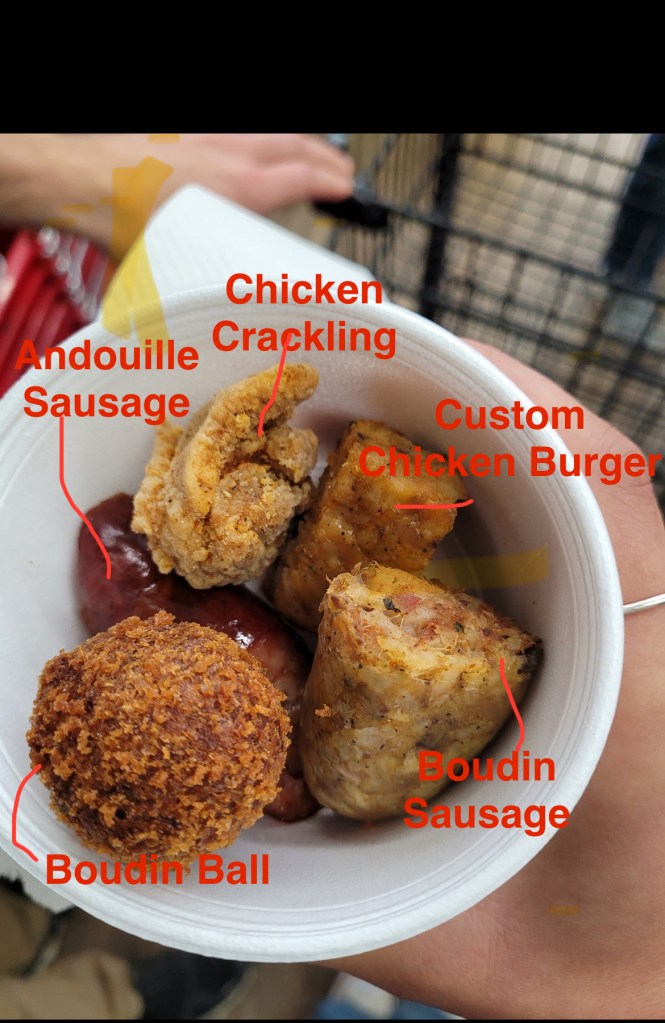
At NuNu’s Fresh Market, we sampled crunchy cracklings, smoky andouille, warm boudin balls, boudin sausage, and chicken patties.
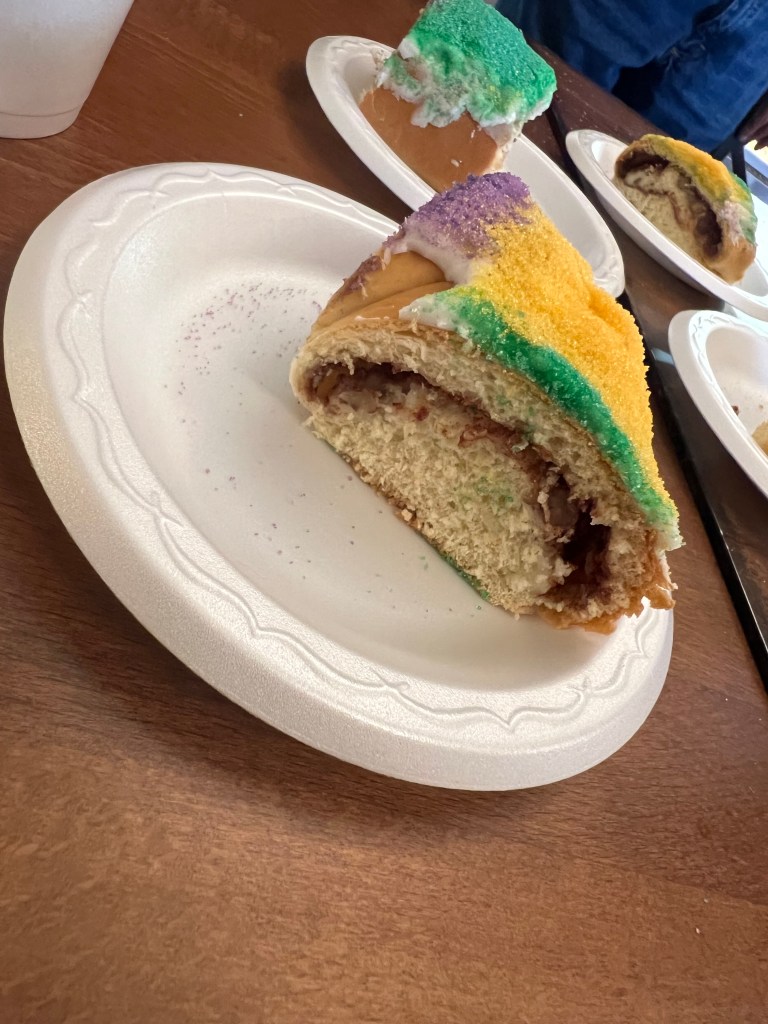
In Carencro, we stopped at Frezzo’s where we tried incredibly tender gator bites along with fried oysters. The tour ended on a sweet note at Poupart’s Bakery with slices of colorful King Cake.
It was a delightful way to experience the area. We came home sated and filled with appreciation for Cajun culture and its vast array of spices and flavors (that would literally set the tone for my cooking over the next couple of weeks).
You Can’t Say You’ve Been To Cajun County If You Haven’t Seen Alligators.
To experience the landscape that shaped so much of Louisiana’s culture, we spent an afternoon with McGee’s Swamp Tours, drifting deep into the heart of the Atchafalaya Basin.
The boat glided through a maze of waterways. Towering bald cypress trees rose straight out of the dark water, their trunks flaring at the base, draped in long strands of Spanish moss that swayed gently with the breeze. According to our guide, this is part of the largest river swamp in the U.S., a vast and complex ecosystem teeming with wildlife and history.
Our guide, a local Cajun, who clearly knew these waters by heart, narrated the entire ride with stories of his childhood and professional experiences as a fisherman. He pointed out birds tucked into the branches, explained how people have lived off this land for generations, and what it’s really like to call the swamp home.
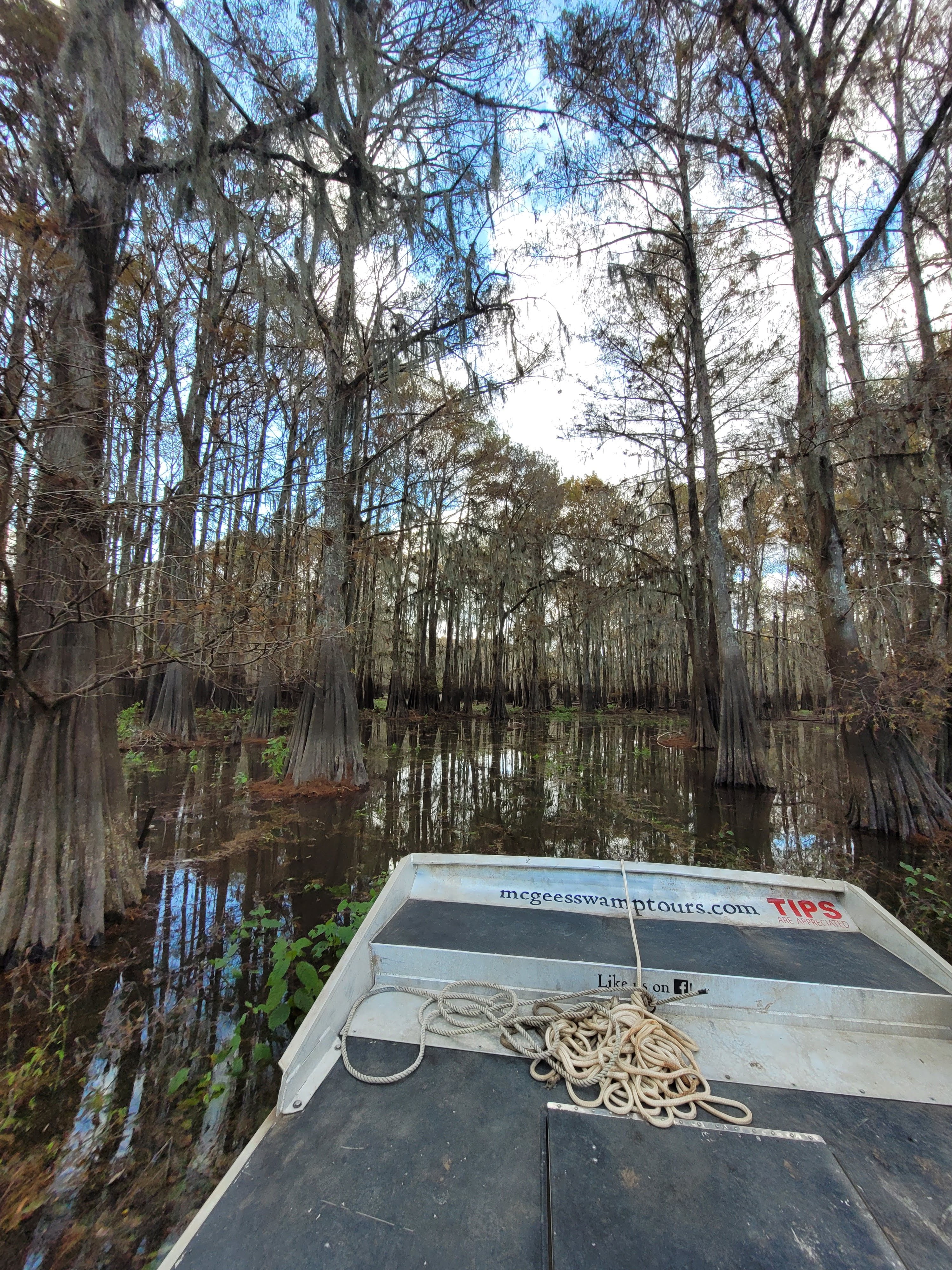
Sad but interesting fact: Rising salinity levels are beginning to reshape parts of the Atchafalaya Basin, placing stress on plant species that have long defined this freshwater ecosystem. Runoff from the spreading of salt on roads during the winter in northern states eventually travels downstream into southern waterways where it does not naturally belong. Over time, this shift in water chemistry can suffocate vegetation that depends on delicate freshwater conditions.
On top of having had rain, it had also been cold over the last few days, so the alligators were mostly in hiding. Even so, we spotted a few juveniles near the banks. Just small ripples at first, then the unmistakable shape once you knew what to look for. It made every bend in the water feel like a quiet search.
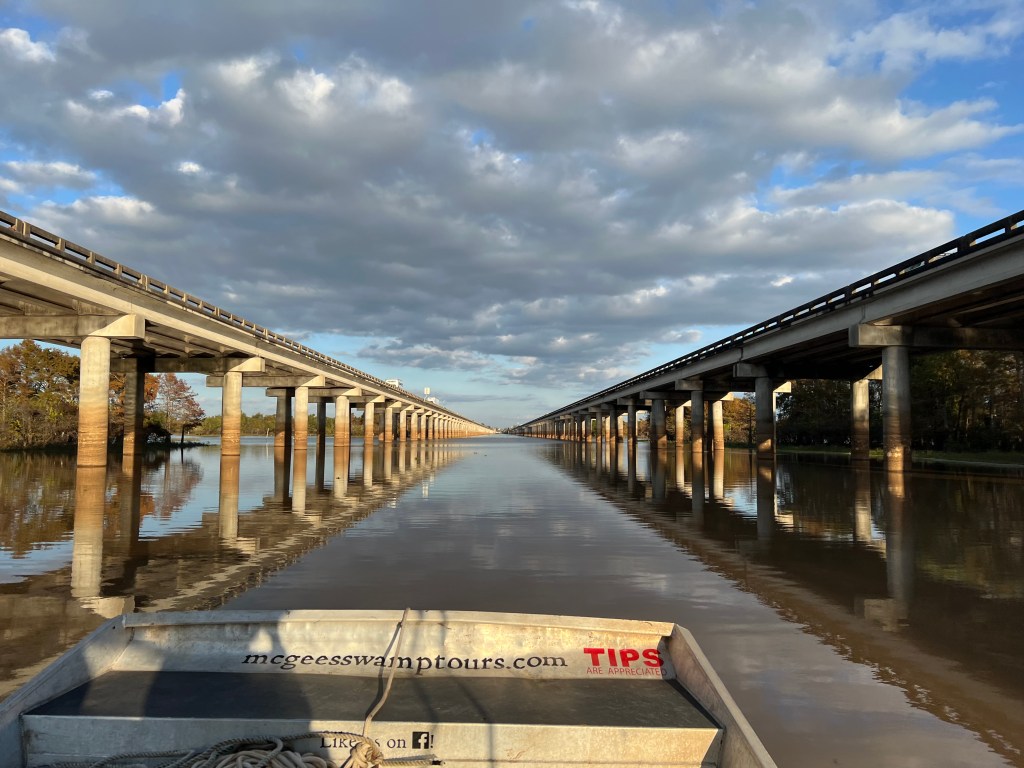
At one point, we passed beneath the longest bridge in the area, its concrete stretch cutting across the wilderness in a way that felt almost surreal. And then just as quickly, we were back winding deeper into the still, green labyrinth.
One of the most fascinating parts wasn’t the wildlife but the “cabins”. Scattered along the water were houseboats, perched on stilts and adapted to a way of life completely shaped by the swamp. It felt like an entirely different rhythm of living. It was so different from anything I’d seen before.
The whole experience felt less like a tour and more like entering an ecosystem, a culture, and a way of life that exists quietly, just beyond the edges of what most people see.
Exploring By Self-Guided Tours
A self-guided walking tour through Breaux Bridge unfolds less like a checklist and more like a series of open doors. Beginning near the bayou, the route carries you into a downtown where history is not preserved behind glass but lived in. You can step inside spaces like the old hardware stores, including the historic Begnaud’s and Broussard’s buildings, where original wooden storefronts and shelves hint at a time when everything from wagons to tools was sold under one roof.
Just a few steps away, other storefronts invite a slower kind of browsing. In buildings like the Potier and Pellerin structures, now home to antique shops, cafés, and boutiques, you can walk beneath pressed tin ceilings that have remained intact for over a century, their metallic patterns catching the light in a way that feels both industrial and delicate.
It is this mix of function and character that defines the walk. One moment you are in a former mercantile space, the next in a boutique or gallery where the architecture tells as much of the story as the items for sale. The experience becomes less about what you are looking for and more about what you stumble into, each doorway offering a small, tangible connection to the town’s past.
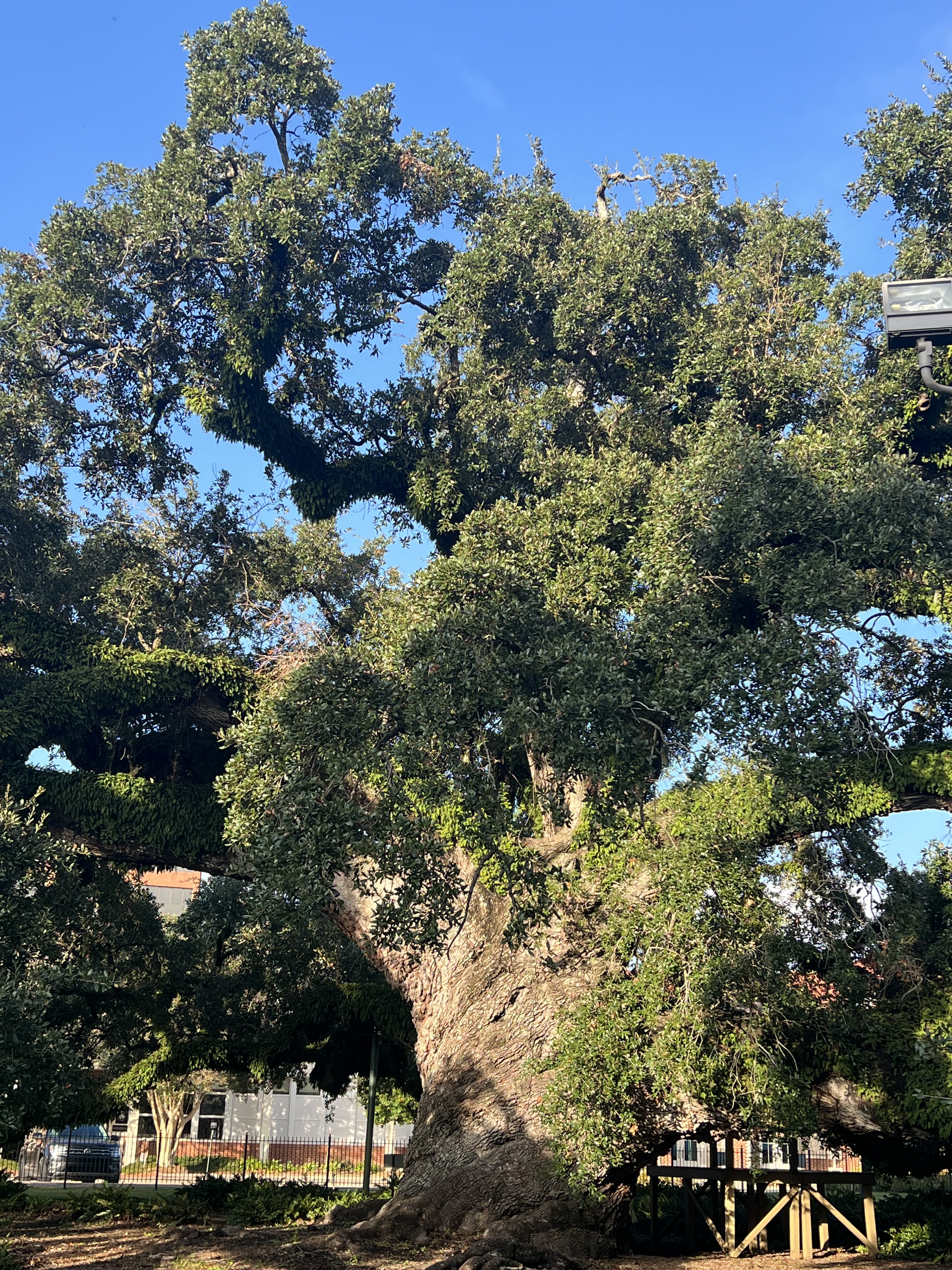
In Lafayette, history also reveals itself in quiet ways. Just beside the stately Cathedral of St. John the Evangelist stands one of the city’s most enduring landmarks, a 450 year old sprawling live oak whose massive branches stretch low and wide, as if shaped by centuries of watching life unfold around it. Believed to be among the oldest in the area, the tree offers a natural counterpoint to the cathedral’s symmetry. Standing beneath its canopy, it feels less like visiting a site and more like stepping briefly into the long, unhurried rhythm of the place.
A Day In New Orleans
New Orleans has always felt like a city that belongs as much to the dark as it does to the light. Perhaps that is why it has long been the perfect setting for stories of vampires, ghosts, and restless spirits. Although we’re not usually ones to visit big cities, I’d been looking forward to getting in as much site seeing in our day in New Orleans as possible. Having grown up reading novels about the supernatural and watching popular vampire shows, I knew this was what I would base my itinerary on for the day. Chris was fully aware that he was along for the ride.
On the day we arrived, I decided to lean fully into that atmosphere and treat our visit like the pages of a gothic diary.
As we found parking near the edge of the French Quarter and walked toward the historic French Market, the air carried the scent of sugar and fried dough long before we even saw the stalls. Rows and rows of booths with trinkets and t-shirts lined the tin-roofed walkway, their colors spilling out beneath the soft shade. The narrow aisles buzzed with energy: Vendors calling out greetings, music drifting in from somewhere unseen, and the steady shuffle of visitors moving from table to table. Handmade jewelry caught the light beside stacks of local spices, artwork, and souvenirs, creating a mix of textures and colors that felt both lively and quite chaotic.
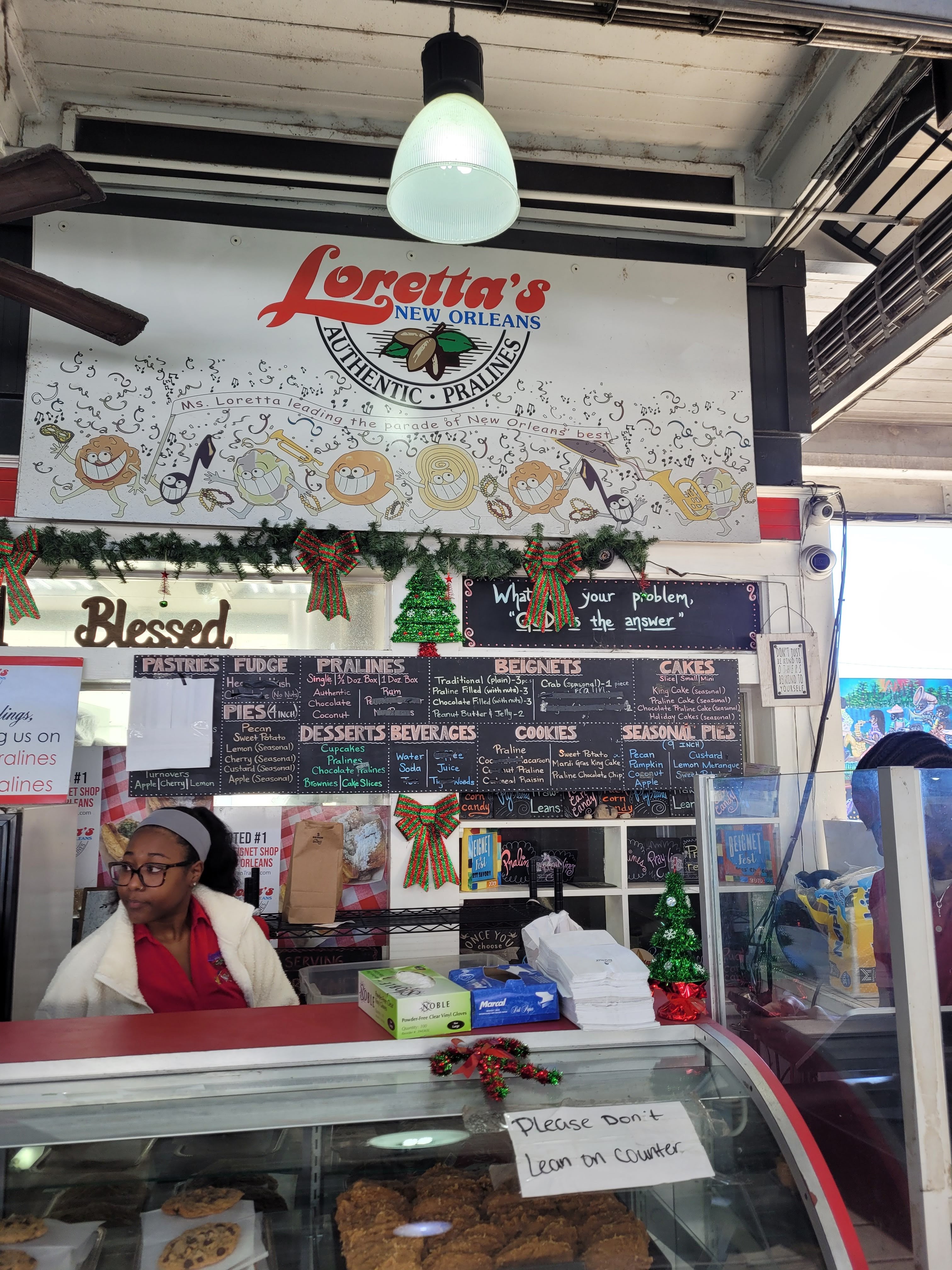
Naturally, we made a stop at Loretta’s Authentic Pralines. Their praline beignets are something of a legend. Imagine a traditional beignet, but filled with the sweet, nutty richness of Louisiana pralines. Warm, powdered with sugar, and impossibly indulgent. For comparison’s sake, we attempted to visit the famous Café du Monde. But the line stretched far beyond our patience, and the tourists swirled around the entrance like moths to a lantern. We decided instead to let mystery linger and continued wandering.
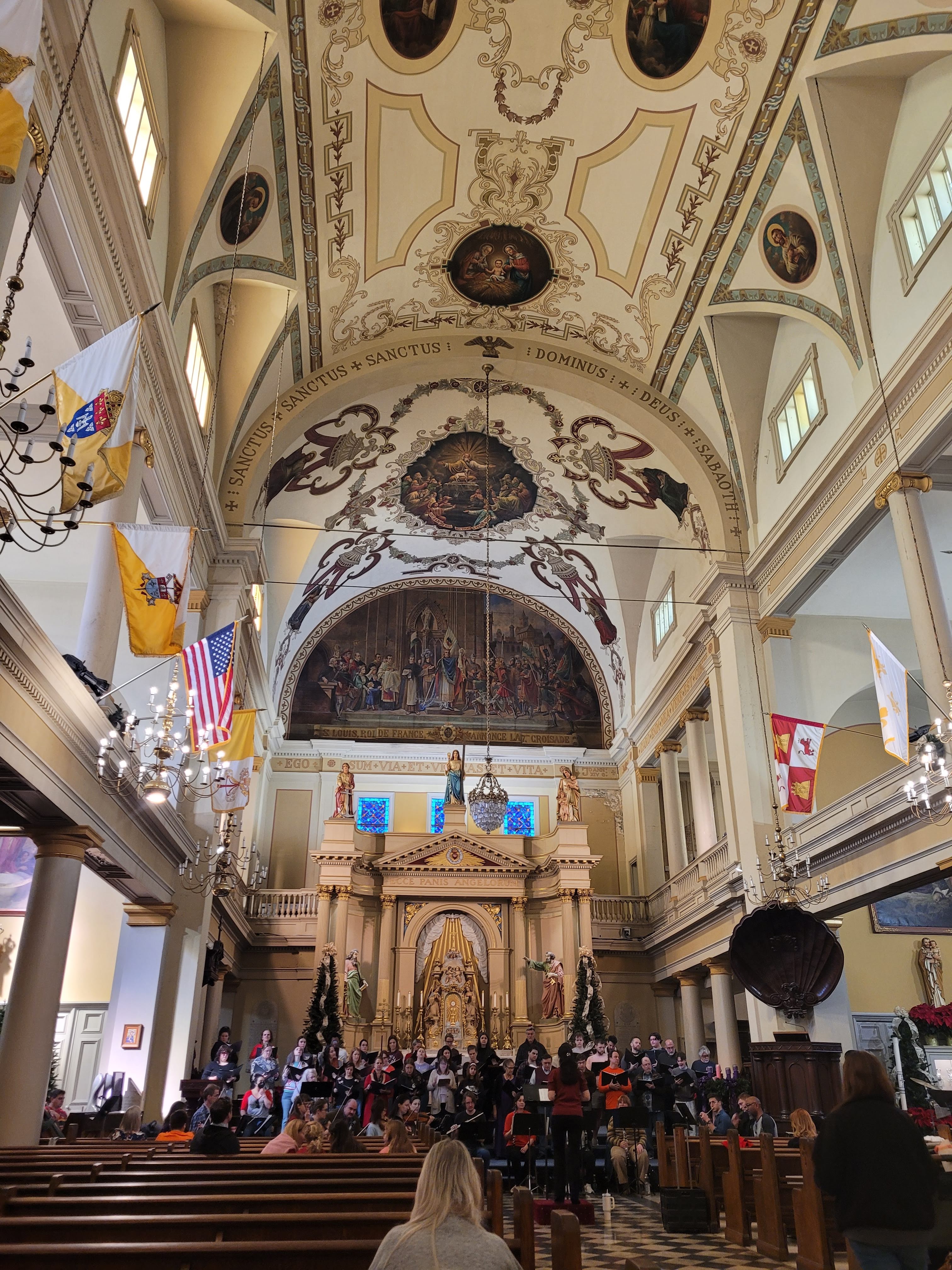
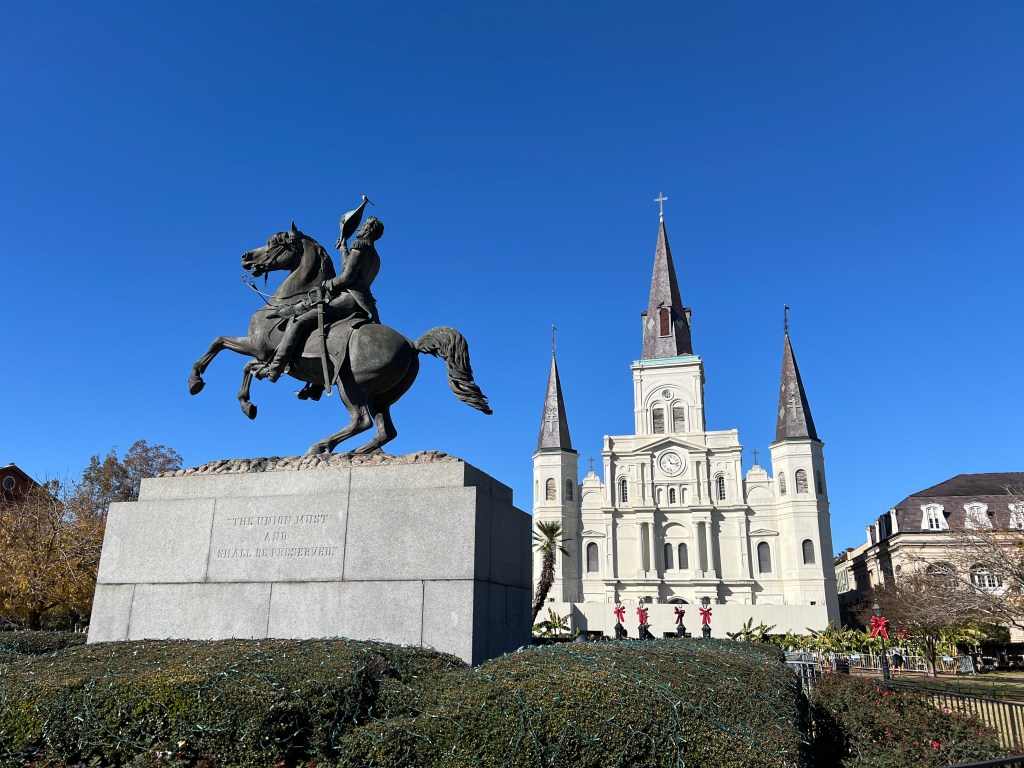
The heart of the Quarter pulled us toward Jackson Square, where artists displayed their work beneath the shade of old trees and musicians filled the air with melody. At the far end stood the towering white spires of St. Louis Cathedral. Inside, we slipped quietly into a pew just as a choir began to sing Christmas hymns. Their voices echoed through the vast space, rising toward the painted ceilings with an almost otherworldly calm.
Outside the cathedral, however, the mood shifted. A group of street performers had gathered a crowd and were performing athletic stunts that bordered on the impossible. Flips, jokes, crowd participation. It was chaotic, hilarious, and perfectly New Orleans.
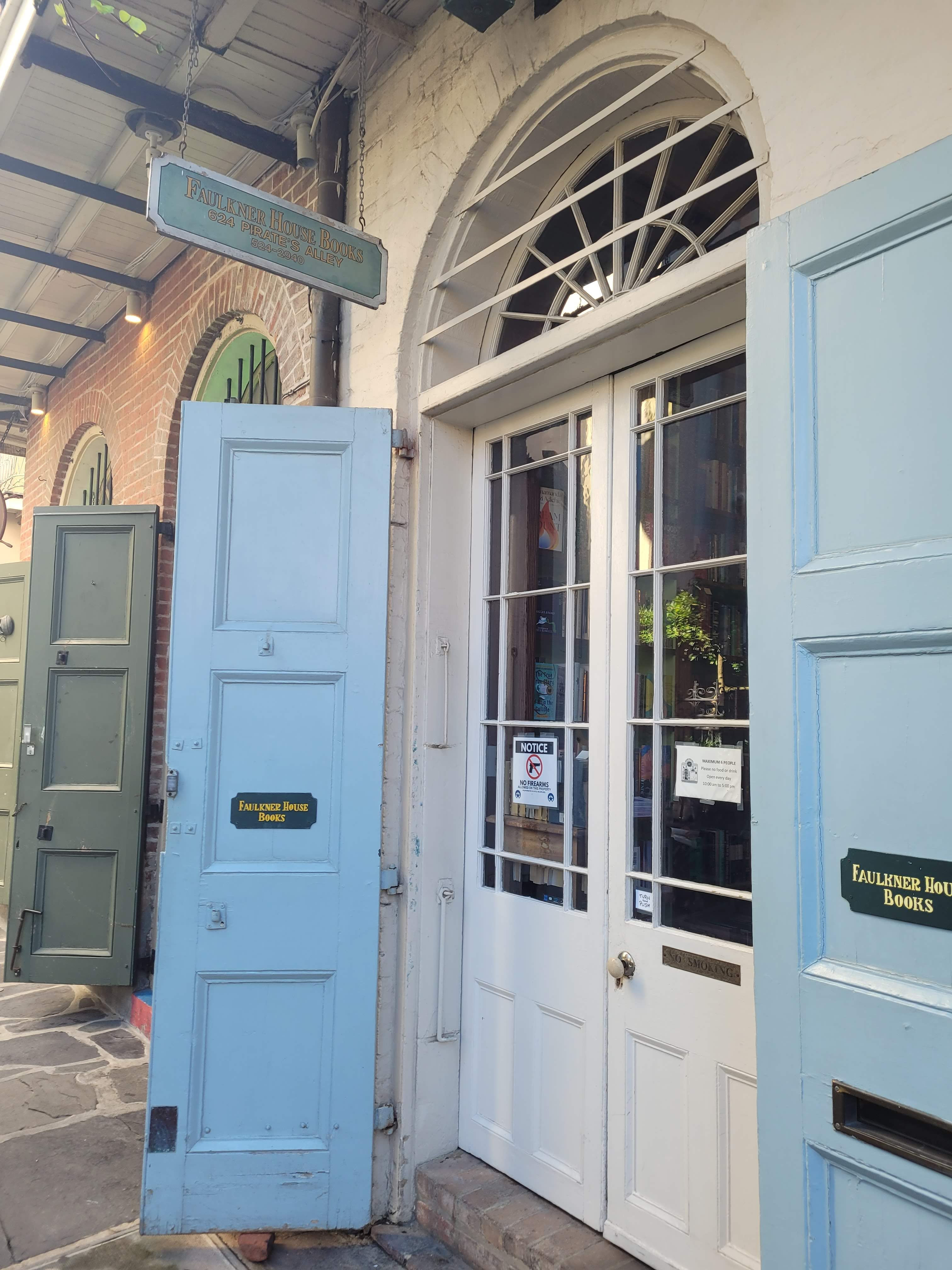
From there we wandered through quieter streets until we stumbled upon Faulkner House Books, a tiny literary haven tucked into a historic building where William Faulkner once lived. The narrow aisles and towering shelves felt like the kind of place where forgotten stories might still linger between the pages.
Not far away we stepped into the peculiar world of the New Orleans Pharmacy Museum. Inside were shelves of antique bottles, strange instruments, and relics from an era when medicine was as much superstition as science. It was equal parts fascinating and slightly unsettling. It really makes you grateful for modern medicine and current technologies.
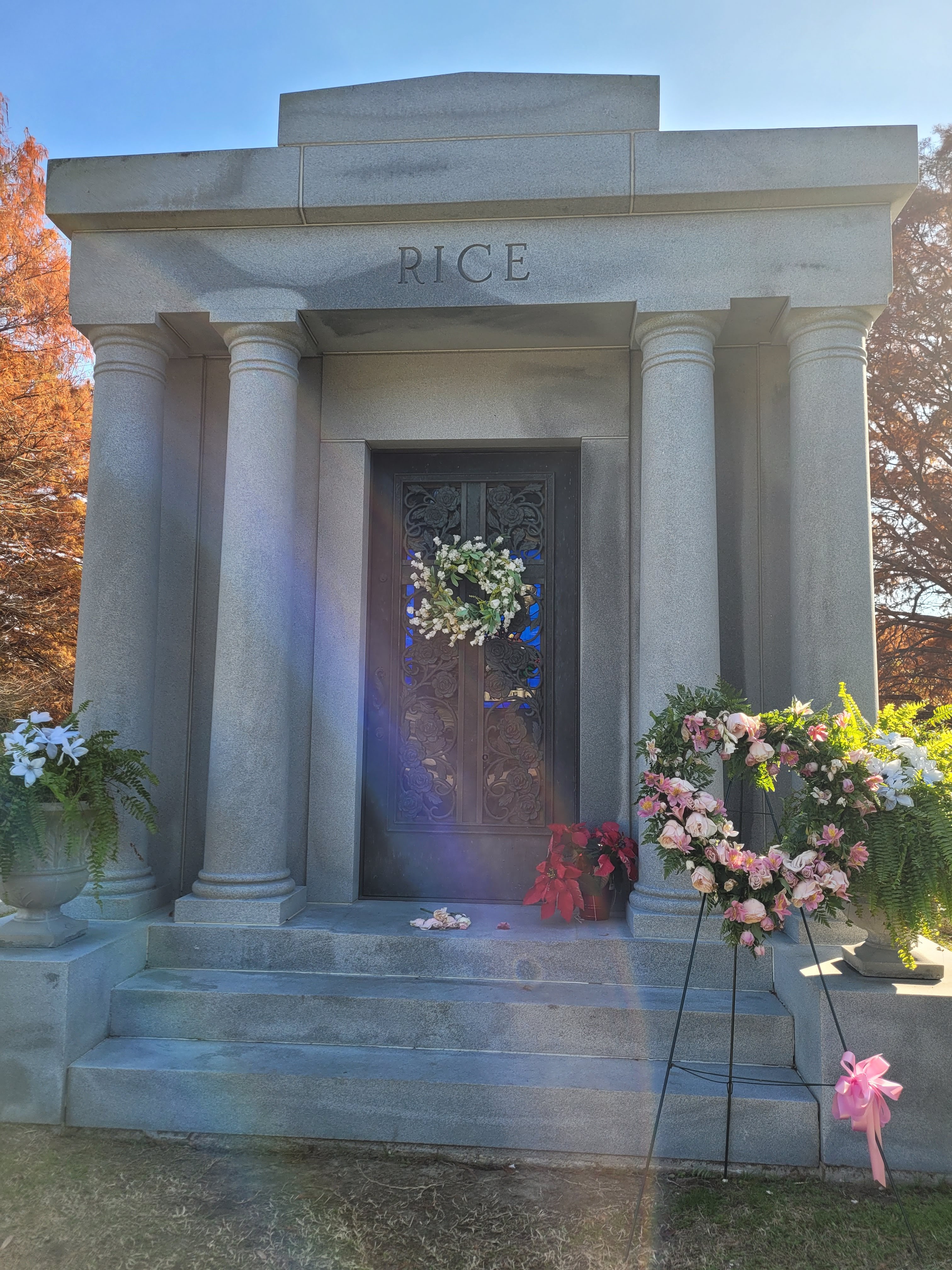
By mid afternoon we decided to cross the city using the Canal Street streetcar. It rumbled across the less touristy areas of the city until it reached Lake Lawn Metairie Cemetery. Known locally as one of the many “Cities of the Dead,” the cemetery holds ornate above ground tombs and mausoleums. Among them is the resting place of Anne Rice and her family. Standing there felt strangely fitting on the day we spent wrapped in the gothic atmosphere of the city she immortalized in novels like Interview with the Vampire.
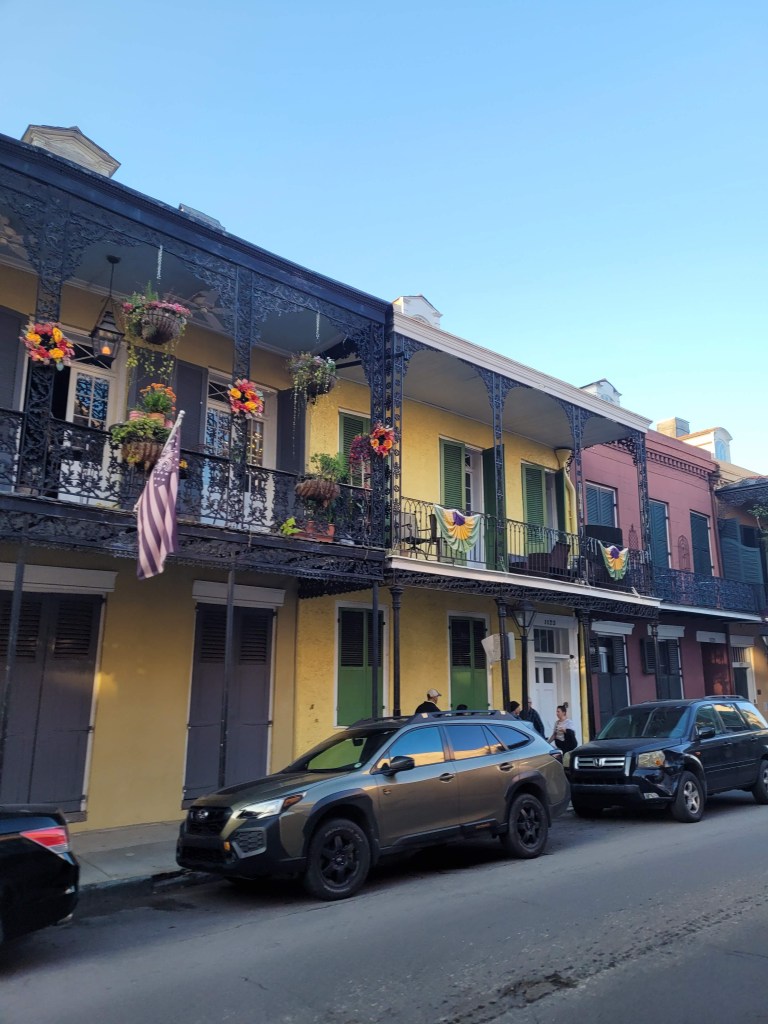
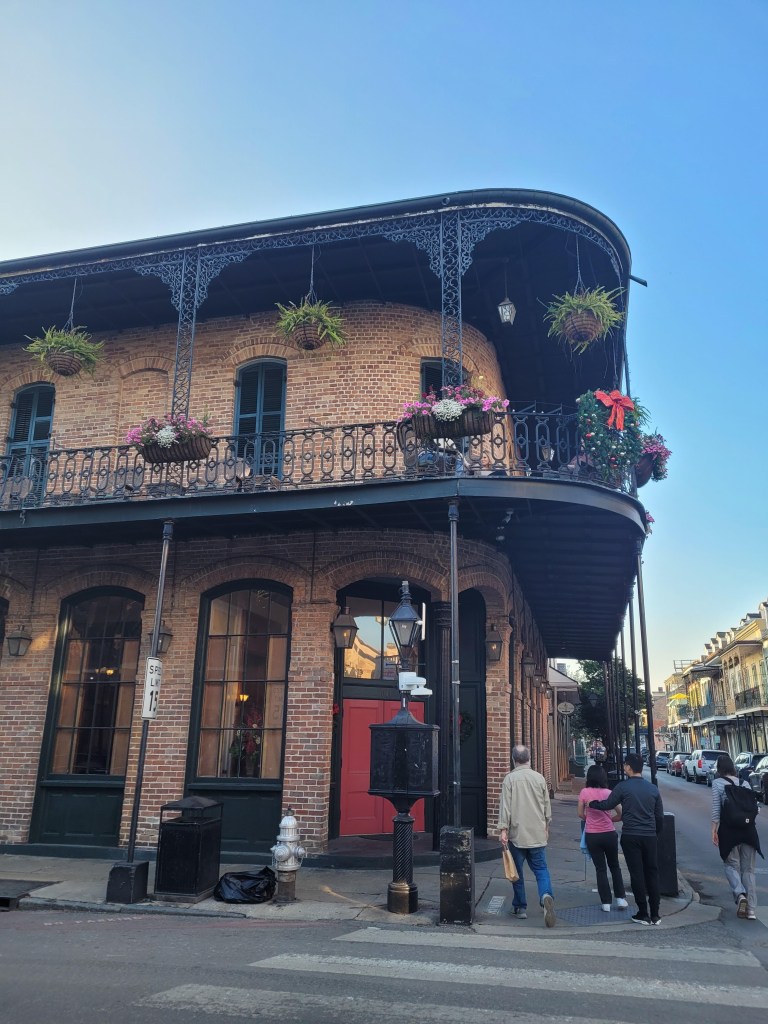
When we returned to the Quarter, we walked down the infamous Bourbon Street. It was only two in the afternoon, yet the street already hummed with life (a mild way of putting it, I suppose). Music spilled from every doorway. Jazz, rock, brass bands, just to name a few. The sound layered itself into a constant roar of rhythm and intoxicated laughter. This became a little overwhelming so we turned onto some adjacent streets. Just beyond the buzz of Bourbon Street, the streets unfolded into a quieter kind of magic: Rows of pastel-hued Creole townhouses glowing under the sun. Adorning the old houses, wrought-iron balconies curled like lace above shuttered windows, while hidden courtyards whispered of another time. It’s a place where Spanish influence meets Caribbean color, and every doorway feels like the beginning of a story.
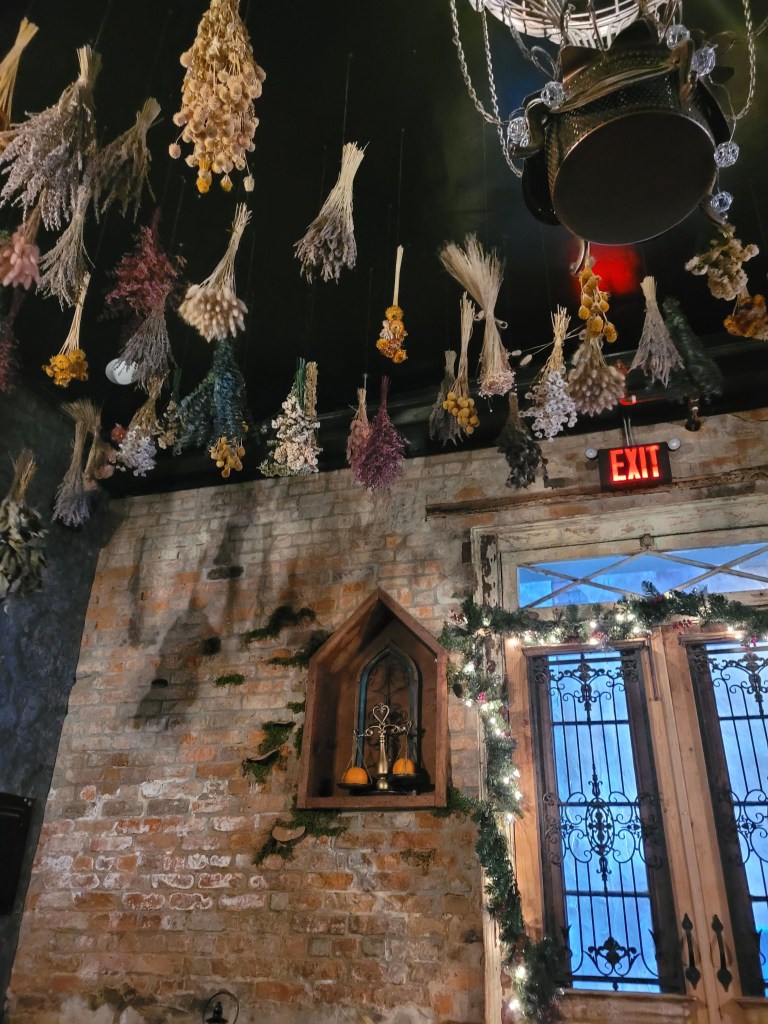
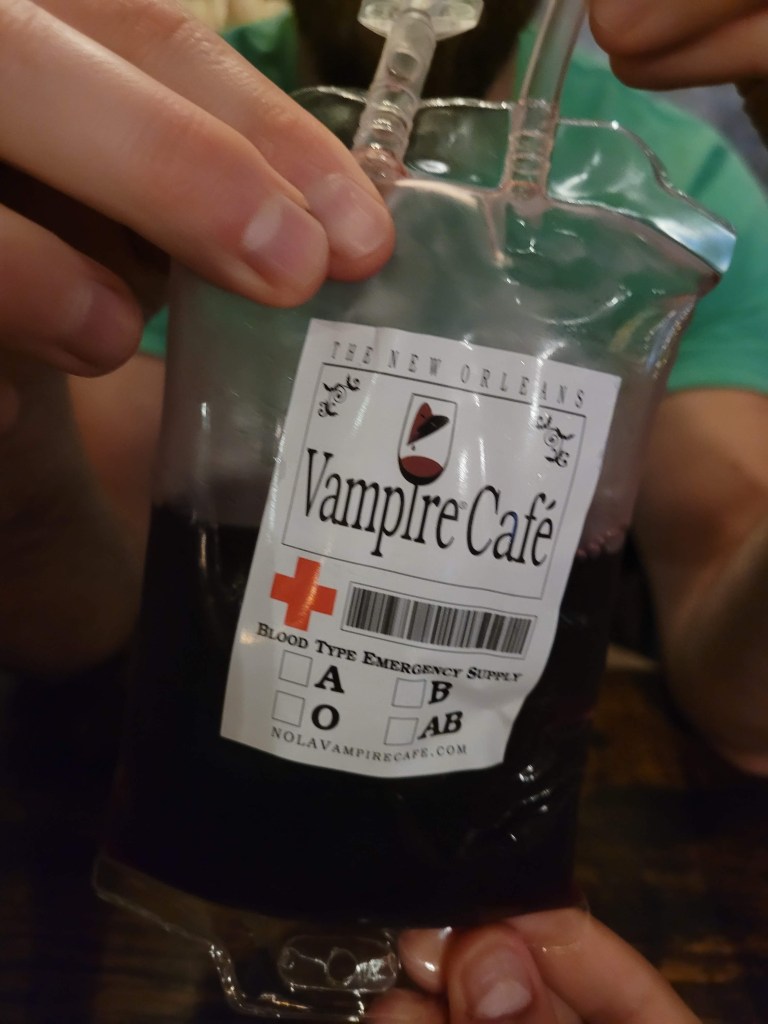
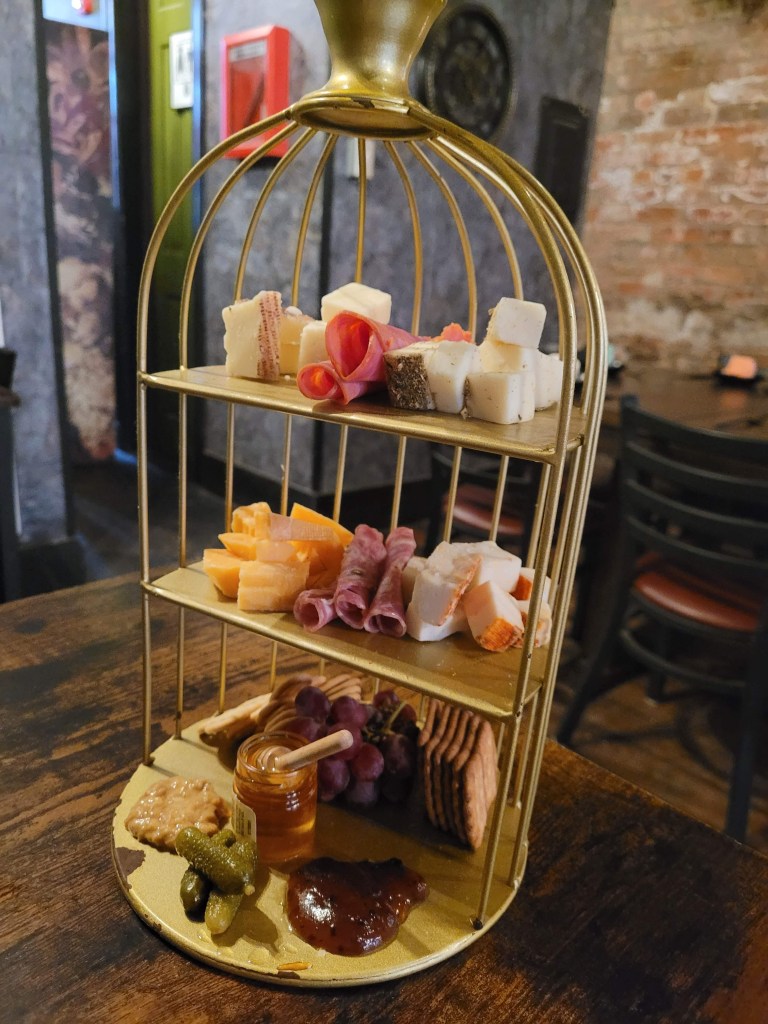
Eventually we stepped into a place that felt perfectly on theme for the day: The Vampire Apothecary Restaurant & Bar. There we ordered a “blood bag,” which despite its appearance was simply sangria, along with a charcuterie board.
Just as we were getting ready to leave, the waitress handed us a small card.
“This is a private invitation,” she said quietly. “A vampire speakeasy.”
She gave us a few directions and a password.
Naturally, we accepted the mission.
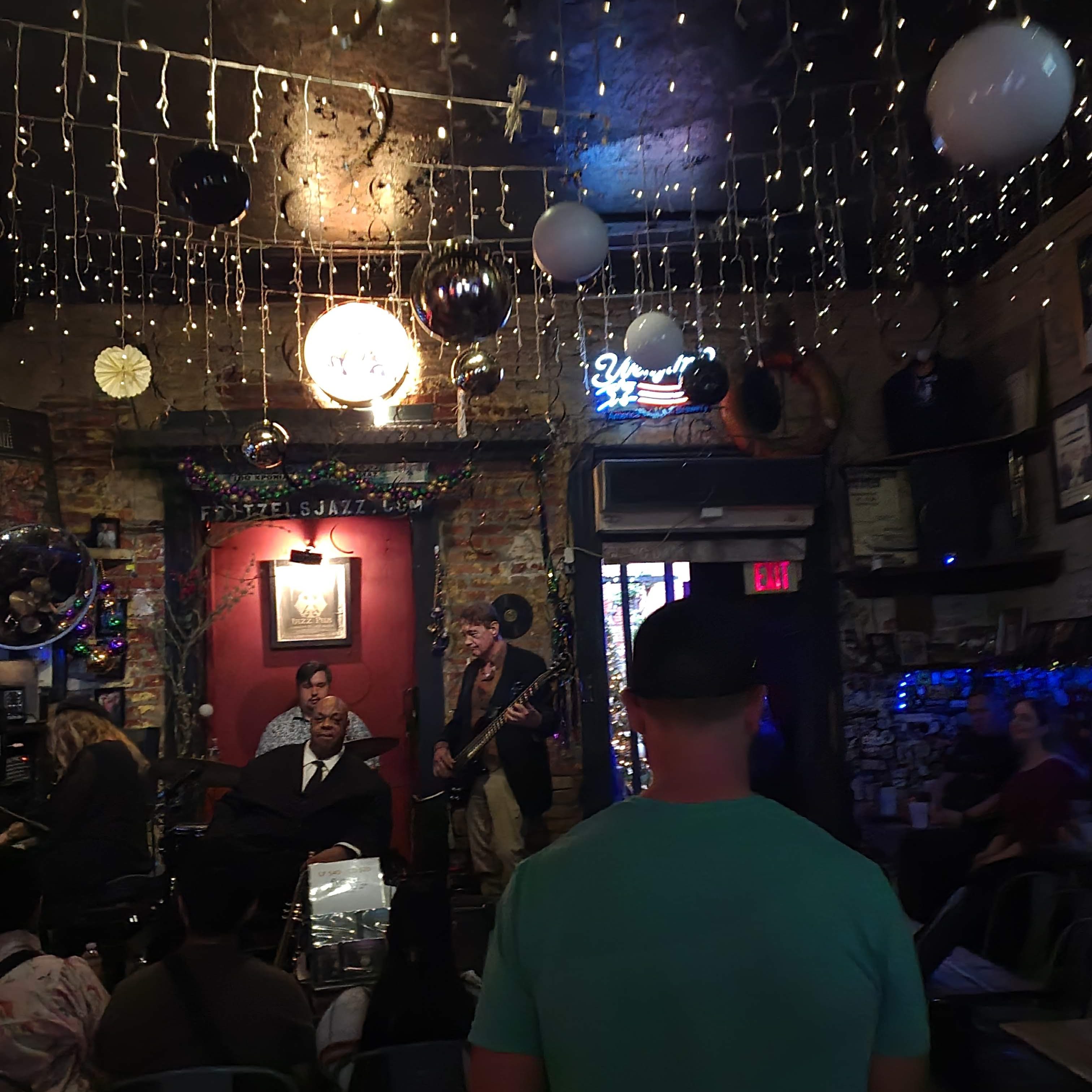
A few minutes later we followed the instructions on the card and made our way to the back of Fritzel’s European Jazz Pub. A dark hallway led us into a courtyard where the sounds of jazz slowly faded behind us. The space opened into a narrow, tucked-away patio framed by warm terracotta walls, strung overhead with soft, glowing lights that crisscrossed between a weathered tree and the surrounding buildings. Small metal café tables and mismatched chairs dotted the cobblestone ground, giving it an intimate, almost secret-garden feel. Potted plants clung to the walls, and a quiet stillness settled in. Chris looked confused.
I, however, immediately spotted him.
A man with long straight black hair sat beneath the dim courtyard lights, wearing a dapper vest and reading a book. For anyone who has ever read fiction, it was almost painfully obvious.
As I approached, he looked up.
Bright amber eyes stared back at me. Yes, I am fully aware they were contact lenses. But in that moment the theatrical illusion worked perfectly.
“The vampire sent us,” I said, giving the password.
He closed his book, stood, and gestured for us to follow.
Chris was still trying to figure out why I was talking to strangers as we were led through a service door and up a narrow, shadowy staircase. When the door at the top finally opened, we stepped into a dimly lit bar that looked as though it had been pulled straight from a gothic novel.
Candles flickered. Velvet furniture lined the room. Another elegantly dressed “vampire” welcomed us inside.
We ordered cocktails and stepped out onto the terrace overlooking Bourbon Street just as the sun began to set. From above, the chaos of the street below became almost entertaining. We watched the crowds swirl while enjoying the calm distance of our hidden perch.
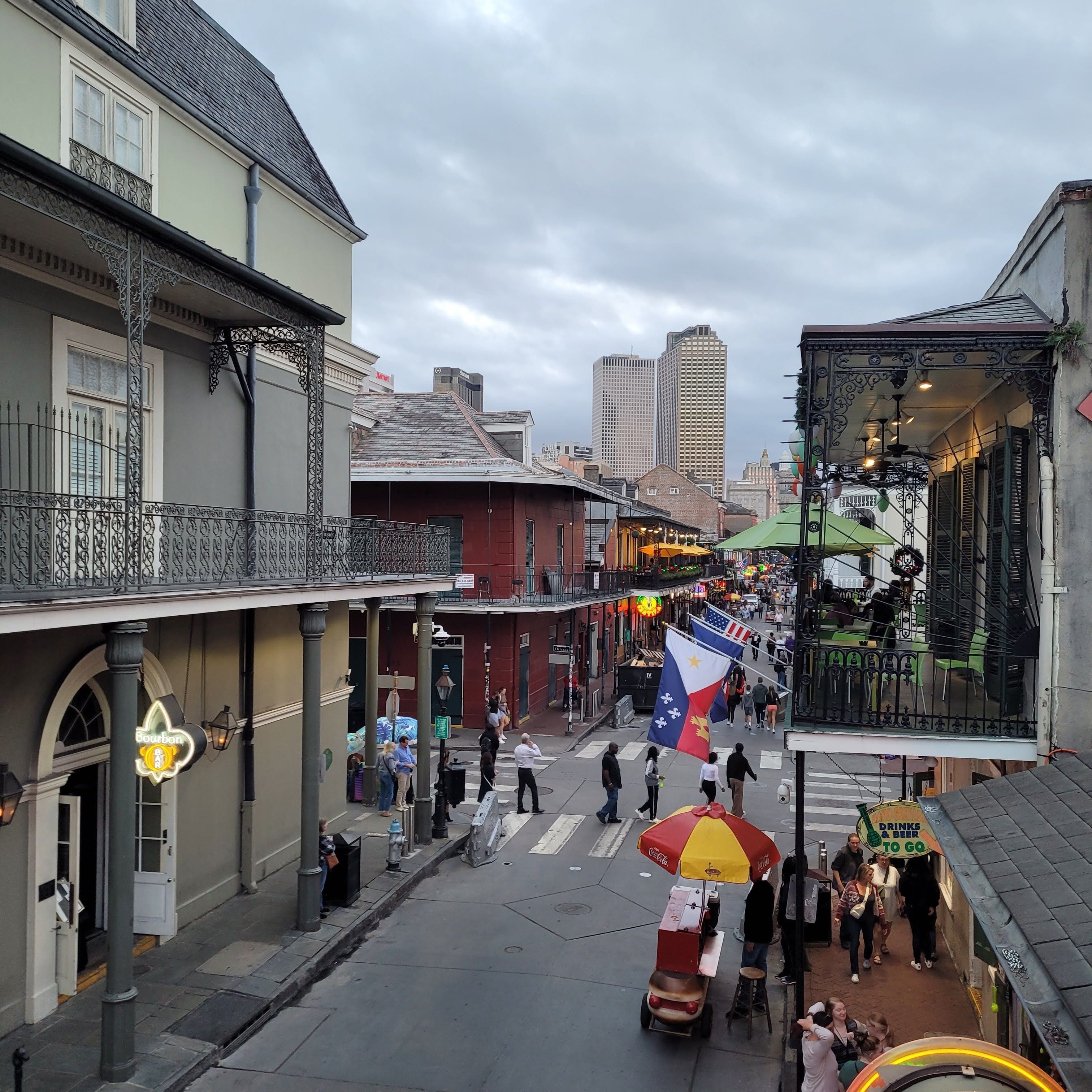
Our final stop brought us to the Voodoo Lounge, where we joined a vampire and ghost tour through the French Quarter. As darkness settled over the old streets, our guide led us past flickering gas lamps and wrought-iron balconies, weaving through hidden courtyards and quiet alleyways where the city seemed to hold its breath. We paused outside centuries-old buildings as stories unfolded—tales of restless spirits lingering in former homes, whispered legends of vampires said to roam the Quarter, and eerie accounts tied to New Orleans’ deep-rooted voodoo traditions. At times, it was hard to tell where history ended and folklore began. We listened wide eyed, enthralled as we sipped on our hurricane cocktail while walking and taking in all this exciting and slightly terrifying storytelling.
By the time we finished the tour, the city felt even more alive with secrets. As if somewhere in the shadows a pair of amber eyes happened to be watching. Well… that would only be fitting in New Orleans.
(In Other News) The Less Than Ideal Situation When Living In Temporary Places
At our campground, one unexpected “side quest” unfolded just a few feet from our campsite. For several days in a row, we had heard the same neighboring camper erupt into loud arguments well past dark. The scene itself was puzzling. Over the course of a few days, we had spotted a rotating cast of people coming and going from the same worn, Breaking Bad-looking bus. A young couple, an older woman, maybe another young adult. It was never entirely clear who actually lived there.
By the fourth night, after being woken up yet again around 11 PM, Chris had had enough. He stepped outside and walked over, catching a glimpse through the back window as he approached. Inside, an elderly-ish woman with mousy brown hair and a cigarette in hand was mid-argument with a man he had never even seen before. For a brief second, they locked eyes, but Chris kept going and knocked firmly on the door.
When it opened, a young man stood there. Shirtless, slightly disheveled, pants half-buttoned, he carried himself with a casual indifference that made the whole situation feel unbothered. As Chris was about to start talking, he noticed a toddler along with a young woman sitting on the couch in the background. His tone shifted instantly. What could have been a confrontation turned into something more measured as Chris simply asked, “What’s going on here?” The answer came back dismissive. “You’ll have to take that up with them, bro,” before the door shut again.
Moments later, the attention shifted back to the rear window, where someone inside urged another to handle it. “Now he’s at our window, talk to him.” Chris hears right before a middle-aged man finally appears looking detached as his head pokes out the small camper’s window. When told the entire campground could hear them, he offered a casual apology, as if it were all far less disruptive than it felt.
And just like that, the window closed, the noise stopped, and silence returned. Still, the night carried a lingering unease. By morning, the decision felt obvious. We asked to move campsites, choosing distance, and leaving that strange unfortunate story behind us.
Flying Home For The Holidays
By the time this post goes live, we are well into March. (As my mom, who also happens to be my blog editor, lovingly told me the other day: You’re slacking!) But rewind a little, because our time in Louisiana actually overlapped with the holidays, which meant pressing pause on life on the road and hopping on a flight from New Orleans to Montreal to spend Christmas with my family.
Christmas and New Year’s in my family are not just calendar dates. It’s a full production. And while Louisiana gave us charming moments, like a Cajun Christmas market and towns dressed up in twinkling lights, I will admit… the lack of snow made it all feel slightly off-script. Festive, yes. But missing that white, cinematic touch if you know what I mean.
Cue our arrival in Montreal. As we made our way out of the airport, there they were. My parents, hopping out of the car with a handmade “Welcome home!” sign like we were long-lost celebrities returning from tour. Honestly, 10 out of 10.
Being back carried this warm layer of nostalgia, even though we hadn’t been gone all that long. Familiar stops quickly made their way into the schedule. A visit to Milano’s grocery store, then wandering through Marché Jean-Talon, with its rows of fresh produce and local vendors stretching in every direction. And of course, the essential stop at Alati-Caserta for cannolis and Italian pastries that somehow taste exactly like childhood.
Food. Drinks. Festivities. Repeat.
Thursday night supper, a sacred family tradition, set the tone. Cold cuts, Italian cold pizza, cheeses, salad, and wine. Lots of wine.
Christmas Eve brought midnight mass and was followed by Christmas Day, which meant gathering again. More food, more wine, and the annual emotional rollercoaster of watching old family DVDs. Nothing humbles you quite like early 2000s footage of your teenage self, full of chaotic energy and questionable fashion choices. A true reminder that growing up without social media was a gift.
Naturally, the one day Montreal decided to stage an ice storm was the exact day we had plans. Chris and I were meeting my uncle and aunt for lunch at Pizzeria 900 on Fleury Street. We parked the car and quite literally ice skated our way across the street, clinging to balance and dignity, before settling in for, you guessed it, more food and wine. There is a very clear theme to my visits home, and I stand by it.
During these visits, Chris is not only my husband and travel partner, he is also the official family IT department. Because if you work in tech, you do not simply visit family. You troubleshoot. Within hours, he found himself on the phone with Videotron customer support, trying to solve the mystery of my parents’ unreliable Wi-Fi.
To be fair, the real issue might be less about the internet and more about my dad’s… commitment to outdated technology. The man operates on a strict “if it still turns on, it’s fine” policy, only considering upgrades once things have fully collapsed. The term of endearment is “the Camplani way” for these instances. Thankfully, my tech-savvy uncle has been slowly dragging him into the modern era over the years, including the legendary moment he gifted my dad his first flat-screen TV approximately two decades after the rest of society had made the switch.
All in all, it was the perfect holiday intermission. A little snow, a lot of wine, and just enough chaos to remind me exactly where I come from.
Driving Back To Minnesota
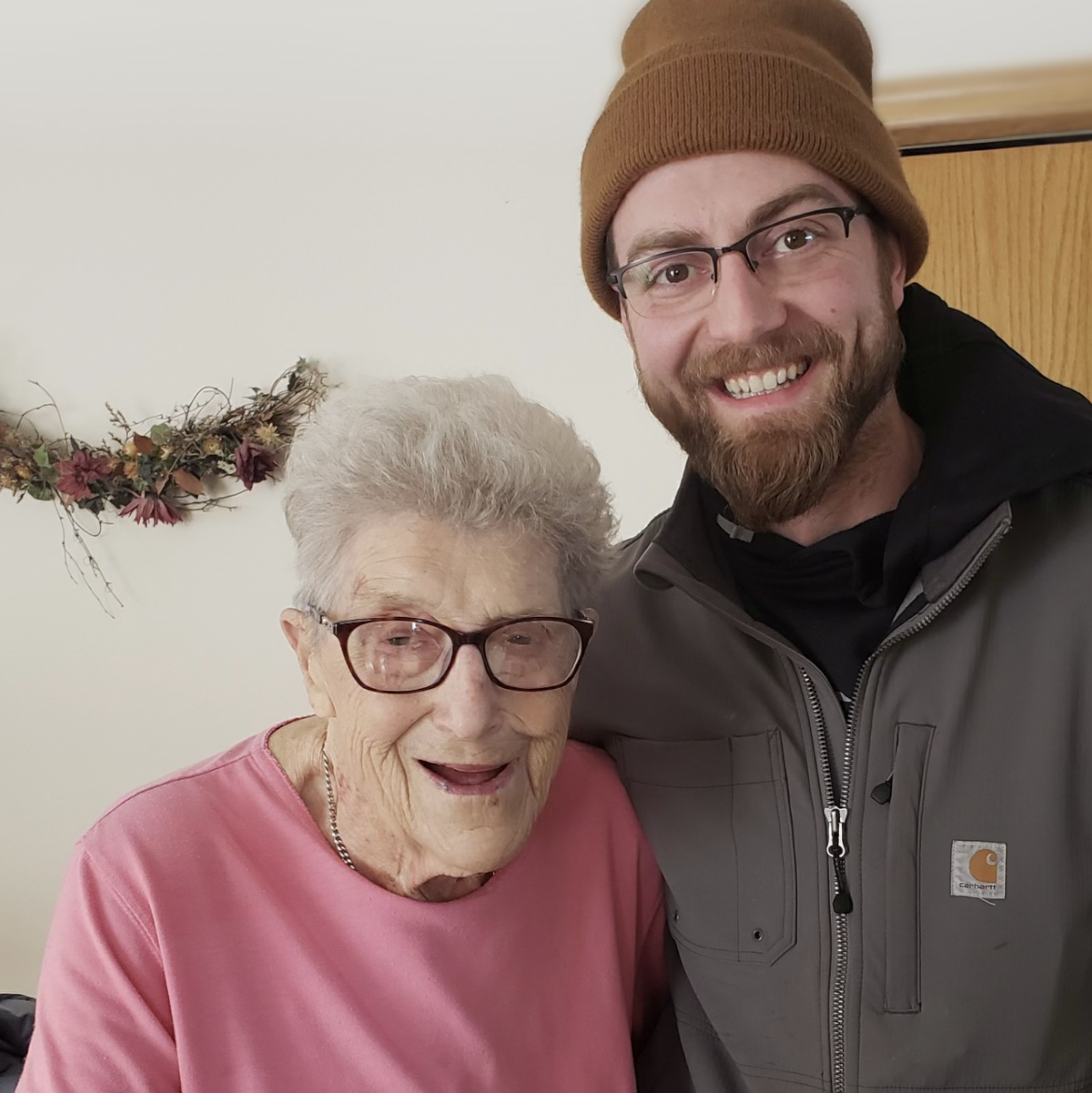
During the holidays, we received the call that Chris’ grandmother, Dorie, had passed. Ninety-six years old. What a long, full, and deeply lived life she had.
There wasn’t a moment of hesitation. We immediately shifted into logistics mode, figuring out how to get back to Minnesota in time for the funeral. Our campground dates were about to expire, but somehow everything fell into place. We found an RV repair shop that could take the Bus in for bearing maintenance1 while we were gone. There was no way we would be driving it through a Midwestern winter.
Gam Gam, as we called Dorie, was the heart of the Sundeen family: the matron in every sense of the word. A stubborn and fiercely independent woman, she was always there for others: her family, her church, her community. She loved sewing and spent countless hours making quilts and garments, many of which she donated to organizations supporting people in need. It was just one of the ways she cared for others.
She always welcomed you into her home and made sure you never left hungry. Her pickle spread, a steady supply of sweets, and coffee were simply part of the experience of being with her.
What always amazed me was her memory. She was unlike any person I’d ever met. She could recall stories, names, connections across an incredibly large family tree. The kind of family where you half-jokingly request everyone wear name tags.
The service was held at the Catholic Church she had attended for so many years. Before entering, we gathered in the main entrance and I observed an entire family dressed in formal black. For a group that usually abides by a casual dress code, it quietly spoke volumes about the respect and love everyone had for her. The priest shared stories of her life, highlighting the many ways she had touched those around her. Several of her grandchildren, including Chris, read passages she had chosen herself; some of her favorites, we later learned. It was a lovely service in honor of a wonderful woman.
At the cemetery, the Minnesota wind was sharp and unrelenting, the kind that cuts right through you. We gathered closely under the tent as the casket was lowered beside her late husband. One by one, the grandchildren and great grandchildren stepped forward, each taking a flower from the bouquet and placing it gently onto the casket as we all said our final goodbyes.
In true form, she had planned every detail of her funeral. Even the meal that followed was made up of her favorite dishes, giving everyone a space to come together, share stories, and honor her life and legacy.
A final gesture. Simple, quiet, and full of meaning.
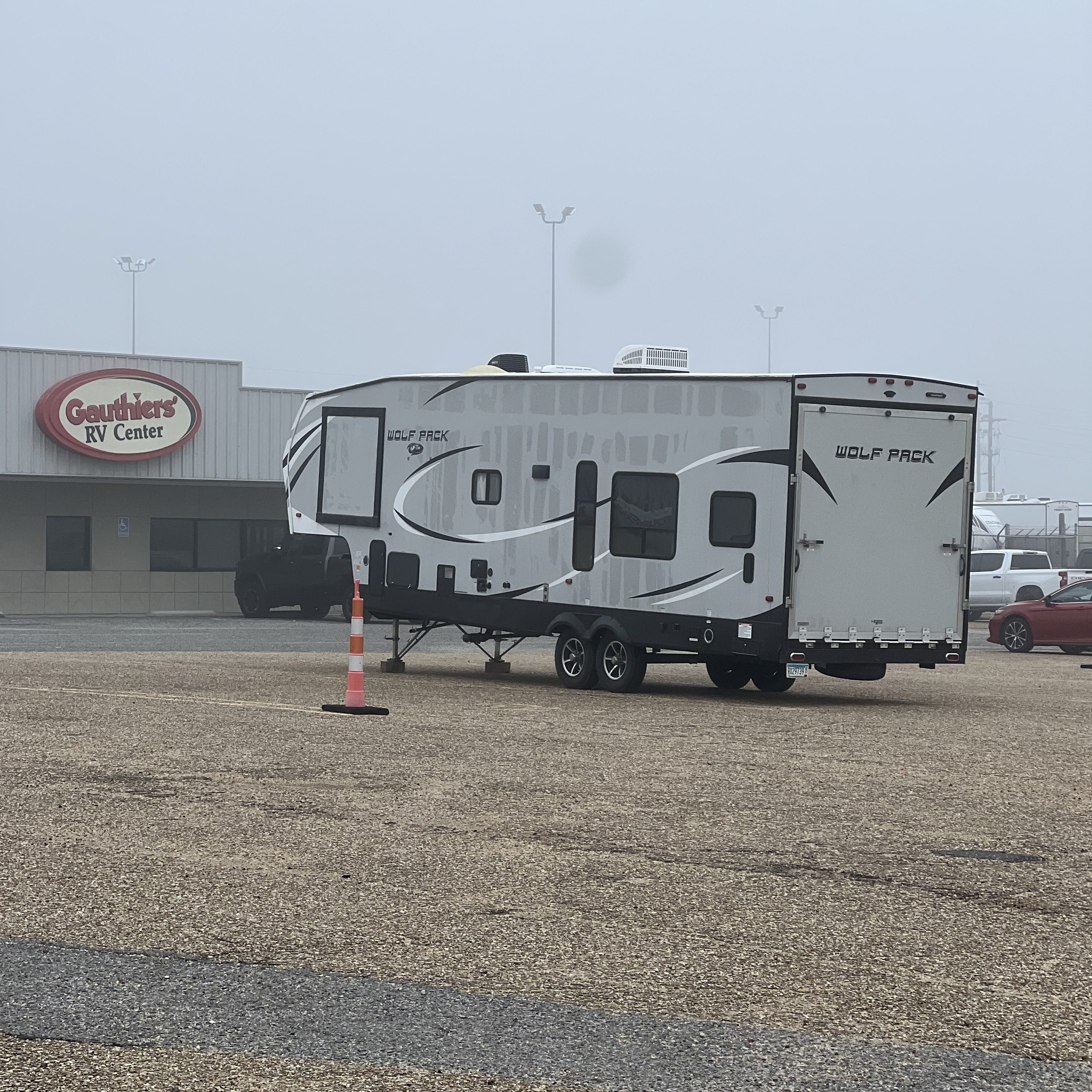
- We received a call from the RV shop during our 3-day drive back to Minnesota informing us that they no longer were able to perform maintenance on the Bus. A rather disappointing turn of events, but that still allowed us to have the Bus securely store FOR FREE while we were away… So kind of a half win, then.


Liked this post? Leave a comment.