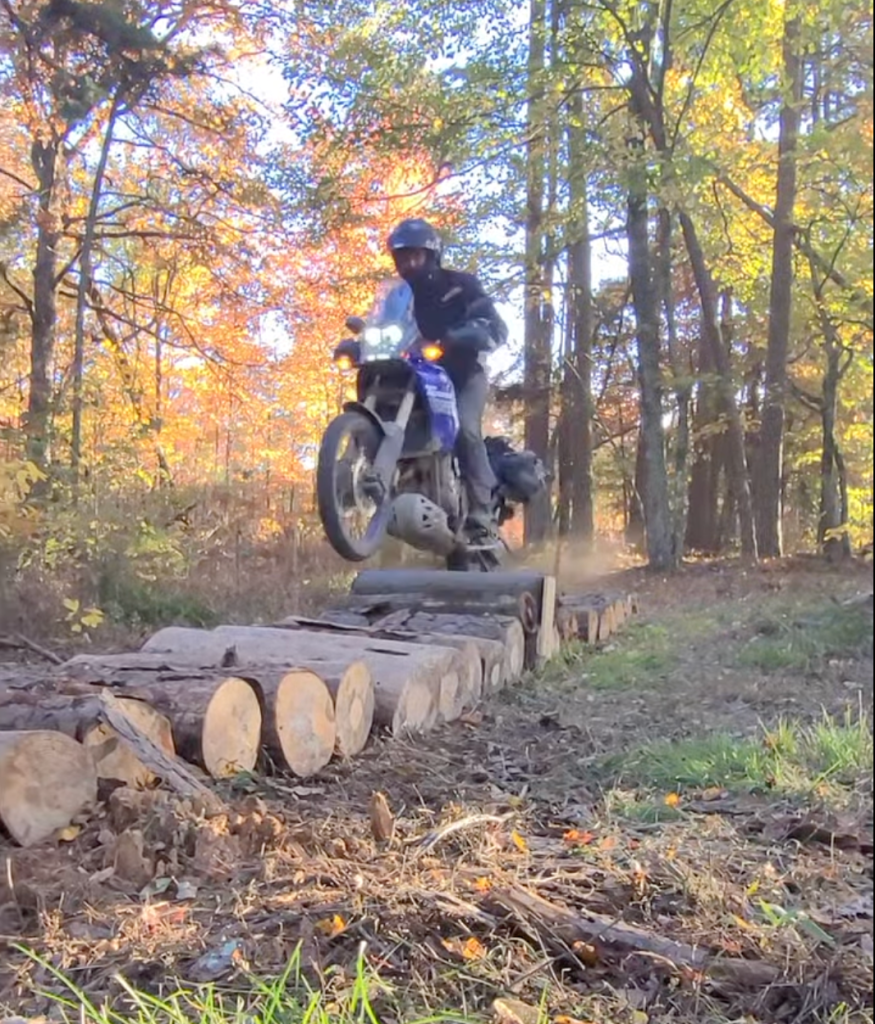
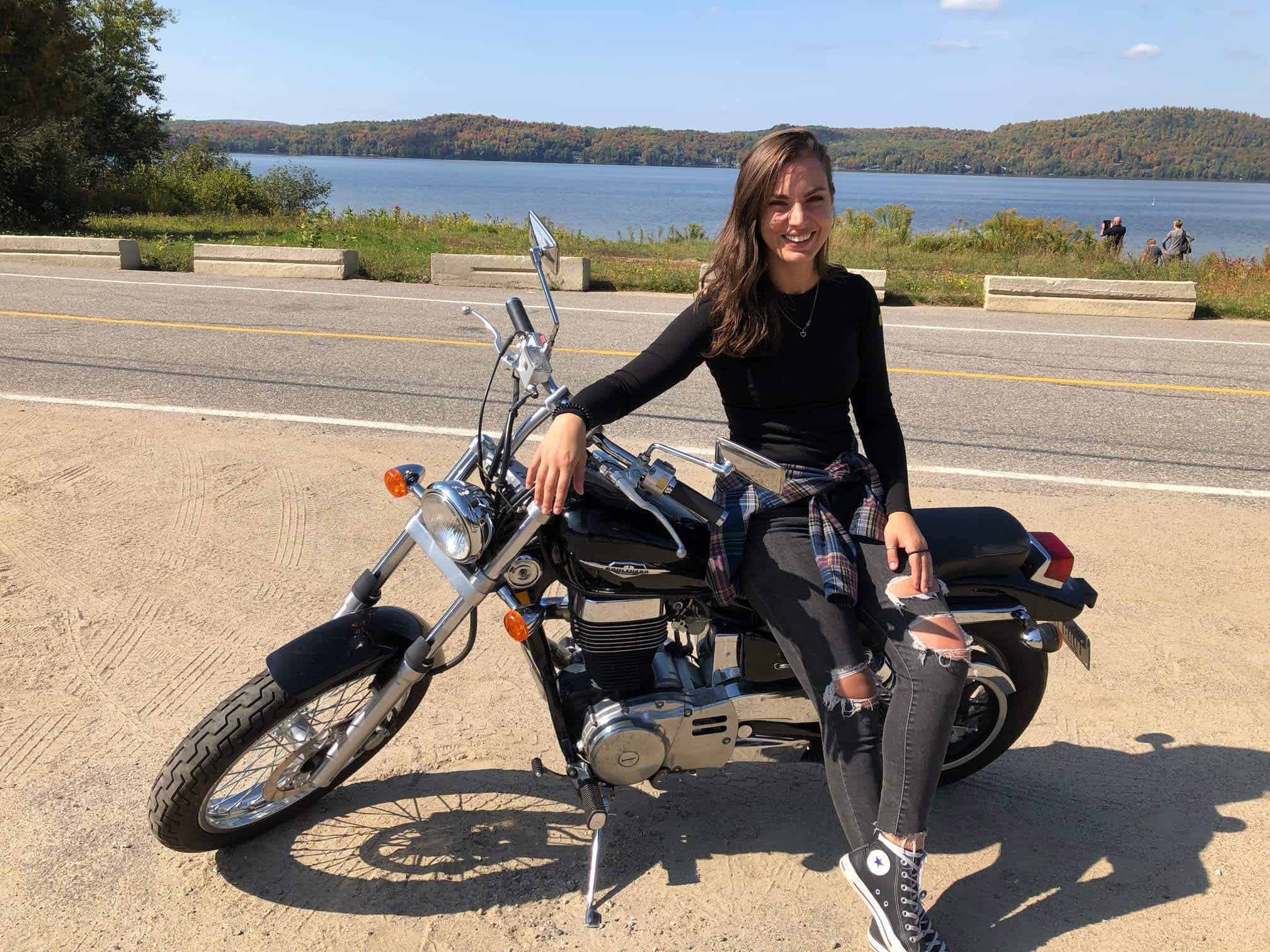
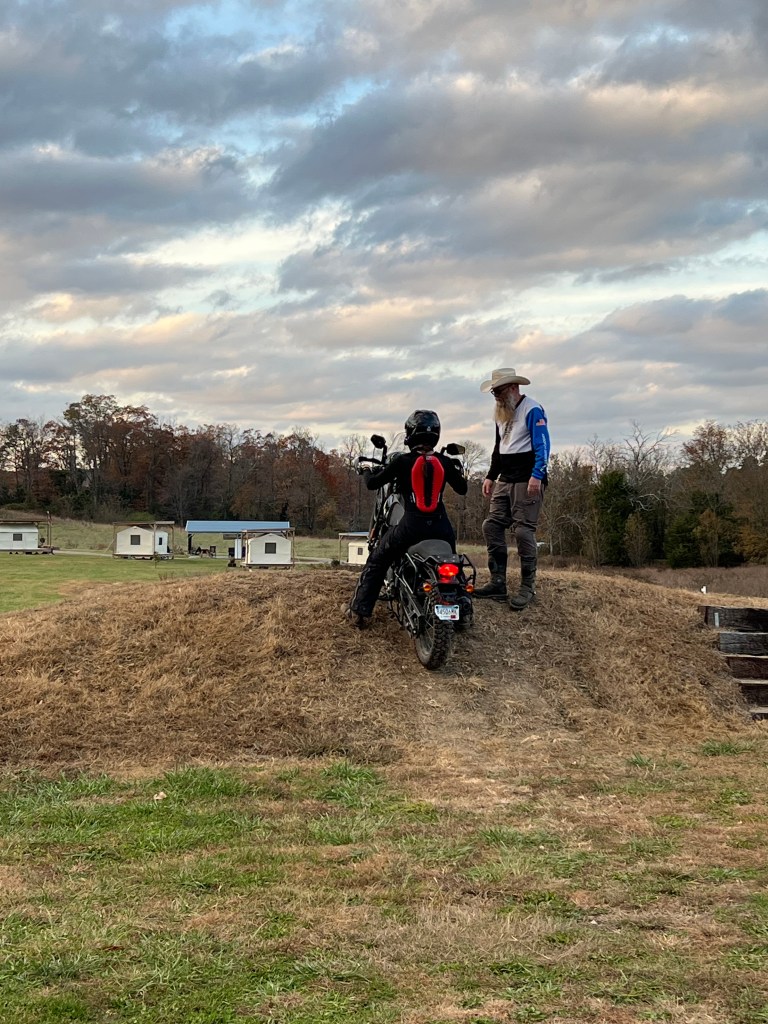
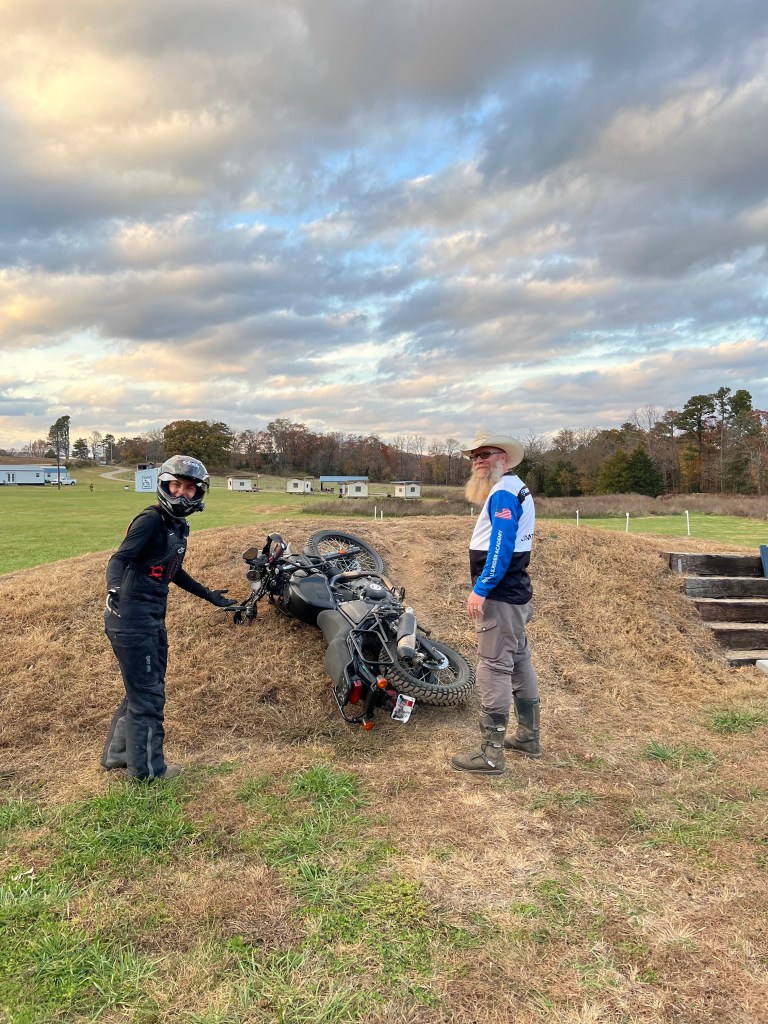
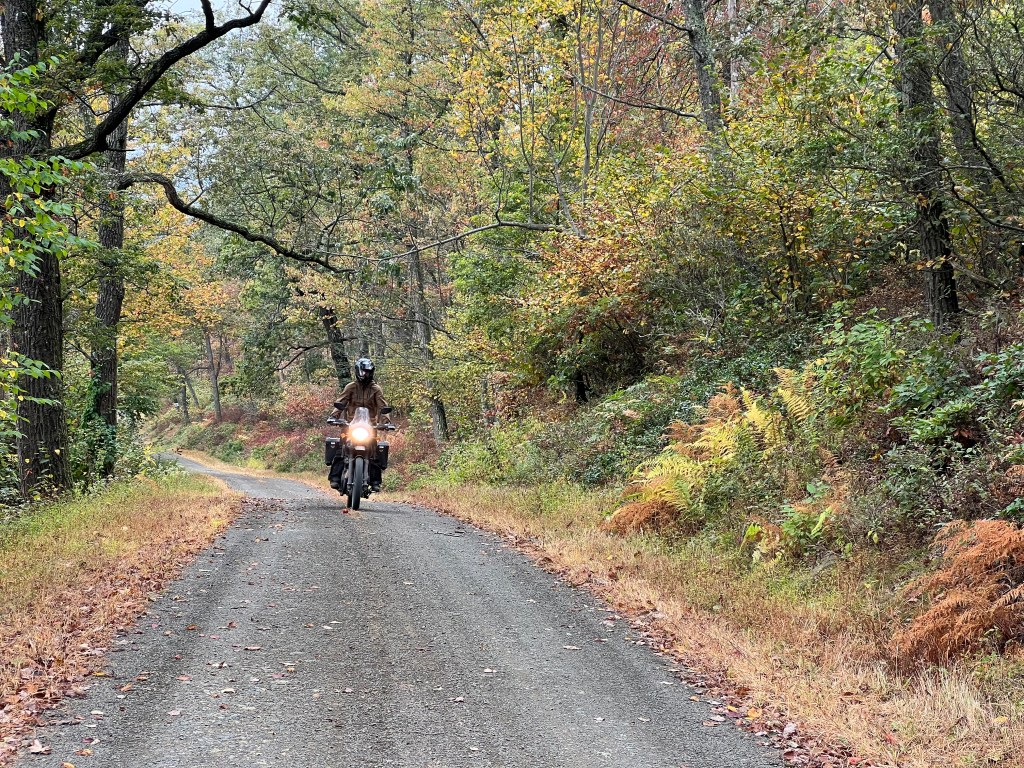
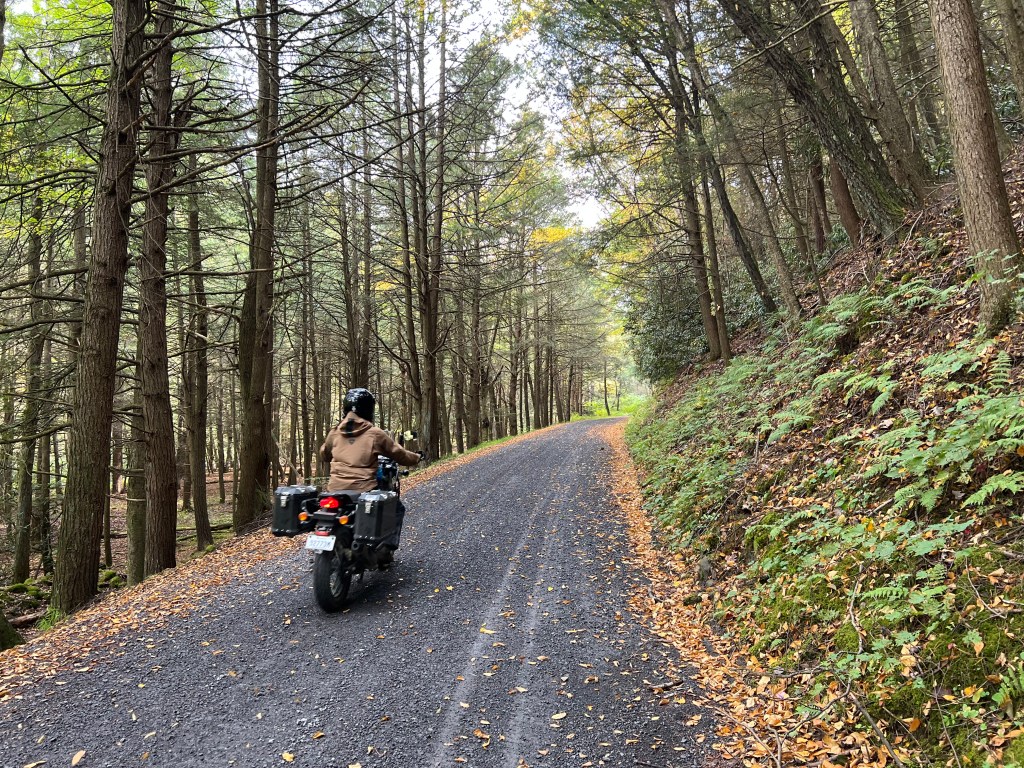
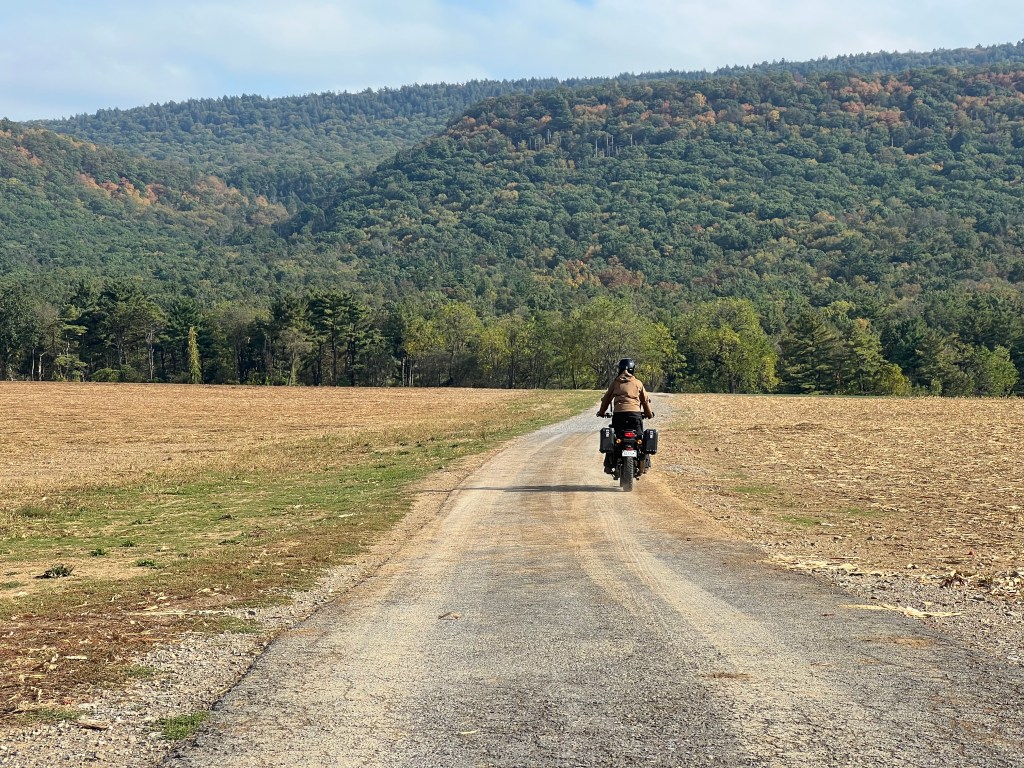
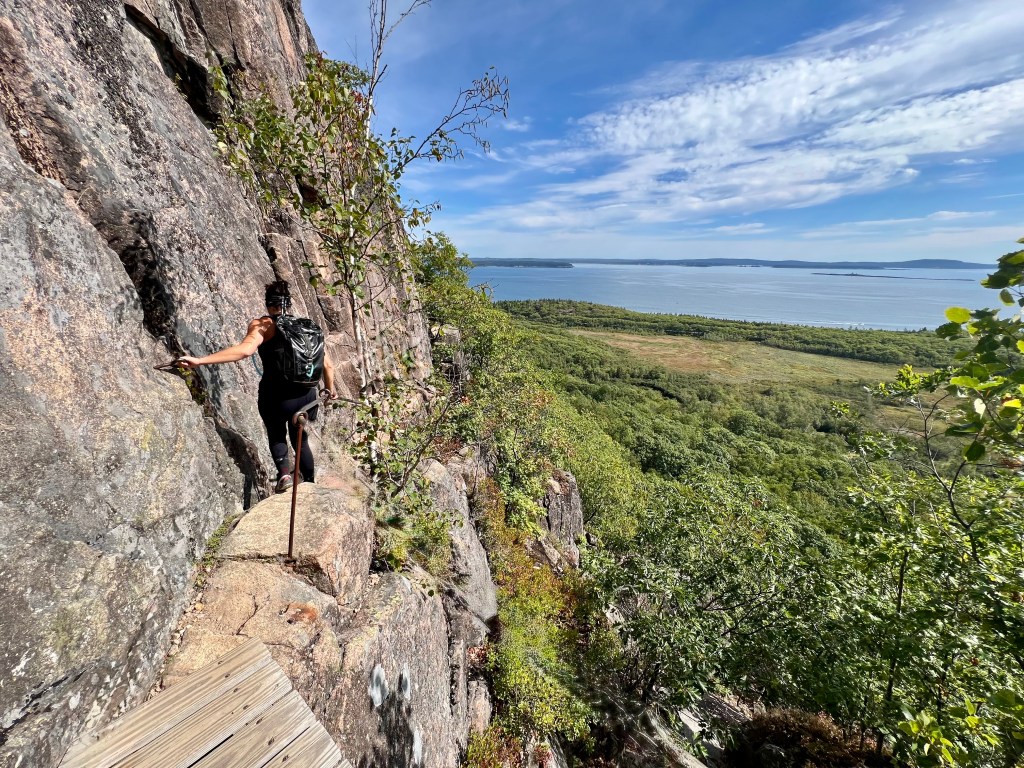
For those of you who thought that a space trip to Mars was out of your budget—I was one of you too. What I didn’t realize is that you don’t need a rocket ship to get you to a place that’s otherworldly. You just need to ride far enough west.
Welcome to Earth’s version of Mars. Somewhere out in the Big Bend region of West Texas.
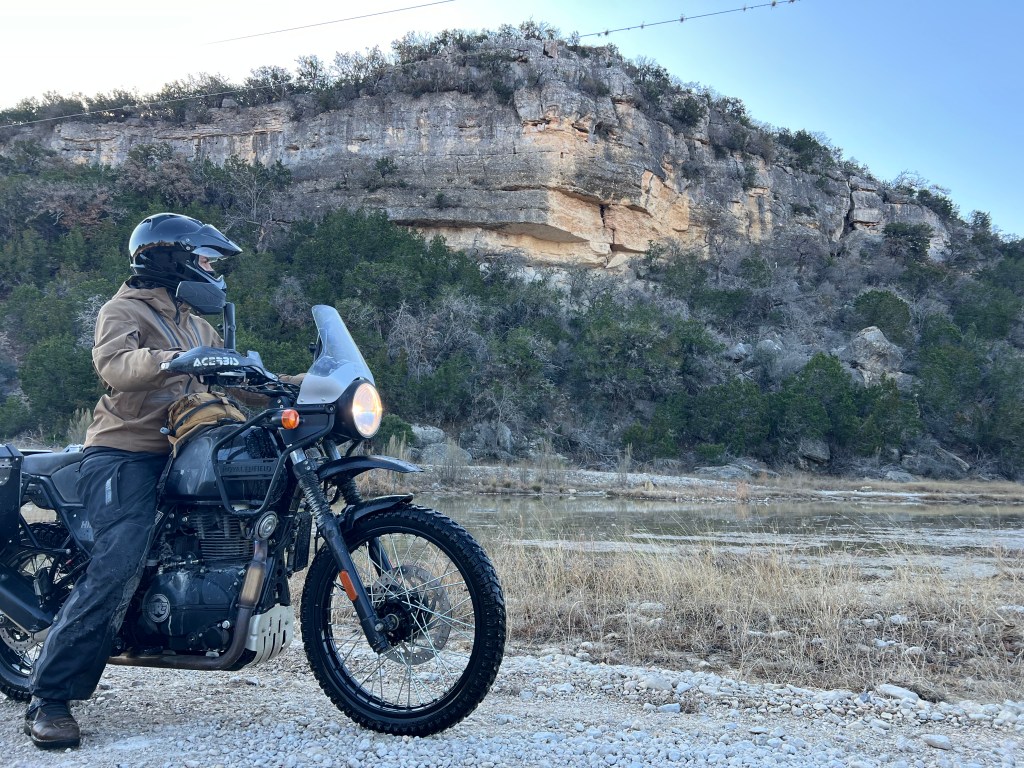
The Big Bend BDR-X threads through places like Rio Grande Village, where the desert opens wide and the river quietly snakes through cottonwoods. From there, the route pulls you deeper into the Rio Grande river basin, where the terrain shifts to stay unpredictable under your tires.
Out here, the land fractures, stretches, and shifts in color like it’s still remembering its volcanic past. The terrain is a mix of jagged basalt, compressed sediment, and endless desert floor that glows in shades of red, rust, and dust depending on how the light hits it. We are in the largest desert in North America: the Chihuahuan Desert. And right through the middle of it all runs the Rio Grande, carving deep canyons through limestone and marking the winding border between the U.S. and Mexico.
We’ve chosen to tackle this BDR-X route a little differently than the previous ones. Instead of leaving on a multi day motorcycle trip, we’re doing full day loops and coming back to the Bus as a basecamp for the night. The idea behind this is to guarantee a good night’s sleep instead of playing Russian roulette with motels or even worse, tent camping somewhere in the desert.
Since our arrival, Fort Davis had already made one thing very clear: the wind out here doesn’t mess around. It surely would turn a simple tent setup into a full-blown wrestling match and promise a night of flapping fabric and very little sleep. We’ve done enough of those to know that the next day would be groggily unpleasant and caffeine-dependent by mile 20. So yes, this version of the BDR-X came with a little more comfort. Which didn’t mean easy.
Day 1: Fort Davis to Marfa
We started in Fort Davis, heading through Alpine and down toward Marfa, combining sections of the route but keeping things mostly paved as we eased into the ride.
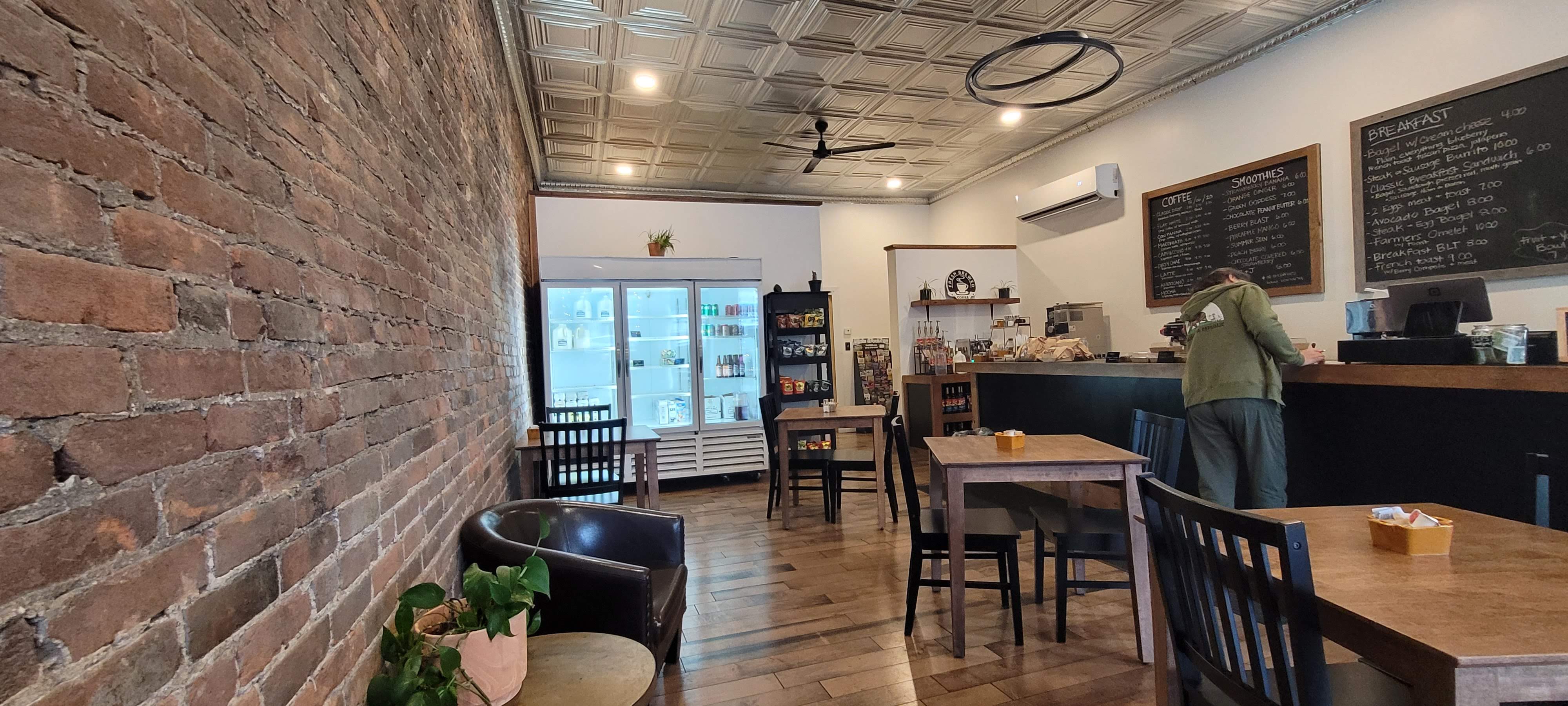
The plan was simple: ride the route, but also meet up with Bill and Val along the way. We stopped at the Venga Cafe where we enjoyed easy conversation with them, quickly falling into a relaxed rhythm of laughter and shared stories. It felt effortless, like we were old friends, and the stop turned into a welcome pause in the middle of the ride.
One of the attractions I was most excited about was meeting Clay, the legendary “Mayor” of Lajitas. In this tiny West Texas town, the title of mayor has long belonged not to a person, but to a goat. It’s a tradition that dates back to the 1980s, when locals jokingly elected a beer-drinking goat named Clay Henry as mayor. Since then, each successor has carried on the Clay Henry name, becoming the town’s beloved mascot and one of its most famous attractions. It may sound ridiculous—and that’s exactly the charm. Meeting Clay has become a rite of passage for anyone passing through Lajitas, adding a dose of Texas-sized humor to an already unforgettable destination.
Somewhere in all of this, we saw the Rio Grande for the first time. I feel bad writing that it was… underwhelming. We expected a wide, powerful river. Instead, it looked more like a shallow creek you could almost step across. Now granted, we were in the middle of a drought, but still, my imagination and cinematic references had prepared me for a large, deep and violently strong current flow across this infamous border.
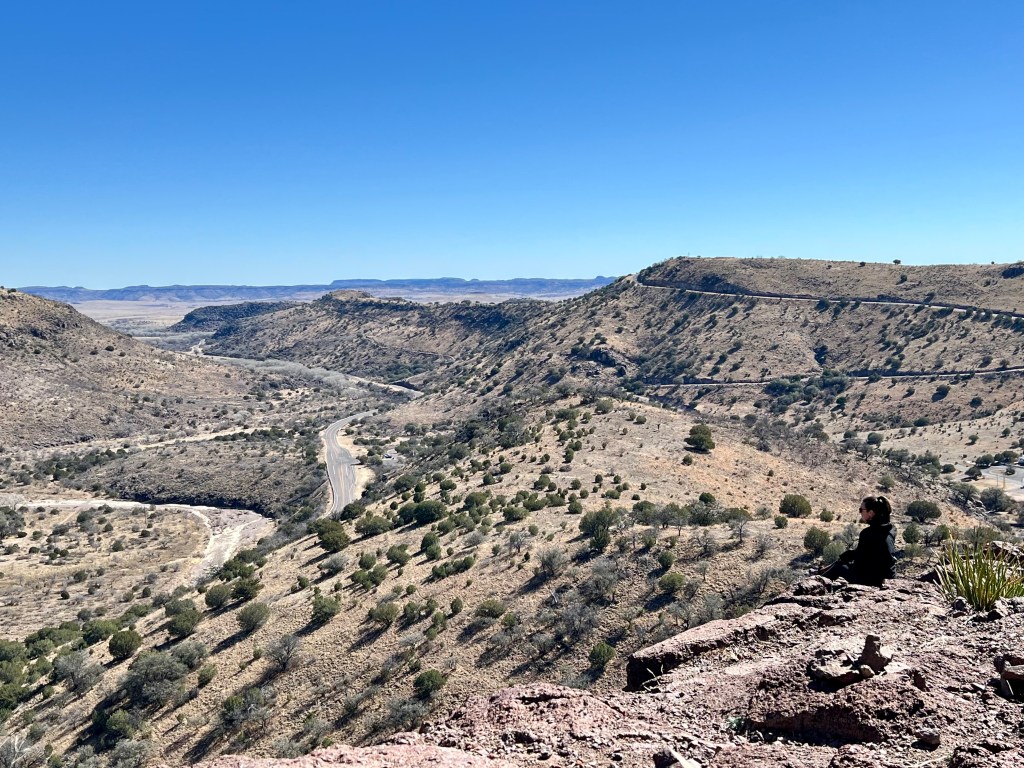
Still, the landscape along Highway 170 was striking. The canyon walls, open desert, and long empty stretches made everything feel bigger than it was.
We almost ran out of fuel after skipping a stop in Study Butte, assuming Presidio wasn’t far. Far enough, our gas tanks told us as the miles ticked on. Both of us finally rolled into the gas station on reserve with very little to spare.
At the pump, we met other riders we’d crossed paths with earlier, swapped a few stories, grabbed snacks, and watched a couple of kids put on a bicycle show in the parking lot. It’s funny how motorcycles have a way of bringing out the showman in young boys; trying to gain prestige in front of their older counterparts.
From there, the ride back toward Marfa felt long. Flat terrain, quiet roads, and a stretch where a closed road forced a quick detour and some guessing on reconnecting routes.
A stop at the Marfa Prada store added a surreal pause to the day. This is a minimalist desert art installation made to look like a luxury boutique, sitting alone beside the highway. The window displayed untouched shoes and handbags, sealed behind glass and slowly aging in the West Texas dust. We pulled over for a quick photo op, half amused and half impressed by the absurdity of this popular art display.
A highlight during our time in Texas was watching roadrunners cross the road in front of us every so often. Their sudden sprints ending with that awkward little hop made us laugh every time. A quick Google search about this observation failed produce any good explanations. I can only guess that it’s a victory hop after surviving a sprint in front of our motorcycles.
Day 2: Into the Remoteness of Southwest Texas
This morning we dropped into Section 4 and headed deeper into southwest Texas, where the landscape quickly shifts into something far more remote and unforgiving. It seems almost impossible to see so much cattle and wild horses make a home out of the seemingly unlivable landscape.
Road 170 runs through the basin of the Rio Grande, and for hours at a time it feels like there is nothing else in the world. The word desolate comes to mind as we ride on.
In several hours of riding, we saw only a handful of vehicles. Solitude became the dominant feature—beautiful, but also absolute. Out here, there’s no cell service, no amenities, and no margin for mistakes. Just the two of us, the bikes, and whatever the terrain decides to do next.
Just as we began to think no civilian vehicle could possibly make it through the rough, rocky terrain, a rancher’s truck appeared in the distance—calmly towing a small trailer with two calves inside. It felt bizarre to see something so ordinary moving through such harsh conditions. Later, an armored vehicle rolled past us, which somehow made the earlier sight feel even more absurd.
Then came “Godzilla Hill” a notorious section of the Big Bend BDR-X that can only be described as… so very steep. The terrain shifts between hard-packed dirt and embedded rock, with stretches of baby-head stones and erosion ruts that keep traction unpredictable, especially on the descent where the surface can turn slick and washed out in an instant. Braking wasn’t really an option; it was more about staying straight, reading the line ahead, and committing all the way through (while trying not yell too loudly in my helmet and have Chris go deaf).
Throughout the day, there were sections of silt that looked harmless, except for the fact that it could swallow the tires unpredictably. The bike would drop in it, its weight shifting without warning, and you would have to keep it moving or risk getting stuck.
Heat and fatigue started to stack up. Breaks were minimal, partly from a daylight management perspective and partly because there was no shade to speak of. Body aches and the heat caused emotions to escalate to the point of wondering when this particular road would end. Yes, the landscape was stunning in its own unique way, we thought, as we pushed ourselves without taking any breaks to speak of. But why was there no SHADE?!
After what felt like a lifetime, the smell of water along the Rio Grande hits us before we see it and the landscape changes instantly.
Migratory birds gathered along the banks, flying around and dotting the surrounding body of water in great numbers.
The dirt eventually gave way to washboard roads that seemed endless, until pavement finally appeared again like relief. From there, it was a straight shot toward Van Horn for food, fuel, and a highly anticipated and well deserved cold beverage.
Day 3: Terlingua, Texas
We drop back into Section 1 through Alpine, this time turning onto Terlingua Ranch Road to complete the sections we’d missed. The morning’s temperature is quite chilly in contrast with the extreme heat of the our last few days. We stop in Terlingua Ranch Lodge for some warm coffee and a late breakfast before starting our off-road day on Marathon road.
Confession time: I tend to over dramatize things. If you’ve been following along for a while, this comes as no surprise. I keep assuming that because I’m getting better at one specific type of terrain,every other one will follow.
Enter an abrupt beginning of deep, soft sand in the middle of nowhere, Terlingua. It didn’t start gently either, we turned the corner and immediately were greeted by an entire stretch of what I can safely name my biggest motorcycle nightmare.
“How would you describe the feeling of riding through deep sand?” You might ask.
You feel like your wheels have lost all traction. Your heart flutters in your chest as you feel completely ungrounded. The handlebars have a mind of their own as the front wheel starts to wobble in both directions. You can also see the “S-shaped” tracks of riders who’ve come before you and have also struggled through the section.
Panic sets in and all I want to do is slow down, which makes it worse. If I’m standing up on the pegs, I desperately want to sit, put both feet down and come to a complete stop. It’s unnerving when you remember that the key to stability in such treacherous terrain is to go faster so that your front wheel can get up over the sand and give you more of that elusive gliding feeling. Also, you don’t want to be death gripping your handlebars. A common analogy we’re taught is to imagine holding onto mushy bananas and you must arrive to your destination without squishing them.
It’s a frustrating battle between my nerves and the terrain, that obviously highlights only one winner in the situation: the SAND. After a few soft falls, I resign to paddling with both feet on the ground, rolling slowly across this section There are a few brief moments when I feel balanced enough to put one foot on the foot peg and get familiar with the feeling of sand under me. Any progress is welcomed, at this point.
What I know for sure is that the next time I get training, I definitely want to get proper practice on sandy terrain.
Once that ordeal is behind us we move onto pavement and visit a fossil bone exhibit—an unexpected reminder that this entire landscape was once underwater. The idea of ancient seas sitting beneath desert rock makes the imagination wander.
We continued toward Big Bend National Park, stopping at Rio Grande Village to refuel and regroup before taking on River Road.
River Road was remote, beautiful, and winding along the Rio Grande with wide views of canyon country. The mountains rose sharply to the north, and the scale of everything felt exaggerated in the best way. We passed the Mariscal Mine Ruins, remnants of an old mining operation slowly being reclaimed by the desert.
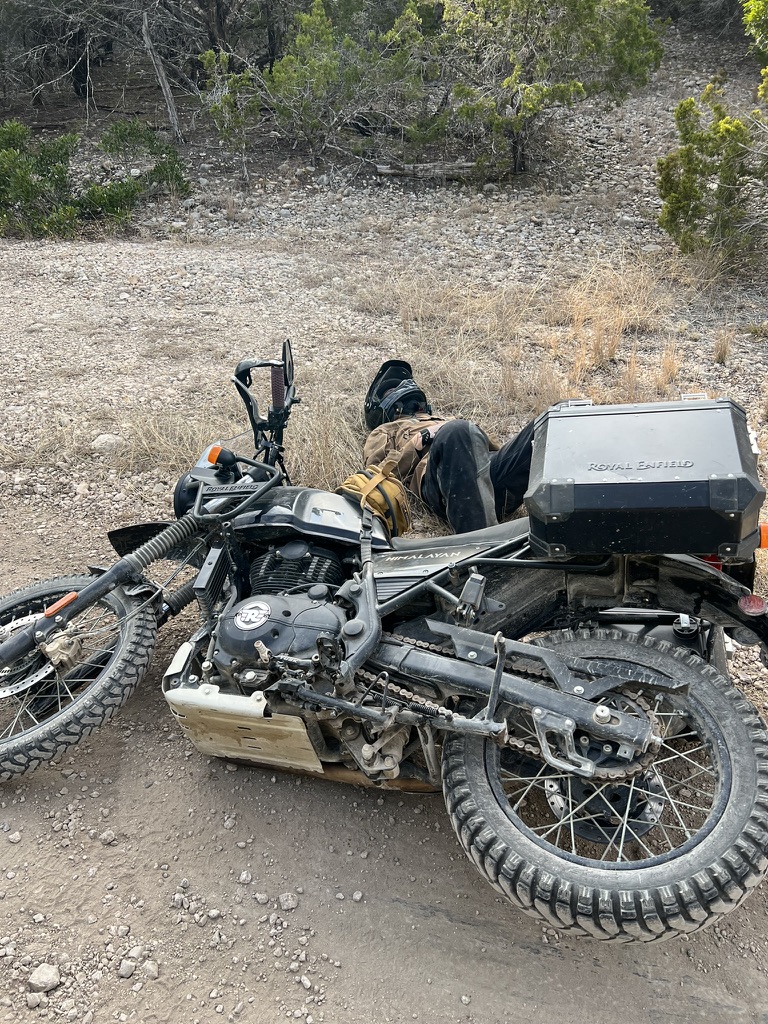
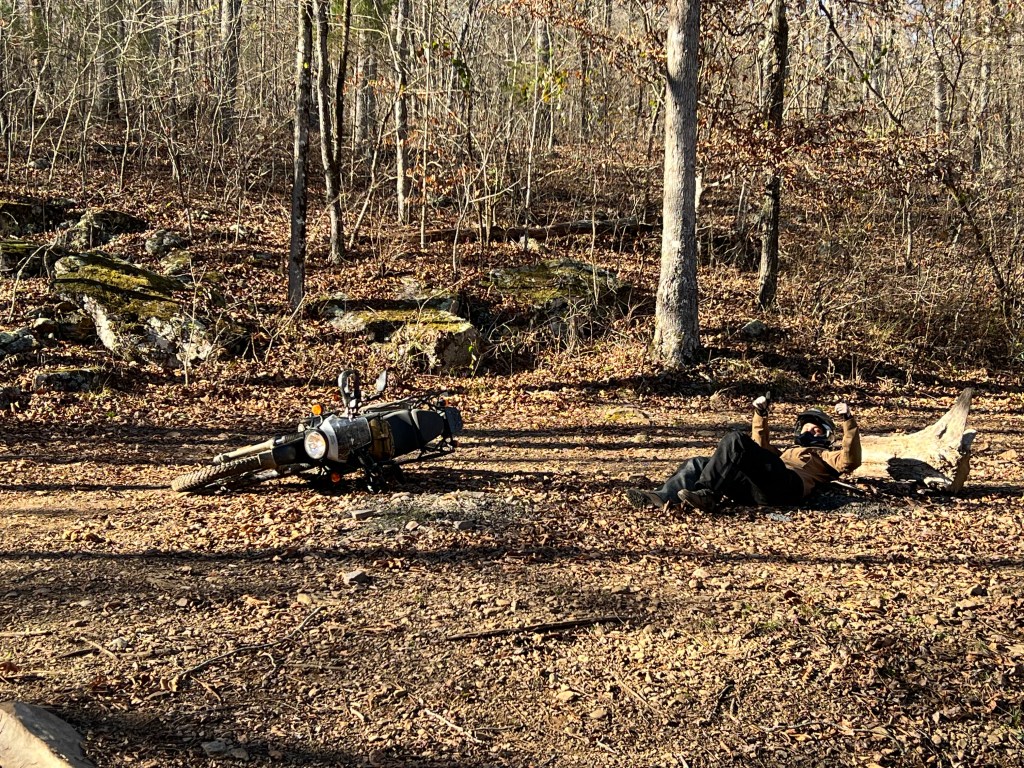
At one point, we noticed smoke rising from the brush near the river. Uncertainty crept in, our attention shifted, and in that brief moment of distraction, we both went down. Thankfully, they were minor crashes with quick recoveries and no significant damage, but it served as a reminder of how quickly things can change—and how important it is to stay focused out here.
The road eventually delivers us to Elena Canyon, where the Rio Grande has carved a breathtaking passage through towering limestone cliffs. Standing at its entrance feels like looking through a gateway into another world.
From Elena Canyon, we make our way back to Study Butte for fuel and a quick dinner. The gas station doesn’t have much to offer. Tonight’s menu consists of refrigerated sandwiches, candy bars, and Brisk Iced Tea.
By the time we head back toward The Bus, the desert sun has slipped below the horizon, leaving us with more than two hours of riding under the stars. With darkness comes a heightened awareness of the wildlife that calls Big Bend home. Deer and wild burros linger along the roadside, their eyes glowing brightly in our headlights long before their silhouettes come into view. Every corner demands extra caution, reminding us that, after sunset, the desert belongs as much to its wildlife as it does to those passing through.
Riding at night has a beauty all its own. A sense of calm settles over the desert as speeds naturally slow, the air cools, and your focus narrows to the ribbon of road illuminated by your headlight. On a clear night, you can even spot the North Star, a quiet reminder of how travelers once navigated these vast landscapes long before GPS.
After a long day, we both switch on music in our helmet communicators to carry us through the final miles. We roll back to The Bus around 11:30 p.m., wrapping up a 13-hour day in the saddle.
Another BDR in the books, after three long days on the bikes!
Driving from the Texas Hill Country out to West Texas is an experience in itself. Texas is big in a way that doesn’t fully make sense until you’re in it. It honestly reminds me of Canadian provinces in terms of distance. You can drive all day and still be in the same state.
While driving down the interstate the hills flattened, the trees spaced out, and eventually disappeared. The landscape opened up in a big way. Long straight roads, barely any turns, and a horizon that just kept going. It felt wide and exposed, but also kind of peaceful in its simplicity.
Then, just when it starts to feel like it will stay that way forever, West Texas decides to switch things up. Or maybe it’s because the speed limit is suddenly 80 mph and everything out here is moving at full throttle, including the scenery. That’s my completely unscientific explanation.
As we got closer to Fort Davis, the ground started to roll again. Subtle at first, then suddenly not subtle at all. Massive rock formations rise out of the desert like they have been waiting for their moment. Sharp, layered, and dramatic. It looks exactly like a western movie set, and yes, probably one with Clint Eastwood.
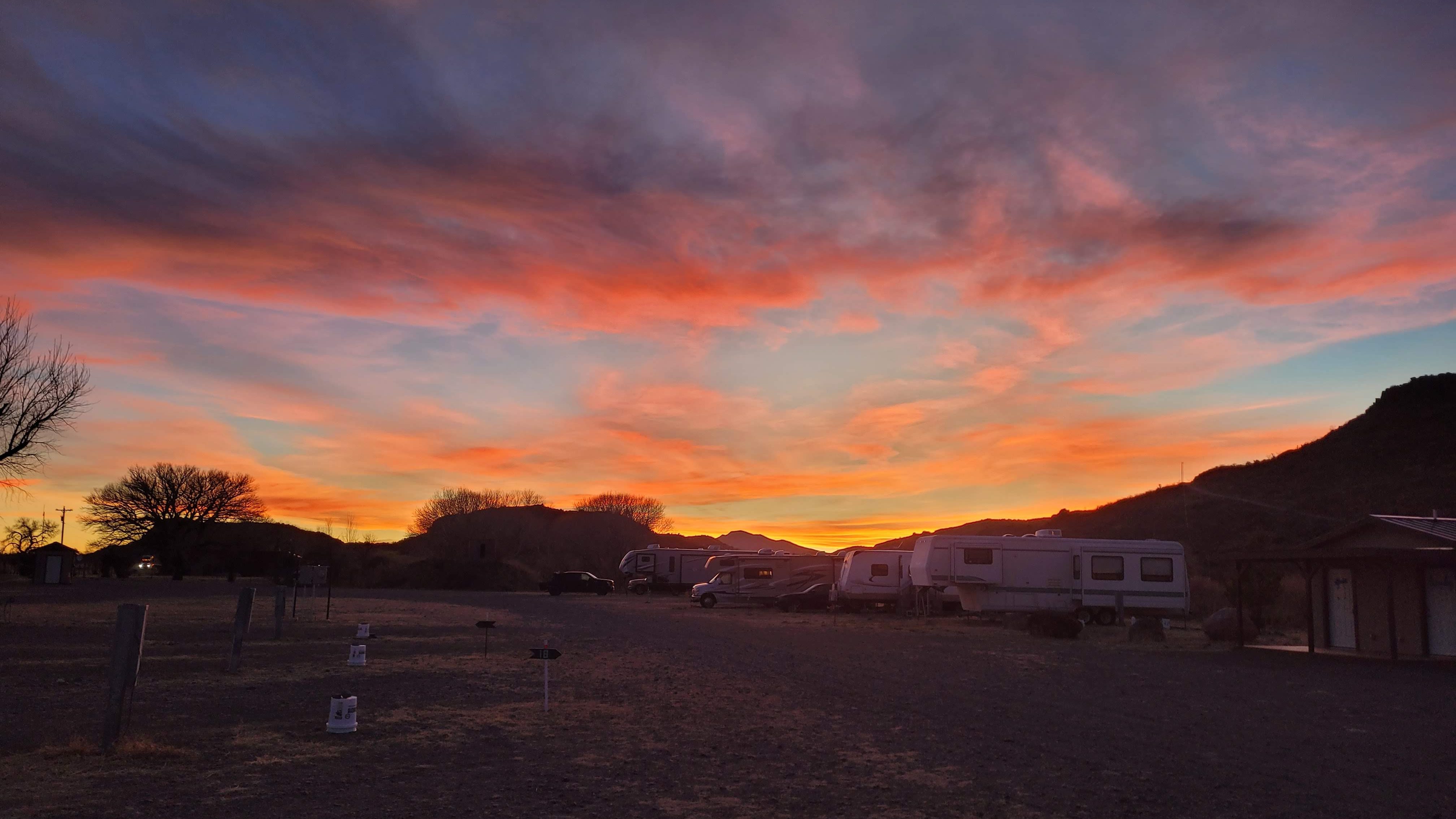
We pulled into Davis Mountains RV Park just as the light was starting to shift. It ended up being one of those campsites that steals the show. Right behind us, we had a clear view of the mountains rising up, nothing blocking it. Just open land and rugged peaks.
And the sunsets. Every single evening, the sky would turn this soft pink that slowly spread across the mountains and the desert floor. Not overly dramatic, just really, really beautiful.
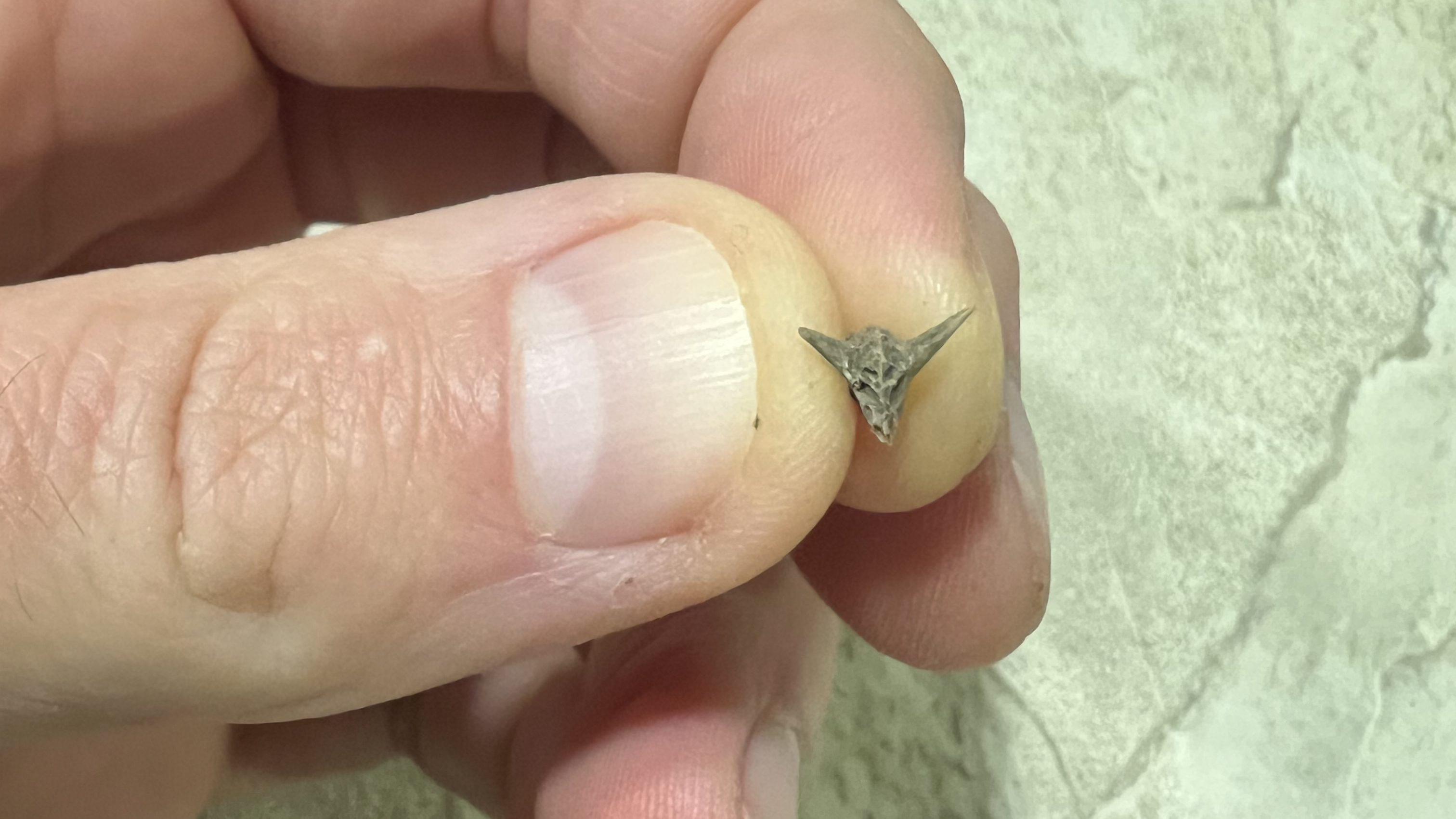
Of course, West Texas also made sure we didn’t get too comfortable. The wind picked up hard at night, strong enough to make the bus shake while we were trying to sleep. It brought back memories of that questionable night we spent along the Cabot Trail, listening to the wind howling outside our tent and making us regret certain life choices. There was also the constant threat of “goat heads,” these tiny but brutal sharp seed pods scattered all over the ground around the campsite. They stick straight into the bottom of your shoes, then somehow would make their way inside the Bus, where you inevitably step on one again in what you thought was a safe, barefoot-friendly zone.
Davis Mountain State Park
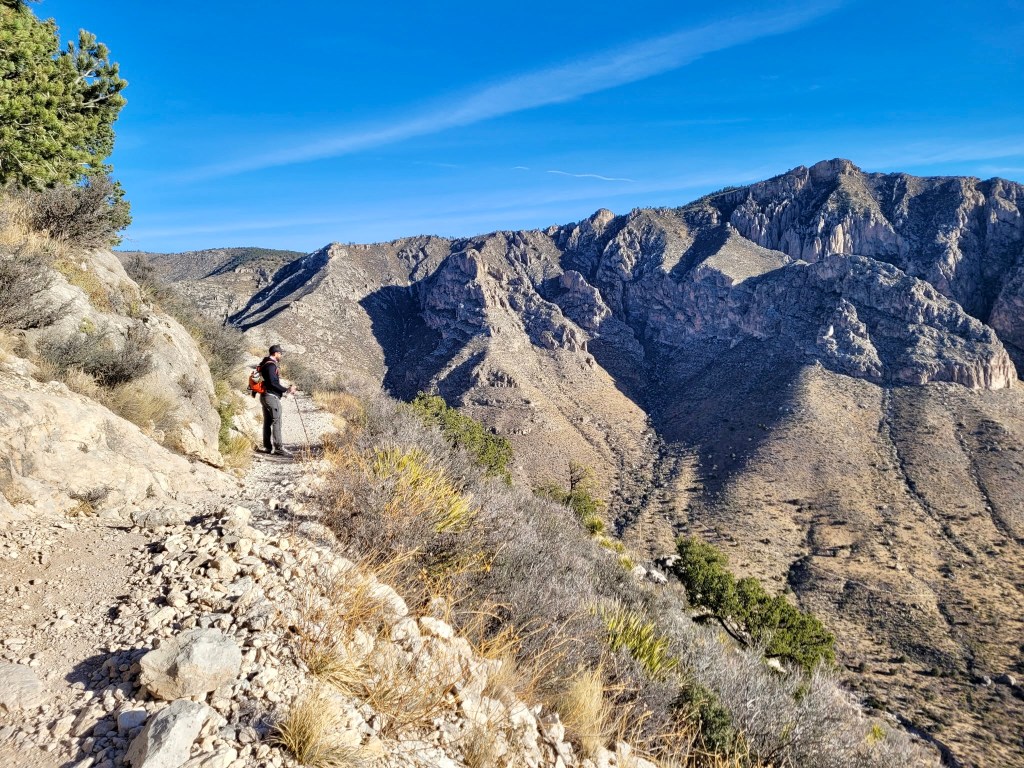
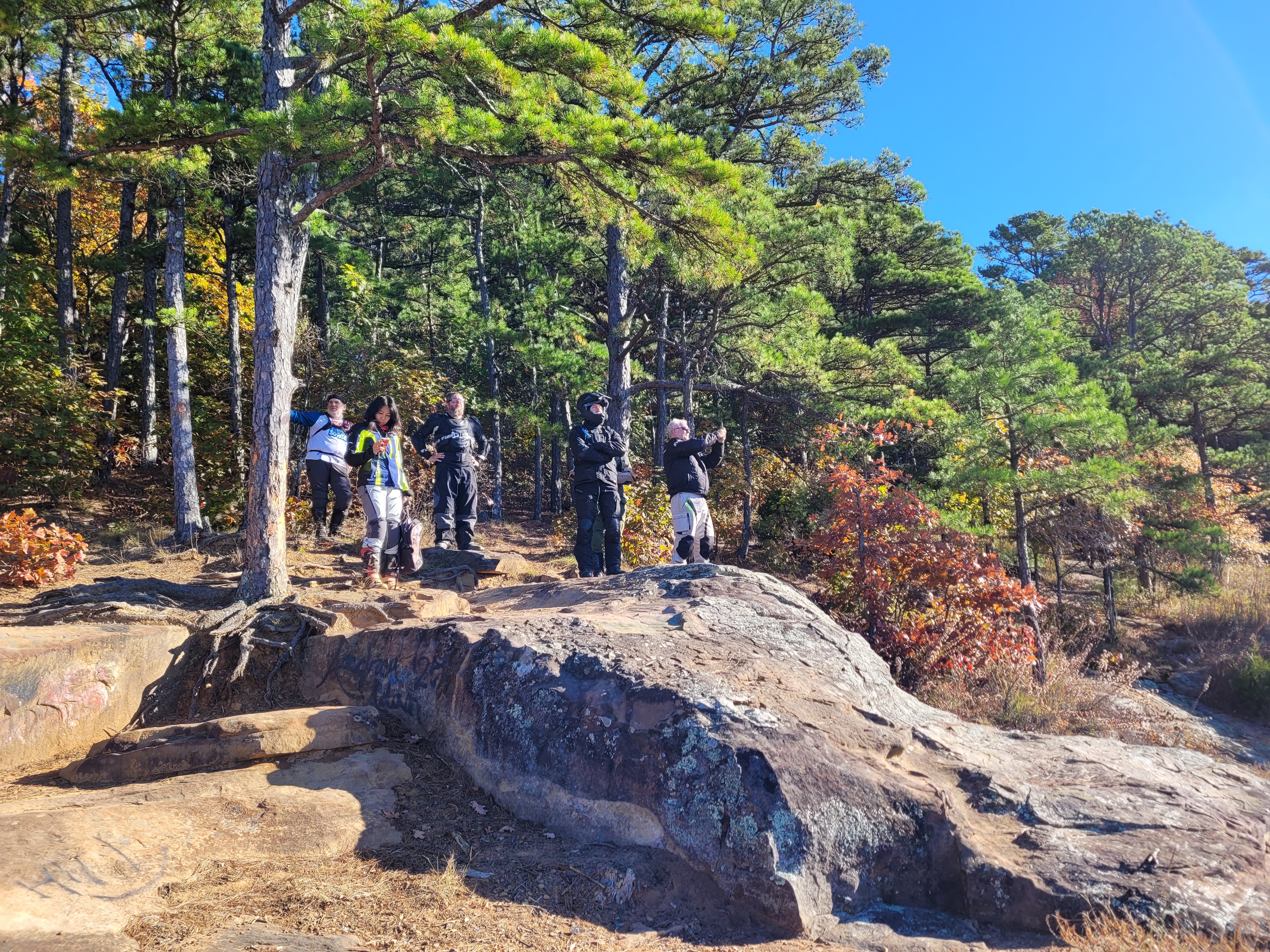
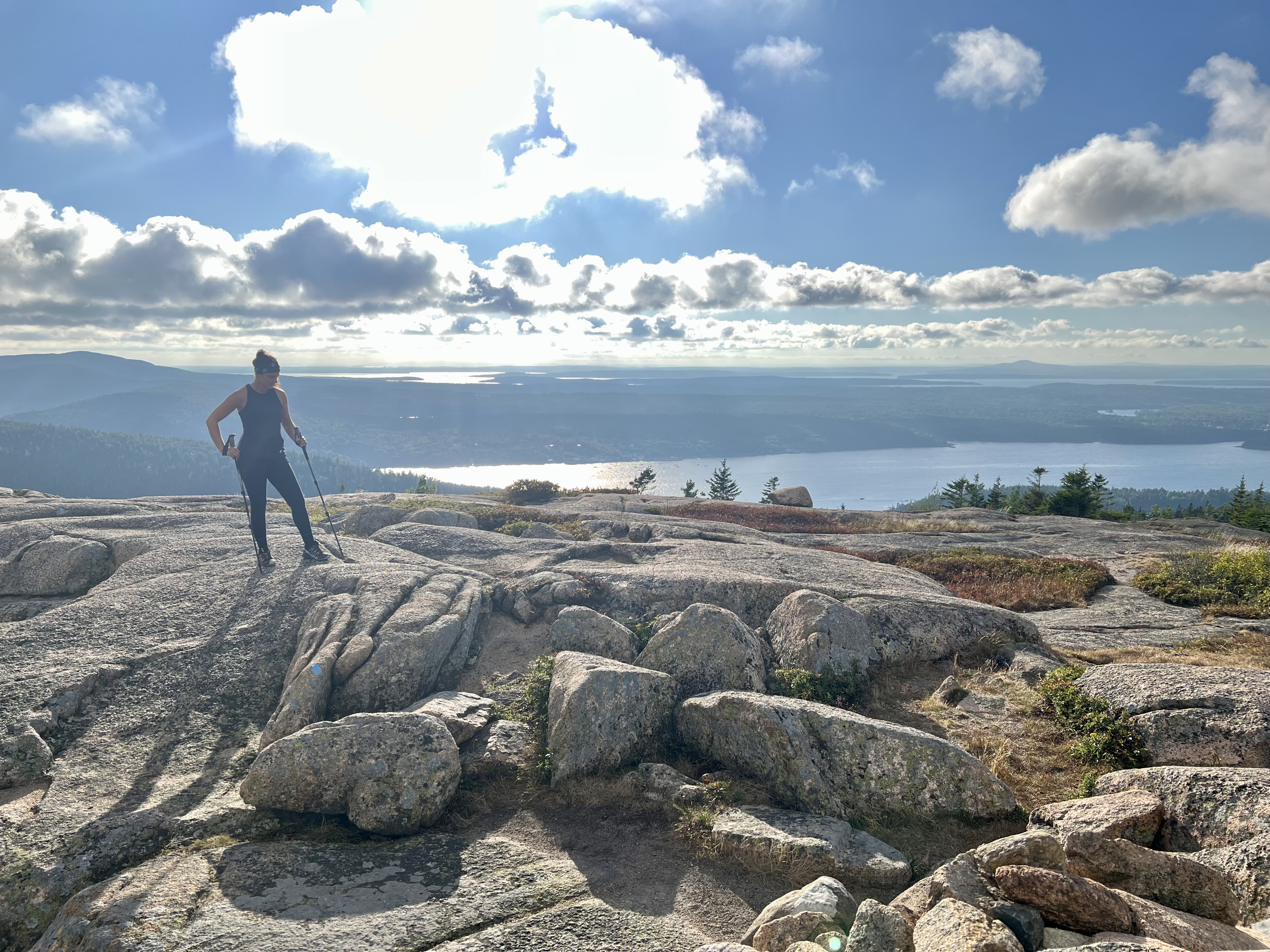
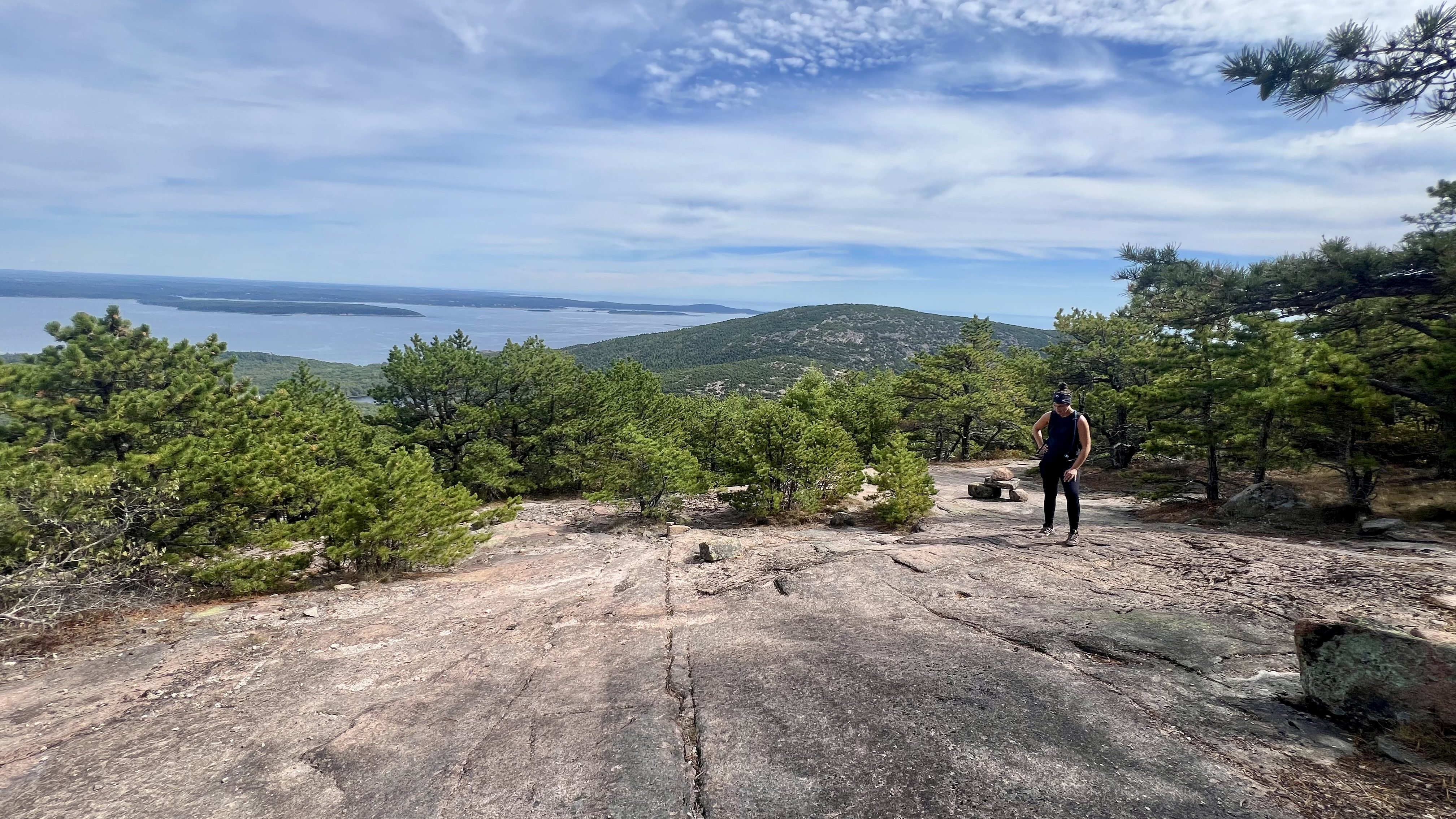
Our first Monday here was a holiday, we decided to spend it the best way possible, outside. We headed to Davis Mountains State Park for a full day of hiking and went with the Old CCC Trail and the Skyline Trail, which turned out to be a solid choice.
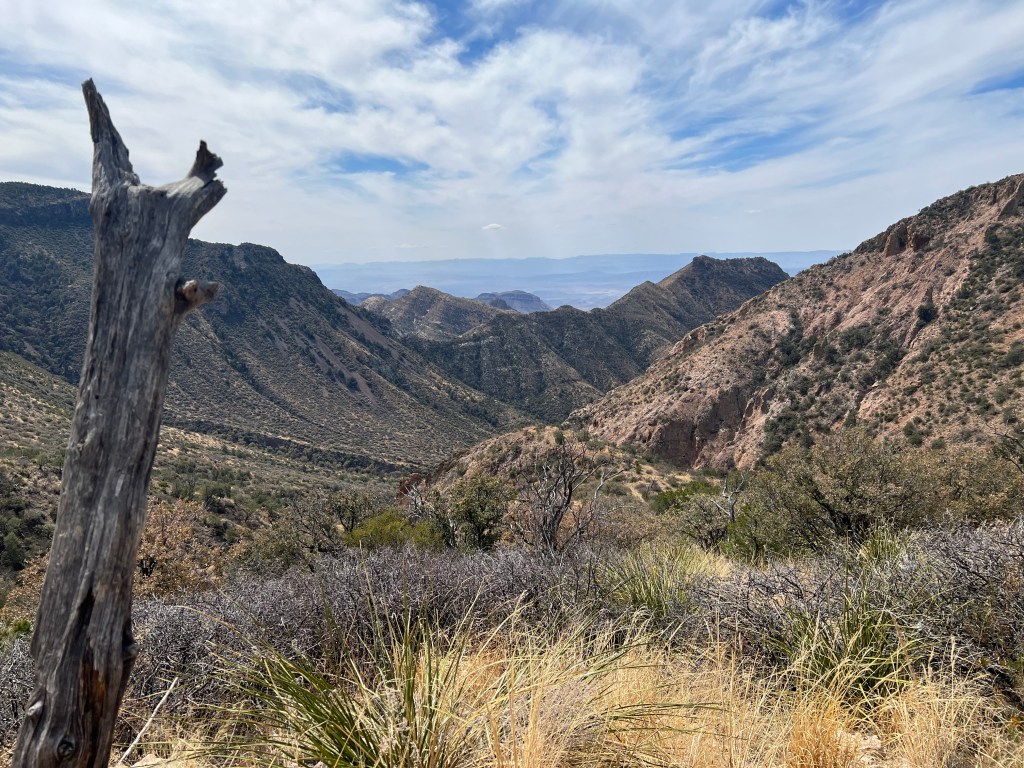
The park sits in the foothills of the Davis Mountains, and it feels completely different from the flat desert you drive through to get there. These mountains were formed by volcanic activity about 25 to 30 million years ago, and you can really see it in the terrain. The rock is layered, dark in places, and exposed along canyon walls and ridgelines. As you hike, you move through areas like Frazier Canyon and past formations like Sleeping Lion and Barrel Springs, which give the whole place a bit more character.
The topography keeps changing as you go. Lower down, it’s dry and rugged with open views. As you climb, the terrain tightens into canyons and ridges, and you start gaining elevation pretty quickly. The park sits around 5,000 to 6,000 feet, which sounds like it should make a difference. In reality, if uphill hiking already has you out of breath, this just feels like… more of the same. Still climbing, still questioning your choices, just with a better view.
What stood out most was how much life there is out there. It’s not just desert. You’ve got oaks and junipers scattered across the hills, grasses covering the ground, and even pinyon pines higher up, which feel slightly out of place but somehow fit. Then there’s the cacti, everywhere. Some small and easy to miss, others very clearly there to remind you to watch where you step.
Wildlife-wise, we actually got pretty lucky. We spotted a few javelinas, and heard birds pretty much the entire time. The American Bird Conservancy has recognized Davis Mountains State Park as a Globally Important Bird Area. The park is home to over 260 species of birds and provides refuge to several species of concern. The newly-constructed bird blind offers an enclosed viewing station, a shielded outside patio, and watering and feeding stations. It is a great place to view scrub jays, white-winged doves and acorn woodpeckers.
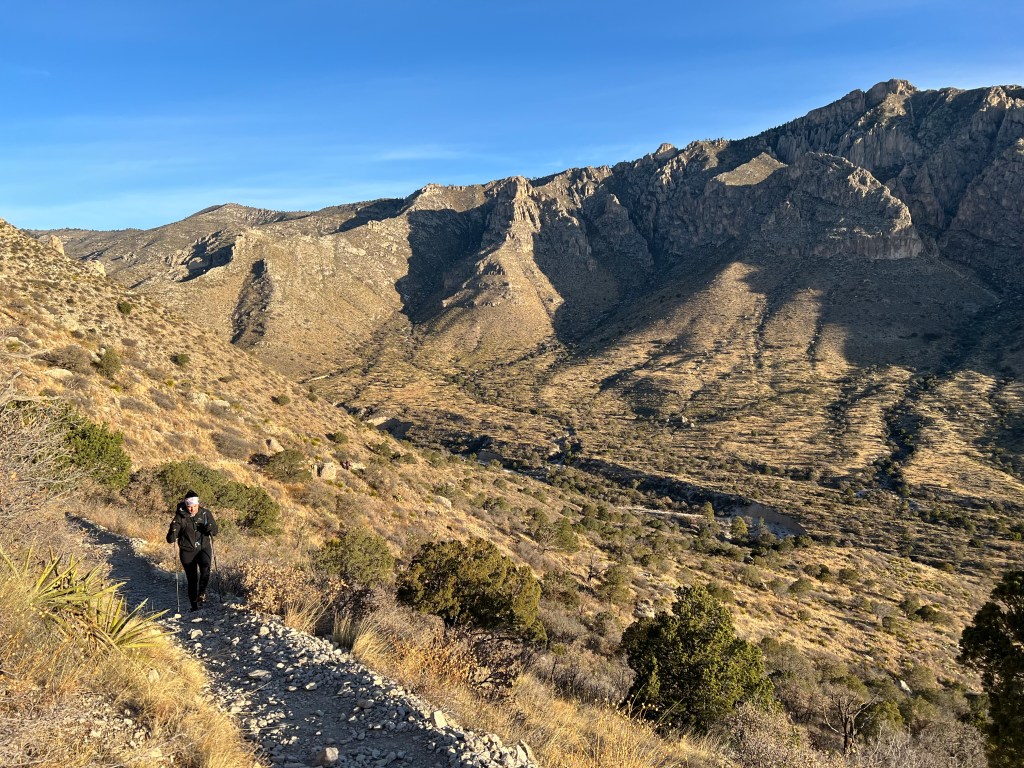
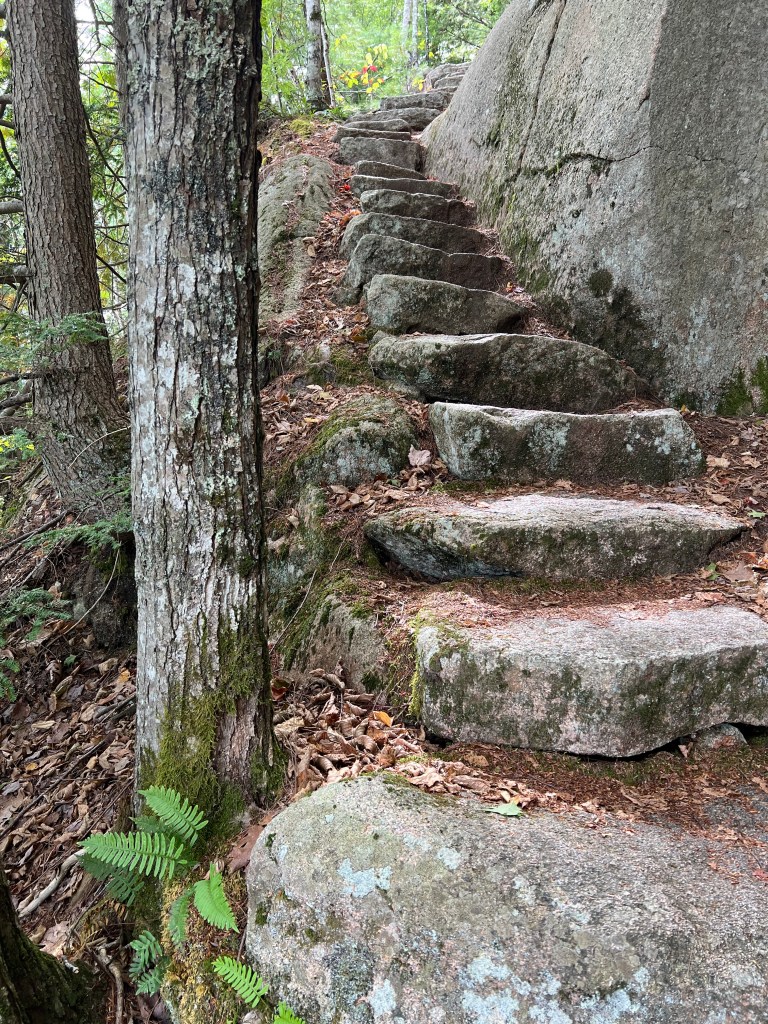
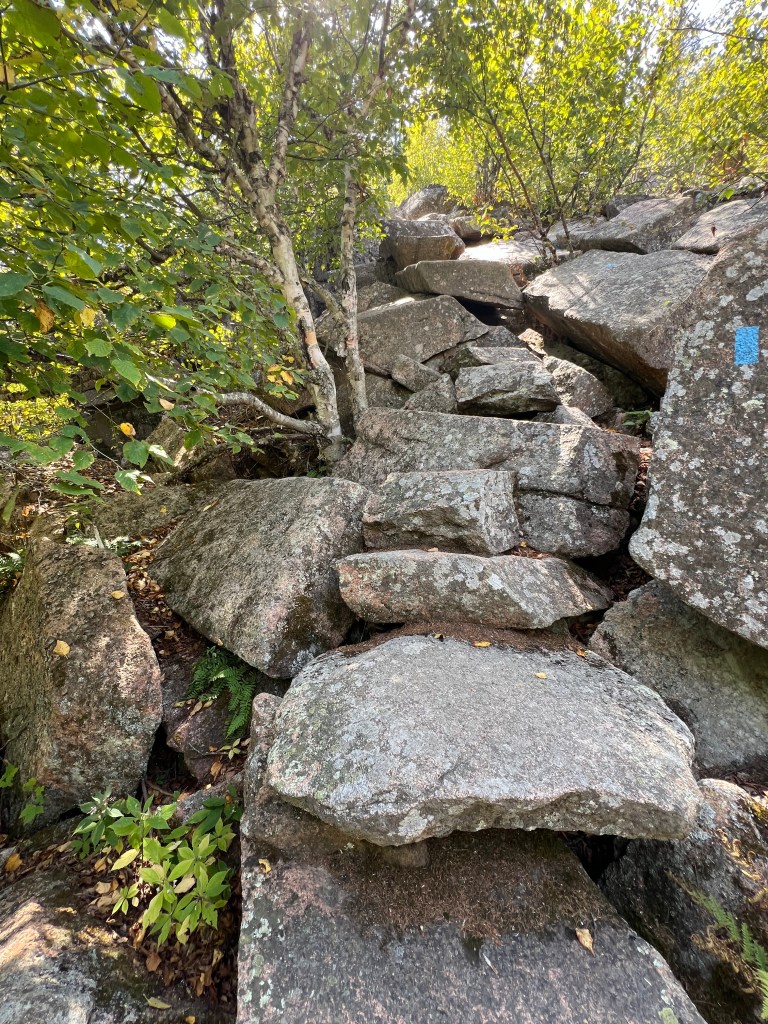
The trails themselves were great. The Old CCC Trail winds you through the canyon with a steady, consistent climb, while the Skyline Trail brings you higher up along the ridges with wide views over the mountains and desert below. It’s the kind of hike where the scenery keeps changing just enough to distract you from the burning legs.
And that was just our first visit.
We ended up going back later in the trip because it felt like we hadn’t quite seen enough. This time we started at the Indian Lodge Trail near Black Bear Restaurant, and it turned into one of those unexpectedly memorable hikes.
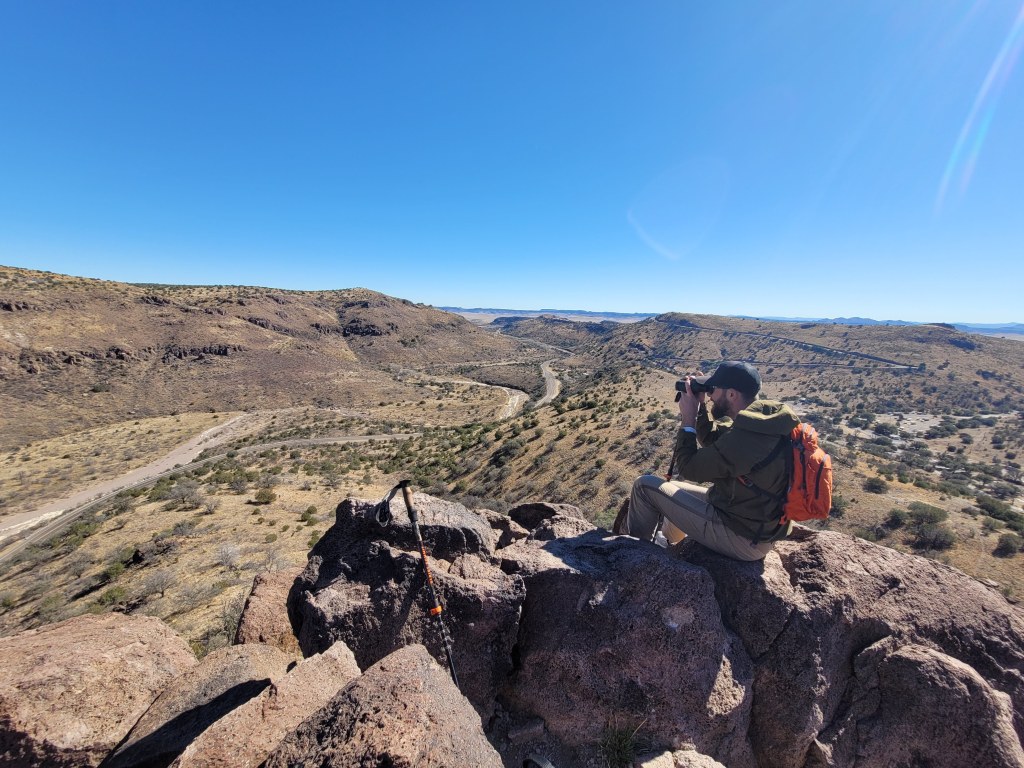
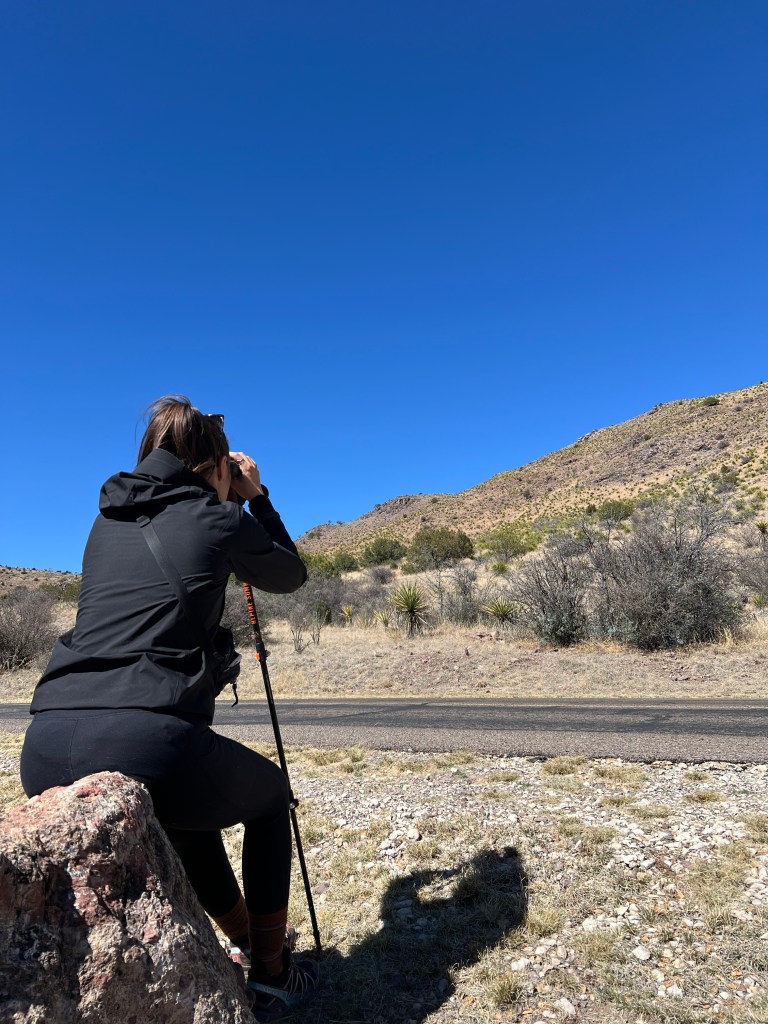
At one point, Chris is walking ahead of me and just stops. No warning. Binoculars come out immediately. Another episode of Chris and his knockers begins.
He is completely locked in, staring down into the ridge. Meanwhile, I’m behind him squinting into the distance like that’s going to magically improve my vision. No binoculars, no glasses, no clue. Just standing there pretending I also see something important.
Eventually, I get the update.
And honestly, they look like they were built for this place. Sandy-colored, perfectly camouflaged against the rock, long legs, and just casually standing on steep terrain like gravity is optional. They move around like it’s nothing, while we’re out here carefully watching every step on a marked trail.
They were aoudad (Barbary sheep)—a wild sheep species originally from the rocky mountains of North Africa. They were introduced to parts of the southwestern U.S. in the 1900s and have since become an invasive species, spreading into rugged desert and canyon landscapes where they compete with native wildlife and are notoriously hard to manage due to how well they adapt to steep, arid terrain.
We ended up spotting them again later from above, which made for a much better view. Naturally, the binoculars made a second appearance, and we took a minute to just watch them move through the landscape.
The sky was completely clear, bright blue with no clouds, and it made everything stand out more. The dark volcanic rock, the dry terrain, the scattered vegetation. It’s not lush, but it doesn’t feel empty either. Just raw and really well put together.
Guadalupe Mountains National Park
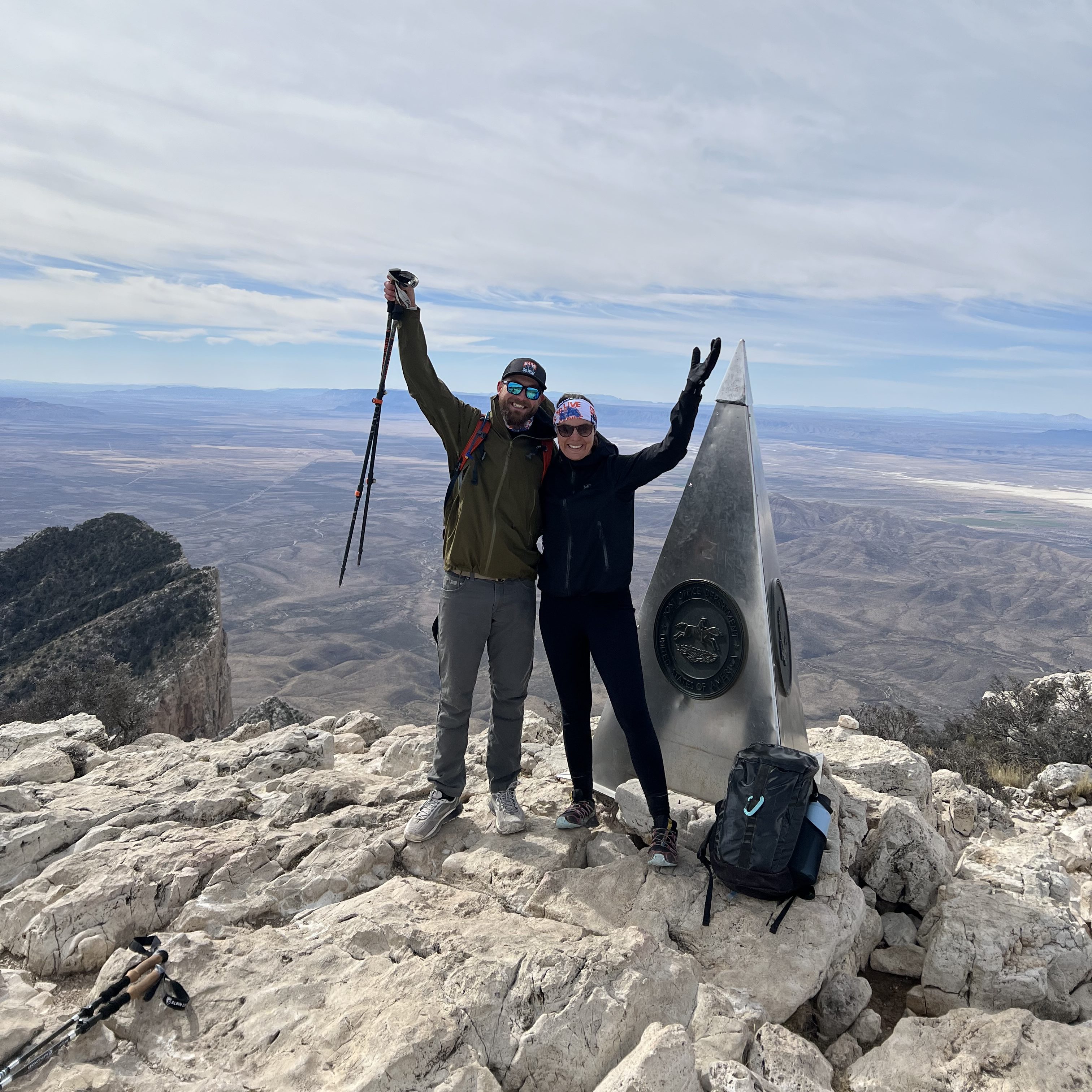
As outdoor enthusiasts, we tend to make the most of every available hour of daylight. On this particular Saturday morning, we set our alarms for 5 am, which already feels questionable. But stepping outside makes it worth it. Pitch black, quiet, and a sky full of stars. The kind of sight that makes you pause for a second before remembering… oh right, we’re about to hike the highest peak in Texas.
Coffee was non-negotiable. We made it in the dark, half awake, then hit the road for the 2.5 hour drive to Guadalupe Mountains National Park.
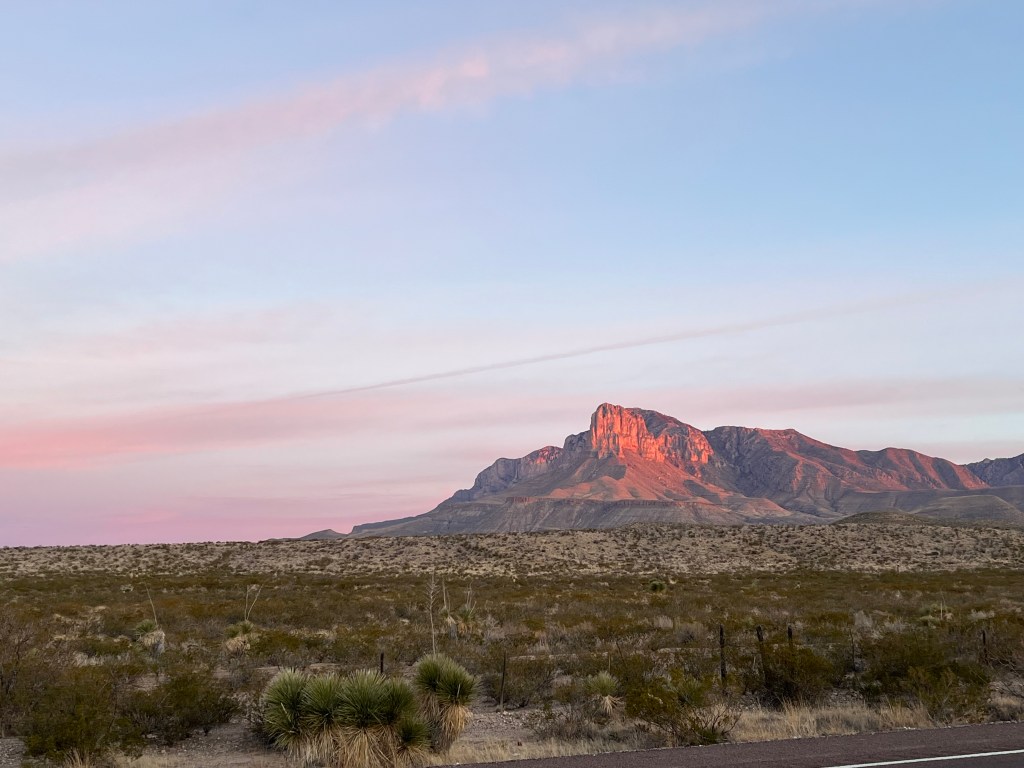
As we got closer, the sun started to come up, and we could see El Capitan and Guadalupe Peak lighting up in that early morning glow. It’s one of those views that makes you go quiet for a minute. Also one of those moments where you think… we’re hiking up that?
For context, Guadalupe Peak sits at 8,751 feet, and the park compares the climb to walking up the Empire State Building three times. THREE. TIMES. If I thought my cardio needed work before, this hike really confirms it.
It was also surprisingly cold. Like gloves and windbreaker the entire time kind of cold. And if you know me, that says a lot because I am usually overheating five minutes into any hike.
The trail started climbing right away. Basically a long series of switchbacks that just kept going. And going. And going. The higher we got, the windier it became. By the time we reached the top, it was straight up brutal. Cold, windy, and absolutely not the vibe for our usual “cute snack at the summit” moment.
So we admired the views, took it all in, and then very quickly decided… yeah, we’re eating somewhere else.
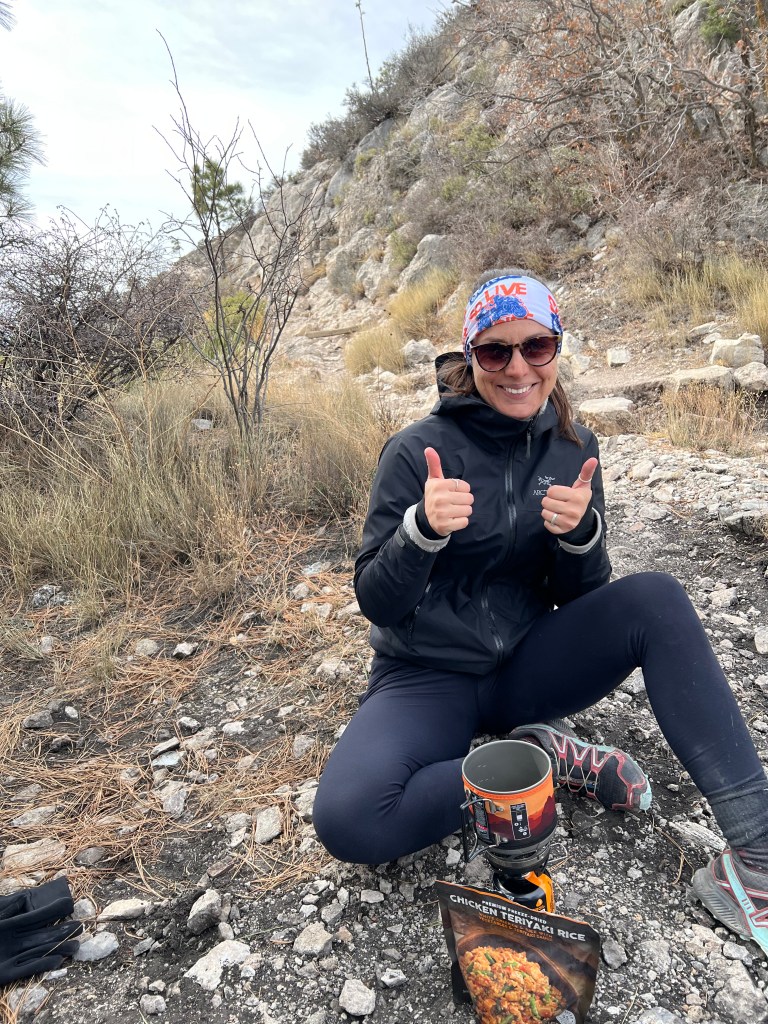
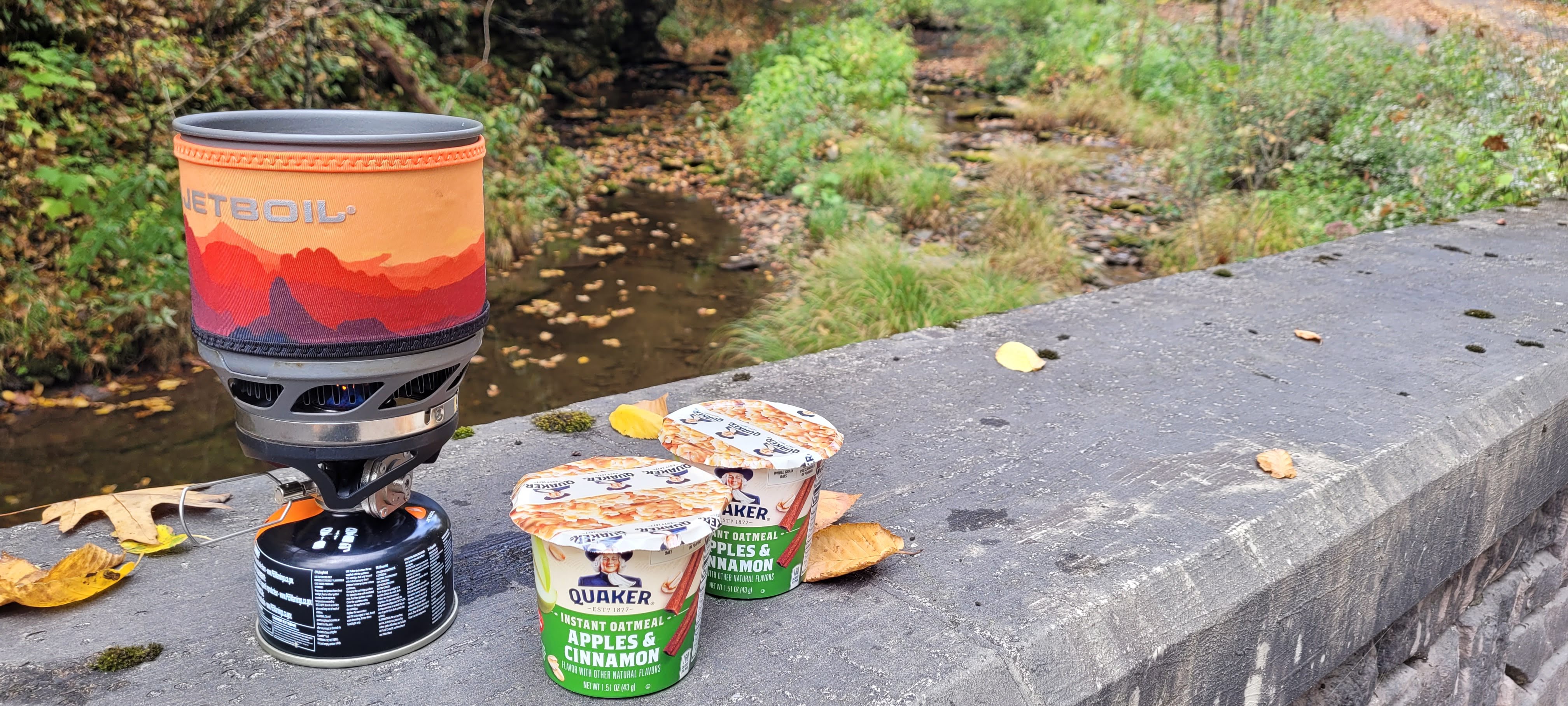
On the way down, we found a tucked-away spot just off the trail in a little wooded area that blocked the wind. Perfect. Out came my mini camp stove, and I started boiling water for the dehydrated meal I had packed.
Side note. Chris definitely thought it was over the top when I loaded up my Patagonia 22L day pack that morning. But halfway through a 9 mile hike, when hunger hit, suddenly it wasn’t overkill anymore. Funny how that works.
Honestly, that hot meal hit harder than anything we could have had considering we were still feeling chilly from the windy conditions.
The hike down though… different story. By the end, my knees were absolutely done. Like fully negotiating with each step. At one point I thought, wow, this is how I go from “active adult” to “needs a walker” in a single afternoon.
Also, I stand by this theory: what you crave after a hike says a lot about you as a person. Me? Gummy bears.
We found some at the visitor center made from prickly pear, which sounded promising. The reality? Not exactly what I expected. But did that stop me? Absolutely not. The whole bag was gone in under 20 minutes.
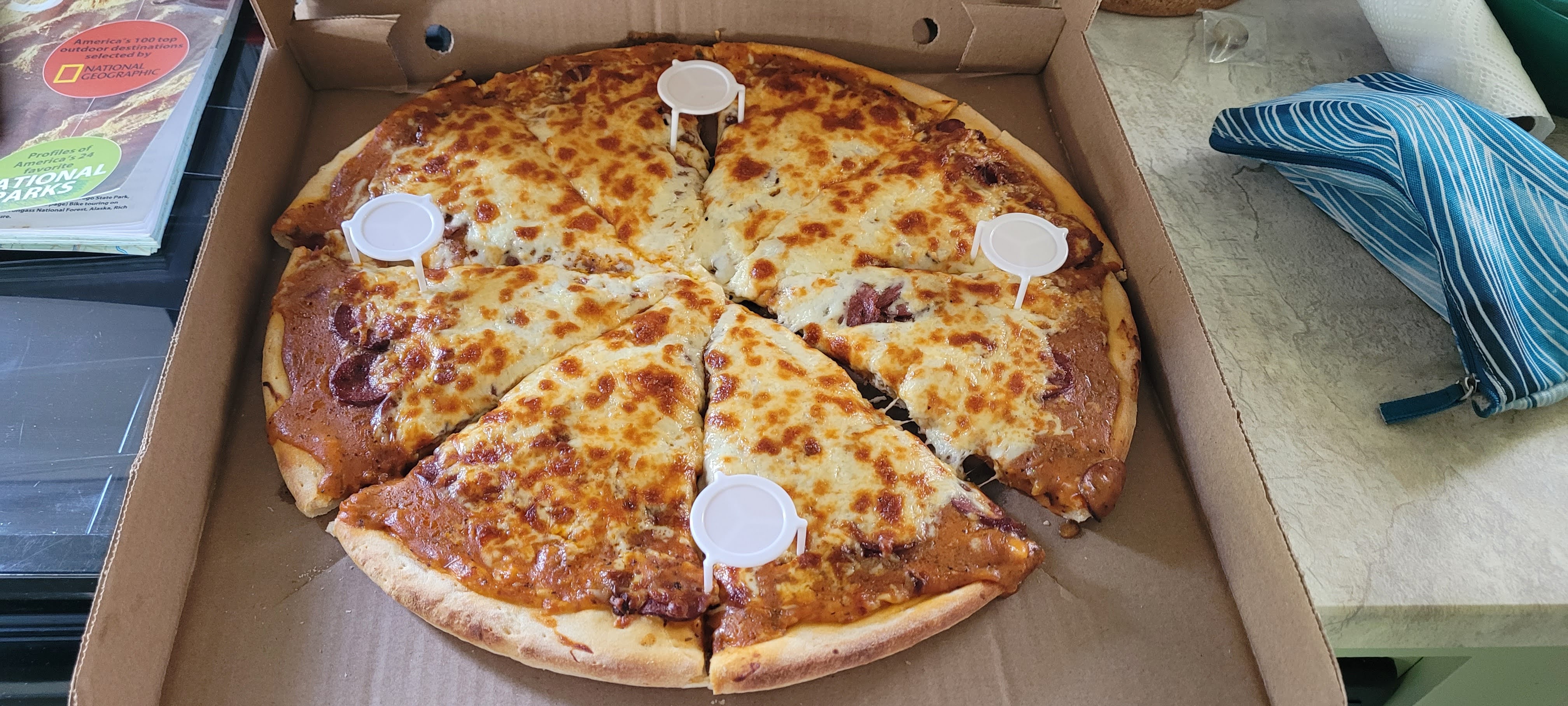
By the time we made it back to Fort Davis, options were limited, so we went straight for carbs. Pizza and hard cider. No hesitation. And honestly, it might have been one of the best meals of the trip.
We rolled back to the Bus just as the sun was setting, completely exhausted, a little sore, and already talking about what to do next.
West Texas was really starting to grow on us.
Big Bend National Park: The South Rim Hike
Another day, another alarm going off at a time when the sun has not even thought about showing up yet. Again, we’re driving 2+ hours south this time to tackle a 14 mile hike on the South Rim Trail in Big Bend National Park. At this point, I’m still holding onto the optimistic idea that my cardio will eventually catch up to my enthusiasm and stop making every incline feel like a nightmare.
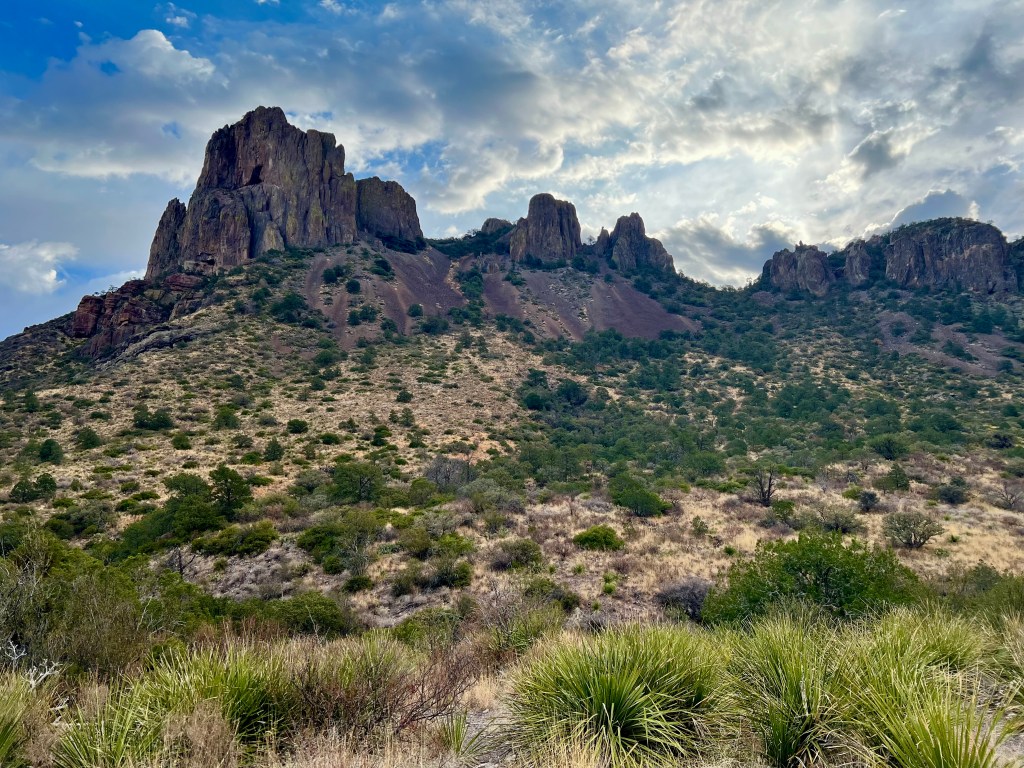
The drive into the park starts with long stretches of open desert, then slowly funnels you into the dramatic geology of the Chisos Mountains. These mountains are actually volcanic in origin, formed by ancient eruptions and later erosion, which explains the layered rock, steep canyon walls, and sharp contrasts in color as you move deeper in. You go from wide desert flats into narrow, winding roads that climb into the basin, with cliffs and rock faces stacking up on either side like they were carved on purpose.
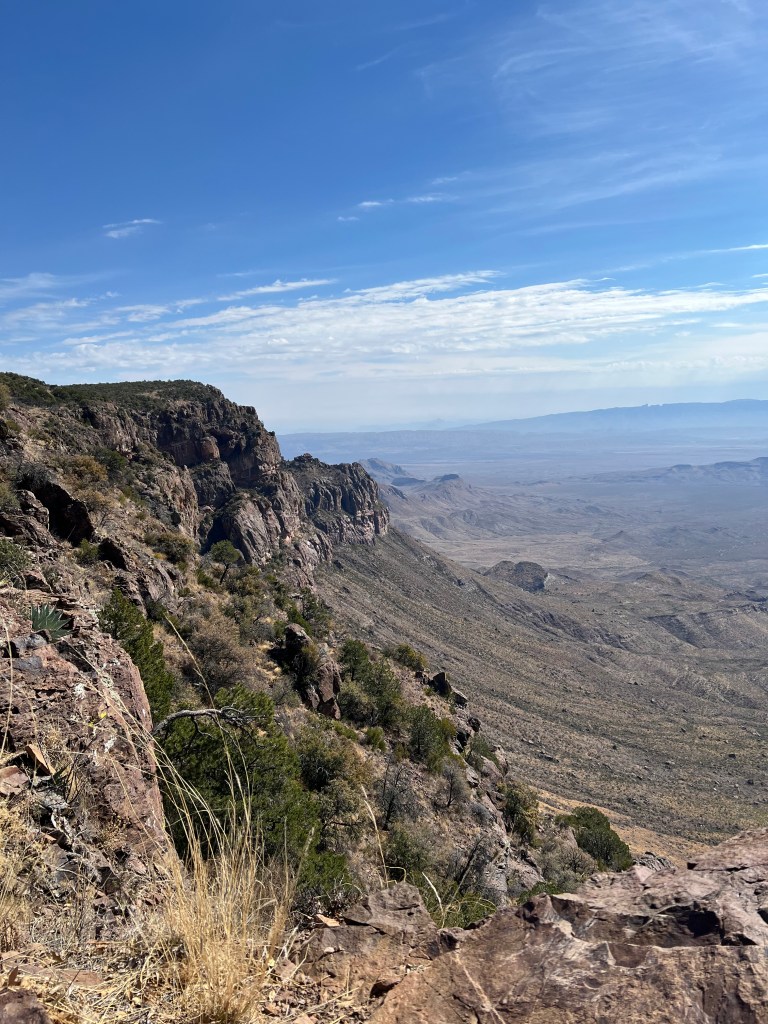
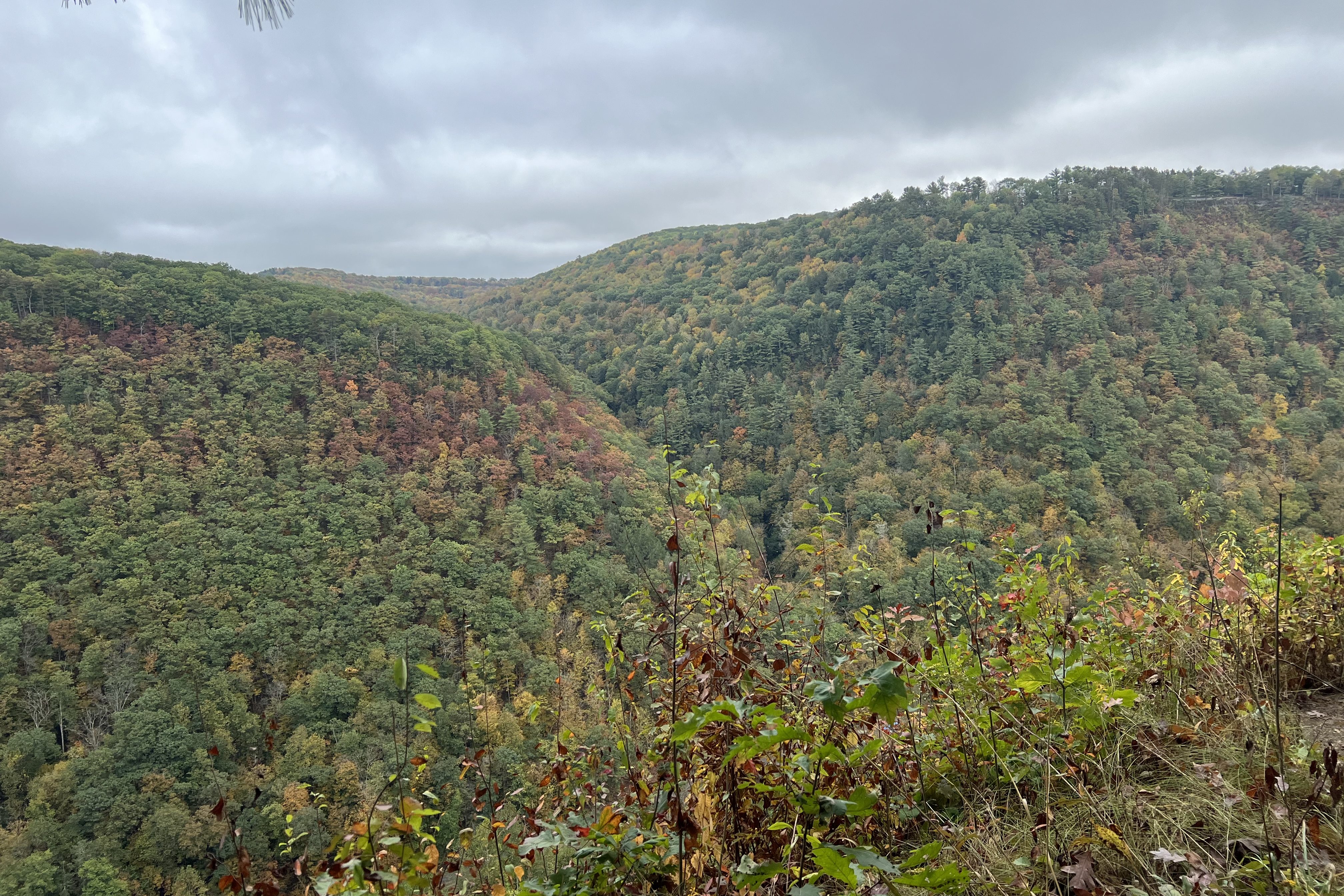
Once on the trail, the landscape continuously shifts as you gain elevation. The lower sections are classic desert terrain—dry, open, and dotted with hardy shrubs and cacti—before gradually giving way to rocky slopes and exposed ridgelines. The higher we climb, the more the landscape opens up around us, revealing sweeping views over the desert below, with mesas and distant mountain ranges layered all the way to the horizon.
Scattered along both sides of the trail are the remnants of burned trees, a quiet reminder of past fire events and the resilience of this ecosystem. Even in its most rugged and seemingly unyielding moments, the landscape is constantly rebuilding and adapting.
It’s also a surprisingly active wildlife area, especially for birds of prey. We spotted Peregrine Falcons riding thermals along the cliffs, barely moving, just letting the wind do the work. Turns out this area is an important habitat for protected raptors, which makes sense once you see how perfectly they fit into the landscape.
At the top of the South Rim, everything just opens up. Massive drop-offs, endless desert views, and that feeling that you’re standing on the edge of something much bigger than it looks on a map. We stopped there for lunch, which in our case means a dehydrated meal situation powered by my very necessary mini camp stove. Yes, again. Chris may or may not have questioned the packing choices beforehand, but at 7,000+ feet with wind picking up on a cliff edge, hot food suddenly feels like genius-level planning.
After a long break soaking in the expansive view all the way into Mexico, we eventually made our way back down, passing more of those wide canyon views and catching the light shifting across the rock as the day moved on.
Later, we learned that the trail was going to be closed the very next day for conservation work to protect the area and its wildlife, including those falcons we had been watching without even realizing how closely managed they were. It made the timing feel a little extra special, like we just squeezed in before the pause button was hit.
Definitely one of those hikes that sticks with you, both for the scale of the landscape and the reminder of how carefully it’s being preserved.
Star Party at The University of Texas McDonald Observatory
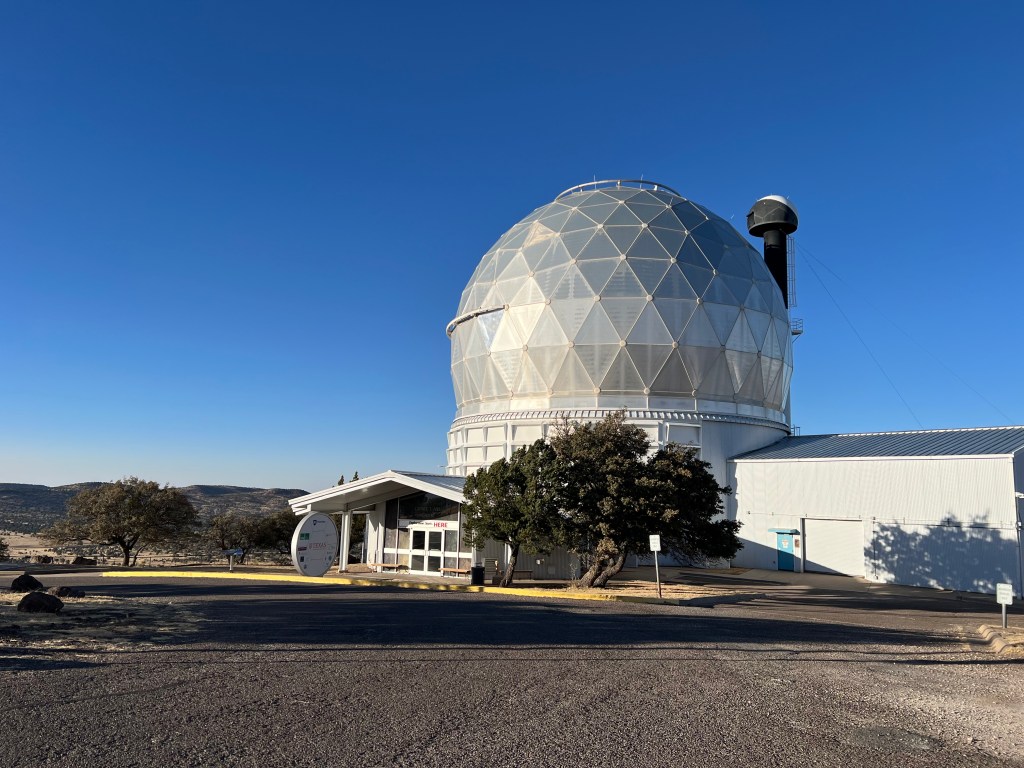
One of the things that makes Fort Davis unique was visiting the McDonald Observatory for their Star Party.
The observatory sits high up in the Davis Mountains, far away from city lights, which makes it one of the darkest skies in the country.
Once the sun set in the horizon and it got dark, the constellation tour started with a group presentation in this open-air amphitheater. The astronomer uses a laser pointer to trace shapes across the sky. It sounds simple, but it’s actually really cool to watch someone connect the dots in real time. Side note, most of the men in the amphitheater seemed more impressed by the laser pointer being visible in the sky than the actual star formations we were supposed to be impressed by.
We started picking out some of the more recognizable constellations like Orion, which is one of the easiest to spot because of the three bright stars that form Orion’s Belt. From there, they pointed out Ursa Major, which includes the Big Dipper, and explained how travelers have used it to navigate for centuries.
They also talked about how these constellations got their names. Most of them go back to ancient Greek and Roman times, when people used the stars to tell stories about gods, hunters, and mythical creatures. It’s kind of wild to think that the sky we’re looking at is the same one people were mapping thousands of years ago, just with way less light pollution.
After the presentation, we moved over to the telescope viewing area. There are multiple telescopes set up, each one focused on something different. One might be locked onto a star cluster, another on a planet, another on the moon. You just move from one to the next, and the volunteers explain what you’re looking at.
Because it was a full moon, the sky looked a little different than expected. Fewer faint stars, but the moon itself completely stole the show. Through the telescopes, you could see the surface in crazy detail. Craters, ridges, shadows. Way more texture than you ever notice just looking up on your own. It almost didn’t look real.
We saw quite a few bright stars, and learned how their color actually tells you something about their temperature. Blue-white stars are hotter, while orange and red ones are cooler.
At one point, they pointed out a faint, hazy patch that didn’t look like much to the naked eye, but through the telescope turned into a dense cluster of stars. That was one of those moments where it really clicks how much is out there that we just don’t see.
It’s not a fast experience, you wait your turn, and you look with wonder. But that’s kind of the point. By the end of the night, it felt like we had learned just enough to recognize a few things on our own, but also realized how much we don’t know.
Driving back in the dark, with the mountains barely visible and the sky still wide open above us, it felt like the kind of night you don’t get very often.
Fort Davis National Historic Site
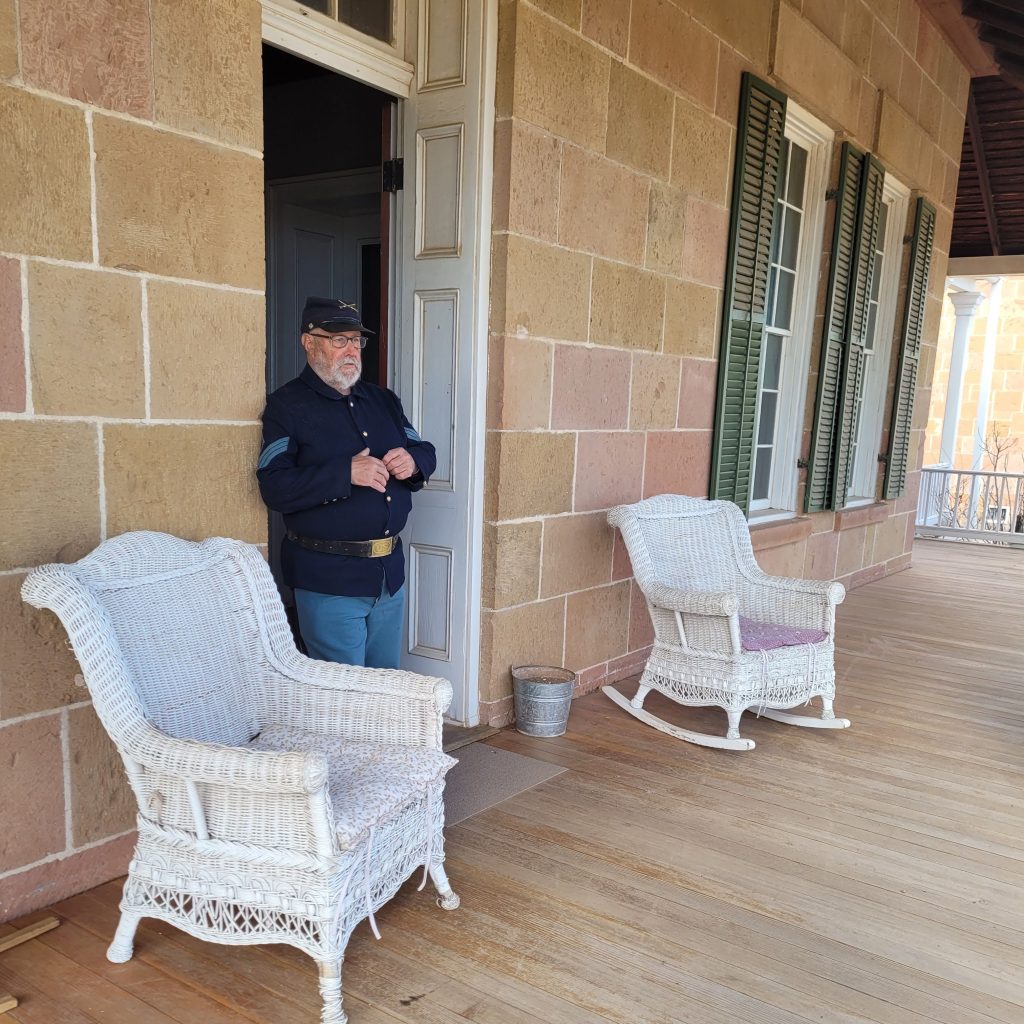
We also visited the Fort Davis National Historic Site, one of the best-preserved frontier military posts in the American Southwest, set within a dramatic mountain pass at the base of the Davis Mountains. After starting in the museum, which does a great job of grounding the site in its 19th-century frontier context, we joined a guided walking tour led by an interpreter dressed in a historically accurate U.S. Army uniform. That detail alone made it feel like stepping back in time.
The fort itself is spread across a wide, open valley framed by rugged limestone and volcanic rock formations—terrain that once made it a key strategic corridor through West Texas. The buildings are arranged in a clear military order: long, low enlisted men’s barracks, the more refined officers’ quarters with shaded porches, and functional structures like the hospital, commissary, and quartermaster buildings, all restored or stabilized to reflect their original footprint. You can still read the logic of frontier military life in how everything is spaced—practical, exposed, and designed for visibility and control in a remote landscape where resources were limited and conditions harsh.
Geologically, the site sits at a transition zone between desert basins and uplifted mountain terrain. The surrounding Davis Mountains are part of an ancient volcanic field, which explains the layered rock, jagged ridgelines, and the stark contrast between flat valley floor and steep surrounding slopes. This landscape shaped everything about the fort’s placement and purpose: it was built to monitor movement through the pass and assert control over a region that had long been traversed by Indigenous groups such as the Apache, who used these same routes for trade, migration, and seasonal movement long before the U.S. military established a presence.
Our guide also did a great job of explaining that history with nuance—describing how interactions between Native American communities and American soldiers were not one-dimensional, but ranged from conflict and forced displacement to moments of negotiation, dependence, and uneasy coexistence. Standing among the restored buildings, with the mountains rising on all sides, made it easier to understand why this location mattered so much—both strategically and culturally—within the broader story of the frontier West.
Honorable mention: When the campground gifts us only excellent neighbors
I’ve said this multiple times over the last year: one of the best parts of traveling is the people you meet along the way. It really is a privilege to talk to people from all over. Some are on their own journeys, others are locals you get to meet in their home places. Most interactions are brief, a nice conversation that fades as everyone moves on. But every now and then, you meet people you actually stay in touch with.
Enter Bill and Valory.
They pulled into the campsite one evening mid-hustle, trying to get their rig set up quickly so they would not miss the Star Party at McDonald Observatory. You know that slightly chaotic “we need to park, plug in, level, and immediately leave” energy.
We chatted here and there over the next couple of days, in between everyone’s packed schedules, and quickly realized they were just the sweetest couple. They are from Michigan and doing a month-long trip.
Since timing never quite lined up at the campground, we ended up exchanging phone numbers and loosely planning to meet up later in Terlingua, since Chris and I were heading that way on the motorcycle the following Saturday.
And we actually did it, which, let’s be honest, is not always guaranteed when people say “we should meet up sometime.”
We met for lunch at Venga Cafe and ended up having such an easy, natural time getting to know each other properly. The kind of conversation that flows so easily you forget you originally met in a campground parking lot a few days earlier.
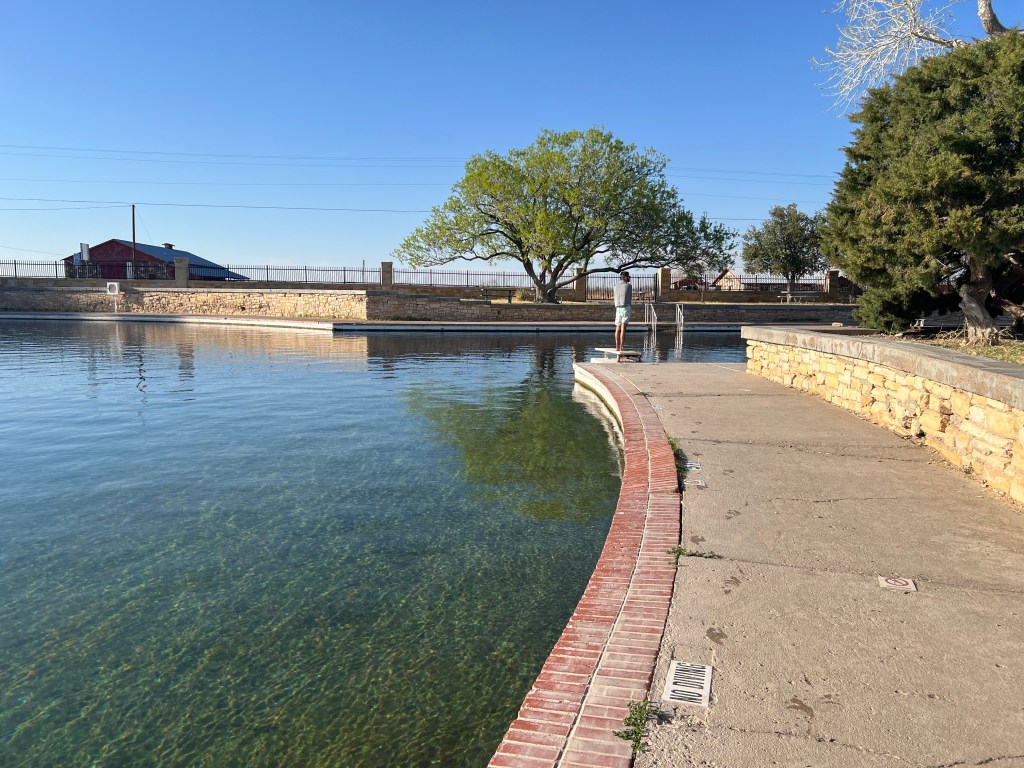
We even crossed paths again at Balmorhea State Park in West Texas, a remarkable desert oasis in the Chihuahuan Desert, before they continued on toward San Antonio. The park is centered around San Solomon Springs, one of the largest natural springs in Texas, which feeds a massive spring-fed swimming pool built by the Civilian Conservation Corps in the 1930s. The water stays a constant, crystal-clear temperature year-round and supports a surprisingly diverse aquatic ecosystem for such an arid landscape.
Quick side note—Balmorhea also has those tiny fish that gently nibble at your feet in the water, which is both strangely relaxing and slightly unsettling.
And then came Yvonne and Craig. Another fantastic couple, this time from Texas. We had a great time talking with Craig and listening to his deep Texan accent and slow cadence. His sense of humor was impeccable.
Once he picked up on my extroverted and easily impressionable personality, he summed it up perfectly: “You’re like a chicken, every day you wake up to a new world!” No truer or funnier words have ever been said.
He also shared a story about visiting his family in the Pacific Northwest, where the pace of conversation tends to be noticeably faster and more clipped. While there with them, he went to order food at a drive-through and found himself in one of those unexpectedly funny communication mismatches—he speaks a bit more slowly and deliberately, and the person on the other end was clearly not quite catching his rhythm. From his perspective, the order was simple enough that it shouldn’t have been complicated, which only made the moment more amusing as it unfolded.
In his telling, what made it even funnier was the contrast in styles—him calmly working through the order, and the drive-through pace moving at full speed—turning a routine stop for food into a surprisingly chaotic little exchange.
It’s funny how travel works sometimes. You go for the landscapes, the hikes, the big “must-see” places, and the sweeping views you’ve seen in photos—but what often stays with you most isn’t any of that. It’s the people you meet in between, and the small, unexpected moments that happen along the way. The conversations, the shared stories, the chance encounters that weren’t on any itinerary—those are the parts that linger long after the trip is over.
Now that the weather has shifted from unusually cold and icy to typical, mild temperatures, we are ready to begin our second Backcountry Discovery Route adventure.
We are currently in the heart of Hill Country. This route is a 670 mile loop and is considered one of the easier options offered by the organization. The terrain is expected to be a mix of hard packed dirt roads, loose gravel, and occasional rocky sections, with some shallow water crossings depending on recent conditions. The elevation changes are not extreme, but the roads wind through rolling hills of different natural areas, which should keep the riding engaging without being overly technical. Chris has taken time off work, and we are both looking forward to spending several days on the road.
We plan to leave on Sunday, the day after the Mardi Gras parade. There has not been much time spent researching the specific route details, so we are approaching the ride with few expectations. Part of the appeal is seeing how the landscape changes as we move through it. The towns along the way are expected to be small and spaced out, with a mix of quiet rural communities and the occasional busier stop with gas stations, local diners, and general stores. Many of these towns reflect the slower pace of this region.
One detail we are particularly curious about is the variety of animals we might encounter. Exotic wildlife appears to be common on private ranches in this part of Texas, and it has become something we are paying attention to as we travel. My notebook has a dedicated section to keeping a running list of said wild animals.
Texas continues to stand out as an interesting place to visit. One of the most noticeable features is the amount of fencing. Large stretches of land are enclosed, and it is rare to go far without seeing some form of barrier. It gives the landscape a defined and managed feel, even in areas that might otherwise seem open.
Day 1: Bandera to Camp Wood
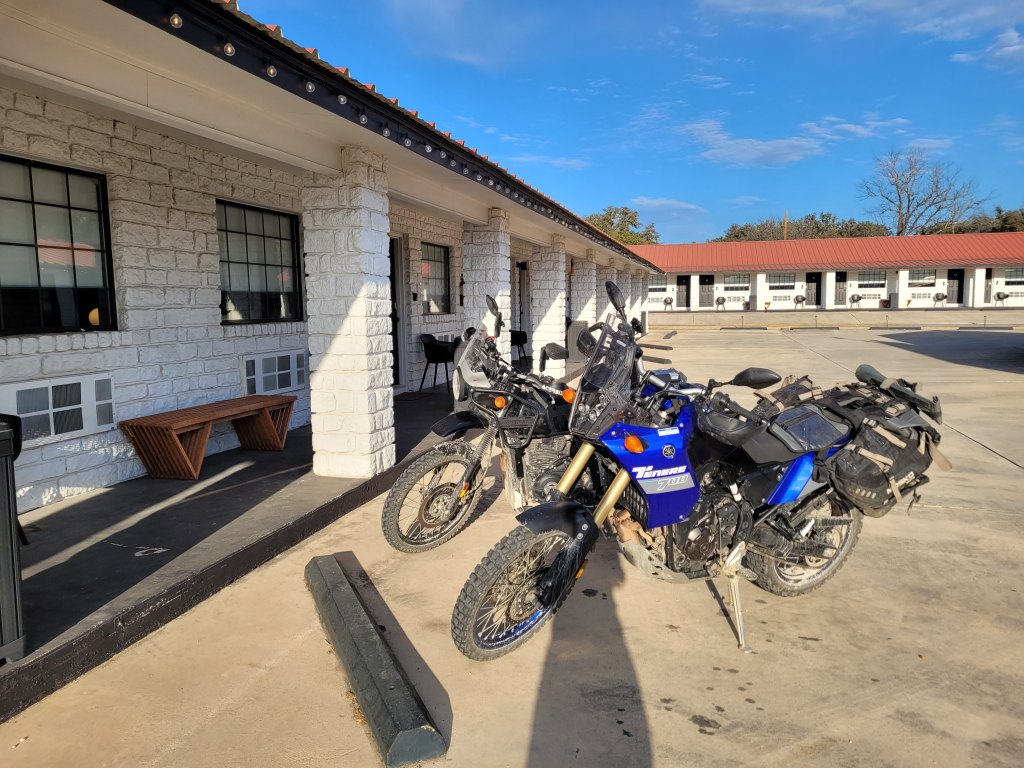
In the morning, we load our gear onto the motorcycles and prepare for the next few days of adventuring. This time we are packing light. We decided to skip camping gear and plan to stay in hotels along the route. There are enough small towns with lodging to make this possible, and it gives us flexibility if the weather turns cold again.
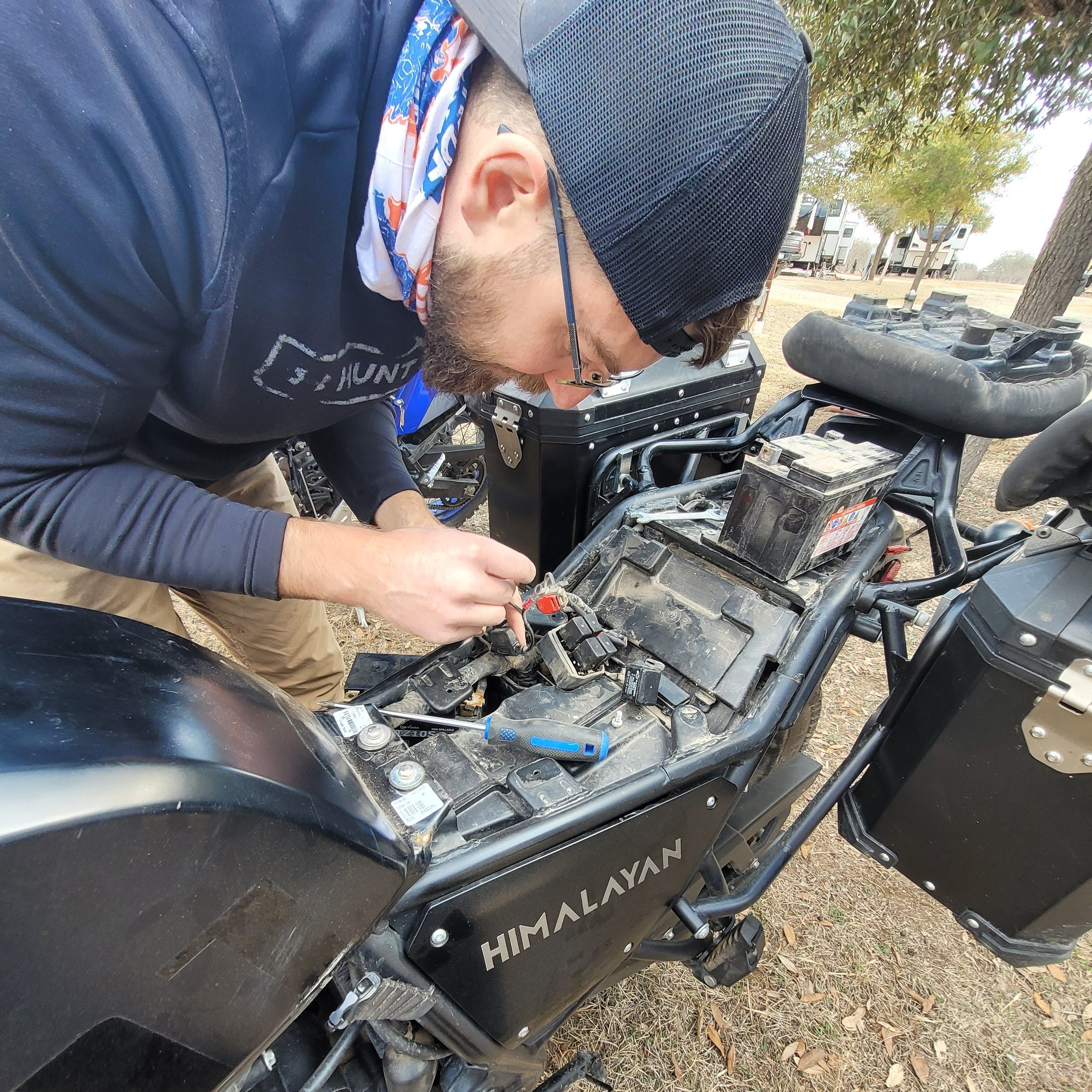
As I walk down the steps of the trailer with my helmet in hand, Chris looks up and tells me that my bike is not starting. We have not even left yet, and we are already troubleshooting.
We go through the usual checks. Fuel is not the issue. The bike powers on, but it will not turn over. Chris starts taking things apart to inspect the basics, including the spark plug, wiring, and battery. To confirm the problem, he connects his battery to my bike. It starts immediately. That narrows it down. My battery is dead.
Because it is Sunday and we are in a rural area, options are limited. We call a local hardware store, and they confirm they have a compatible battery in stock. We drive over, pick it up, and return to install it. The swap is straightforward. After a few hours of delay, the bike starts without issue. By the time we leave, it is midday and we are already thinking about food.
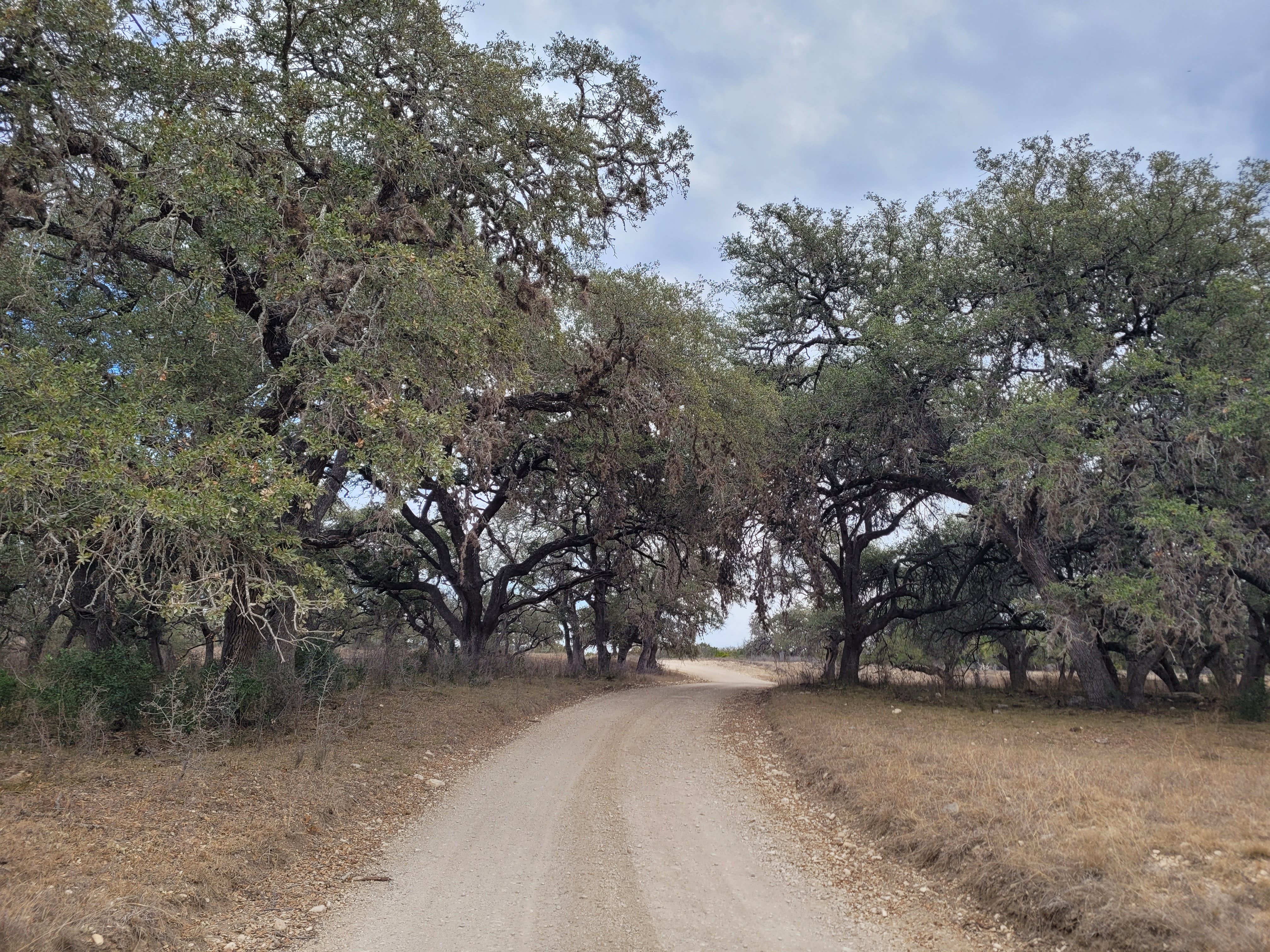
We head out through the Hill Country State Natural Area, a wide stretch of protected land with rugged terrain, oak trees, shallow canyons, and seasonal water crossings. The roads are mostly hard packed with sections of loose gravel. The riding is steady, with rolling elevation changes and long views across the landscape.
By the time we reach Utopia, we are ready for a late lunch break. The town is small and quiet, with a few local spots clustered along the main road. We pass by a large tabby cat near one of the cafés. It reacts immediately to the sound of the motorcycles, arching its back, puffing up, and stepping toward Chris with clear irritation before stopping short. All I can do is laugh as Chris looks over confused at such a strong reaction from the feline, that apparently is so opposed to motorcycles entering his territory.
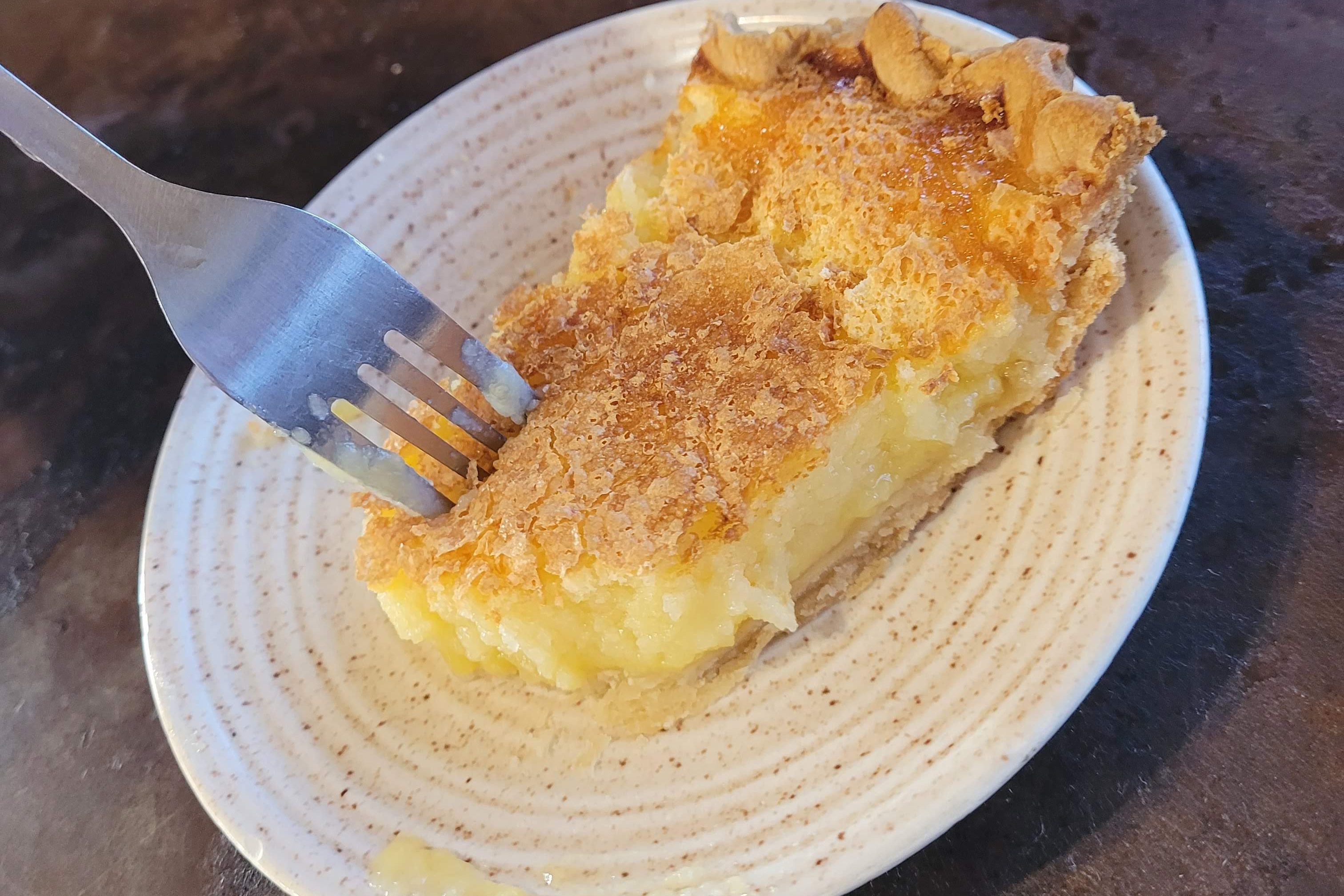
We eat at Lost Maples Café, a casual roadside spot known for simple comfort food. Chris orders a slice of buttermilk pie for dessert. I am skeptical at first and decline to get my own. When the extra fork arrives and I try a bite, I change my mind quickly. The flavor is smooth and sweet, nothing like what I expected. I regret not ordering a full slice.
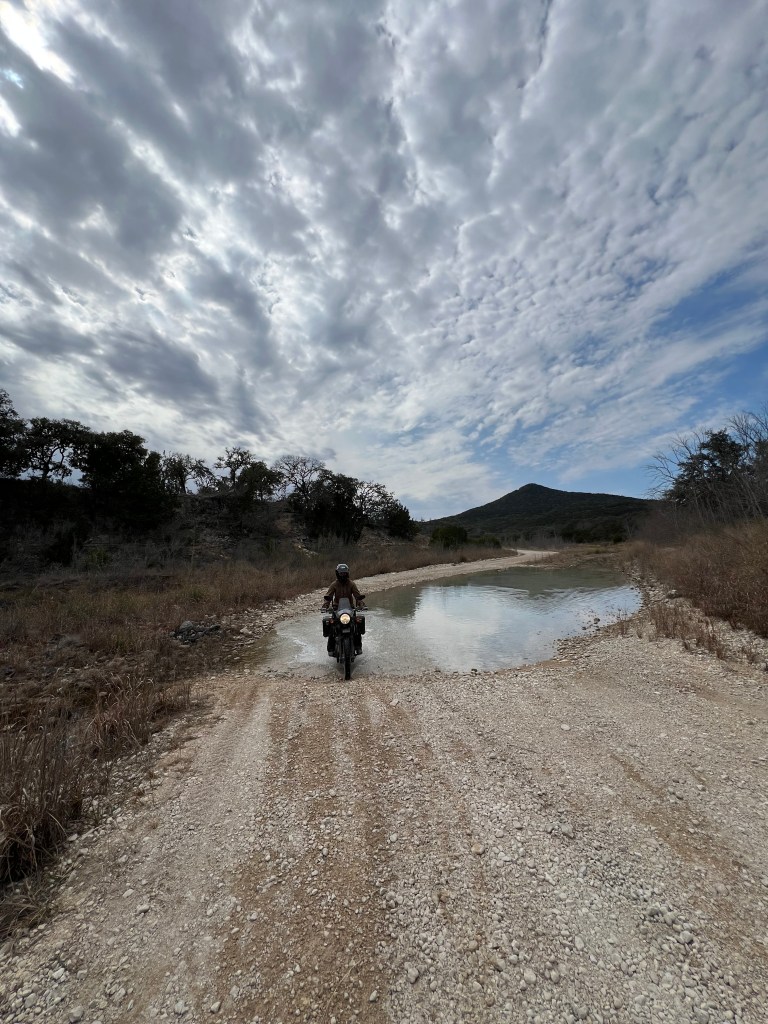
Back on the road, we ride a portion of the Twisted Sisters, a set of winding roads known for their curves and elevation changes. The terrain shifts between open stretches and tighter sections lined with cedar and oak. We cross several low water crossings, all shallow due to the current dry conditions.
By early evening, we arrive in Camp Wood. The town has a defined main street with small shops, including an art store and a home goods store, along with a few restaurants. There is a sense that it could be more active during busier times, but on this Sunday most places are closed.
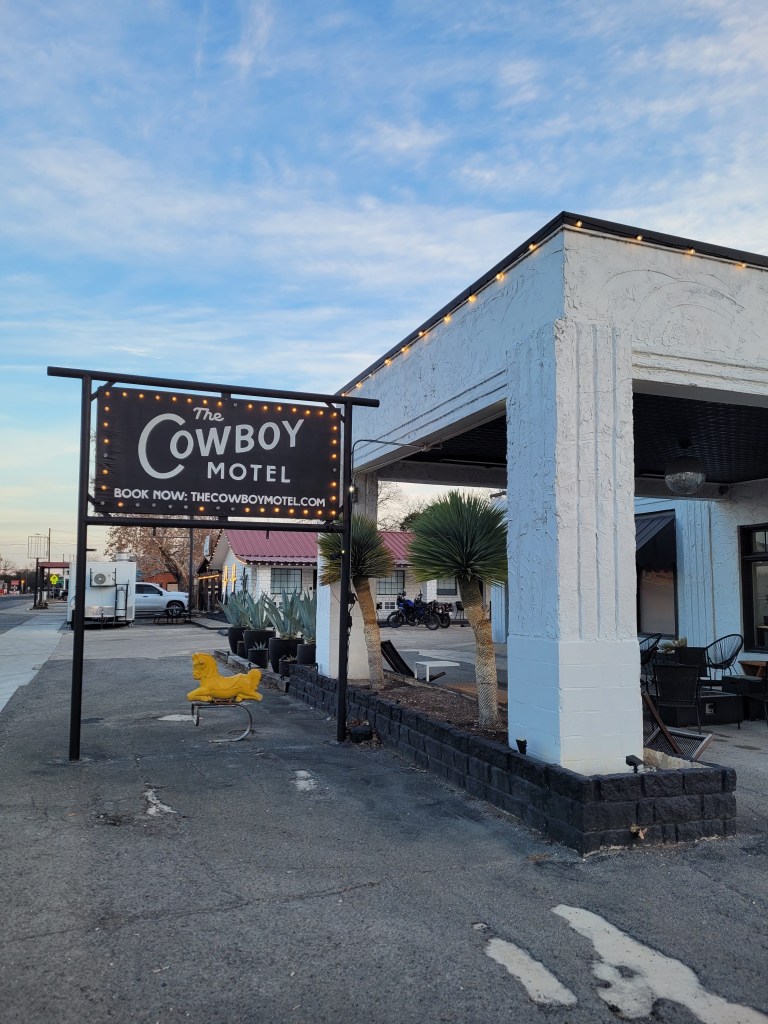
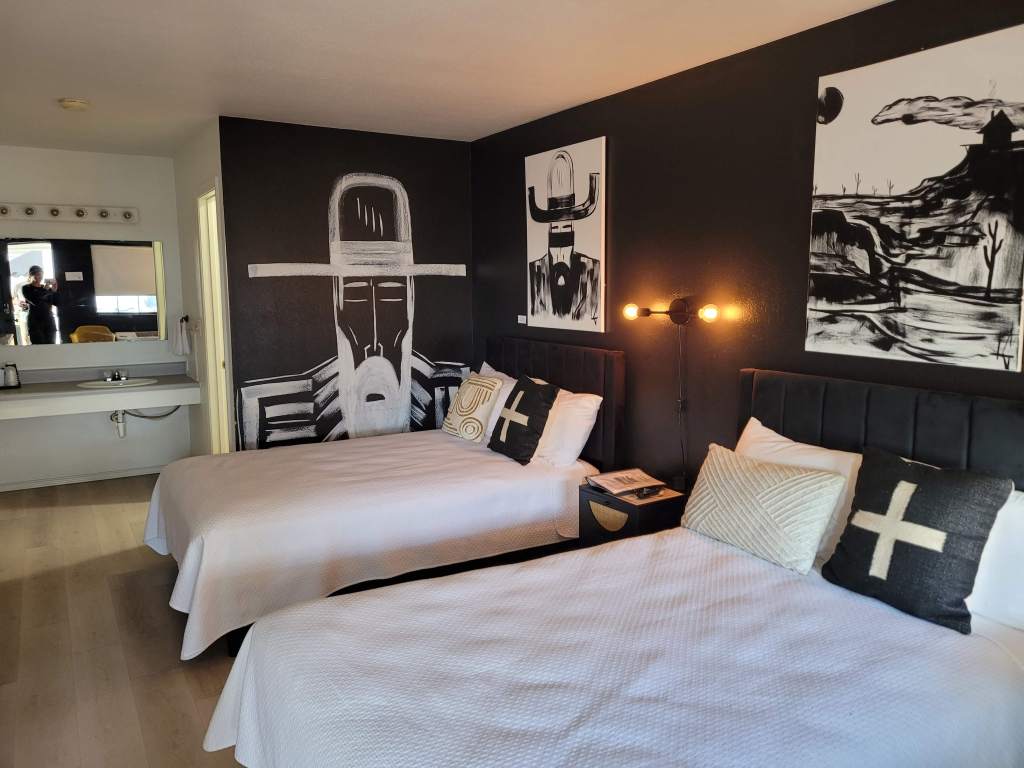
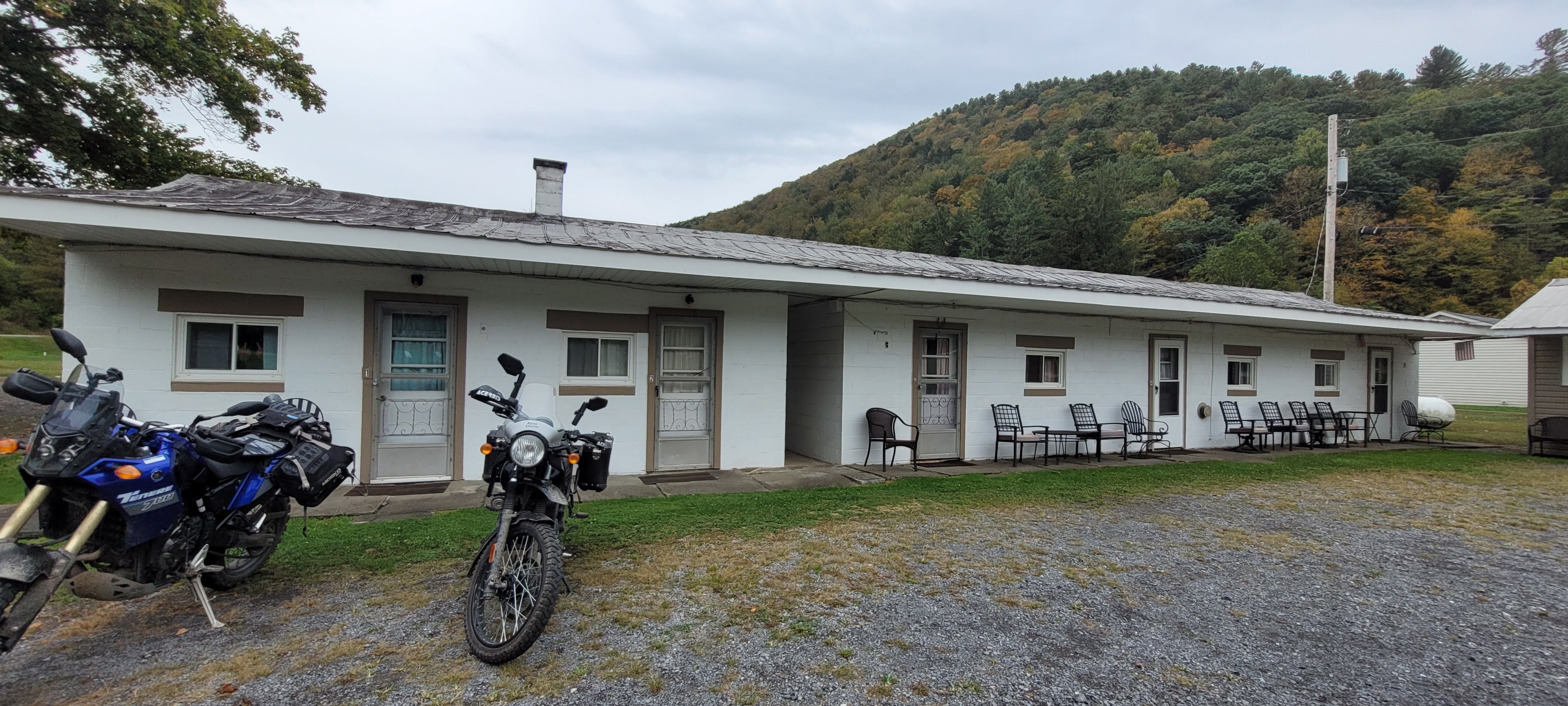
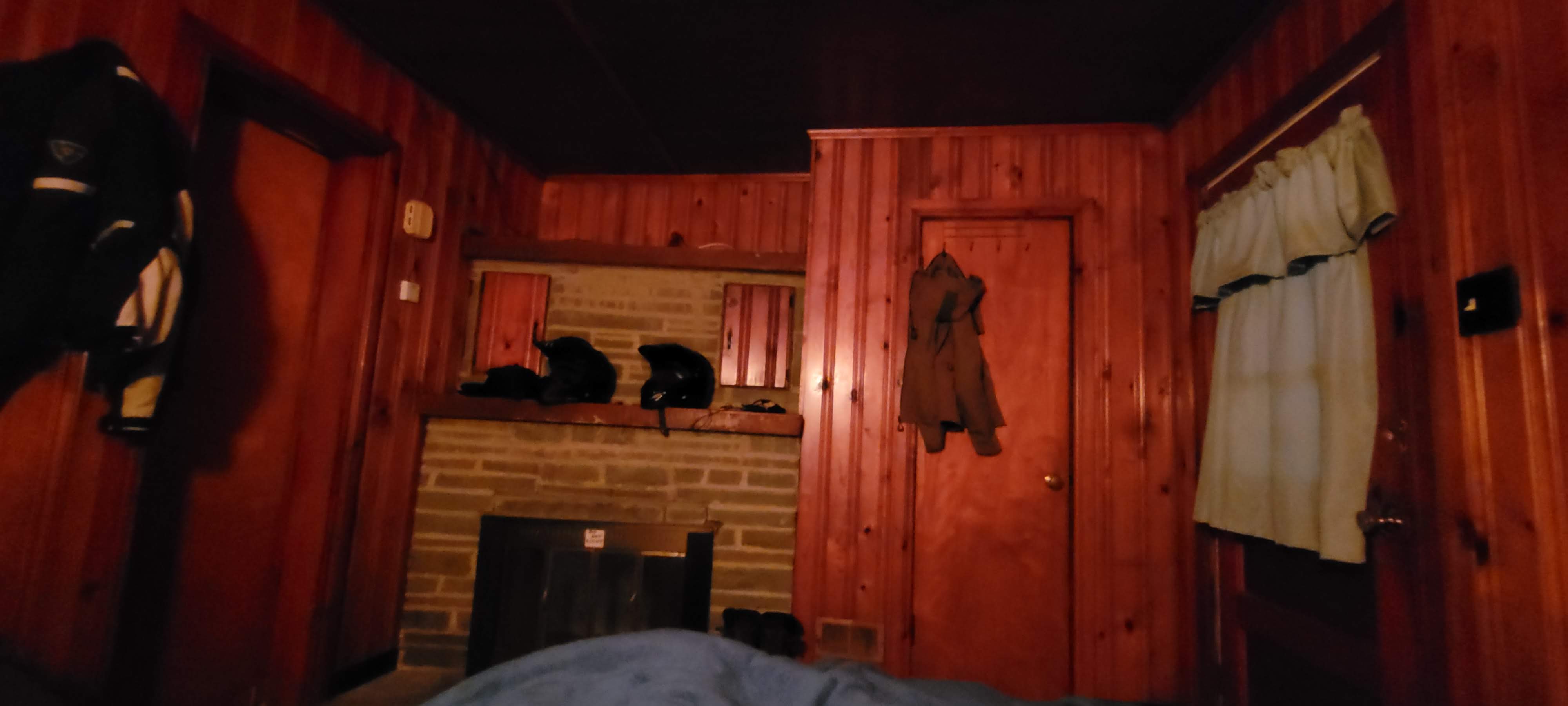
We check into The Cowboy Motel. The motel has been updated with a modern style and is clearly set up with motorcyclists in mind. Despite that, the town itself is quiet, and there are no open restaurants nearby. There is only one option located about a block away.
Now this particular day, happened to be our “meeting while on vacation” anniversary. And here we were grabbing pizza at a gas station counter laughing at how far this was from anything we would’ve planned. We ended up eating outside our motel—sitting in black Acapulco chairs under a hanging disco ball, surrounded by agave plants—simple, a little surreal, and somehow exactly right for the moment.
Day 2: Camp Wood to Mason
We wake up feeling more rested than we would have been if we had camped. The room is quiet, and the morning light softens the space. The large black and white painting of a cowboy on the wall, which felt intense the night before, looks much less harsh in daylight.
We walk over to Casa Falcon Restaurant for breakfast. It is a straightforward, local spot serving traditional Mexican dishes. We order huevos rancheros and coffee. The food is simple and filling, and it sets us up well for the day ahead.
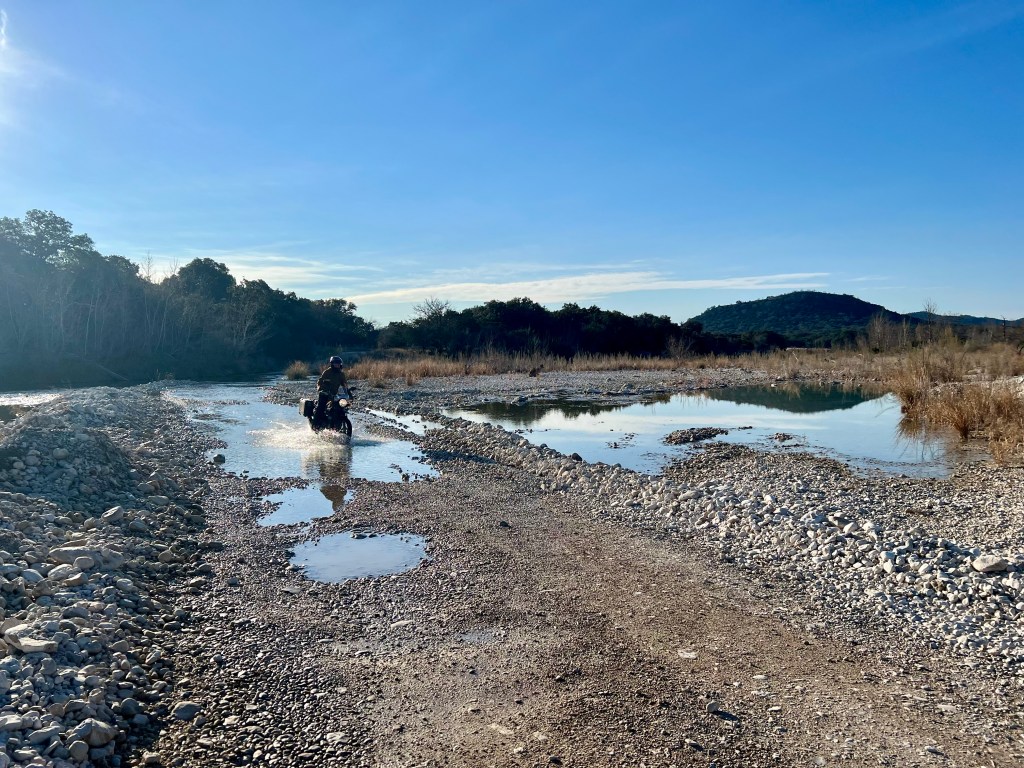
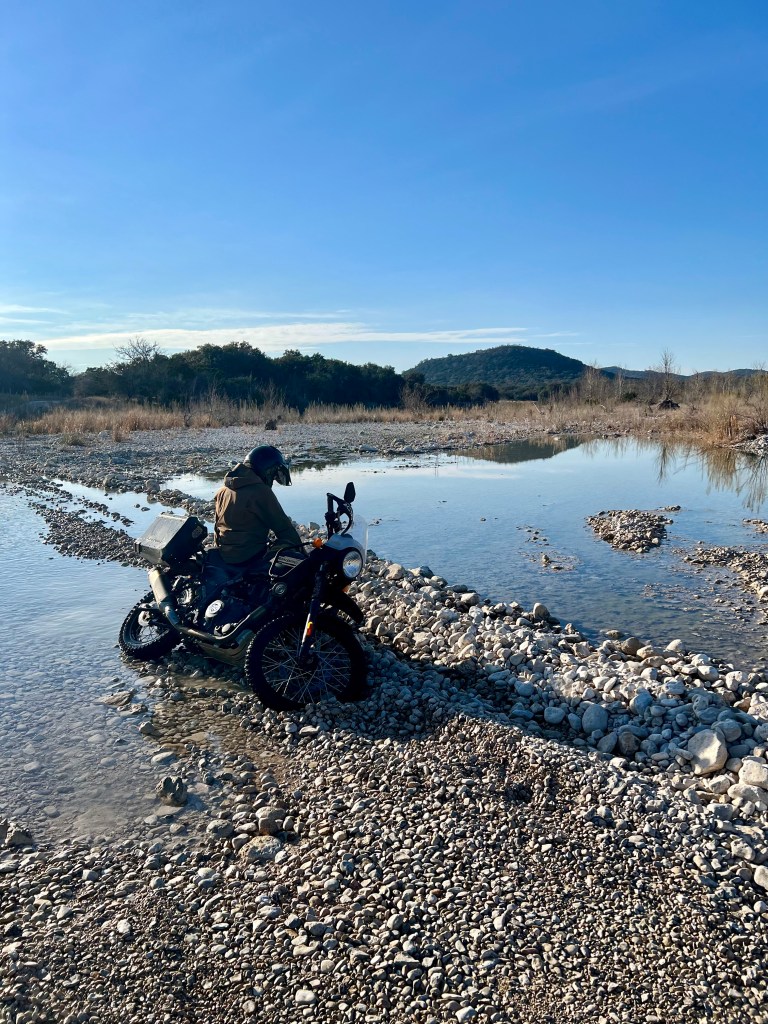
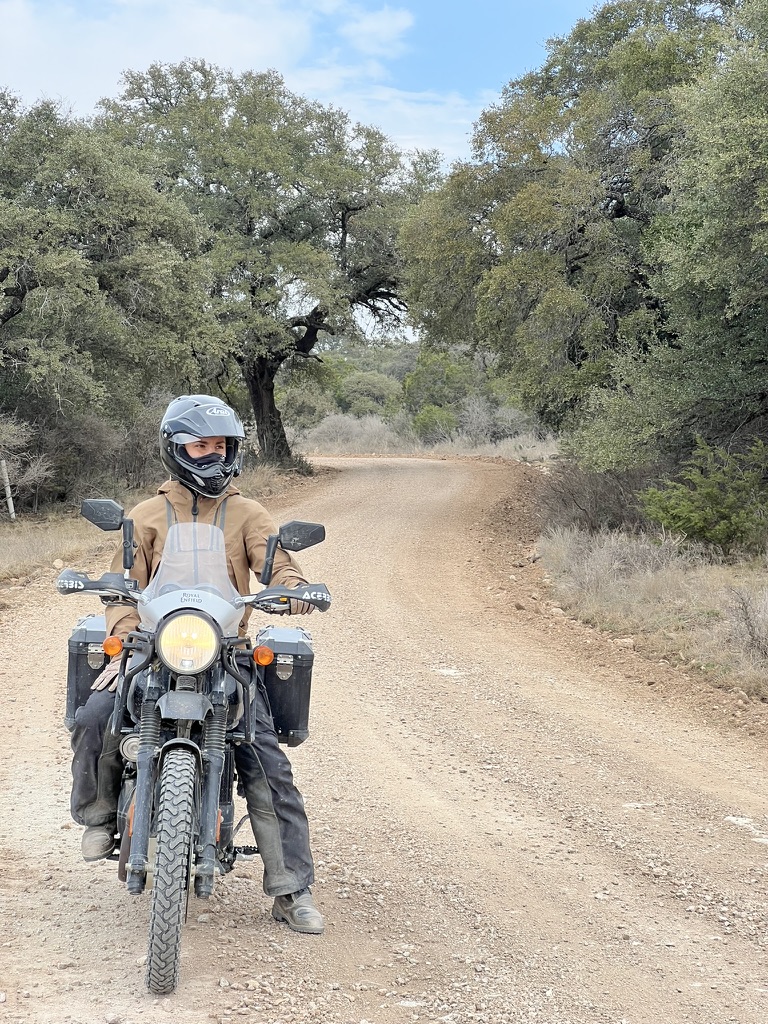
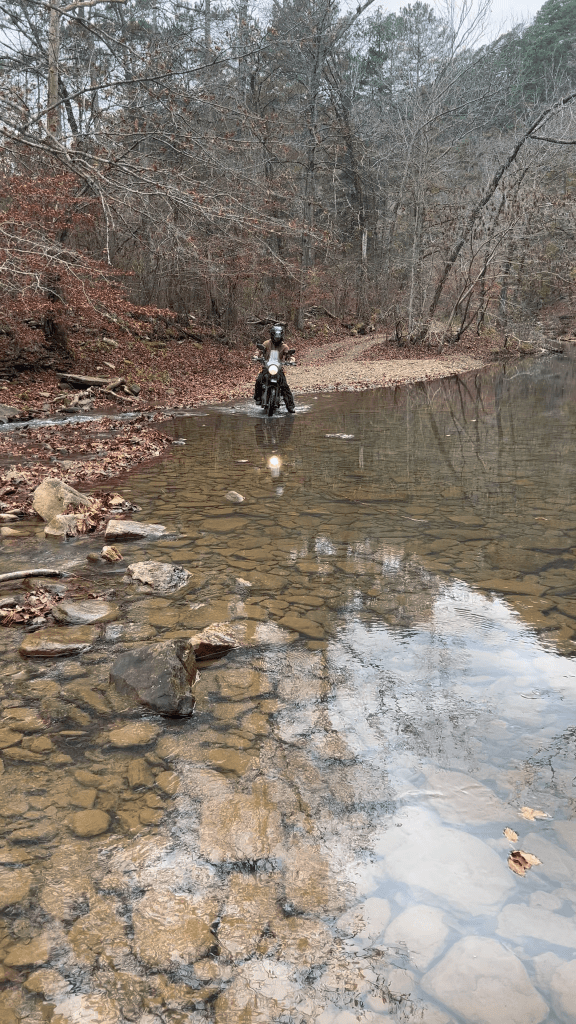
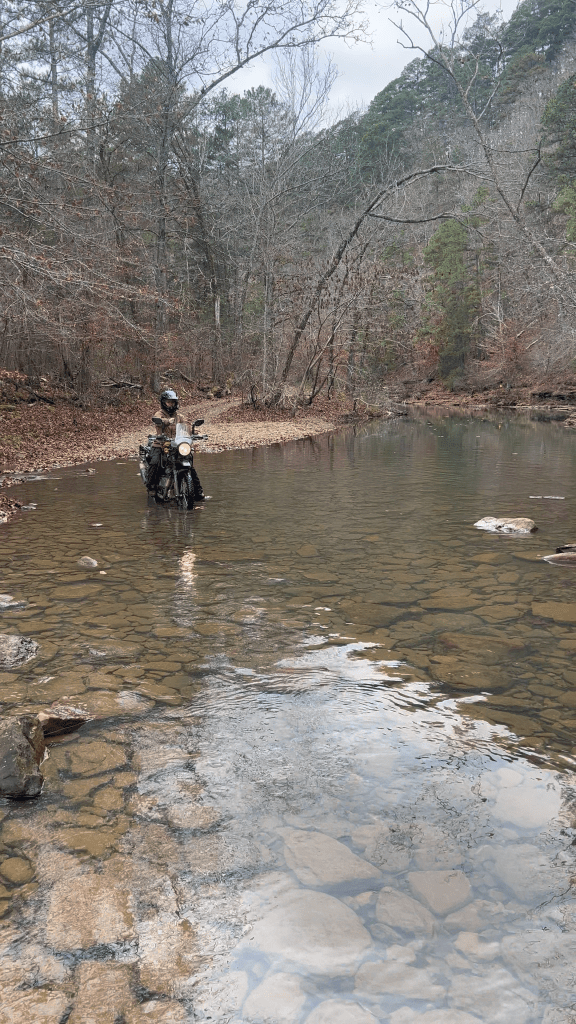
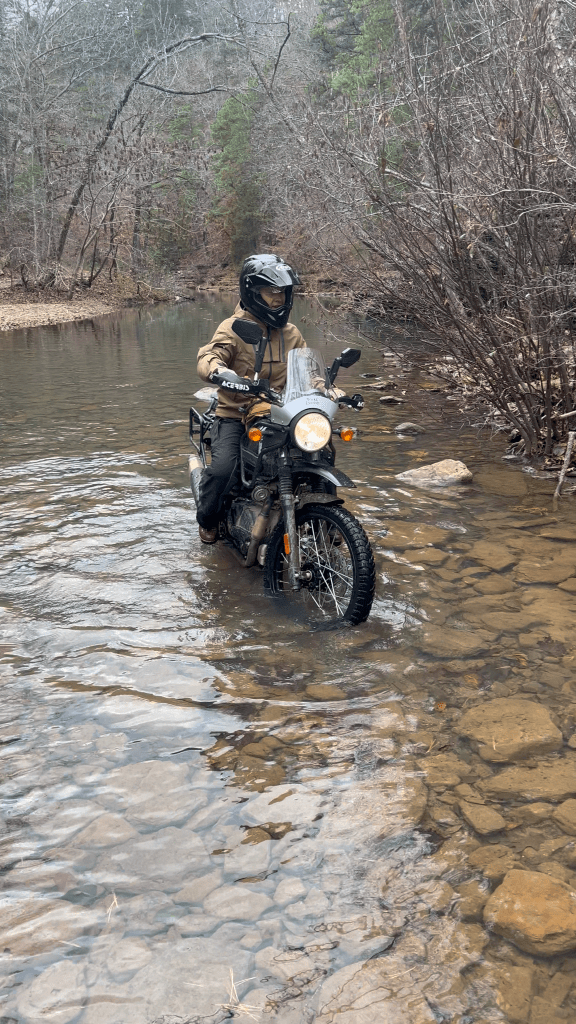
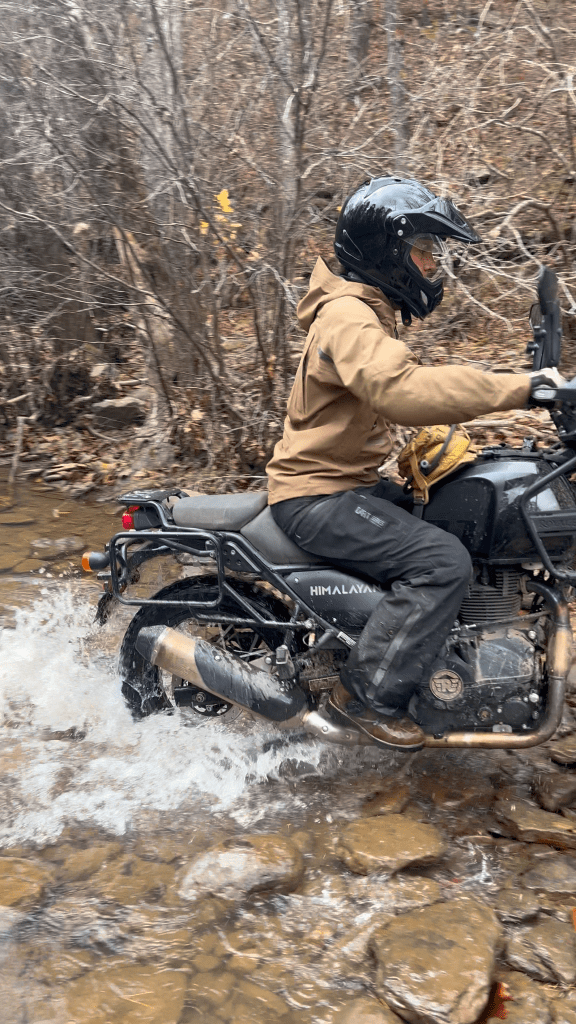
Back on the route, the terrain remains consistent with the previous day. The roads alternate between hard packed dirt and loose gravel, with occasional rocky patches. We pass through several water crossings, though most are shallow. The water levels are low, turning them into more of a puddle crossing than a technical obstacle. Without much flow, there is less concern about algae on the concrete, which makes traction more predictable. In one crossing, we notice a snake lying still under the surface of the water. It does not move as we pass. Just our luck, the only time we get to see a snake, it turns out it’s dead. So much for them being prevalent in the State.
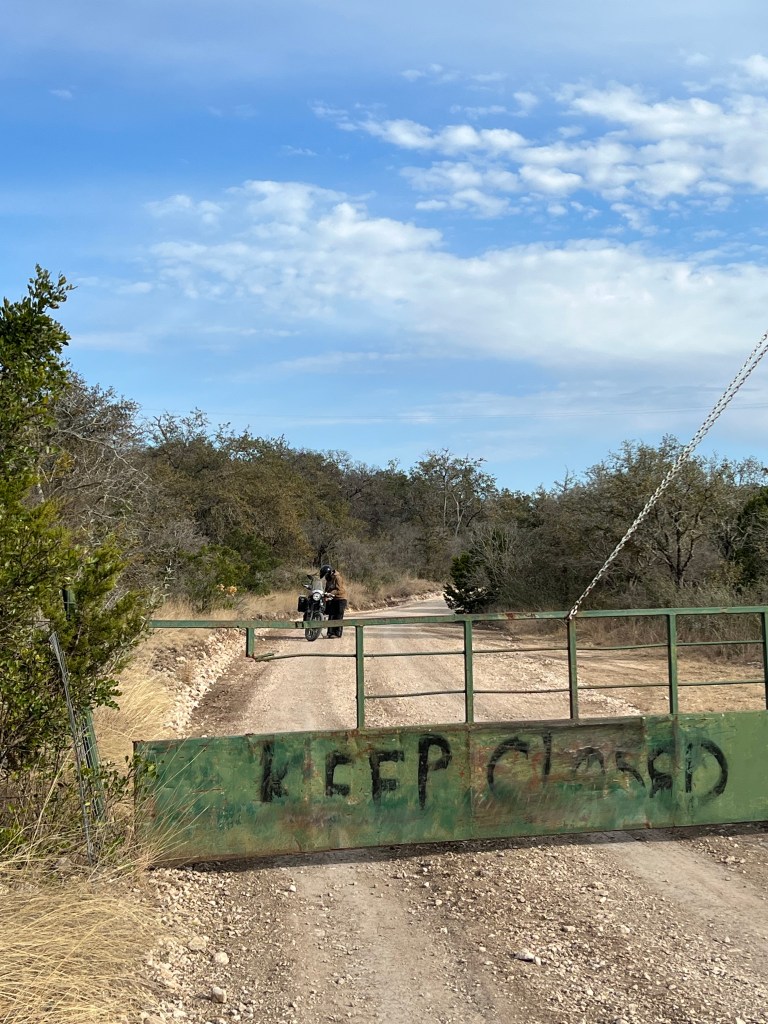
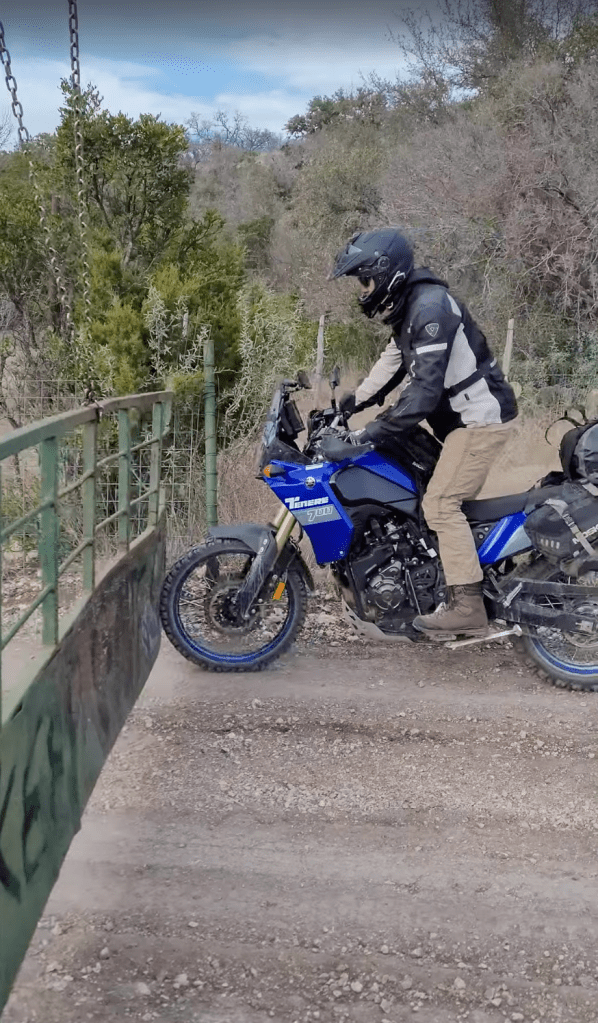
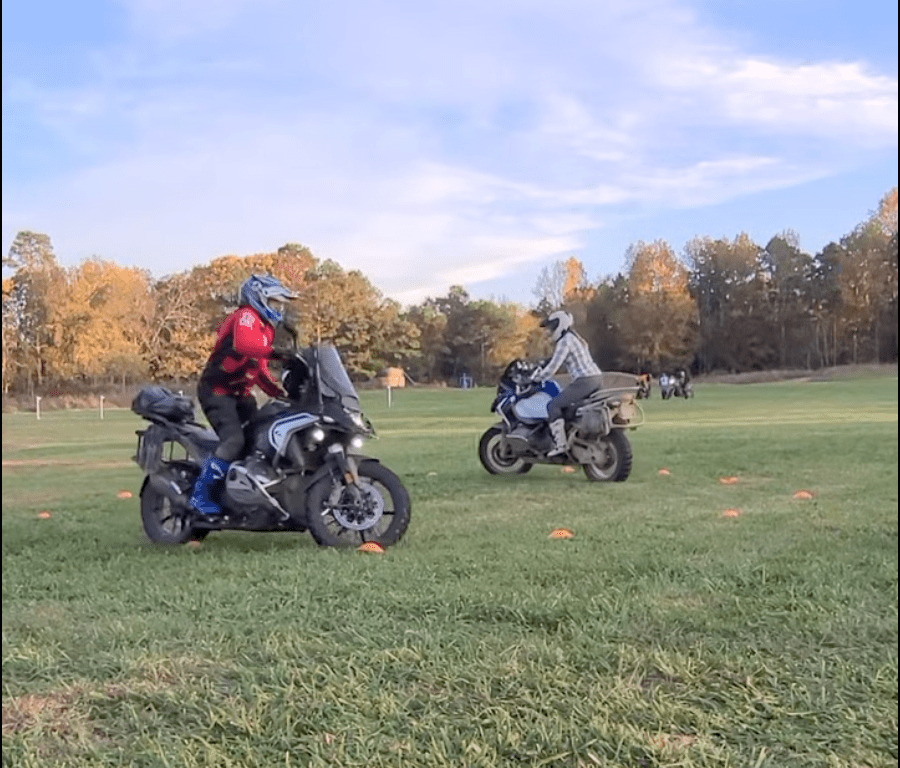
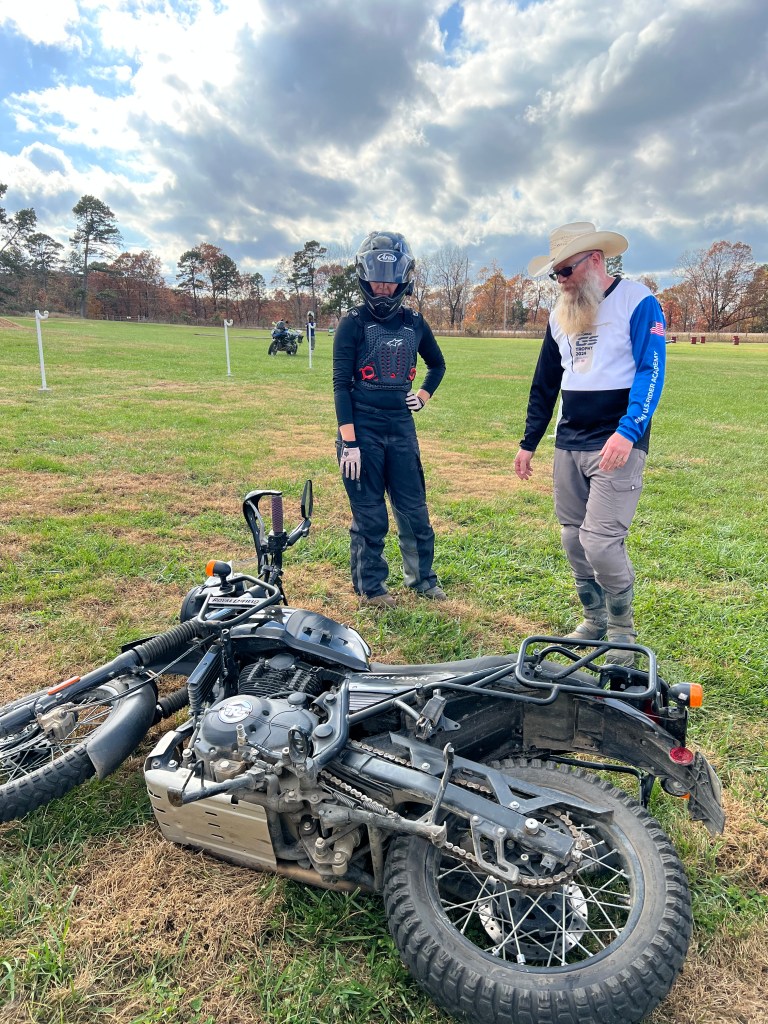
As the day progresses, we encounter a series of ranch gates, which quickly turns into what feels like an informal training session. This section is called “bump gate university.” Each gate requires a slightly different approach. Some are light and easy to push open with the bike, while others are heavier and require more control. It becomes an exercise in balance, throttle control, and confidence. After a couple of failed attempts that send me throttling out of control and eventually dropping the bike, I decide on a more efficient approach and tuck in closely behind Chris, slipping through before the gate closes. It’s not the most technical solution, but it works—and sometimes that’s all you need on the trail.
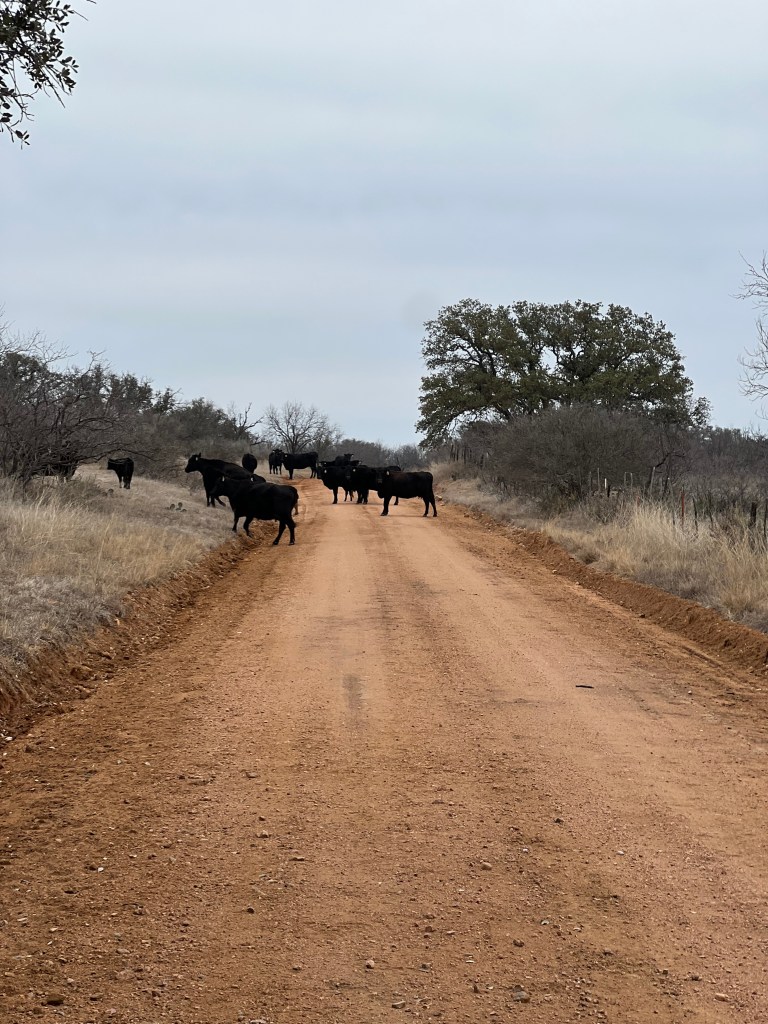
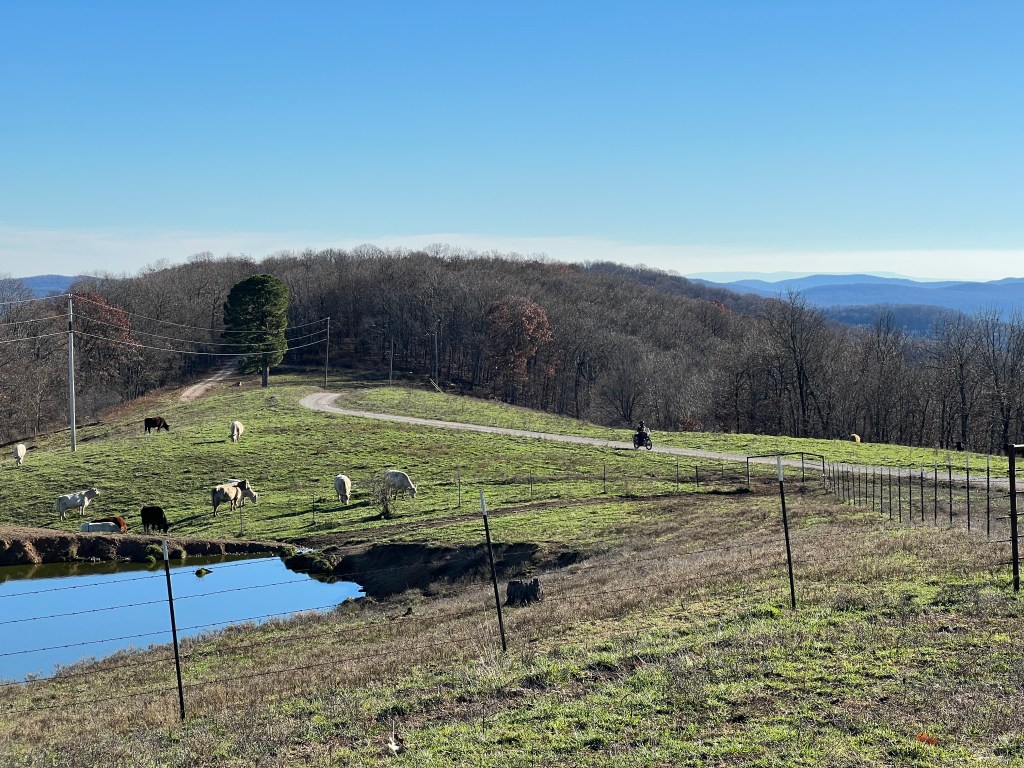
The route continues through active ranch land. On many occasions, we come across large herds of cows standing directly on the track. We slow down as we approach. The adult cows watch us carefully, while a few calves react more suddenly and move off to the side. It is the closest we have been to them on the bikes so far, and it reinforces the fact that we are moving through working cattle country.
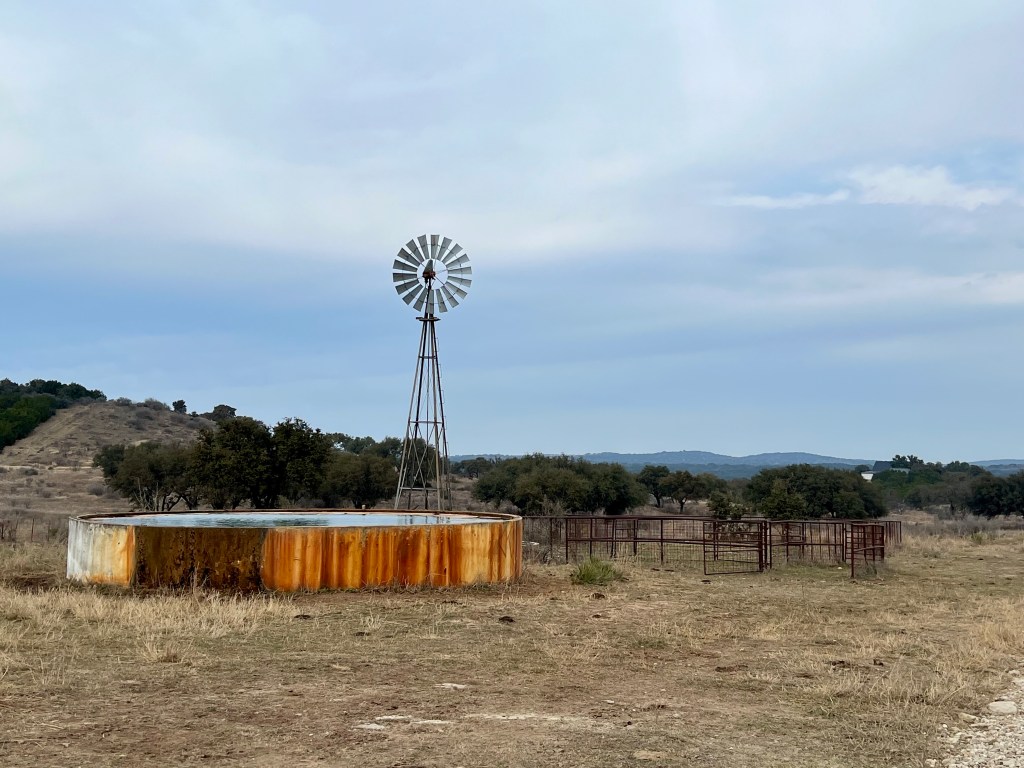
As we ride, the character of the land and homes becomes more noticeable. The properties are large and set back from the road, often marked by long driveways and gated entrances. Many houses are low, single story structures built from stone or stucco, with metal roofs and wide porches. Some are newer builds with clean lines, while others are older ranch homes with weathered wood and practical layouts. Outbuildings, barns, and equipment sheds are common, along with windmills and water tanks. The land itself alternates between cleared pasture and sections of dense cedar and oak.
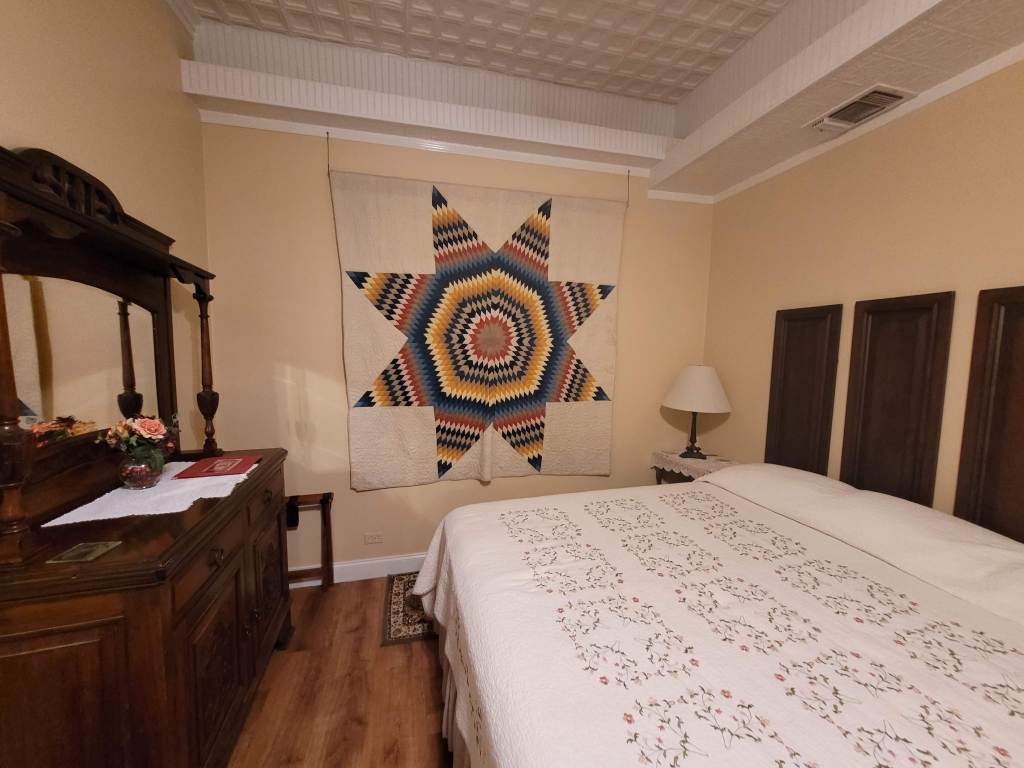
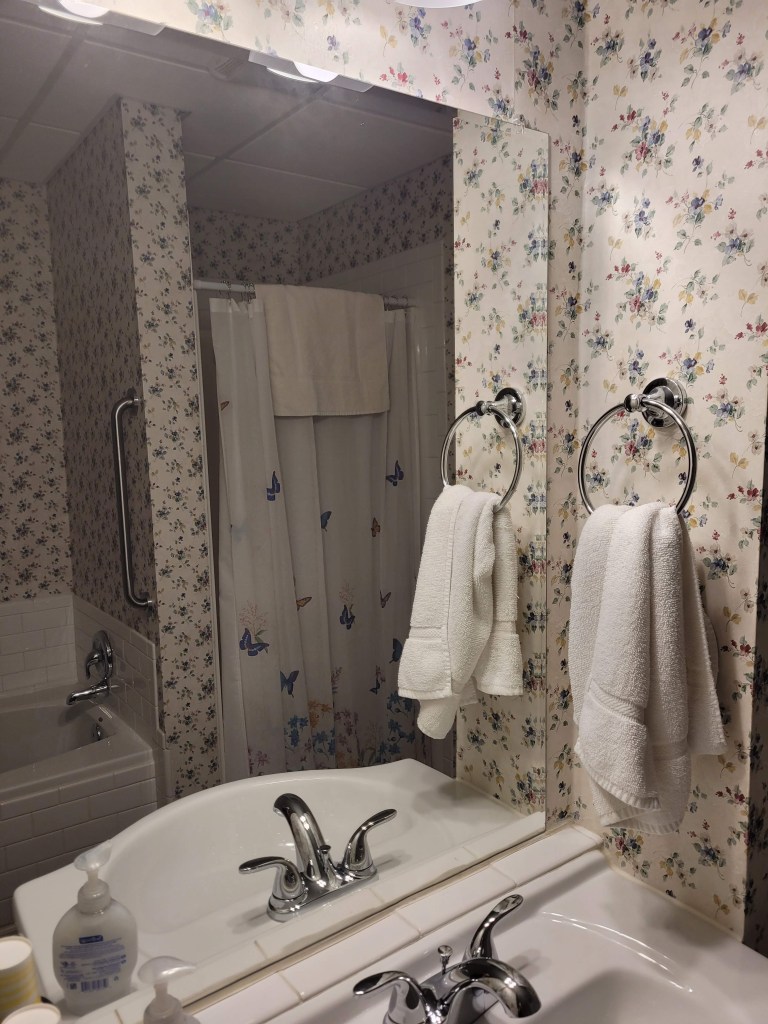
We arrive in Mason in the late afternoon and check into Red Door Bed & Breakfast. The guesthouse is well kept and decorated in a traditional style, with a lived-in, comfortable feel. There are small details throughout that make it clear the space is cared for. We are told there will be fresh banana bread in the morning. Grandma-core for the win!
For dinner, we walk over to Crocket Restaurant and sit at the bar. The atmosphere is casual, and it does not take long before we start talking with the people around us. Cindy introduces herself and quickly becomes part of the conversation. At one point, she tells us that we would make very beautiful babies. It is unexpected, but said casually and without hesitation.
Next door, is a gun shop also run by Crocket where he keeps a large collection of antiques. He talks about his interest in local history and casually mentions supplying cannonballs for display at The Alamo. The conversation drifts easily from one topic to the next, and before we realize it, we’ve stayed much longer than we planned.
Day 3: Mason to Llano
We leave Mason in the morning and begin heading southeast toward Llano. The shift in landscape is gradual but noticeable. The terrain opens up in places, with broader views and flatter sections between low rolling hills. The roads continue to alternate between dirt and gravel, but there are more stretches of pale limestone, which gives the ground a lighter, almost chalky appearance.
There are occasional patches of loose sand, though they are short and manageable. Most of the riding remains predictable, with steady traction on the limestone roads. Water crossings are still present, but the levels remain low. They feel more like shallow puddles than obstacles, though we continue to slow down and approach them with care.
As we move through this section, the architecture becomes more distinct. Many of the homes are built from local limestone, giving them a light, uniform appearance that blends into the surrounding terrain. Some properties feel older and more traditional, while others are newer builds that still follow the same material style. The land around them is open, with fenced pastures and scattered trees.
We make our way to San Saba, known as the pecan capital of the world. The town feels slightly more active than some of the smaller stops we have passed through, with a defined center and a few more open businesses. We stop for lunch at Casa Del Charro Mexican Grill & Bar. It is a straightforward, sit down spot with a full menu and a steady flow of locals coming in and out.
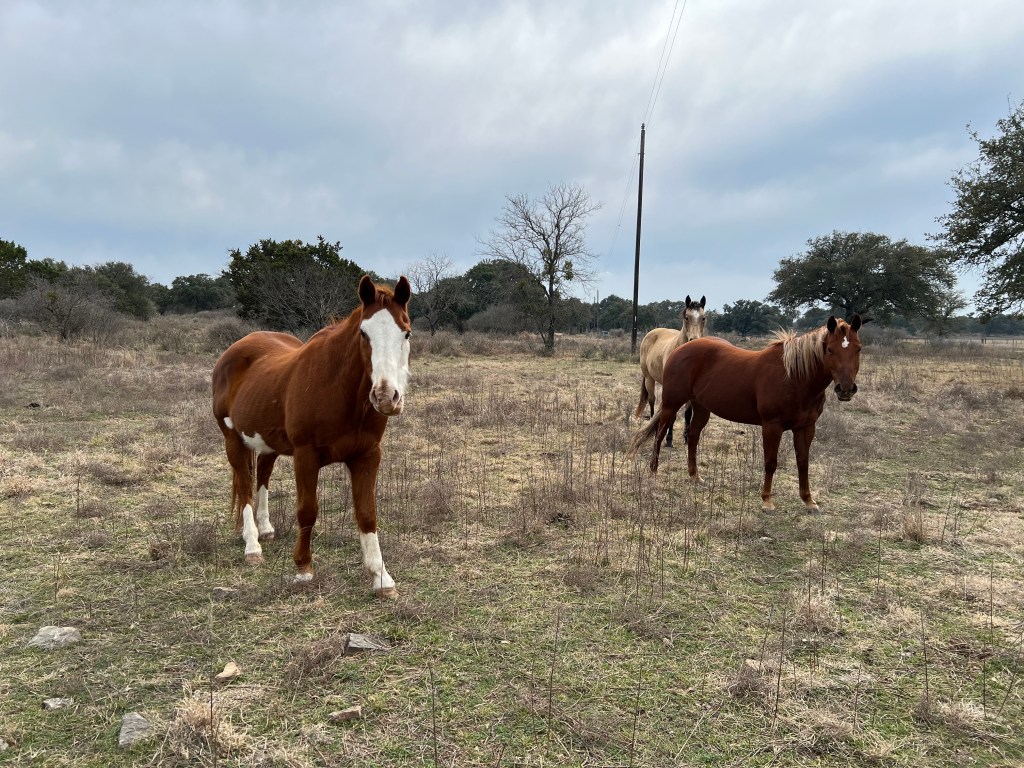
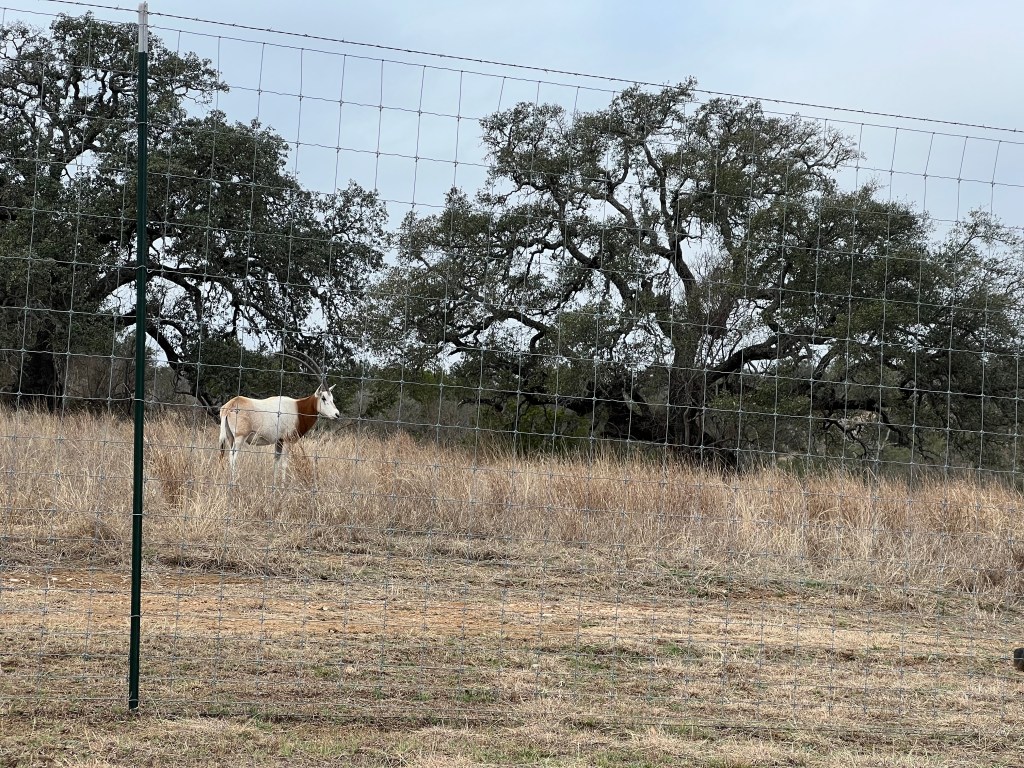
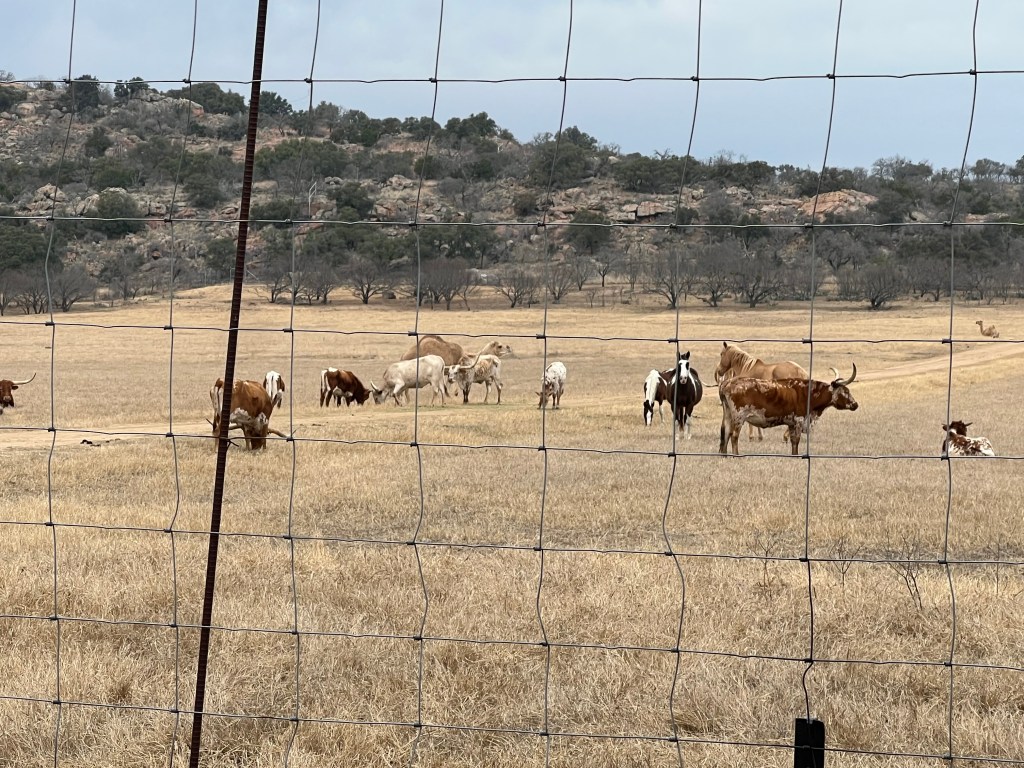
Back on the route, we continue to keep track of the animals we see along the way. Over the course of the ride, we spot camels, antelope, ostriches, oryx, and longhorn cattle. Most are behind fences on large ranch properties, but their presence adds a different layer to the landscape.
At one point, we come across a deer that is trying to get away from us. Instead of moving away from the fence line, it keeps running parallel to it, hitting the barrier and turning back in the same direction. It repeats the pattern several times without making progress. It becomes a clear reminder of how panic can limit decision making. When there is no pause to assess the situation, there is no way to adjust the outcome.
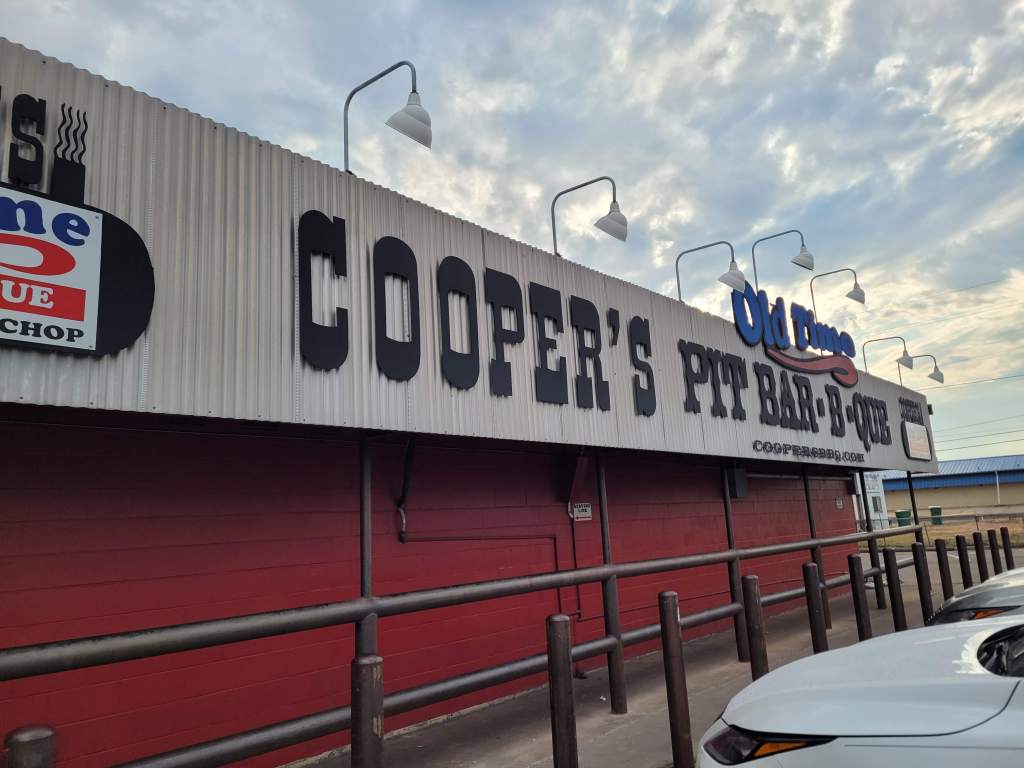
We arrive in Llano later in the day and check into Rodeway Inn & Suites, located next to Cooper’s Old Time Pit BBQ.
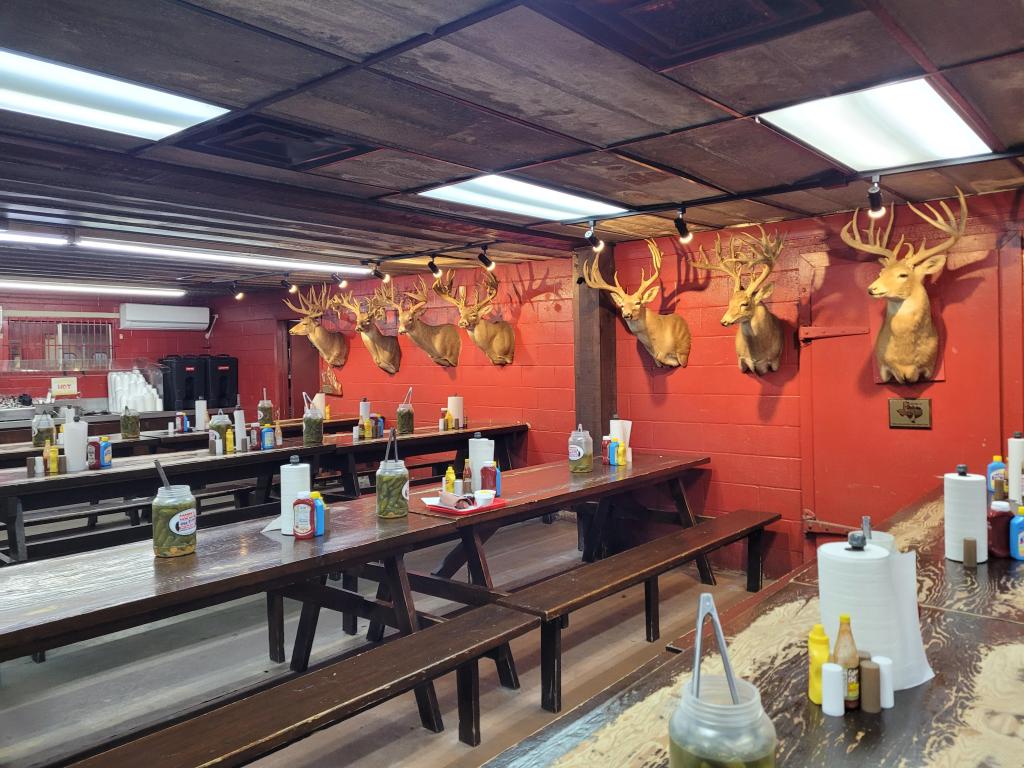
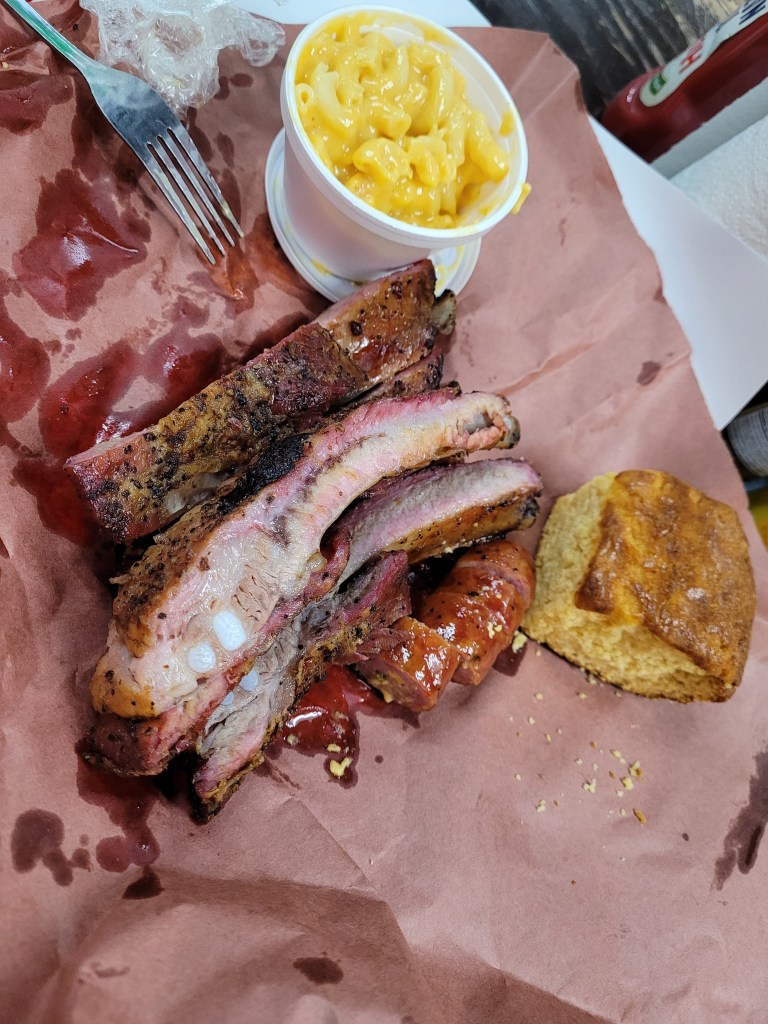
Here, the setup is direct. You walk up to a large outdoor pit and choose your cuts of meat from what is available. The selection is laid out in front of you, and the portions are cut to order. Inside, the seating is communal, with long tables where people sit next to each other regardless of group. The atmosphere is busy but efficient, with a steady flow of customers moving through.
After a full day of riding through shifting terrain and gradually larger towns, the stop in Llano feels like a subtle step up in pace. It’s also an unexpected kind of victory—ending the day in a place that, by some small miracle, has the most comfortable mattress and pillow combination I’ve ever experienced.
Day 4: Llano to Bandera
We leave Llano in the morning and begin the final leg of the loop back toward Bandera. The terrain shifts again as we move farther south.
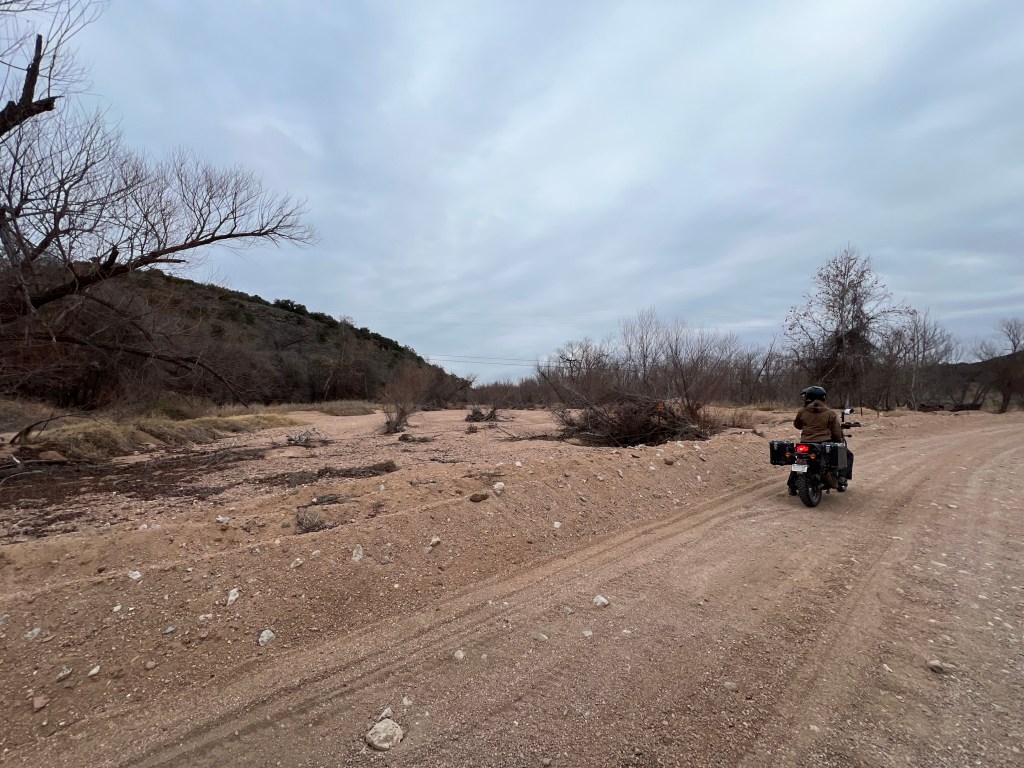
One of the more noticeable changes is at Sandy Creek. The crossing is completely dry. It is easy to recognize it as a water crossing by the width and the shape of the banks. But instead of water, it is filled with loose sand. The surface is softer and requires more attention to throttle and balance than the shallow crossings from earlier in the trip.
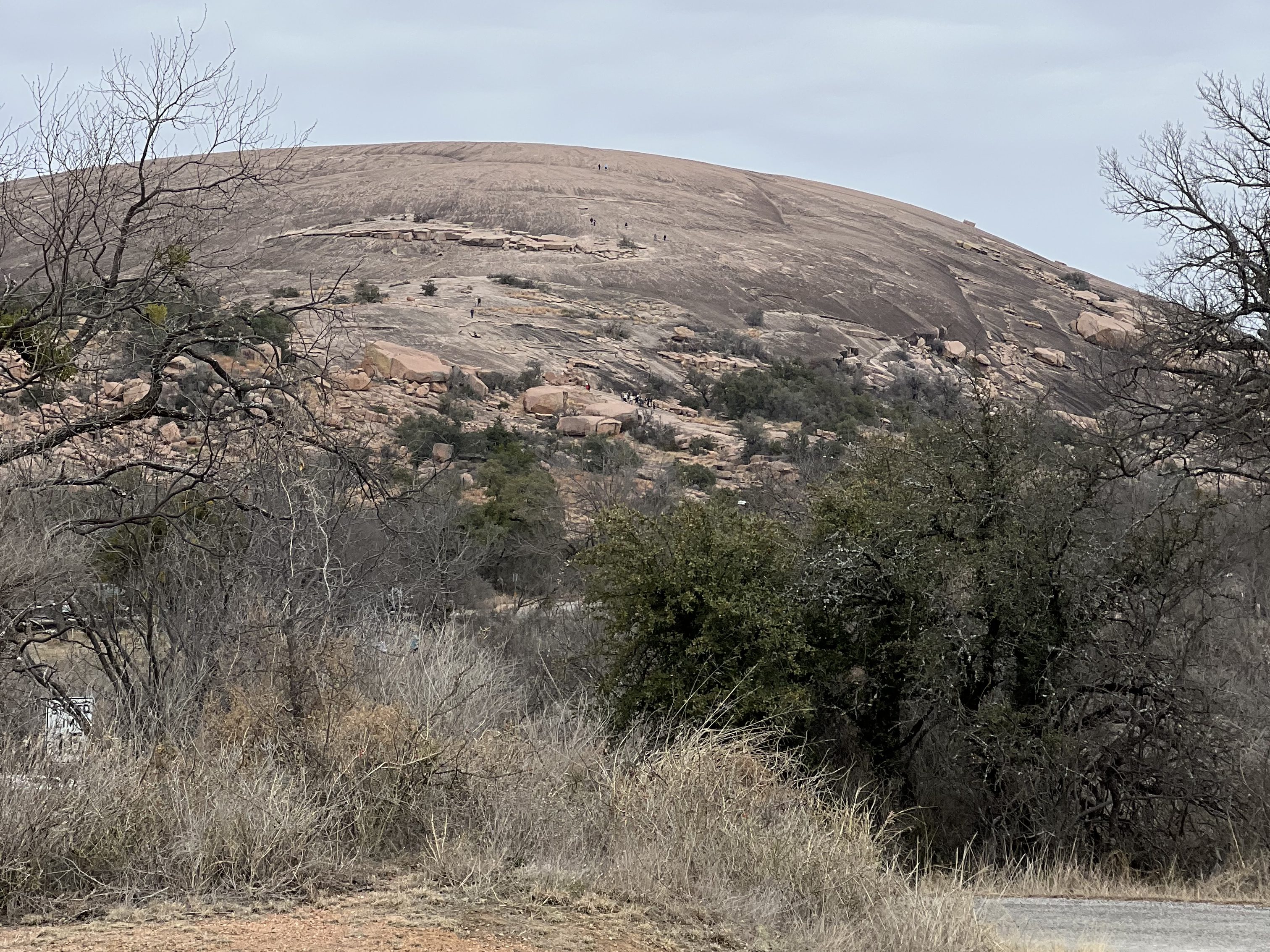
We continue on toward Enchanted Rock. The formation stands out from a distance. It is a large, smooth granite dome that rises above the surrounding landscape. Its rounded shape and bare surface give it a distinct appearance, like the top of a bald man’s head. The rest of the terrain is more vegetated and uneven.
As we approach Fredericksburg, the character of the area changes again. The town has a strong German influence, which is reflected in the architecture and layout. Many of the buildings have a more traditional style, with painted facades, decorative trim, and visible signage for beer gardens and restaurants. The streets are more active, with a steady flow of visitors moving between shops, tasting rooms, and outdoor seating areas.
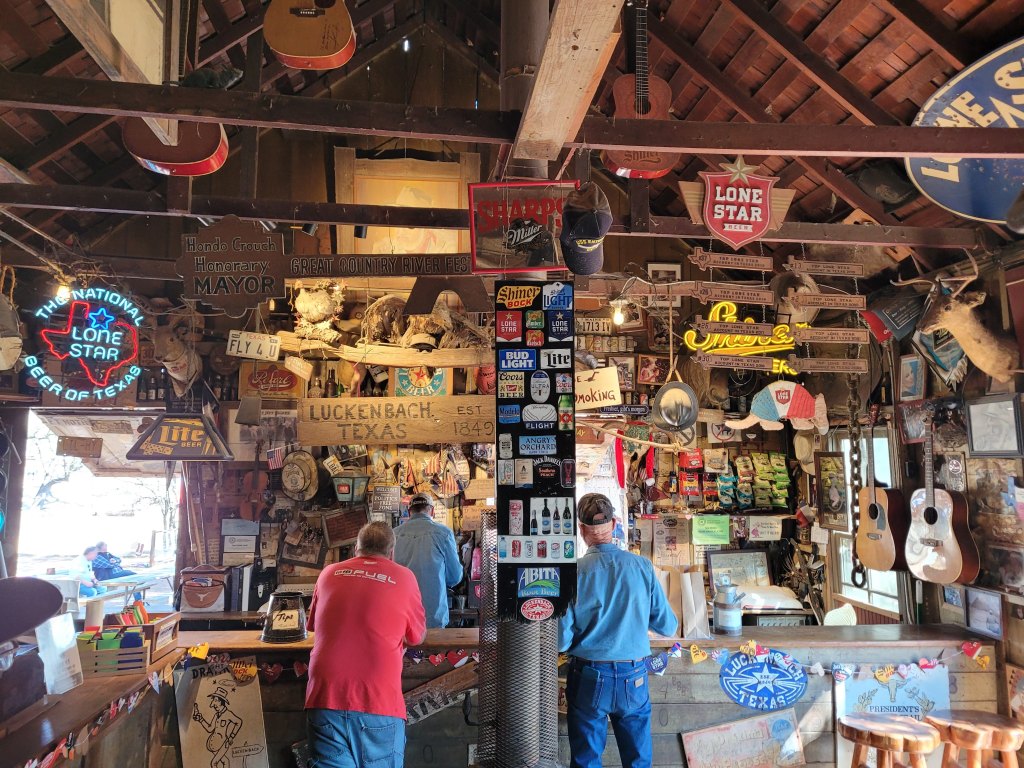
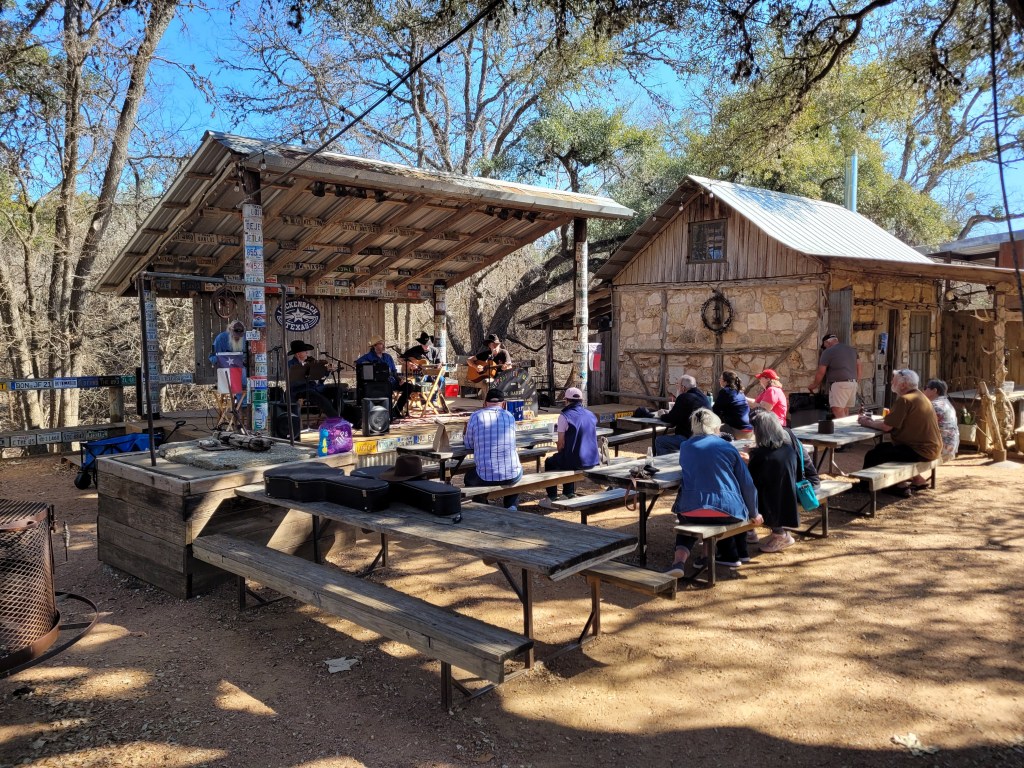
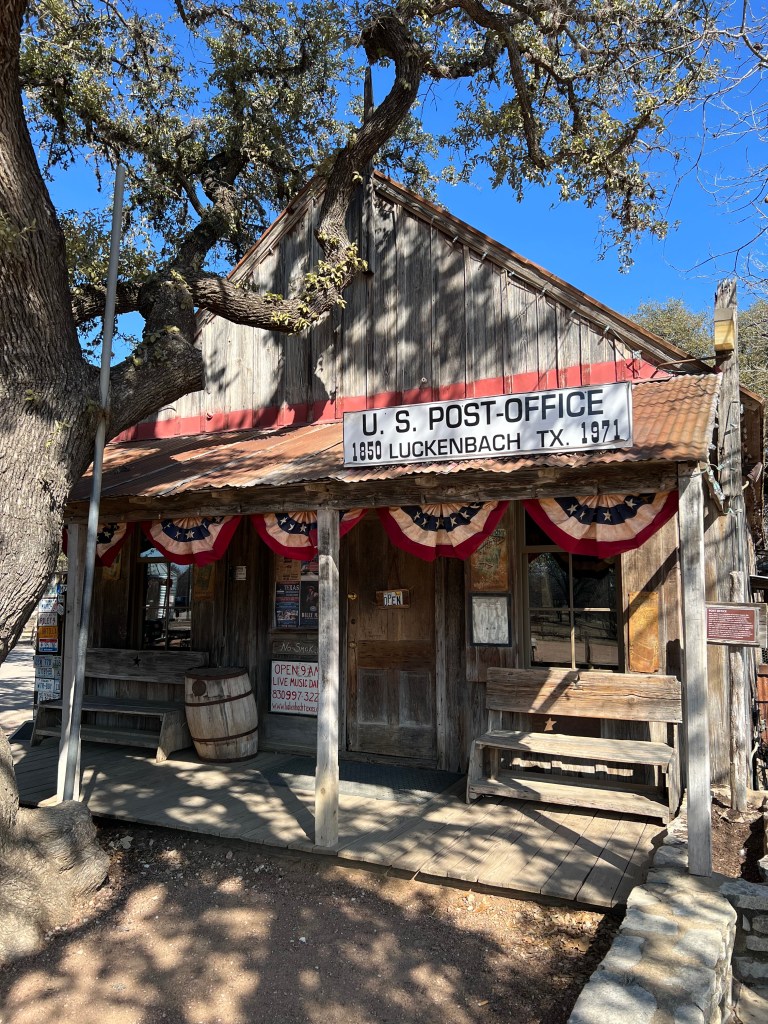
Leaving Fredericksburg, we make our way to Luckenbach. The town is small and centered around a few key buildings, including a general store, a saloon, and an old dance hall. Live music is a regular part of the atmosphere, and there is a steady flow of people stopping in throughout the day. We take a break, have a beer, and spend some time listening to the music. The setting is informal and relaxed, with people gathered outside under the trees.
The final stretch back toward Bandera makes us sigh with relief. The terrain returns to the mix of hard packed dirt, gravel, and low water crossings that we started with. By the time we arrive, the loop feels complete. After 4 full days in the saddle, we can’t lie that we are sore and ready to get back to the Bus and it’s comforts.
We end the day with dinner at Trail Boss Steak & Grill. This route turned out to be exactly what it was described as. It is on the easier side in terms of technical riding, but that allows more space to take in the surroundings without feeling rushed or overly challenged.
Overall, it was a straightforward and enjoyable ride. It offered a clear look at the Texas Hill Country, with a mix of landscapes, small towns, and everyday interactions that made the experience feel complete.
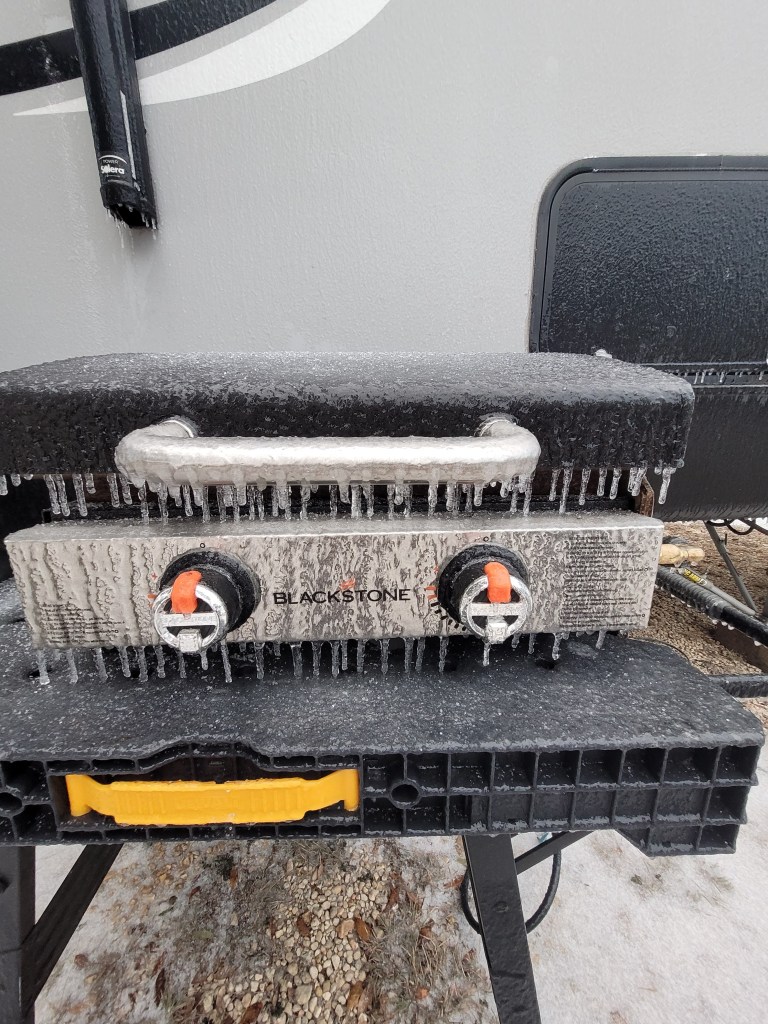
Truer words were never muttered by Lee, the campground’s maintenance man. This was in the aftermath of the brutally cold ice storm that swept over Texas, back in January. When the main lines burst in our section of the campground, we were left with no running water for days.
At one point Chris stepped out of the trailer during a quick break from work to inspect the situation. He found Lee in the middle of hooking up our rig to a neighboring campsite’s water hydrant while we waited for the main line to be fixed.
“How deep are the water pipes buried underground here?” Chris curiously asked.
Lee paused, looked up, and replied matter-of-factly, “We’re Texans… we don’t feel the need to bury our pipes.”
Ah, okay then.
We knew the cold front was coming, but we may have not taken it as seriously as the locals. I mean… we’re used to winter. How bad can a cold front in the South really be?
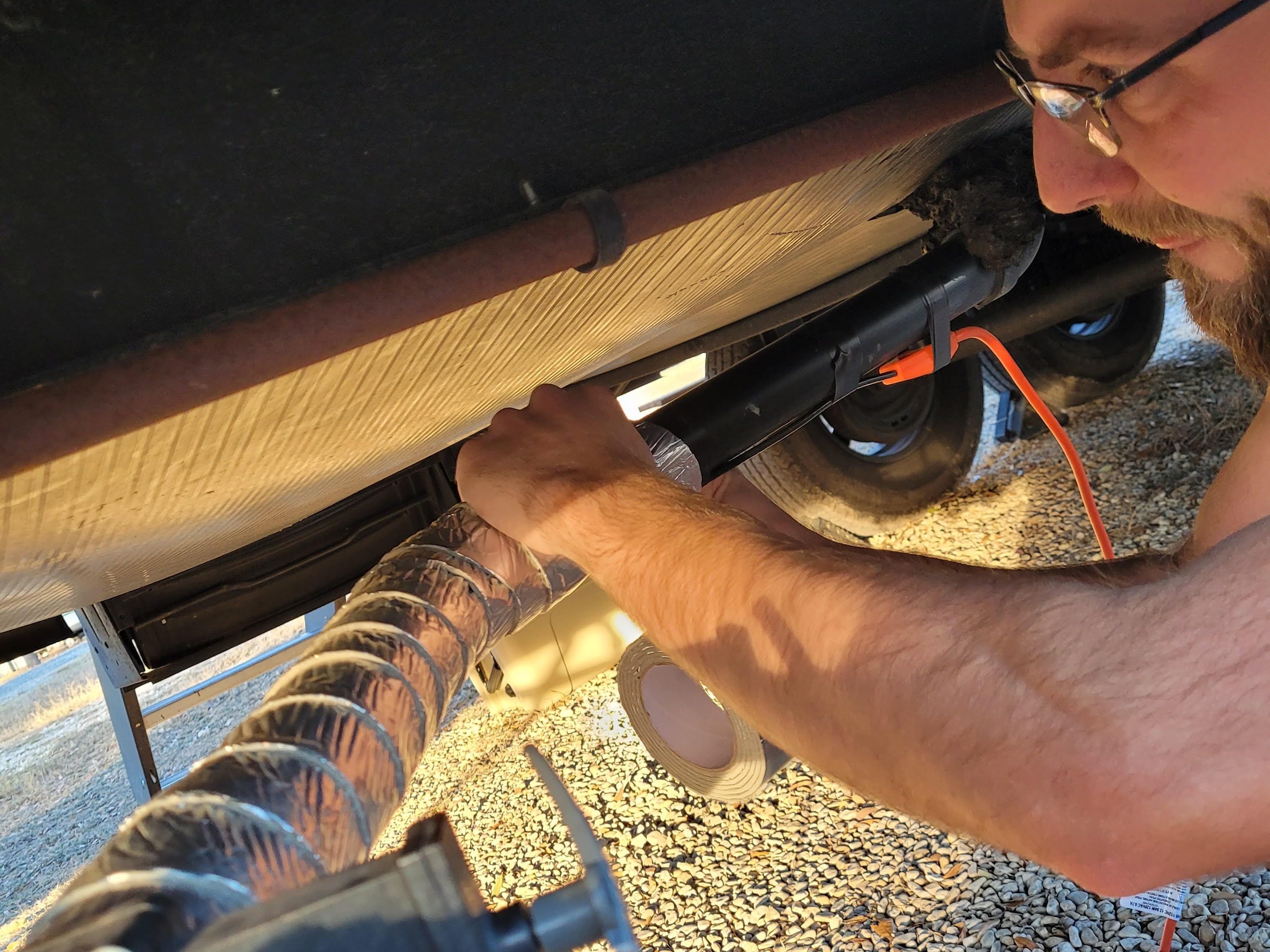
Before the storm hit, we had scrambled to find anywhere that could refill our propane tanks in the middle of a shortage. Most Texans had been quicker than us to react, already preparing for what felt like an apocalyptic weather forecast. We rushed to the hardware store and stocked up on heat tape for the water pipes, hoping this would be enough to insulate our water lines.
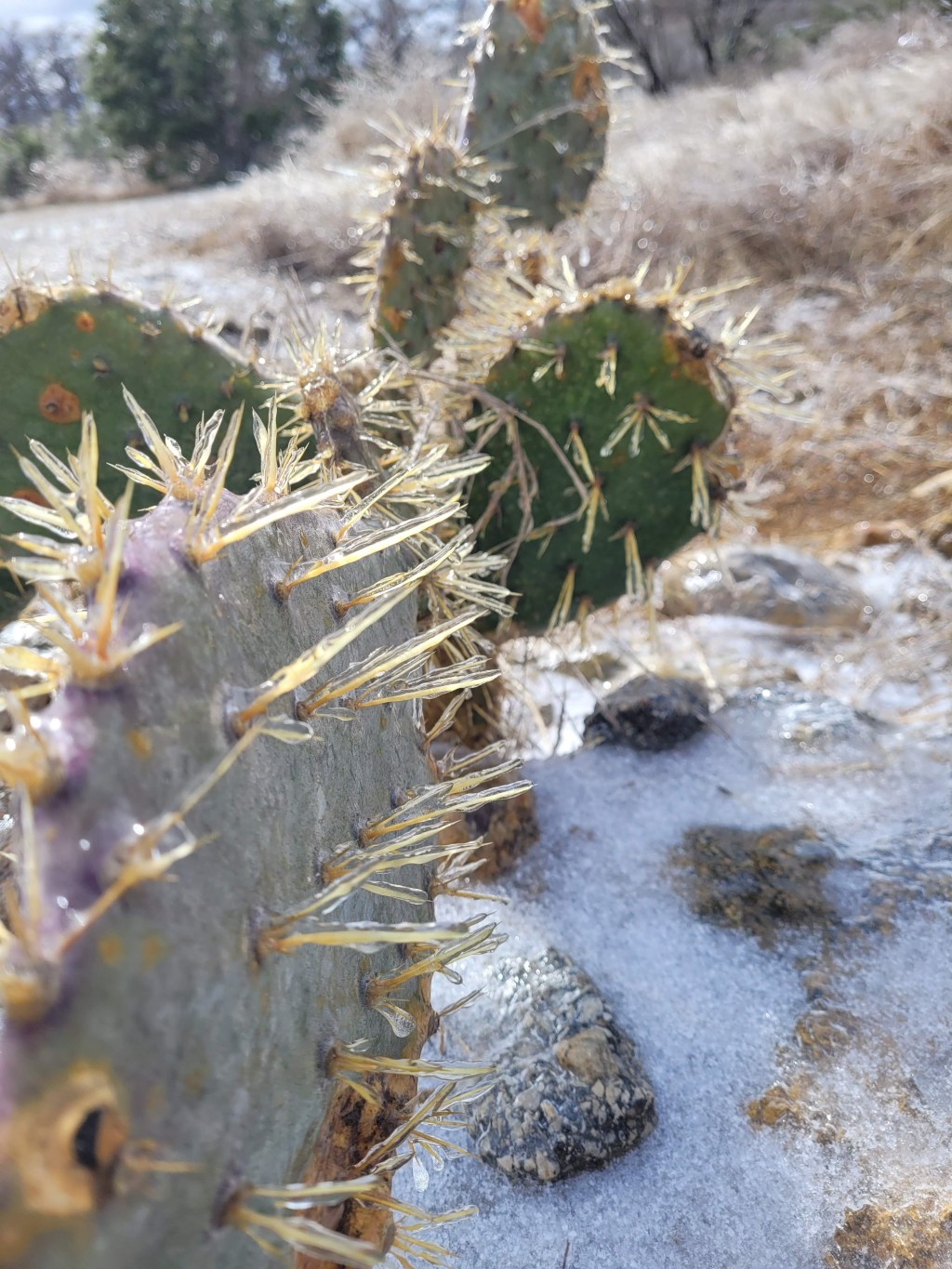
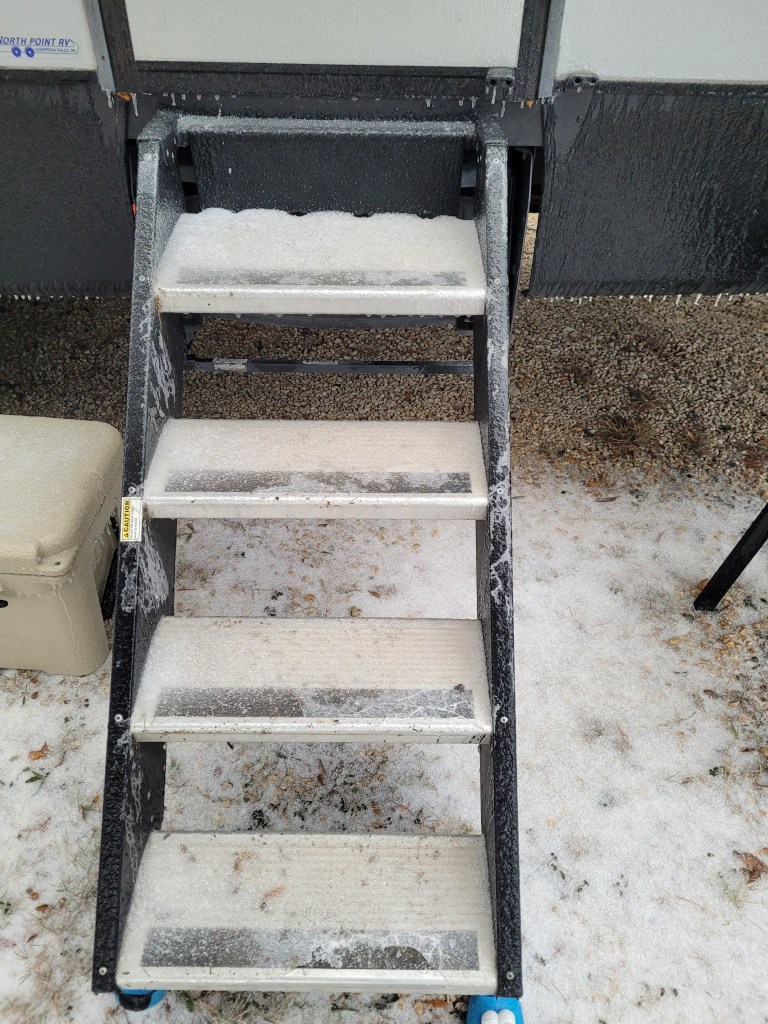
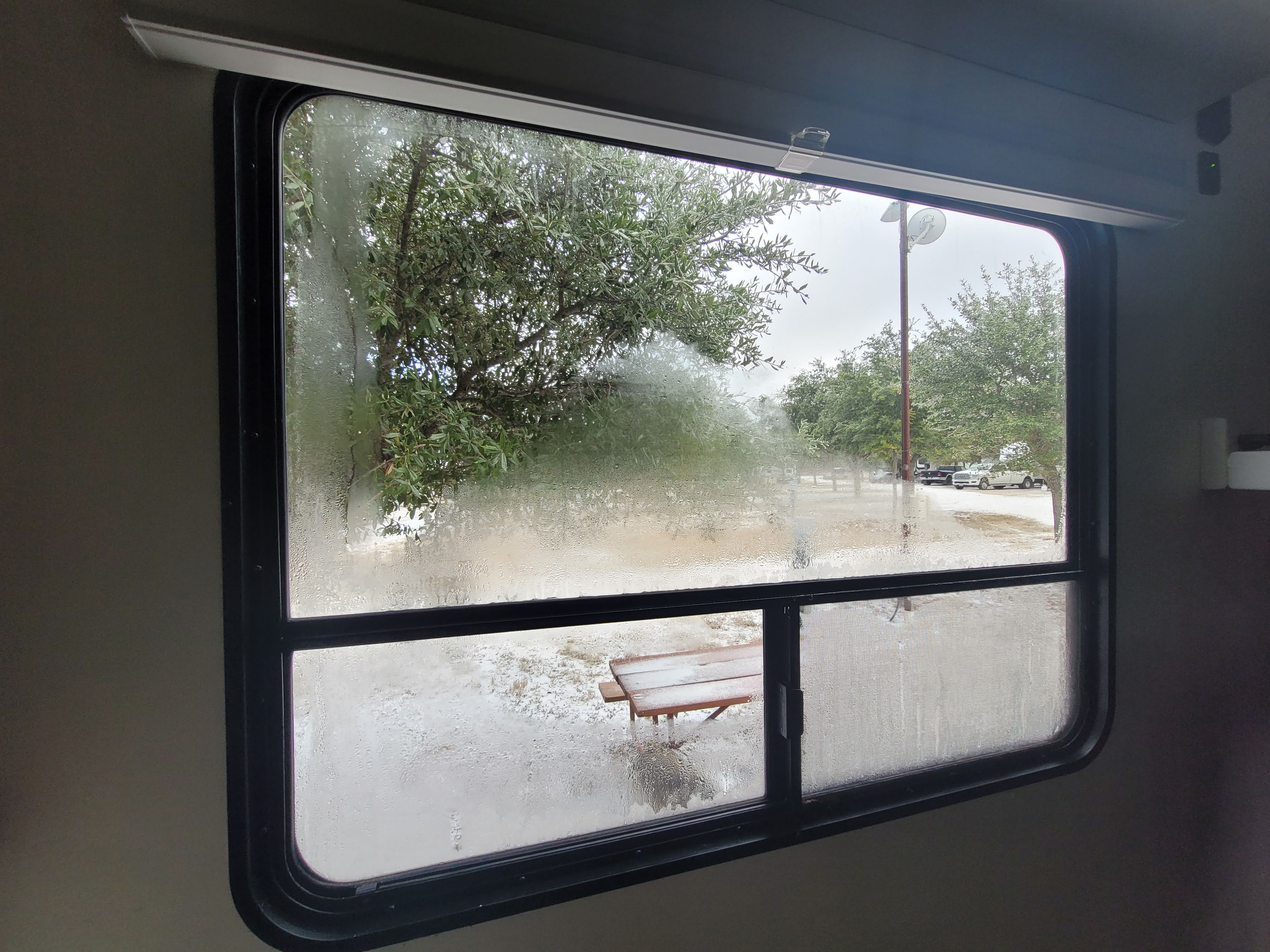
And then, we felt the temperatures drop. We woke up to a layer of ice covering every surface in sight. As I tried going down the stairs to further inspect this southern winter wonderland, my foot slipped on the icy steps and I tumbled down right to the ground that crunched softly under me. Just elegantly gliding through life… clearly.
Those of you who were expecting tips from Alaska have by now realized that we’re actually in Texas. But you’re more than welcome to stick around. This is where the chapter really begins.
If you’ve been following along for a while, you already know there’s always some level of chaos woven into these adventures.
When we’d started planning our departure from Louisiana, we’d learned that the RV park where we were staying owned several properties across the country. Conveniently, one of them sat right along a motorcycle route we’d been wanting to ride: the Texas Hill Country Backcountry Discovery Route loop.
Then I saw the town name: Bandera, the Cowboy Capital of the World. How cool is that?
The location seemed promising so I called to make a reservation. On the other end of the line was the kindest woman, who patiently walked me through availability. Sadly though, they were fully booked for one of our chosen weekends, which meant a full month wasn’t possible.
She explained that the town gets especially busy during Cowboy Mardi Gras.
“Mardi Gras?” I asked, suddenly unsure I had dialed the right place.
“Yes,” she replied warmly. “Cowboy Mardi Gras.”
I hesitated. “Just to make sure… this is Texas, right? Not Louisiana?”
“Yes ma’am,” she said, still as patient as ever. “This is Antler Oaks RV Park in Texas. Mardi Gras isn’t just celebrated in Louisiana, it’s quite popular here too.”
That’s one of the tradeoff we tend to run into when planning our next stop: the monthly rate is worth it, but finding a place that has availability and meets our needs can get complicated.
I asked to be put on the waitlist in case anything opened up. I was definitely disappointed, but still hopeful.
And then the universe did what it does best. Someone canceled that very same afternoon.
I didn’t hesitate. I happily booked it.
When we’d wrapped up our short stint in Minnesota in January, we’d pointed ourselves South toward Louisiana, trading the cold northern air for the long stretch of highway ahead.
It felt a bit like retracing our steps before starting something new again. Once Bus and truck were together again, we’d be heading west toward Texas and its warmer days. Or so we thought.
It’s impressive how one knows they’ve arrived in Texas.
The landscape shifts almost immediately. The soft, forgiving greenery we’d grown used to in Lafayette gives way to something a little more rugged and intense. The earth itself feels drier, dustier, tinged in pale limestone and sunbaked tones.
Then there are the trees. They don’t just grow here, they defend themselves.
Scrubby Ashe junipers dot the hills in thick clusters, their dense, tangled branches giving the land a wild, almost unkempt feel. Mesquite trees twist low to the ground, armed with long, unforgiving thorns that look like they mean business. Even the live oaks, with their sprawling, ancient limbs, seem to reach outward in every direction like they’ve been shaped by years of wind, drought, and stubborn resilience.
Prickly pear cactus line the roadsides, flat green paddles covered in spines that you only notice after you’ve brushed up against them (Ask me how I know.). Agave and yucca plants spike up from the ground like nature’s version of a warning sign: look, don’t touch. It’s a landscape that feels… armed. Like everything here has adapted to hold its ground.
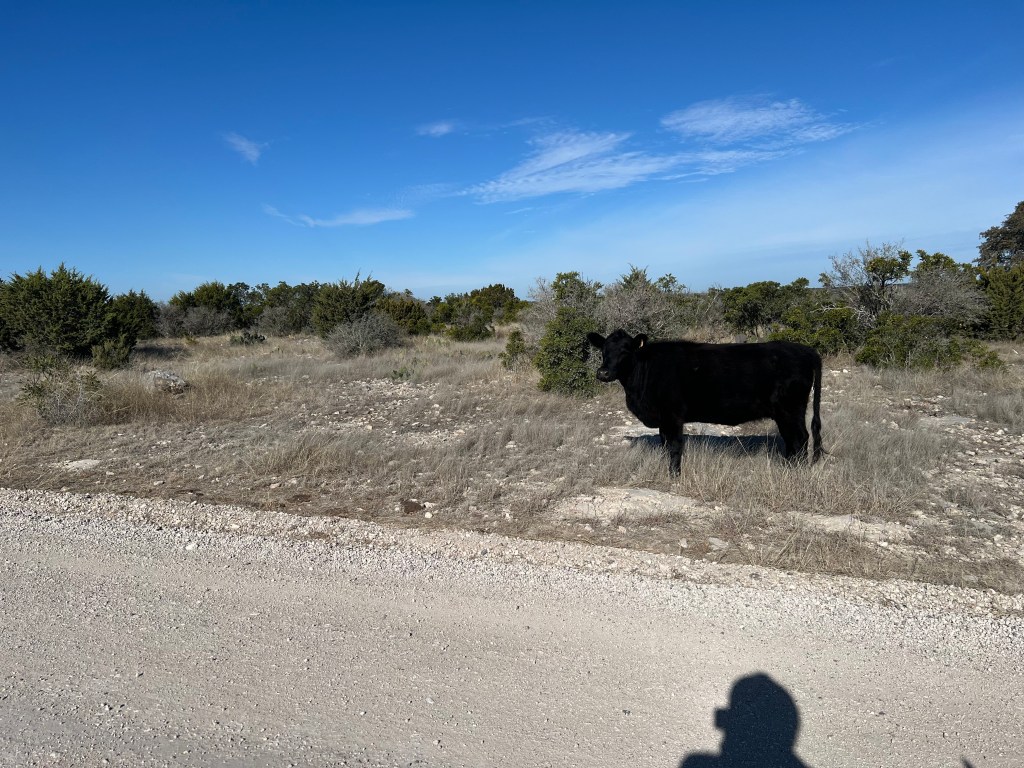
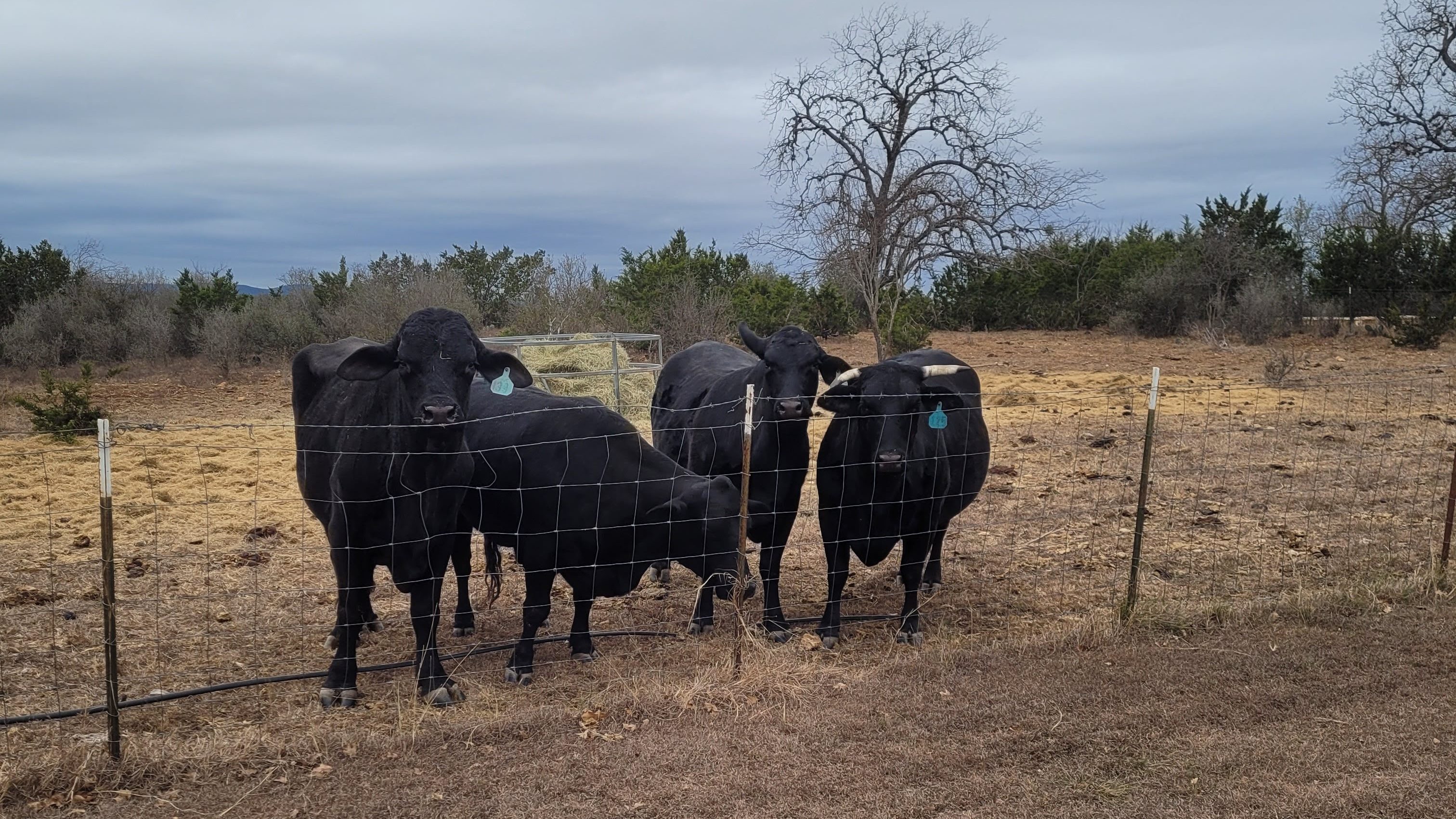
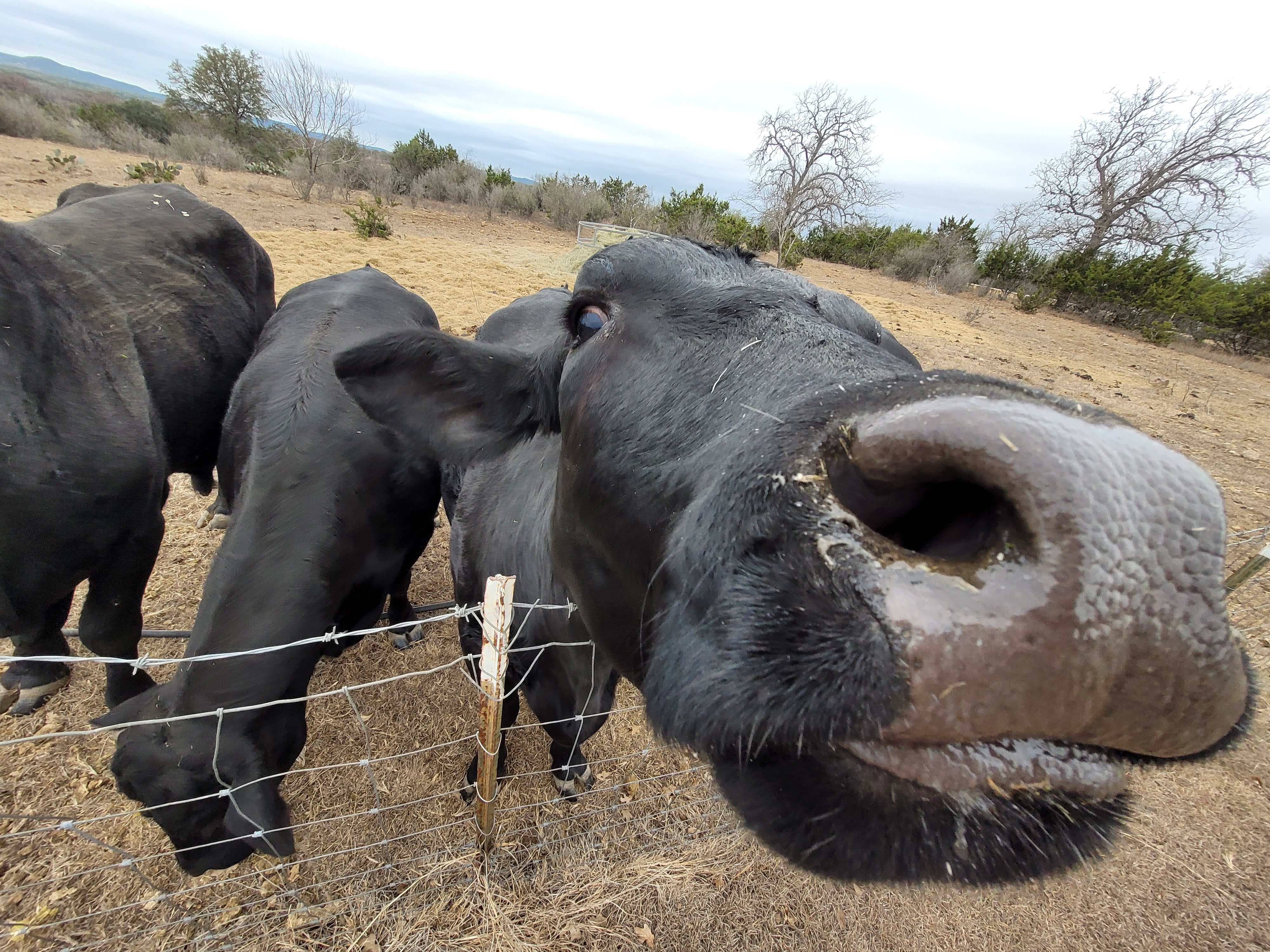
As we turn into the campground, it’s surrounded by wide pastures. We are in cattle country, after all. So it feels only fitting that, as we pull up by the main office building, we’re greeted by four large black Angus cows and bulls lazily working through piles of hay.
Inside the office, we’re welcomed by two lovely women. One of them is Silvia, the patient voice I had spoken to just a few weeks earlier. She walks us through the layout of the campground, points out the amenities, and casually mentions that the cows are very friendly and love to greet visitors.
The other woman, who happens to be the park manager, disappears into the back room and returns with a large plastic bag full of treats for us to give the cows.
I am thrilled.
Chris is slightly baffled at how something so simple can spark that level of excitement from me. But growing up on a hobby farm, I suppose he got this out of his system early. My inner child, however, was raised mostly in a big city, where interactions with wildlife were limited… unless you were willing to play a risky game of rabies roulette with a raccoon digging through the trash.
So yes, this felt magical.
Naturally, our evening walks around the campground quickly turned into cow-spotting missions. I never left without a few snacks tucked into my hoodie pocket, just in case.
At first, the herd kept their distance, watching us cautiously from afar. Fair enough. I wouldn’t trust random strangers either without knowing their intentions.
But eventually, curiosity (and snacks) won.
One day, I caught them close enough to the fence and pulled out a treat. That was all it took.
From then on, they began approaching us during our walks, growing more comfortable with each encounter accepting our petting them and enthusiastically nibbling their treats.
One evening we called out to them from a neighboring pasture, not expecting much. But suddenly, the youngest bull came cantering toward us, throwing in little excited bucks along the way, clearly determined to get his share of cookies.
I didn’t think cows could get more endearing. Boy, was I was wrong.
On Today’s Episode Of Chris And His Knockers… And Other Animal Encounters
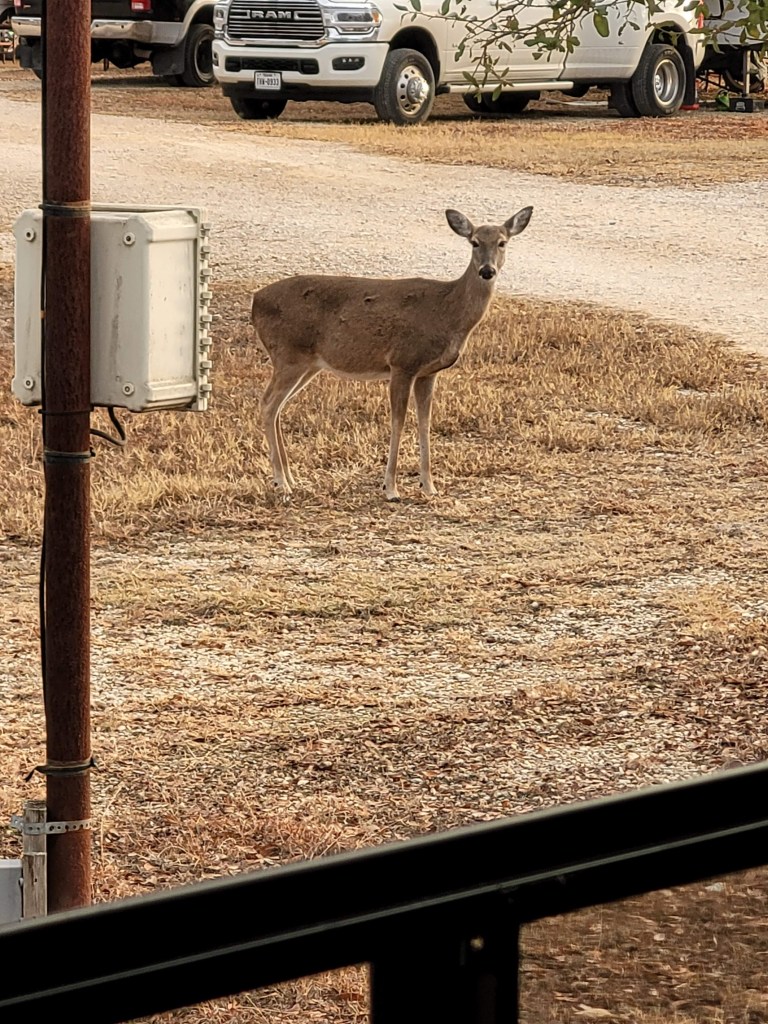
We are staying at a campground absolutely overrun with deer, to Chris’ absolute delight.
Not the tall, sturdy, majestic deer we’re used to seeing in Minnesota. These seem like their smaller, slightly more delicate cousins. Hill Country deer (mostly white-tailed) are leaner, lighter on their feet, with narrower frames and this constant, alert energy about them.
They graze casually through campsites, wander between rigs like they pay rent, and regularly stop just close enough before deciding whether you’re worth worrying about. It’s just enough interaction to completely derail Chris.
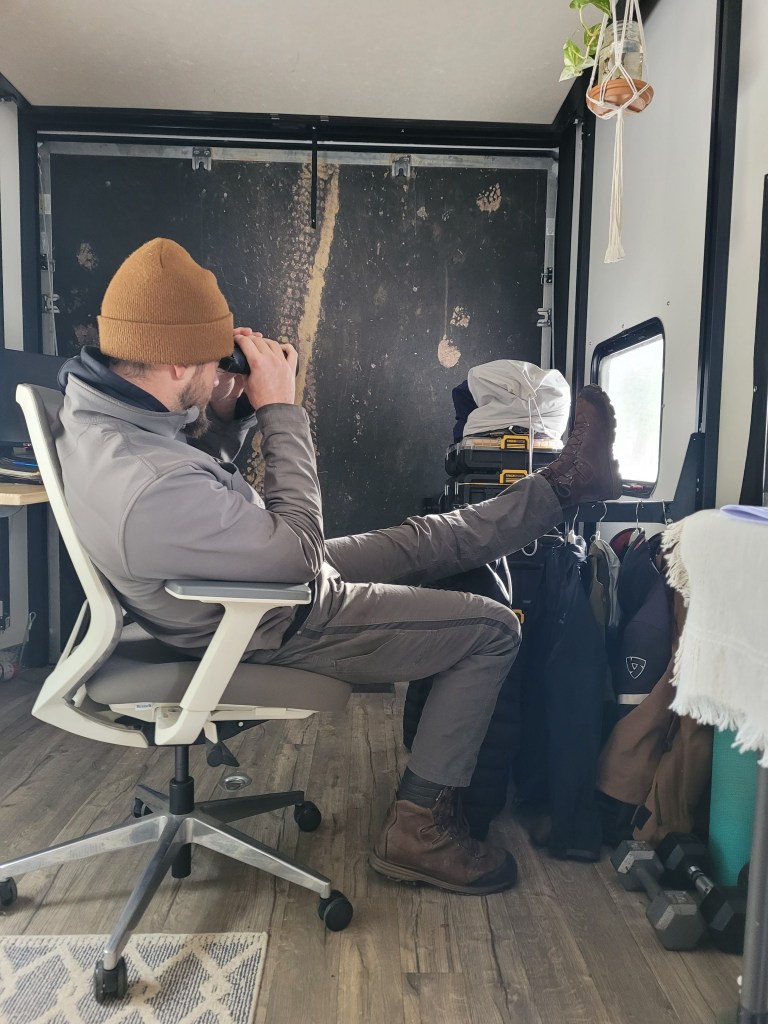
Because once one deer shows up, that’s it! He’s at the window.
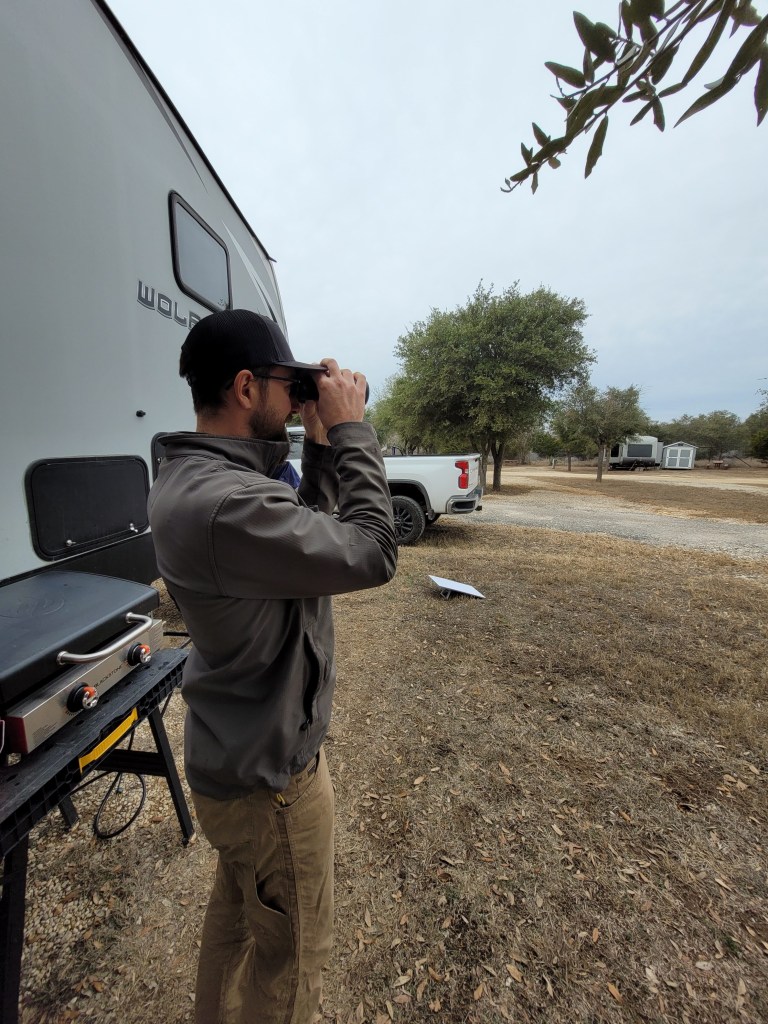
Watching with binoculars in hand. Waiting. Narrating.
Hence: Chris and his knockers.
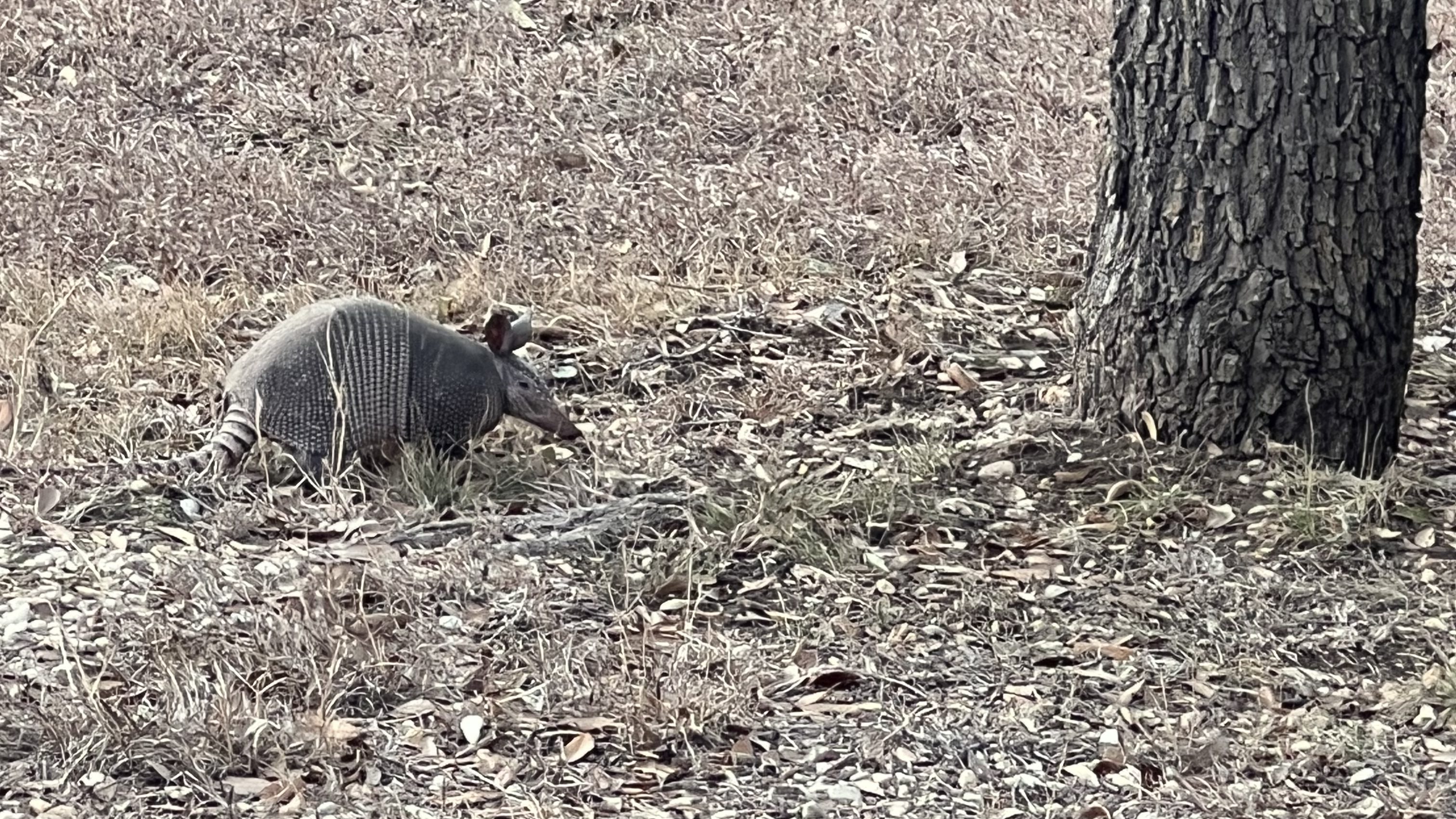
But the deer aren’t the only regulars. We also have armadillos—what we’ve humorously started calling the tactical possums of Texas after reading that on a t-shirt.
If you’ve never seen one up close, imagine a small, round-bodied creature wearing medieval armor. Their bodies are covered in these segmented, bony plates that move as they shuffle along, noses pressed to the ground, constantly sniffing for insects. It’s like nature couldn’t decide between “tank” and “rodent” and just… went with both.
They’re not fast. They’re not graceful. And most importantly, they don’t see very well.
Which, unfortunately (or fortunately), has turned them into Chris’s favorite form of entertainment while on our daily walks around the property.
He has developed what can only be described as a stealth approach technique, where he slowly tries to sneak up on them while they’re busy minding their own business. And for just a brief moment it almost works.
The second the armadillo senses something’s off, however, it bolts in the most chaotic, zigzagging escape pattern imaginable, leaving Chris standing there trying not to laugh at how completely ludicrous this whole interaction is.
To be clear—he never actually tries to grab one. They are wild animals, after all. This is strictly a “look but don’t touch (and maybe lightly stalk for fun)” situation.
And then there’s the surprising absence of something we were fully expecting. Snakes. Before arriving in Texas, it felt like everyone had a story, a warning, or a dramatic retelling involving rattle snakes. We braced ourselves for constant vigilance. Watching every step, scanning every trail. And yet… not a single sighting.
I guess this is the animal equivalent of the hill people: the fear of the unknown often proves more grandiose than the reality.
Took a Day Trip To San Antonio
Because our first few weeks in Texas have greeted us with inclement weather, our motorcycles are on a forced break for the time being.
On this particular weekend, we’ve traded in our adventure gear for walking shoes as we take a drive to San Antonio and explore the city and some important American history that goes along with it.
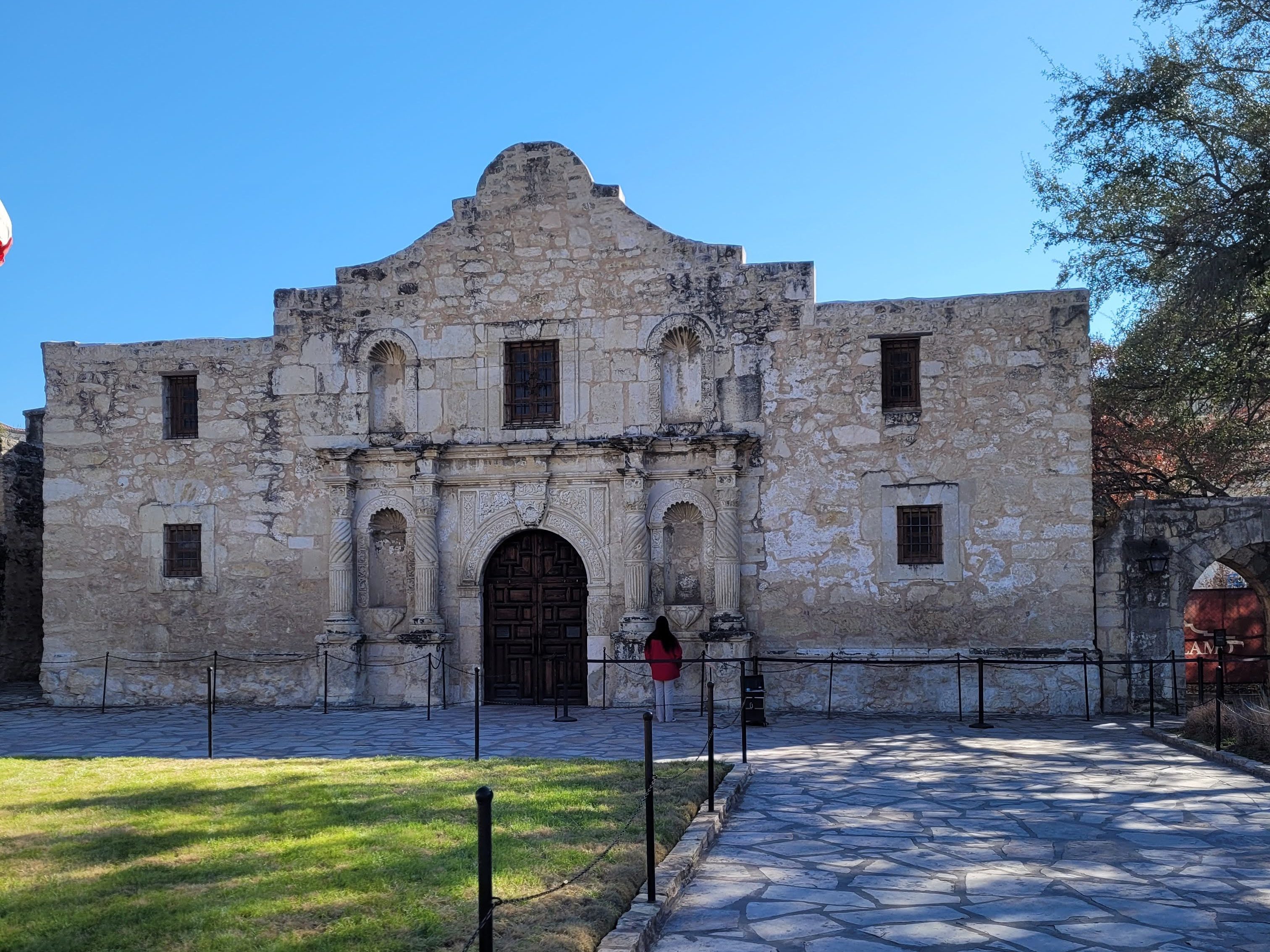
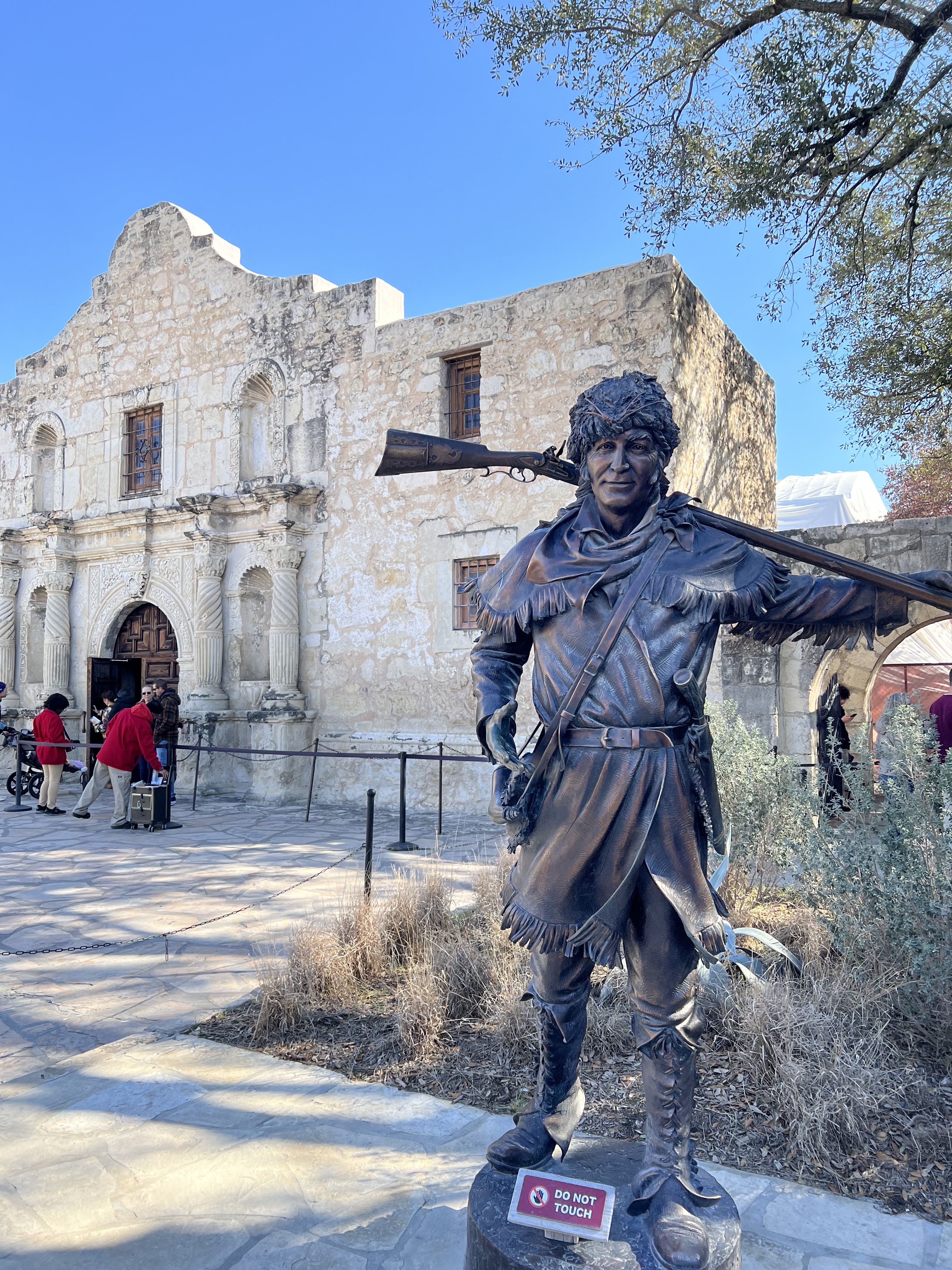
There’s a quiet gravity to The Alamo that you don’t quite grasp until you’re standing inside its walls. The limestone façade—smaller than you might expect—feels less like a grand monument and more like a preserved memory, held carefully in place amid the growing city around it.
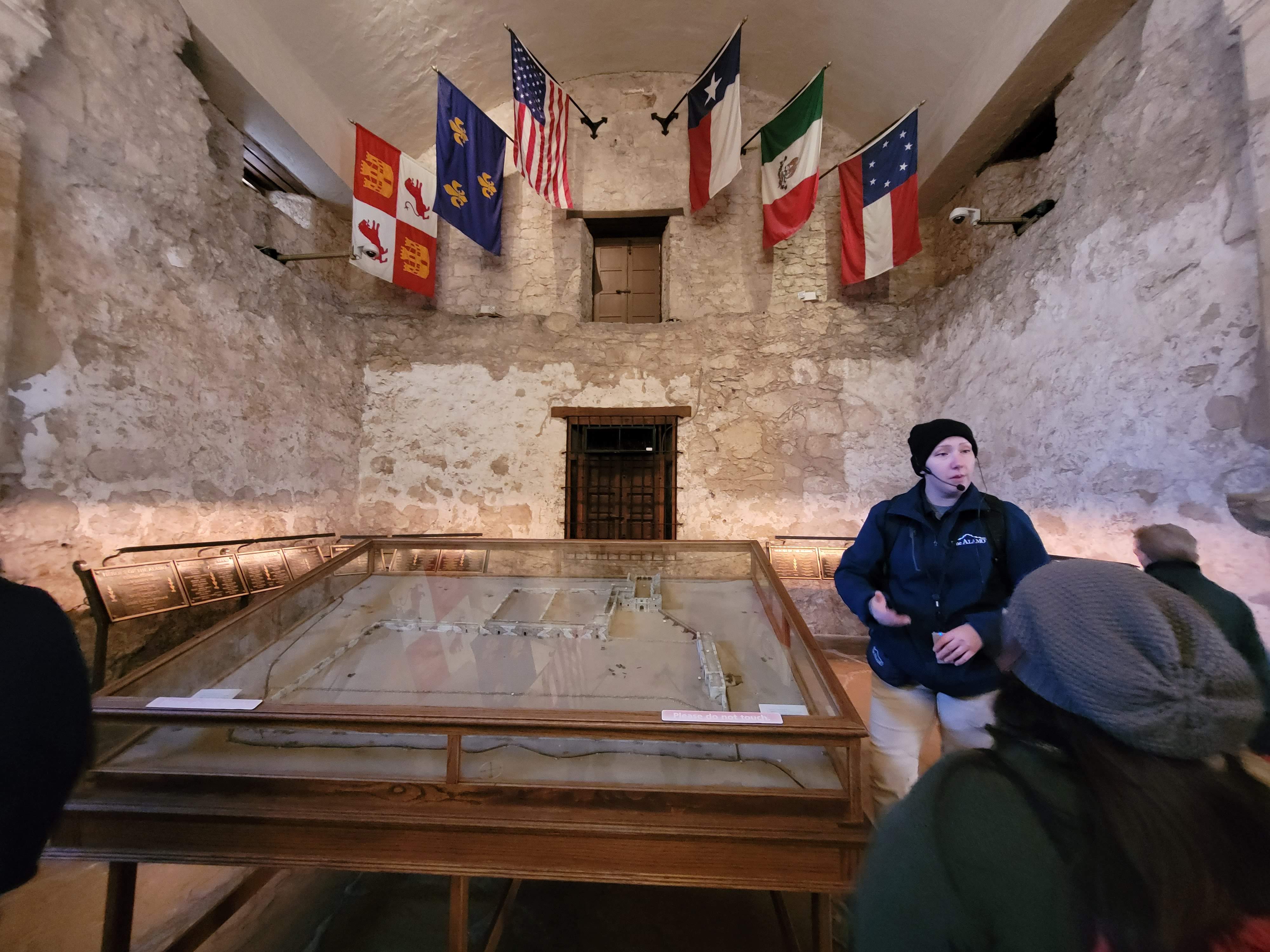
We opted for a guided tour, which shifted the experience from simply seeing to understanding. Walking through the grounds, the guide unraveled layers of history that stretched beyond the iconic 1836 battle—back to its origins as an 18th-century Spanish mission. The low stone buildings, weathered wooden doors, and open courtyards framed stories of resilience and conflict in a way that felt tangible.
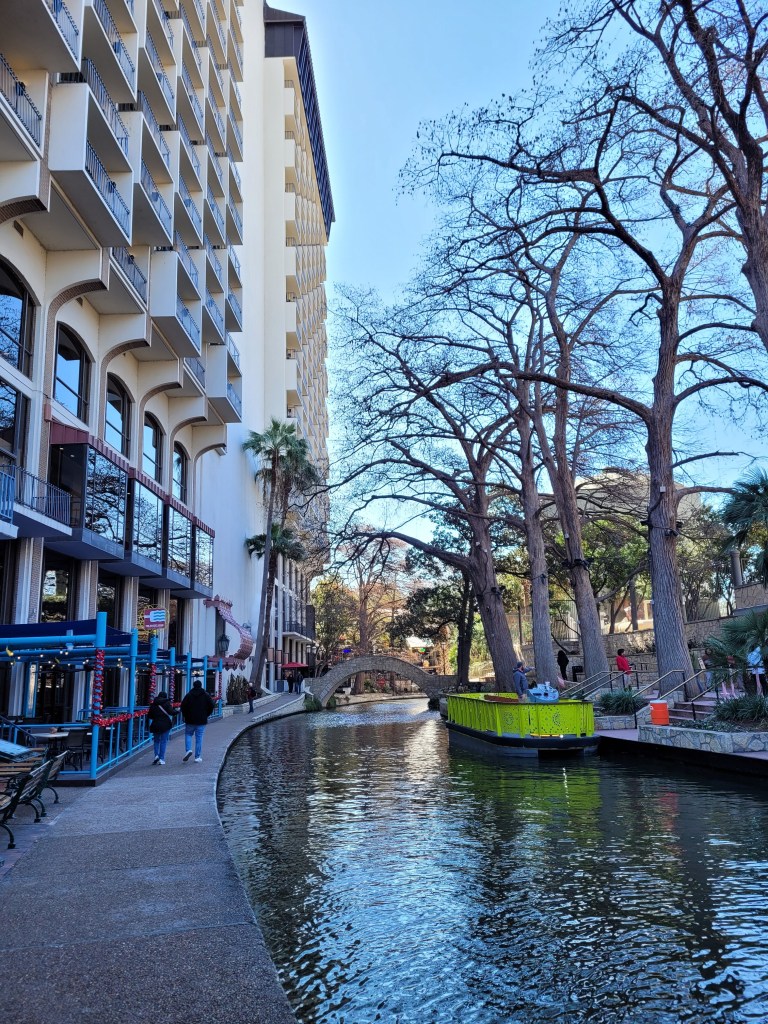
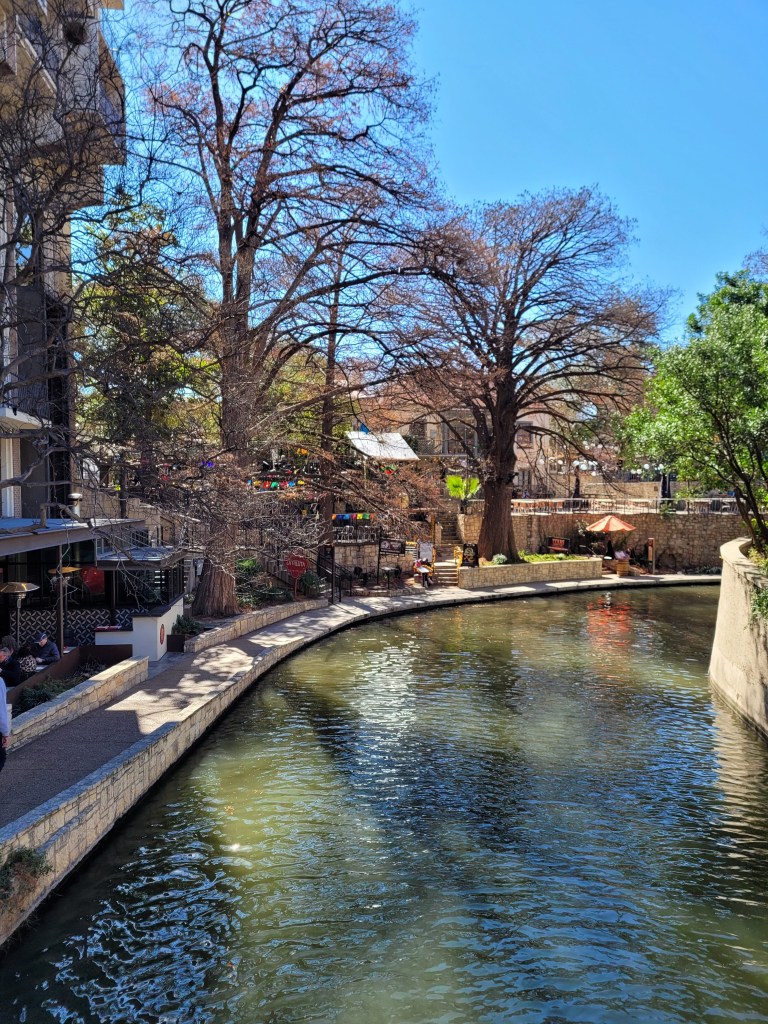
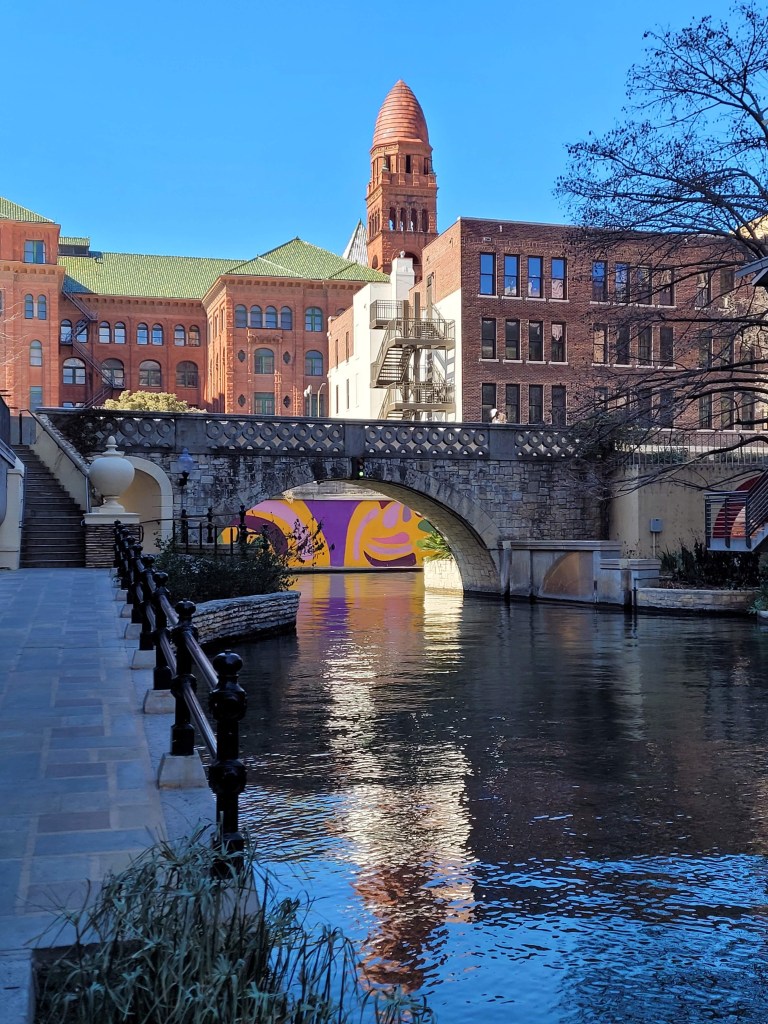
From there, we dropped down into the winding pathways of the San Antonio River Walk, where the city shifts again—this time into something more intimate. The River Walk sits below street level, creating a kind of hidden corridor lined with stone bridges, cypress trees, and restaurants that hug the water’s edge. It makes me think of the waterways of Venice, Italy, especially when you see public transportation in the form of boats.
The cold had thinned the crowds, which made the experience feel almost private. Without the usual hum of packed patios and passing tour boats, you notice the smaller details—the way the water moves slowly under the bridges and the contrast between the quiet river and the busy streets just above.
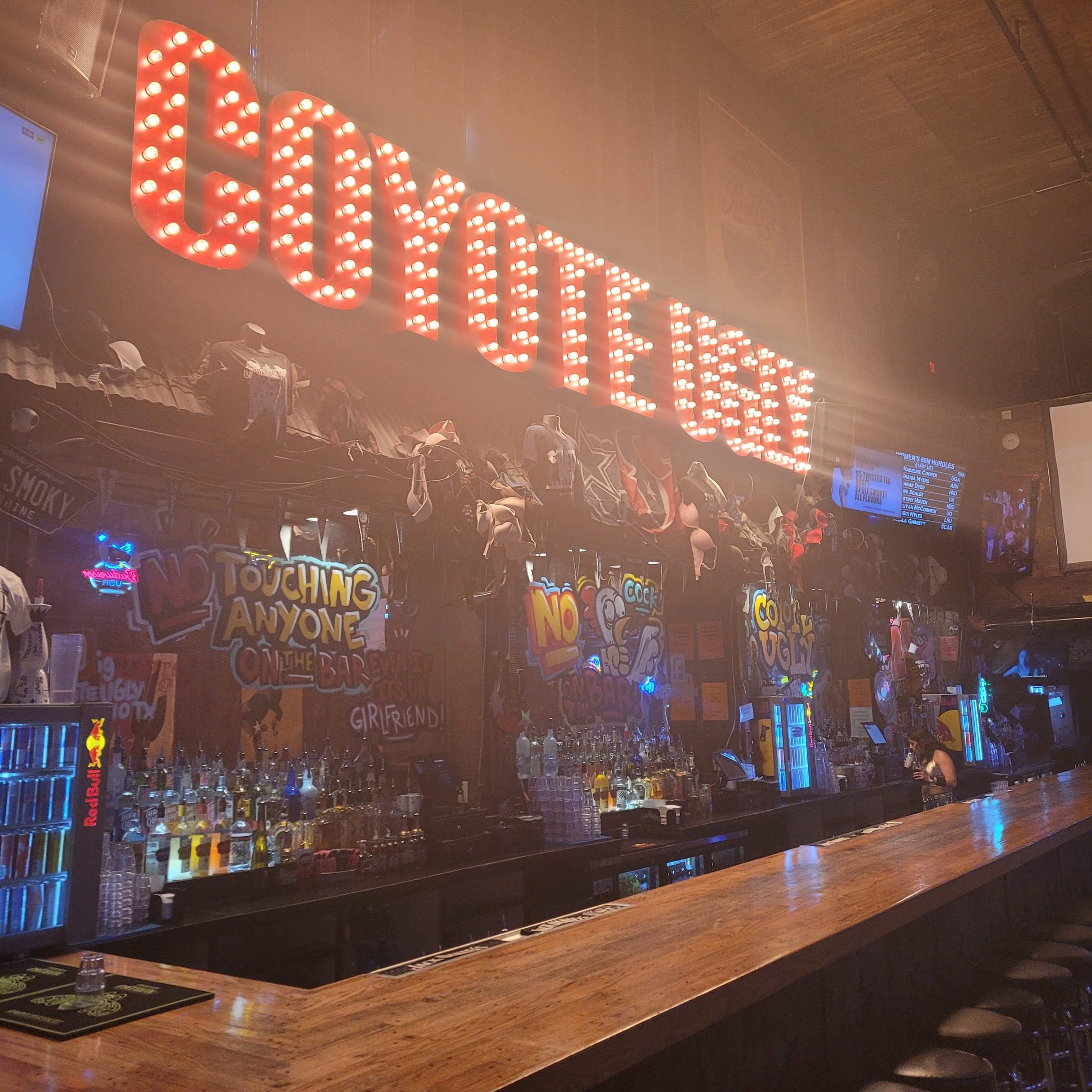
We passed by the original Coyote Ugly Saloon, doors open just after noon, already humming with the promise of a much louder night ahead. Inside, it carried that unmistakable energy of dim lighting, worn wood, a bar built for standing on as much as leaning against.
A bartender, fully in character, welcomed us in with an immediate suggestion of shooters. It was tempting in a “this is the story we’ll tell later” kind of way—but the clock (and the rest of the day’s plans) nudged us toward restraint. We took a quick look, soaked in the atmosphere, and stepped back out into the daylight before things escalated past curiosity.
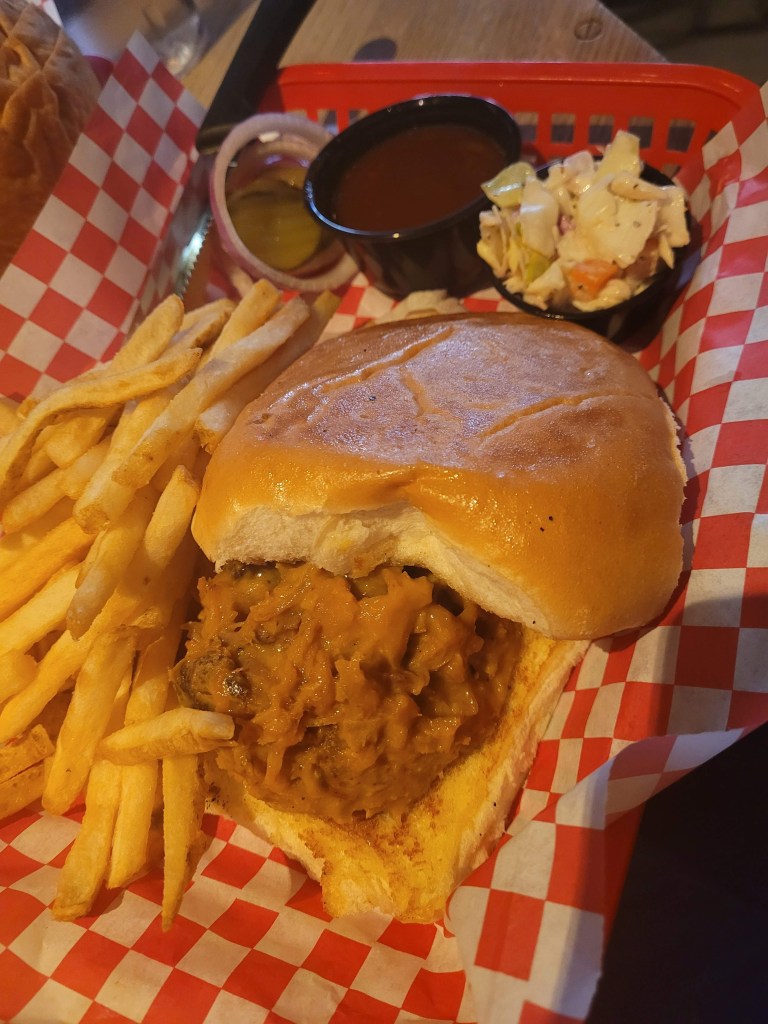
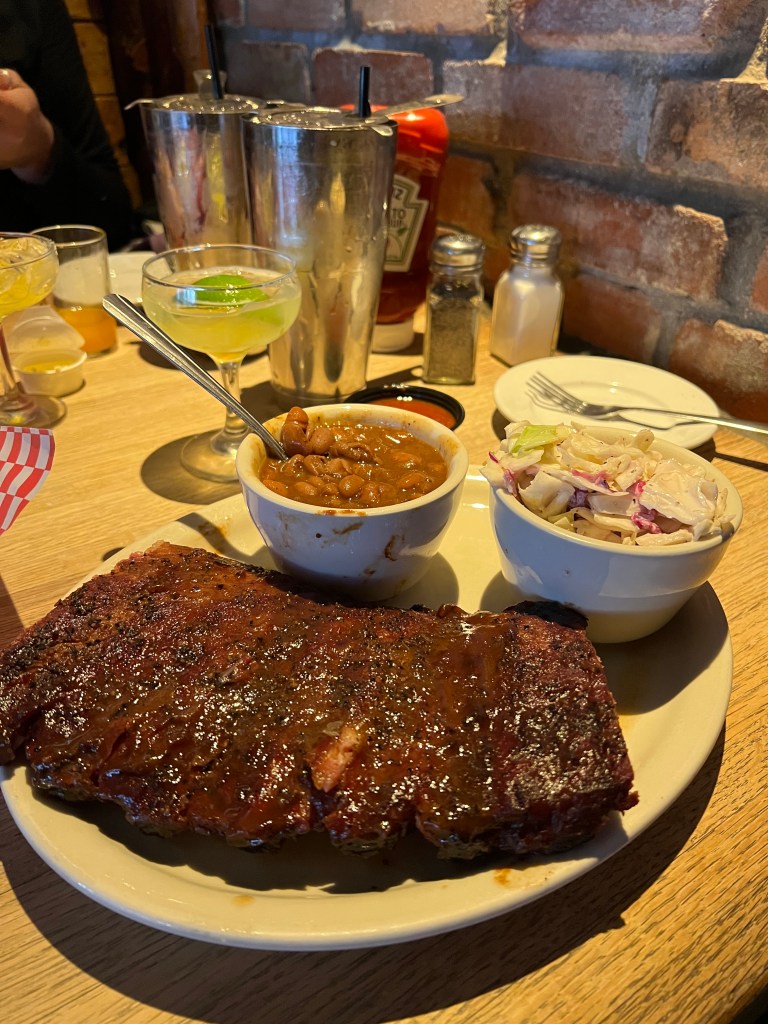
We stopped for an unapologetically Texan lunch at The County Line BBQ: a pulled pork sandwich piled high and ribs that were done right. The sauce leaned rich, slightly sweet, with a tang that cut through the heaviness. And because this is still Texas, margaritas promptly made their way to the table.
Cowboy Mardi Gras And The Town of Bandera
Known as the “Cowboy Capital of the World,” this small Hill Country town of roughly 900 residents swells to nearly 10,000 over the Cowboy Mardi Gras weekend.
We watched it unfold in real time at the campground at first. A group of colorful RVs rolled in for the weekend like a traveling burst of energy, unloading decorations, beads, and just enough sparkle to transform campsites into mini Mardi Gras outposts.
The “Lady of the Fly” group is a traveling community of women who gather around a shared love of the road and camping. What stands out most is how quickly they transform a space. They’ve brought a kind of festive momentum with them that sets the tone for what is about to unfold in town.
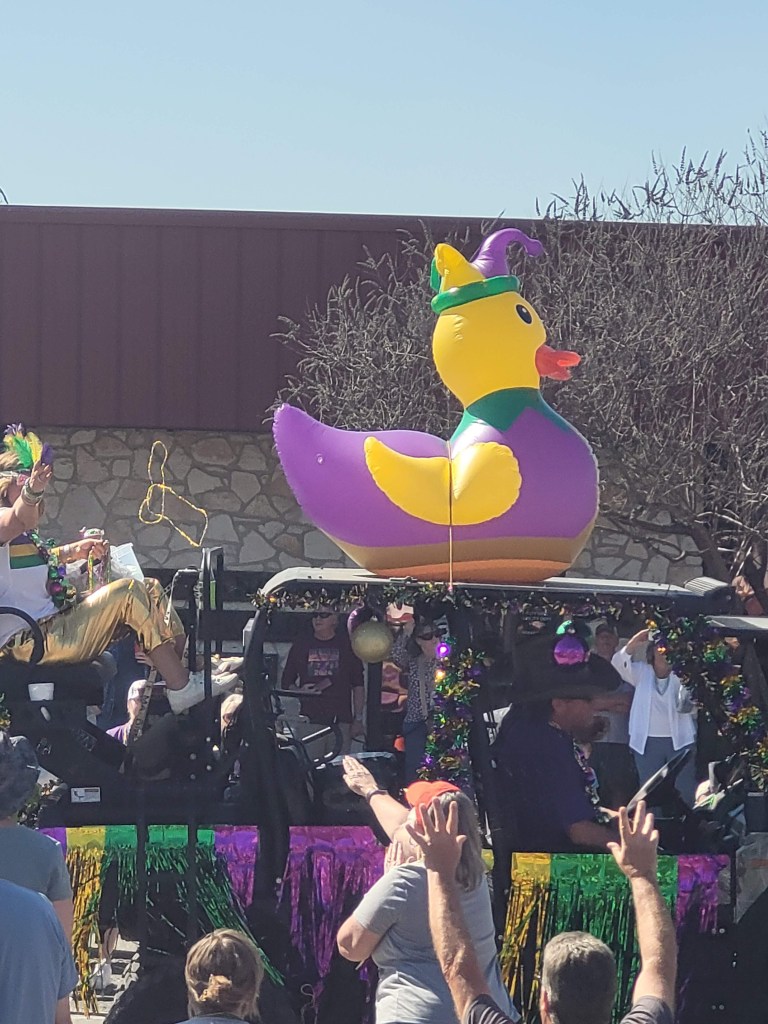
When the parade rolled through, it didn’t just pass by. Float after float made its way down Main Street, each one a mix of western grit and Mardi Gras flair. Horses walked alongside decorated trailers, boots and hats paired with purple, green, and gold.
We stood shoulder to shoulder with strangers who didn’t feel like strangers for long, waving, laughing, and reaching out as beads arced through the air. Some were caught cleanly, others bounced off hands and hit the pavement, immediately scooped up with the kind of competitive joy that only something as simple as a plastic necklace can inspire.
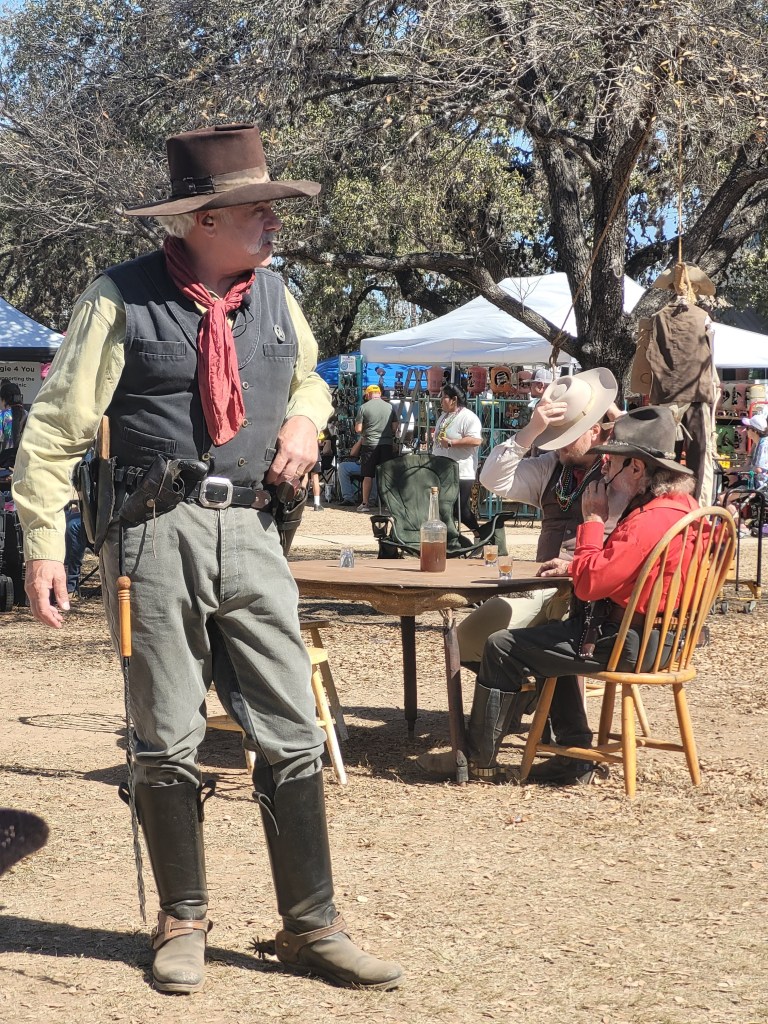
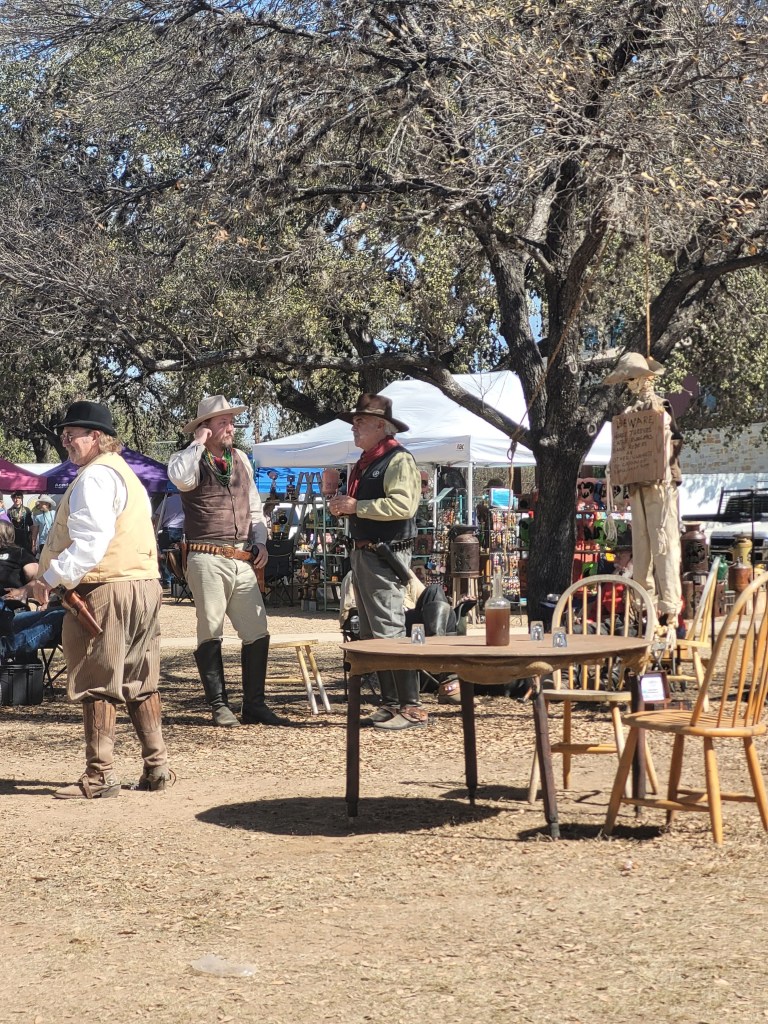
Somewhere between the floats and the shops, we found ourselves pulled towards a group of reenactors fully committed to another era. Dressed as cowboys, sheriffs, and outlaws, they carried themselves like they’d stepped straight out of the 1800s, complete with exaggerated swagger and perfectly timed one-liners.
The gunfight reenactment was equal parts theatrical and hilarious. Every movement was deliberate, every draw just dramatic enough, every fall to the ground a little more exaggerated than the last. They stayed in character the entire time, playing off the crowd, stretching the moment in a way that made you forget what time period we’re in.
Before the beads and parade floats, Bandera earned its identity the hard way. In the late 1800s, it was a major staging ground for cattle drives—longhorns gathered here before being pushed north along routes like the Western Trail. Cowboys, many of them Mexican vaqueros whose techniques shaped what we now recognize as “cowboy culture,” drove herds across vast stretches of land toward railheads in Kansas.
That legacy isn’t tucked away in a museum, it’s woven directly into the town. Along Main Street, storefronts embrace the aesthetic: leather goods, western wear, old saloons, and family-run shops that feel more like a lived-in extensions of the people behind the counter than retail spaces.
My Very American Bucket List
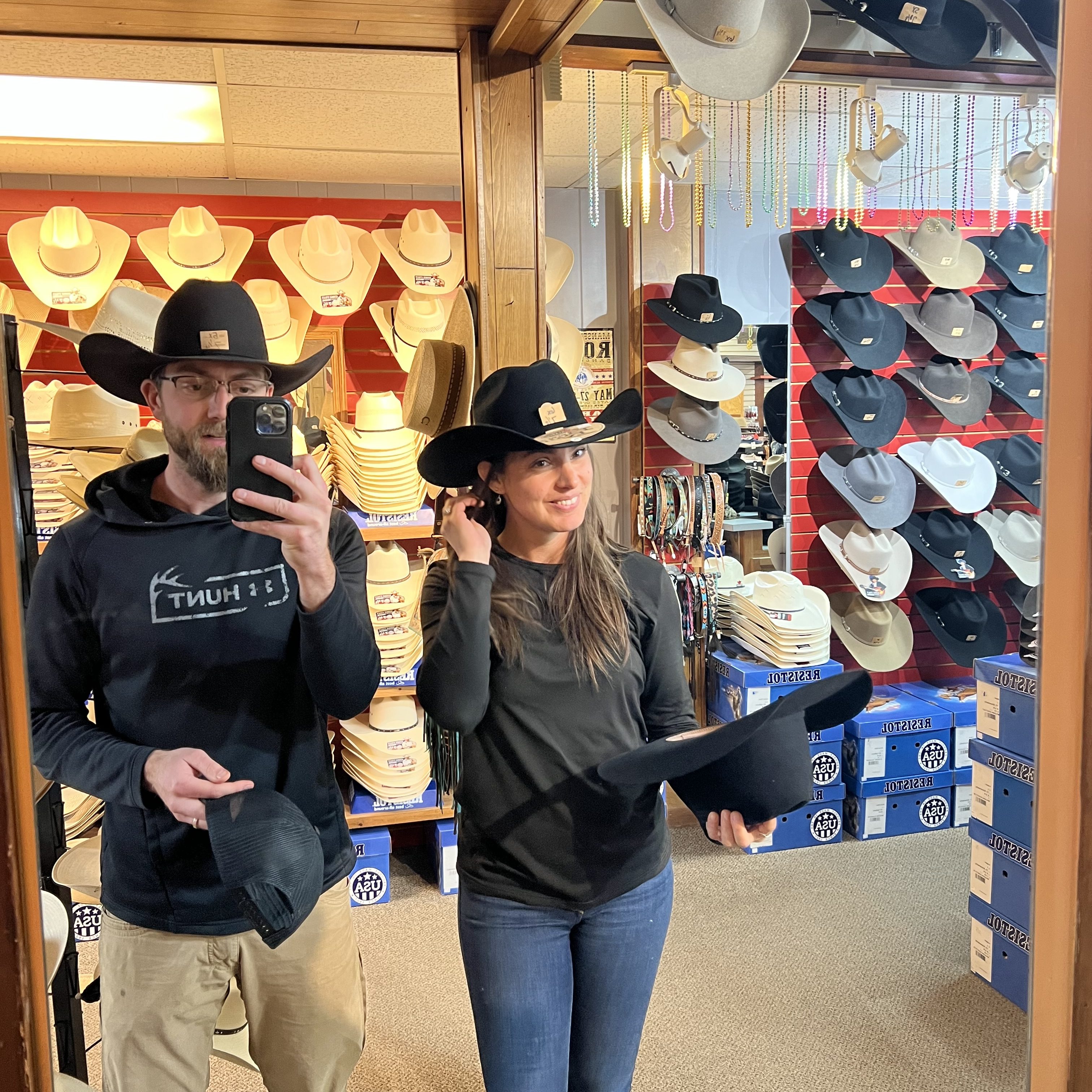
Somewhere along this full-time RV journey, I unknowingly started what I now call “my very American bucket list.” As a Canadian living in the U.S., it became less about sightseeing and more about immersion—leaning into the things that feel distinctly American. Truthfully, the list is a moving target. Every time someone asks what’s on it, I seem to reinvent it on the spot. But two things have remained consistent. First: noodling—yes, the act of catching fish with your bare hands. That one is still… under review, pending both feasibility and a serious conversation about my personal safety. Second: an authentic cowboy hat from Texas.
Which is how we found ourselves inside The Cowboy Store, me trying on what felt like every hat in the building. Felt, straw, black, tan—each one slightly different, each one requiring a full head tilt and mirror check. And of course, the one I loved and fit nicely on my apparently large head was not the most budget-friendly option. In my defense, there are way more expensive choices. So my preferred option was the middle ground. Oh yeah!, I got it. When I called my sister to tell her about my new accessory, she immediately labeled the purchase as ridiculous, which only made me dig my heels in further. I wore it proudly during Cowboy Mardi Gras, fully committing to the look. Financially, the cost-per-wear hasn’t exactly balanced out yet but I remain stubbornly optimistic that it will.
Southern Hospitality: An Homage To The People We Met
Just as the landscape seems harsh, the opposite is true of Texans in everyday life. Conversations start easily here even in the most ordinary places, like the grocery store aisle. It’s a polite nod, a simple “ma’am,” a small exchange that somehow carries a quiet respect. It’s effortless and I love it!
During our stay at the campground, the people we met seemed to embody that spirit in their own distinct ways.
Keith and Linda were the kind of couple that make you believe opposites really do attract and thrive. Keith, full of humor and calm, carried himself with an easy kindness. Linda, on the other hand, was sharp, witty, and unapologetically direct. Together, they balanced each other perfectly. It reminded me of that “black cat and golden retriever” pairing. Different energies, yet fitting seamlessly.
Then there was Cindy. Opinionated, full of sass, and always accompanied by her dog, Robin—a round, determined pitbull who seemed to have appointed herself as the one in charge of their walks. More often than not, Robin walked Cindy. She didn’t seem to mind.
Jason, the campground’s new maintenance guy, brought a different kind of charm. He had stories collected from campgrounds all over the country and a way of turning small mishaps into something worth laughing about. A broken water line spraying wildly from an empty site wasn’t a problem to him. “Perfect bird fountain,” he said. And if you dug it out a little more? Maybe a koi pond. His ability to find humor in the everyday feels contagious.
And then there was a specific moment that truly caught us off guard.
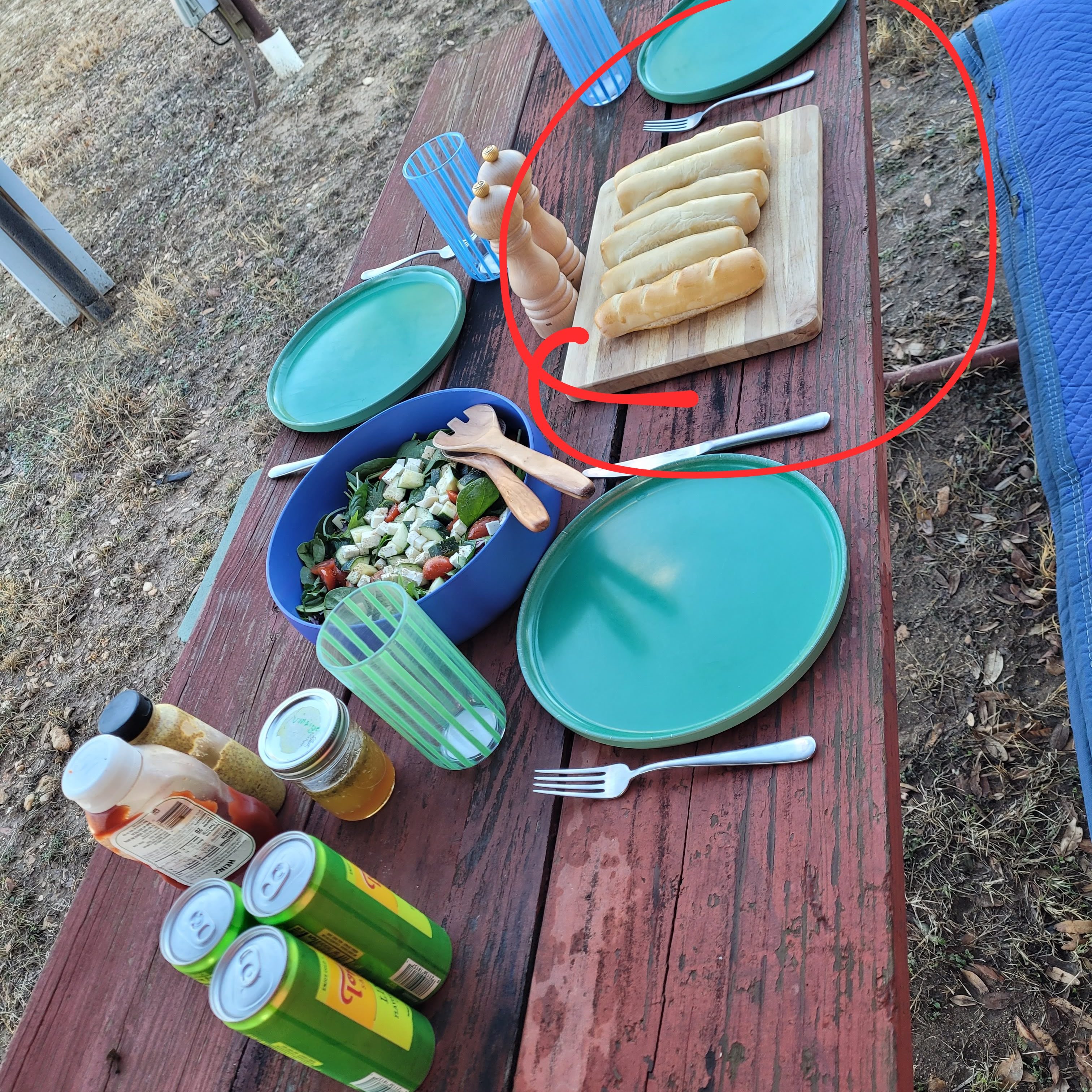
One evening, while getting ready for dinner, Chris was outside making homemade hotdog buns. Space inside the bus is limited, so he had taken over what little room he could find outside, fully focused on kneading the dough. What he didn’t realize was that he had an audience.
A woman staying a few spots down had apparently been watching him.
Later that night, as we sat down for one last dinner at the campground with Jason, she suddenly pulled up beside us. Without hesitation, she leaned out and told Chris how amazing it was to watch a young man knead dough so thoroughly.
We were stunned.
We had been there for a month and had never exchanged a single word with her. And now, out of nowhere, she was going out of her way to compliment him, practically swooning.
Chris didn’t quite know how to respond. None of us did.
She drove off just as quickly as she had appeared, leaving us sitting there, completely dumbfounded… and then absolutely cracking up. It was one of those moments you couldn’t have planned if you tried.
The infamous homemade hotdog buns that caused quite the reaction from our neighbor.
Before starting this newest chapter of our travels, we first have to rewind to one of our previous destinations.
The story of how we ended up in Louisiana actually begins much farther north, in Nova Scotia.
While we were there, I had a few memorable conversations with a man named Doug.
Doug was one of those people who seems to have lived several different lives, each one more interesting than the other. At one point he had been a bush pilot in Alaska. He had made his way there from California and, if I remember correctly, hitchhiked much of the journey. The kind of story that makes you pause and realize there are far more ways to live our lives. After more than a decade in Lafayette, Louisiana, Doug had plenty of stories to share. His descriptions of his life there and the places his wife and he cherished inspired us to look more closely at the destination and, eventually, make the journey south.
Doug said something during one of our conversations that has stayed with me: “The difference between adversity and adventure is your attitude.”
Such a simple sentence. Yet, it completely shifted how I saw this newly embarked travel lifestyle. Instead of viewing uncertainty as something to control, I began to see it as an invitation to something potentially meaningful. A reminder that what defines a person isn’t just what they do in life, but how they choose to live their lives. Sometimes, it’s the experiences, the risks, and the stories gathered along the way that shape us the most.
Traveling from Nova Scotia to Louisiana felt fitting, since their history is so intertwined.
Nova Scotia was the homeland of the Acadians. In the 1700s, many of them were deported during the Great Expulsion and eventually made their way to Louisiana.
Over time, the word Acadian evolved into Cajun, partly because the English struggled to pronounce the original French name.
And with that bit of history in mind, Lafayette suddenly felt like the perfect place to explore.
Not long after leaving Arkansas, the landscape began to change. The forests gave way to small palm trees, the air felt heavy with humidity and the roads slowly dropped into the flat, watery lowlands of southern Louisiana. We had officially entered bayou country.
Our arrival, however, did not quite match the romantic image I’d conveniently made up in my mind.
During the first week, it rained. And rained. And rained.
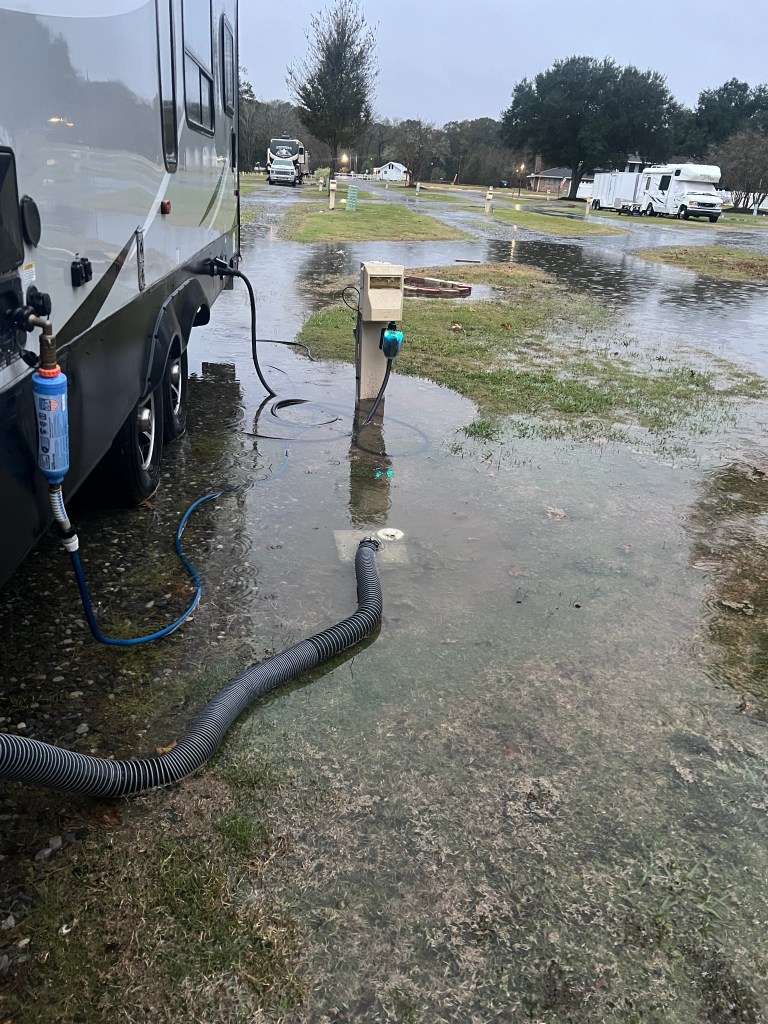
What started as a few wet days quickly turned into a relentless stretch of gray skies and steady downpours. The campground flooded and pools of water surrounded the trailers. Exploring was limited, and for a little while it felt like the weather had burst the bubble of adventure we had imagined. Instead of wandering through Cajun towns and bayous, we spent a lot of time inside the trailer, watching the rain fall and advancing our cribbage playing streak.
Once the weather cleared, we started discovering just how rich this corner of Louisiana really is.
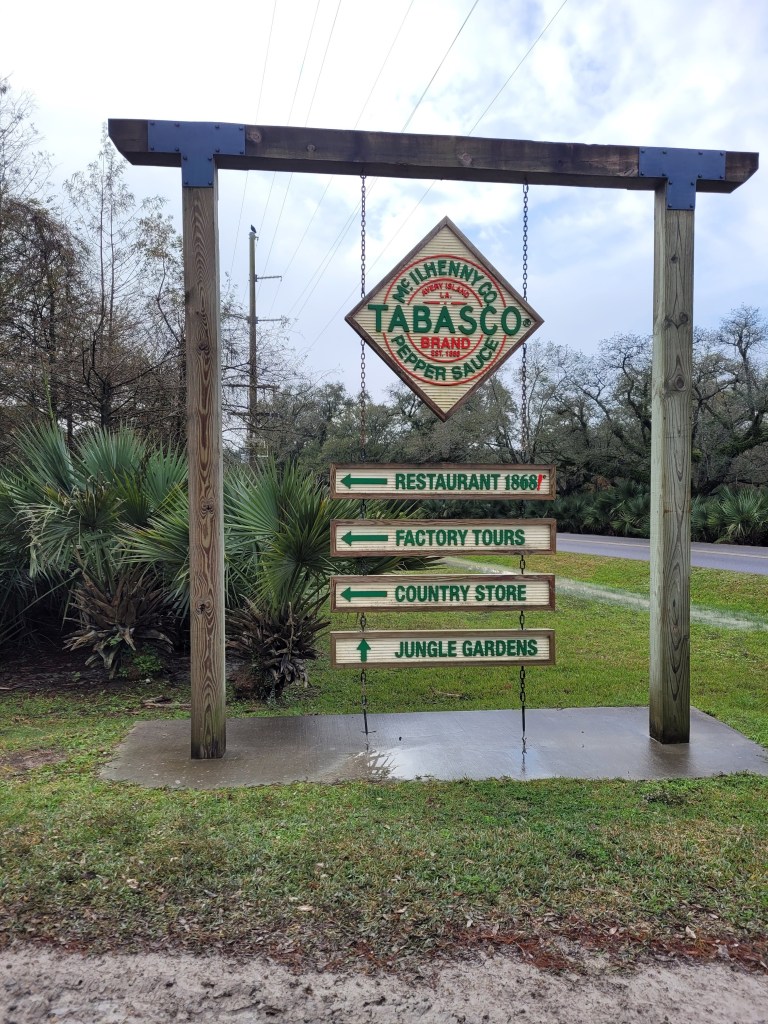
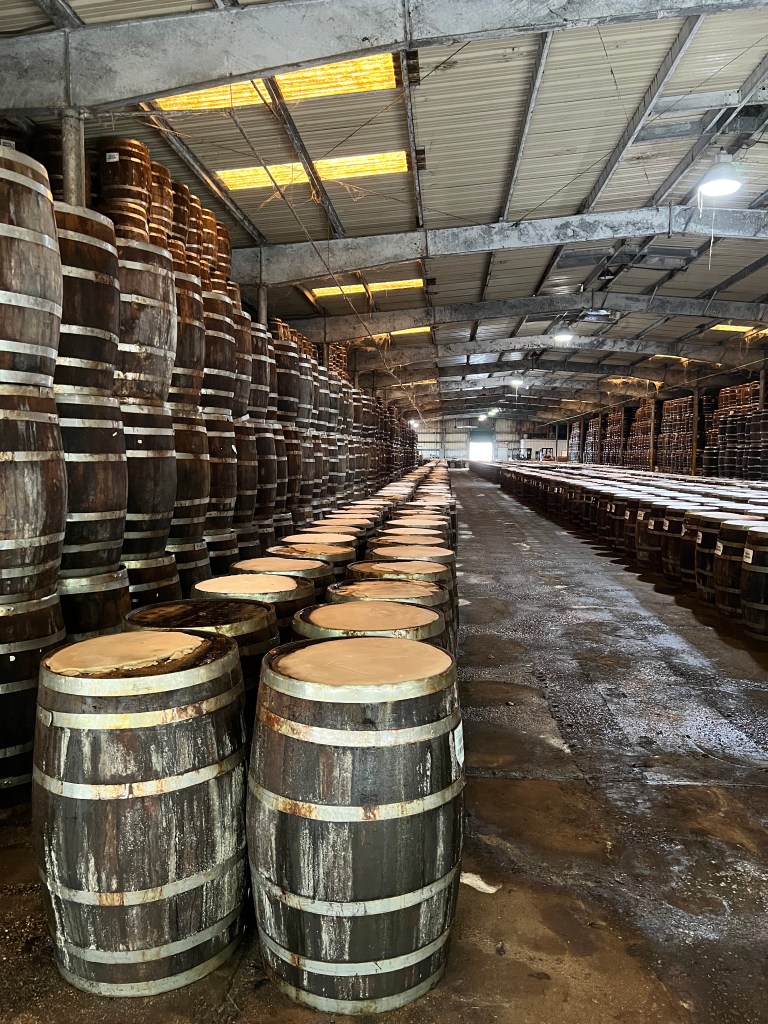
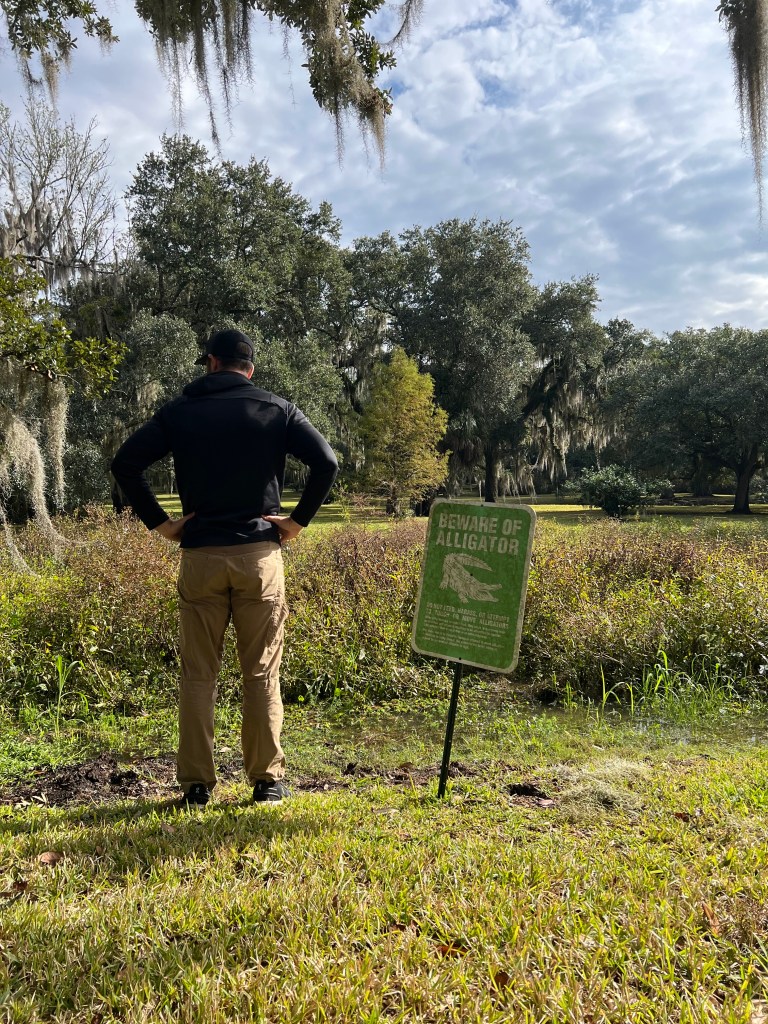
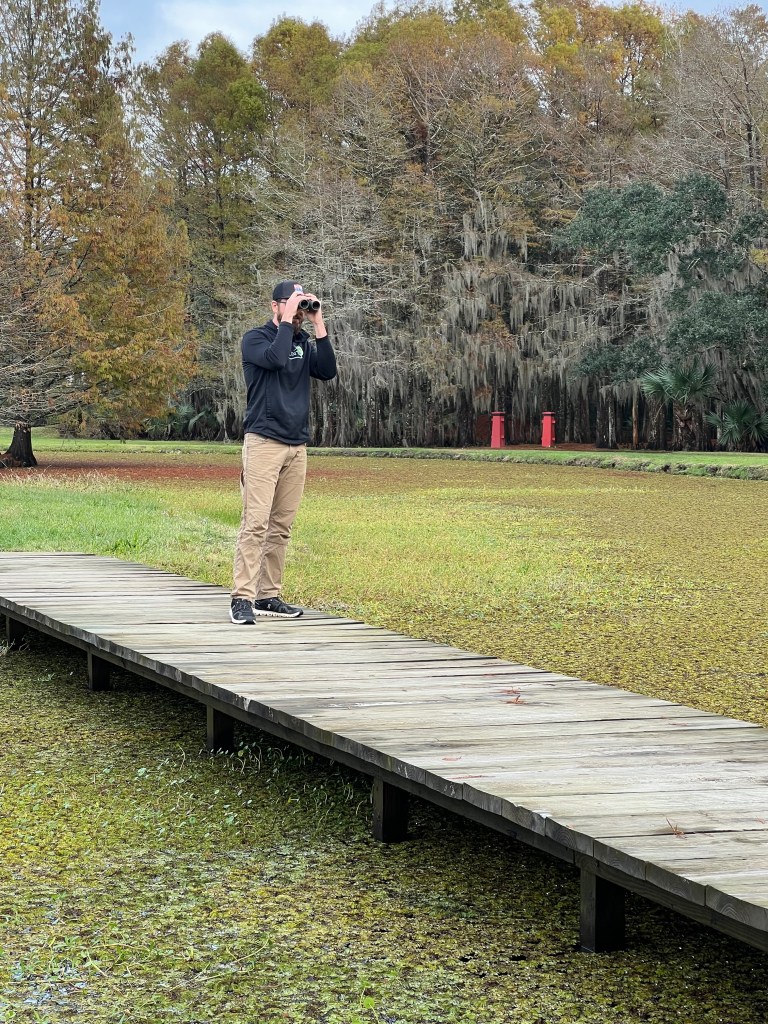
One morning we crossed Avery Island to tour the Tabasco factory. The smell of peppers in the air was impressive as we learned how the famous sauce is fermented and aged for 3 years before being bottled and shipped around the world. After the tour, we wandered through the Jungle Gardens, where quiet roads wind beneath massive oak trees and past ponds dotted with birds and the occasional small gator. Chris had been on a mission to spot one ever since we arrived in Louisiana, so I couldn’t help but laugh at how quickly he whipped out his binoculars, scanning the swamp like a seasoned wildlife tracker. I didn’t even know he’d packed them. It was the beginning of what would become our running joke: “Chris and his knockers.”
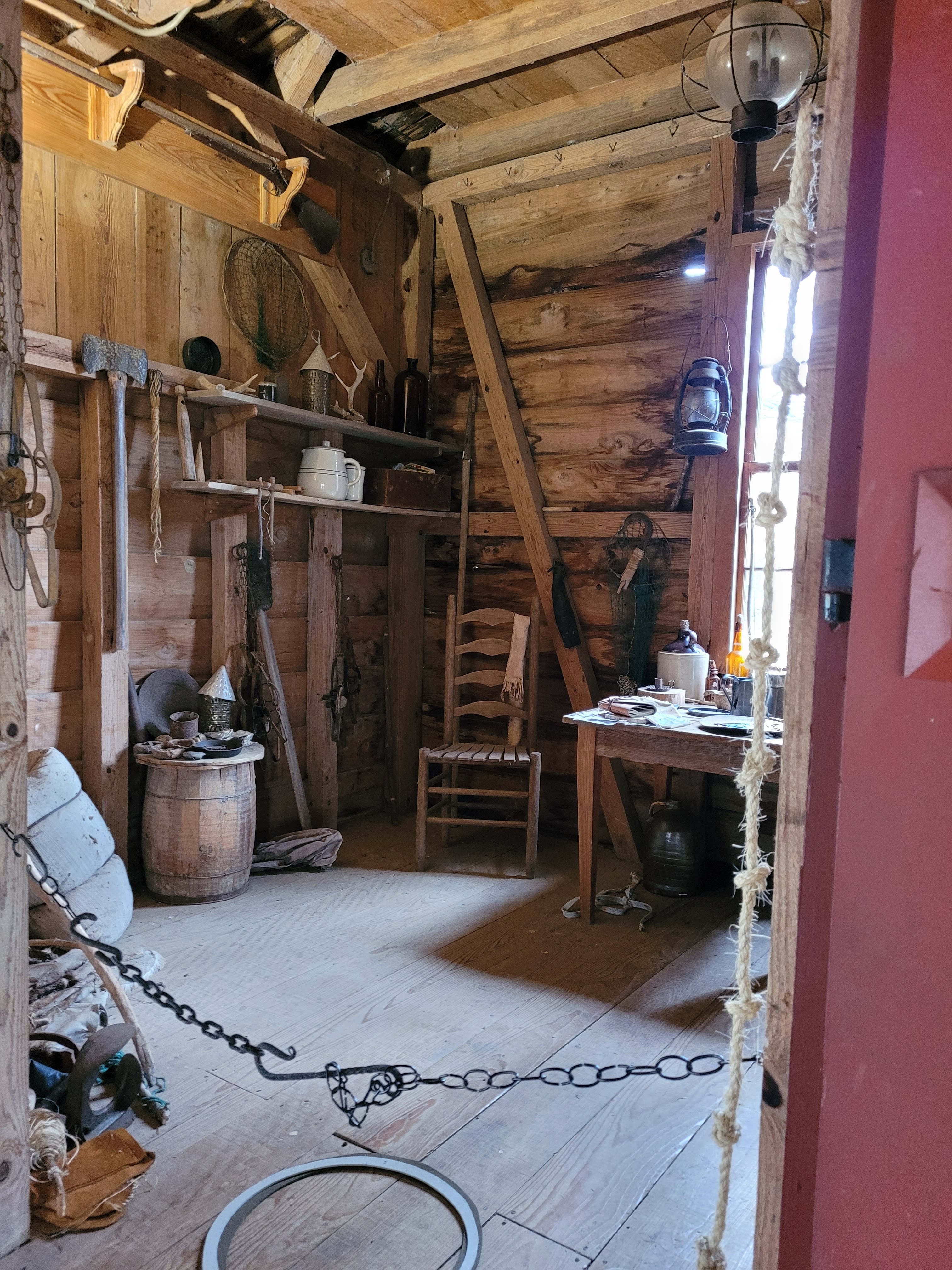
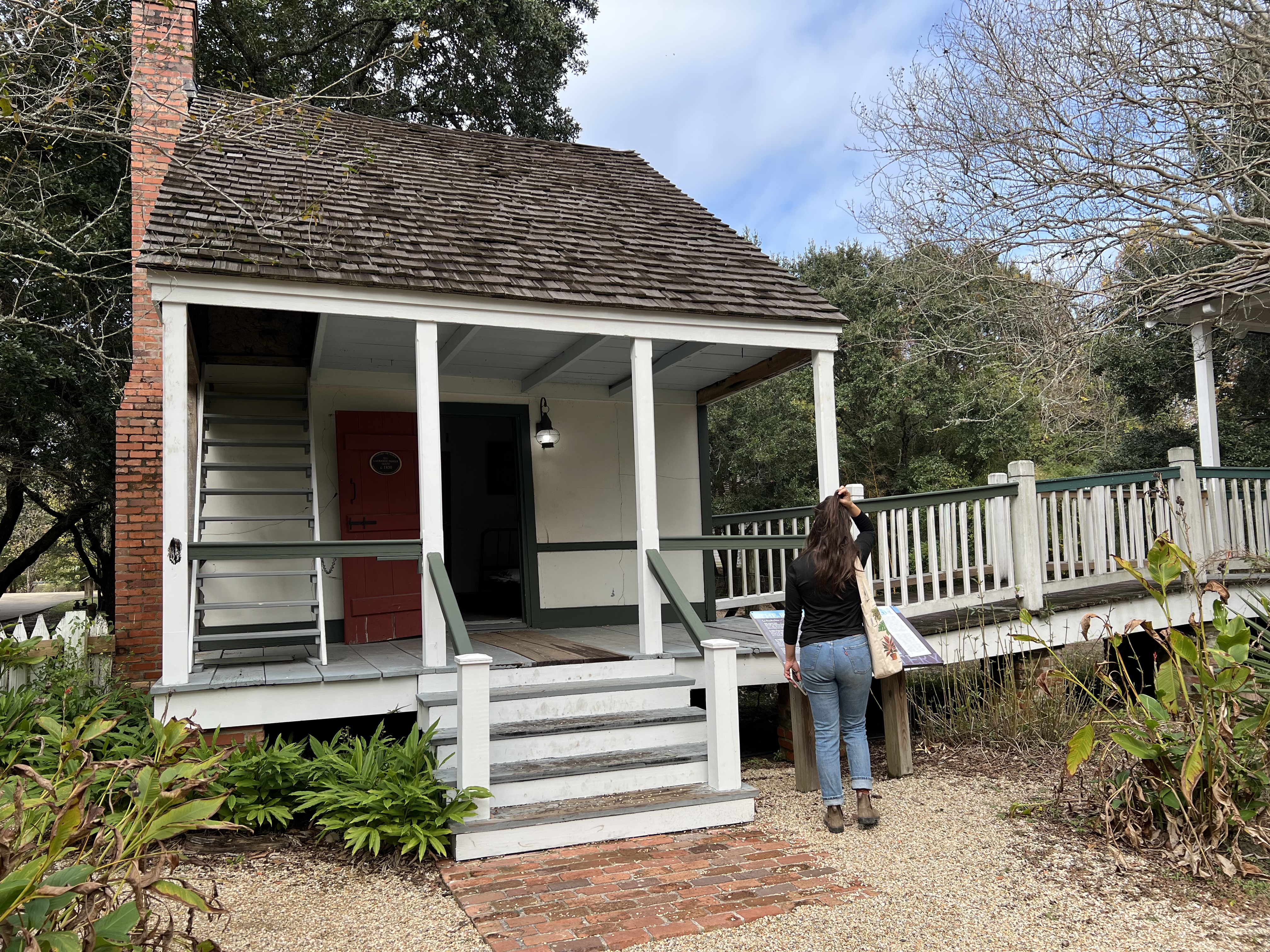
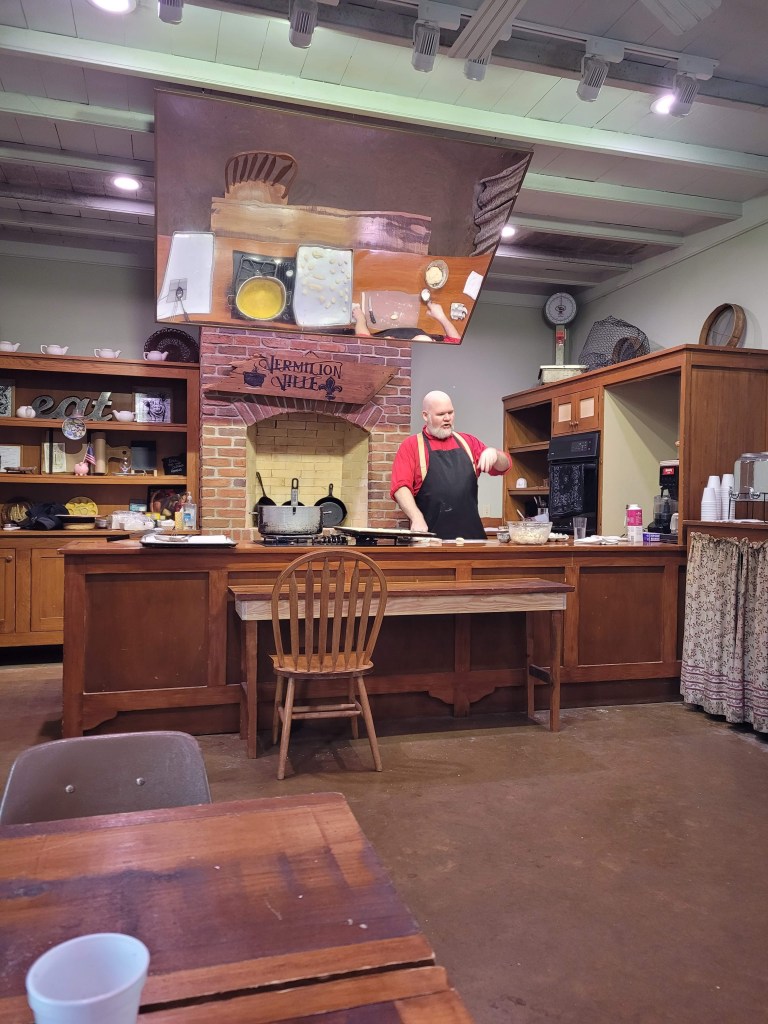
Another memorable day was spent at Vermilionville Historic Village, a living history village preserving Cajun and Creole heritage. Walking through the restored homes along the bayou felt like stepping into another slow, quiet century that was deeply rooted in tradition. And yet, just across the water, someone was fishing with loud rap music blasting, the bass thumping through the air. The contrast was impossible to ignore. Imagine standing inside an old forge with no modern amenities, while the beat of today’s music quite literally vibrated through the walls.
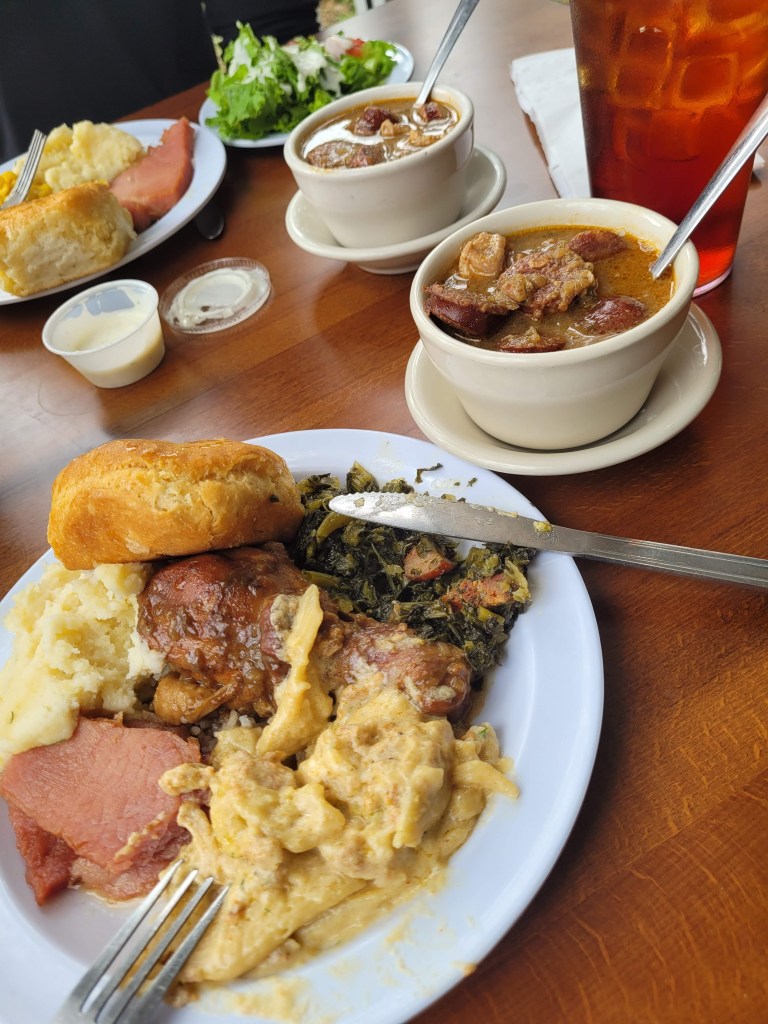
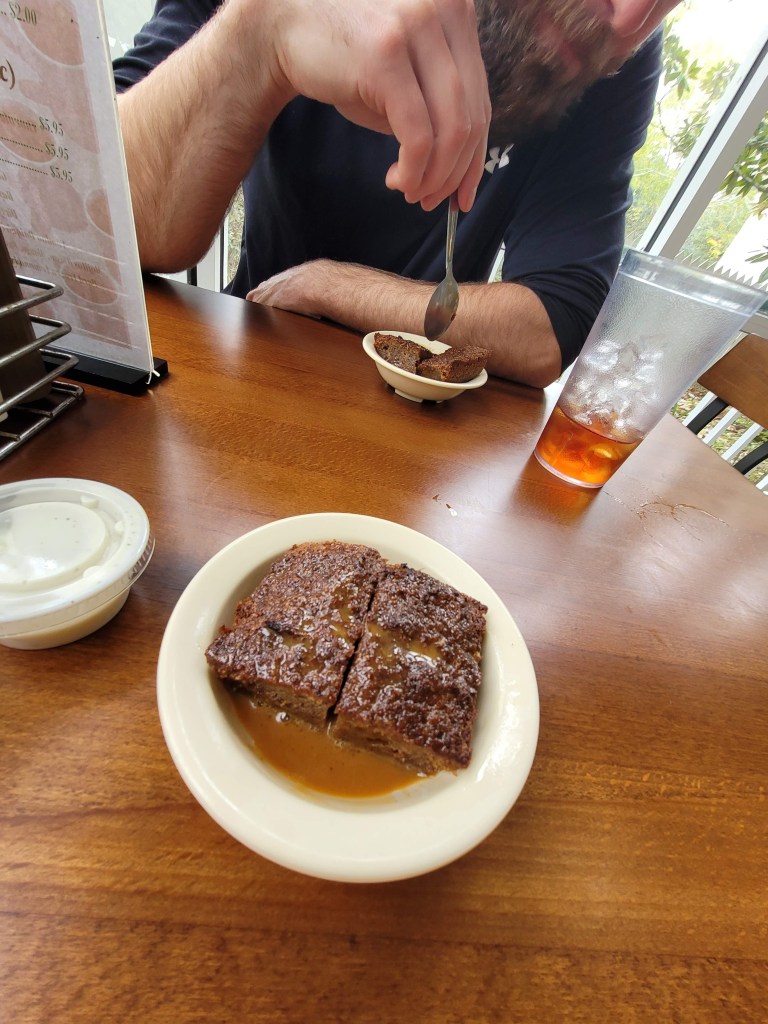
We stopped for lunch at La Cuisine de Maman (Mom’s Kitchen), where Chris swears he had the absolute best bread pudding of his entire existence. Afterwards we wandered into the dancehall where a zydeco band had started playing. Before long the dance floor filled with locals, many of them older couples who moved with effortless rhythm. Watching them spin and laugh across the floor felt like a window into everyday Cajun culture.
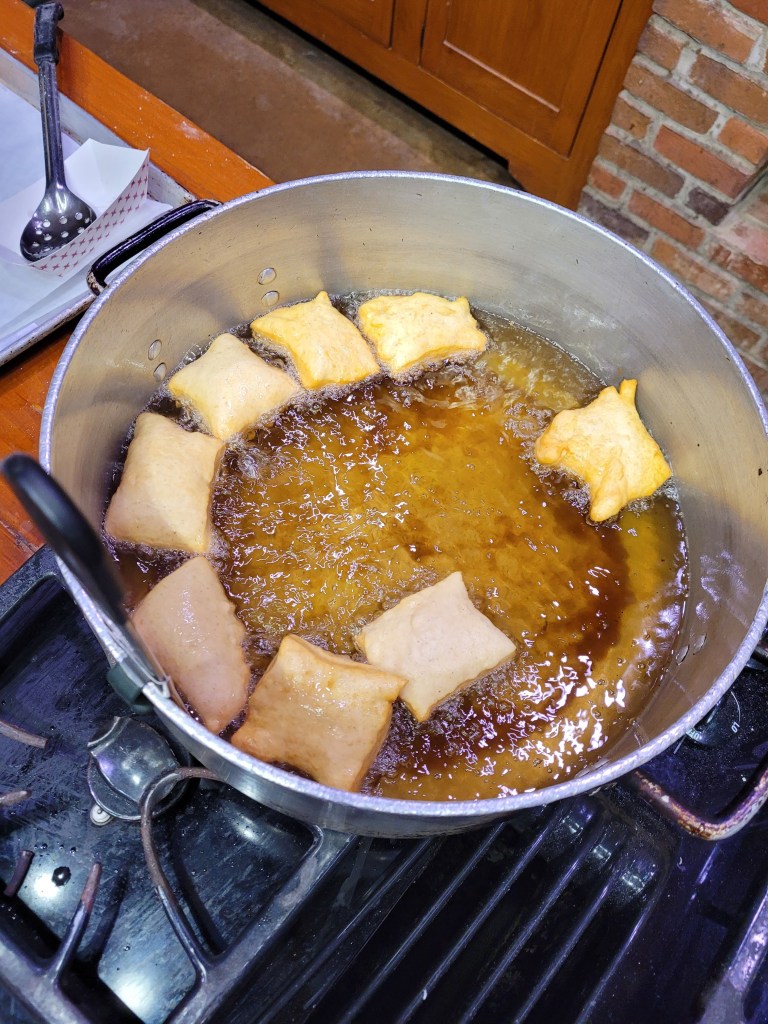
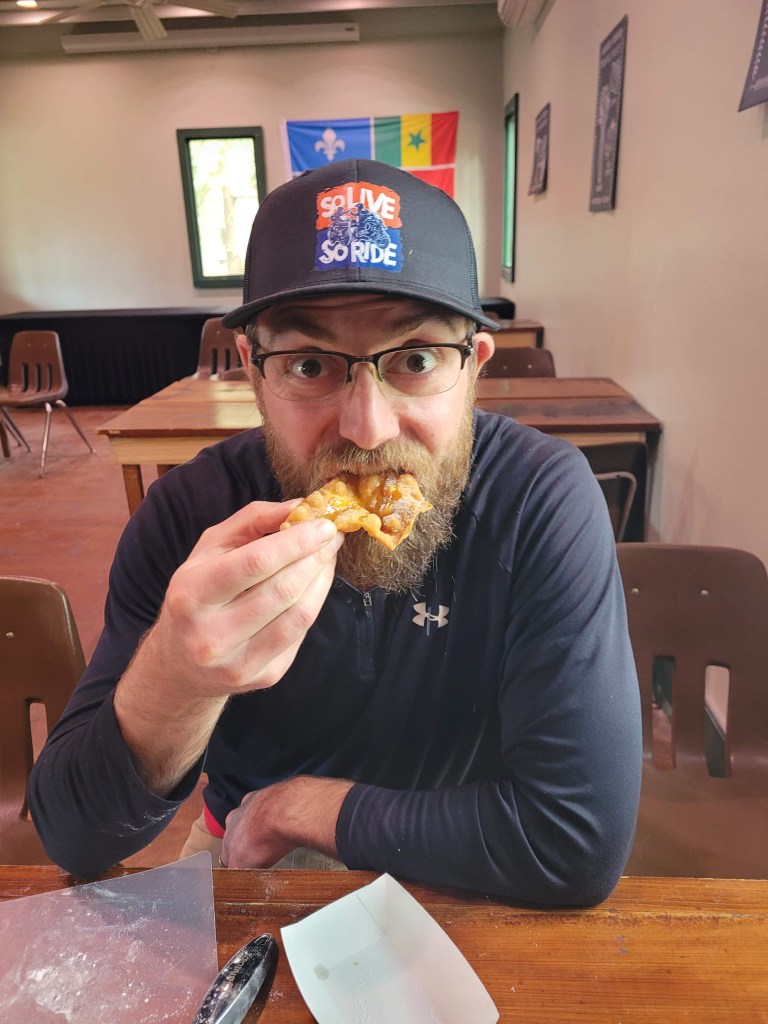
Our main reason for visiting Vermilionville was that I’d signed us up for a Cajun cooking class. We experienced heritage cooking at its finest, with a Hands-On Beignet Making Demo. Our food historian and beignet-maker supreme, Jay, guided us as he explained the origins of the famous beignets as we created delicious little dessert treats. By the end of the class, the room smelled like warm, fried dough and powdered sugar.
Louisiana: Where The Food Doesn’t Disappoint
Food, of course, quickly became the main gateway into Cajun country’s history.
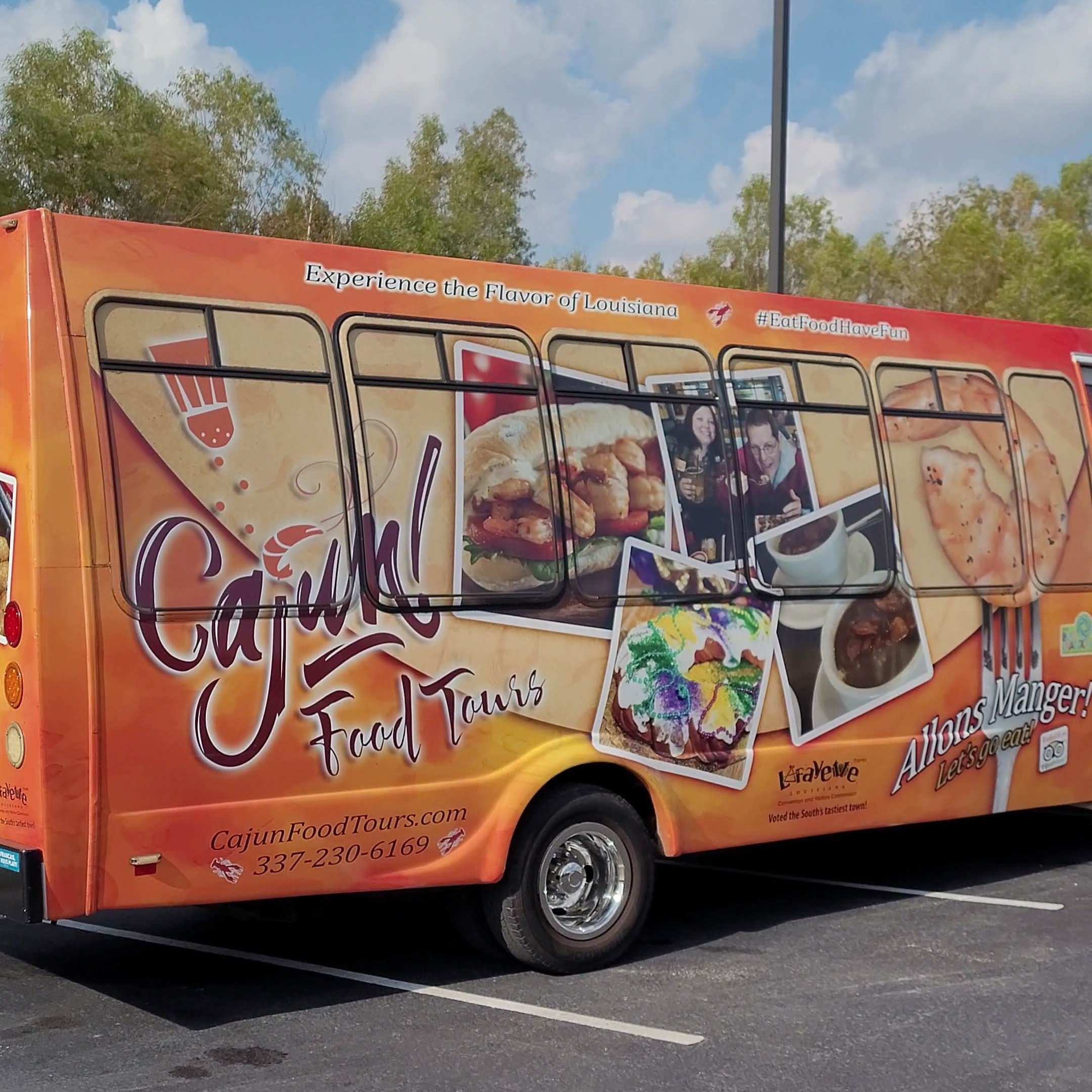
One day we joined a Cajun food tour that turned out to be part history lesson, part feast. We drove to the meeting point and climbed aboard a bright red bus decorated with cheerful Cajun touches. Our guide Marie, a former history teacher, quickly set the tone. As we rolled through Lafayette and the surrounding towns she told the story of the Acadians, Le Grand Dérangement, and how settlers from Europe and Nova Scotia shaped the food culture of southern Louisiana.
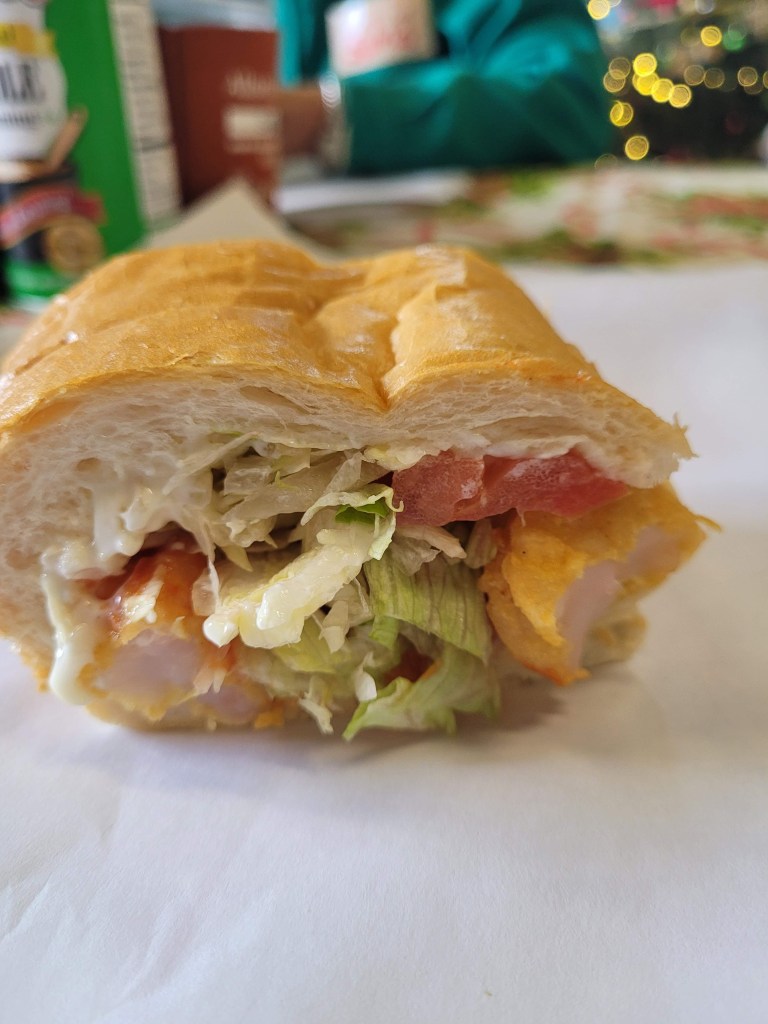
Our first stop was Broussard and Ton’s Drive, where we tried gumbo served with potato salad. This sparked one of the great Cajun debates. Do you keep the potato salad separate, mix it into the gumbo, or dip each spoonful? (In case you’re curious Chris and I are both dippers.) Next came BJ’s, where we sampled a shrimp po’ boy. The sandwich itself carries a bit of history.
During a streetcar strike in New Orleans in the 1920s, restaurant owners created large sandwiches to feed the unemployed workers who came in for free meals. They would call out, “Here comes another poor boy,” and the name eventually stuck.
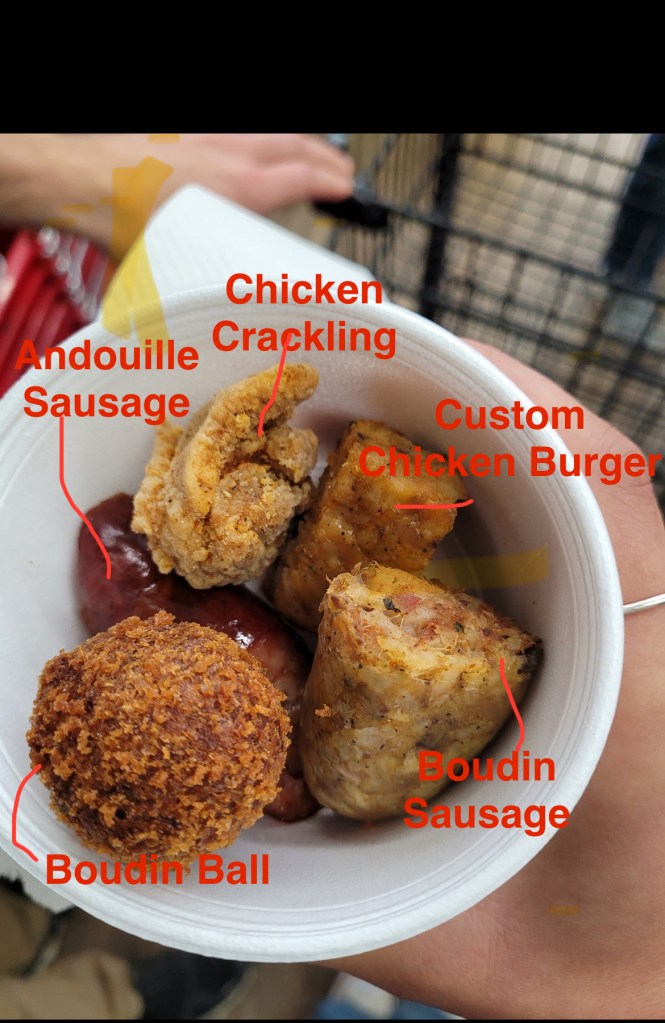
At NuNu’s Fresh Market, we sampled crunchy cracklings, smoky andouille, warm boudin balls, boudin sausage, and chicken patties.
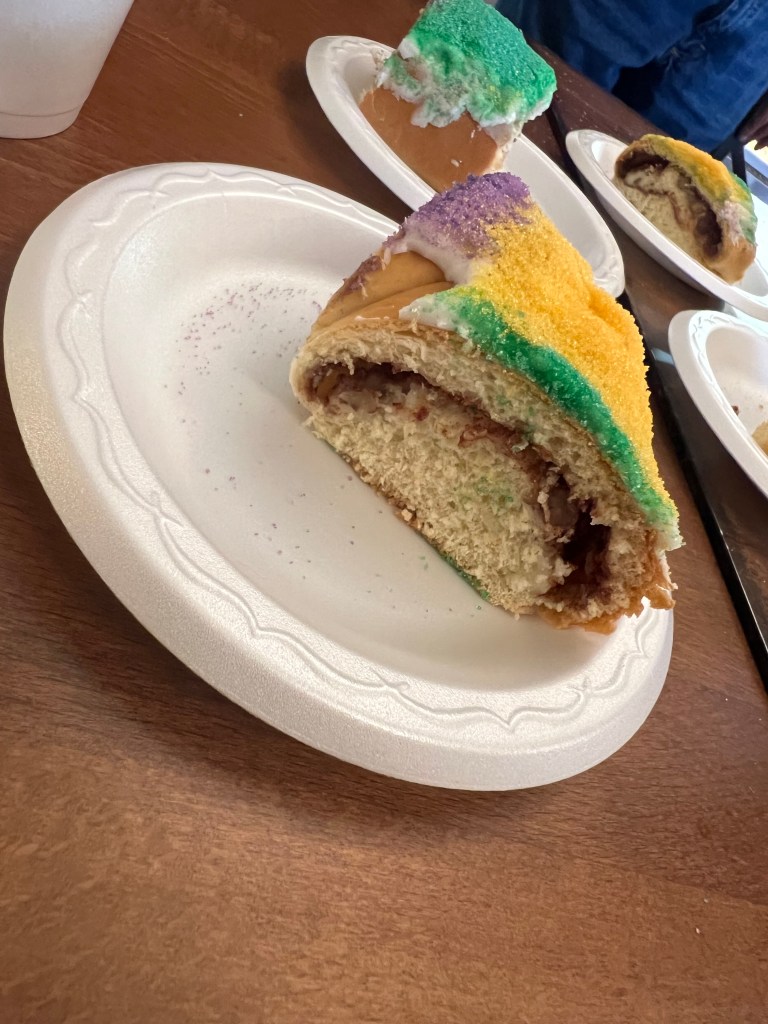
In Carencro, we stopped at Frezzo’s where we tried incredibly tender gator bites along with fried oysters. The tour ended on a sweet note at Poupart’s Bakery with slices of colorful King Cake.
It was a delightful way to experience the area. We came home sated and filled with appreciation for Cajun culture and its vast array of spices and flavors (that would literally set the tone for my cooking over the next couple of weeks).
You Can’t Say You’ve Been To Cajun County If You Haven’t Seen Alligators.
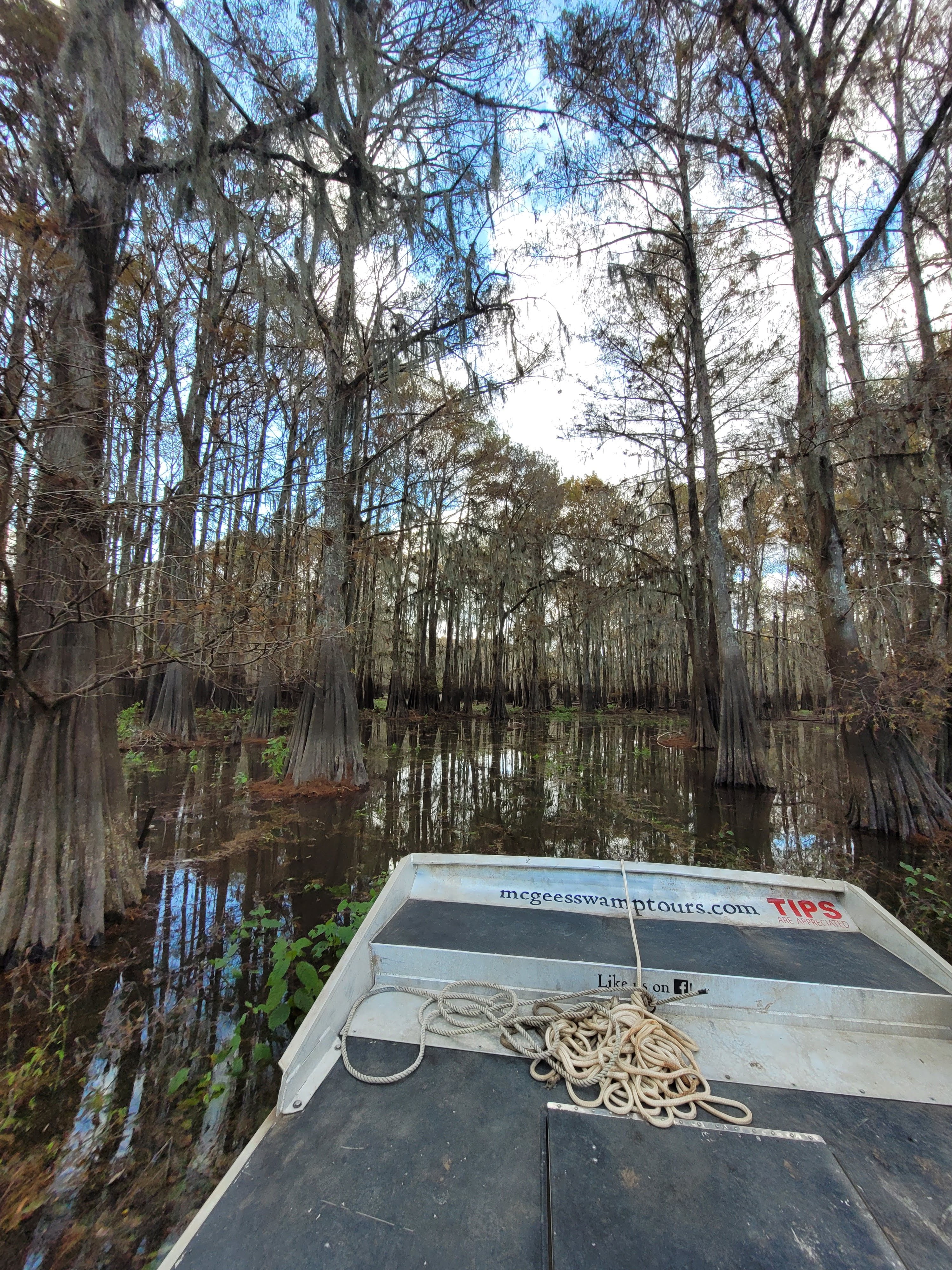
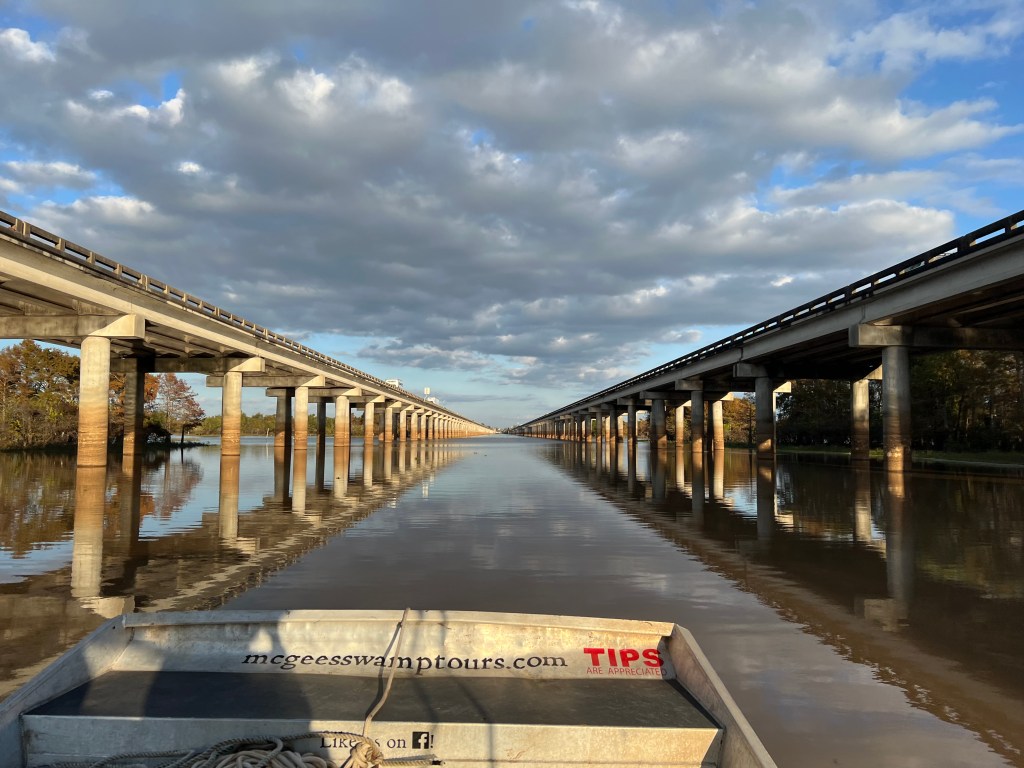
To experience the landscape that shaped so much of Louisiana’s culture, we spent an afternoon with McGee’s Swamp Tours, drifting deep into the heart of the Atchafalaya Basin.
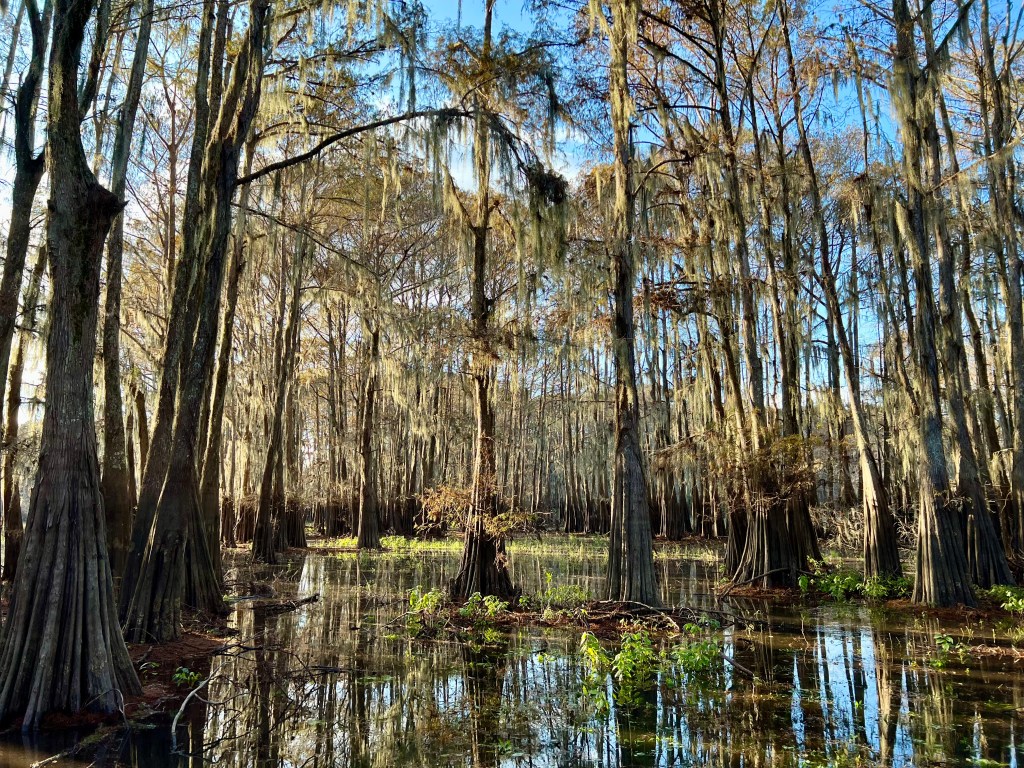
The boat glided through a maze of waterways. Towering bald cypress trees rose straight out of the dark water, their trunks flaring at the base, draped in long strands of Spanish moss that swayed gently with the breeze. According to our guide, this is part of the largest river swamp in the U.S., a vast and complex ecosystem teeming with wildlife and history.
Our guide, a local Cajun, who clearly knew these waters by heart, narrated the entire ride with stories of his childhood and professional experiences as a fisherman. He pointed out birds tucked into the branches, explained how people have lived off this land for generations, and what it’s really like to call the swamp home.
Sad but interesting fact: Rising salinity levels are beginning to reshape parts of the Atchafalaya Basin, placing stress on plant species that have long defined this freshwater ecosystem. Runoff from the spreading of salt on roads during the winter in northern states eventually travels downstream into southern waterways where it does not naturally belong. Over time, this shift in water chemistry can suffocate vegetation that depends on delicate freshwater conditions.
On top of having had rain, it had also been cold over the last few days, so the alligators were mostly in hiding. Even so, we spotted a few juveniles near the banks. Just small ripples at first, then the unmistakable shape once you knew what to look for. It made every bend in the water feel like a quiet search.
At one point, we passed beneath the longest bridge in the area, its concrete stretch cutting across the wilderness in a way that felt almost surreal. And then just as quickly, we were back winding deeper into the still, green labyrinth.
One of the most fascinating parts wasn’t the wildlife but the “cabins”. Scattered along the water were houseboats, perched on stilts and adapted to a way of life completely shaped by the swamp. It felt like an entirely different rhythm of living. It was so different from anything I’d seen before.
The whole experience felt less like a tour and more like entering an ecosystem, a culture, and a way of life that exists quietly, just beyond the edges of what most people see.
Exploring By Self-Guided Tours
A self-guided walking tour through Breaux Bridge unfolds less like a checklist and more like a series of open doors. Beginning near the bayou, the route carries you into a downtown where history is not preserved behind glass but lived in. You can step inside spaces like the old hardware stores, including the historic Begnaud’s and Broussard’s buildings, where original wooden storefronts and shelves hint at a time when everything from wagons to tools was sold under one roof.
Just a few steps away, other storefronts invite a slower kind of browsing. In buildings like the Potier and Pellerin structures, now home to antique shops, cafés, and boutiques, you can walk beneath pressed tin ceilings that have remained intact for over a century, their metallic patterns catching the light in a way that feels both industrial and delicate.
It is this mix of function and character that defines the walk. One moment you are in a former mercantile space, the next in a boutique or gallery where the architecture tells as much of the story as the items for sale. The experience becomes less about what you are looking for and more about what you stumble into, each doorway offering a small, tangible connection to the town’s past.
In Lafayette, history also reveals itself in quiet ways. Just beside the stately Cathedral of St. John the Evangelist stands one of the city’s most enduring landmarks, a 450 year old sprawling live oak whose massive branches stretch low and wide, as if shaped by centuries of watching life unfold around it. Believed to be among the oldest in the area, the tree offers a natural counterpoint to the cathedral’s symmetry. Standing beneath its canopy, it feels less like visiting a site and more like stepping briefly into the long, unhurried rhythm of the place.
A Day In New Orleans
New Orleans has always felt like a city that belongs as much to the dark as it does to the light. Perhaps that is why it has long been the perfect setting for stories of vampires, ghosts, and restless spirits. Although we’re not usually ones to visit big cities, I’d been looking forward to getting in as much site seeing in our day in New Orleans as possible. Having grown up reading novels about the supernatural and watching popular vampire shows, I knew this was what I would base my itinerary on for the day. Chris was fully aware that he was along for the ride.
On the day we arrived, I decided to lean fully into that atmosphere and treat our visit like the pages of a gothic diary.
As we found parking near the edge of the French Quarter and walked toward the historic French Market, the air carried the scent of sugar and fried dough long before we even saw the stalls. Rows and rows of booths with trinkets and t-shirts lined the tin-roofed walkway, their colors spilling out beneath the soft shade. The narrow aisles buzzed with energy: Vendors calling out greetings, music drifting in from somewhere unseen, and the steady shuffle of visitors moving from table to table. Handmade jewelry caught the light beside stacks of local spices, artwork, and souvenirs, creating a mix of textures and colors that felt both lively and quite chaotic.
Naturally, we made a stop at Loretta’s Authentic Pralines. Their praline beignets are something of a legend. Imagine a traditional beignet, but filled with the sweet, nutty richness of Louisiana pralines. Warm, powdered with sugar, and impossibly indulgent. For comparison’s sake, we attempted to visit the famous Café du Monde. But the line stretched far beyond our patience, and the tourists swirled around the entrance like moths to a lantern. We decided instead to let mystery linger and continued wandering.
The heart of the Quarter pulled us toward Jackson Square, where artists displayed their work beneath the shade of old trees and musicians filled the air with melody. At the far end stood the towering white spires of St. Louis Cathedral. Inside, we slipped quietly into a pew just as a choir began to sing Christmas hymns. Their voices echoed through the vast space, rising toward the painted ceilings with an almost otherworldly calm.
Outside the cathedral, however, the mood shifted. A group of street performers had gathered a crowd and were performing athletic stunts that bordered on the impossible. Flips, jokes, crowd participation. It was chaotic, hilarious, and perfectly New Orleans.
From there we wandered through quieter streets until we stumbled upon Faulkner House Books, a tiny literary haven tucked into a historic building where William Faulkner once lived. The narrow aisles and towering shelves felt like the kind of place where forgotten stories might still linger between the pages.
Not far away we stepped into the peculiar world of the New Orleans Pharmacy Museum. Inside were shelves of antique bottles, strange instruments, and relics from an era when medicine was as much superstition as science. It was equal parts fascinating and slightly unsettling. It really makes you grateful for modern medicine and current technologies.
By mid afternoon we decided to cross the city using the Canal Street streetcar. It rumbled across the less touristy areas of the city until it reached Lake Lawn Metairie Cemetery. Known locally as one of the many “Cities of the Dead,” the cemetery holds ornate above ground tombs and mausoleums. Among them is the resting place of Anne Rice and her family. Standing there felt strangely fitting on the day we spent wrapped in the gothic atmosphere of the city she immortalized in novels like Interview with the Vampire.
When we returned to the Quarter, we walked down the infamous Bourbon Street. It was only two in the afternoon, yet the street already hummed with life (a mild way of putting it, I suppose). Music spilled from every doorway. Jazz, rock, brass bands, just to name a few. The sound layered itself into a constant roar of rhythm and intoxicated laughter. This became a little overwhelming so we turned onto some adjacent streets. Just beyond the buzz of Bourbon Street, the streets unfolded into a quieter kind of magic: Rows of pastel-hued Creole townhouses glowing under the sun. Adorning the old houses, wrought-iron balconies curled like lace above shuttered windows, while hidden courtyards whispered of another time. It’s a place where Spanish influence meets Caribbean color, and every doorway feels like the beginning of a story.
Eventually we stepped into a place that felt perfectly on theme for the day: The Vampire Apothecary Restaurant & Bar. There we ordered a “blood bag,” which despite its appearance was simply sangria, along with a charcuterie board.
Just as we were getting ready to leave, the waitress handed us a small card.
“This is a private invitation,” she said quietly. “A vampire speakeasy.”
She gave us a few directions and a password.
Naturally, we accepted the mission.
A few minutes later we followed the instructions on the card and made our way to the back of Fritzel’s European Jazz Pub. A dark hallway led us into a courtyard where the sounds of jazz slowly faded behind us. The space opened into a narrow, tucked-away patio framed by warm terracotta walls, strung overhead with soft, glowing lights that crisscrossed between a weathered tree and the surrounding buildings. Small metal café tables and mismatched chairs dotted the cobblestone ground, giving it an intimate, almost secret-garden feel. Potted plants clung to the walls, and a quiet stillness settled in. Chris looked confused.
I, however, immediately spotted him.
A man with long straight black hair sat beneath the dim courtyard lights, wearing a dapper vest and reading a book. For anyone who has ever read fiction, it was almost painfully obvious.
As I approached, he looked up.
Bright amber eyes stared back at me. Yes, I am fully aware they were contact lenses. But in that moment the theatrical illusion worked perfectly.
“The vampire sent us,” I said, giving the password.
He closed his book, stood, and gestured for us to follow.
Chris was still trying to figure out why I was talking to strangers as we were led through a service door and up a narrow, shadowy staircase. When the door at the top finally opened, we stepped into a dimly lit bar that looked as though it had been pulled straight from a gothic novel.
Candles flickered. Velvet furniture lined the room. Another elegantly dressed “vampire” welcomed us inside.
We ordered cocktails and stepped out onto the terrace overlooking Bourbon Street just as the sun began to set. From above, the chaos of the street below became almost entertaining. We watched the crowds swirl while enjoying the calm distance of our hidden perch.
Our final stop brought us to the Voodoo Lounge, where we joined a vampire and ghost tour through the French Quarter. As darkness settled over the old streets, our guide led us past flickering gas lamps and wrought-iron balconies, weaving through hidden courtyards and quiet alleyways where the city seemed to hold its breath. We paused outside centuries-old buildings as stories unfolded—tales of restless spirits lingering in former homes, whispered legends of vampires said to roam the Quarter, and eerie accounts tied to New Orleans’ deep-rooted voodoo traditions. At times, it was hard to tell where history ended and folklore began. We listened wide eyed, enthralled as we sipped on our hurricane cocktail while walking and taking in all this exciting and slightly terrifying storytelling.
By the time we finished the tour, the city felt even more alive with secrets. As if somewhere in the shadows a pair of amber eyes happened to be watching. Well… that would only be fitting in New Orleans.
(In Other News) The Less Than Ideal Situation When Living In Temporary Places
At our campground, one unexpected “side quest” unfolded just a few feet from our campsite. For several days in a row, we had heard the same neighboring camper erupt into loud arguments well past dark. The scene itself was puzzling. Over the course of a few days, we had spotted a rotating cast of people coming and going from the same worn, Breaking Bad-looking bus. A young couple, an older woman, maybe another young adult. It was never entirely clear who actually lived there.
By the fourth night, after being woken up yet again around 11 PM, Chris had had enough. He stepped outside and walked over, catching a glimpse through the back window as he approached. Inside, an elderly-ish woman with mousy brown hair and a cigarette in hand was mid-argument with a man he had never even seen before. For a brief second, they locked eyes, but Chris kept going and knocked firmly on the door.
When it opened, a young man stood there. Shirtless, slightly disheveled, pants half-buttoned, he carried himself with a casual indifference that made the whole situation feel unbothered. As Chris was about to start talking, he noticed a toddler along with a young woman sitting on the couch in the background. His tone shifted instantly. What could have been a confrontation turned into something more measured as Chris simply asked, “What’s going on here?” The answer came back dismissive. “You’ll have to take that up with them, bro,” before the door shut again.
Moments later, the attention shifted back to the rear window, where someone inside urged another to handle it. “Now he’s at our window, talk to him.” Chris hears right before a middle-aged man finally appears looking detached as his head pokes out the small camper’s window. When told the entire campground could hear them, he offered a casual apology, as if it were all far less disruptive than it felt.
And just like that, the window closed, the noise stopped, and silence returned. Still, the night carried a lingering unease. By morning, the decision felt obvious. We asked to move campsites, choosing distance, and leaving that strange unfortunate story behind us.
Flying Home For The Holidays
By the time this post goes live, we are well into March. (As my mom, who also happens to be my blog editor, lovingly told me the other day: You’re slacking!) But rewind a little, because our time in Louisiana actually overlapped with the holidays, which meant pressing pause on life on the road and hopping on a flight from New Orleans to Montreal to spend Christmas with my family.
Christmas and New Year’s in my family are not just calendar dates. It’s a full production. And while Louisiana gave us charming moments, like a Cajun Christmas market and towns dressed up in twinkling lights, I will admit… the lack of snow made it all feel slightly off-script. Festive, yes. But missing that white, cinematic touch if you know what I mean.
Cue our arrival in Montreal. As we made our way out of the airport, there they were. My parents, hopping out of the car with a handmade “Welcome home!” sign like we were long-lost celebrities returning from tour. Honestly, 10 out of 10.
Being back carried this warm layer of nostalgia, even though we hadn’t been gone all that long. Familiar stops quickly made their way into the schedule. A visit to Milano’s grocery store, then wandering through Marché Jean-Talon, with its rows of fresh produce and local vendors stretching in every direction. And of course, the essential stop at Alati-Caserta for cannolis and Italian pastries that somehow taste exactly like childhood.
Food. Drinks. Festivities. Repeat.
Thursday night supper, a sacred family tradition, set the tone. Cold cuts, Italian cold pizza, cheeses, salad, and wine. Lots of wine.
Christmas Eve brought midnight mass and was followed by Christmas Day, which meant gathering again. More food, more wine, and the annual emotional rollercoaster of watching old family DVDs. Nothing humbles you quite like early 2000s footage of your teenage self, full of chaotic energy and questionable fashion choices. A true reminder that growing up without social media was a gift.
Naturally, the one day Montreal decided to stage an ice storm was the exact day we had plans. Chris and I were meeting my uncle and aunt for lunch at Pizzeria 900 on Fleury Street. We parked the car and quite literally ice skated our way across the street, clinging to balance and dignity, before settling in for, you guessed it, more food and wine. There is a very clear theme to my visits home, and I stand by it.
During these visits, Chris is not only my husband and travel partner, he is also the official family IT department. Because if you work in tech, you do not simply visit family. You troubleshoot. Within hours, he found himself on the phone with Videotron customer support, trying to solve the mystery of my parents’ unreliable Wi-Fi.
To be fair, the real issue might be less about the internet and more about my dad’s… commitment to outdated technology. The man operates on a strict “if it still turns on, it’s fine” policy, only considering upgrades once things have fully collapsed. The term of endearment is “the Camplani way” for these instances. Thankfully, my tech-savvy uncle has been slowly dragging him into the modern era over the years, including the legendary moment he gifted my dad his first flat-screen TV approximately two decades after the rest of society had made the switch.
All in all, it was the perfect holiday intermission. A little snow, a lot of wine, and just enough chaos to remind me exactly where I come from.
Driving Back To Minnesota
During the holidays, we received the call that Chris’ grandmother, Dorie, had passed. Ninety-six years old. What a long, full, and deeply lived life she had.
There wasn’t a moment of hesitation. We immediately shifted into logistics mode, figuring out how to get back to Minnesota in time for the funeral. Our campground dates were about to expire, but somehow everything fell into place. We found an RV repair shop that could take the Bus in for bearing maintenance1 while we were gone. There was no way we would be driving it through a Midwestern winter.
Gam Gam, as we called Dorie, was the heart of the Sundeen family: the matron in every sense of the word. A stubborn and fiercely independent woman, she was always there for others: her family, her church, her community. She loved sewing and spent countless hours making quilts and garments, many of which she donated to organizations supporting people in need. It was just one of the ways she cared for others.
She always welcomed you into her home and made sure you never left hungry. Her pickle spread, a steady supply of sweets, and coffee were simply part of the experience of being with her.
What always amazed me was her memory. She was unlike any person I’d ever met. She could recall stories, names, connections across an incredibly large family tree. The kind of family where you half-jokingly request everyone wear name tags.
The service was held at the Catholic Church she had attended for so many years. Before entering, we gathered in the main entrance and I observed an entire family dressed in formal black. For a group that usually abides by a casual dress code, it quietly spoke volumes about the respect and love everyone had for her. The priest shared stories of her life, highlighting the many ways she had touched those around her. Several of her grandchildren, including Chris, read passages she had chosen herself; some of her favorites, we later learned. It was a lovely service in honor of a wonderful woman.
At the cemetery, the Minnesota wind was sharp and unrelenting, the kind that cuts right through you. We gathered closely under the tent as the casket was lowered beside her late husband. One by one, the grandchildren and great grandchildren stepped forward, each taking a flower from the bouquet and placing it gently onto the casket as we all said our final goodbyes.
In true form, she had planned every detail of her funeral. Even the meal that followed was made up of her favorite dishes, giving everyone a space to come together, share stories, and honor her life and legacy.
A final gesture. Simple, quiet, and full of meaning.
We received a call from the RV shop during our 3-day drive back to Minnesota informing us that they no longer were able to perform maintenance on the Bus. A rather disappointing turn of events, but that still allowed us to have the Bus securely store FOR FREE while we were away… So kind of a half win, then.
Welcome back to the Kickstand Chronicles. If you caught the spoiler in the last entry, you already know Arkansas wasn’t just a pit stop. We’d stumbled upon a full-blown adventure motorcycle paradise. It was compelling enough to make our plans revolve around this as we were curious to see just how deep this Arkansas rabbit hole would go.
A few days after settling in, a big A-class camper rolled into the campground, unloading some adventure motorcycles and a side-by-side. My internal radar immediately went off. Before I could overthink it, I was already halfway out the door and smiling. Chris looked up from his computer monitor, just in time to offer a gentle warning. Something along the lines of maybe don’t overwhelm them. A fair concern, considering my well-documented enthusiasm for meeting new people and my occasional blind spot when it comes to social cues.
Still, curiosity won.
I wandered over and launched into the usual rider small talk with our new neighbors, Roger and Sara. What do you ride? Where are you from? How often do you ride here? I then get asked a question I wasn’t expecting. Are you here for the ADV Rally?
I explain that this is the first I’m hearing of it, but that I am extremely interested in knowing more. Turns out that the So Live So Ride Moto Ranch we’d spotted a few days earlier is hosting its Fall Adventure Rally. Well I’ll be!
Before long, another van pulled into the campground. A couple hopped out and began unloading their adventure bikes. My heart did a little fist pump at the prospect of making more friends.
That’s how I met Angga and Lee, visiting from Kansas. As we swapped motorcycle stories and compared setups, Lee casually mentioned he was heading over to the Moto Ranch to sign up for the weekend and see what the schedule looked like. Then he asked, almost as an afterthought, if I wanted to come along.
I gleefully agree, heading back to our camper to throw on my gear, and sprinting (yes, sprinting like a child) back to the Bus to deliver the news to Chris. “I’m heading to a moto ranch with the nice man I just met over there,” pointing towards their camper van, “to get information about the motorcycle rally. I’ll be back!”
Chris barely had time to process this before replying, “Uh. Okay. Be safe! See you later.”
And just like that, I was on my motorcycle, driving off with the nice man. All this courtesy of campground timing, adventure bikes, and the kind of coincidences that seem to appear only when you’re already exactly where you’re supposed to be.
Pulling into the So Live So Ride Moto Ranch, the back field is already dotted with camping tents and Sprinter vans. A white pop-up tent greets us near the entrance, surrounded by adventure bikes and clusters of riders swapping stories. Off to the right, another field is set up with obstacles: barrels, cones, a series of evenly spaced, consecutive mounds of dirt bike whoops.
I park near the tent and introduce myself to the folks under the tent: Kate and Kim. Kate and her husband Dustin1 own the ranch and organize this event. They are casual legends, in their own right, I soon find out.
We chat about the schedule for the next few days, the organized rides, and how to sign up to explore the surrounding trails. All skill levels are welcome, and a quick glance around confirms it. Every age group, nearly every adventure bike brand, are represented. I ride back to camp buzzing with excitement and fill Chris in. Our very first motorcycle rally!
Tales From the 3-Day Moto Rally
Today is Thursday. After Chris’ workday ends, we head back to the ranch to watch the Cha Cha Trail Time Trial. Riders thread their way through a tight labyrinth that is carved through a high grass field as fast as possible. The ground is slick, the turns are unforgiving. When people fall, they bounce back up and keep going. Skills on full display. As evening settles in, we gather around a campfire where stories are traded and trail maps are discussed. We’re told that the routes are clearly rated by difficulty online.
The next day, Chris takes a half day from work and we decide to explore on our own before heading back to the Moto Ranch later in the afternoon. When it comes to planning our rides, I’m not in charge of maps as the GPS screen is set up on Chris’ bike. Plus, my spacial awareness skills are so subpar I would probably get lost if I had directions spelled out for me on my dashboard.
The ride starts out easy enough, as we wind through smooth gravel roads, that twist as we follow the edge along Ludwig Lake before heading back under the cover of fall colored trees. It’s all so pleasant and fairly easy going.
Then Chris casually asks, “Are you up for something a little more challenging?” I can do a little more challenging and so enthusiastically agree without asking a single follow-up question.
At the fork in the road, we turn left onto a little more challenging route. Almost immediately the terrain turns rocky, rutted, and slick with mud. Surprisingly, I start off feeling confident and capable. And then the road begins to thoroughly kick my ass. With part of the trail named Fist Fight, I should have known better.
Chris sails up a steep incline with ease. I follow, unaware that I’m in third gear instead of first. I try to power my way up, stall, and wipe out sideways into the washed-out trail. Everything’s fine, I say over the comms, as Chris rushes back to help me right the bike. We push on.
A bit later, my front tire hits a rock (a fairly large one), the bike stops dead, and I go over the handlebars. This is my first ride wearing the chest protector my brother-in-law insisted I take. Thank goodness for that, because I get the wind knocked out of me as I land on the ground, mirror in hand. This is also when I’m glad to have replaced my stock mirrors with Ram-mounted adventure mirrors that are able to take the brunt of a fall without breaking.
By the time we reach a particularly rocky and technical section, my energy is fading fast. Chris stops to analyze the line ahead, while I realize that every stop-and-start is draining whatever reserves I have left. Damn you, inadequate cardio! I decide that momentum is the answer. If I don’t stop, I won’t have to restart, right?
Oh boy.
I vaguely hear Chris warning me to stop and analyze what’s ahead. I ignore him. He raises his voice, understandably panicked as I barrel toward him. What I attempt to shout between gasps is something like, “If I stop, I won’t be able to start again!” I know it’s absurd, but I commit. For about three bike lengths. Then I crash. Again.
Chris jogs over, and delivers a firm lecture about if you get hurt, you won’t be able to go anywhere. I push back weakly, questioning whether I should even be on this trail. What level is this damn thing, anyway? It would seem that the first route we passed was rated 1.0. The second was a whopping 3.0.
I can confirm that I wasn’t ready to experience such a sudden jump in difficulty level. Nevertheless, I’m proud of having tried my best and gotten through nearly unscathed with no parts on my bike completely broken off.
Chris rides my bike to the end of the section while I walk it out, pondering my life choices and wondering if there’s a way to be better at this. Another spoiler alert: there is.
We finish the afternoon with a beautiful and much more mellow ride through the Ozark forest before heading back to the ranch to watch more skills challenges.
On the way back we stopped at Grumpy’s burger barn to grab some food. Partly because it’s supper time, but mainly because I am in need of comfort food after that afternoon ride. We end up eating the best pulled pork sandwich either of us has ever tasted.
Grumpy’s is literally a trailer on the side of the road with a big smoker drum right behind it. And for those of you who are wondering, it’s called Grumpy’s because they play their role very well. Taunting clients to order something specific on the menu and giving you a hard time when you seem to want to over complicate things about their menu. It’s perfectly charming!
As we roll back through the gate at the moto ranch, engines ticking as they cool, the Ozark dusk settles in. We arrive just in time for the evening’s challenges, a kind of moto rodeo that feels equal parts skill clinic and summer camp for grown riders.
First up are the barrel races.
It is the same concept as on horseback, except instead of reins and a galloping partner, you rely on throttle control and clutch finesse. You burst out of the gate, dive hard right around the first barrel, cross diagonally to sweep left around the second, then hustle to the center top barrel before launching back toward the finish. Fastest time wins.
Simple enough on paper.
On big adventure bikes such as BMW GSs, Africa Twins, and KTMs, it becomes a dance of balance and determination. Even in a groomed arena, the surface is loose gravel over hard-pack, and if you grab too much front brake or hesitate mid turn, you are flirting with gravity. Drop your bike at any point and you are disqualified.
The engines rev. Tires bite. A few riders come in hot and wide. One misjudged line nearly topples a fully loaded GS. The crowd cheers, half encouragement and half relief.
Then come the slow races.
Chris gives it a go and instantly realizes how deceptive “slow” really is. Riding fast feels instinctive. Riding painfully, deliberately slow without putting a foot down requires discipline. The key is clutch control, steady throttle, and tiny body adjustments. On these uneven grassy surfaces, even the smallest rut or incline can tip your balance. Riders wobble. Boots hover nervously above the ground. A single dab of a foot means you are out.
Dustin remains the undisputed king.
He inches forward with almost supernatural composure, at times appearing completely motionless. His front wheel trembles but never falters. While others glance sideways to assess their competitors and lose focus just long enough to dab, Dustin rides his own race. Calm and unbothered. He crosses the line at a pace that feels glacial but triumphant.
Then comes the slow circle showdown. Also known as “knife fight in a phone booth”.
Cones form a tight ring, roughly 25 feet across, barely enough room to maneuver a bicycle, let alone a 500 pound adventure bike. It is a last rider standing duel. The objective is not speed. It is psychological warfare. You creep toward your opponent, trying to pressure them into losing balance and putting a foot down.
Big bikes. Tight circle. Zero room for ego.
The ladies shine here.
Kate and Kim glide around the circle on their BMW GS bikes as if the machines weigh nothing. Feathering the clutch, subtle counterbalance, steady throttle. Effortless. It is mesmerizing to watch. Strength is not the story. Control is. Confidence is.
As riders gather around the fire, stories begin to flow. There are creek crossings on Warloop Road, ledgy climbs on Mill Creek, slick descents where red clay behaves like grease. Route recommendations bounce from group to group.
Chris mentions that we rode Guns and Wiemers and part of Fist Fight. The reaction is immediate. Eyes widen. A few low whistles. Someone mutters that those trails are no joke.
Both are notorious in the local Ozark riding community. Guns and Wiemers is steep, rocky, and relentless. Loose baby head rocks scatter across off camber climbs where momentum becomes your only friend. Fist Fight earns its name honestly. Tight switchbacks. Jagged limestone shelves. Deep ruts carved by runoff. Climbs that demand total dedication. Congratulations are offered. I quickly clarify that it was a complete struggle and that I had absolutely no business being on that trail. We made it through, but it was deeply humbling. We laugh.
Waking up on Saturday morning, Chris and I stick to our usual breakfast of oatmeal, knowing we will be out riding for hours before there is any chance of lunch. It feels practical and responsible.
When we pull into the Moto Ranch, we are immediately greeted with enthusiastic pointing toward the white tent. Breakfast burritos from Grumpy’s are laid out for everyone. Even as I insist I am not that hungry I still walk towards the tent. I grab one because it’s impolite to turn down offered food, right?
At 8:30 AM sharp, I roll out for the beginner guided group ride, with a planned pit stop at the Strawberry Bluffs viewpoint.
Chris has gone off with a group of more experienced riders. Before our group leaves the Moto Ranch, I watch them disappear in a cloud of dust and feel genuinely glad he gets the chance to let the throttle loose a bit more than he does when riding with me.
The sound of our ten bikes starting up at once carries differently than when it’s just the two of us heading out alone. There is an energy to it. A sense of shared momentum.
The gravel roads begin almost immediately. They wind and dip through the folds of the Ozark Mountains, climbing gently before dropping into shaded hollows. Although Chris and I never ride particularly fast while exploring on our own, there is something about being in a larger group that subtly shifts the pace. It’s rhythmic. Corners flow into one another. Dust hangs briefly in the morning light before settling back onto the road.
Joining a guided group ride with riders at a similar skill level turns out to be pure joy. There is comfort in knowing everyone is reading the terrain the same way, choosing similar lines, trusting the same pace. No pressure to prove anything. No anxiety about holding anyone back.
The Ozarks continue to surprise me. At Strawberry Bluffs, the overlook opens wide. You can see the patchwork of fields and forest below, the subtle blue haze softening the distant ridgelines.
Our group rolls into Hagarville Grocery & Deli sometime late in the morning. Inside, the small deli counter hums with the quiet rhythm of a family-run operation. I’m told that the local delicacy is a sandwich called Lipstick on a Pig. I don’t ask questions. I don’t need clarification.
Now, context is important here. This is technically my third full meal of the morning. We had our light breakfast, then the surprise burritos, and somehow I’ve found myself here, circling another counter. I am not hungry. Not even remotely.
What arrives is no dainty snack. It’s a substantial, warm sandwich wrapped in paper that barely contains it. Fried bologna, edges curled and crisped from the griddle. Melted cheese binding everything together. A soft, homemade bun that somehow holds its own against the grease and glory of it all. It’s unapologetic. It’s perfect.
The first bite confirms it: this is comfort food in its purest form. Despite the very real threat of slipping into a carb-induced stupor, I eat the entire thing. Slowly at first, then with growing determination. Each bite feels like both a victory and a mild act of self-sabotage. By the end, I’m operating at that dangerous edge where one more bite could tip me into a full-blown food coma.
And yet, no regrets.
We roll back into camp just before noon. There is a short reset before the second guided ride heads out at 12:30. This time Chris has signed up, eager for another loop into the folds of the Ozark Mountains.
The afternoon ride feels softer somehow. We slip back onto forested roads that tunnel through hardwoods and pine, light flickering across visors in rhythmic flashes. One minute we are enveloped in dense woodland, the next we are skirting the edges of wide, open farmland. Expansive fields stretch out beside us, barns weathered, cattle grazing within sight. It feels almost like passing through someone’s backyard, intimate and unfiltered.
As the miles tick by, puddles begin to collect in the shaded sections of road. They are mostly shallow and friendly, their bottoms visible through murky colored water. Each crossing becomes a quiet lesson in commitment. Steady throttle. Light hands. Eyes up. Trust that whatever lies beneath the water will not deflect you if your body stays loose and your mind stays calm.
Then, just as we roll off the final stretch of gravel and queue up at a stop sign to rejoin the pavement back to the Moto Ranch, the unexpected happens.
Our guide, Bryan, has a low speed mishap. His Honda Africa Twin tips over in exactly the wrong position. The impact is minor, but the angle is not. Within seconds, oil begins to leak onto the road. A collective pause.
There is no riding that bike back.
Phones come out. Reinforcements are called. While we wait, the mood shifts from concern to problem solving. Chris happens to be one of the few riders with a GPS with the return track loaded. Just like that, he is promoted to guide. We remount and follow him back toward camp, the group stretching into a tidy line on the pavement. It feels oddly empowering to navigate ourselves home. When we pull in, the evening skill contests are already beginning. Not long after, Bryan and his wounded Africa Twin return in the bed of Dustin’s pickup truck, greeted with sympathetic applause and a few good natured jokes.
The Saturday evening events are the centerpiece of the weekend activities. First up: Fun for All Skills Competition. Think of it as a contained obstacle course designed to expose your skills and weaknesses on your motorcycle.
Riders begin by climbing the teeter tot hill, balancing their weight carefully before rolling down to kick a giant red ball positioned at the base. From there, they weave into a cone maze reminiscent of a GS Garage drill. Three tight S shaped sections demand precision. Drift outside the cones and penalty points stack up quickly.
Next comes the opposite side of the teeter tot, where a limbo pole waits. Riders must duck low while maintaining forward momentum, then climb a short hill to bump a barrel perched at the top. It has to roll down in a straight line, which means that positioning and controlled speed are everything.
The course does not let up. A tennis ball balanced on a PVC pipe must be grabbed on the move. Riders turn back toward the red ball they kicked earlier and attempt to throw the tennis ball onto it. Accuracy under pressure is harder than it sounds. The final task appears simple but rarely is. A track stand. Three full seconds of complete stillness before crossing the line.
Cheers erupt for the single clean run of the night: Lee! Groans follow missed throws and wobbly track stands. It is competitive, but playful. Skillful, but accessible.
Then comes the Best of the Ozarks ADV Skills Challenge.
This one raises the stakes.
Riders launch into a cone section before disappearing into the woods. They weave tightly through trees, climb onto a log bridge known affectionately as Logzilla, and continue into a rocky forested section that looks like it was curated by the terrain itself. Embedded stones, uneven ruts, off camber roots. The objective is simple to state and difficult to achieve. Get through with the fewest foot dabs possible.
Chris in total control on LogZilla, during the Best of the Ozarks Challenge.
The advanced riders make it look almost effortless. Controlled clutch work. Precise body positioning. Eyes always scanning two obstacles ahead.
Equally impressive is Kate, running between the start and finish lines with her GoPro, capturing footage from every possible angle. She sprints as hard as the riders ride, documenting each success and each near save.
By the end of the evening, the Ozarks have once again made their point. Speed is fun. Obstacles are humbling. Community makes all of it better. And every rider, no matter their level, leaves having learned something.
Moto Ranch Adventure Training: A personal Anthem On Getting This Far
Story time, because this might explain how I ended up here.
After six years on a perfectly unintimidating Suzuki Boulevard S40, I decided in 2023 that it was time for something different. I bought a Royal Enfield Himalayan. A 411cc single cylinder tractor of a motorcycle that immediately dragged me into an entirely new set of comfort zones. I named her Murphy. As in Murphy’s Law3. It felt realistic.
If I’m honest, I sometimes miss when paved, winding roads were the only plan. Back when the hardest decision on a ride was which scenic pull off deserved a photo and whether I wanted coffee before or after the twisties. Life was simple. Predictable. Upright.
2019 with my old motorcycle, named “Mike the Bike”
Owning an adventure bike with zero off road background is sobering in a very public way. I spend a surprising amount of time explaining that yes, I drop my motorcycle. Fairly often. I am actually quite skilled at it. Keeping it upright is still a developing talent.
Somewhere along the way, downplaying my abilities became a coping mechanism. It is easier to make the joke first than to admit the imposter syndrome that creeps in when I ride with people who make technical terrain look effortless. You know the riders. Balanced. Relaxed. No visible panic. Meanwhile, I am internally negotiating with every rock and rut while pretending my dramatic foot dab was all part of the plan.
But also, and this is the important part, the places this motorcycle takes me are worth every awkward stall and tip over.
An adventure bike changes what feels possible. Dirt roads stop being questionable decisions. Forest trails stop being barriers. Forgotten back ways that most travelers never see suddenly feel like invitations. The discomfort expands your world.
And I would be lying if I did not give credit where it is due. Chris talks me through climbs and descents over our comm system with a calm I barely ever possess. When a section pushes past my current ability, he rides my bike through it without making it feel like a failure. Then he hands it back and tells me to try the next one.
We all grow differently. I just so happen to have chosen a slightly more demanding way.
The “How To Fall” Chronicles
After the Arkansas Adventure Fall Rally weekend, I knew I had so much learning to do. I signed us up for a training session with Kate and Dustin at the Moto Ranch. Chris agreed that brushing up on slow-speed skills would be good for him too, and that it would be a fun thing to experience together. Understatement of the year. That afternoon turned out to be one of the most valuable riding experiences we’ve had so far.
The course focused on foundational adventure riding skills. The kind that quietly save you from dropping your bike in slow, humiliating ways. We practiced balance, control, and confidence through a series of thoughtfully designed drills. One of the first lessons centered around foot positioning when stopping, affectionately referred to as “dabbing.” Turns out, where and how you place your foot matters far more than I’d ever realized, especially when the ground isn’t flat, dry, or particularly cooperative. This would have been lovely to know in the Fist Fight trail a few days ago, but I digress.
From there, we worked on slow speed, clutch control, balance, multitasking by riding in first gear while picking up a tennis ball and delivering it to the next PVC platform. One deceptively simple exercise. We practiced emergency braking, learning how to stop quickly and effectively without panic-grabbing the front brake and immediately regretting it.
There were controlled climbs up and down a high dirt mound, emphasizing body position and momentum. We rode through ruts without fighting the bike, practiced full-lock 180-degree turns between cones that gradually moved closer together, and learned how to trust the motorcycle to do what it was designed to do, provided we weren’t actively sabotaging it (Who would have thought?).
Another monumental win for my confidence was learning how to pick up my motorcycle by myself. Up until this point, I had never really attempted to lift the 400 lb machine without Chris’ help, so being able to lift it correctly felt like a huge accomplishment in my learning curve.
By the end of the session, everything felt more intentional. Less reactive. The fear didn’t disappear, but it quieted down, replaced by understanding and muscle memory. The kind that gently nudges you toward better decisions.
I left the ranch tired, dusty, and grinning. Still learning. Still falling sometimes. But now, with a few more tools in the toolbox, and a little less reason to doubt that I belong out there at all.
Water Crossings: A Foot Dabbing Memoir
At our campground, we met Brett and Nicole, who had just moved to Arkansas from Florida. Brett rode a small dirt bike and was eager to find people to explore with him while they got to know the area. One Saturday afternoon, Chris, Brett, and I headed out for what we thought would be a short, easy ride.
It did not turn out that way.
Rain from the night before had transformed the trails. Clay turned slick, ruts deepened, and sections that might have been simple on a dry day suddenly felt far more technical than I had wanted to tackle. We pressed on carefully. At one particularly steep, slippery descent scattered with large boulders, Chris rode my bike down for me while I walked it. No ego, just teamwork.
Then came the water crossings.
We rode through more river beds that afternoon than I ever had before. Most were shallow, but deep enough that when I dabbed, my foot and ankle disappeared under water. One crossing stretched long and wide, and I could feel the nerves creeping in.
Instead of focusing on the far bank, I remembered my training. Pick a point. In this case, a rock sticking out of the water. Ride to it. Stop. Regroup. Choose the next one. I repeated that process three times, steadying my breath and committing to each small section instead of the whole intimidating span.
And then I was across.
It was not dramatic. But it felt amazing hearing Chris and Brett cheering about my success. What had felt challenging only hours earlier already sounded like the beginning of a good memory.
The next evening, the four of us gathered around the campfire. Stories flowed easier than the river had the day before. This is one of my favorite parts of living on the road, meeting new people we can connect and become friends with.
Honorable Mention To The Boston Blue Hole
Reaching the Boston Blue Hole feels like earning a secret.
The route there is not glamorous. At one point, it leads us straight through an open cow pasture, the kind with no clear boundary between “public road” and “someone’s backyard.” Cattle scatter lazily as we idle past, every head lifting in synchronized suspicion. One massive bull stands apart from the herd, watching us with slow, deliberate focus. For a brief moment, it feels less like a scenic detour and more like a negotiation. We keep our speed steady, respectful, hoping he decides we are not worth the trouble.
And then, just beyond the field, the landscape shifts.
The Boston Blue Hole sits tucked into the Ozark forest near the community of Boston in northwest Arkansas. Fed by a cold spring and surrounded by limestone bluffs, the pool is known for its striking, almost unreal color. The water is not simply blue. It is milky, luminous, almost unreal against the green canopy overhead.
That distinct turquoise hue comes from the geology that defines the Ozark Mountains. Sunlight reflects off microscopic calcium carbonate crystals suspended in the water, a byproduct of dissolved limestone filtering through the region’s karst landscape. The result is a soft, opaque blue that seems to glow from within, especially when the light hits it at the right angle.
Our time in Arkansas has come to an end, and somehow I already feel nostalgic. It has easily become one of my favorite destinations to date. Writing this chapter took longer than I expected2 because I wanted to do it justice, to capture the texture of the trails, the color of the water, and the feeling of riding through hills that constantly surprised me. More than the landscapes, though, it is the people who defined this stop. The friendships formed around campfires, the invitations into homes, the shared rides and shared meals gave us something we had quietly been missing on the road. In Arkansas, we did not just pass through. We belonged.
Just one of the many examples of me falling. Once Chris gets over his initial terror, he takes a picture. (Okay.. but how did I land so far away, though?!)
Notes:
Kate & Dustin: Just incredible human beings, that became friends over the course of our month in Arkansas. Thank you for welcoming us into your home and shared your passion for adventure riding.
This article took way longer than anticipated to write because of my perfectionism. We had such a blast here, that redundancy wasn’t an option here.
Wikipedia Definition of Murphy’s law is an adage or epigram that is typically stated as: “Anything that can go wrong will go wrong.”
We mention our love of coffee quite often in our tales. A good cup to start the day isn’t just a preference, it’s an imperative to a successful day (especially for me). Our method of choice is the humble French press, a small ritual that gives even the most ordinary mornings purpose and intention. When you live full-time on the road, these things matter.
There are, however, many things Chris and I have learned the hard way in our endeavor as full-time Bus owners. Some lessons come gently. Others arrive with far less grace.
I say all this because on a seemingly uneventful evening—fresh off our PA Wilds motorcycle adventure—we began the familiar process of packing up and preparing to move on to the next destination. This includes one of the least glamorous parts of RV life: emptying the grey and black water tanks. It’s an absolutely unsexy routine, but one that is necessary.
As I tidied up the inside of the camper, I could hear Chris outside through the open window. Grunting. Muttering. A few choice expletives carried on the night air. There was some rustling, then sudden silence. A moment later, more noises—but it was dark, and all I could see were shifting shadows moving along the side of the rig and the occasional beam of light from his head lamp flashing through the window.
Then Chris hollers, “Can you come out here quick! Oh, and bring your phone!”
Confused and slightly concerned, I slipped on my sandals, hurried down the three steps, and ran around to the other side of the camper. I barely had time to register the scene. Chris was crouched beside the open tank valves, the unattached sewer hose in one hand and a long, thin stick in the other.
“I think something settled at the bottom of the grey tank and it’s blocked,” he muttered, prodding the entrance with his trusty stick.
And then all hell broke loose.
The dam inside the tank gave way without warning. A sudden rush of foul, murky water erupted as Chris scrambled to get the hose properly seated back onto the outlet—just a second too late. Chaos, panic, and a fair amount of shouting followed.
It didn’t take long to figure out who the culprit was.
Every morning, while washing dishes, I’d been casually dumping the used coffee grounds from our French press down the sink. Normally, we empty our tanks every couple of days, depending on usage. But this time, we’d been gone on the bikes and we hadn’t emptied our tanks for a full week. Those innocent little grounds had time to sink, settle, and eventually solidify at the bottom of the grey tank—forming a perfect, immovable plug. Lesson learned.
Is This The End?
Our travels were briefly disrupted by a deadline: we needed to be back in Minnesota. Not because we were finished with the Bus adventures, but because Chris needed to attend the yearly all-staff in-person company meeting. This gave us the chance to see friends and reclaim a bit of normalcy in our social calendar. Truthfully, full-time travel comes with its own set of challenges. It can feel isolating when your usual support system is scattered across the map.
There was a part of us that wondered if we could stay and settle for a while. But a stronger part whispered about the next destination, insisting, we’re not done yet. There were still too many places to see. And, practically speaking, Minnesota is not a state you want to spend interminable winter months in a poorly insulated camper—one not built to withstand below-freezing temperatures. Unless it’s winterized and entirely devoid of inhabitants.
So, from Pennsylvania, we pointed the Bus west and committed to three long days of driving. Up until then, most of our overnights had been spent tucked into truck stops or highway rest areas. Somewhere along the way, we heard about Harvest Hosts: a membership program for RVers that offers free overnight stays at unique locations like wineries and farms. Instead of traditional campgrounds, you park on private property and support the host by purchasing their goods or services. For an annual fee, you gain access to a network of places that feel quieter, more personal, and deeply rooted in local life.
In my tendency to romanticize life’s simple moments, I was thrilled when we signed up and I got to choose our very first stop. My brain immediately went to “cute” and “fluffy.” Naturally, we headed to a sheep farm.
We settled in for the evening and were lucky enough to receive a small tour of the family’s barn, where we met sheep and goats and learned what it takes to be a competitive show sheep participant in 4H programs. Our parking spot overlooked a wide open field. In the morning, we watched the sun rise as we drank our coffee, and I made the acquaintance of the host family’s cat, aptly named S’mores.
It was one of those tranquil mornings you know is fleeting. The kind you savor because you’re unlikely to ever be in this exact place again. Yet in that moment, there was nothing but joy and gratitude for being there at all, and for choosing this life that keeps placing us in unexpected pockets of quiet beauty.
Honey, We’re Home!
We arrived at Chris’ parents’ homestead in early October and tucked ourselves behind the pole barn, right at the edge of their forested property. We have electricity but no water, which means that any official bathroom or shower situation requires a brisk walk to the house. Or, for those of us who insist on drinking a cup of warm tea right before bed, there’s the less official option: the ever-so-elegant crouch in the dark, under a sky full of stars, hoping a porch light doesn’t turn on at the worst possible moment.
You could call this the original glamping experience.
Fall, for many of us, is that perfect in-between season: cool mornings, warmer afternoons, and just enough chill in the air to justify an extra layer. The foliage turns even the shortest drive into something spectacular, and nearly every outdoor activity suddenly becomes more enjoyable. In my opinion, it’s the best time of year, full stop.
It’s also peak acorn season.
All night long, acorns rain down onto the steel roof of the barn like nature’s own percussion section. The first night is… not restful. Loud, startling, and deeply confusing. At various moments, it sounds like hail, gunfire, or a very aggressive squirrel with a vendetta. It takes us far too long to realize what’s happening outside, and even longer to accept that our only real solution is to close the bedroom window and hope that most of the acorns will have fallen from the tree that night and the next nights will be better.
As if nature hadn’t already made her point, we also arrive right in the middle of Minnesota’s prime archery hunting season. Something Chris has been FOMO-ing about all summer. The thought of missing hunting season for the first time in what feels like his entire adult life had cast a noticeable shadow over our travels. Now, with the woods alive and the season open, his mood shifts almost immediately. Despite the acorns, the nightly walks to the bathroom, and the questionable bedtime tea habits, all feels right in his world again.
For me, being back home also means returning to the barn. Riding and caring for horses has been a constant passion for decades, even back in Canada. There is something deeply cathartic about being around horses, something grounding in a way few other things do. Riding familiar trails, reconnecting with friends, and spending long days outside brings an unmistakable sense of joy to my life.
Barn friends are a phenomenon all their own. We all range in ages and life stages, yet are bound together by a shared love of horses. Since I started spending time there a little over a year ago, my friend Abbie, who owns the barn, has generously let me borrow one of her horses. Sierra (an opinionated chestnut mare) has become a steady source of happiness and equine therapy since moving to the States and beginning a new chapter of life. She has opinions, she makes them known, and she’s exactly what I didn’t know I needed.
During one weekend, I’m invited to join a group of gals for a trail ride about an hour north, and it turns into one of those perfect fall days. We ride through forests carpeted in yellow leaves, listening to hooves crunch rhythmically beneath us. Laughter echoes as we splash through a few water crossings, waving to other riding groups as we pass. It’s simple, joyful, and fleeting in the way all the best moments seem to be.
While we’re in the area, we decide it’s imperative that we start seriously looking for a diesel truck. Because let’s not forget: we very quickly learned the hard way what climbing hills in a gas truck pulling a fifth-wheel feels like.
As the self-proclaimed Chief Financial Budgeter of this endeavor, I track our expenses by category. Fuel is easily one of our biggest line items, especially when we’re covering long stretches of highway. We feel that cost acutely the moment the terrain gets hilly. With plans to head into the mountains out West next summer, the idea of doing that with our current setup feels daunting—particularly given how much we struggled in comparatively mild hill country.
Now, let me preface this by saying: I know nothing about trucks. What I do know is that the idea of spending time in a dealership so soon after buying our last truck feels unpleasantly close. We should have done more research. We should have bought the trailer before purchasing the vehicle meant to tow it. We should have… Yes, yes. Hindsight is always 20/20. Like the other lessons on this journey, we learned it in the field.
Dealerships are also not my natural habitat. I have to actively remind myself to smile, otherwise I look completely unapproachable. “Fix your face,” Chris whispers under his breath as we walk in. Fair enough. I adjust accordingly.
Before we even walk into the lot, we’ve written down very specific criteria. First and foremost (and this somehow confuses most salespeople) we have a budget. A strict budget. One we are not compromising on. And since we’re already doing this, why not go for the full American experience: a one-ton diesel truck with a ten-speed transmission. Ask me if I knew there were different kinds of transmissions before this process. I absolutely did not.
After a few test drives, a handful of text exchanges, and several near-misses involving trucks with swapped transmissions of questionable origin, we finally settle on a new-to-us diesel that checks the important boxes. The good news: it already has the puck system integrated into the frame for attaching our fifth-wheel hitch. The bad news: it’s a different system than the one on our previous truck, which means we now need a new fifth-wheel adapter from the RV parts store.
Chris gets his hands dirty installing the new adapter himself, adding yet another skill to the ever-growing roster of RV life competencies. One more lesson learned, one more piece of the puzzle in place—and one step closer to being ready for those western mountains.
Routine Maintenance and The Case Of A Stubborn Wife
While still home, we take advantage of the time and space to knock out some routine maintenance on the Bus. The top priority is a UV treatment for the roof. One of those preventative tasks that isn’t very exciting, but goes a long way toward preserving the roof material and, ideally, avoiding leaks or a full replacement down the line.
After a stop at the local RV shop for supplies, we grab a ladder, we climb up to inspect the roof. And wow. She is filthy. It’s hard to say what exactly accumulated over the last few months, but the surface is coated in a generous layer of grime that clearly didn’t get the memo about being low-maintenance.
First order of business: a thorough cleaning. We fill a bucket with warm water and diluted dish soap and get to work. Chris tackles the large surface areas with a pressure washer, while I follow closely behind with a sponge, getting into the corners and around the seals—making sure everything is free of gunk before moving on. Once the roof is clean and dry, we apply the RV roof protectant, and Chris finishes up by inspecting all the window seals to see if any touch-ups are needed. By the end, the rig looks noticeably better, and we’re left with that deeply satisfying feeling that comes from crossing something important off the list.
Being home also gives us the opportunity to address another ongoing issue: Asian beetles.
For those unfamiliar, Asian beetles (they look like lady bugs) are common in Minnesota—especially after the soybean harvest. Supposedly beneficial in fields, come fall they become aggressive home invaders. They congregate on sunny windows, stain surfaces, occasionally bite, and generally act like they pay rent.
I retrieve our vacuum from the storage unit and make it a ritual to vacuum them up at least once a day. They tend to emerge when the sun is out, clustering along windows and ceilings. It’s also a sobering reminder of just how… porous RV construction can be. Bugs find their way in through windows, vents, seams—places you didn’t even know existed.
But I digress. The goal is simple: reduce their numbers.
Spoiler alert: not all of them were vacuumed. To this day, months later, beetles still emerge from mysterious hiding places we cannot identify. Where they come from remains unknown. What is known is that they have fully committed to RV life whether we like it or not.
Another important task on our ever-growing Bus upkeep list is flushing and treating the water tanks. It’s one of those preventative chores meant to keep sensors uncovered, lines clear, and unpleasant surprises to a minimum.
We start with the black water tank and everything goes according to plan. There’s a clearly marked flush port, clear instructions, and one very important rule: the black tank valve must be open while flushing. Easy enough. The tank flushes cleanly and successfully. We’re feeling confident.
Maybe too confident.
With the black tank done, my mind immediately jumps to the grey water tank. After all, if we’re flushing tanks, shouldn’t we flush all the tanks? Especially considering the recent coffee-grounds incident. I am determined to get every last particle out of that system.
At this point, the black tank valve is closed. Chris, sensing danger, warns me not to reconnect the water. I don’t fully understand why, so I move closer to inspect. He repeats himself. More firmly this time.
I remain fixated.
I reconnect the water anyway.
It takes approximately four seconds for things to go very wrong.
Water begins leaking onto the ground—definitely not part of the plan. We scramble. The hose is shut off, we rush inside the trailer, and that’s when we realize what happened: with the black tank valve closed, water pressure had nowhere to go. The pressure built up and blew out the water pressure regulator valve.
Luckily, the damage is limited. The regulator is easily accessible behind the toilet, which is both convenient and humbling. I head back to the RV parts store, purchase the replacement part, and we get everything repaired without further incident.
Another lesson learned. Another reminder that confidence in RV maintenance should always be paired with listening. And maybe—just occasionally—pausing before reconnecting the hose.
How to Register Your Motorcycle: The Saga Continues
At this point, I’m convinced that the saga of importing and registering my motorcycle has taken nearly as long and has required as many steps as obtaining my permanent resident status. Possibly more. There’s certainly irony here.
According to my research, once your motorcycle is imported, getting a state license plate should be fairly straightforward. The internet, as usual, made it sound almost charming.
Step 1: Clear U.S. Customs & ensure compliance. CHECK.
Step 2: Gather Minnesota DMV documents (proof of sale, insurance, etc.). CHECK.
Step 3: Visit a Minnesota License Center. Here I am. CHECK.
Step 4: Submit documents, pay fees, receive plates and registration stickers immediately. Absolutely no CHECK.
Reality arrives swiftly. Because I’m from a French-speaking province in Canada, some of my documents contain French words. This alone is enough to bring the front desk to a complete halt. I’m informed that before anything can proceed, I must have these documents translated by an approved translator.
Additionally, I’m told I need the original registration paper associated with my Quebec license plate.
I try to explain—calmly, politely—that Quebec’s system is now digital. There is no original paper. We don’t have a vehicle “title” in the way the U.S. does; it’s called a registration, and it exists as a digital document. I have printed it. This is the thing.
Nope. Nothing they can do. Figure it out.
I leave the building frustrated and defeated, genuinely surprised. I had assumed that border patrol and the actual importation of the motorcycle would be the hardest part of this process. Instead, here I am—so close to the finish line, yet once again stuck running endlessly on the hamster wheel of bureaucracy.
When I share this story with a few people, I’m told this experience is… not uncommon. Apparently, this particular DMV has a reputation. The suggestion is simple: try the license center in the next town over. They’re supposedly nicer. More adaptable. Possibly human.
Still, assuming I’ll need that translation regardless, I send my French-language insurance document to one of the approved translation companies on the provided list. The total? $95. FOR SIX WORDS.
Fine.
Meanwhile, I embark on a side quest to contact the Quebec Road Safety Authority to see if there’s any way to have a physical registration card mailed to my parents’ address, who could then forward it to me in the States. Every instruction loops me back to the website, where I can download and print the same PDF I already have.
Yes. I know. But the DMV wants something tangible.
Oh and Canada Post is on strike at this time. So even if this magical paper existed, who knows when it would arrive. Joy.
After about a week of attempting to rationalize with the idea that government systems surely know what they’re doing, I lose patience. I gather my documents and drive to the next town’s DMV, fully prepared for another round of disappointment.
I walk in. The bell dings. And I’m greeted with… a wave? A smile?
Could it be?
I step up to the counter and explain my situation. What I want to do. Where I’m coming from. And then I hear the words I never thought I would:
“Absolutely, no problem.”
She even comments on how ridiculous it was that I’d been asked to translate six words when the document’s purpose is painfully obvious. Digital-only registrations? Completely normal in other states and countries. My printed PDF? Perfectly acceptable.
Well, I’ll be.
Within minutes, my paperwork is processed. And then—just like that—I’m handed a license plate on the spot.
And with that, we can officially close the extended case file entitled: “How to Import and Register a Canadian-Bought Motorcycle in the United States.”
Thanks for tagging along.
The Delicate Art of Motorcycle Maintenance
I’ve said this before, but I’ll say it again: I am not particularly skilled at diagnosing mechanical issues based on sound. If my vehicle begins making an unfamiliar noise, my instinct is not investigation, it’s volume adjustment. If the noise becomes harder to hear, then clearly the problem has been addressed.
This philosophy has worked just fine for me until now.
One weekend, my brother-in-law takes my bike out for a short ride. He returns and immediately informs me that my chain is making an odd noise. I acknowledge this information in the only way I know how: politely, and without action.
A closer inspection—this time by Chris, while he’s tightening the chain on his own bike—reveals the truth. My chain isn’t just noisy; it’s well past its service life. The wear is obvious. Stretch, uneven tension, and teeth on the sprockets that have seen better days. This is not preventative. This is overdue maintenance.
So the list grows: new chain and new sprockets.
While we’re already elbow-deep in motorcycle upkeep, we decide to revisit another unresolved issue: the persistent squeak coming from my rear brake. Previously, we had replaced the brake pads, which had changed nothing except our optimism. This time, we escalate. The rear disc rotor gets swapped out, because surely this is the logical conclusion to the problem-solving process.
It is not.
Despite fresh pads, a new rotor, and perfectly functional braking performance, the bike continues to squeak every time I apply the rear brake. Consistently. Reliably. Almost reassuringly.
The bike stops. The braking force is solid. The noise remains.
At this point, we’ve decided to interpret the squeak not as a defect, but as feedback: a reminder that maintenance has occurred. And most importantly—when I press the brake, the motorcycle slows down. Which, from a technical standpoint, is the primary objective.
Hit the road, Jack
It’s been a full and meaningful four weeks parked back in Minnesota. The days passed quickly, filled with good food, conversations, and the kind of family time that settles you in a way the road doesn’t always allow. We tackled the practical things and quietly squared away the technical loose ends that make the next leg of travel feel possible rather than stressful.
As the month went on, the temperatures began their steady descent. Nights dipped to freezing, and our sleep setup evolved accordingly: extra blankets layered on, an oil heater borrowed and strategically placed, and the growing awareness that our camper, charming as it is, was not designed for prolonged Midwestern winters.
Still, we lingered. We savored the meals shared around familiar tables, the easy laughter, the comfort of being near people who know us well. There’s something soothing about pausing long enough to feel rooted again, even if just temporarily.
But the road has a way of calling, and this time it’s calling us south. Toward warmer air and mornings that don’t require negotiating with frozen hoses or multiple layers of fleece. We leave Minnesota grateful for the time, the memories and ready, once again, to point the Bus toward the next horizon.
The Backcountry Discovery Routes—BDRs for short— had become a regular feature on our YouTube feed as we planned the places we wanted to see during our full-time travels. Watching other riders tackle long stretches of dirt, gravel, and forest roads gave us a sense of what was possible. BDRs are a network of long-distance, mostly off-pavement motorcycle routes that run through different regions of the U.S. Each one highlights public lands, small towns, and remote backcountry areas, offering riders a safe, legal way to experience wilderness travel without guesswork.
Now we were finally moving from screen to real life. Rolling out of Maine, we followed the last hints of summer southward. The first signs of fall greeted us along the way: cooler air, shifting light, a sense that the season was turning. As we crossed state lines into Pennsylvania, the landscape widened. Farmland opened on both sides of the road, hills rose and fell in long, steady waves, and the rhythm of riding felt effortless.
Ahead of us was the PA Wilds BDR, the next route on our list. This particular stretch winds through one of the largest undeveloped forests in the eastern United States, connecting state forests, fire roads, small communities, rivers, and overlooks. Riders talk about its mix of terrain—graded gravel, forest lanes, rocky sections—and the way it feels both accessible and remote at the same time. For us, it marked the beginning of a new chapter: more dirt, slower days, and the chance to settle into the kind of travel we’d been preparing for.
To really slow down and savor all 500 miles of the route, Chris took a full week off from work. We were riding the BDR on its terms: no rushing, no clock-watching, just letting the trail set the pace and allowing ourselves the unhurried joy of stopping whenever something caught our attention.
Up to this point, the weather had been almost suspiciously cooperative. Warm days, cool nights, clear skies stretching ahead. Which, of course, should’ve been our first warning. A quick forecast check revealed a wall of rain perfectly timed for our start. Classic. Gear would get damp, roads slick, and we would laugh at the universe’s impeccable timing. Bad luck? Maybe. But it had become part of our rhythm. A trademark, if you will. Nearly every story we tell later, over campfires or coffee, begins with clouds gathering behind us.
So we ride—rain or shine. Because these are the conditions that turn ordinary days into legends.
Day 1: Weedville to Milroy (164 miles)
On the first morning of our Pennsylvania adventure, we rolled out fresh and eager. The sun climbed over forested ridges, casting a warm glow across the valley. Today, we start with Section 3 of the PA Wilds BDR: 164 miles of gravel, forest roads, and hidden valleys. Fall was in full swing; maples and oaks flickered reds and golds in the sunlight. Rolling hills and distant ridges appeared and disappeared as the road folded back on itself in a hypnotic rhythm.
The ride started smoothly, tires skimming over loose stones and nicely maintained gravel roads. Then, just as the rhythm sets in, a road sign appears: “Road Closed – 5 miles ahead.” Classic foreshadowing. Closure, as we know, is rarely absolute. “Road closed?” Chris says. “How closed can it be?”
Not long after, the answer reveals itself. Bridge construction sprawls across the path: Cement barricades litter the road like abandoned chess pieces, rebar juts skyward like skeletal fingers, and a dormant crane crouches in the distance, prehistoric, Jurassic Park–ready. Loose gravel skitters under our boots. Chris becomes pure momentum, sending the bike over rogue construction panels like a hero in a DIY montage. My bike’s turn comes—commitment unwavering as he runs back, jumps right on and does an encore performance. Boots tap, tires slide, adrenaline hums. Meanwhile, I narrate silently from the sidelines, prestige-documentary style, until the inevitable: the walk of shame as I traverse the scene on foot.
The forest gravel road stretches onward, and that’s when I notice it: a square opening in the remnants of an old stone foundation. Out of the corner of my eye, it looks like nothing. Then suddenly, my imagination kicks in: hobbits, rituals, haunted mini-homes.
Chris hears my exclamation over the helmet intercom: “Oh wow, I wonder where that goes!”
I quickly park on the side of the road, hop off and jog towards the hobbit hole. Torchlight engaged—phone flashlight trembling like a nervous Android candle—I peer inside. It’s dark, damp, unhelpful. Shadows crawl across jagged stones, soil hints at abandonment, a perfect set for a low-budget horror flick. Chris encourages: “Go on inside.” “Looks like one of those haunted spaces you see in the movies.”
I promptly sprint back to the bike. Zero out of ten for comfort, ten out of ten for story potential. Miniature hobbit hole of horrors: highly recommended.
The afternoon sun is slowly starting to come down. The landscape opens up quickly, and before long the road runs straight through a set of cornfields. It’s flat, smooth riding—just a simple farm road with rows of cut corn stocks on both sides. It’s a brief section, but it stands out because it feels so open compared to the rest of the forested route.
Once you reach the end of the fields, the terrain changes almost immediately. The road narrows, the gravel gets rougher, and the first rocks start appearing. Within a few minutes, the route becomes a steady uphill section with a mix of loose rock and embedded stone. The climb continues through the trees, with a few spots where the surface gets chunkier and you feel the rear tire slip slightly before catching. A consistent, rocky uphill that keeps you focused until you reach the top.
After the climb levels out, the road becomes easier again. I stop the bike to catch my breath and take a moment to celebrate the accomplishment of having conquered this section. To the average rider, this isn’t overly difficult, but it does require a bit of line-picking and keeping steady momentum. Being able to see my skills improving is encouraging and gives me some much needed confidence for what the next few days could throw at us.
By late afternoon, the miles have carried us past forested ridges and narrow valleys, rolling farmland opening the view as we approach Milroy. First order of business: find a place to stay the night. The website promised mini cabins, hot tub included, for $89. However, when we contact the campground management, it turns out that there is an additional $50 cleaning surcharge. Our dream is crushed, in order to respect our budget. Instead we decide to go for a classic tent site for $47.
Hunger propels us into town. It’s Monday; not much is open. Across from a trailer‑park‑vibe stretch, we spot a bar. Perfect. We clomp inside in full ADV regalia—dusty jackets and boots, helmets under arms. While Chris walks to the bathroom, I head towards the bar area to ask if we can sit on the outside patio. A man sitting on the nearest stool turns towards me and with a sweeping up/down glance asks: “What kind of horse did you ride on into here?”
His accent catches me completely off guard: Since when does Pennsylvania cosplay the Deep South? My brain responds on autopilot: “A really dusty one.”
My response is promptly rejected with a shoulder turn. He resumes his original position and continues drinking his beer. Okay then.
We step onto the patio, order our meals and get to witness a corn hole tournament in full swing. It’s live, loud, and fueled by enough beer to make the rules optional. It’s glorious in a National-Geographic-meets-drunk-backyard way. Our burgers devoured, beers gulped down, we hear thunder rolling in like a cinematic audio cue. If we don’t get back to our campsite soon, the rain will get the better of us.
By the time we retreat to the tent, the sky is darkening and occasional raindrops are pattering on the canvas. Dirt under finger nails, dust in every seam, adrenaline fading into tired contentment. Day one of the PA Wilds BDR: complete.
Our next morning’s verdict is… Sore. Unrested. Questioning life choices. We ride past the tiny hot‑tub cabins and wave politely, mourning silently. If there is one regret we will have during our adventure, it’s not having taken advantage of a hot tub after a long day on the motorcycles. This is the price to pay when living on a budget.
Day Two: Milroy to Waterville (126 miles)
The second day greeted us, not with a sunrise, but with fog so thick it seemed to blur ambition and destination alike. We packed our gear and made a beeline for the nearest breakfast spot, desperate for caffeine to stir our minds. A hearty morning meal at The Honey Creek Inn did more than fuel us—it sharpened our focus and gave the day ahead a sense of purpose.
From there, we plunged into the desolate expanse of Bald Eagle State Forest. The gravel twisted and climbed, rising and falling across mountain gaps like the undulating back of some ancient creature. Here, the roads flow with a gentle, forgiving rhythm—perfect for those seeking adventure without the aggression of technical trails.
Mist clung to us like a living presence as I eased to a stop on the dirt road to take it all in. The forest around held its breath. Every leaf shimmered with the remnants of rain, trembling under water still undecided whether to fall or hold on. The air was thick with the unmistakable scent of damp earth, pine, and something primal I couldn’t name. It filtered through my helmet like a whisper from a dream, both familiar and strange.
Above, the trees arched in sweeping vaults, their limbs intertwined like the ceiling of a forgotten cathedral. Shadows lingered in their upper reaches, while the forest floor glowed faintly, a diffused light reflecting off the mist. The peace was absolute, yet edged with something sharp, a quiet that felt as if the woods were watching. Beauty here demanded stillness—it pulled you inward, slowed your pulse, and forced reverence.
For a moment, I stayed there, suspended between calm and unease, breathing in the wet air, letting the hush after the rain sink in. When the engine beneath me rumbled, a low hymn in this sylvan sanctuary. I dropped into gear, twisted the throttle, and let the towering trees swallow me as the trail carried me deeper into the PA Wilds Backcountry Discovery Route.
The winding gravel roads alternated between ascents, ridge lines, and descents, each offering glimpses of the Pine Ridge Creek valley before climbing back toward the ridges. By early afternoon, the rain had turned relentless. We were approaching Waterville, eyes scanning the GPX map for the Waterville Inn.
At first, hope faltered: the inn was closed on Tuesdays and Wednesdays. A glance at the other local inn brought no relief—it sat permanently shuttered. We returned to the Waterville Inn, soaked but undeterred, huddling under the porch and pleading with the mist, “Anything but canvas.” We couldn’t handle another sleepless night on the hard ground.
Then a grey pickup rolled in. A man stepped out, keys in hand, moving toward the locked entrance with the air of someone who belonged. “Who ARE you, rain-key-hobbit-sir?” I muttered under my breath. Minutes later, he returned and looked towards us. “You waiting on a key?”
We stared. Did he even work here? Not quite. He was a restaurant supplier, and better yet, a friend of the owners. He personally guided us to the country store next door, helping us get in contact with the Inn owner. Within minutes, we secured the last available room. Ritchie, patron saint of last-minute budget redeemers, had saved the day.
Supper followed, courtesy of Ritchie’s recommendation: homemade deli subs from the Country Store “so good that the Amish boys love them.” Cultural endorsement accepted. While we waited for our subs to be assembled, we wandered the country store aisles—a survivalist candy land of fishing gear, camping necessities, hunting paraphernalia, and taxidermied squirrels in mid-victory poses. A tiny boxing raccoon grinned up at me. Roadside Americana at its finest.
Soon, the inn owner appeared. We paid for the room and were led upstairs to a space that Pinterest would classify as “Rustic Luxe Meets Log-Cabin Aesthetic.” Gear and baggage were piled near the warmth, a small comfort against the forecasted rain.
Then came the moment I had imagined all day: collapsing onto the mattress.
It… boinged.
Betrayal. Too springy. Too firm. This was supposed to be my night of restorative glory. Chris, meanwhile, was already asleep—lights out, no commentary, a mystery of manly endurance that science may never solve. I lay there instead, listening to the rain drum a steady rhythm on the roof, the forest’s hush now translated into a lullaby of droplets and distant wind.
Day 3: Waterville to Crossfork (140 miles)
We leave Waterville behind and dive back into the forest roads. Pine, oak, and hemlock scent the air, a damp, earthy perfume mingling with the faint tang of moss and fallen leaves. Each twist of the road reveals another ridge or hollow, rolling topography that makes your body follow the bike instinctively—lean, lift, a fleeting moment of perfect flow.
The gravel alternates between smooth stretches and loose patches that keep you honest. Small streams gurgle through rocks, their edges lined with ferns glistening like tiny emerald carpets. Mist clings low in the valleys, wrapping the hillsides in a secretive veil.
By midday, a bridge became our impromptu rest stop. We unpacked oats and stirred a pot of oatmeal on our Jetboil stove beneath misty trees. Birds trilled overhead. For a few brief moments, the calm made me consider abandoning civilization entirely, embracing the life of a nature columnist, utterly absorbed in the quiet babble of the brook below.
As we wrap up our break and head back on the road, we see wildlife flit in and out of sight. A flash of copper marks a red fox; further down, a white-tailed deer freezes at the roadside, weighing our presence before vanishing back into the trees. Bird songs echo faintly, a soundtrack to the solitude. Towns are rare: Duncan is little more than a quiet cluster of homes and a general store—a brief human punctuation before the forest reclaims the road.
Every mile here is a study in contrasts: steep climbs that test endurance, followed by descents that demand attention and reward riders with glimpses of hidden valleys. The road’s twists mirror the hills’ undulations, a natural choreography that makes you feel less like a visitor and more like a participant in the landscape.
There’s a small detour to the Colton Point State Park overlook. Before all this, I’m blissfully unaware of what’s about to unfold. Our comm systems are still on, and Chris barely has time to park before he notices me trying to back up like an ungraceful duck attempting to waddle backwards with all 400 pounds of my motorcycle. He sees the disaster forming before I do. Through the headset I faintly hear, “…you’re falling!” which I find ridiculous, because my left foot is already pushing down the kickstand. But then I feel it—that slow, undeniable gravitational pull. Before I can make sense of anything, the bike tips right, taking me with it, and I end up sprawled across the parking lot. How is this happening again? All I can think to say, staring up through my rectangular visor at the tops of the trees, is: “How did you know I was falling!?” The parking lot is barely off-camber—maybe a couple of degrees—but just like on the Cabot Trail, it’s apparently my nemesis.
We walk to the overlook afterward. It’s beautiful: Pine Creek winding far below between two mountain ridges, families scattered along the railing, everyone taking in the view. I try to keep up a strong front, as if I didn’t just tip over in a perfectly normal parking lot, silently hoping no one noticed (at least no one rushed over like during the Cabot Trail episode). To this day, I barely remember the overlook itself—just the flood of adrenaline and the photo that proves I was actually there.
By the time Cross Fork appears, the forest thins just enough to reveal glimpses of sky and distant ridges. Solitude lingers like a shadow, even as signs of settlement whisper that civilization has not entirely abandoned this stretch.
Outside the bar, we met a man enveloped in a cloud of cigarette smoke. Paul, owner of the modest motel we had passed—its mid-century façade a relic that could belong in a roadside anthropological archive labeled Hunting Grandpa Chic—offered more than a room that day. He offered a rescue arc.
He accepted only cash or checks. Our situation? Cashless. Town facilities? No cash-back options available. Paul’s solution? “Mail it when you can. I won’t leave anyone stranded by my watch.” Not all heroes wear capes.
Rain rolled back in, thunder gathering. Night riding in rain and darkness was a firm no from me, so we accepted Paul’s benevolent loophole hospitality and checked into our retro revival roadside palace.
Inside, the décor looked curated by hunters whose color palette peaked in 1973. The beds? Coils enthusiastic enough to trigger mattress PTSD. Yet I loved it. I reveled in the vintage spectacle like an art critic evaluating motel maximalism. Our bikes stood obediently outside our door, sentinels in the dim light. Paul, an absolute legend in his own way, knocks on our door a little while later to offer us towels to dry off our motorcycles before we leave tomorrow morning.
The place flirted with mild Bates Motel vibes—but only as autumn flirts with Halloween: slightly ominous, irresistibly moody. If dark literature had décor, this room would be its perfect embodiment.
Day 4: Crossfork back to Kane (254 miles)
After all that rain, the next morning arrived softened by mist. The roads ahead twisted in endless S-curves. A few puddles waited, glimmering in the pale light, promising small, sparkling splashes as we crossed. The logging zones were particularly treacherous—earth churned and chewed by heavy machinery, softened into a slick glaze we quickly dubbed “greasy.”
It wasn’t mud, exactly. I would classify it more like existential doubt—damp loam mixed with sand, shallow but persuasive enough to whisper, “Go on. Slide a little.” Chris rode through it with unshakable steadiness; I rode it like a woman narrating her own survival tutorial. The terrain didn’t feel chaotic, but it was slippery enough, each wheel-spin felt like a negotiation with gravity itself.
We passed small towns and clusters of farms, roads narrowing and widening, the forest opening in brief glades where mist curled over fields like smoke. Between Cross Fork and Weedville, the route followed winding ridgelines and gentle valleys, punctuated by stream crossings and pine-shrouded hollows.
A welcome distraction appeared in the form of a tiny, inviting café in the town of Emporium: Aroma Café & Market. Outside, rain hammered the roof in steady rhythm. Inside, the warmth, the smell of roasted coffee, and the quiet hum of conversation felt like a small, civilized miracle in the midst of the wilderness. We lingered, letting cups of steaming brew thaw our damp spirits.
Later, the Elk Museum and Visitor Center drew us in, though we knew the chances of seeing actual elk at this hour were slim. True enough—no majestic antlers wandering past—but the displays offered a silent reminder of the wildlife inhabiting these forests, and a moment to stretch our legs before the final push.
From there, gravel and asphalt wound us back toward Weedville, then northwest toward our campground near Kane, PA. The off-road route was traded for highway in order to get back to home base a little quicker. The rain softened, mist lingering in pockets along the road, reflecting the waning daylight in silver patches. By the time we reached the campground, the RV and the familiar comforts it promised felt like a sanctuary after the loop: tires, bikes, and travelers damp but triumphant, ready to dry off and rest, knowing the forest had given all it had to offer.
Maine and Nova Scotia. It’s surprising how two coastal regions along the same Atlantic stretch can be so different. The very air tells two stories.
In Maine, the salt in the breeze is clean, briny, and threaded with the faint scent of seaweed sunning on the shore. It’s the kind of classic “ocean smell” people picture when they dream of the coast. The contrast is small but unmistakable. Maine’s air feels gentler, mellowed.
Driving along, the coast reveals another set of differences. Maine’s houses have that iconic New England charm with weathered cedar shake siding, dark shutters, and an understated color palette shaped by storms, salt, and tradition. Many homes feature radiant “sun face” wall ornaments—technically called sunburst wall plaques—watching over wide porches. According to Wikipedia, they symbolize warmth, energy, happiness, and positivity, often inspired by ancient solar deities and cultural beliefs in good luck and abundance. It’s a look that feels old-school, nostalgic even, especially as the road winds toward each mountain peak.
Long Live The Daily Hike
When one gets in the habit of hiking, it brings you into an almost addictive headspace. Where the streak must be continued. Every day feels incomplete without at least a few miles on a trail. Your cardio gets better, your balance improves, and even the hiking sticks start to feel like extensions of your own rhythm.
With time, you begin to understand the personality of different trails—how “moderate” can mean anything from a pleasant forest walk to a full quad workout; how elevation gain written on a map never truly reflects how steep a climb feels when your breathing quickens. There were a few hikes I had planned that ended up taking much longer than expected. Some even pushed us past sunset, turning into careful nighttime descents lit only by headlamps.
Those after-dark hikes were a first for me. The forest shifts at night—the temperature drops, the birds quiet, and every rustle feels amplified. My knees, already a bit weak and jumbled from hours of stepping over roots and rocks, protested with every uneven stretch. The already difficult task of placing each foot over obstacles rather than into them became even more challenging as the sun slipped behind the tree line.
But there was something strangely calming about it too. With our headlamps cutting narrow beams through the darkness, the world shrank into a tunnel of light. Step, plant, breathe. Step, plant, breathe. Mile after mile, we made our way back to the truck—slowly, steadily, and somehow feeling more alive than we had at the start. Especially when the unmistakable howl of coyotes echoed in the distance.
Saturdays Are For Long Hikes
Then came the Saturday that will forever be known as THE LONG HIKE.
I had planned what I thought would be a challenging but reasonable nine-mile route. Nine miles didn’t sound like much, mostly because my brain still insists on converting everything into kilometers and convincing me it’s shorter.
The logic was simple: We had a full weekend to rack up miles and conquer peaks. And for some reason, it had evolved into this unspoken competition with ourselves—pack in as much as possible, squeeze every ounce out of daylight. So much for nature’s calming influence.
As we approached the trailhead I’d pinned on our map, two crucial factors had been conveniently ignored: the time and the day. We left for the trail at 10 a.m. on a beautifully sunny Saturday in Acadia National Park. Peak weather, peak season, peak foolishness. Naturally, the parking lot I aimed for was completely full.
Time for Plan B.
We kept driving up the winding road along the base of the mountains, searching for any sliver of available space. The next lot was also full—but there were cars neatly lined along the shoulder of the road. Perfect. We joined the single-file pilgrimage, creeping forward until we hit a stark sign that read: “NO PARKING BEYOND THIS POINT.” Because we are eternal optimists, we tried our best to wiggle our big truck behind the sign, but also dangerously close to the front bumper of the car behind us.The front cab and hood of the truck were definitely flirting with illegal territory, while the bed of the truck was defiantly sticking out. If you squinted, we were good. Technically. Kind of.
As it turns out, nine miles was actually fourteen miles once the full route revealed itself—twenty-two kilometers. That mathematical betrayal hit us only after the fact.
We began with the famous Precipice Trail, which turned out to be exactly what the name promises, with absolutely no false advertising. The route climbs almost straight up, rising over iron rungs bolted into the cliff face, threading narrow ledges that press your spine against granite and dare you to look down. The views are spectacular. Every downward glance delivered a pleasant surge of vertigo and the reminder that gravity is a very real concept.
As we continued our quest for spectacular views atop mountain peaks, we had the privilege of hiking up various types of terrain. Among them, the rock staircases varied wildly—some neatly arranged like nature’s version of a gym circuit, others complete free-for-all scrambles. We followed the painted blazes, trusting that they knew where the trail was supposed to go even when our legs questioned why we were going there. Each step was a fresh reminder that glutes and calves are both heroic and dramatically petty when pushed too far.
The trail stretched on far longer than expected. Every section seemed to open into yet another—another ridge, another scramble, another false sense of nearing the end. Hours passed. Eight of them, in fact. By the time we emerged from the last segment, every muscle in my body was trembling. But the vistas were indescribable, the kind that make you stop mid-sentence. The fellow hikers we met along the way were wonderfully kind with little bursts of camaraderie. Quick smiles, encouraging words, that unspoken “we’re all in this together” energy that happens when strangers become temporary teammates.
One man, cheerful and sweat-soaked like the rest of us, recommended a brewery near our campground. “Great pizza. Great beer,” he said. “If you’re into that kind of thing.” Well. He spoke directly to our souls.
The scenery almost erased the discomfort (almost) until we climbed back into the truck and my legs staged a mutiny. The photos taken that day capture the entire emotional arc: hopeful excitement, mild concern, worsening concern, full existential questioning, then the hollow-eyed perseverance of someone who just wants a sandwich and a soft surface.
And while we’re on the subject of photos—how do influencers look effortlessly radiant at the summit? I look like I’m molting. The moment the incline begins, I turn into a sweaty, frizzy, tomato-tinted creature that no filter can save. Any action shot of me requires distance. Dramatic distance.
That’s me. Clearly in the “questioning my life choices” phase of the hike.
The final leg of the journey wasn’t even on the trail—it was the long walk along the pavement back to the truck, since to Precipice was a one-way climb. Every passing car was a temptation. A tiny part of my brain whispered, “Flag them down. Hitch a ride. No one will judge.” But then the stubborn part kicked in, and we marched on, fueled by the promise of beer and something carb-loaded. My internal mantra became a chant: pizza and beer, pizza and beer, pizza and beer. Sometimes survival looks like determination; sometimes it looks like food-based affirmations.
By the time we finally spotted our truck in the thinning row of cars, we remembered our questionable parking job. A group of hikers ahead of us noticed too—they paused, laughed, tried to take a picture. Chris, being the embodiment of Minnesota Nice, shouted a joking “Hey! That’s ours!” They burst into laughter, relieved to find the renegade parking belonged to someone whose day had clearly been as long as theirs.
Like us, they were coming to the end of a long day, some of them barefoot now because their shoes had surrendered earlier. Before I could blink, Chris offered them a ride to their campground. Five of them piled into the truck bed like a scene straight out of a feel-good movie. I could hear their laughter trailing behind us, wind tossing their voices around. When we reached their stop, one of them gave two taps on the roof (classic signal) before hopping out with heartfelt gratitude. In moments like that, the world feels small in a good way.
And then, finally, the reward: Fogtown Brewery. Live music drifting through warm air, tiny pixie lights hanging above the patio like glowing fireflies, the smell of pizza that could revive the dead. We devoured slices, sipped cold drinks, and let the day settle into memory.
That meal tasted like victory. Like exhaustion. Like pure contentment. It tasted exactly like THE LONG HIKE deserved.
The next day’s planned hike was quickly forgotten and instead we decided to take a very leisurely bicycle ride on carriage road, where we gave our bodies some well deserved rest, but also kept ourselves moving to keep the streak going.
The Particularity of Our Campground
One thing we quickly learned about campgrounds in Maine is that the calendar runs a little differently—especially when it comes to Halloween. Apparently, Halloween happens in September. Not officially, of course, but in practice. And honestly? As a super-fan of anything spooky, eerie, pumpkin-themed, or glow-in-the-dark, it felt like a cosmic gift.
The first clue was subtle: a few pumpkin lights strung around a camper, a witch’s hat perched suspiciously on a picnic table. At first, I thought people were simply getting an early start. But then the decorations ramped up—fast. Campsites transformed into full-blown Halloween displays overnight. Motion-activated skeletons jerked to life as we walked past, their red eyes glowing like something out of a low-budget horror film. Ghosts swayed in the trees. A fog machine hissed to life in the evenings, rolling smoky tendrils across the gravel like a scene from a haunted carnival.
By the second night, it became clear this wasn’t just enthusiastic decorating—it was a tradition. Entire families returned each year specifically for “Campground Halloween,” a weekend of spooky lights, potlucks, costume parades, and friendly attempts to outdo each other. And honestly? It was magical. Something about being surrounded by twinkling lights, cackling animatronics, and grown adults who take their skeleton displays very seriously made the whole place feel like a cozy, festive micro-universe.
Maine Hospitality Comes in a Bowl of Mussels
On our final evening, the universe handed us yet another surprise—this time in the form of food. One of our neighbors, who had been out fishing the day before, knocked on our door holding a bucket the size of a kid’s Halloween candy pail. Inside: mussels. A lot of mussels. Apparently, he had caught far more than he and his family could eat and figured we might be up for a fresh seafood feast.
Cue me speed-scrolling through Pinterest for a recipe while trying to remember what pots we actually had with us. Remember a few chapters back when I mentioned that we packed minimally? Well, that included bringing only three out of our four pots and pans. Thankfully, one of them happened to be the biggest pot we owned, and it just—just—fit enough mussels for two people.
The cooking process turned out to be wonderfully simple: clean, steam, and serve. I melted an embarrassing amount of butter, added garlic (for culinary confidence), and crossed my fingers. In minutes, the shells opened, releasing that salty, ocean-fresh aroma that instantly makes you feel like you’re doing something right.
We sat outside at our little campsite table, surrounded by the glow of Halloween lights and the faint echo of a distant fog machine, digging into a bowl of mussels that tasted like pure East Coast charm. Chris slowly acquired the taste—hesitant at first, then increasingly enthusiastic as he realized dipping anything into butter and garlic is practically cheating.
By the end, we were full, happy, and deeply grateful. Not just for the food, but for the generosity of strangers and the small, unexpected moments that make travel feel less like being on the road and more like being part of a community.
Little Motorcycle Rides in Maine
During our three-week stay, we didn’t end up venturing onto any off-road trails with the bikes—something we usually chase whenever we’re in a new region. But honestly, the paved routes around Acadia National Park, the Schoodic Peninsula, and even Deer Island had their own kind of magic. Sometimes a calm ride is exactly what the moment calls for.
Riding through Acadia National Park feels like gliding through a moving postcard. The Park Loop Road twists along rugged cliffs and dips into stretches of dense forest where the scent of pine becomes almost heady. Every few miles the trees open up to reveal glittering blue ocean, granite ledges, and distant islands that look like they’re floating. Even at lower speeds, the road’s gentle curves give that satisfying lean that makes a motorcycle feel like the perfect way to experience the landscape. There’s a peaceful rhythm to it—uphill, coastal view, downhill, forest shade, repeat.
The Schoodic Peninsula was a completely different vibe—quieter, moodier, and more remote. The roads here are wide and smooth, with long stretches where you hardly see another vehicle. It’s the part of Acadia that most people skip, which makes the ride feel like a secret you’ve stumbled upon. Black volcanic-looking rock lines the shoreline, waves constantly crashing against it. We stopped to enjoy the scenery and were greeted by grey seals in the distance. Just a small part of their heads were sticking out of the water. Their eyes followed our movements as we found a comfortable rock to sit on and quietly take in our surroundings. Riding with the sound of the waves in the background, and the salty mist occasionally brushing your face shield, made the whole loop feel cinematic. It’s a place where your mind slows down and your shoulders drop a little without you even noticing.
Our favorite unexpected ride was Deer Island. The route takes you through small fishing towns, over bridges that hover above quiet inlets, and past clusters of weathered boats anchored close to shore. It’s the kind of ride where you follow the road simply because it’s beautiful, not because there’s a particular destination waiting at the end. The island itself has a slower heartbeat—calm roads, gentle hills, and scenery that feels untouched. No rush. No noise. Just the hum of the engine and the soft roll of the Atlantic in the background.
Even without the thrill of off-roading, those weeks of riding were memorable for their easy pace. Each route offered something a little different—ocean views, coastal cliffs, fishing villages, forests—but all of them shared the same quiet, grounding charm. Sometimes the best rides aren’t the most technical ones; they’re the ones that simply let you breathe, look around, and enjoy the place you’re in.
And just like that, our stay in Maine came to an end. Between marathon hikes, coastal motorcycle rides, and unexpected seafood feasts, it’s safe to say the state kept us well-entertained. Tired… but entertained.
But the road doesn’t slow down for long. With the Bus hitched and the bikes strapped in, we’re pointing our compass toward Pennsylvania next—ready to trade ocean views for forest trails and ride the Backcountry Discovery Route loop we’ve been eyeing for months.
New terrain. New stories. Same two wandering souls.
The hum of our engines cuts through the morning fog as the first light spills over our campsite in Pictou. The world is quiet except for the low rumble of anticipation and caffeine kicking in. We’re gearing up for our first multi-day motorcycle trip, the beginning of The Kickstand Chronicles, a collection of rides, reflections, and fleeting moments that remind us of why we chase horizons on two wheels.
Our destination is the legendary Cabot Trail. One hundred and eighty-five miles of winding asphalt carved through cliffs, forests, and sea spray. It’s the worst-kept “hidden gem” among motorcyclists, a bucket-list ride we’ve dreamed about for years. Today, it’s finally happening.
But before a wheel even turns, the age-old debate arises: Clockwise or counterclockwise? Ask any local, and you’ll hear passionate arguments for both. After hours of forum scrolling, campground chats, and a fair bit of indecision, we settle on counterclockwise. That route hugs the coastline, keeping the ocean to your right, the edge so close you can taste the salt in the air. Some say it can trigger vertigo. I call that a front-row seat to the Atlantic. Besides, I tend to romanticize everything, remember?
Panniers packed, GPS loaded, comms charged, we roll toward Cape Breton Island. The drive takes just over an hour, and we avoid the highway whenever possible. When we finally cross the causeway, signs boast about the world-famous Cabot Trail. Unsure how far apart gas stations might be, we fill up and set off.
The plan is clear. Counterclockwise it is.
Except, within twenty minutes, it isn’t.
Something feels off. “This doesn’t look right,” I mention through the comms. “This is definitely the way,” Chris replies, his voice full of confidence.
Given my less-than-stellar navigation record, I let it go—until a few miles later, I hear a faint “Crap” through my helmet.
“What is it?” I ask. Silence. His blinker flashes, and he pulls to the shoulder. “What is it?” I repeat, louder this time. A pause, then a half-laugh, half-sigh. “You were right.”
Did I hear that correctly? I was right? Too stunned to celebrate, I ask, “Wait, what do you mean I’m right?”
Turns out we had turned too soon and were heading clockwise the whole time. My carefully plotted route and dream coastal views vanished with one wrong turn.
We consider doubling back but quickly dismiss it. The road ahead is open, the day young, and retracing steps has never been our style. This is how we always travel: Part plan, part instinct, and a generous dose of improvisation.
How many miles we cover in a day depends on the weather, temperature, and how often I stop to admire the view (which is often). The only real rule is to keep moving forward, wherever the road decides to take us.
At the entrance to Cape Breton Highlands National Park, a ranger waves us down to share tips on the best lookouts. This year, there’s no park fee, and thanks to a fire ban, campsites are easier to find. The gate lifts, and we shift into first gear, winding upward through curves that reveal spectacular ocean vistas. Steep cliffs drop vertically into blue depths. Just when we think we’ve seen the best view, the next corner proves us wrong. Choosing which lookout to stop at becomes a battle with FOMO.
As everything feels perfect—the bikes humming, the sun warm on our shoulders, the road unfurling ahead—we pull over at a scenic curve along MacKenzie Mountain. From here, the coastline stretches endlessly into the Atlantic, rugged cliffs stand proud beneath a sky too blue to be real. Tourists gather at the viewpoint, laughter and camera shutters carried by the wind.
MacKenzie’s turns sweep down the mountain in wide arcs, but the parking lot sits on a noticeable slant. Not much, just enough.
When it’s time to leave, I swing my leg over the seat and feel it: that slow, sinking shift. “No, no, no…” I whisper, but gravity has already decided. In slow motion, the bike leans, wobbles, and with a loud splat hits the asphalt.
Unfortunately, I go down too. My body flings sideways like a ragdoll in a bad stunt reel, landing flat on my back, arms sprawled out as I stare up at the sky in disbelief through the rectangle of the helmet visor.
In my ear, Chris’ sigh comes through, one part patience, one part prophecy. He had already noticed the slope and parked me in a safer spot. And here I am, proving him right again.
Tourists rush to help, their concern comically disproportionate to my bruised ego. Together, we heave the bike upright, her shiny new handguard scuffed, my pride thoroughly demolished. “You good?” Chris asks, his tone halfway between concern and amusement. “Yep,” I answer. “Now please help me lift this thing so I can die of embarrassment somewhere else.”
The “I fell here” memento I made from a postcard bought in a nearby shop.
And just like that, the perfect ride has its first mishap, the kind that becomes a favorite story later. Or a cautionary tale. Whichever one calls to you best.
We continue through the valleys of Cape Breton Highlands, the scenery still surreal. Cliffs plunge into the sea, winding roads weave through dense trees, and every curve reveals another picture-perfect moment. As the sun dips low, we start scanning for a campsite.
We find a quiet spot near the mountains, nothing but rustling leaves and a babbling brook nearby. Our only neighbor is a small tent with a lone bicycle parked beside it. We had seen the same bike earlier, the rider grinding up a steep incline while we cruised past, impressed and a little guilty.
Curiosity wins, and we wander over. That’s how we meet Johan from Lyon, France, who is cycling across Canada, from Vancouver to Newfoundland. By now, he has pedaled nearly five thousand miles, averaging 70 a day and surviving on Knorr meal packs. Genius, really. We have spent far too much on dehydrated camping meals, and here he is proving the cheaper ones taste just as good.
As we walk back to our tent, I sigh dreamily. “Wow,” I say. “I want to try that kind of travel someday.” Without missing a beat, Chris replies, “You couldn’t ride from here to the road without getting winded.” Touché.
The next morning greets us with stiff backs but another golden sunrise over the mountains. Sleep wasn’t great, but the view makes up for it. We pack our gear, stretch our sore muscles, and head to Pleasant Bay for a long-anticipated whale-watching excursion.
At the dock, Captain Mark welcomes us aboard a small zodiac. His energy is contagious, his stories blending fact and folklore with effortless charm. As we head out, the sea greets us with gentle swells and salt spray. Before long, a pod of pilot whales surfaces nearby, sleek and curious. Mothers and calves glide between the waves, unbothered by our presence.
Above us, Northern Gannets dive like arrows into the sea. Closer to shore, cliffs rise in jagged layers, their edges carved by time. Captain Mark points out “The Old Man,” a rock face shaped by nature into a profile both haunting and human. Grey seals pop their heads above the water, watching us with curious eyes before slipping beneath the waves again.
After two hours on the water, we return to shore, salt-streaked and grinning. It’s the kind of experience that lingers long after you’re back on land.
Side note: our GoPro didn’t survive the adventure. In a burst of enthusiasm, Chris dunked it underwater for the perfect whale shot. Minutes later, it blinked, sputtered, and died. Saltwater, as it turns out, isn’t forgiving. Another casualty of curiosity.
Later that day, we follow a small dirt path toward a Buddhist temple we spot on a roadside sign. The trail twists through trees and opens to a clearing where a white and gold stupa gleams under the sunlight, prayer flags fluttering in the breeze. The air feels still and sacred. Carved messages speak of peace and presence, a quiet reminder to slow down.
Captain Mark had mentioned that each year, monks here buy a local lobster catch, bless the lobsters, and release them back into the sea. It’s their way of giving life another chance, just in case one of their brothers has returned in shellfish form. The story lingers with us as we ride away, engines blending with the hum of the forest.
From Pleasant Bay onward, the Cabot Trail feels like it opens up at every turn. The road clings to the mountainside, the Atlantic stretching endlessly below. Each curve offers something new: a burst of wildflowers, a sliver of beach far below, a rush of wind that smells like pine and salt. The trail demands our focus but rewards us with awe.
Before leaving Pictou, our campground neighbor Dwayne had warned us with a grin, “Watch out for the hill people up north. You’ll know when you get there.” What we find instead is Meat Cove, a windswept, cliffside campsite where ocean and sky meet in spectacular fashion. It’s less remote wilderness and more adventurer’s resort, full of tents, camper vans, and laughter drifting through the salt air. We can’t help but laugh at the irony.
As the sun dips into the horizon and the waves crash below, the beauty of it all leaves us silent.
We rarely plan campgrounds ahead, so our options often depend on timing and our sore backsides. Balancing the choice between riding longer or settling for what’s available has led us to some of our best surprises. Sometimes the gamble lands us somewhere extraordinary, like a stretch of beach framed by forest and ocean.
That’s how we find our next stop: A literal beachside campground. I imagine a magical night by the sea, the kind of place you see in travel magazines. For the first hour, it’s just as whimsical as I’d imagined. The sky turns from gold to deep indigo, the waves hum softly, and the tent glows warm from lantern light. Then the wind shifts.
What starts as a breeze becomes a gale. The tent walls whip and snap, and sleep becomes a distant dream. Then comes the rain. We scramble to zip the fly shut, sealing ourselves in a humid cocoon that feels half sauna, half shelter. By morning, we’re bleary-eyed and delirious, the night officially filed under “memorable disasters.”
Coffee is non-negotiable, so we roll onto a small cable ferry and ride straight across without dismounting in Englishtown. Breakfast follows, along with the inevitable conversation about why we do this to ourselves, hauling gear, chasing weather, and sleeping on noisy, slippery fabric.
Refueled and restless, we continue east to circle the island completely. The wind roars against our helmets as we ride through stretches of empty coastline, windswept trees bending inland. On this side, there are fewer tourists, more “for sale” signs, and a quiet stillness that feels both freeing and slightly eerie.
Lighthouses dot the shoreline, white and red against the blue horizon. Even after a dozen of them, their silhouettes never lose their magic. They are symbols of endurance, quiet keepers of the Maritimes.
Further south, we reach Isle Madame and the village of Petit-de-Grat, a serene fishing community shaped by the sea. The road meanders along the coast, where pastel homes rest close to the water and boats sway gently at their docks. The air smells faintly of salt and seaweed, touched with the clean smell of linens hanging on clotheslines.
The pace here is unhurried. Every bend reveals another cove, another weathered shed, another moment worth remembering. Locals wave as we pass, their gestures warm and familiar. Isle Madame feels humble, proud, and deeply rooted—a place where the sea is both companion and teacher. Riding here isn’t about distance; it’s about simply being present.
We end our loop at a small pub, toasting the ride with a local specialty: the donair fried roll. Crispy, rich, and exactly what tired riders need. Once again, the sun dips below the horizon, and though a few hours still stand between us and the Bus, the pull of our soft bed wins out.
Helmet hair, rosy cheeks, and road dust—signs of an adventure well lived. The Cabot Trail has earned its place in the Chronicles.
Leaving the cabin meant facing the hardest part of long-term travel: Deciding where to go next. Every option feels like the right one; yet choosing means letting go of a dozen others. The desire to see it all can weigh heavier than the motorcycles packed in the trailer. FOMO is a real travel companion, and if you let it take over, you’ll sit frozen in “what ifs” instead of moving forward. It’s analysis paralysis at its worst – like staring at a blank page before daring to write the first line. I speak from personal experience on this one.
To arrive at a final decision isn’t always simple. Chris and I had been glued to our laptops for hours, scouring maps for a campground that checked all the boxes: Clear, unobstructed skies for our internet connection, close to bucket-list worthy motorcycle trails, far from a noisy highway, away from the middle of a city, reasonably priced, and available for a three-week stay. Yes, we know, our criteria list is a mile long.
Each time we thought we’d found the right spot, we’d comb through campground reviews like detectives. When we finally landed on a spot that seemed perfect and spoke to someone at the other end of the line, our relief gave way to skepticism.
“Do we pay now?” we asked. “Oh no, at the end, don’t worry about it,” came the casual reply.
Which immediately set off alarm bells. The trauma of our North Bay, Ontario campground fiasco was still way too fresh. No deposit? No receipt? No guarantee?
“Do we get a confirmation number or email?” I asked, trying not to sound shrill. “Oh, yeah, sure. It’s 9038.”
To this day, we’re convinced that number was pulled out of thin air just to shut us up. But with no backup plan, we crossed our fingers and hit the road for the 1000 miles journey. Onwards to Nova Scotia, Canada!
Our first day had us driving for over 11 hours, until the sun started to set. That’s how we ended up at a truck stop in New Brunswick for the night. Not exactly the pretty-views-camping we’d envisioned as rookie full-timers, but in RV life, safe and practical wins in certain cases. Fluorescent lights buzzed overhead while the low hum of diesel engines became our white noise.
The next morning, optimism took the wheel, along with just enough blind faith to keep things interesting. I had been appointed Chief Navigation Officer, a title that sounded far more official considering my actual skills. What I didn’t realize was that my GPS had “Toll Roads Off” in its settings. Combine that with the fact that we’d run out of Canadian data, our route was locked-in the moment I pressed “Go.” No rerouting, no quick fixes. Just commitment to our paper Atlas. It became a lighthouse beacon safely guiding our ship to port.
Of course, that’s when the map betrayed us. A “primary highway” looked promising outlined in bold red, but turned out to be anything but highway or primary. The fastest route on paper was definitely not the easiest way to tow the Bus.
Here’s where our personalities inevitably collided. Free spirit me was the one who insisted on chasing the ocean as we headed East, convinced that the smaller highways would reward us with sweeping views. The ever-rational Chris, pointed out the less romantic reality. Postcard-worthy roads usually come with sharp curves, low shoulders, and a headache or two. Naturally, we married each other.
We ended up following my lead. Our prize for chasing the ocean? A narrow, winding road that ended abruptly in construction.
“How closed could it really be?” we asked. Answer: Very closed.
This led us straight into one of those humbling rites of passage as a newly-ish married couple. We backed our rig into a stranger’s driveway to make a 180 degree turn. Remember when I mentioned taking driving for granted? There’s no quicker ego check than pretending to stay calm while your husband maneuvers 35 feet of trailer backwards with surgical precision.
Eventually, we found the detour, which wound us onto (you guessed it) more narrow roads. By this time, the charm was wearing thin. Potholes rattled the truck and trailer. The pavement eventually gave way to a stretch of dirt road, vibrating us to pieces with relentless speed bumps. Then came the tight squeezes through small towns, where our mirrors practically brushed past mailboxes and parked cars.
I could feel Chris’s patience stretching perilously with every bump and jolt. The more the road deteriorated, the quieter it got inside the truck. Not the peaceful kind of quiet. More like the no one dares to speak because we both know exactly why we’re here kind of quiet. This had been my call and I was acutely aware of my blunder. From the grand idea of chasing the ocean along a “scenic” back route, I now sat small in my seat, trying not to attract attention.
Finally, the road opened up to the sweeping ocean view I had been longing for. While they were exactly as I’d imagined, . Only tinged with the knowledge that sometimes, the beauty comes with a price. In this case, the price was every last ounce of Chris’s patience.
Harbour Light Campground
We pulled into the campground and stepped into the main office, where we were greeted by the owner, Cameron. Without hesitation, he reached behind him for a basket on the shelf and handed it over. Inside were heaps of plump blueberries.
“Here ya go! Fresh picked just yesterday morning,” he said with a cheerful grin.
The voice rang a bell. It was the same man who’d taken our reservation over the phone! Sure enough, our site was ready – the very site he’d told us about during our first conversation. Somehow, without checking a single note or phone screen, he remembered not only our names but also where we were from and what we were towing. Impressive.
No sooner had we finished introductions than Cameron launched into what the longtime seasonal campers later described as his “50-question interrogation.” Apparently, it was his way of showing he liked you. I believed it.
One of his questions was about which route we’d taken to get to the town of Pictou. And there it was—the dreaded question. I admitted, a little sheepishly, that we’d taken Route 6.
“Oh no, that’s the long way ‘round,” he chuckled. “Never mind what the GPS tells ya. The highway looks longer, but you’ll be moving faster and straighter.”
I could feel Chris nodding his agreement. I, on the other hand, avoided eye contact. Cameron caught the silence. “Ah, you two fight on the way here?” he asked, eyebrows raised.
Busted. I scrambled for a response that wouldn’t give us away completely.
“Well,” I said, “I admit I made a navigational mistake. Let’s just say that the inside of the truck got very quiet.”
Cameron burst out laughing.
“That’s worse! But hey, you made it, and it’ll all be better now that you’re here.” Then he added, almost as an afterthought: “Don’t prepare supper!”
Chris and I exchanged a quick, confused glance, but exhaustion had gotten the better of us. With the Bus still to set up and bags to unpack, we simply nodded, thanked him, and headed off to our site.
We tuck ourselves into a row of RVs, each lined up neatly beside the next. It feels busy here, a little buzz of activity with families setting up chairs, kids pedaling bikes, and the smell of the nearby ocean drifts through the air. Everything is tidy and cared for, which makes the bustle feel inviting rather than overwhelming. The best part is the beach: Just a short walk down from the site, where you can dip your toes in the water or simply sit back and watch the waves roll in. It’s the kind of place where you feel part of a bigger camping community, yet still get to enjoy the calm of a small coastal town.
Once we’d finished tidying up around the campsite, we couldn’t resist the pull of the ocean. Neither of us had ever stood on this side of the Atlantic before, and its mystery tugged at us. What would it be like? Were there sharks, jellyfish, or other strange creatures lurking out there? Like any curious couple, we knew the only “sensible” thing to do was to get in and find out.
The path to the beach starts simply enough: Winding under a canopy of tall trees, the ground shifting from gravel to scattered rocks. Sunlight filters through the leaves, flickering on the trail as we make our way down. Soon, the trees open onto a sandy walkway bordered by tufts of tall grass swaying in the warm breeze. That very first step onto the sand feels like pure bliss.
And then, just ahead, the path funneled wide. There it was, the Atlantic, in all its quiet grandeur. Waves rolled in gently, carrying that unmistakable salty tang. But there was a twist I hadn’t expected. The air smelled different from the Caribbean waters I knew so well. Here, the salt mingled with a faint but present hint of sulfur, like the scent of hard-boiled eggs. When the tide dropped, the smell grew stronger – a strange but oddly endearing reminder that this ocean had its own character, one we grew to enjoy over our stay.
The heat wave and drought pressing down on Nova Scotia made the day feel almost tropical, heavy with humidity. The air was so warm that the coolness of the water felt less like an intimidating eviction and more like an open invitation. With the sun on our backs and the horizon stretching endlessly before us, it was impossible not to walk in, letting the Atlantic welcome us for the very first time.
The first swim of the day was perfect; the kind of effortless joy that makes you forget the chill of the water. Later that evening, we returned, thinking a sunset dip would be the ideal way to end the day. But as we waded deeper into the water, something caught Chris’ eye. A sudden yelp, a splash, and he bolted back toward the shore. Odd. What could have startled a grown man like that?
When I looked down, there were hundreds of tiny, shifting shapes moving beneath the surface. My turn to panic. I stumbled back, laughing nervously as we both realized how ridiculous we must look. A quick scan of the beach confirmed it—no one else was in the water. People were either strolling along the sand or lounging on towels, gazing out at the view. Was this some kind of local secret? Do Maritime waters become off-limits after the tide goes out?
Curiosity got the better of us, so we crept back in, carefully watching where we stepped. As the ripples cleared, the mystery revealed itself: Crabs. Dozens of little hermit crabs, scuttling over the sand. It must have been the warmth of the shallow water drawing them out. Then we spotted a few larger rock crabs ambling about with far too much confidence. One began making a not-so-slow, deliberate approach toward Chris’ foot.
Now, I know what you’re probably thinking:
“Really? They’re tiny. What’s the big deal?”
Fair point. But knowing that doesn’t stop instinct. When that three-inch crab advanced like it had a personal vendetta against Chris’ toes, he let out another yelp and sprinted for dry land. I wasn’t far behind.
By the time we made our way back to the campground, we were laughing hard, salty and barefoot, grateful for the kind of simple, silly moment that reminds us of how close to nature we really are. Our first unexpected adventure of this trip can be summarized by: Small crabs, big memories.
Besides our two beach visits, we couldn’t forget Cameron’s parting words: “Don’t worry about supper.” We thought he was joking. Campground owners don’t usually double as personal chefs, right? But as we were settling in, getting our bearings at the site, a truck rolled up and stopped in front of the Bus. The window glided down and there was Cameron himself, grinning from ear to ear.
With that unmistakable Nova Scotia lilt, he calls out: “Hope you’re hungry! See if you can figure out what makes this different —it’s our county’s special recipe.” And like some sort of culinary magician, he pulls out an oversized pizza box and hands it to us.
Now, if there’s one thing you should know about us, it’s that pizza is our collective kryptonite. Actually, scratch that, anything with gluten is. So, this isn’t just supper being delivered to our campsite, it’s destiny. We thank him profusely, grab the box like a pack of overexcited kids, and hurry into the trailer to unwrap our prize.
And she is glorious. Extra large, cheesy, clearly pepperoni, with a crust that hits that perfect balance of not too thin, not too thick. Our first slices disappear at a speed that could set records. So much for savoring the “special ingredients.”
Determined to do better on slice number two, we slow down. That’s when we notice something different. The pepperoni sausage is smoked, sure, but the sauce… it’s brown. Not red-brown, but honest-to-goodness brown.
“Is this even tomato sauce?” I ask, baffled. Chris, replies mid-bite with the confidence of a man committed to finishing the slice regardless: “Tastes like tomato sauce.”
Mystery or not, the pizza didn’t stand a chance. It was gone in under thirty minutes. Later, when we ran into Cameron, he asked if we’d figured out what made it different.
“The sausage was smoky,” we said. “And is there something going on with the sauce?”
With that same knowing smile, he replied, “Yep! The tomato sauce here always comes out brown.”
Brown tomato sauce? That was a first. And as for why it’s that way—well, that part remains a mystery. But honestly, who cares? It was rich, smoky, and absolutely delicious. We’d happily demolish another Acropole Pizza any day of the week.
Downtown Pictou Village: A Culinary Diary
I don’t like to call myself a foodie. No shame to those who proudly wear that badge, but I prefer to think of myself as a subscriber of the “I’ll try anything once” philosophy. My former coworkers used to call me the seagull because I’d eat my lunch and then happily swoop in on whatever leftovers anyone offered. Fair.
Food, to me, is how you get to know a place. It’s the quickest way to understand its rhythm. And here, in the Maritimes, where the ocean writes every menu, each meal feels like a celebration. We’d rolled into Pictou, a sun-swept harbor village that instantly felt like the kind of place where everyone waves, even if they don’t know you. Amazingly, every car stops whenever a pedestrian reaches the crosswalk. This charming little town absolutely delivered!
Downtown Pictou has that effortlessly cozy, slightly nostalgic small-port vibe. It’s the kind of place where brightly painted storefronts line the main street, locals greet each other by name, and the smell of salt air mingles with fryer oil and the comforting aroma of something cooking just out of sight. The waterfront boardwalk has that wish you were here kind of charm—boats gently bobbing in the harbor, gulls swooping with perfect timing, and a light sea breeze that carries both the scent of the ocean and someone’s order of fish and chips. You can wander past boutiques shops, restaurants, and the Hector Heritage Quay, where a full-scale replica of the ship Hector nods to the town’s proud Scottish roots. There’s something sweetly unhurried about it all; even the breeze seems to take its time.
On one of our evenings exploring Pictou, we found our way to The Nook and Cranny, tucked right by the water, and grabbed a spot on the patio. It was one of those summer evenings when the heat practically melts off the pavement. So, the first cold sip felt like a personal victory. Chris went for the classic fish and chips—perfectly crispy, golden perfection. I couldn’t resist the fried haddock burger, which was everything you want a coastal meal to be: flaky, tender, and unapologetically messy. Chris’ Moscow Mule was crisp, my cider refreshing, and with the heat, every gulp tasted better than the last.
We sat there grinning like fools, staring at the harbor, feeling that rare and satisfying kind of contentment that comes when good food, good drink, and a good view collide.
On more than one occasion during our stay in Nova Scotia, we gave in to the sweet call of ice cream. Sandy’s Ice Cream Shop quickly became a favorite, with its cheerful chalkboard list of flavors. Cones in hand, we’d wander along the waterfront, the salty air mixing with the scent of waffle cones and ocean breeze. Sometimes, a local musician would be strumming folk songs by the water, his voice carrying softly over the lapping waves. It was the kind of simple, perfect moment that makes warm days feel endless.
One evening, during one of our passeggiate (the Italian after-dinner stroll Chris and I have adopted as a ritual) we stumbled upon Logan’s Daily Catch, a small seafood market tucked near the marina. The sign promised fresh local fish, and I couldn’t resist. The next afternoon, I rushed back and picked out a beautiful piece of halibut.
Cooking has always been a joy for me, something grounding and creative all at once. There’s a rhythm to it: chopping colorful vegetables, mixing herbs, feeling the warmth of the pan, and watching everything come together. Maybe my Italian heritage is revealed through my love of feeding others and making the table feel alive. I grew up watching my mom and grandmothers turn ordinary ingredients into feasts. Always from scratch, always with pride.
That evening, our little picnic table outside the RV looked like a summer painting: bright vegetables, perfectly grilled halibut, and homemade Paloma cocktails glistening in the sun. We lingered through dinner, laughing and shooting at the occasional fly with our ever-trusted salt gun, the air still thick with heat of the day.
Pictou may be small, but it packs a flavorful punch. From seaside ice cream to market-fresh fish, every bite feels like a discovery and we’re more than happy to play seagulls once again, savoring every last crumb and drop of summer.