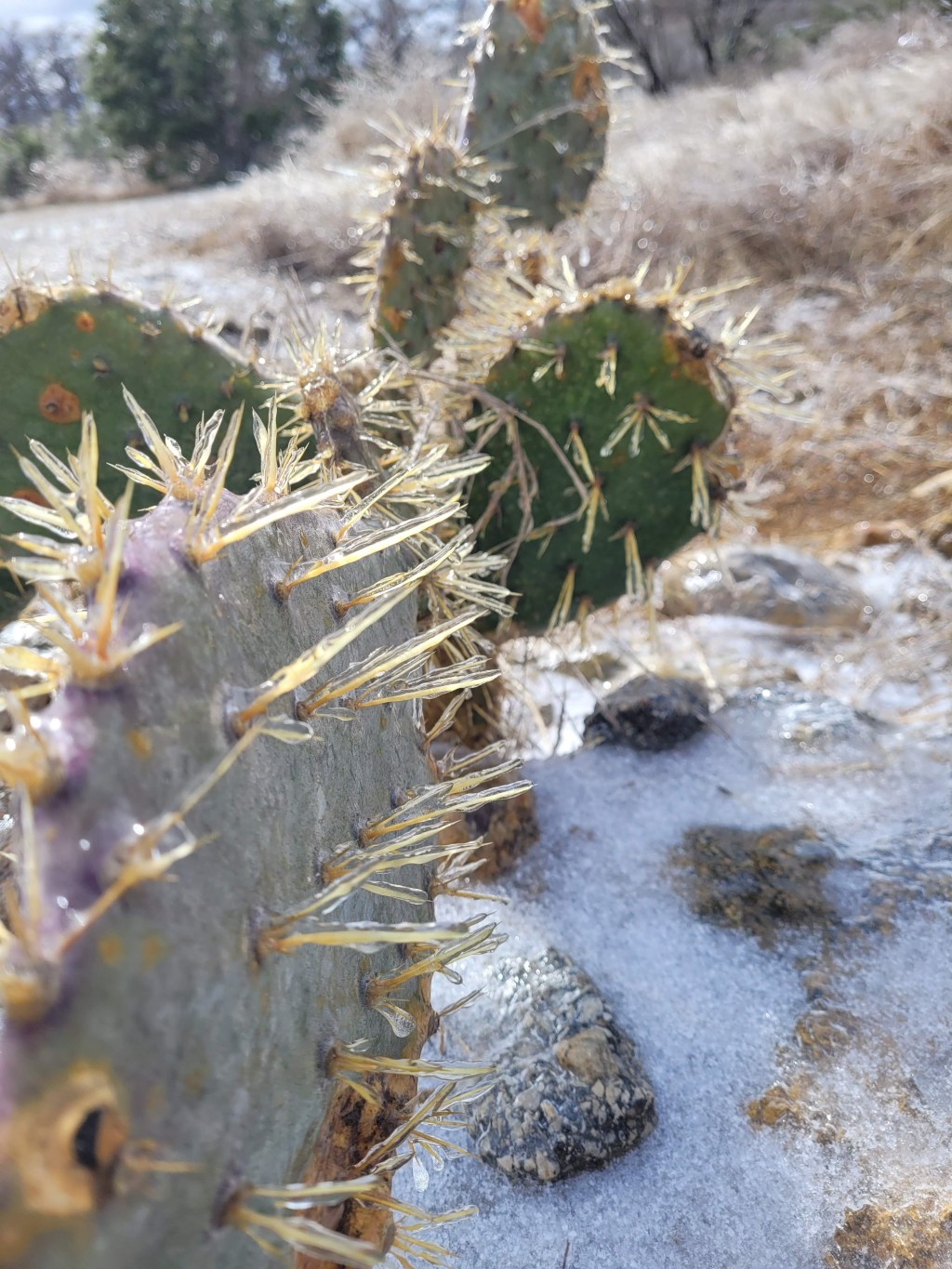
Truer words were never muttered by Lee, the campground’s maintenance man. This was in the aftermath of the brutally cold ice storm that swept over Texas, back in January. When the main lines burst in our section of the campground, we were left with no running water for days.
At one point Chris stepped out of the trailer during a quick break from work to inspect the situation. He found Lee in the middle of hooking up our rig to a neighboring campsite’s water hydrant while we waited for the main line to be fixed.
“How deep are the water pipes buried underground here?” Chris curiously asked.
Lee paused, looked up, and replied matter-of-factly,
“We’re Texans… we don’t feel the need to bury our pipes.”
Ah, okay then.
We knew the cold front was coming, but we may have not taken it as seriously as the locals. I mean… we’re used to winter. How bad can a cold front in the South really be?
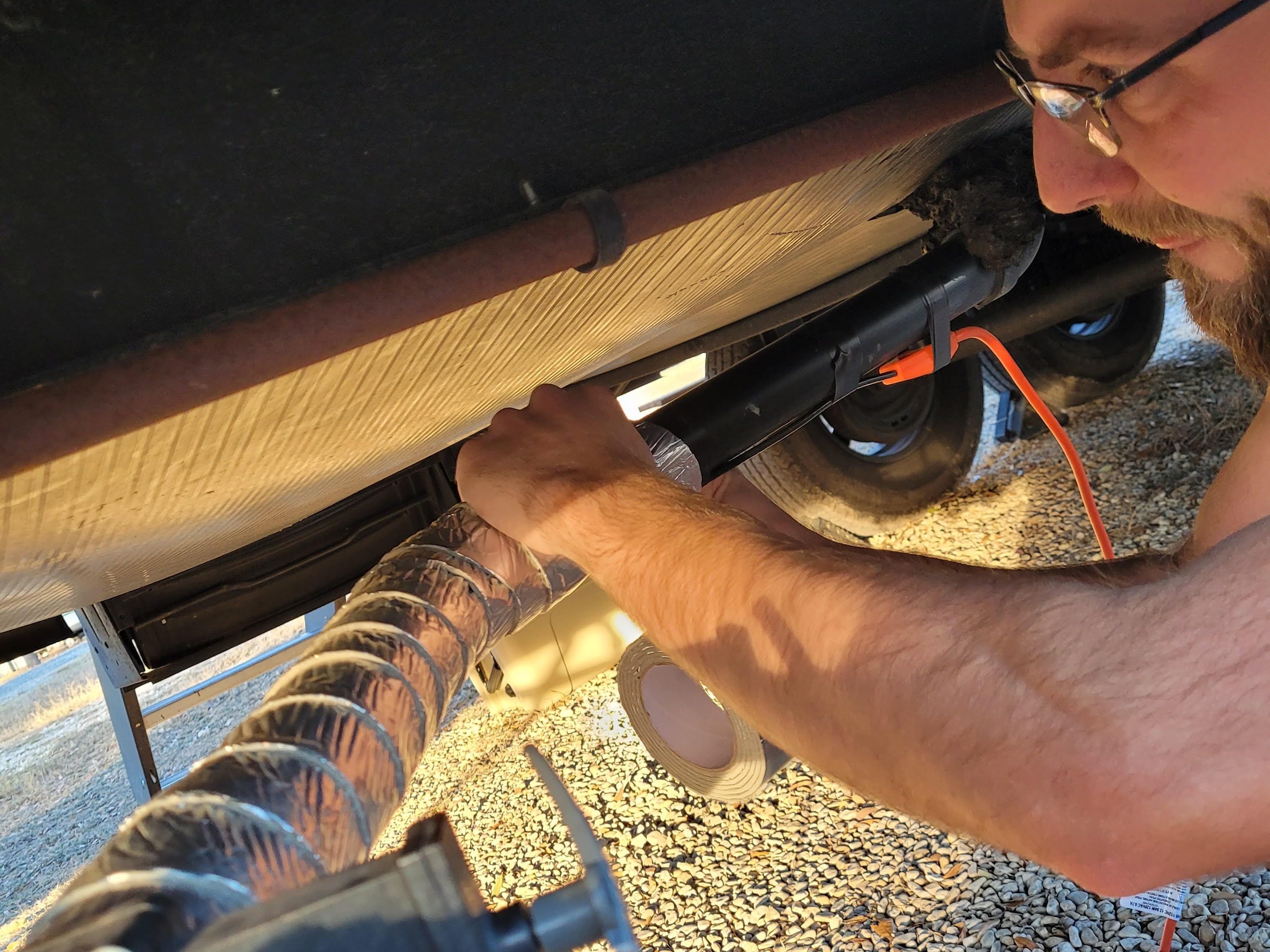
Before the storm hit, we had scrambled to find anywhere that could refill our propane tanks in the middle of a shortage. Most Texans had been quicker than us to react, already preparing for what felt like an apocalyptic weather forecast. We rushed to the hardware store and stocked up on heat tape for the water pipes, hoping this would be enough to insulate our water lines.
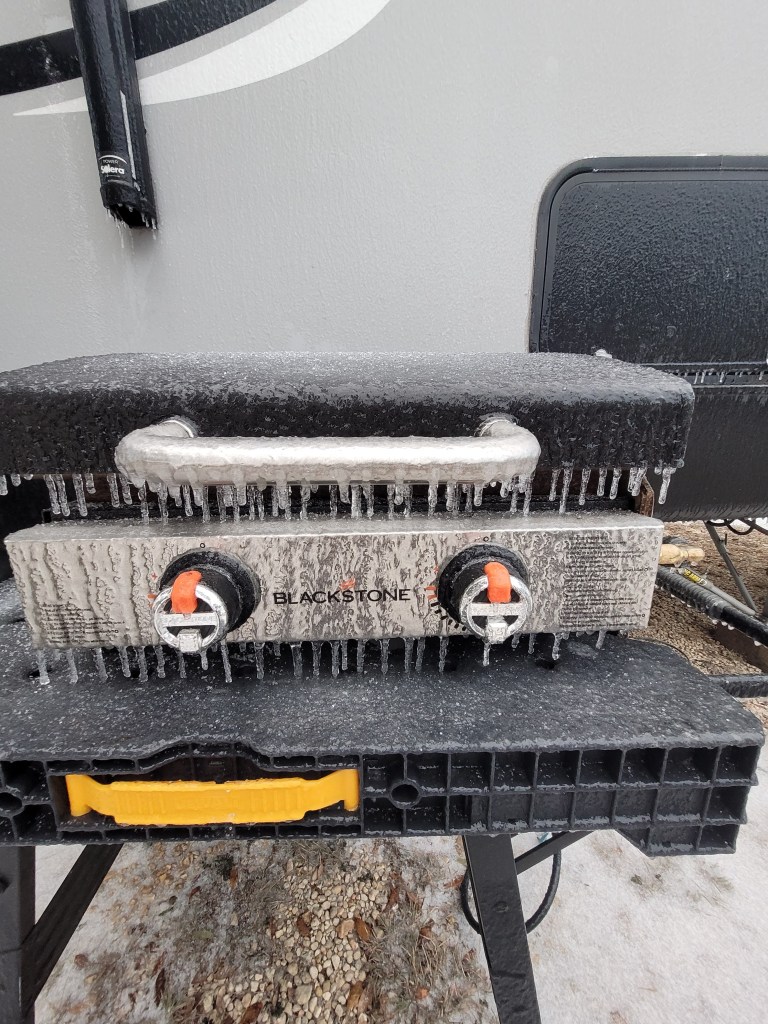
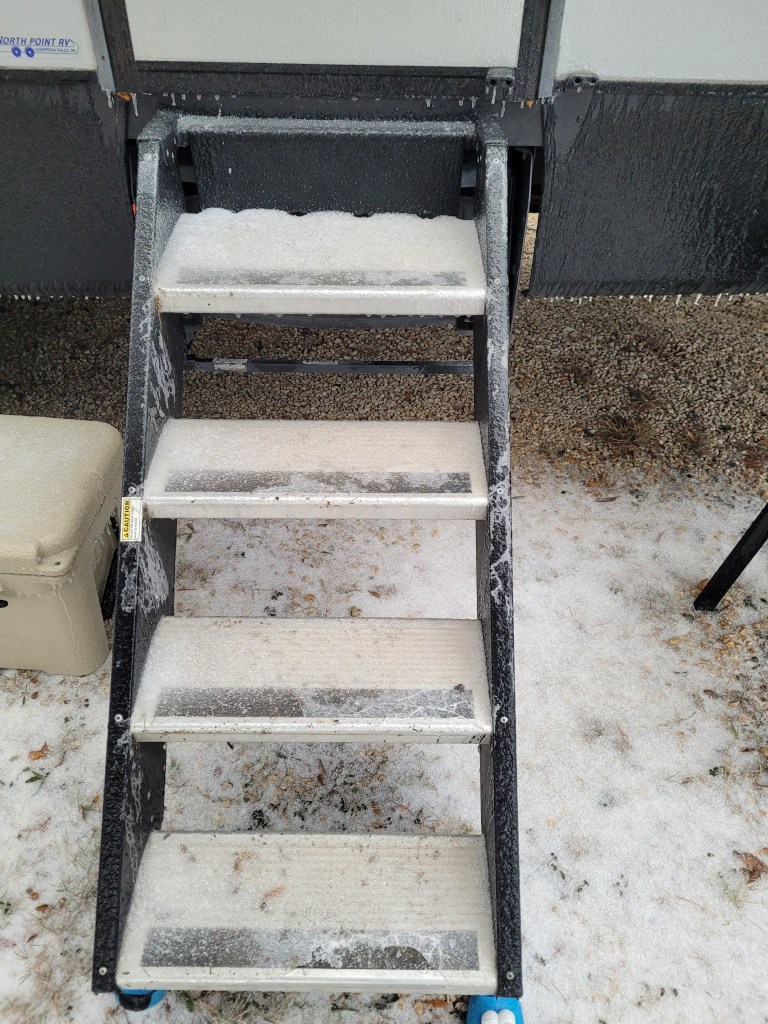
And then, we felt the temperatures drop. We woke up to a layer of ice covering every surface in sight. As I tried going down the stairs to further inspect this southern winter wonderland, my foot slipped on the icy steps and I tumbled down right to the ground that crunched softly under me. Just elegantly gliding through life… clearly.
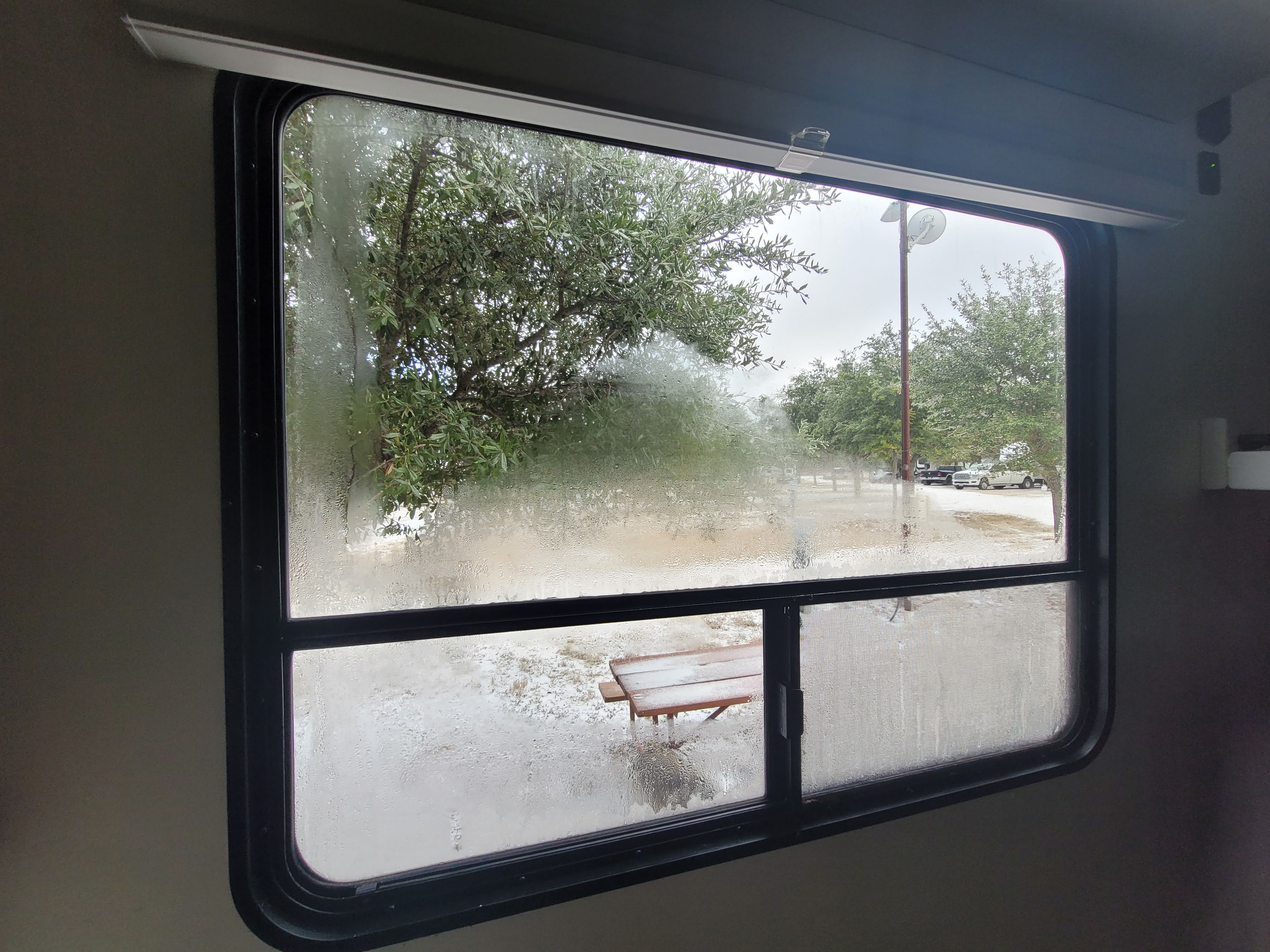
Those of you who were expecting tips from Alaska have by now realized that we’re actually in Texas. But you’re more than welcome to stick around. This is where the chapter really begins.
If you’ve been following along for a while, you already know there’s always some level of chaos woven into these adventures.
When we’d started planning our departure from Louisiana, we’d learned that the RV park where we were staying owned several properties across the country. Conveniently, one of them sat right along a motorcycle route we’d been wanting to ride: the Texas Hill Country Backcountry Discovery Route loop.
Then I saw the town name: Bandera, the Cowboy Capital of the World. How cool is that?
The location seemed promising so I called to make a reservation. On the other end of the line was the kindest woman, who patiently walked me through availability. Sadly though, they were fully booked for one of our chosen weekends, which meant a full month wasn’t possible.
She explained that the town gets especially busy during Cowboy Mardi Gras.
“Mardi Gras?” I asked, suddenly unsure I had dialed the right place.
“Yes,” she replied warmly. “Cowboy Mardi Gras.”
I hesitated.
“Just to make sure… this is Texas, right? Not Louisiana?”
“Yes ma’am,” she said, still as patient as ever. “This is Antler Oaks RV Park in Texas. Mardi Gras isn’t just celebrated in Louisiana, it’s quite popular here too.”
That’s one of the tradeoff we tend to run into when planning our next stop: the monthly rate is worth it, but finding a place that has availability and meets our needs can get complicated.
I asked to be put on the waitlist in case anything opened up. I was definitely disappointed, but still hopeful.
And then the universe did what it does best. Someone canceled that very same afternoon.
I didn’t hesitate. I happily booked it.
When we’d wrapped up our short stint in Minnesota in January, we’d pointed ourselves South toward Louisiana, trading the cold northern air for the long stretch of highway ahead.
It felt a bit like retracing our steps before starting something new again. Once Bus and truck were together again, we’d be heading west toward Texas and its warmer days. Or so we thought.
It’s impressive how one knows they’ve arrived in Texas.
The landscape shifts almost immediately. The soft, forgiving greenery we’d grown used to in Lafayette gives way to something a little more rugged and intense. The earth itself feels drier, dustier, tinged in pale limestone and sunbaked tones.
Then there are the trees. They don’t just grow here, they defend themselves.
Scrubby Ashe junipers dot the hills in thick clusters, their dense, tangled branches giving the land a wild, almost unkempt feel. Mesquite trees twist low to the ground, armed with long, unforgiving thorns that look like they mean business. Even the live oaks, with their sprawling, ancient limbs, seem to reach outward in every direction like they’ve been shaped by years of wind, drought, and stubborn resilience.
Prickly pear cactus line the roadsides, flat green paddles covered in spines that you only notice after you’ve brushed up against them (Ask me how I know.). Agave and yucca plants spike up from the ground like nature’s version of a warning sign: look, don’t touch. It’s a landscape that feels… armed. Like everything here has adapted to hold its ground.
As we turn into the campground, it’s surrounded by wide pastures. We are in cattle country, after all. So it feels only fitting that, as we pull up by the main office building, we’re greeted by four large black Angus cows and bulls lazily working through piles of hay.
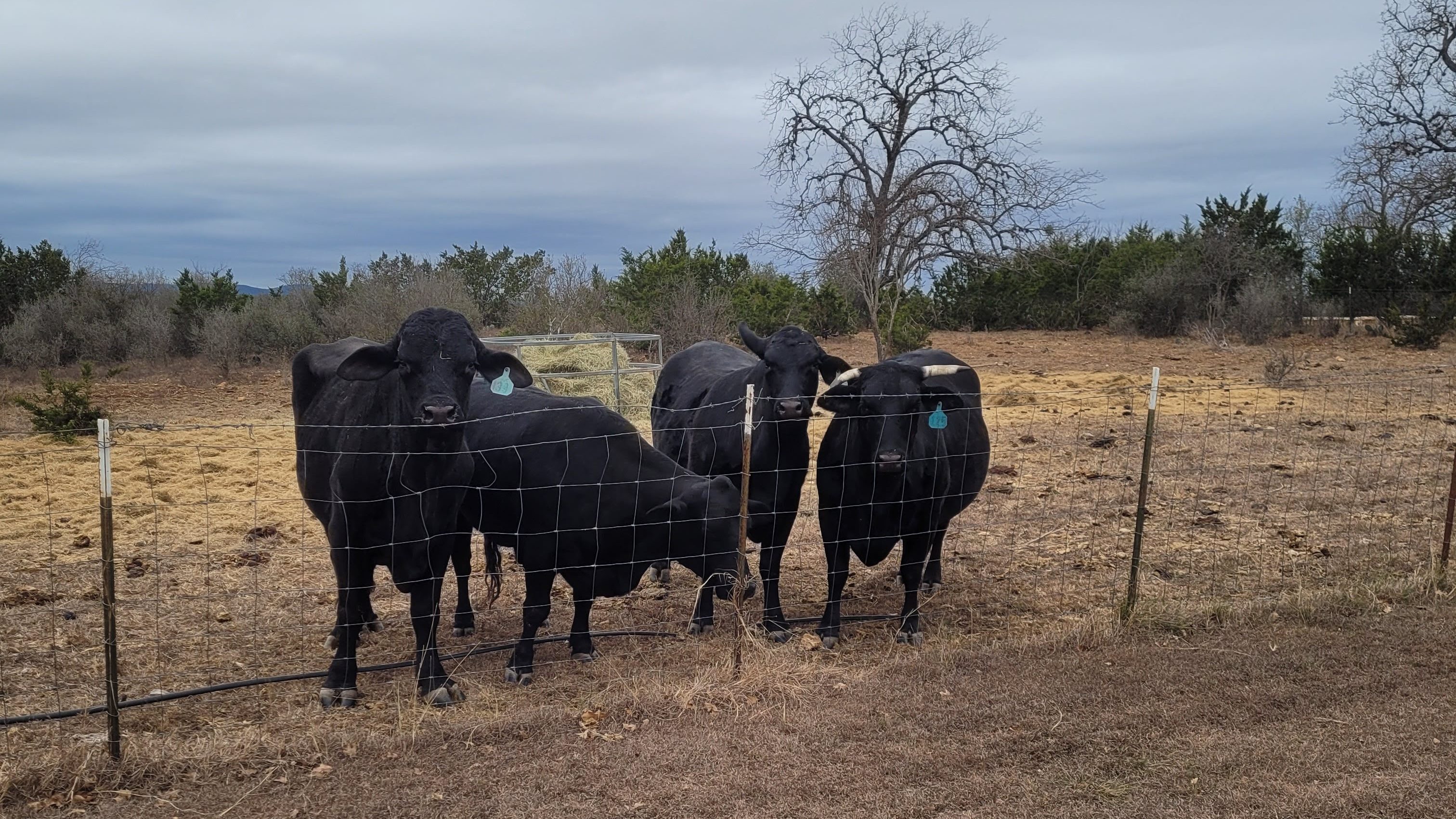
Inside the office, we’re welcomed by two lovely women. One of them is Silvia, the patient voice I had spoken to just a few weeks earlier. She walks us through the layout of the campground, points out the amenities, and casually mentions that the cows are very friendly and love to greet visitors.
The other woman, who happens to be the park manager, disappears into the back room and returns with a large plastic bag full of treats for us to give the cows.
I am thrilled.
Chris is slightly baffled at how something so simple can spark that level of excitement from me. But growing up on a hobby farm, I suppose he got this out of his system early. My inner child, however, was raised mostly in a big city, where interactions with wildlife were limited… unless you were willing to play a risky game of rabies roulette with a raccoon digging through the trash.
So yes, this felt magical.
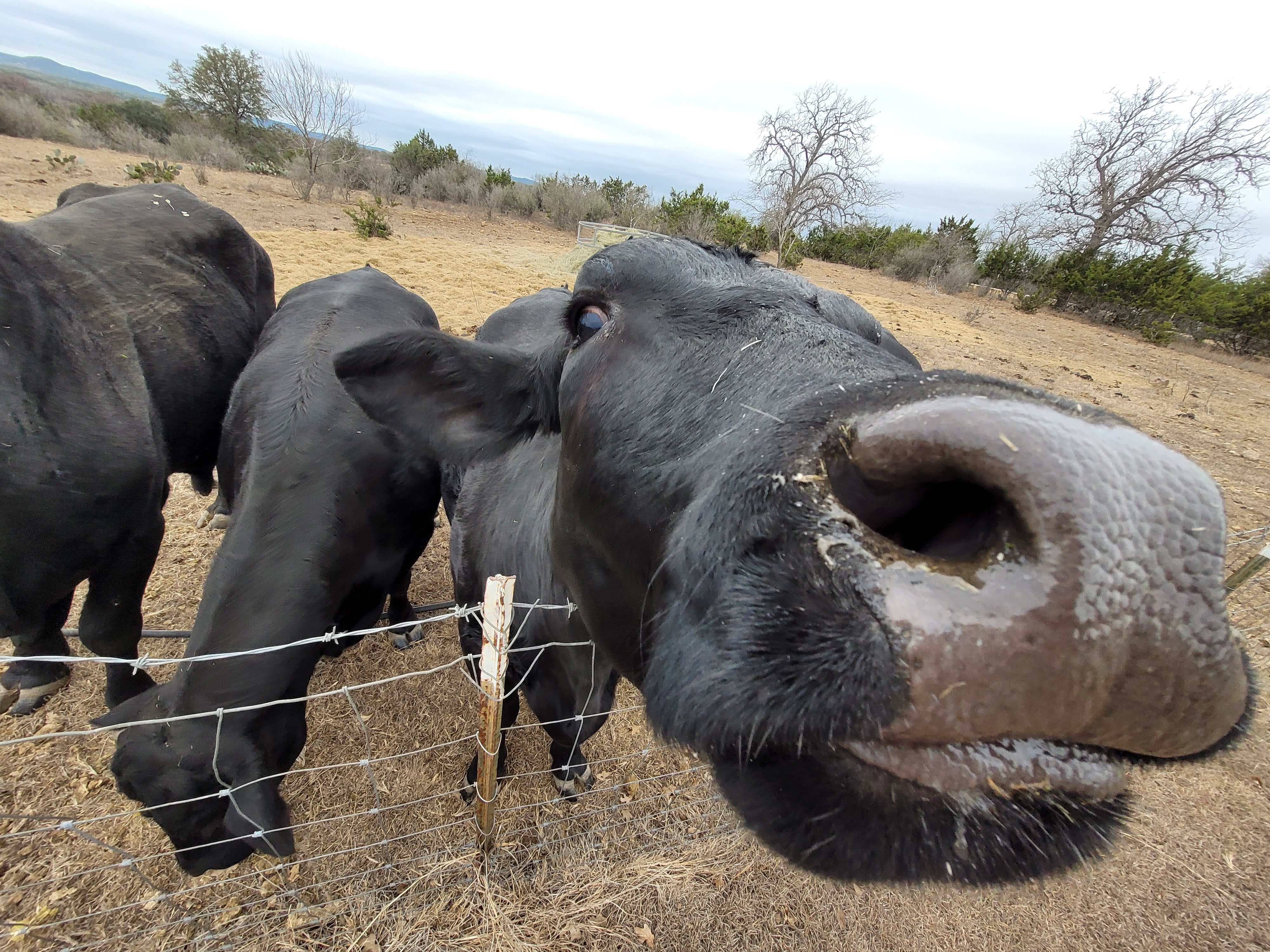
Naturally, our evening walks around the campground quickly turned into cow-spotting missions. I never left without a few snacks tucked into my hoodie pocket, just in case.
At first, the herd kept their distance, watching us cautiously from afar. Fair enough. I wouldn’t trust random strangers either without knowing their intentions.
But eventually, curiosity (and snacks) won.
One day, I caught them close enough to the fence and pulled out a treat. That was all it took.
From then on, they began approaching us during our walks, growing more comfortable with each encounter accepting our petting them and enthusiastically nibbling their treats.
One evening we called out to them from a neighboring pasture, not expecting much. But suddenly, the youngest bull came cantering toward us, throwing in little excited bucks along the way, clearly determined to get his share of cookies.
I didn’t think cows could get more endearing. Boy, was I was wrong.
On Today’s Episode Of Chris And His Knockers… And Other Animal Encounters
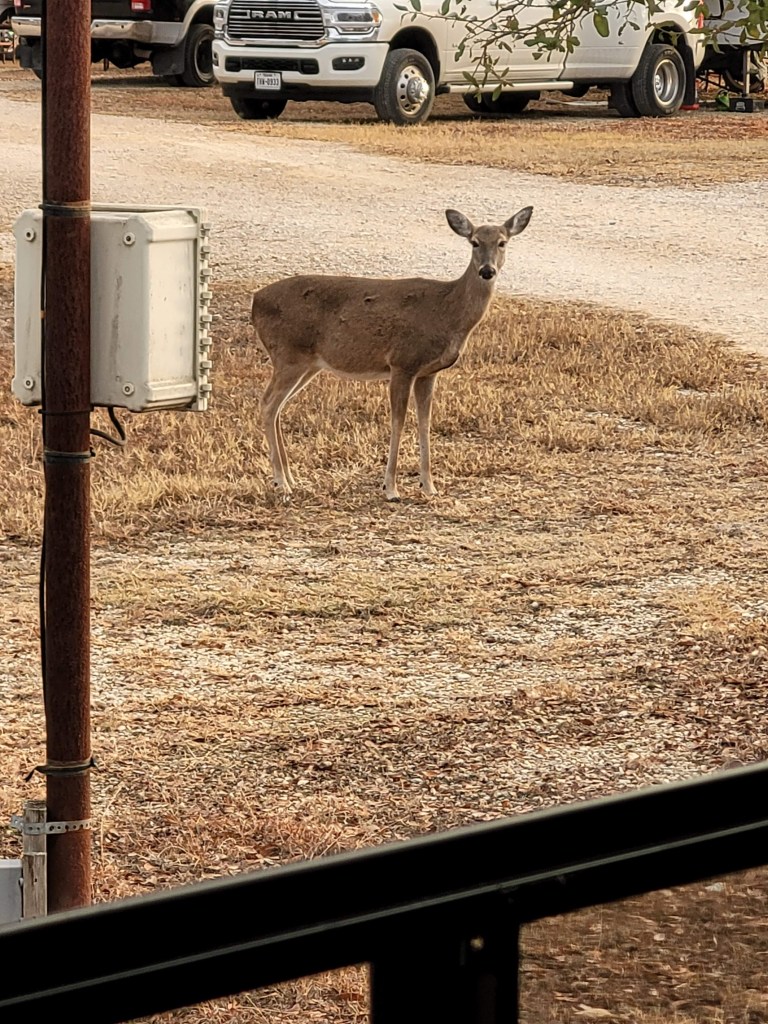
We are staying at a campground absolutely overrun with deer, to Chris’ absolute delight.
Not the tall, sturdy, majestic deer we’re used to seeing in Minnesota. These seem like their smaller, slightly more delicate cousins. Hill Country deer (mostly white-tailed) are leaner, lighter on their feet, with narrower frames and this constant, alert energy about them.
They graze casually through campsites, wander between rigs like they pay rent, and regularly stop just close enough before deciding whether you’re worth worrying about. It’s just enough interaction to completely derail Chris.
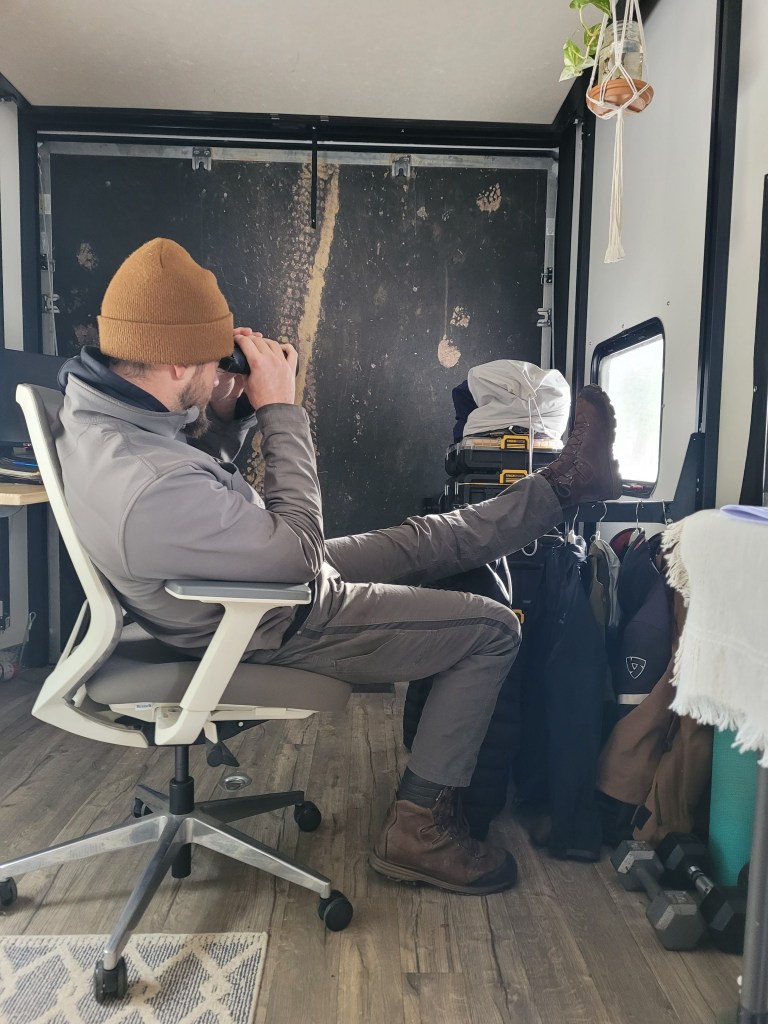
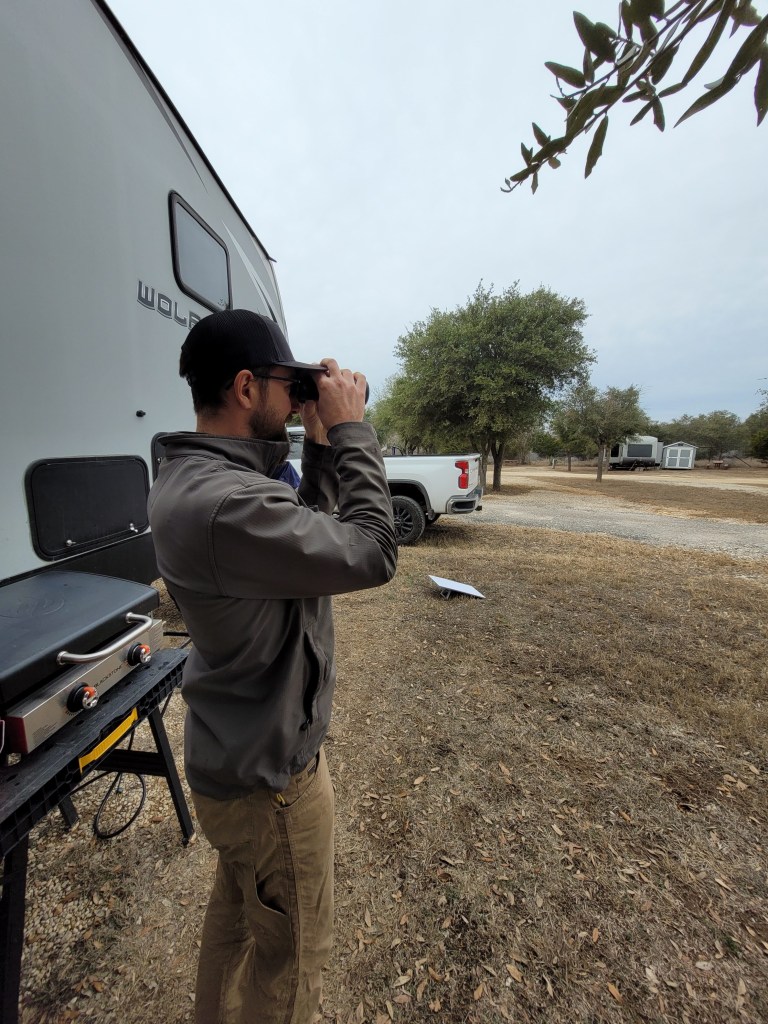
Because once one deer shows up, that’s it! He’s at the window.
Watching with binoculars in hand. Waiting. Narrating.
Hence: Chris and his knockers.
But the deer aren’t the only regulars. We also have armadillos—what we’ve humorously started calling the tactical possums of Texas after reading that on a t-shirt.
If you’ve never seen one up close, imagine a small, round-bodied creature wearing medieval armor. Their bodies are covered in these segmented, bony plates that move as they shuffle along, noses pressed to the ground, constantly sniffing for insects. It’s like nature couldn’t decide between “tank” and “rodent” and just… went with both.
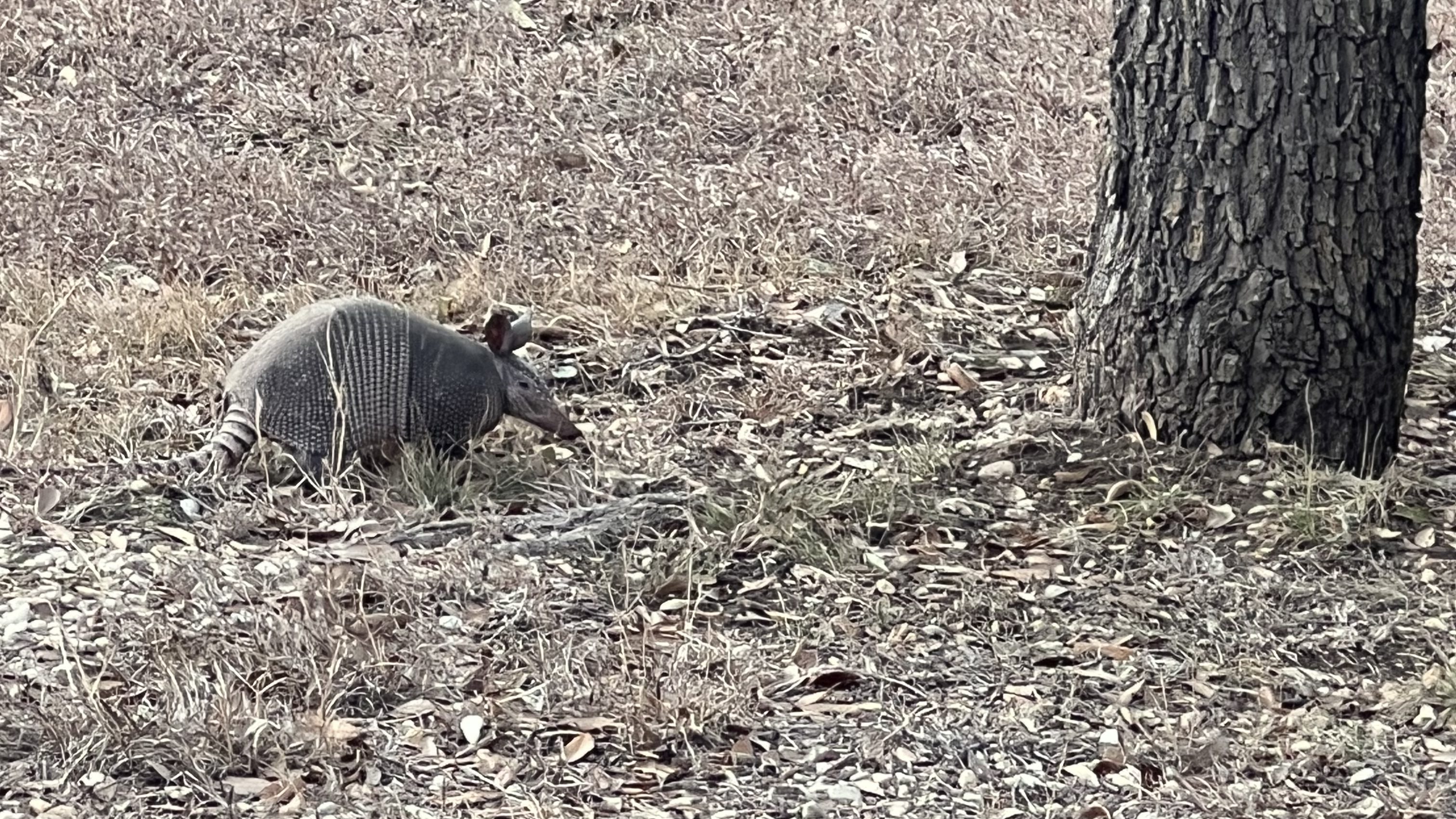
They’re not fast.
They’re not graceful.
And most importantly, they don’t see very well.
Which, unfortunately (or fortunately), has turned them into Chris’s favorite form of entertainment while on our daily walks around the property.
He has developed what can only be described as a stealth approach technique, where he slowly tries to sneak up on them while they’re busy minding their own business. And for just a brief moment it almost works.
The second the armadillo senses something’s off, however, it bolts in the most chaotic, zigzagging escape pattern imaginable, leaving Chris standing there trying not to laugh at how completely ludicrous this whole interaction is.
To be clear—he never actually tries to grab one. They are wild animals, after all. This is strictly a “look but don’t touch (and maybe lightly stalk for fun)” situation.
And then there’s the surprising absence of something we were fully expecting. Snakes. Before arriving in Texas, it felt like everyone had a story, a warning, or a dramatic retelling involving rattle snakes. We braced ourselves for constant vigilance. Watching every step, scanning every trail. And yet… not a single sighting.
I guess this is the animal equivalent of the hill people: the fear of the unknown often proves more grandiose than the reality.
Took a Day Trip To San Antonio
Because our first few weeks in Texas have greeted us with inclement weather, our motorcycles are on a forced break for the time being.
On this particular weekend, we’ve traded in our adventure gear for walking shoes as we take a drive to San Antonio and explore the city and some important American history that goes along with it.
There’s a quiet gravity to The Alamo that you don’t quite grasp until you’re standing inside its walls. The limestone façade—smaller than you might expect—feels less like a grand monument and more like a preserved memory, held carefully in place amid the growing city around it.
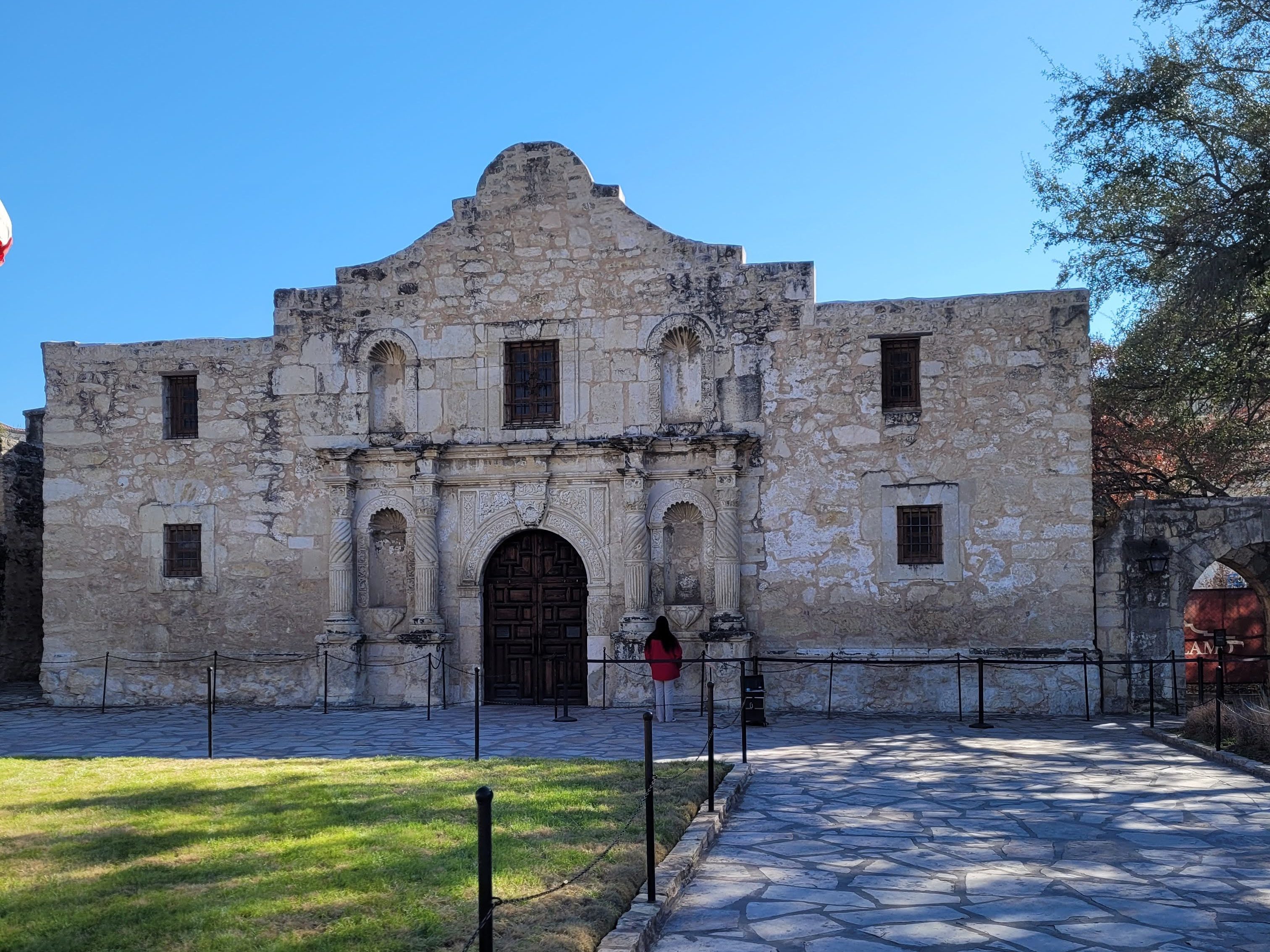
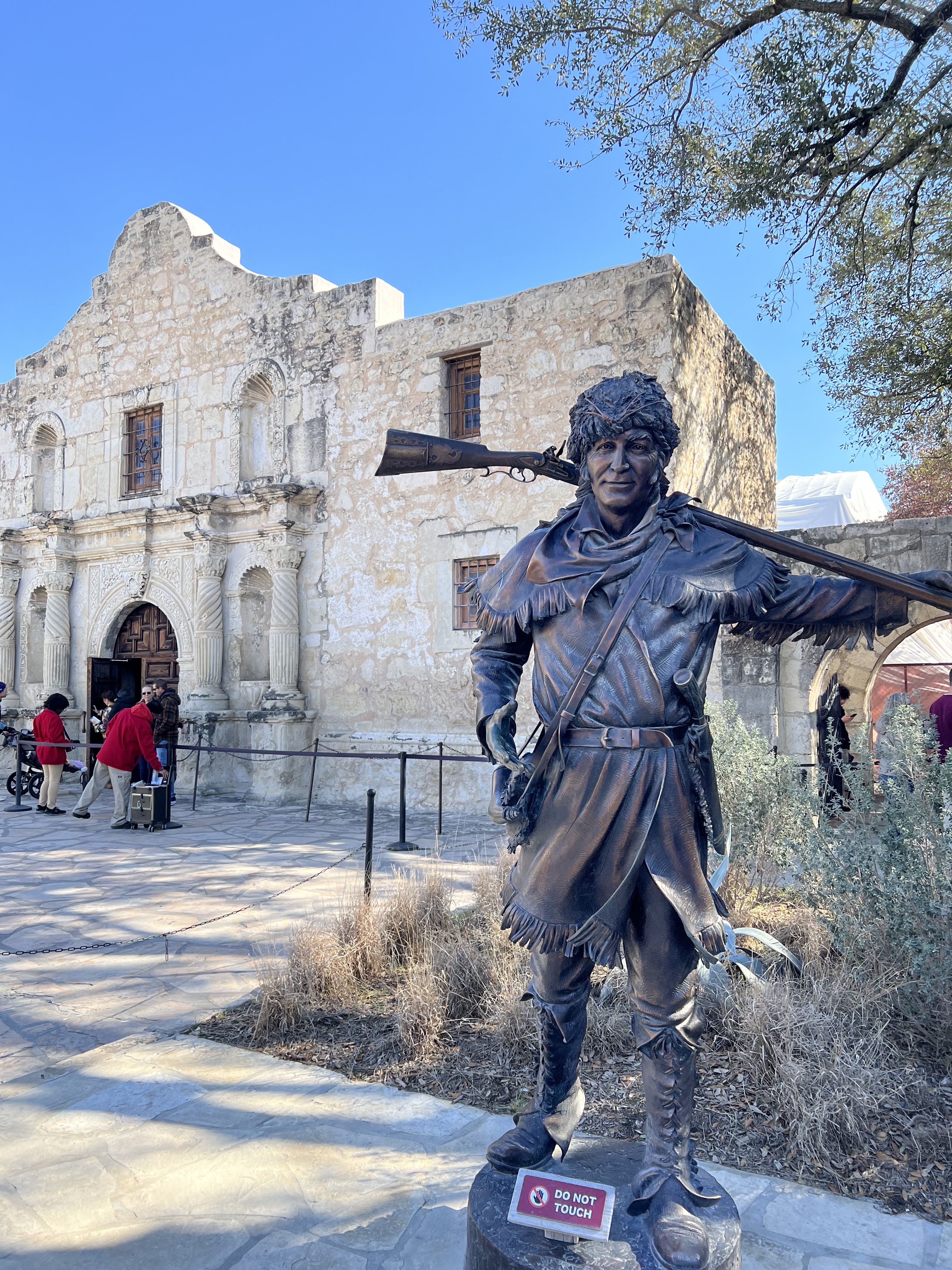
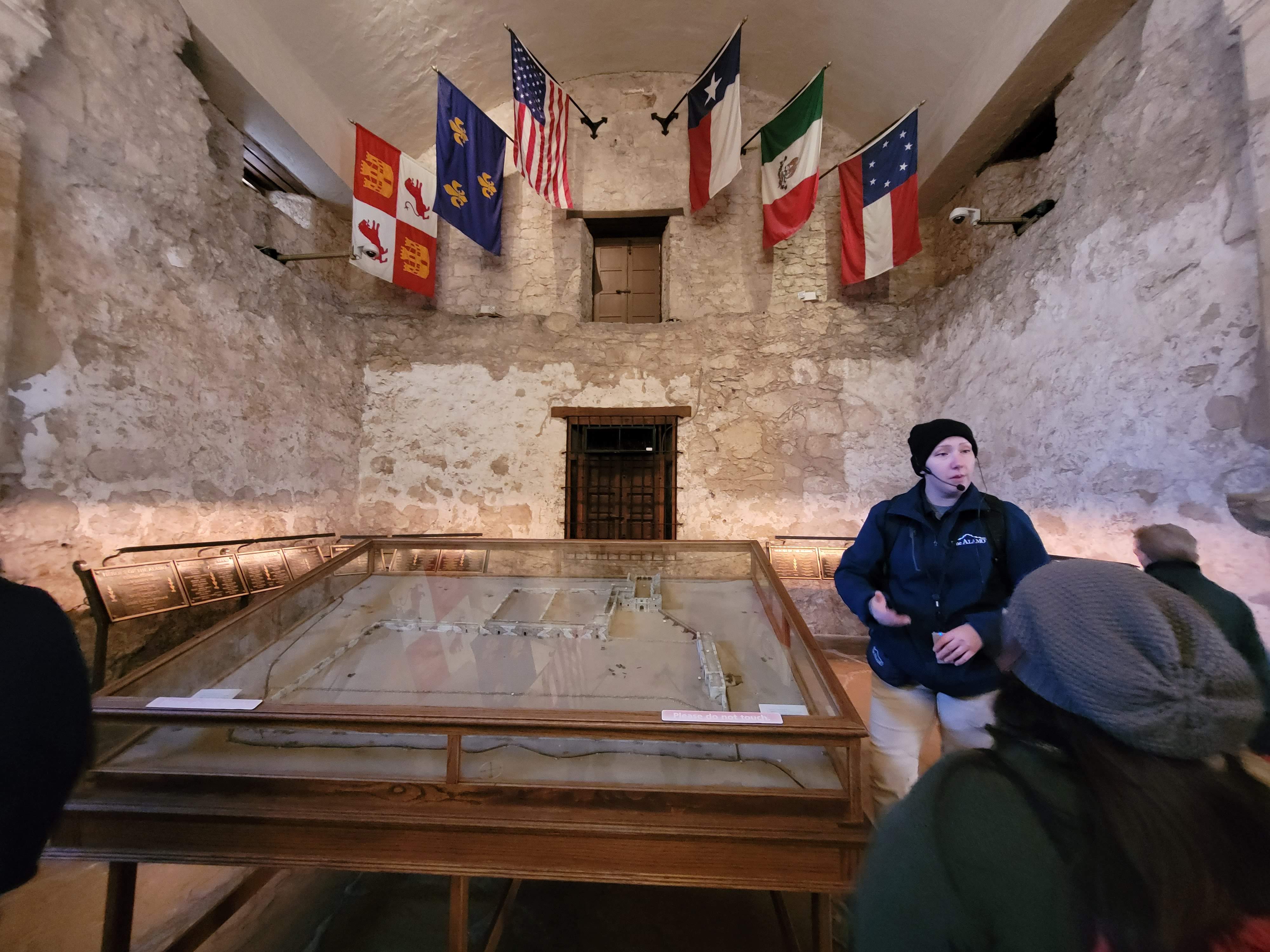
We opted for a guided tour, which shifted the experience from simply seeing to understanding. Walking through the grounds, the guide unraveled layers of history that stretched beyond the iconic 1836 battle—back to its origins as an 18th-century Spanish mission. The low stone buildings, weathered wooden doors, and open courtyards framed stories of resilience and conflict in a way that felt tangible.
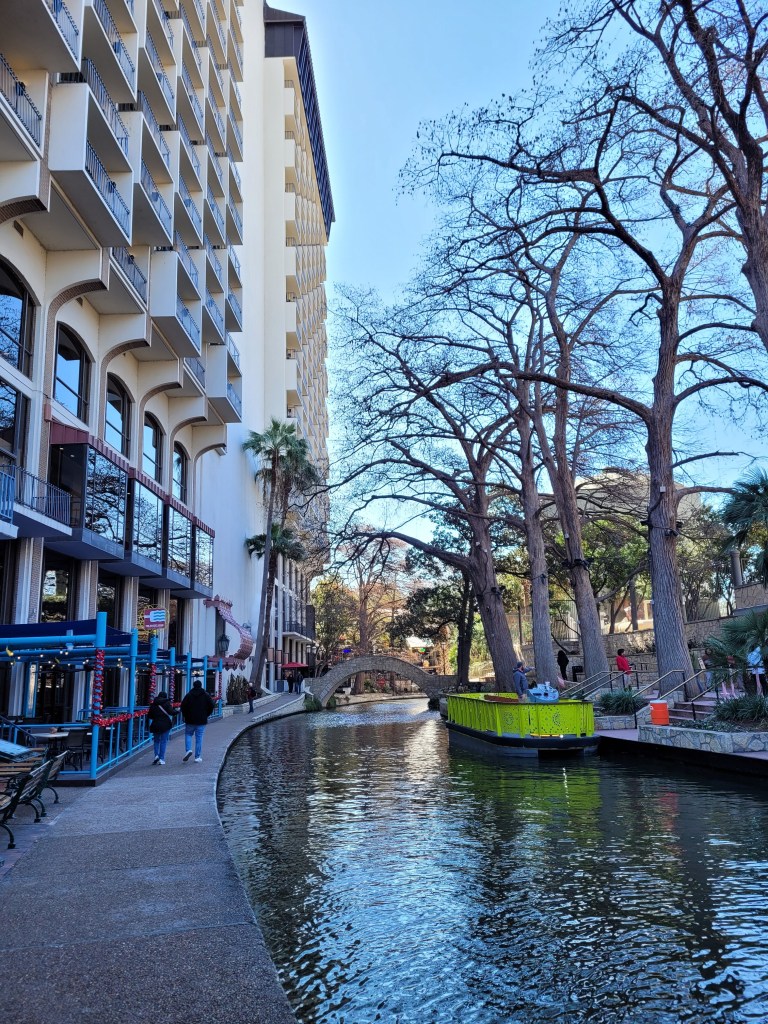
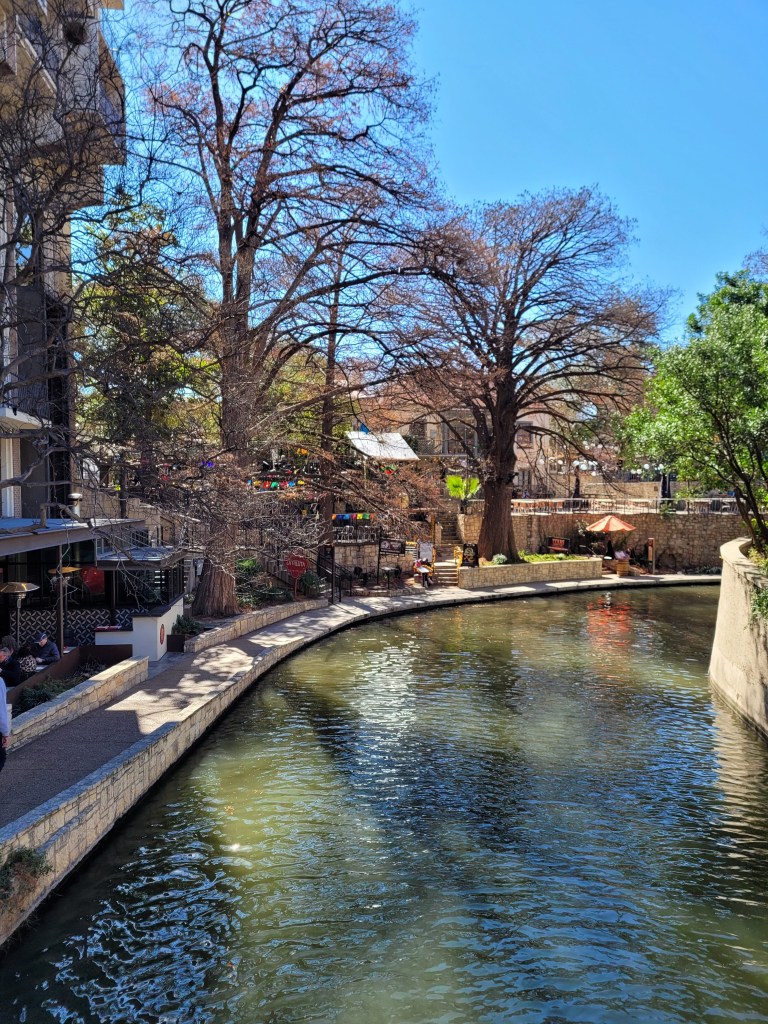
From there, we dropped down into the winding pathways of the San Antonio River Walk, where the city shifts again—this time into something more intimate. The River Walk sits below street level, creating a kind of hidden corridor lined with stone bridges, cypress trees, and restaurants that hug the water’s edge. It makes me think of the waterways of Venice, Italy, especially when you see public transportation in the form of boats.
The cold had thinned the crowds, which made the experience feel almost private. Without the usual hum of packed patios and passing tour boats, you notice the smaller details—the way the water moves slowly under the bridges and the contrast between the quiet river and the busy streets just above.
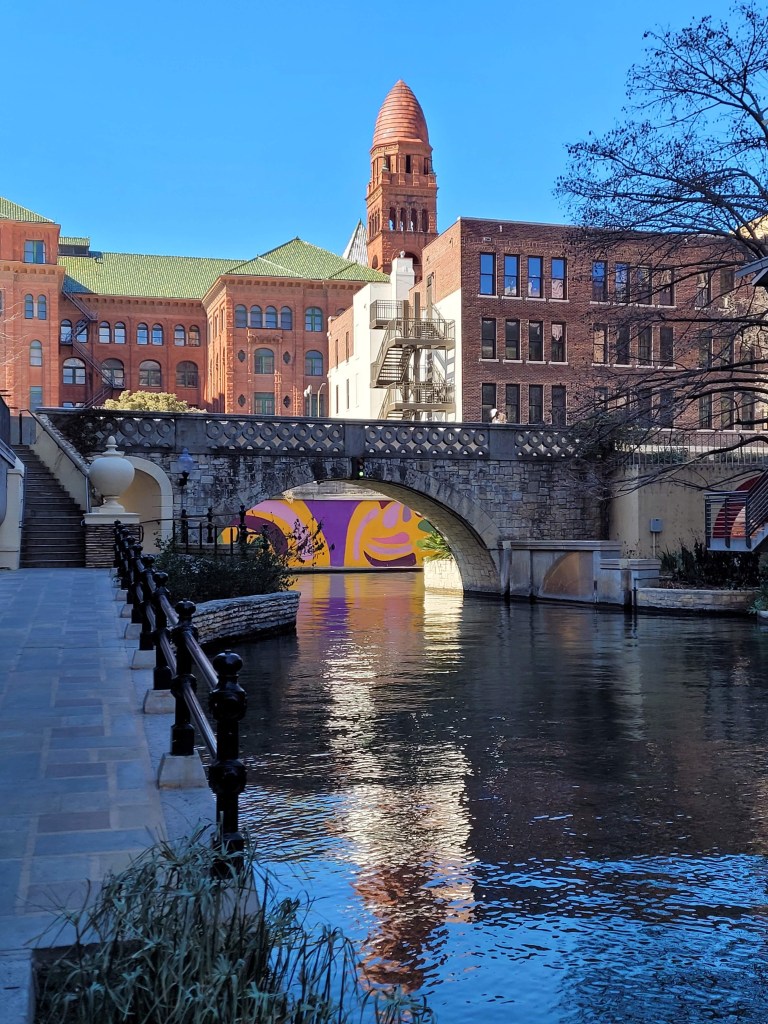
We passed by the original Coyote Ugly Saloon, doors open just after noon, already humming with the promise of a much louder night ahead. Inside, it carried that unmistakable energy of dim lighting, worn wood, a bar built for standing on as much as leaning against.
A bartender, fully in character, welcomed us in with an immediate suggestion of shooters. It was tempting in a “this is the story we’ll tell later” kind of way—but the clock (and the rest of the day’s plans) nudged us toward restraint. We took a quick look, soaked in the atmosphere, and stepped back out into the daylight before things escalated past curiosity.
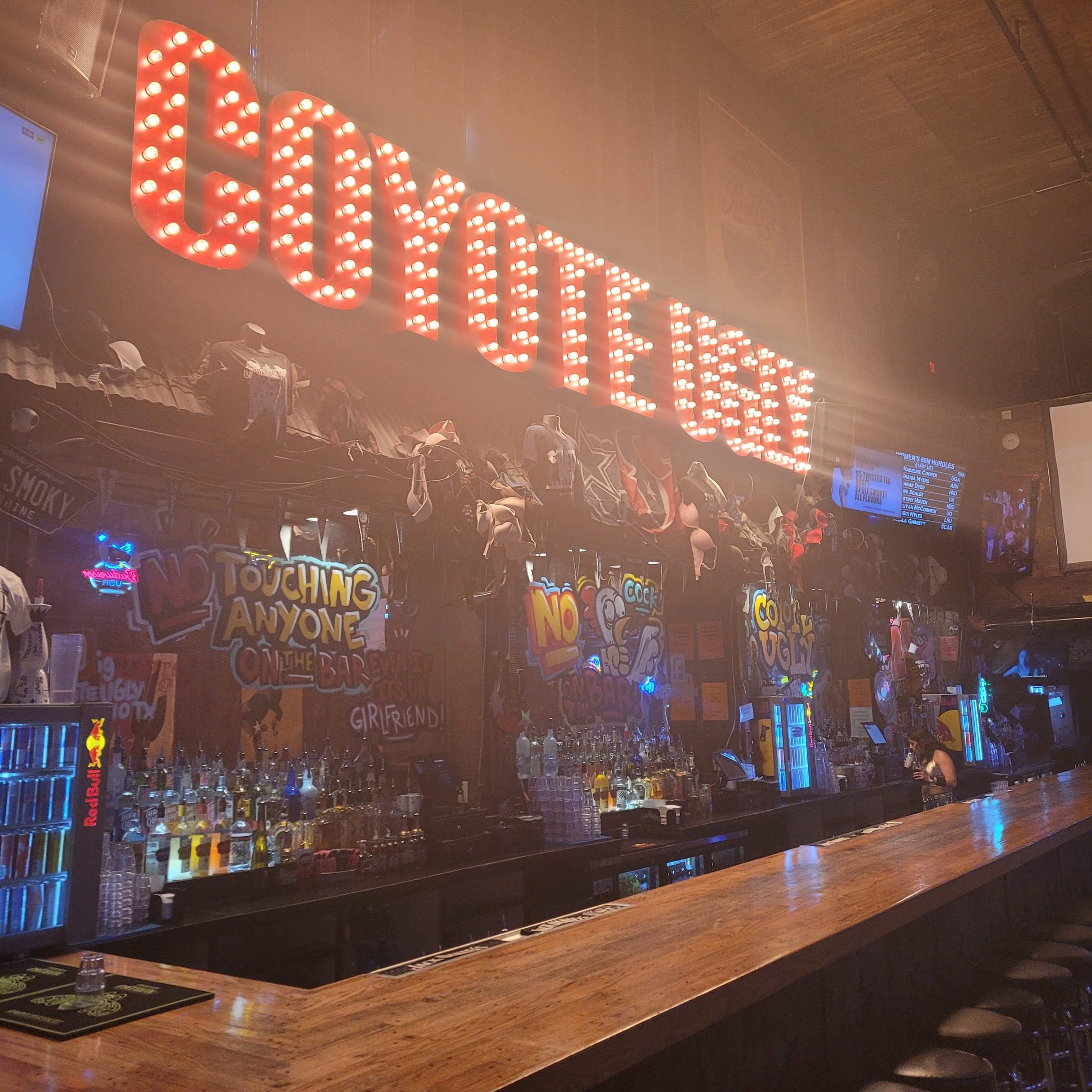
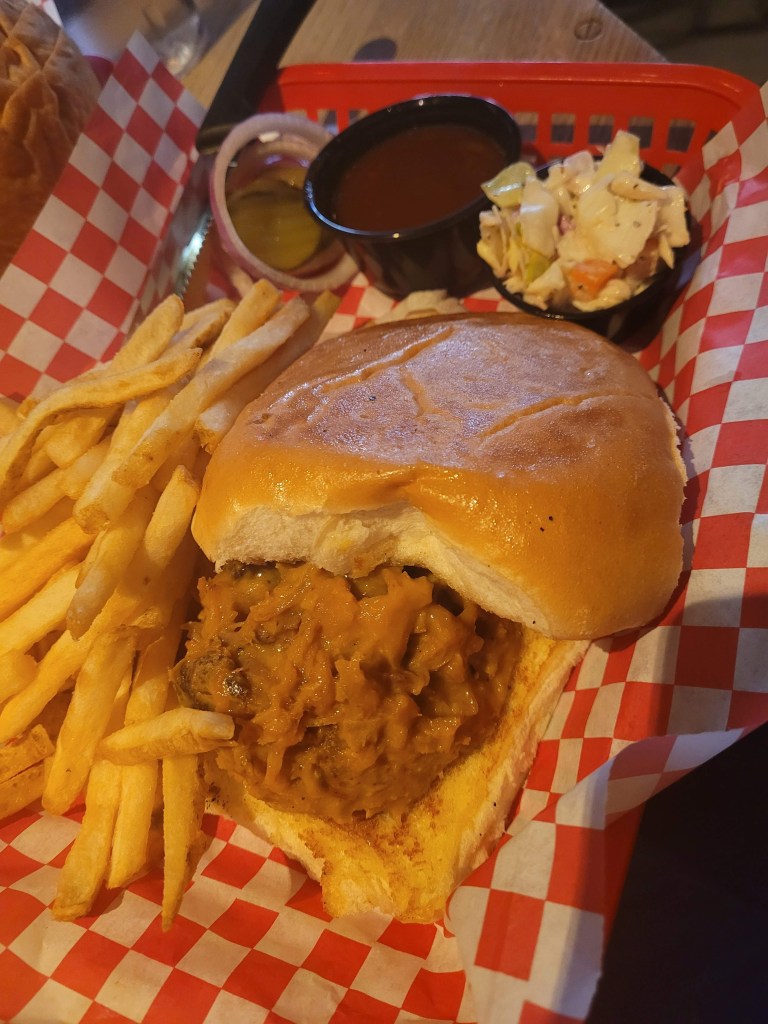
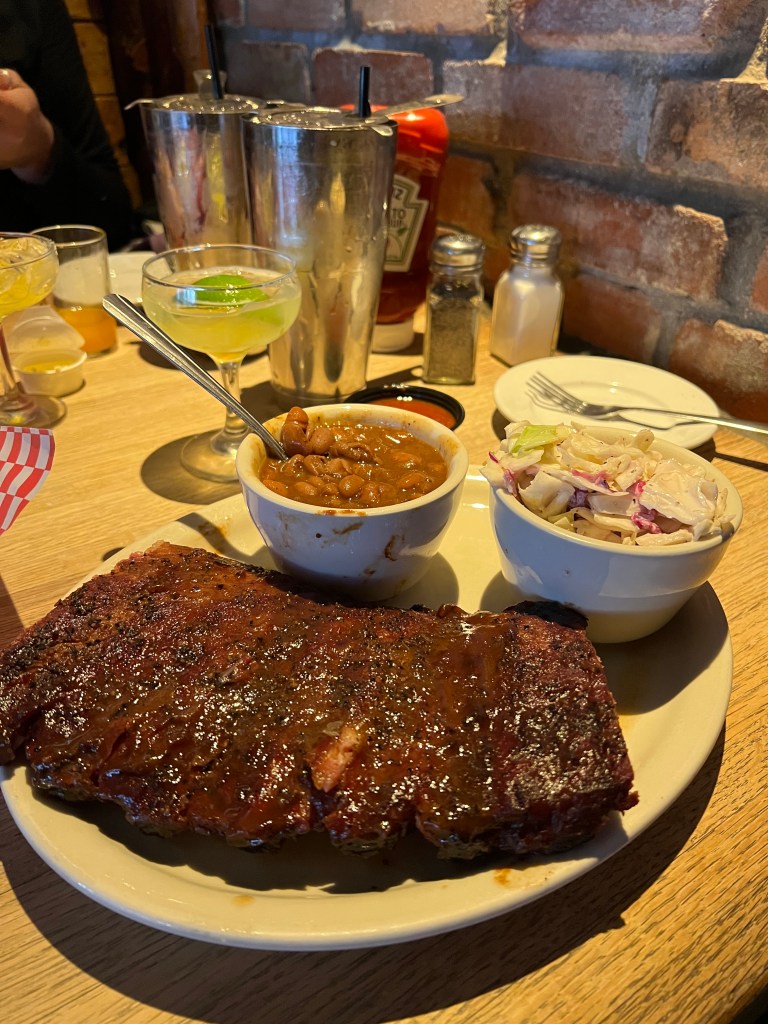
We stopped for an unapologetically Texan lunch at The County Line BBQ: a pulled pork sandwich piled high and ribs that were done right. The sauce leaned rich, slightly sweet, with a tang that cut through the heaviness. And because this is still Texas, margaritas promptly made their way to the table.

Cowboy Mardi Gras And The Town of Bandera
Known as the “Cowboy Capital of the World,” this small Hill Country town of roughly 900 residents swells to nearly 10,000 over the Cowboy Mardi Gras weekend.
We watched it unfold in real time at the campground at first. A group of colorful RVs rolled in for the weekend like a traveling burst of energy, unloading decorations, beads, and just enough sparkle to transform campsites into mini Mardi Gras outposts.
The “Lady of the Fly” group is a traveling community of women who gather around a shared love of the road and camping. What stands out most is how quickly they transform a space. They’ve brought a kind of festive momentum with them that sets the tone for what is about to unfold in town.
When the parade rolled through, it didn’t just pass by. Float after float made its way down Main Street, each one a mix of western grit and Mardi Gras flair. Horses walked alongside decorated trailers, boots and hats paired with purple, green, and gold.

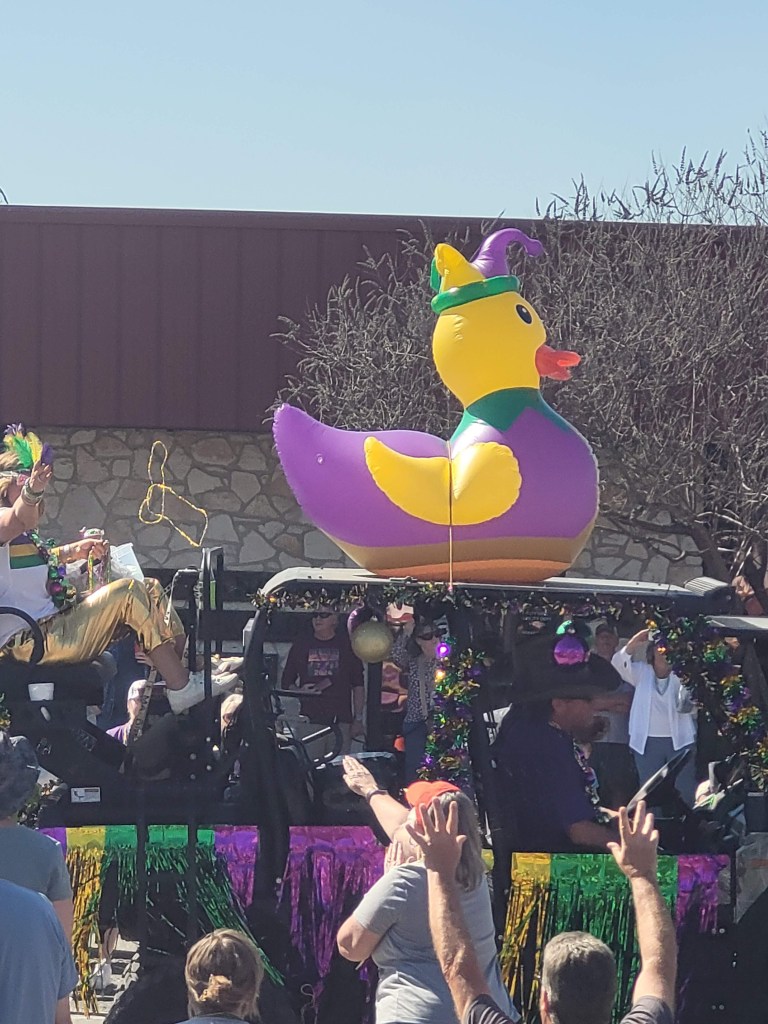
We stood shoulder to shoulder with strangers who didn’t feel like strangers for long, waving, laughing, and reaching out as beads arced through the air. Some were caught cleanly, others bounced off hands and hit the pavement, immediately scooped up with the kind of competitive joy that only something as simple as a plastic necklace can inspire.
Somewhere between the floats and the shops, we found ourselves pulled towards a group of reenactors fully committed to another era. Dressed as cowboys, sheriffs, and outlaws, they carried themselves like they’d stepped straight out of the 1800s, complete with exaggerated swagger and perfectly timed one-liners.
The gunfight reenactment was equal parts theatrical and hilarious. Every movement was deliberate, every draw just dramatic enough, every fall to the ground a little more exaggerated than the last. They stayed in character the entire time, playing off the crowd, stretching the moment in a way that made you forget what time period we’re in.
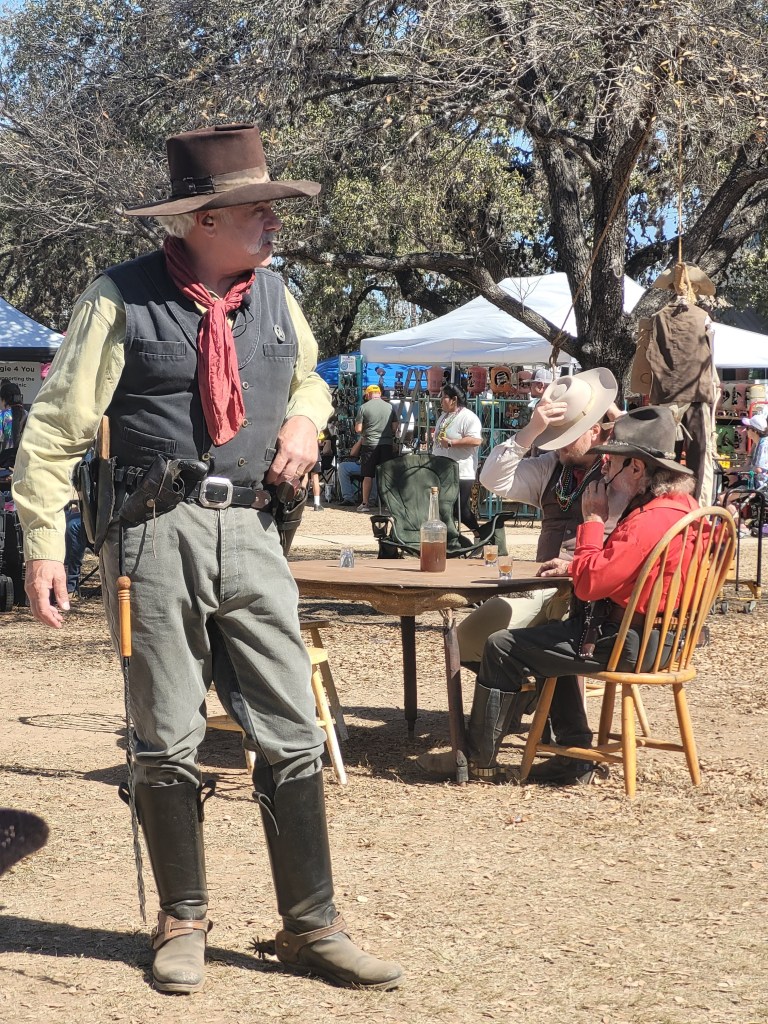
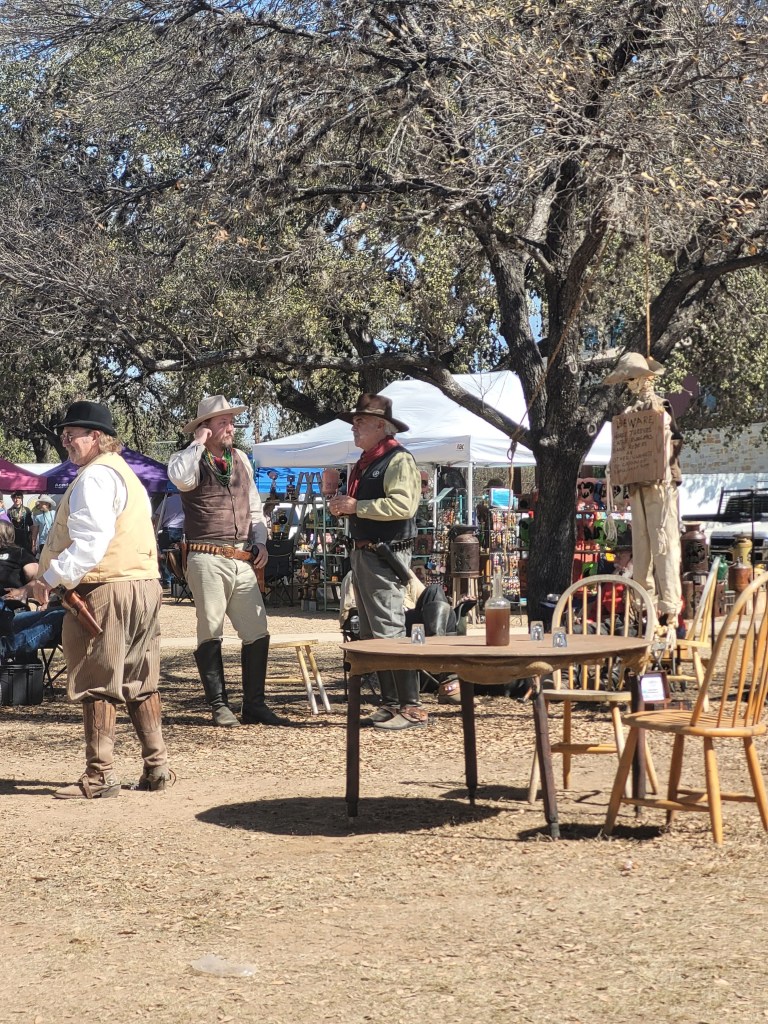
Before the beads and parade floats, Bandera earned its identity the hard way. In the late 1800s, it was a major staging ground for cattle drives—longhorns gathered here before being pushed north along routes like the Western Trail. Cowboys, many of them Mexican vaqueros whose techniques shaped what we now recognize as “cowboy culture,” drove herds across vast stretches of land toward railheads in Kansas.
That legacy isn’t tucked away in a museum, it’s woven directly into the town. Along Main Street, storefronts embrace the aesthetic: leather goods, western wear, old saloons, and family-run shops that feel more like a lived-in extensions of the people behind the counter than retail spaces.
My Very American Bucket List
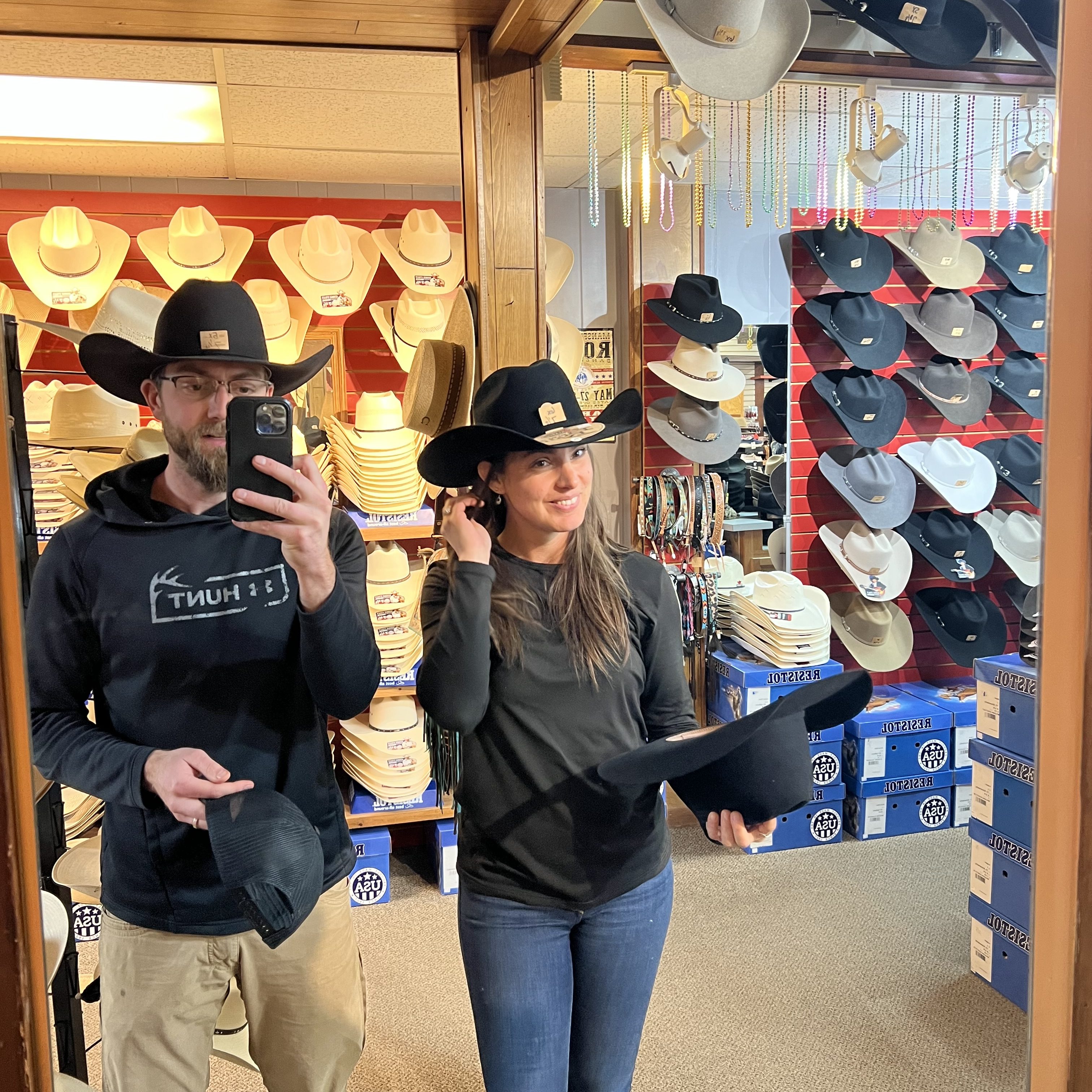
Somewhere along this full-time RV journey, I unknowingly started what I now call “my very American bucket list.” As a Canadian living in the U.S., it became less about sightseeing and more about immersion—leaning into the things that feel distinctly American. Truthfully, the list is a moving target. Every time someone asks what’s on it, I seem to reinvent it on the spot. But two things have remained consistent. First: noodling—yes, the act of catching fish with your bare hands. That one is still… under review, pending both feasibility and a serious conversation about my personal safety. Second: an authentic cowboy hat from Texas.
Which is how we found ourselves inside The Cowboy Store, me trying on what felt like every hat in the building. Felt, straw, black, tan—each one slightly different, each one requiring a full head tilt and mirror check. And of course, the one I loved and fit nicely on my apparently large head was not the most budget-friendly option. In my defense, there are way more expensive choices. So my preferred option was the middle ground. Oh yeah!, I got it. When I called my sister to tell her about my new accessory, she immediately labeled the purchase as ridiculous, which only made me dig my heels in further. I wore it proudly during Cowboy Mardi Gras, fully committing to the look. Financially, the cost-per-wear hasn’t exactly balanced out yet but I remain stubbornly optimistic that it will.
Southern Hospitality: An Homage To The People We Met
Just as the landscape seems harsh, the opposite is true of Texans in everyday life. Conversations start easily here even in the most ordinary places, like the grocery store aisle. It’s a polite nod, a simple “ma’am,” a small exchange that somehow carries a quiet respect. It’s effortless and I love it!
During our stay at the campground, the people we met seemed to embody that spirit in their own distinct ways.
Keith and Linda were the kind of couple that make you believe opposites really do attract and thrive. Keith, full of humor and calm, carried himself with an easy kindness. Linda, on the other hand, was sharp, witty, and unapologetically direct. Together, they balanced each other perfectly. It reminded me of that “black cat and golden retriever” pairing. Different energies, yet fitting seamlessly.
Then there was Cindy. Opinionated, full of sass, and always accompanied by her dog, Robin—a round, determined pitbull who seemed to have appointed herself as the one in charge of their walks. More often than not, Robin walked Cindy. She didn’t seem to mind.
Jason, the campground’s new maintenance guy, brought a different kind of charm. He had stories collected from campgrounds all over the country and a way of turning small mishaps into something worth laughing about. A broken water line spraying wildly from an empty site wasn’t a problem to him. “Perfect bird fountain,” he said. And if you dug it out a little more? Maybe a koi pond. His ability to find humor in the everyday feels contagious.
And then there was a specific moment that truly caught us off guard.
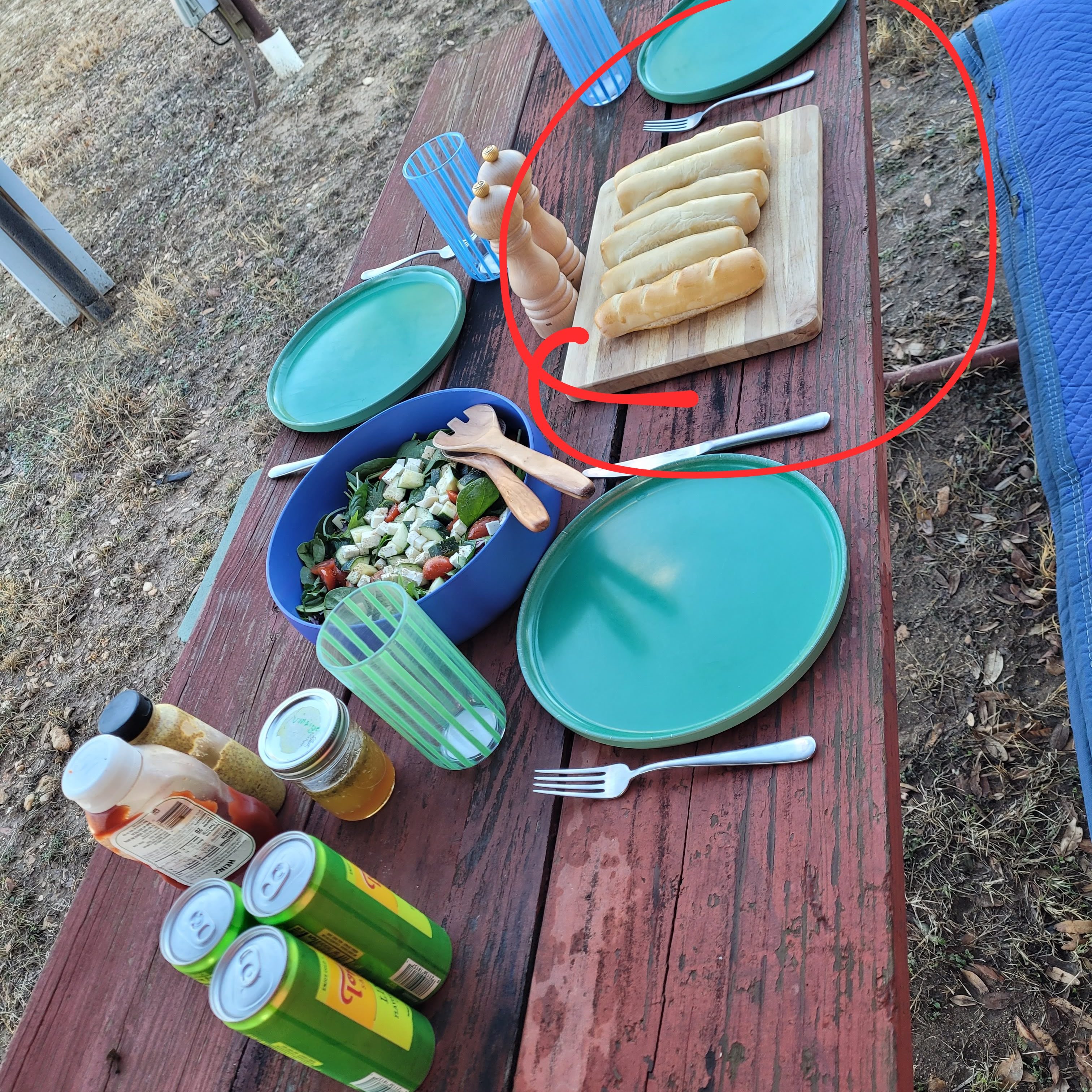
One evening, while getting ready for dinner, Chris was outside making homemade hotdog buns. Space inside the bus is limited, so he had taken over what little room he could find outside, fully focused on kneading the dough. What he didn’t realize was that he had an audience.
A woman staying a few spots down had apparently been watching him.
Later that night, as we sat down for one last dinner at the campground with Jason, she suddenly pulled up beside us. Without hesitation, she leaned out and told Chris how amazing it was to watch a young man knead dough so thoroughly.
We were stunned.
We had been there for a month and had never exchanged a single word with her. And now, out of nowhere, she was going out of her way to compliment him, practically swooning.
Chris didn’t quite know how to respond. None of us did.
She drove off just as quickly as she had appeared, leaving us sitting there, completely dumbfounded… and then absolutely cracking up. It was one of those moments you couldn’t have planned if you tried.
 NOMADIC ADV
Liked this post? Leave a comment.