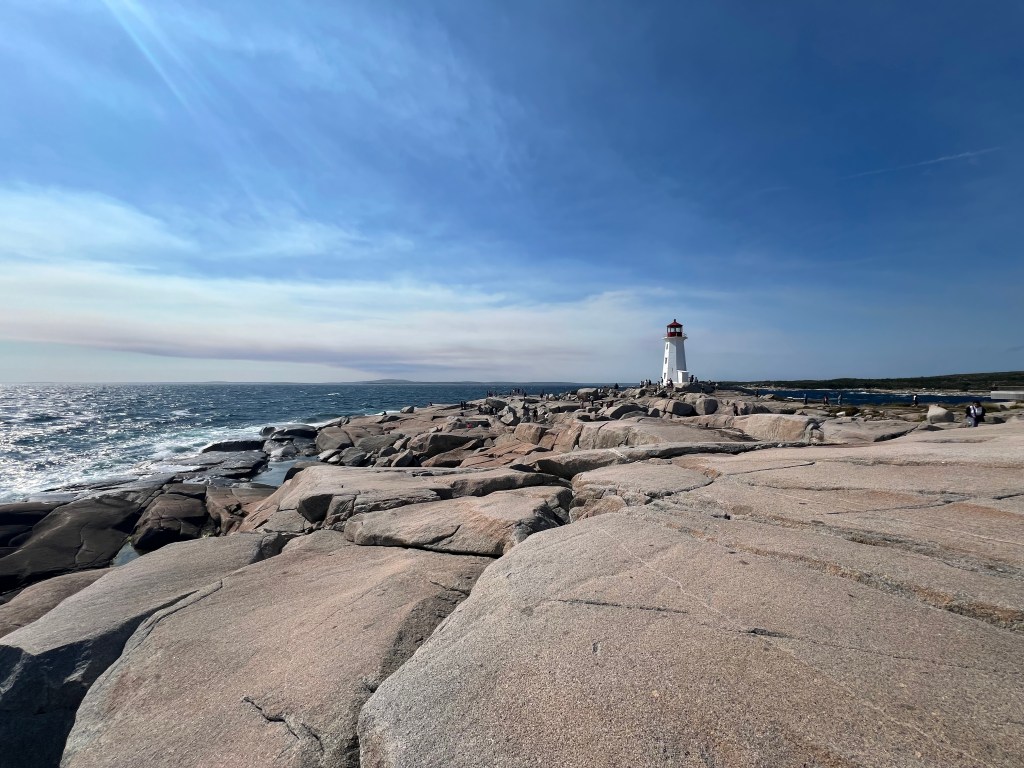
Flashback to an evening at my parents’ cabin.
We’re momentarily back at Lac Belanger. It’s the kind of evening when dinner stretches lazily into stories and laughter, and glasses of wine somehow refill themselves.
Somewhere between bites and banter, Dad suddenly says, “Hey! They started doing tours of Oak Island again this year.” There’s a spark in his eye. I pull out my phone, and within seconds, we realize the island is barely an hour from our planned campground in Pictou Nova Scotia. Cue the excitement. A quick check online shows that tickets are just $99 Canadian. Which, for my American friends, is basically free when you factor in the exchange rate.
My Dad and I have been watching The Curse of Oak Island for years. It’s that long-running show where two brothers and a team of hopeful treasure hunters dig up a small island off the coast of Nova Scotia in search of legendary riches, and somehow manage to find everything except the treasure. I’ll admit, I mostly watch it for my Dad, but at this point, I’m too invested to quit. If they finally unearth the mystery and I’m not watching, all those years of emotional commitment will have been for nothing.
We exchange mischievous smiles around the table.
“We’ve never visited the Maritimes,” Mom says thoughtfully.
“We’ve been talking about touring the island for years,” I add.
And from across the table, Chris chimes in, “We’ve got an extra bed in the camper.”
And just like that, the group chat Nova Scotia Losers is born. Four tour tickets later, our fate is sealed.
Naturally, that’s when the chaos begins. My parents nearly get scammed while trying to buy their flights (they insist that everything was under control the entire time, but I believe it to be a close call either way). The travel dates don’t match on any of the reputable websites. And, as it turns out, there are two Oak Islands in Nova Scotia — and the one near Pictou isn’t the right one. Which means a hasty change of plans and a couple of extra nights booked in Halifax. Because what’s a family adventure without a few wrong turns before it even begins?
The Great Oak Island Expedition
Two weeks after that fateful evening at my parents’ cabin, when we booked our Oak Island tour, we fast forward to our time in Nova Scotia. Chris and I have been exploring the province since August 10th, and it’s now August 16th the day after my parents land in Halifax, ready for our treasure hunt.
At the earliest hour of the morning, Chris and I set off to meet them in Halifax. We start our day together with a hearty breakfast, stretch our legs with a short walk around Citadel Hill of Fort George. Then, we hit the road toward the legendary Oak Island. The correct one.
Crossing the rocky causeway onto this storied patch of land, the place that has kept us holding our breath for years, feels almost surreal. Before boarding the little car train, we scope out which seats will offer the best view. Dad arrives fully armed for the occasion: a GoPro, a professional-grade camera, his cellphone, and not one but two pairs of glasses (because, in his words, bifocals are so last year). We squeeze in, cameras ready, anticipation buzzing.
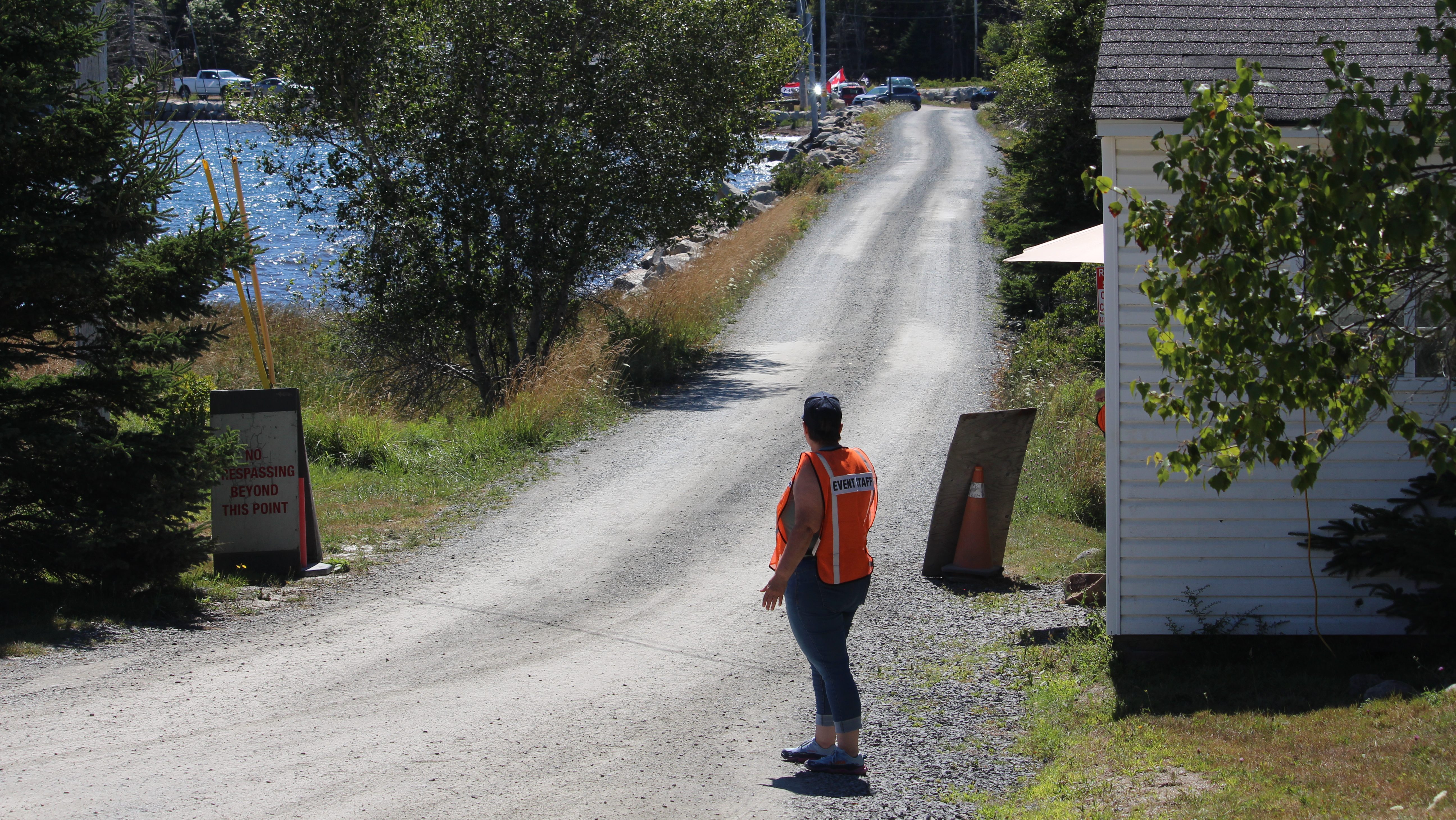
We roll past the production studio right beside the War Room, the famous hub of whispered theories and dramatic revelations. As our guide explains, this is where the show’s cast often recreates their reactions: Gasps, head turns, nods and all. So, yes, the drama is at least partially staged, but we choose to suspend disbelief.
Our narrator for the day is none other than Charles Barkhouse, the Oak Island historian who appears on the show. Sitting a few feet from him feels a little like meeting royalty—if royalty also knew an impressive amount about 18th-century digging techniques
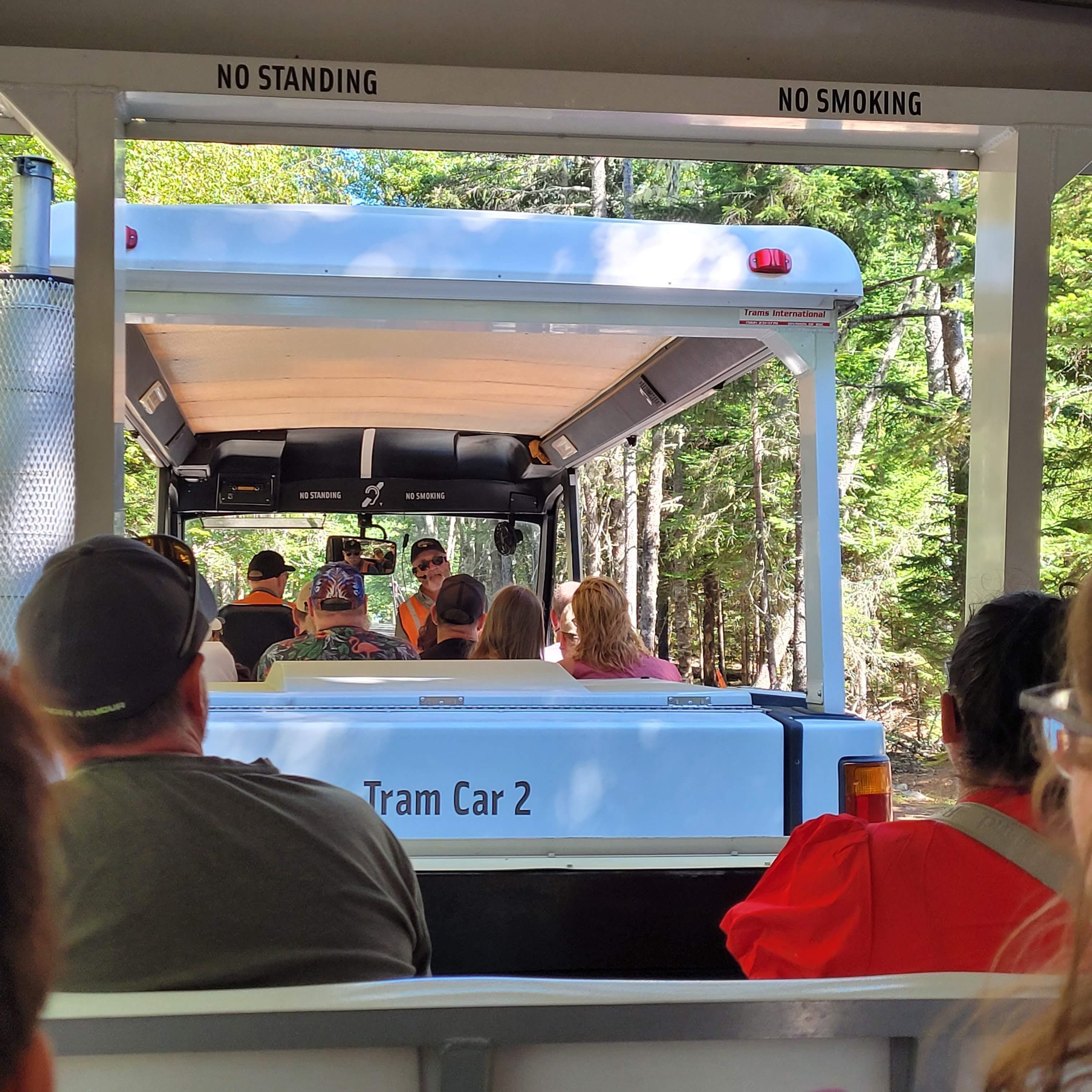

For the next three hours (yes, three full hours), we trundle around the island’s many excavation sites while Charles fills our heads with legends, facts, and wild theories. I had low expectations for how much we’d actually learn, but by the end, it’s safe to say we’d gained more insight than from several seasons of television viewing. And no annoying repetitive voiceover narration in sight.
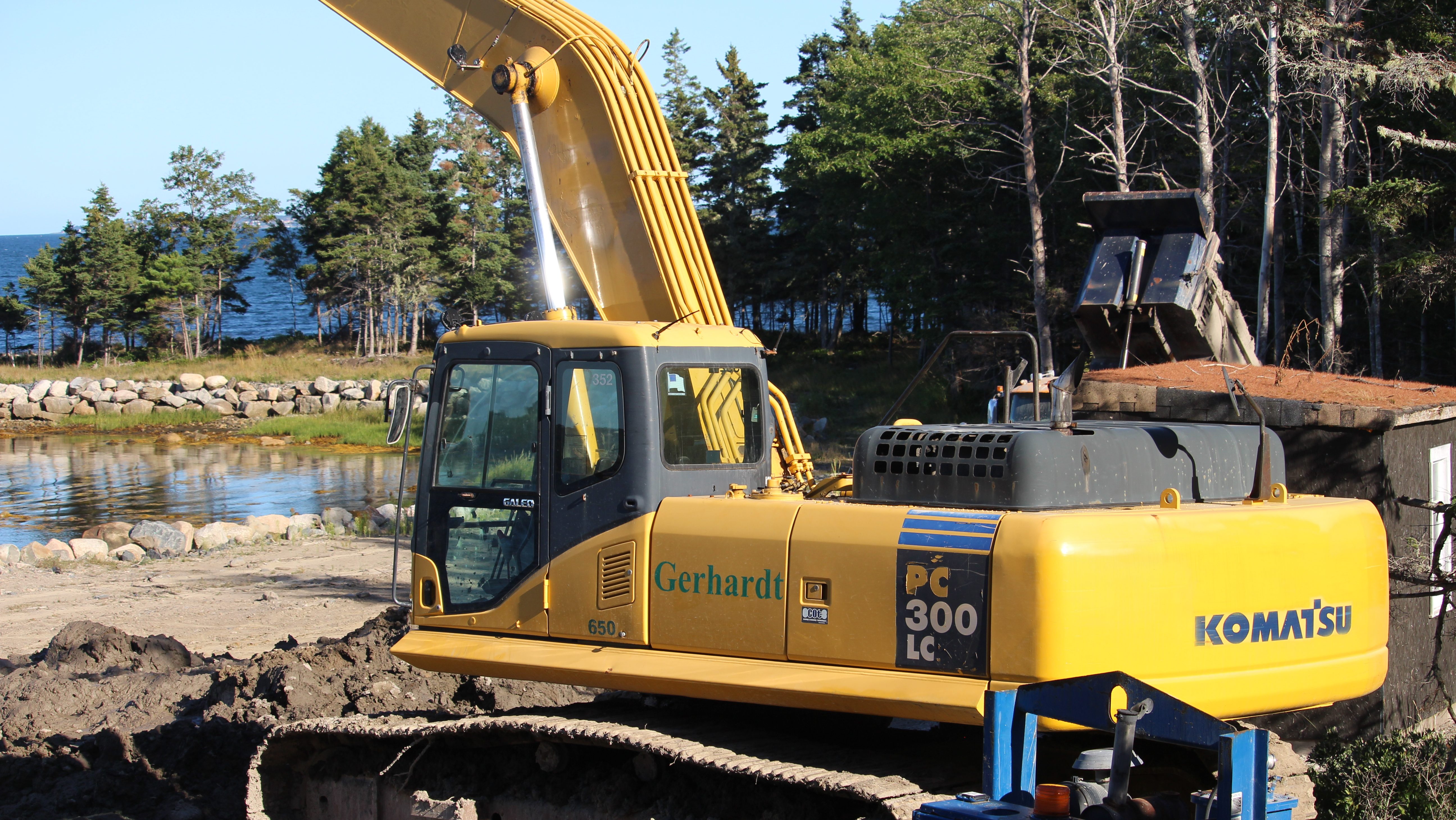
No Oak Island experience would’ve been complete without following in the crew’s footsteps to the Mug & Anchor Pub in nearby Mahone Bay, the place they sometimes film their “post-discovery” scenes. The heat of the summer drought has finally softened into a golden evening, and we grab a patio table overlooking the calm bay. A pitcher of beer appears, and we soon discover that Chris is decidedly not a fan of bitter IPA brews. The only logical solution? Finish this one and order another kind.
A fun fact Dad shares with us: Back in the day, people used to add a pinch of salt to their beer to cut the bitterness. I get a little too excited and the generous pinch of salt spills completely in my glass. Turns out you can over salt anything.

The night hums with the sound of a local band, laughter, and just enough beer to give everything a pleasant blur. When we finally pile back into the car (and I’ll admit I helped Chris finish his share), we hit a road construction detour that sends us winding through the backstreets instead of on Main Street.
That’s when we spot a dummy dressed as a man, holding a sign. I laugh and yell, “Stop the car!” I jump out to read it. The sign says: The end is near. There is a dead end. We burst out laughing. “How close can it be?” I ask. The answer, dear reader, is very close. Dead end, literal.
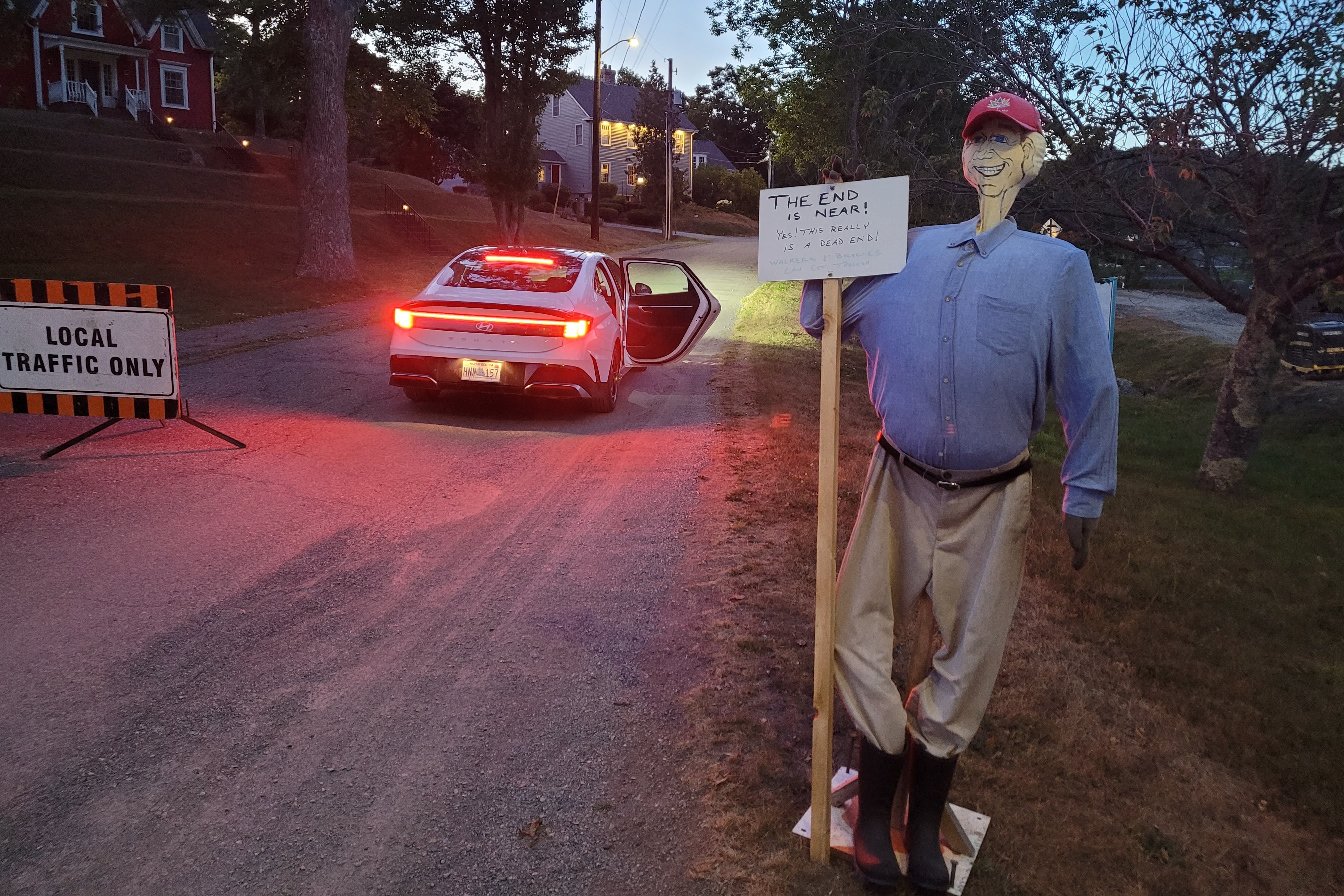
After a clumsy U-turn in the dark, we make our way back to Halifax, where our truck had been waiting near my parents’ hotel.
Rather than dropping a small fortune on a last-minute downtown room, we find a nearby campground and set up the tent. Having packed the truck instead of the motorcycle feels like an upgrade in itself—we’d traded panniers for space, which meant the rare luxury of full-sized pillows. The sleeping pads still had us tossing and turning, but at least our heads rested in comfort.
Chasing Legends and Lighthouses
The next morning, we meet my parents and set out toward Lunenburg, a postcard-perfect coastal town famous for its bright, candy-colored houses and salty sea air. It proudly boasts the home of Canada’s most recognizable sailing icon: The Bluenose II, the elegant schooner immortalized on the Canadian dime.
We wander down toward the docks, eyes scanning the marina. Sleek white masts sway gently against the sky, the water glimmers with reflections of hulls and gulls, but the Bluenose II is nowhere to be found.
“Huh,” we wonder aloud. “Maybe it’s out for a little sail?”
A quick check of the website reveals the punchline: According to its busy summer schedule, the famous ship is docked today… in Pictou. At the very same Heritage Quay Center just steps from our campground. Of course it is. We drove all the way here, only for the boat to be waiting right where we came from. Just our luck.
Still, Lunenburg is far too charming to let irony ruin the day. We stroll through the Fisheries Museum of the Atlantic, peek into boutique shops tucked into color-splashed historic buildings, and weave through narrow streets that feel frozen in time.
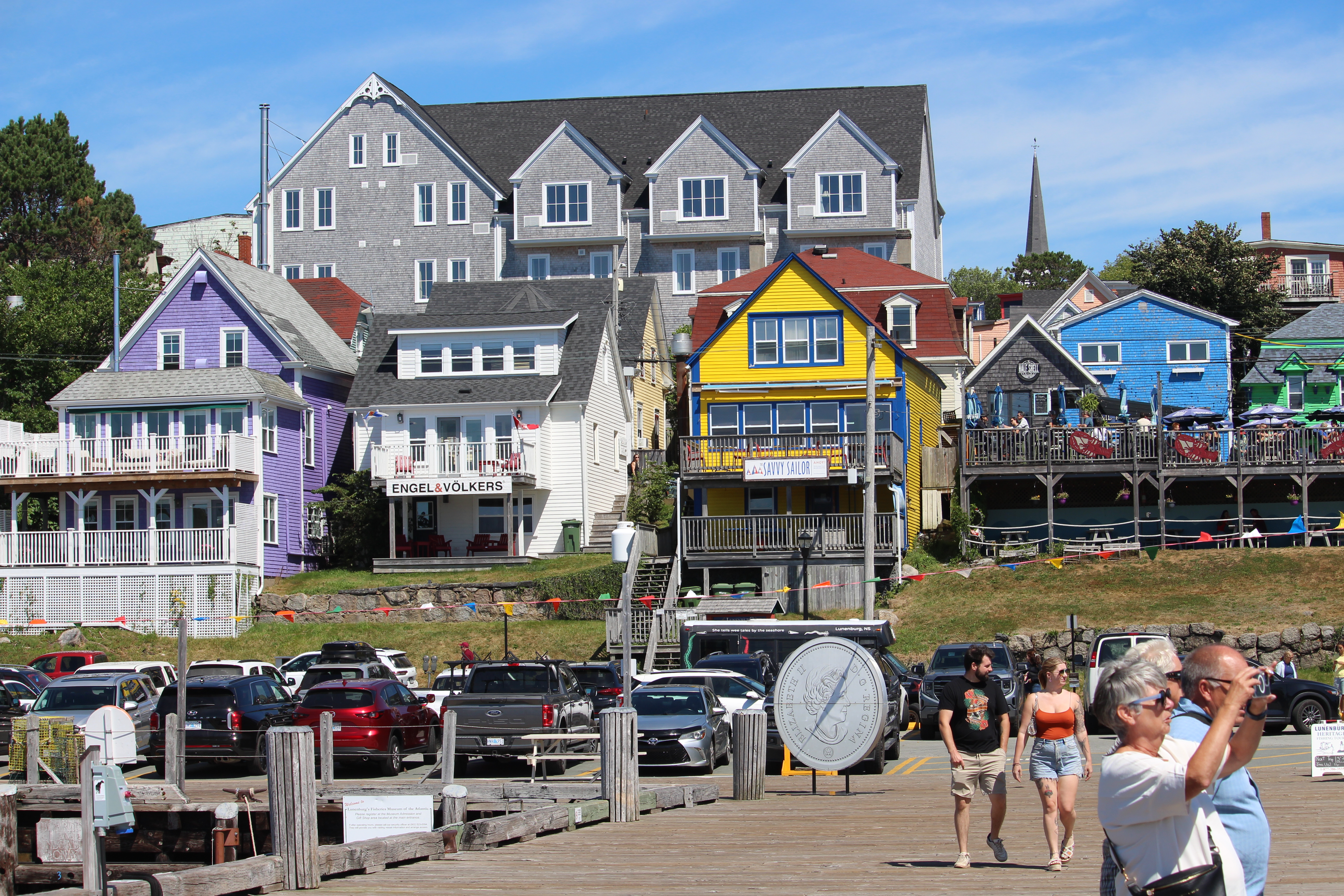
Eventually hunger starts to call, so we settle on The Old Fish Factory Restaurant, conveniently perched along the waterfront. An Acadian band plays under a nearby marquee, the kind of lilting fiddle music that pairs perfectly with sea breezes and cold drinks. Without much discussion, we each order a beer—no pitcher this time, so Chris can choose something lighter, and we decide to split two lobster rolls among the four of us. Just a small bite to keep us going until dinner.

Everything is idyllic until the bill arrives. My Dad pays with his usual flourish, no questions asked. As we leave, he leans over with that unmistakable grin and says, “I guess we didn’t look too hard at the prices on that menu.”
“What do you mean?” I whisper, already suspicious.
Turns out those “light snack” lobster rolls were listed at market price that day. Thirty-two dollars each. Each! We laugh in disbelief. Delicious, yes, but possibly the most expensive few inches of sandwich any of us have ever eaten.
We shake it off with a collective chuckle and pile back into my parents’ rented car, bound for our next stop: Peggy’s Cove, home to the most photographed lighthouse in North America.
I always hear those superlatives—the most this, the best that—and hold onto a secret hope that maybe, just maybe, we’ll luck out and have the place to ourselves. No such luck today. But as we crest the hill and the lighthouse comes into view, it’s immediately clear why it draws such a crowd.
The landscape is nothing short of dramatic. Smooth granite boulders stretch out toward the ocean, worn to silk by centuries of wind and saltwater. The cracks and ridges in the stone remind me of aging skin—lines that tell a story of resilience and time. There’s beauty in those imperfections.

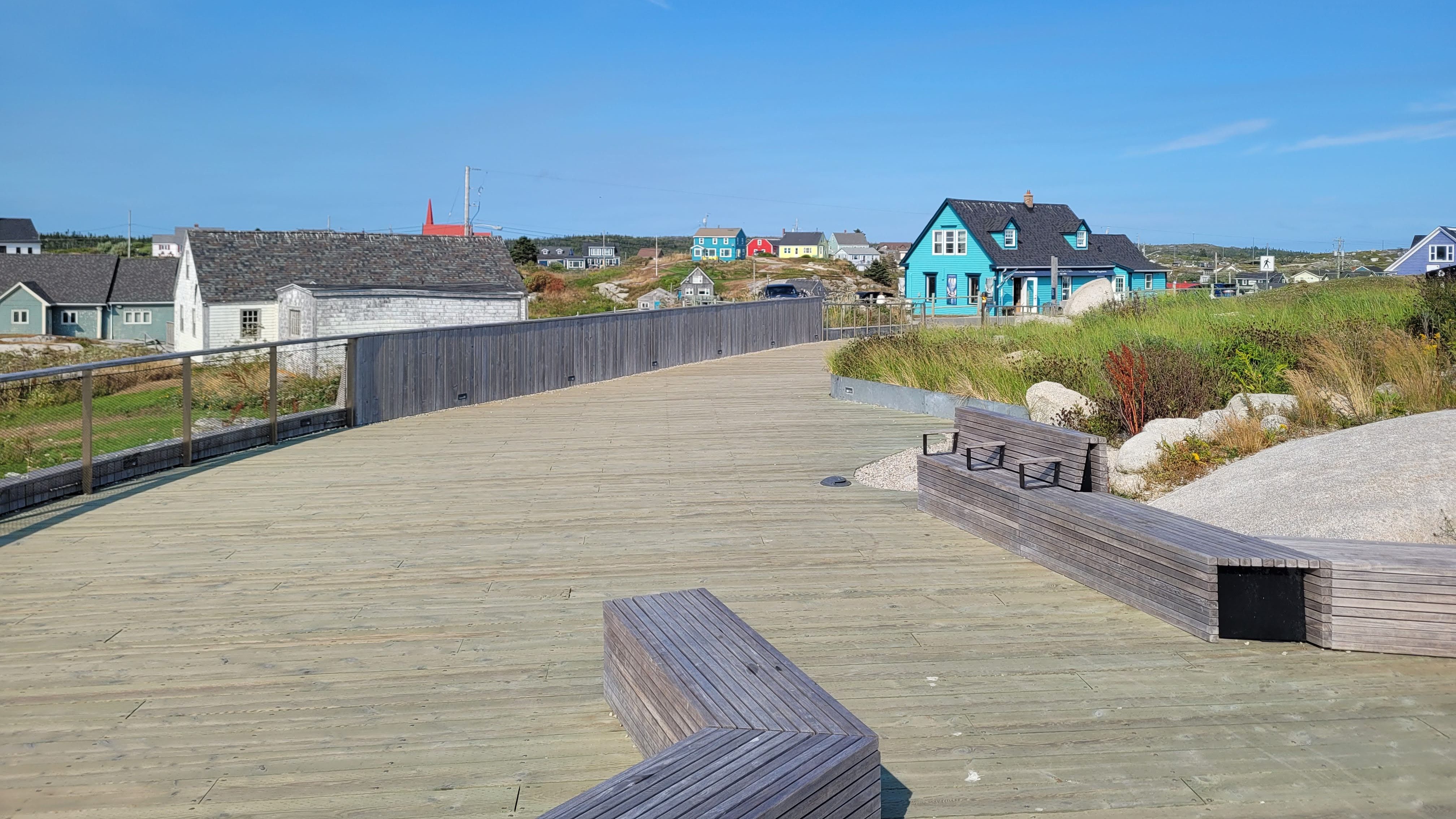
The lighthouse itself stands tall and steadfast, a stoic witness to decades of storms and selfie sticks. But the real magic extends beyond it. The surrounding village feels like a scene preserved in amber—weathered cedar facades, grey shingled roofs, lobster traps stacked high in the tall grass. The muted palette of driftwood, rust, and seaweed green could be mistaken for a quiet Scandinavian hamlet.
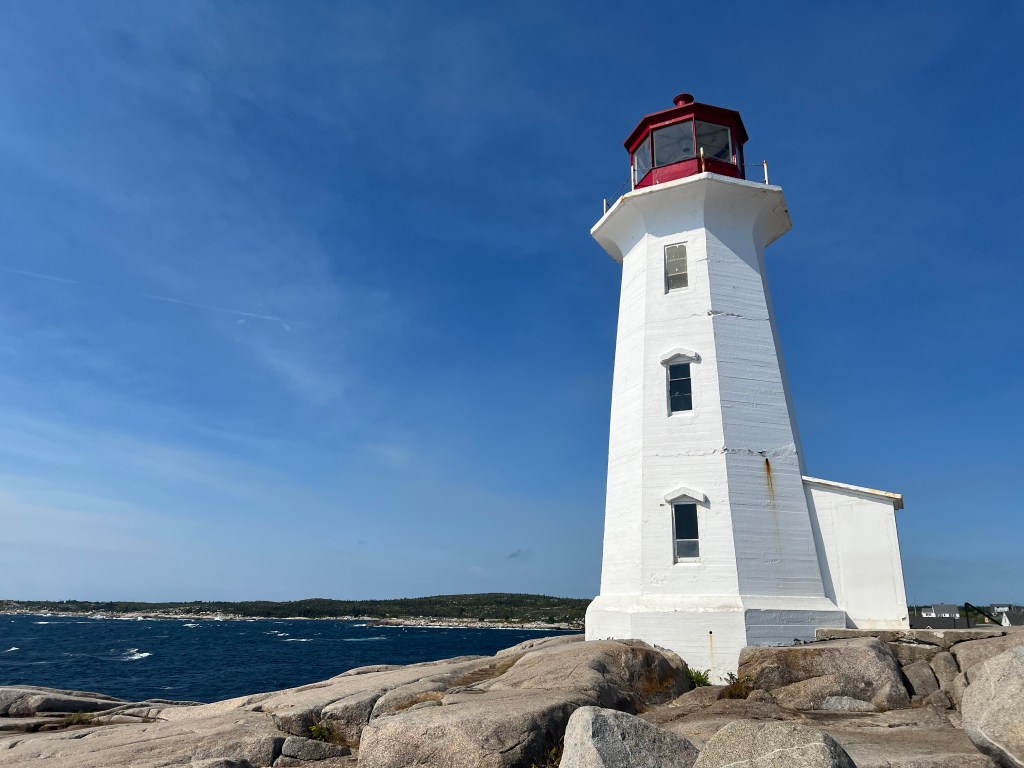
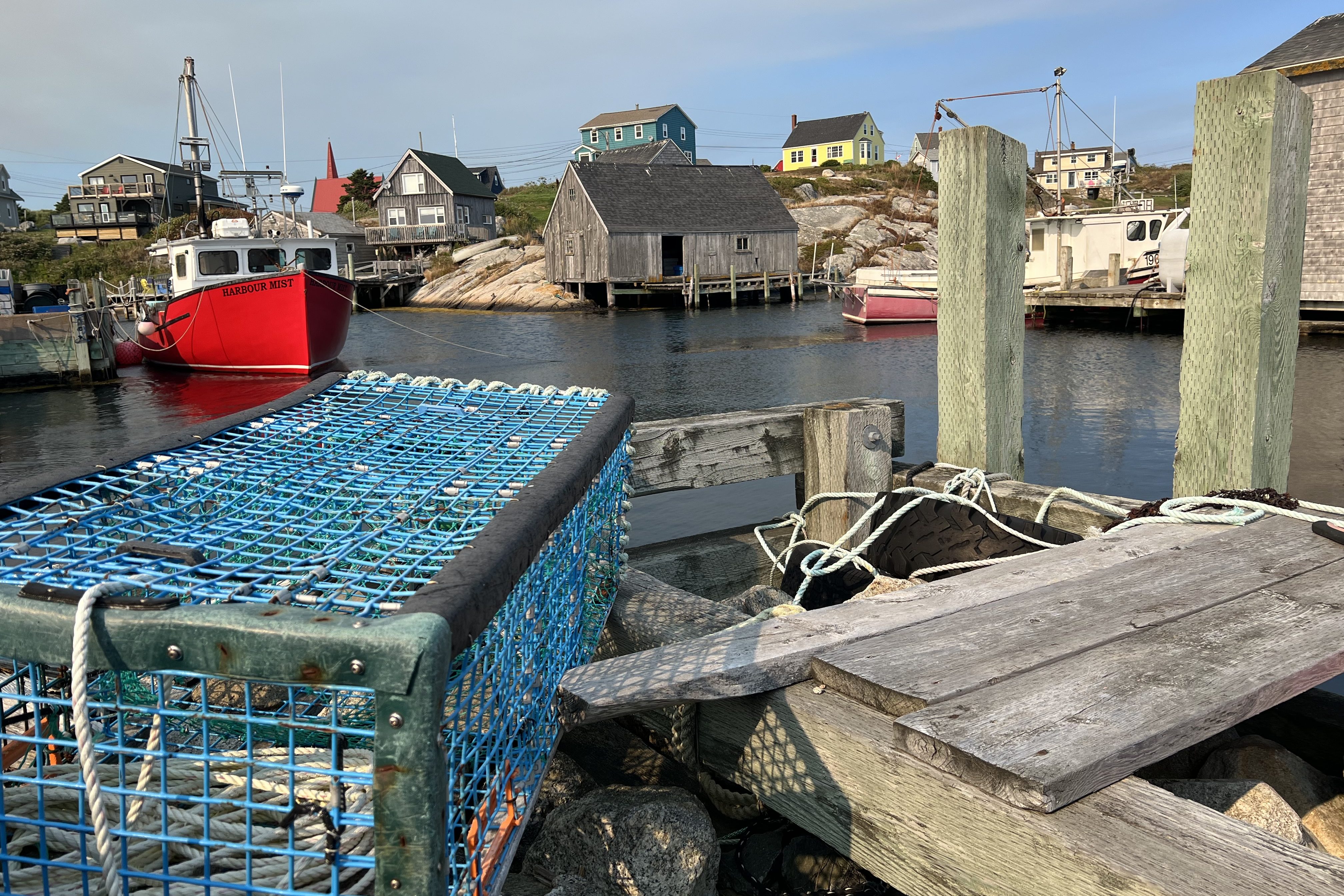
Harsh winds whip across the rocks, and waves explode against the shore in white sprays that sting the air with salt. As we sit and take it all in, the noise of the crowd fades into a low murmur. There’s a stillness here, a rhythm in the waves that hushes everything else. Even the boardwalk, simple and thoughtfully designed, seems to guide you toward calm.
Prince Edward Island
After our time in Peggy’s Cove, we pack up and head back toward Pictou, where my parents will stay with us at the campground for the week.
For two days, Chris stays behind while my parents and I set off for a quick escape to Prince Edward Island. A little detour that’s been on my Mom’s bucket list for years.
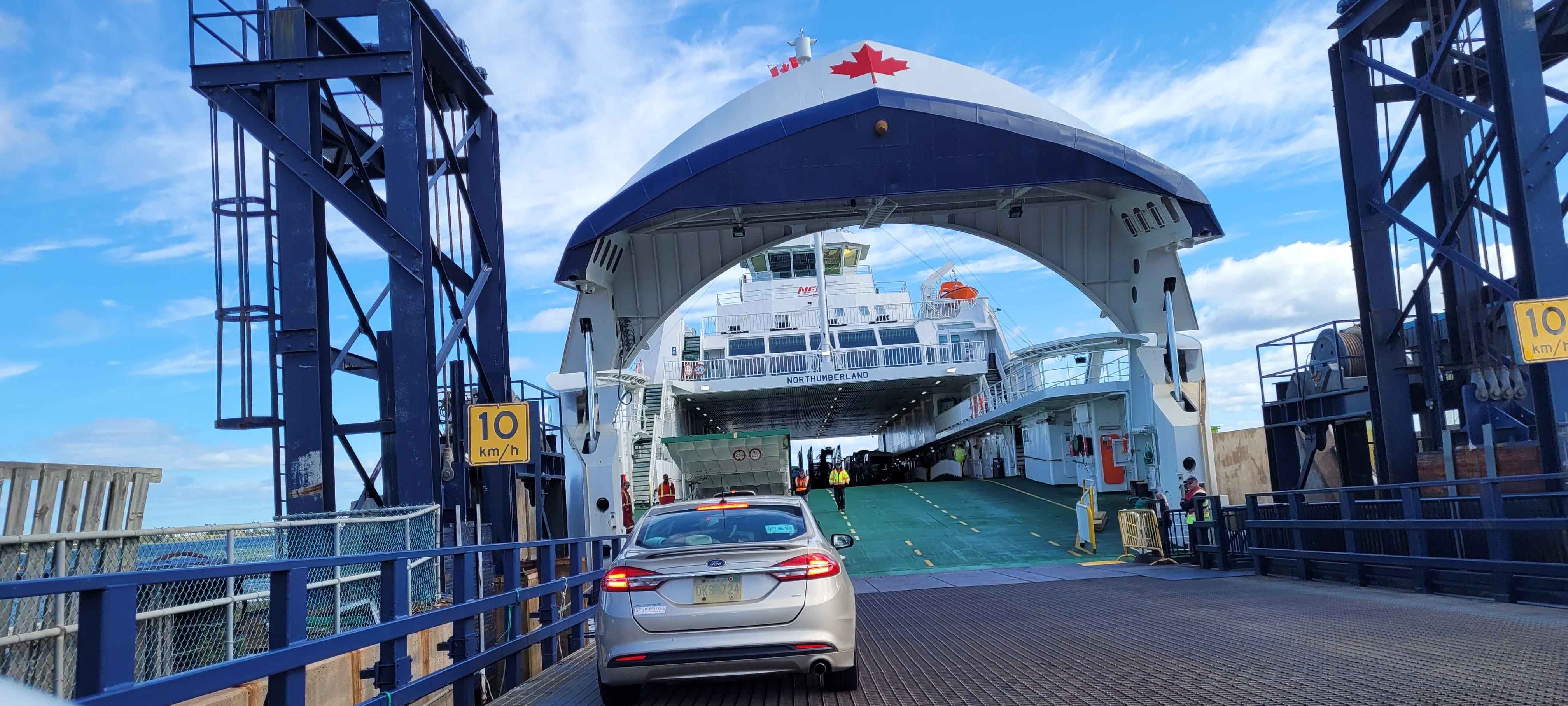
We drive toward the Northumberland Ferry terminal and roll aboard the huge ship bound for PEI. As the mainland shrinks behind us, the red cliffs and green fields slowly come into view.
Our first stop is Charlottetown, the island’s charming capital. Despite it being a Tuesday, the city feels alive. The streets buzzing with tourists, horse-drawn carriages clip-clopping along the waterfront, and patios filled with chatter. Parking, however, proves to be a sport of its own. After circling a few blocks and watching the crowds in mild disbelief, we finally find some in an underground lot. When we realize it only costs eight dollars for the entire day, we laugh. That’s what, half an hour in Montreal?
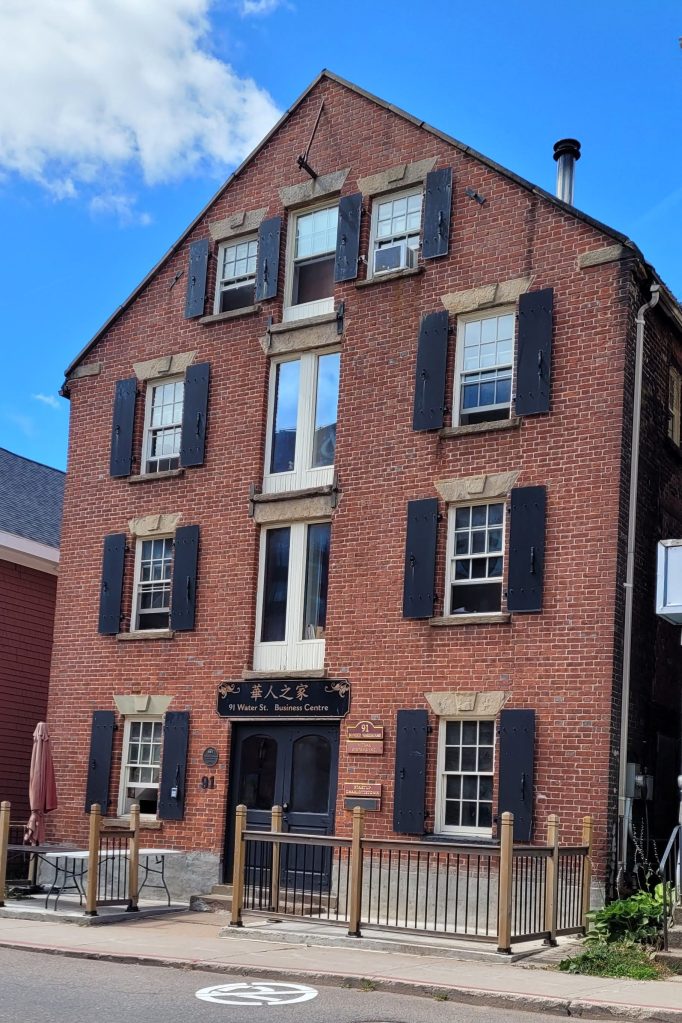
We hop aboard a small red trolley called the Pony Express, and once the seats are secured, let the city’s stories unfold. The route winds through rows of red-brick buildings with black shutters, each one steeped in colonial charm. There’s something about the blend of old-world architecture and sea breeze that feels straight out of a prohibition-era film.

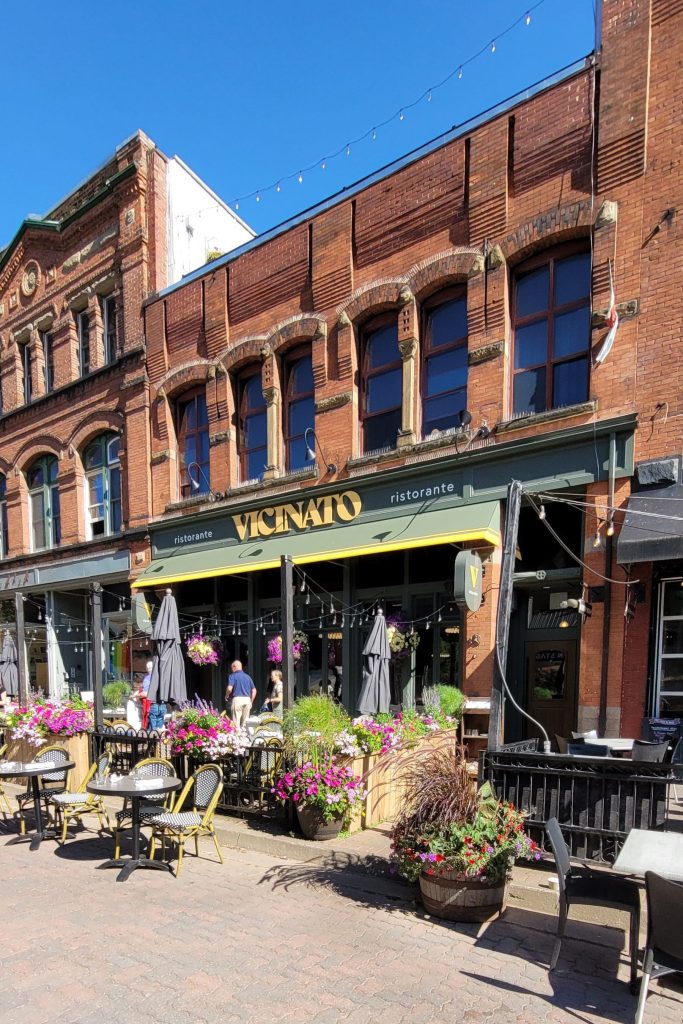
When hunger hits, we wander the streets in search of seafood — because when in the Maritimes, that’s practically law. But at 2 p.m. on a Tuesday, the options are slim. We finally stumble upon a trendy Italian spot with the smell of wood-fired pizza drifting into the street. Pasta, pizza, and a Revival round of cocktails later, we’re refueled and ready to explore again.
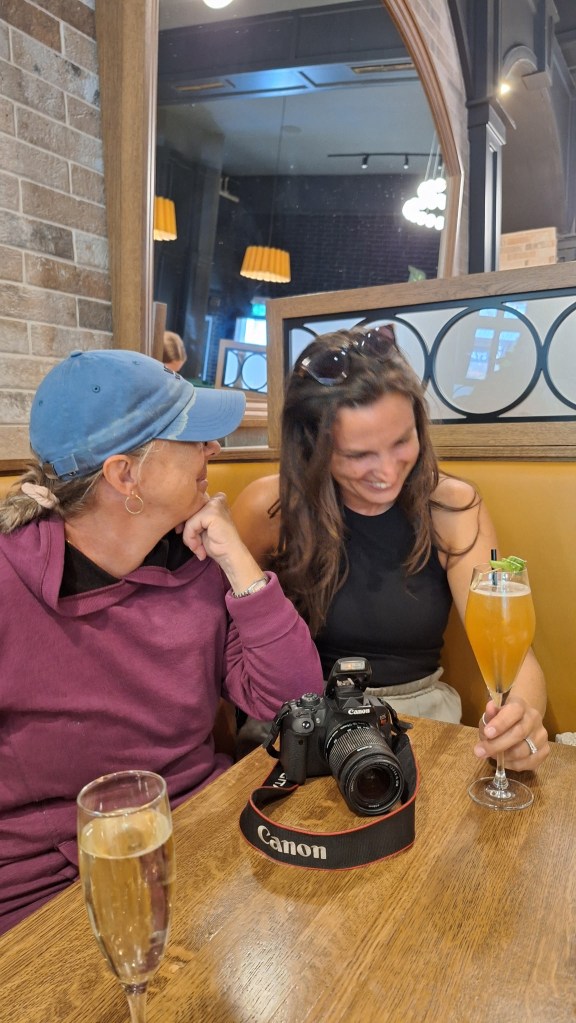
One of the unexpected highlights of the afternoon is St. Dunstan’s Basilica, a masterpiece of Gothic in the heart of Charlottetown. Inside, sunlight spills through intricate stained glass, setting the gold inlays and marble columns aglow. The ceiling arches high above like a carved canopy of devotion — it’s one of those places where you automatically lower your voice, even if no one’s told you to.

After a full day exploring Charlottetown’s lively streets, we drive twenty minutes north to a quiet roadside inn. We’ve rented two rooms this time— Dad’s snoring is a force of nature best enjoyed through a wall—but even with the separation, sleep doesn’t come easily. A balcony light outside my door stays on through the night, seeping under the frame and washing the room in a dull glow.
Morning brings clear skies and the promise of nostalgia.
The Famous Green Gables
Our first stop: Green Gables Heritage Place, the heart of Lucy Maude Montgomery’s fictional world. The house stands immaculate, its white clapboard walls and green gables framed by gardens that look painted into being. Inside, rooms are furnished with artifacts collected from local families—objects that blur the line between the author’s imagination and the island’s living memory. We wander through the flower beds and into the so-called Haunted Wood, where snippets of Montgomery’s words appear along the path. The air whispers with her voice, equal parts whimsy and wistfulness.


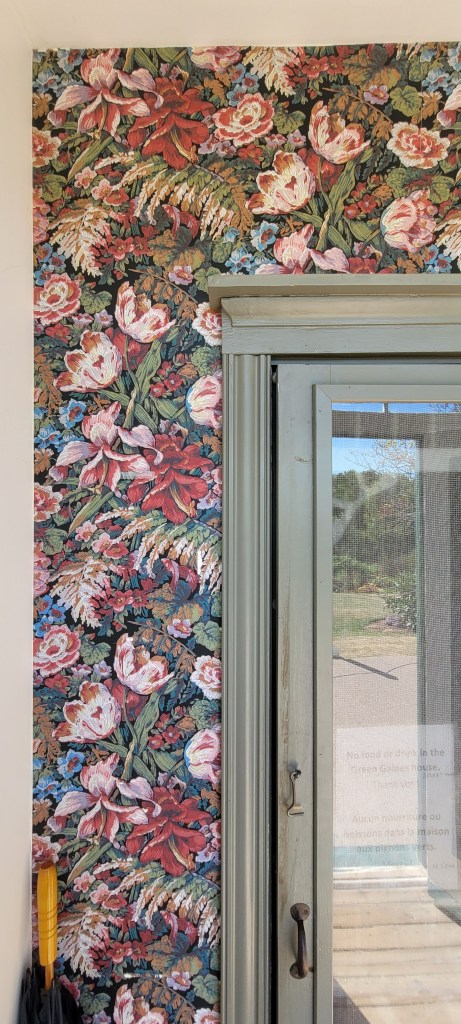
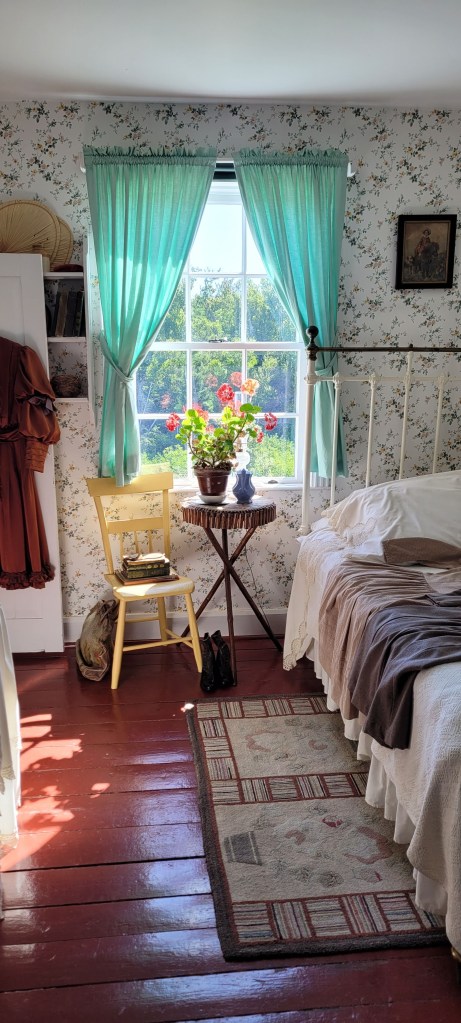
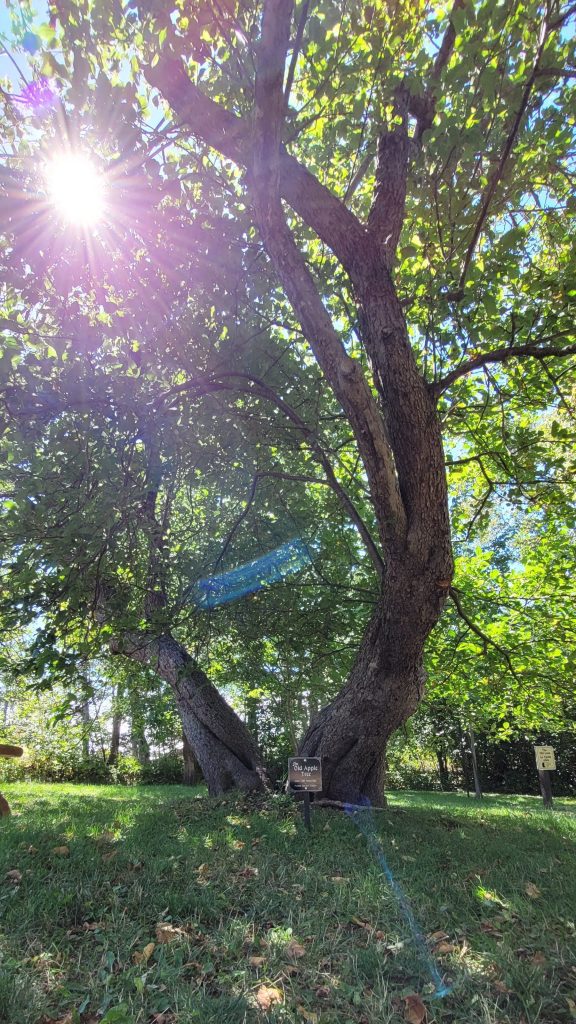
At the gift shop, a green fabric-bound edition of Anne of Green Gables catches my eye. It’s the kind of book that feels good just to hold. It’s soft, textured, timeless. From there, we continue to the ruins of the modest farmhouse where Montgomery herself grew up. The landscape stretches in gentle waves, framed by that distinct island light that makes everything seem a little more golden. A century-old apple tree stands sentinel near the house, its branches reaching over the yard as if guarding the writer’s memories. Inside, her small writing desk sits by a window, still and humble, yet carrying the quiet weight of creativity that shaped generations.
It’s easy to see why Montgomery’s imagination bloomed here. The island feels suspended somewhere between fiction and memory—a place where stories don’t end, they just keep unfolding quietly in the wind.

My parents, inveterate gardeners, start plucking seed pods from the lush flower beds with the stealth of children stealing cookies. I hiss at them to stop, half mortified, half amused, as they stifle laughter and carry on undeterred. There’s no one around to notice—but I can’t shake the irrational fear of being caught and scolded for botanical mischief.
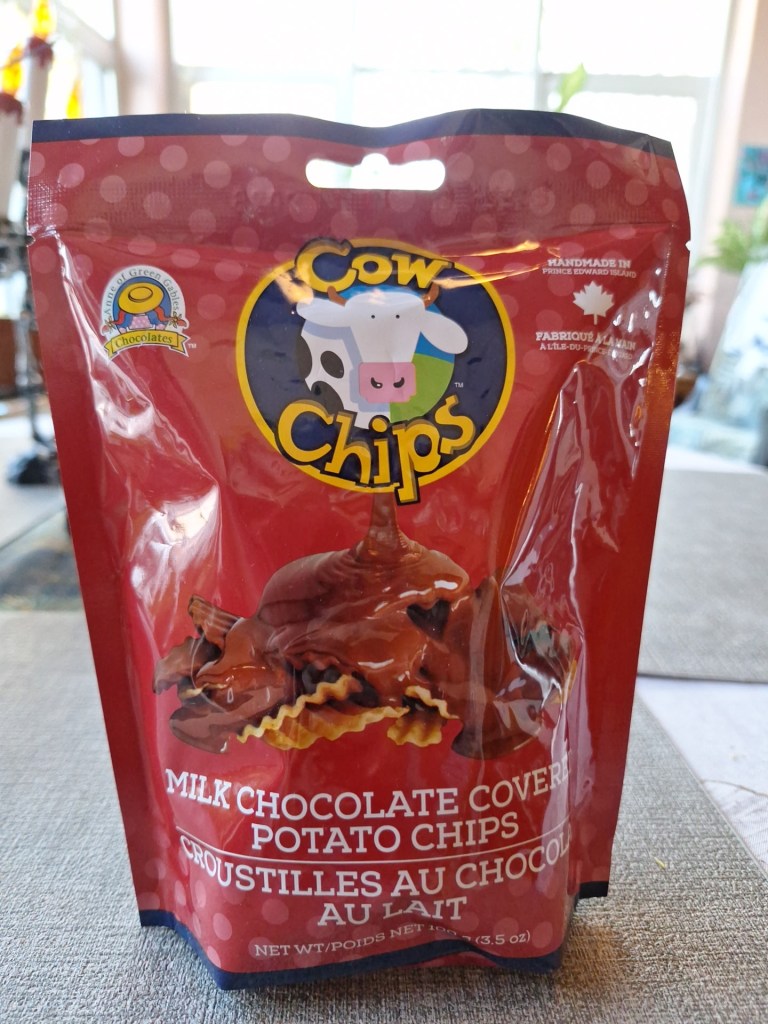
A short drive away, Avonlea Village offers a different kind of homage—one built for visitors and dreamers. The streets are lined with pastel storefronts, ice cream parlors, and craft shops. Everything feels both staged and sincere, like a recollection of something that never quite existed. I wander into a candy shop and leave with chocolate-covered potato chips—an oddly perfect mix of salt, sweetness, and sentimentality. We finish the afternoon on a patio, sharing nachos and a cold beer while the sunlight softens across the beer garden.


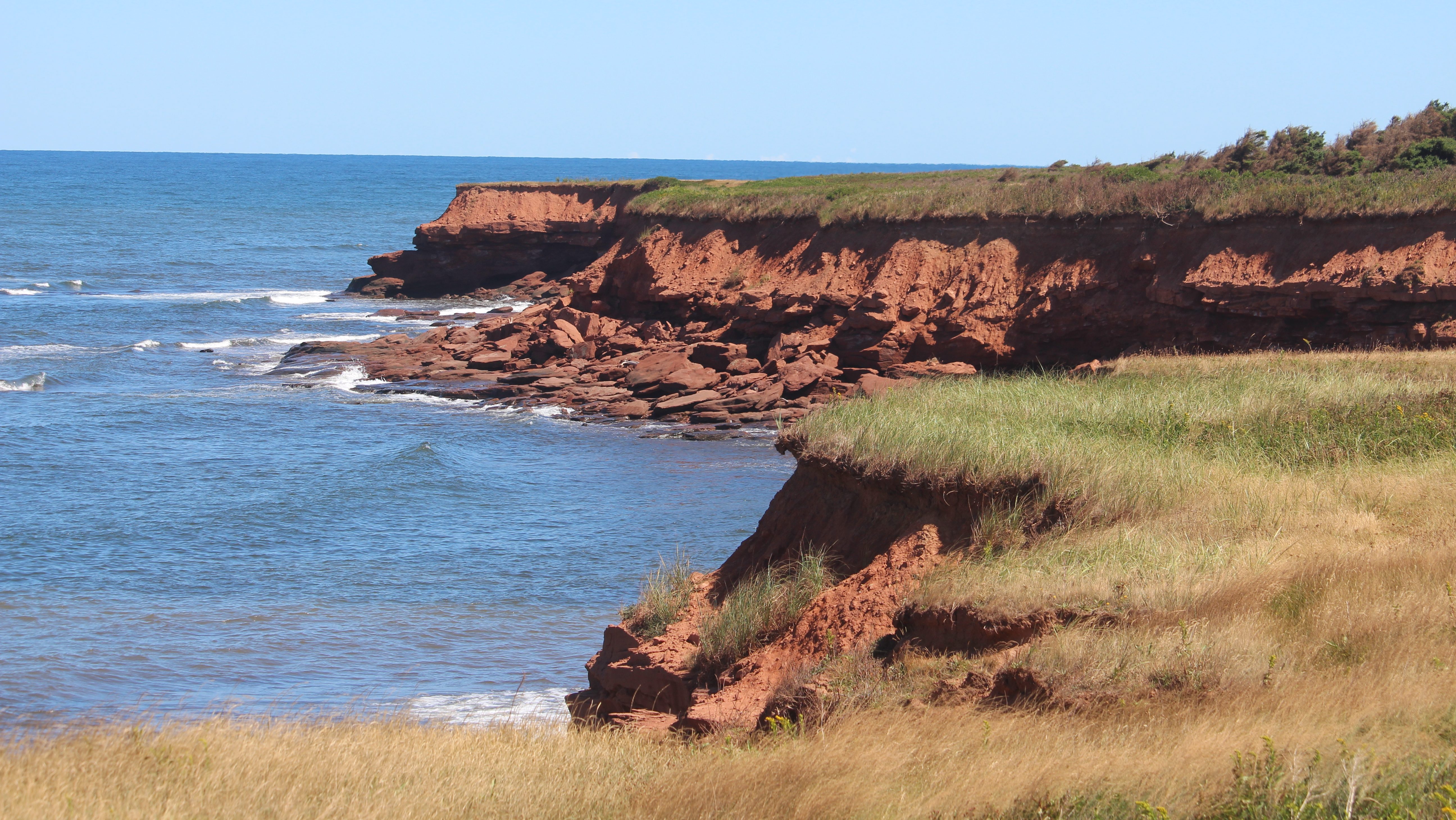
Before heading back, we detour toward Cavendish Beach, following a winding road lined with dunes and weathered pines. The air grows cooler as we near the coast, carrying the tang of salt and the faint cry of distant gulls. When the horizon opens up, the view stops us cold. Red sandstone cliffs tumble sharply into the Atlantic, their edges sculpted by wind and time. Below, the tide folds against the rocks in slow, deliberate breaths.
The light has that late-afternoon magic, softening every edge. The cliffs glow copper, the grasses shimmer pale green, and for a moment the whole landscape feels less like something you see and more like something imagined. It’s the kind of place that holds you in silence, where even conversation feels like an unwanted interruption. We linger longer than we mean to, watching the waves break and reform, tracing patterns that never repeat.
When the sun begins its descent, we turn toward the mainland, trading the ferry for the Confederation Bridge—a slender ribbon of concrete stretching 12.9 kilometers across the Northumberland Strait. The ride feels suspended between two worlds, the island fading behind us, the mainland still a silhouette ahead. Wind presses against the vehicle in steady gusts, and the sea flashes silver in the lowering light.
As the shoreline sharpens into view, the day settles quietly around us. By the time we roll back into Pictou, we’re tired, happy, and our pockets full of stories, and a few “borrowed” seeds that will soon find new soil.
Wrapping Up in Nova Scotia
The week with my parents passes in a blur of salt air and soft laughter. Days stretch long and generous, filled with the kind of ease that only comes when time briefly forgets to hurry. We drove through villages painted in weathered blues and reds, past harbors where boats tilt gently in the tide.
Traveling with my parents feels like returning to something familiar and fleeting all at once. There’s an unspoken rhythm between us—quiet pauses and easy laughter, moments stitched together by the simple pleasure of being in one another’s orbit.
Evenings settle slow. We gather around tables always cluttered with food, half-empty glasses, and stories that drift between memory and the present moment.
When the week ends, we load bags and goodbyes into the trunk of their rental car. The morning is crisp, the air sharp with that familiar Atlantic chill. Chris and I stand in the gravel driveway, hands tucked in our pockets, watching as my parents wave from the window—smiling, content, and maybe a little tearful. The car rolls down the narrow lane and disappears around the bend, the sound of its tires fading into the wind.
For a long moment, we stay there in the quiet. The laughter, the days, the salt and light—all of it lingers, like sea spray caught in the air, refusing to settle.

 NOMADIC ADV
Leave a Reply to ecstatic5d53275511 Cancel reply