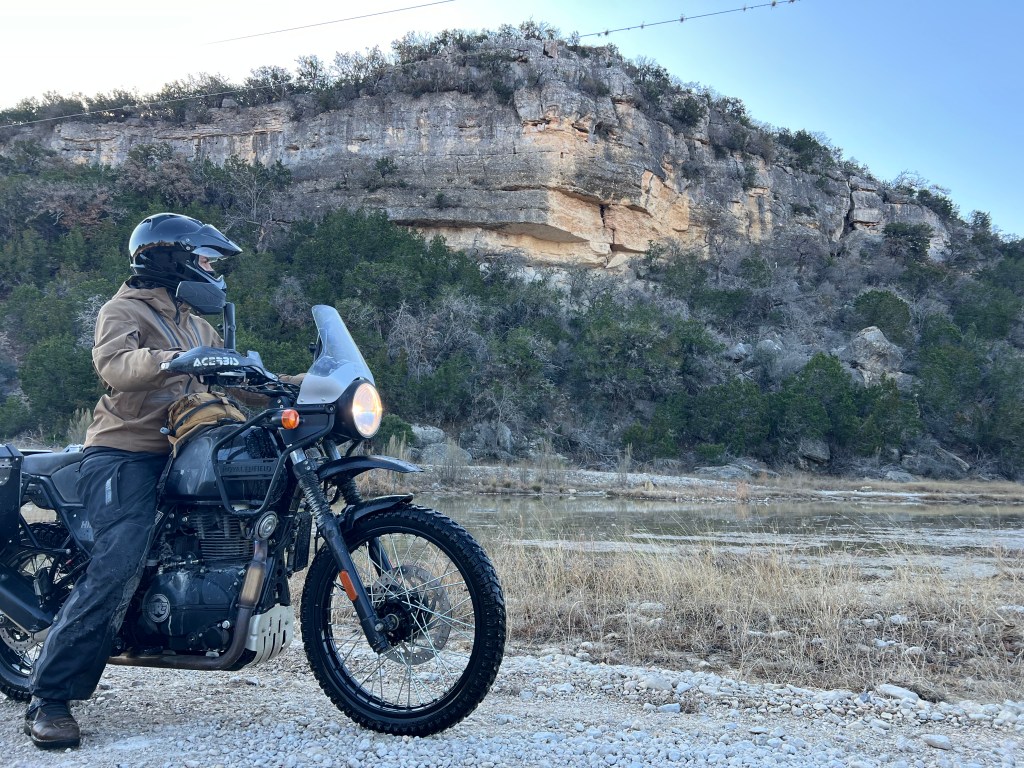
Now that the weather has shifted from unusually cold and icy to typical, mild temperatures, we are ready to begin our second Backcountry Discovery Route adventure.
We are currently in the heart of Hill Country. This route is a 670 mile loop and is considered one of the easier options offered by the organization. The terrain is expected to be a mix of hard packed dirt roads, loose gravel, and occasional rocky sections, with some shallow water crossings depending on recent conditions. The elevation changes are not extreme, but the roads wind through rolling hills of different natural areas, which should keep the riding engaging without being overly technical. Chris has taken time off work, and we are both looking forward to spending several days on the road.
We plan to leave on Sunday, the day after the Mardi Gras parade. There has not been much time spent researching the specific route details, so we are approaching the ride with few expectations. Part of the appeal is seeing how the landscape changes as we move through it. The towns along the way are expected to be small and spaced out, with a mix of quiet rural communities and the occasional busier stop with gas stations, local diners, and general stores. Many of these towns reflect the slower pace of this region.
One detail we are particularly curious about is the variety of animals we might encounter. Exotic wildlife appears to be common on private ranches in this part of Texas, and it has become something we are paying attention to as we travel. My notebook has a dedicated section to keeping a running list of said wild animals.
Texas continues to stand out as an interesting place to visit. One of the most noticeable features is the amount of fencing. Large stretches of land are enclosed, and it is rare to go far without seeing some form of barrier. It gives the landscape a defined and managed feel, even in areas that might otherwise seem open.
Day 1: Bandera to Camp Wood
In the morning, we load our gear onto the motorcycles and prepare for the next few days of adventuring. This time we are packing light. We decided to skip camping gear and plan to stay in hotels along the route. There are enough small towns with lodging to make this possible, and it gives us flexibility if the weather turns cold again.
As I walk down the steps of the trailer with my helmet in hand, Chris looks up and tells me that my bike is not starting. We have not even left yet, and we are already troubleshooting.
We go through the usual checks. Fuel is not the issue. The bike powers on, but it will not turn over. Chris starts taking things apart to inspect the basics, including the spark plug, wiring, and battery. To confirm the problem, he connects his battery to my bike. It starts immediately. That narrows it down. My battery is dead.
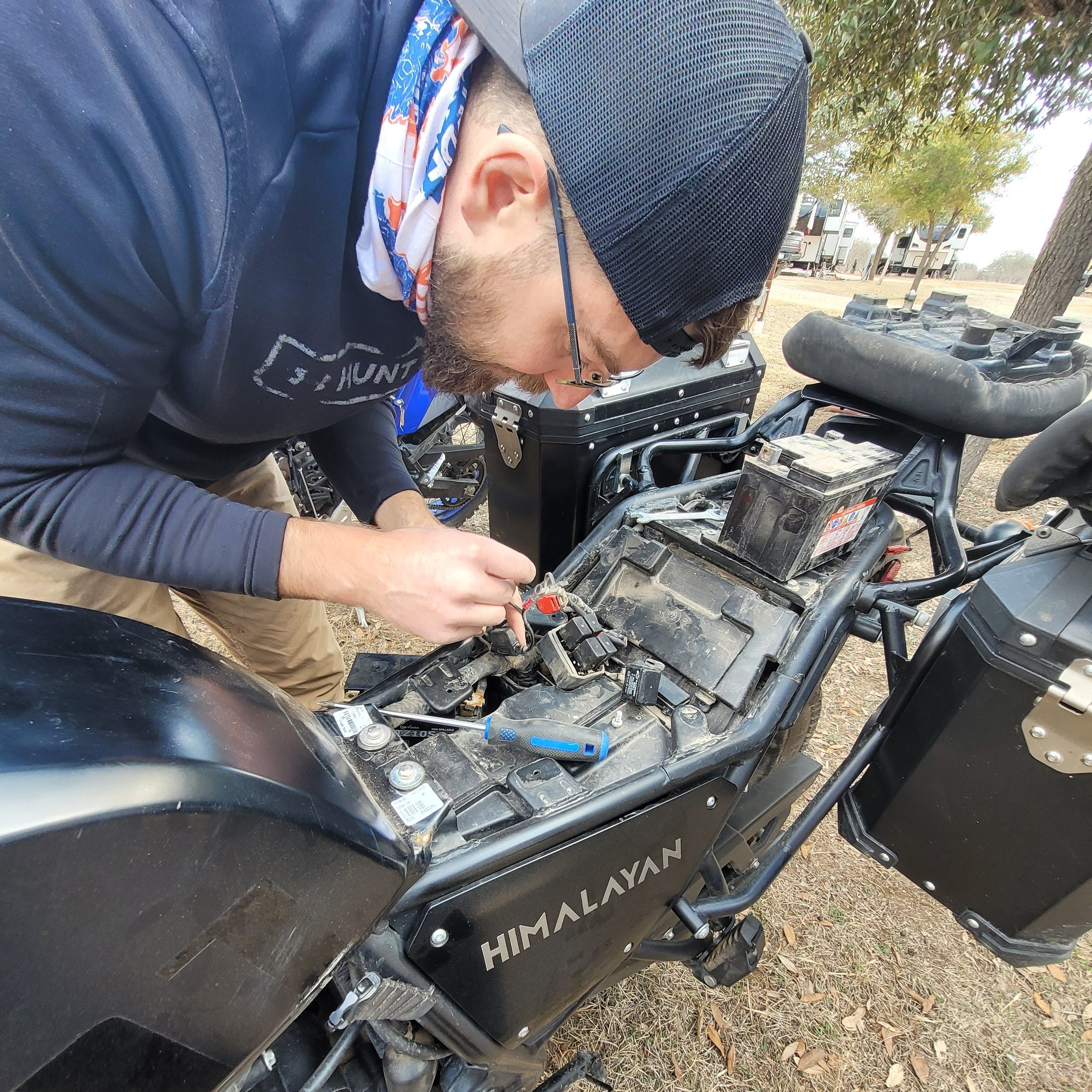
Because it is Sunday and we are in a rural area, options are limited. We call a local hardware store, and they confirm they have a compatible battery in stock. We drive over, pick it up, and return to install it. The swap is straightforward. After a few hours of delay, the bike starts without issue. By the time we leave, it is midday and we are already thinking about food.
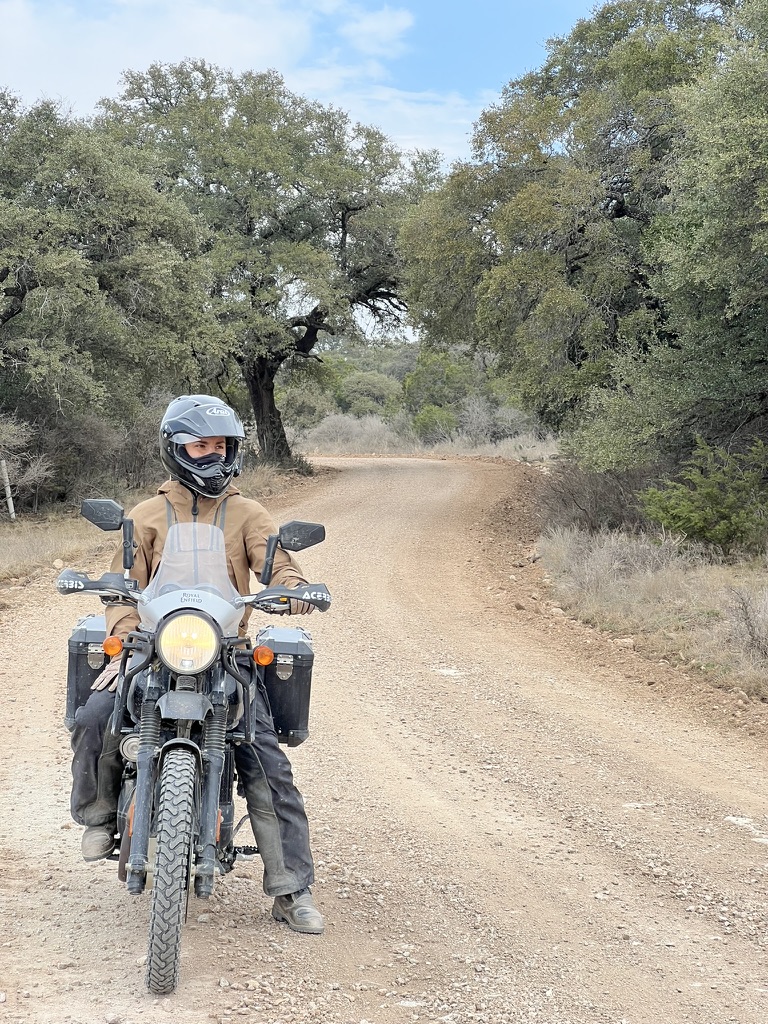
We head out through the Hill Country State Natural Area, a wide stretch of protected land with rugged terrain, oak trees, shallow canyons, and seasonal water crossings. The roads are mostly hard packed with sections of loose gravel. The riding is steady, with rolling elevation changes and long views across the landscape.
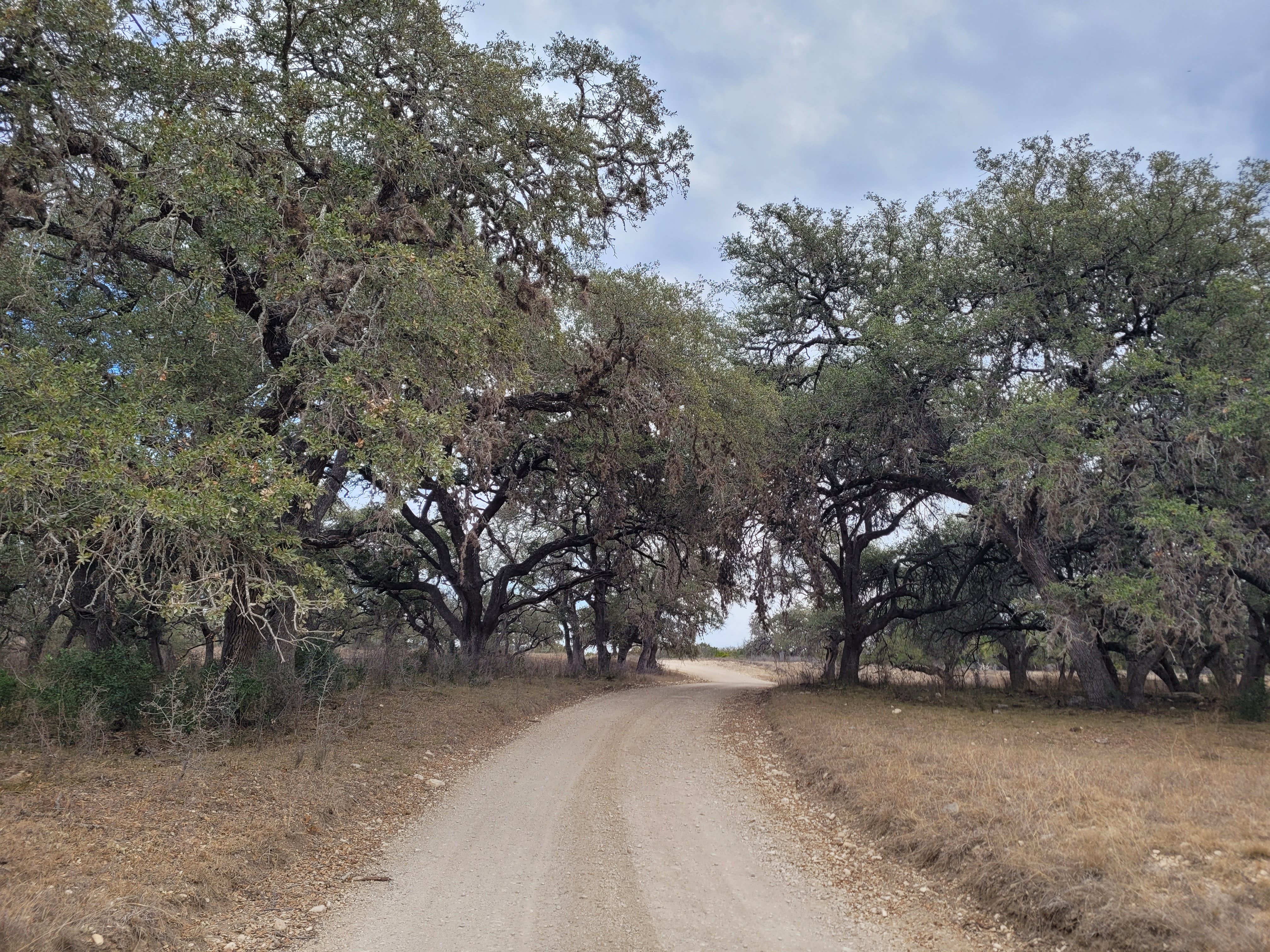
By the time we reach Utopia, we are ready for a late lunch break. The town is small and quiet, with a few local spots clustered along the main road. We pass by a large tabby cat near one of the cafés. It reacts immediately to the sound of the motorcycles, arching its back, puffing up, and stepping toward Chris with clear irritation before stopping short. All I can do is laugh as Chris looks over confused at such a strong reaction from the feline, that apparently is so opposed to motorcycles entering his territory.
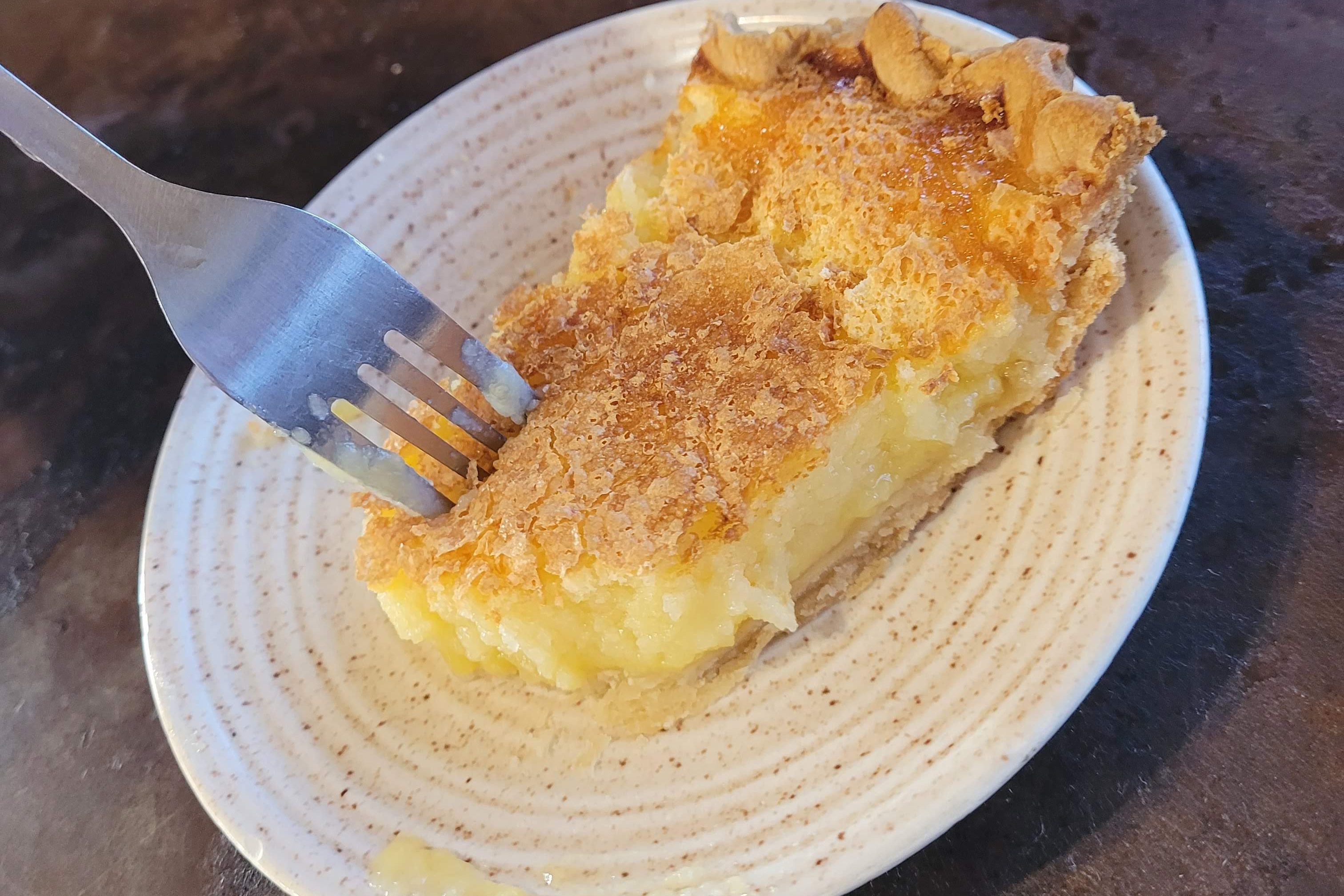
We eat at Lost Maples Café, a casual roadside spot known for simple comfort food. Chris orders a slice of buttermilk pie for dessert. I am skeptical at first and decline to get my own. When the extra fork arrives and I try a bite, I change my mind quickly. The flavor is smooth and sweet, nothing like what I expected. I regret not ordering a full slice.
Back on the road, we ride a portion of the Twisted Sisters, a set of winding roads known for their curves and elevation changes. The terrain shifts between open stretches and tighter sections lined with cedar and oak. We cross several low water crossings, all shallow due to the current dry conditions.
By early evening, we arrive in Camp Wood. The town has a defined main street with small shops, including an art store and a home goods store, along with a few restaurants. There is a sense that it could be more active during busier times, but on this Sunday most places are closed.
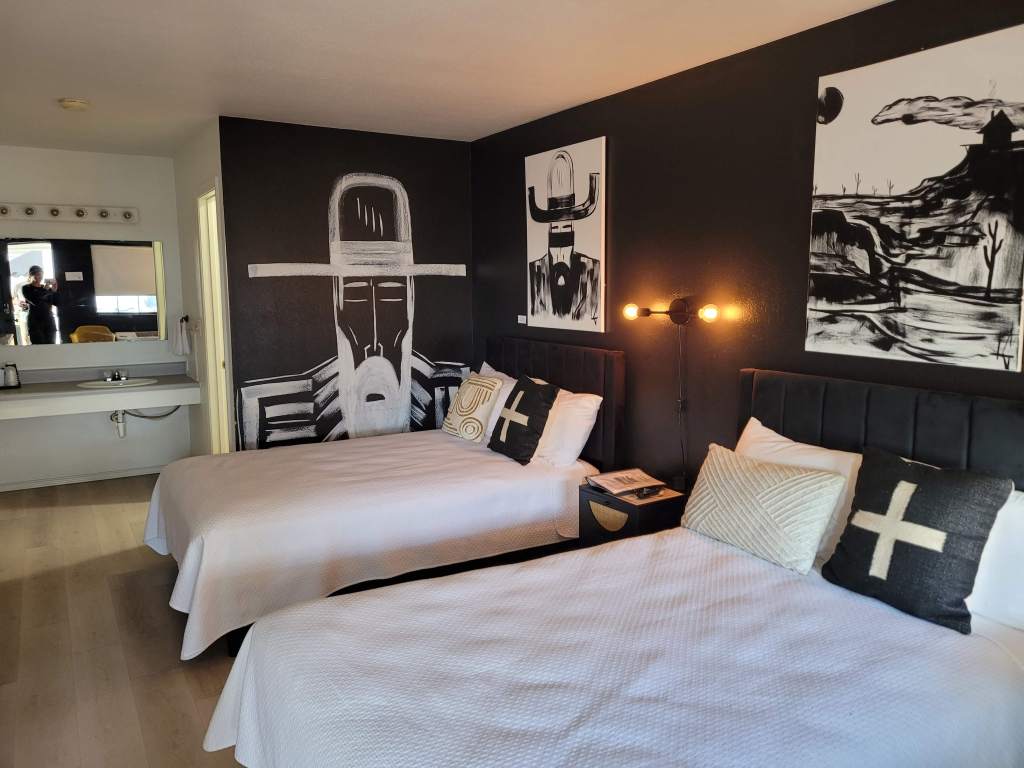
We check into The Cowboy Motel. The motel has been updated with a modern style and is clearly set up with motorcyclists in mind. Despite that, the town itself is quiet, and there are no open restaurants nearby. There is only one option located about a block away.
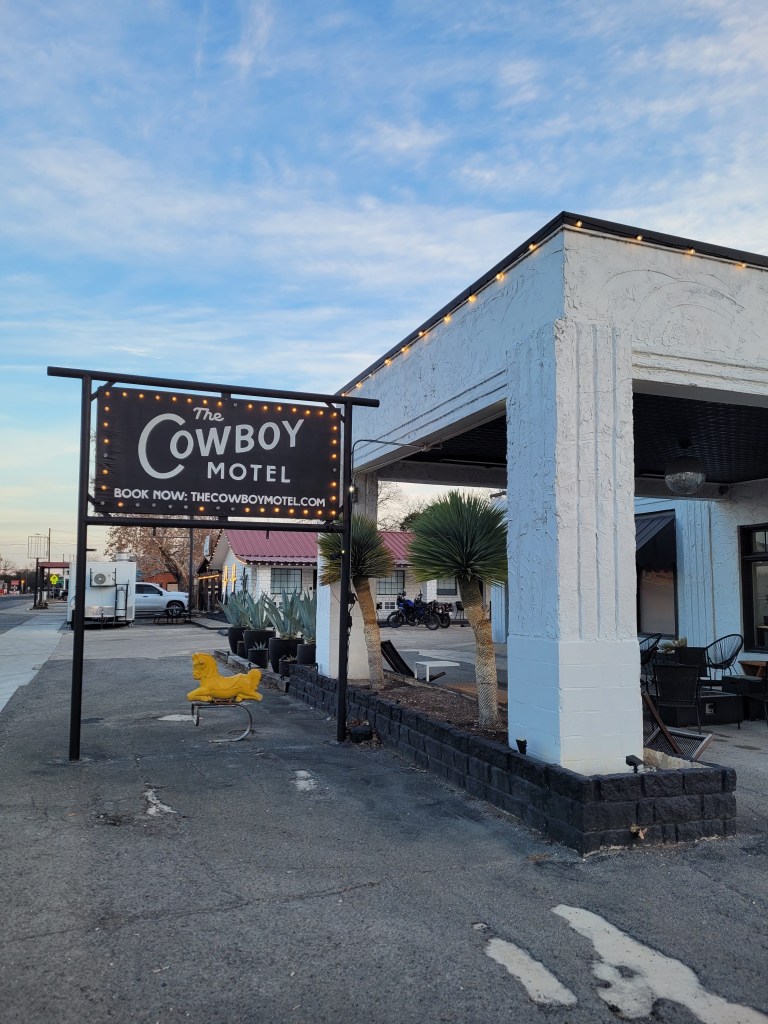
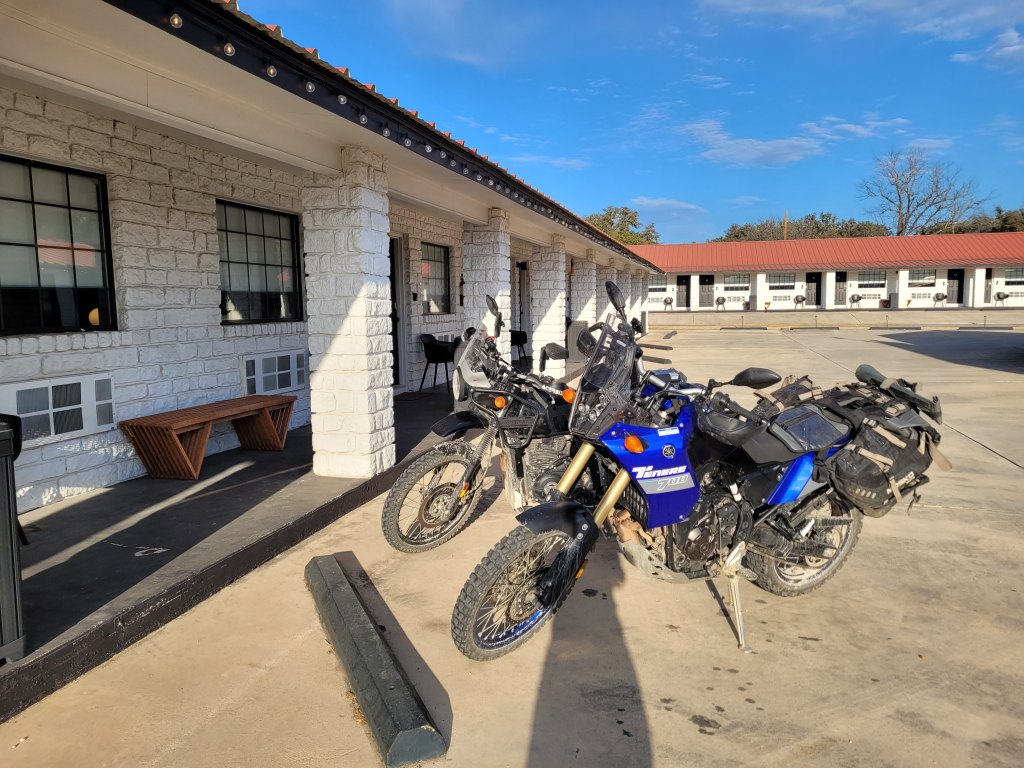
Now this particular day, happened to be our “meeting while on vacation” anniversary. And here we were grabbing pizza at a gas station counter laughing at how far this was from anything we would’ve planned. We ended up eating outside our motel—sitting in black Acapulco chairs under a hanging disco ball, surrounded by agave plants—simple, a little surreal, and somehow exactly right for the moment.
Day 2: Camp Wood to Mason
We wake up feeling more rested than we would have been if we had camped. The room is quiet, and the morning light softens the space. The large black and white painting of a cowboy on the wall, which felt intense the night before, looks much less harsh in daylight.
We walk over to Casa Falcon Restaurant for breakfast. It is a straightforward, local spot serving traditional Mexican dishes. We order huevos rancheros and coffee. The food is simple and filling, and it sets us up well for the day ahead.
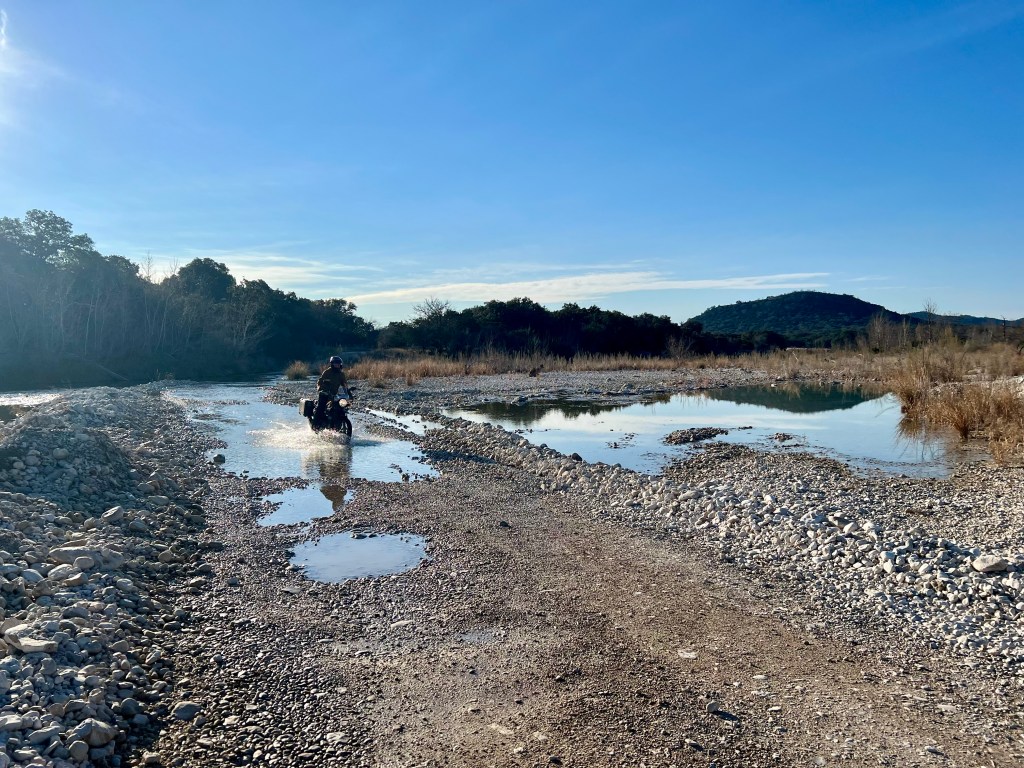
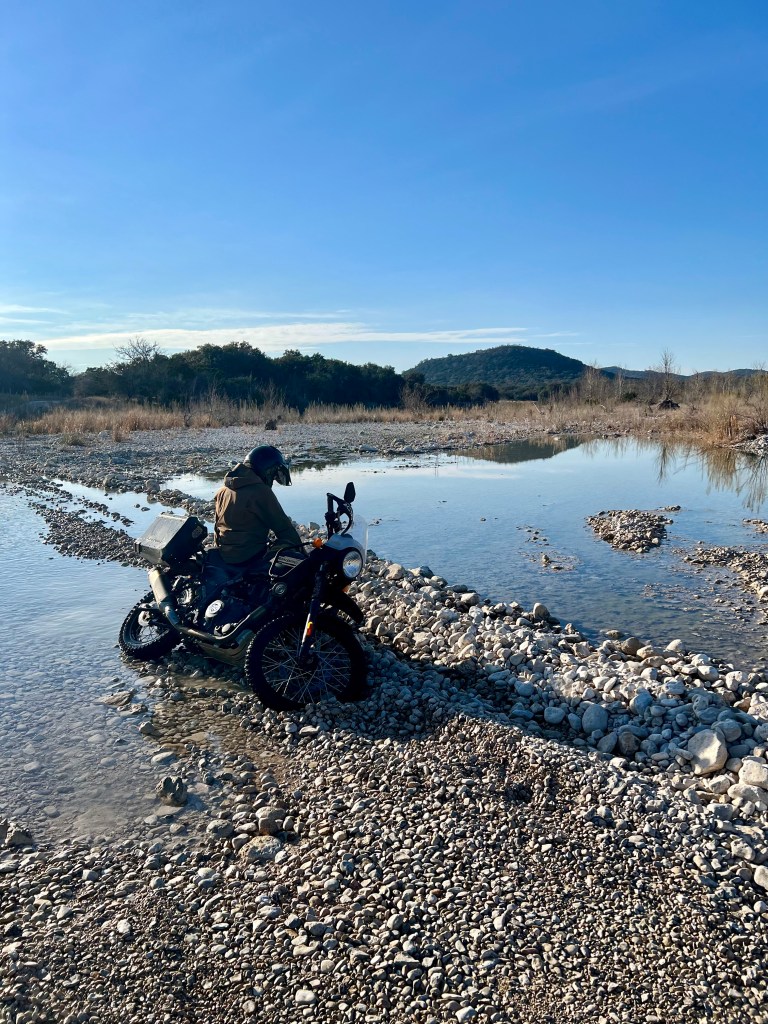
Back on the route, the terrain remains consistent with the previous day. The roads alternate between hard packed dirt and loose gravel, with occasional rocky patches. We pass through several water crossings, though most are shallow. The water levels are low, turning them into more of a puddle crossing than a technical obstacle. Without much flow, there is less concern about algae on the concrete, which makes traction more predictable. In one crossing, we notice a snake lying still under the surface of the water. It does not move as we pass. Just our luck, the only time we get to see a snake, it turns out it’s dead. So much for them being prevalent in the State.
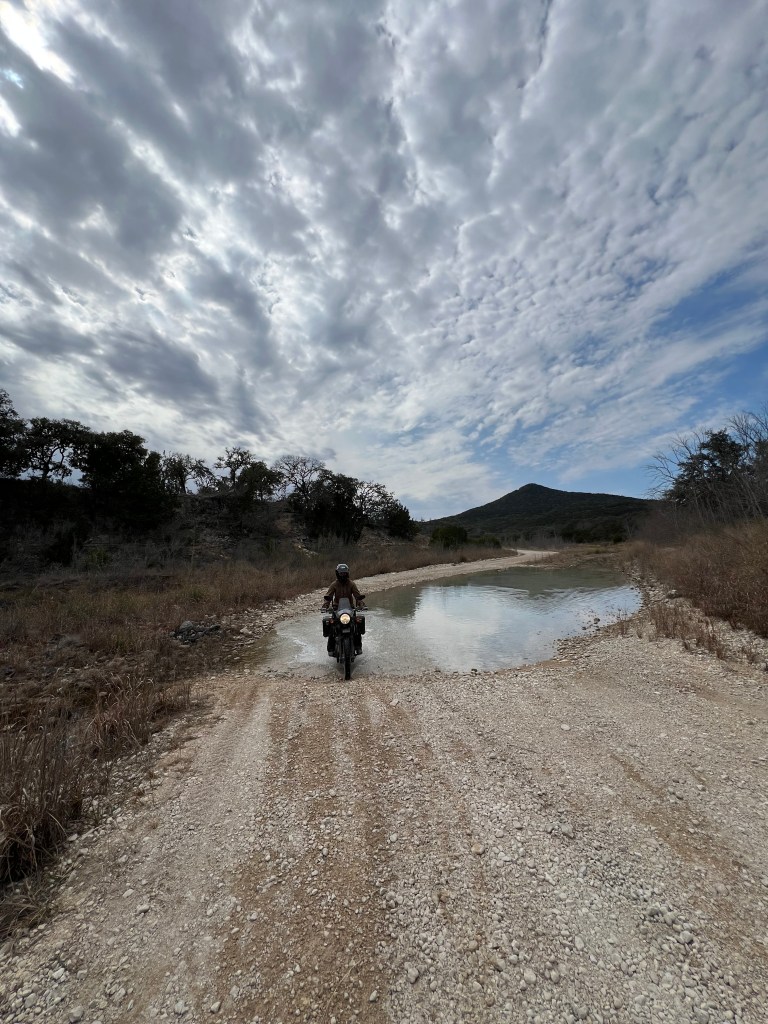
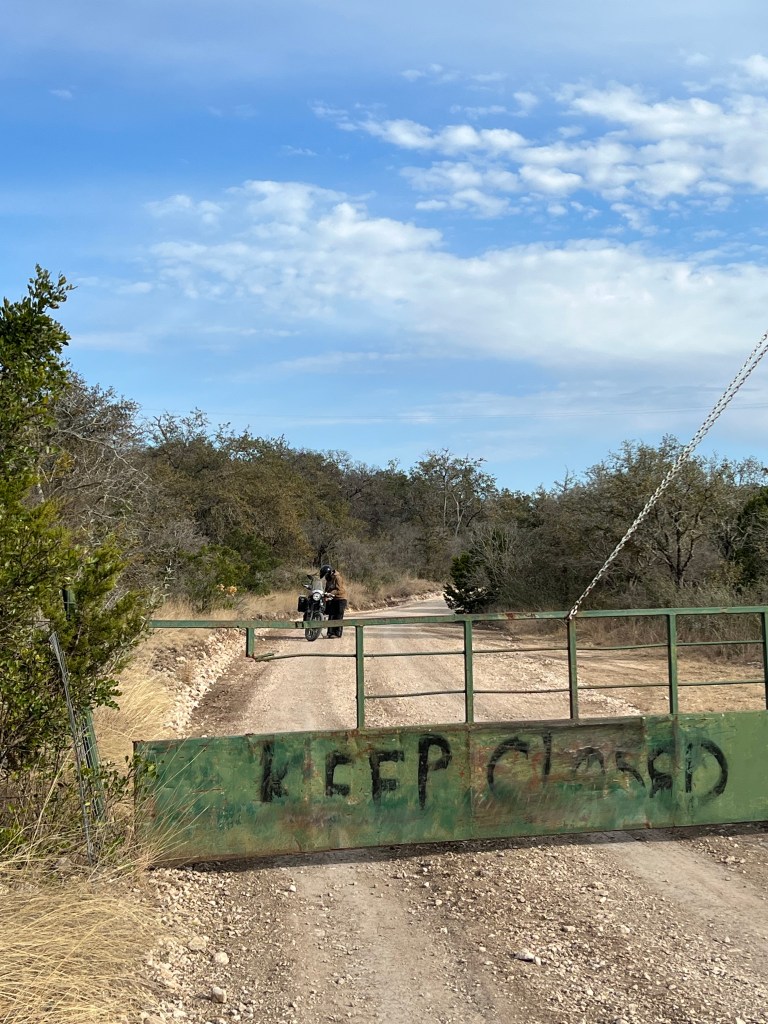
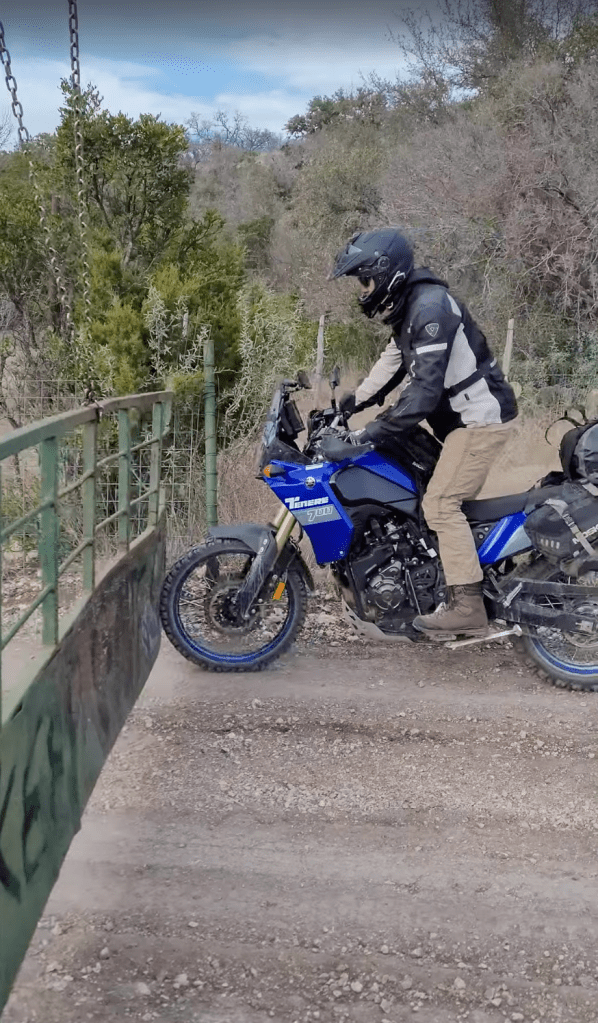
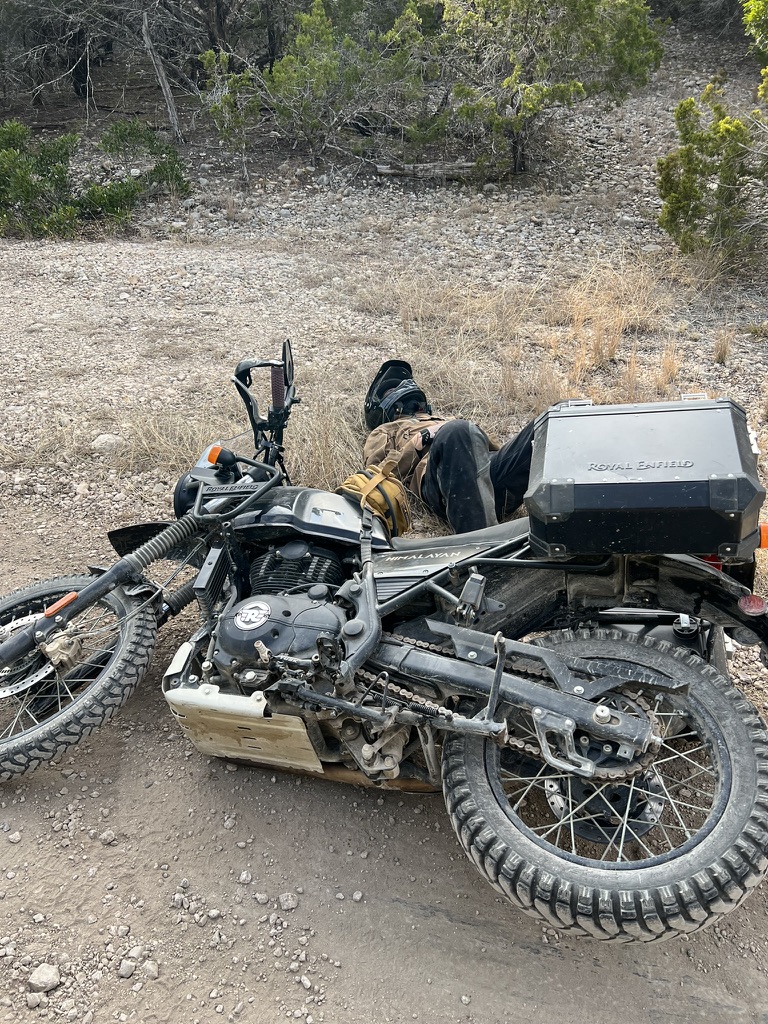
As the day progresses, we encounter a series of ranch gates, which quickly turns into what feels like an informal training session. This section is called “bump gate university.” Each gate requires a slightly different approach. Some are light and easy to push open with the bike, while others are heavier and require more control. It becomes an exercise in balance, throttle control, and confidence. After a couple of failed attempts that send me throttling out of control and eventually dropping the bike, I decide on a more efficient approach and tuck in closely behind Chris, slipping through before the gate closes. It’s not the most technical solution, but it works—and sometimes that’s all you need on the trail.
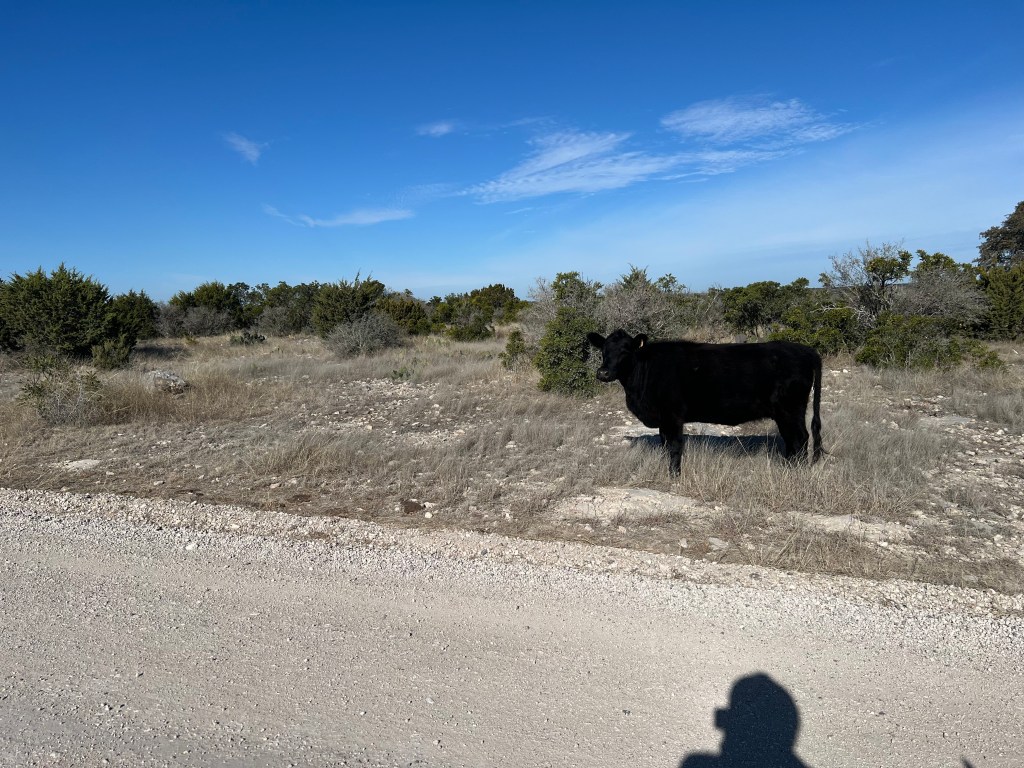
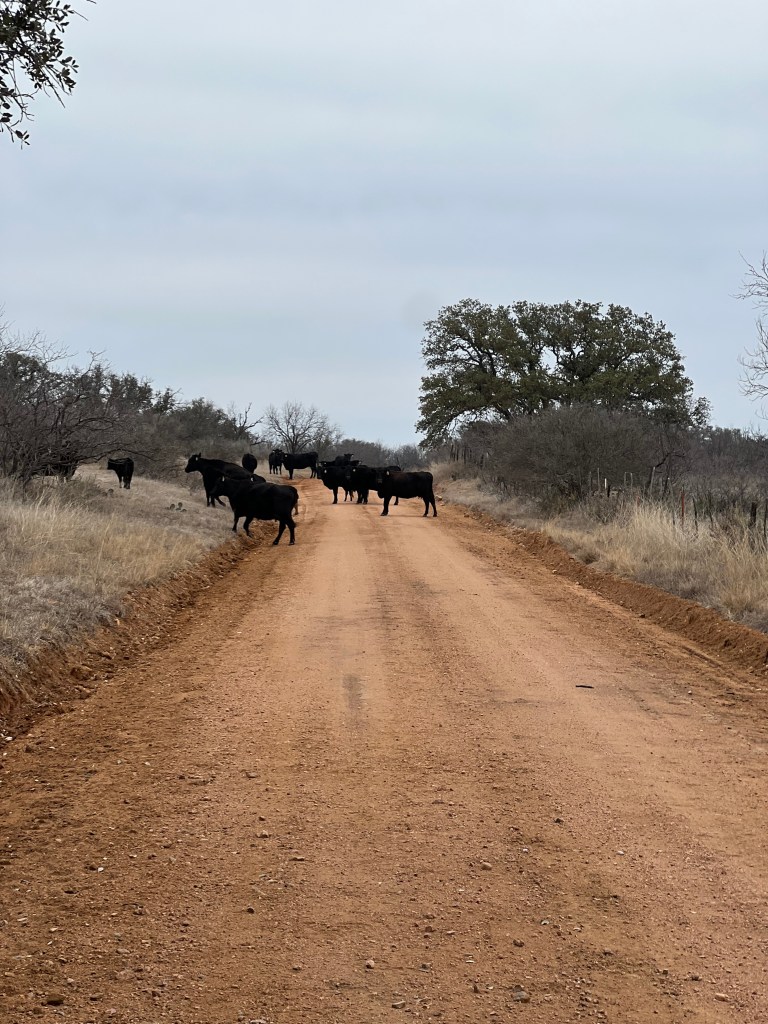
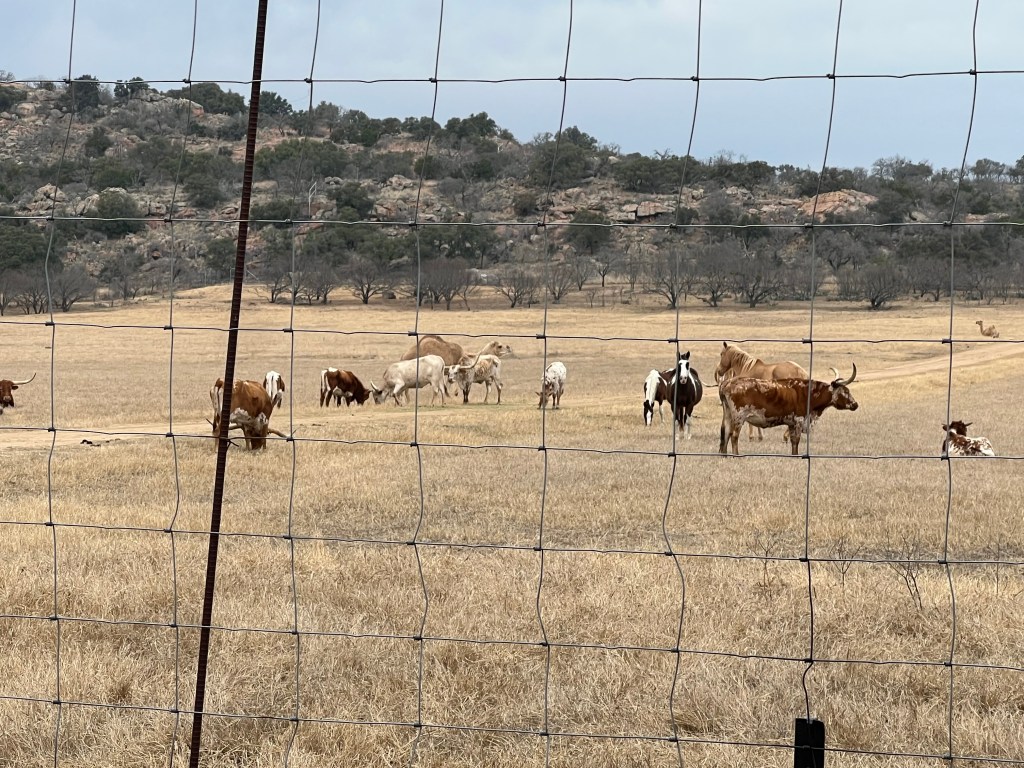
The route continues through active ranch land. On many occasions, we come across large herds of cows standing directly on the track. We slow down as we approach. The adult cows watch us carefully, while a few calves react more suddenly and move off to the side. It is the closest we have been to them on the bikes so far, and it reinforces the fact that we are moving through working cattle country.
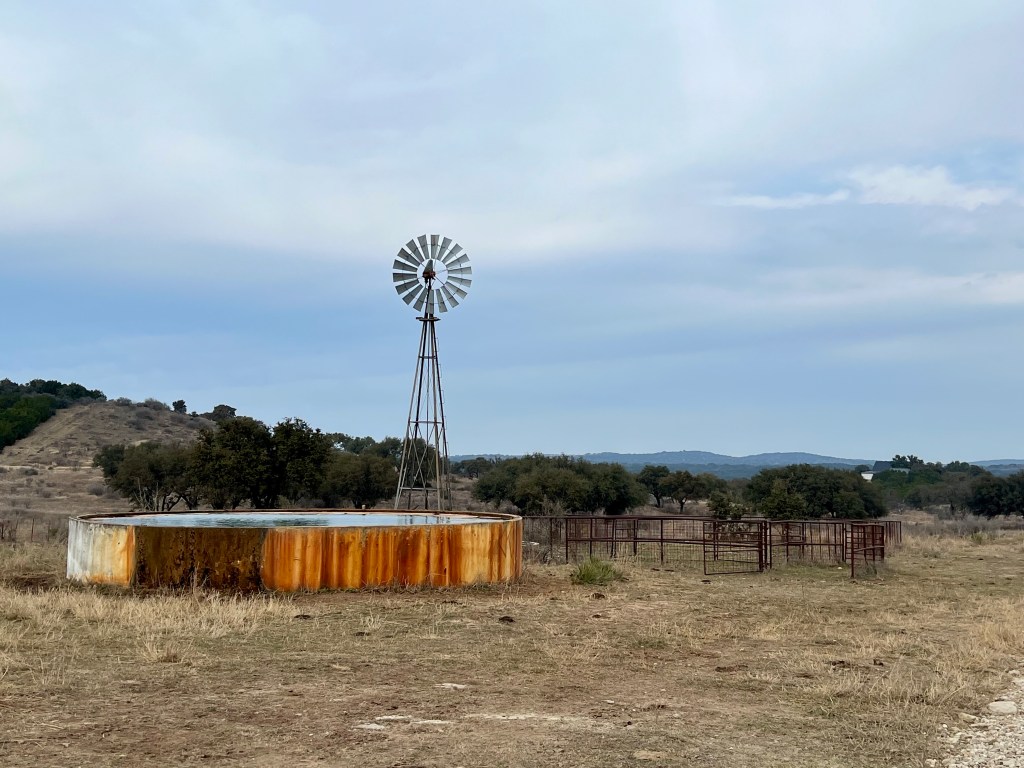
As we ride, the character of the land and homes becomes more noticeable. The properties are large and set back from the road, often marked by long driveways and gated entrances. Many houses are low, single story structures built from stone or stucco, with metal roofs and wide porches. Some are newer builds with clean lines, while others are older ranch homes with weathered wood and practical layouts. Outbuildings, barns, and equipment sheds are common, along with windmills and water tanks. The land itself alternates between cleared pasture and sections of dense cedar and oak.
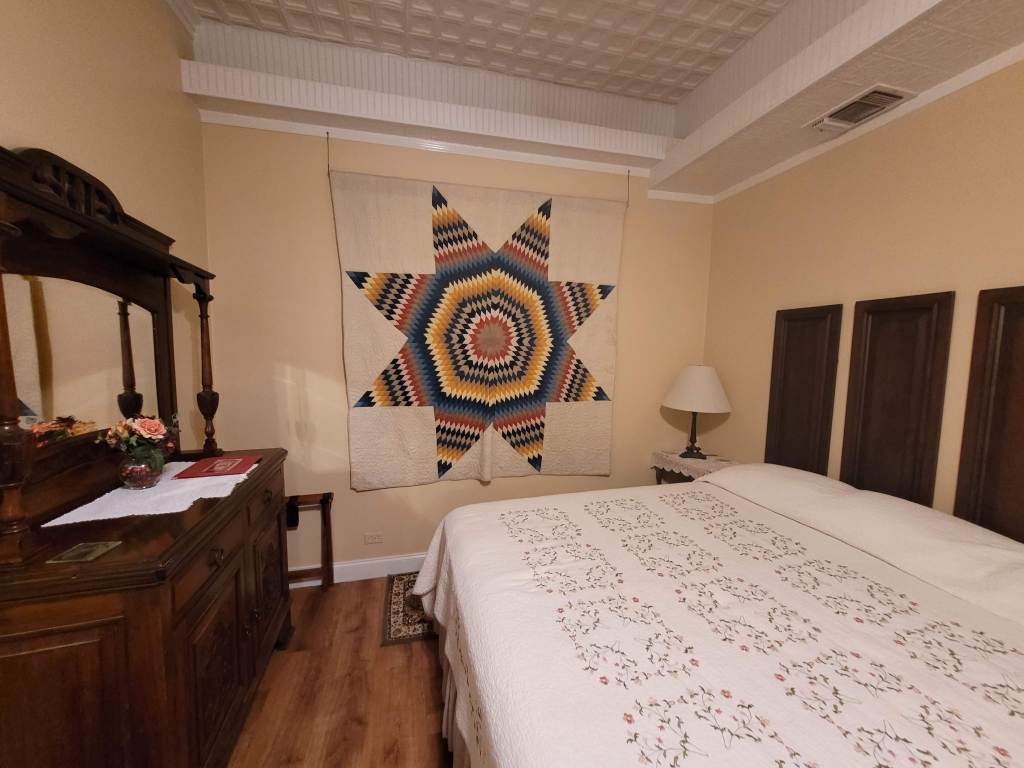
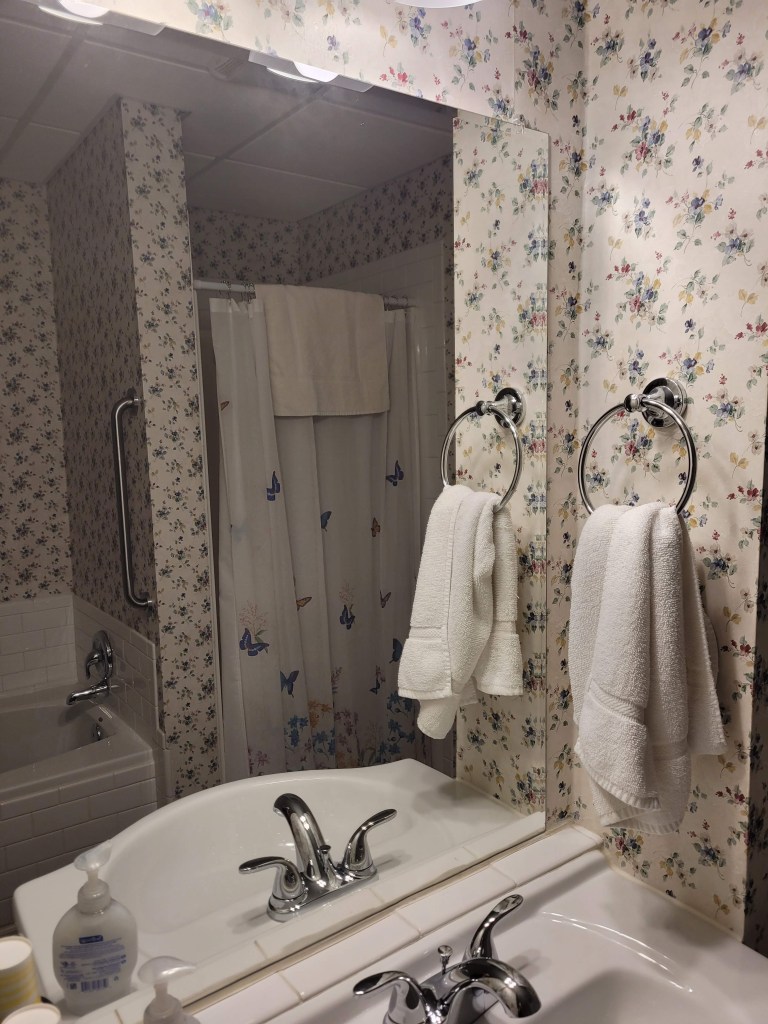
We arrive in Mason in the late afternoon and check into Red Door Bed & Breakfast. The guesthouse is well kept and decorated in a traditional style, with a lived-in, comfortable feel. There are small details throughout that make it clear the space is cared for. We are told there will be fresh banana bread in the morning. Grandma-core for the win!
For dinner, we walk over to Crocket Restaurant and sit at the bar. The atmosphere is casual, and it does not take long before we start talking with the people around us. Cindy introduces herself and quickly becomes part of the conversation. At one point, she tells us that we would make very beautiful babies. It is unexpected, but said casually and without hesitation.
Next door, is a gun shop also run by Crocket where he keeps a large collection of antiques. He talks about his interest in local history and casually mentions supplying cannonballs for display at The Alamo. The conversation drifts easily from one topic to the next, and before we realize it, we’ve stayed much longer than we planned.
Day 3: Mason to Llano
We leave Mason in the morning and begin heading southeast toward Llano. The shift in landscape is gradual but noticeable. The terrain opens up in places, with broader views and flatter sections between low rolling hills. The roads continue to alternate between dirt and gravel, but there are more stretches of pale limestone, which gives the ground a lighter, almost chalky appearance.
There are occasional patches of loose sand, though they are short and manageable. Most of the riding remains predictable, with steady traction on the limestone roads. Water crossings are still present, but the levels remain low. They feel more like shallow puddles than obstacles, though we continue to slow down and approach them with care.
As we move through this section, the architecture becomes more distinct. Many of the homes are built from local limestone, giving them a light, uniform appearance that blends into the surrounding terrain. Some properties feel older and more traditional, while others are newer builds that still follow the same material style. The land around them is open, with fenced pastures and scattered trees.
We make our way to San Saba, known as the pecan capital of the world. The town feels slightly more active than some of the smaller stops we have passed through, with a defined center and a few more open businesses. We stop for lunch at Casa Del Charro Mexican Grill & Bar. It is a straightforward, sit down spot with a full menu and a steady flow of locals coming in and out.
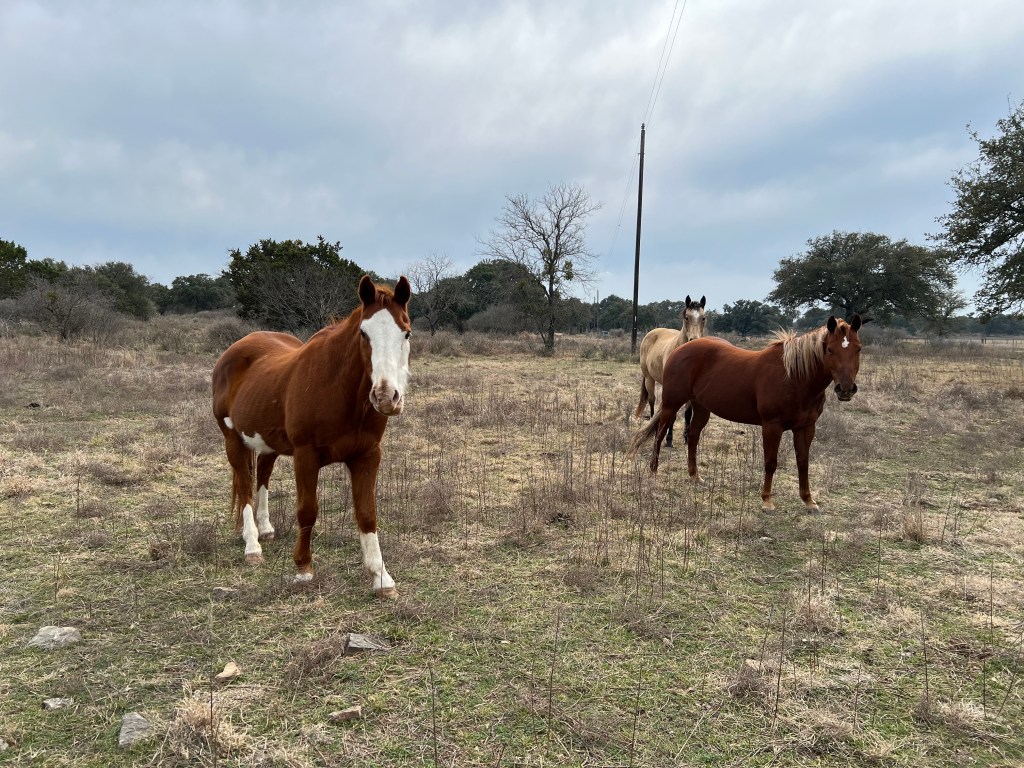
Back on the route, we continue to keep track of the animals we see along the way. Over the course of the ride, we spot camels, antelope, ostriches, oryx, and longhorn cattle. Most are behind fences on large ranch properties, but their presence adds a different layer to the landscape.
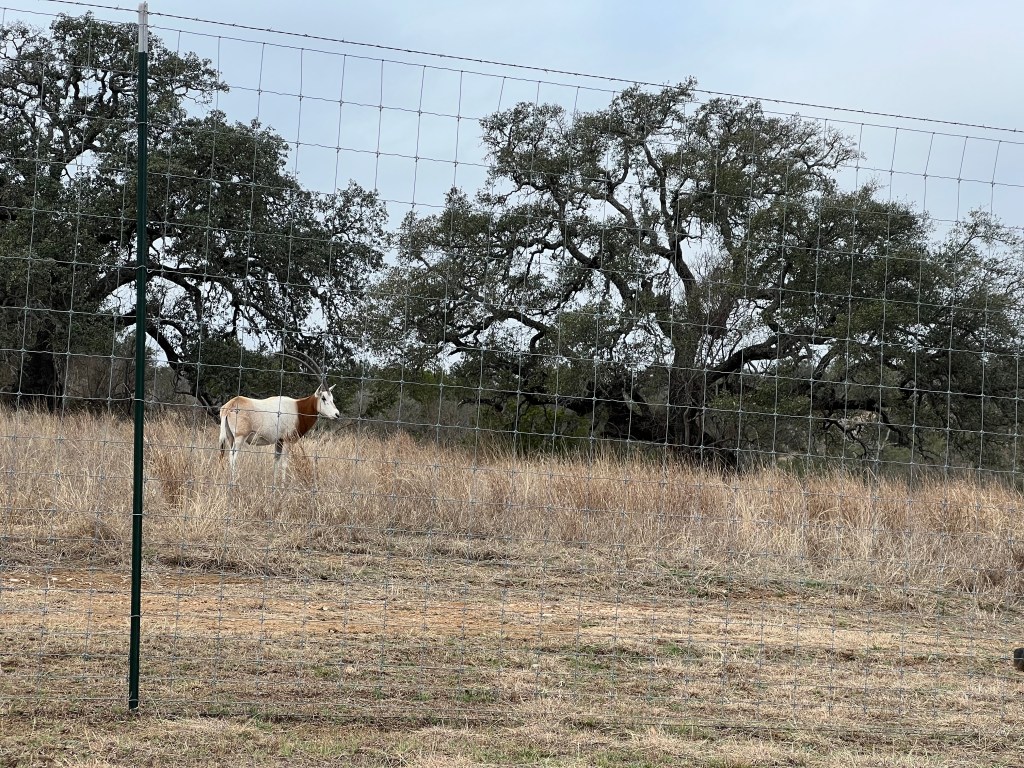
At one point, we come across a deer that is trying to get away from us. Instead of moving away from the fence line, it keeps running parallel to it, hitting the barrier and turning back in the same direction. It repeats the pattern several times without making progress. It becomes a clear reminder of how panic can limit decision making. When there is no pause to assess the situation, there is no way to adjust the outcome.
We arrive in Llano later in the day and check into Rodeway Inn & Suites, located next to Cooper’s Old Time Pit BBQ.
Here, the setup is direct. You walk up to a large outdoor pit and choose your cuts of meat from what is available. The selection is laid out in front of you, and the portions are cut to order. Inside, the seating is communal, with long tables where people sit next to each other regardless of group. The atmosphere is busy but efficient, with a steady flow of customers moving through.
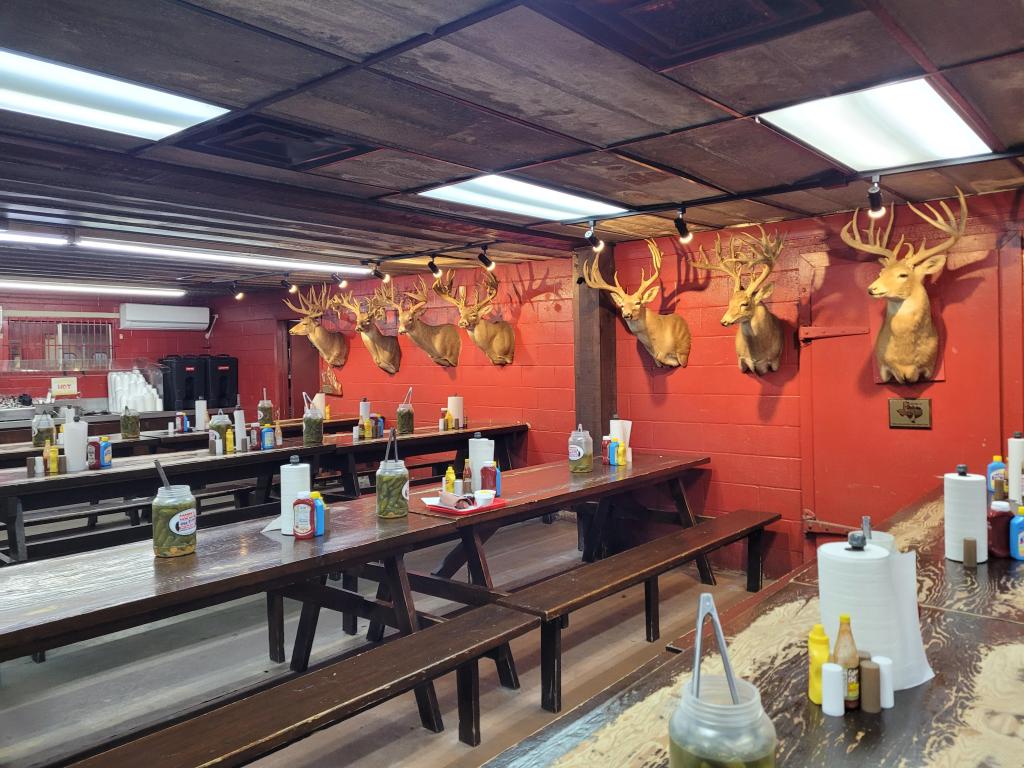
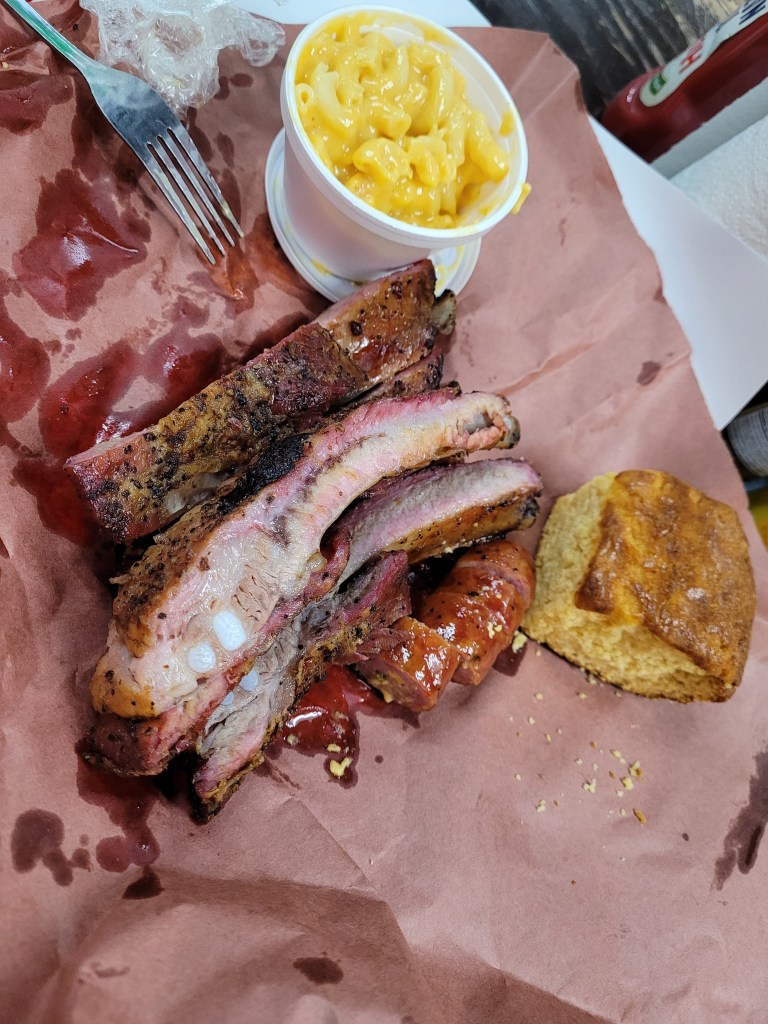
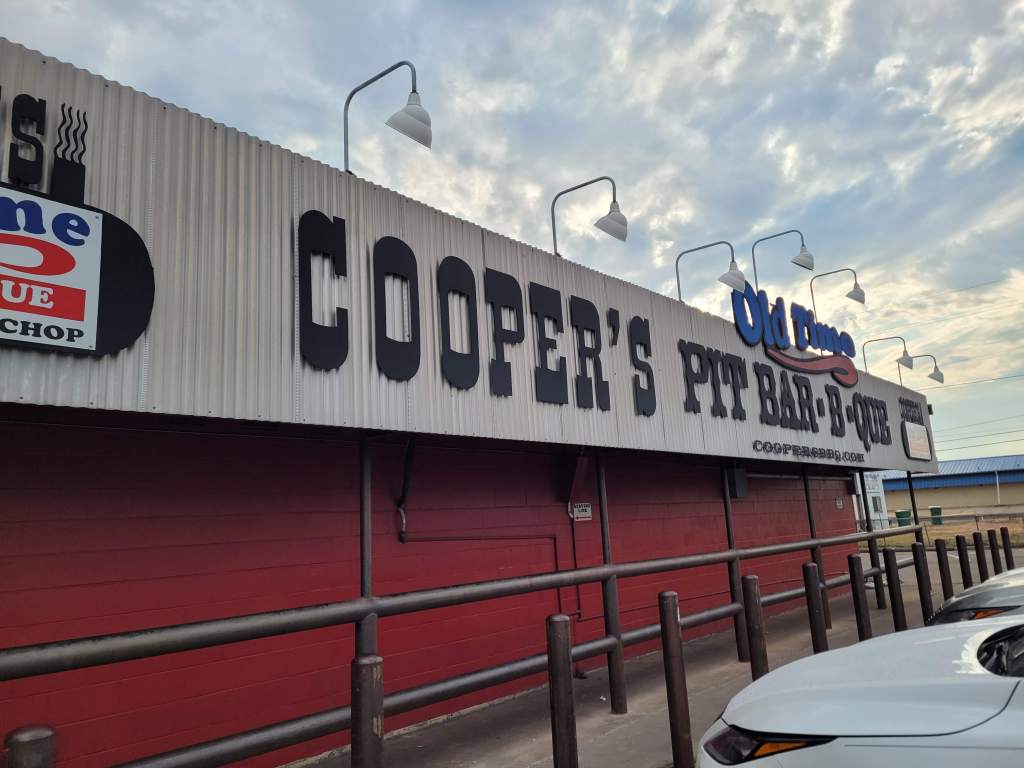
After a full day of riding through shifting terrain and gradually larger towns, the stop in Llano feels like a subtle step up in pace. It’s also an unexpected kind of victory—ending the day in a place that, by some small miracle, has the most comfortable mattress and pillow combination I’ve ever experienced.
Day 4: Llano to Bandera
We leave Llano in the morning and begin the final leg of the loop back toward Bandera. The terrain shifts again as we move farther south.
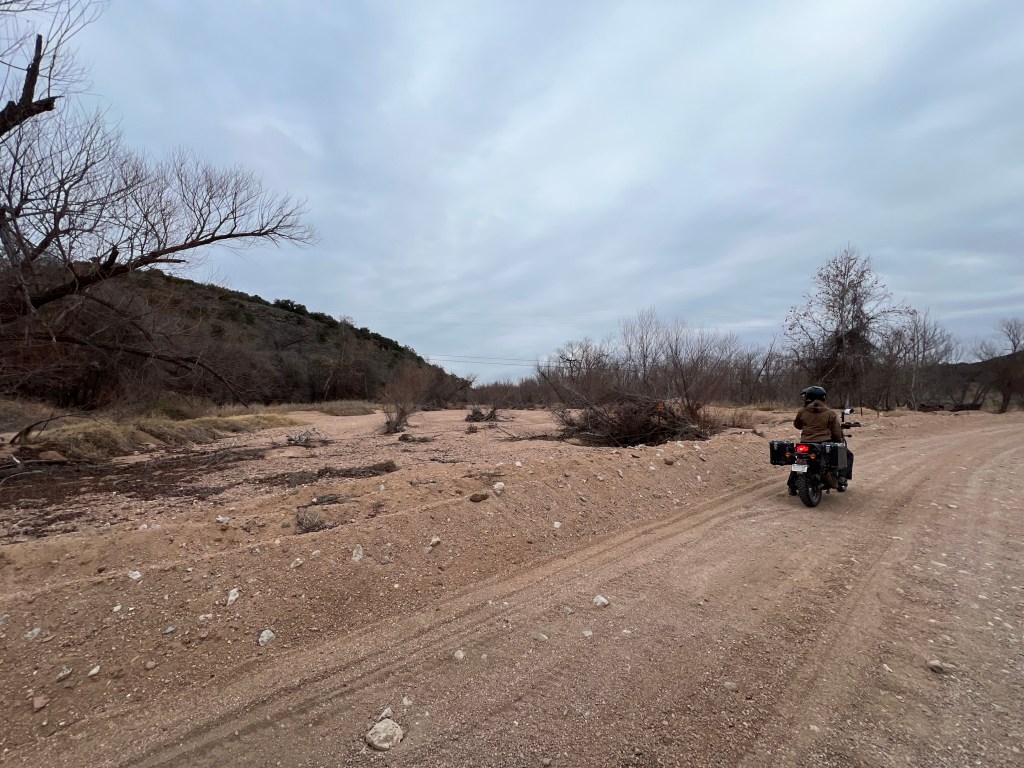
One of the more noticeable changes is at Sandy Creek. The crossing is completely dry. It is easy to recognize it as a water crossing by the width and the shape of the banks. But instead of water, it is filled with loose sand. The surface is softer and requires more attention to throttle and balance than the shallow crossings from earlier in the trip.
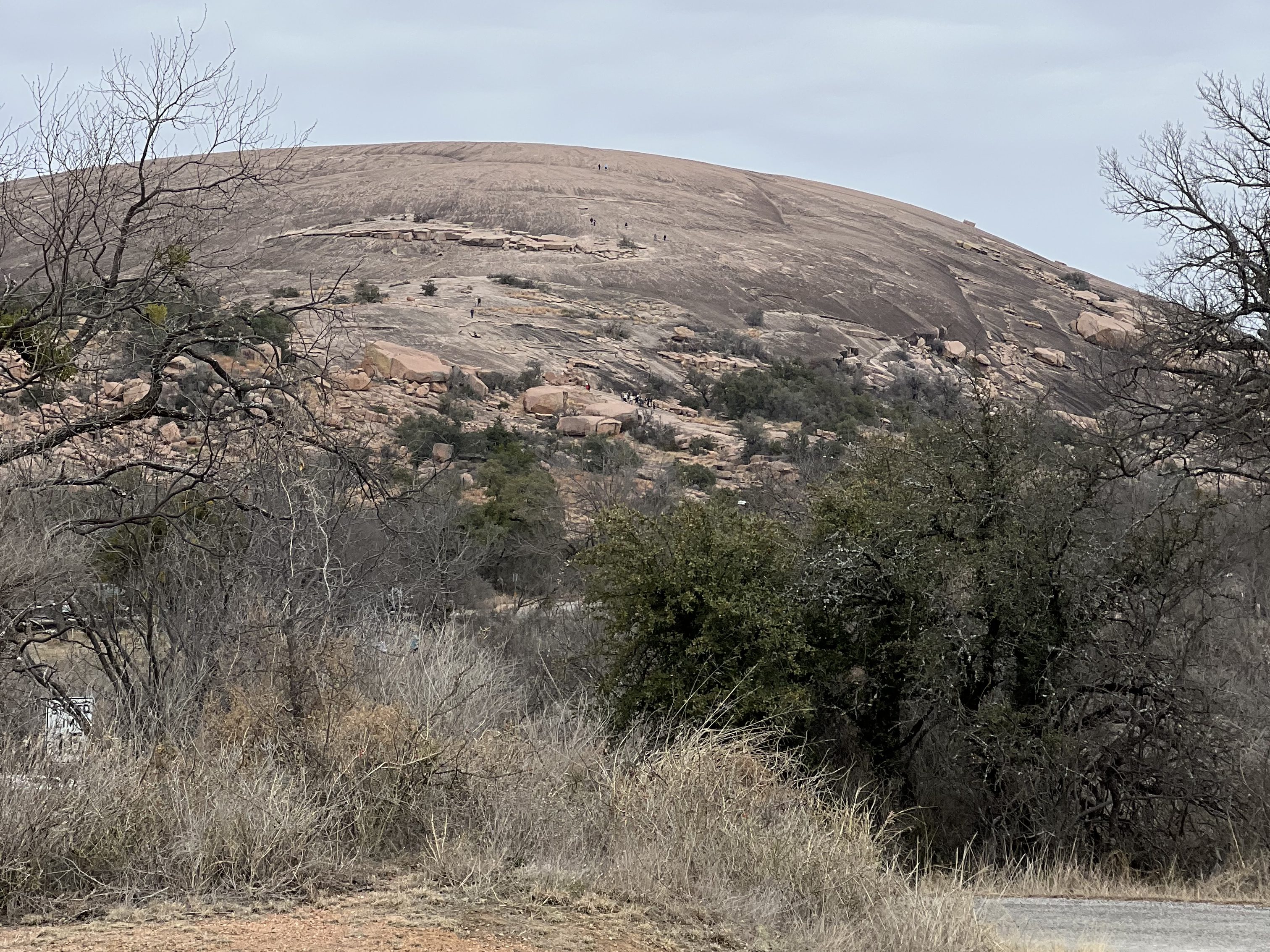
We continue on toward Enchanted Rock. The formation stands out from a distance. It is a large, smooth granite dome that rises above the surrounding landscape. Its rounded shape and bare surface give it a distinct appearance, like the top of a bald man’s head. The rest of the terrain is more vegetated and uneven.
As we approach Fredericksburg, the character of the area changes again. The town has a strong German influence, which is reflected in the architecture and layout. Many of the buildings have a more traditional style, with painted facades, decorative trim, and visible signage for beer gardens and restaurants. The streets are more active, with a steady flow of visitors moving between shops, tasting rooms, and outdoor seating areas.
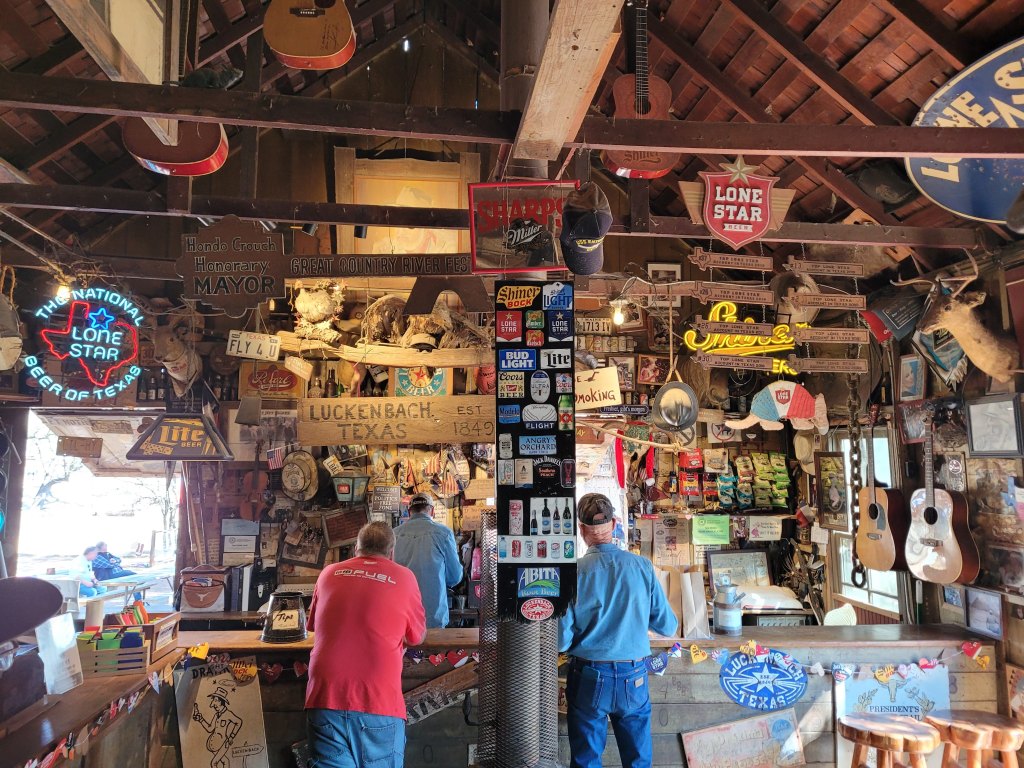
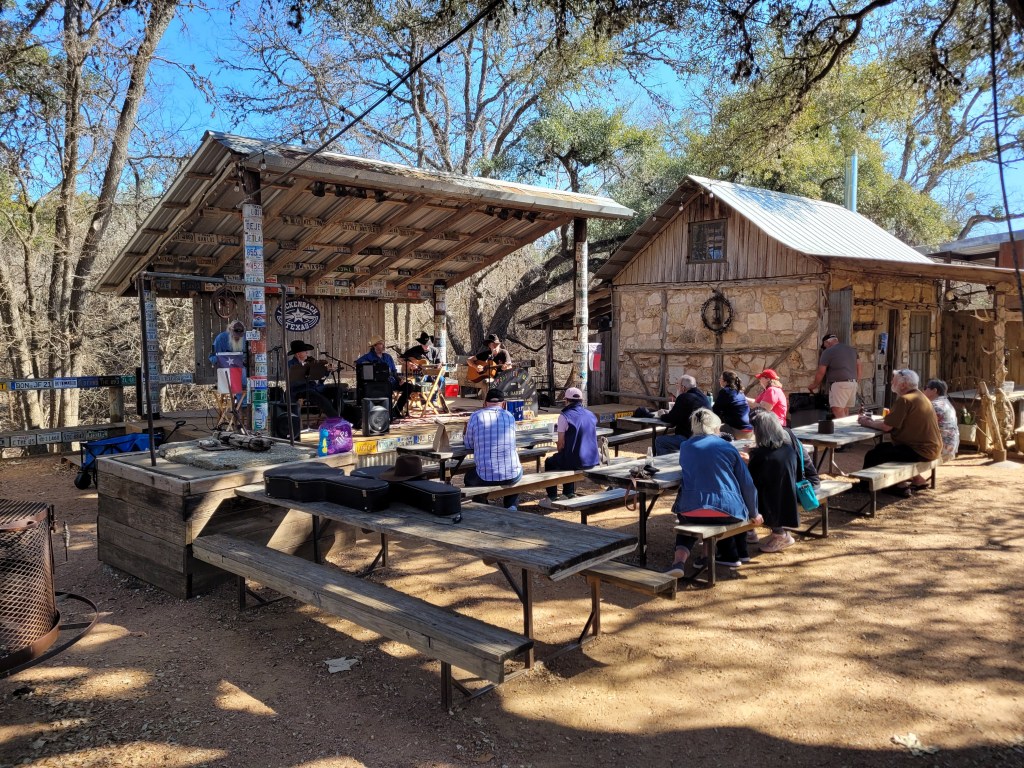
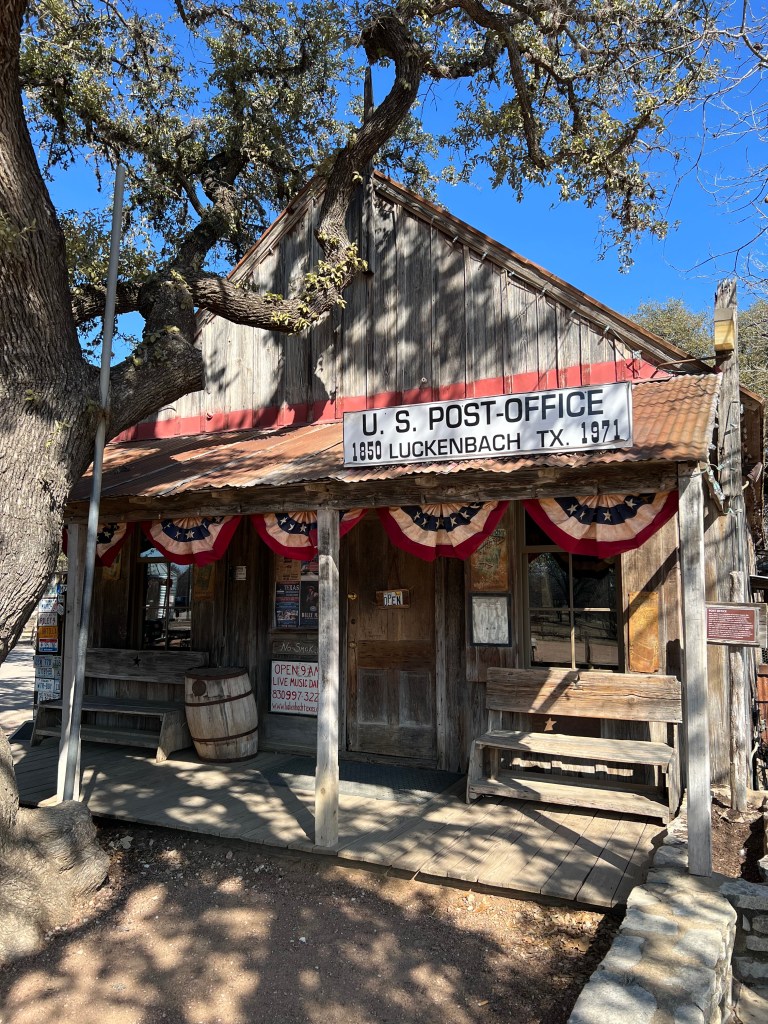
Leaving Fredericksburg, we make our way to Luckenbach. The town is small and centered around a few key buildings, including a general store, a saloon, and an old dance hall. Live music is a regular part of the atmosphere, and there is a steady flow of people stopping in throughout the day. We take a break, have a beer, and spend some time listening to the music. The setting is informal and relaxed, with people gathered outside under the trees.
The final stretch back toward Bandera makes us sigh with relief. The terrain returns to the mix of hard packed dirt, gravel, and low water crossings that we started with. By the time we arrive, the loop feels complete. After 4 full days in the saddle, we can’t lie that we are sore and ready to get back to the Bus and it’s comforts.
We end the day with dinner at Trail Boss Steak & Grill. This route turned out to be exactly what it was described as. It is on the easier side in terms of technical riding, but that allows more space to take in the surroundings without feeling rushed or overly challenged.
Overall, it was a straightforward and enjoyable ride. It offered a clear look at the Texas Hill Country, with a mix of landscapes, small towns, and everyday interactions that made the experience feel complete.

