Tag: nature

  • Marathon Hikes & Surprise Seafood Feast

    Marathon Hikes & Surprise Seafood Feast

    Maine and Nova Scotia. It’s surprising how two coastal regions along the same Atlantic stretch can be so different. The very air tells two stories. 

    In Maine, the salt in the breeze is clean, briny, and threaded with the faint scent of seaweed sunning on the shore. It’s the kind of classic “ocean smell” people picture when they dream of the coast. The contrast is small but unmistakable. Maine’s air feels gentler, mellowed.

    Driving along, the coast reveals another set of differences. Maine’s houses have that iconic New England charm with weathered cedar shake siding, dark shutters, and an understated color palette shaped by storms, salt, and tradition. Many homes feature radiant “sun face” wall ornaments—technically called sunburst wall plaques—watching over wide porches. According to Wikipedia, they symbolize warmth, energy, happiness, and positivity, often inspired by ancient solar deities and cultural beliefs in good luck and abundance. It’s a look that feels old-school, nostalgic even, especially as the road winds toward each mountain peak.

    Long Live The Daily Hike

    When one gets in the habit of hiking, it brings you into an almost addictive headspace. Where the streak must be continued. Every day feels incomplete without at least a few miles on a trail. Your cardio gets better, your balance improves, and even the hiking sticks start to feel like extensions of your own rhythm.

    With time, you begin to understand the personality of different trails—how “moderate” can mean anything from a pleasant forest walk to a full quad workout; how elevation gain written on a map never truly reflects how steep a climb feels when your breathing quickens. There were a few hikes I had planned that ended up taking much longer than expected. Some even pushed us past sunset, turning into careful nighttime descents lit only by headlamps.
    Those after-dark hikes were a first for me. The forest shifts at night—the temperature drops, the birds quiet, and every rustle feels amplified. My knees, already a bit weak and jumbled from hours of stepping over roots and rocks, protested with every uneven stretch. The already difficult task of placing each foot over obstacles rather than into them became even more challenging as the sun slipped behind the tree line.

    But there was something strangely calming about it too. With our headlamps cutting narrow beams through the darkness, the world shrank into a tunnel of light. Step, plant, breathe. Step, plant, breathe. Mile after mile, we made our way back to the truck—slowly, steadily, and somehow feeling more alive than we had at the start. Especially when the unmistakable howl of coyotes echoed in the distance.

    Saturdays Are For Long Hikes

    Then came the Saturday that will forever be known as THE LONG HIKE.

    I had planned what I thought would be a challenging but reasonable nine-mile route. Nine miles didn’t sound like much, mostly because my brain still insists on converting everything into kilometers and convincing me it’s shorter. 

    The logic was simple: We had a full weekend to rack up miles and conquer peaks. And for some reason, it had evolved into this unspoken competition with ourselves—pack in as much as possible, squeeze every ounce out of daylight. So much for nature’s calming influence.

    As we approached the trailhead I’d pinned on our map, two crucial factors had been conveniently ignored: the time and the day. We left for the trail at 10 a.m. on a beautifully sunny Saturday in Acadia National Park. Peak weather, peak season, peak foolishness. Naturally, the parking lot I aimed for was completely full.

    Time for Plan B.

    We kept driving up the winding road along the base of the mountains, searching for any sliver of available space. The next lot was also full—but there were cars neatly lined along the shoulder of the road. Perfect. We joined the single-file pilgrimage, creeping forward until we hit a stark sign that read: “NO PARKING BEYOND THIS POINT.” Because we are eternal optimists, we tried our best to wiggle our big truck behind the sign, but also dangerously close to the front bumper of the car behind us.The front cab and hood of the truck were definitely flirting with illegal territory, while the bed of the truck was defiantly sticking out. If you squinted, we were good. Technically. Kind of. 

    As it turns out, nine miles was actually fourteen miles once the full route revealed itself—twenty-two kilometers. That mathematical betrayal hit us only after the fact.

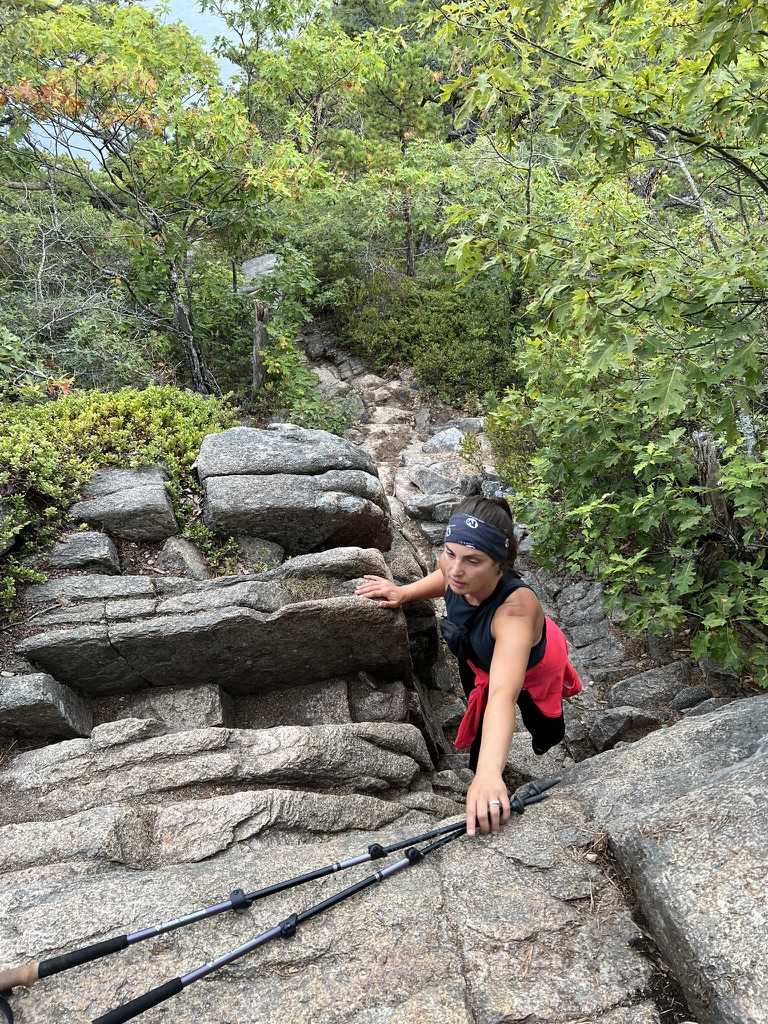
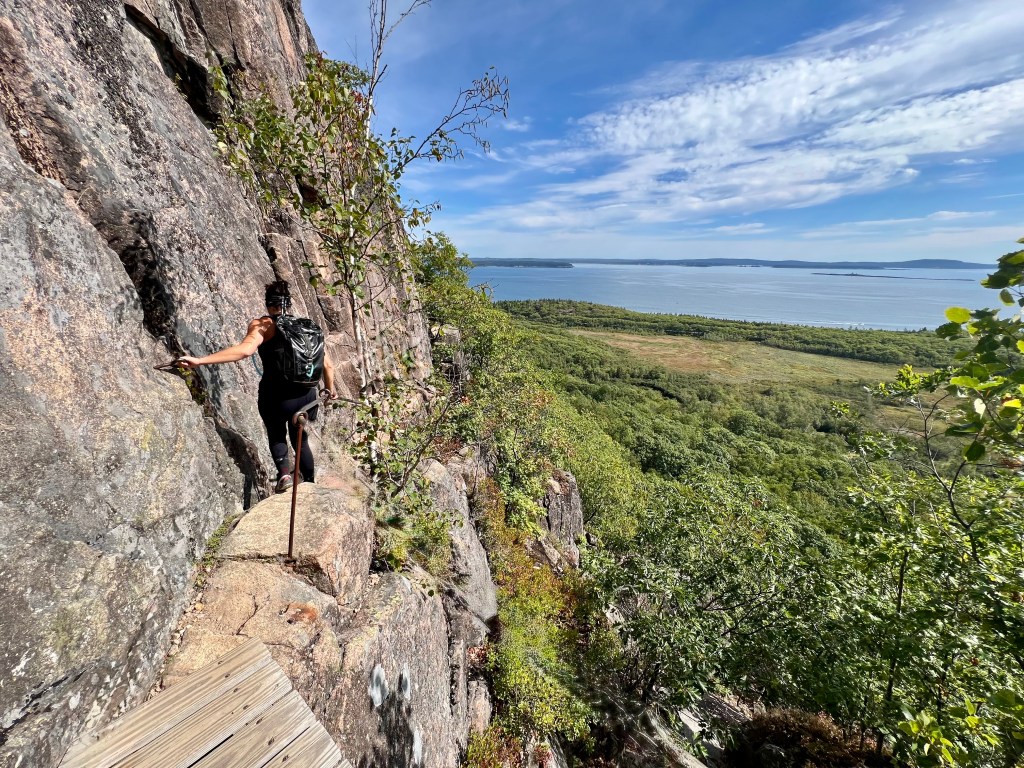
    We began with the famous Precipice Trail, which turned out to be exactly what the name promises, with absolutely no false advertising. The route climbs almost straight up, rising over iron rungs bolted into the cliff face, threading narrow ledges that press your spine against granite and dare you to look down. The views are spectacular. Every downward glance delivered a pleasant surge of vertigo and the reminder that gravity is a very real concept.

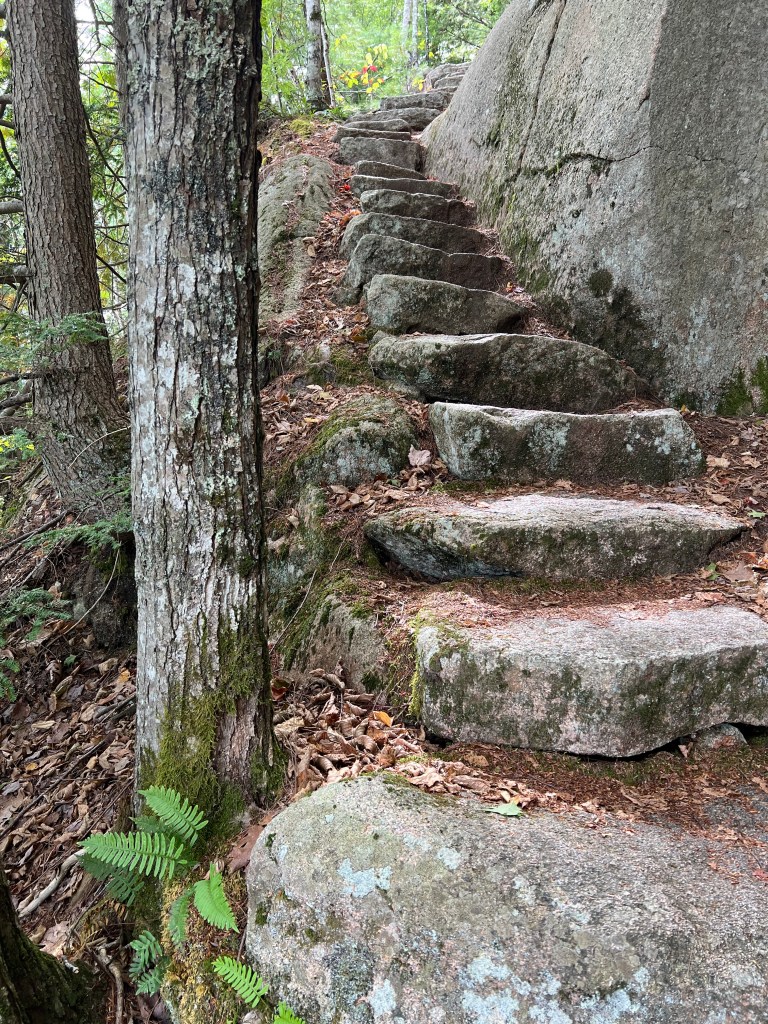
    As we continued our quest for spectacular views atop mountain peaks, we had the privilege of hiking up various types of terrain. Among them, the rock staircases varied wildly—some neatly arranged like nature’s version of a gym circuit, others complete free-for-all scrambles. We followed the painted blazes, trusting that they knew where the trail was supposed to go even when our legs questioned why we were going there. Each step was a fresh reminder that glutes and calves are both heroic and dramatically petty when pushed too far.
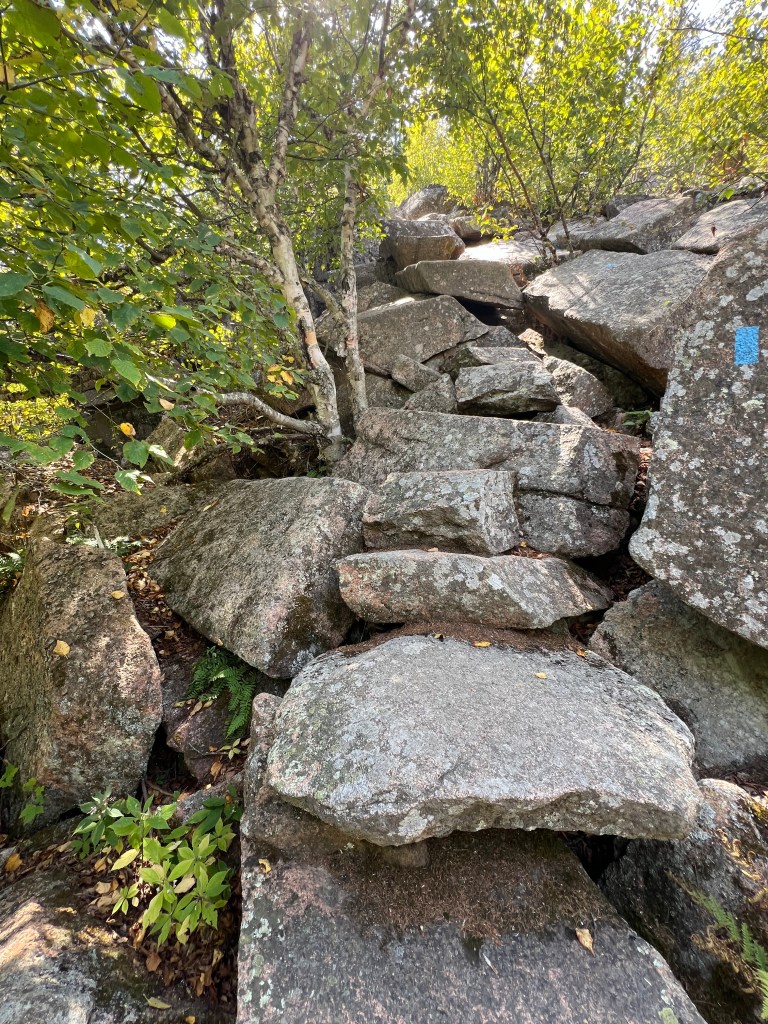
    The trail stretched on far longer than expected. Every section seemed to open into yet another—another ridge, another scramble, another false sense of nearing the end. Hours passed. Eight of them, in fact. By the time we emerged from the last segment, every muscle in my body was trembling. But the vistas were indescribable, the kind that make you stop mid-sentence. The fellow hikers we met along the way were wonderfully kind with little bursts of camaraderie. Quick smiles, encouraging words, that unspoken “we’re all in this together” energy that happens when strangers become temporary teammates.

    One man, cheerful and sweat-soaked like the rest of us, recommended a brewery near our campground. “Great pizza. Great beer,” he said. “If you’re into that kind of thing.”
    Well. He spoke directly to our souls.

    The scenery almost erased the discomfort (almost) until we climbed back into the truck and my legs staged a mutiny. The photos taken that day capture the entire emotional arc: hopeful excitement, mild concern, worsening concern, full existential questioning, then the hollow-eyed perseverance of someone who just wants a sandwich and a soft surface.

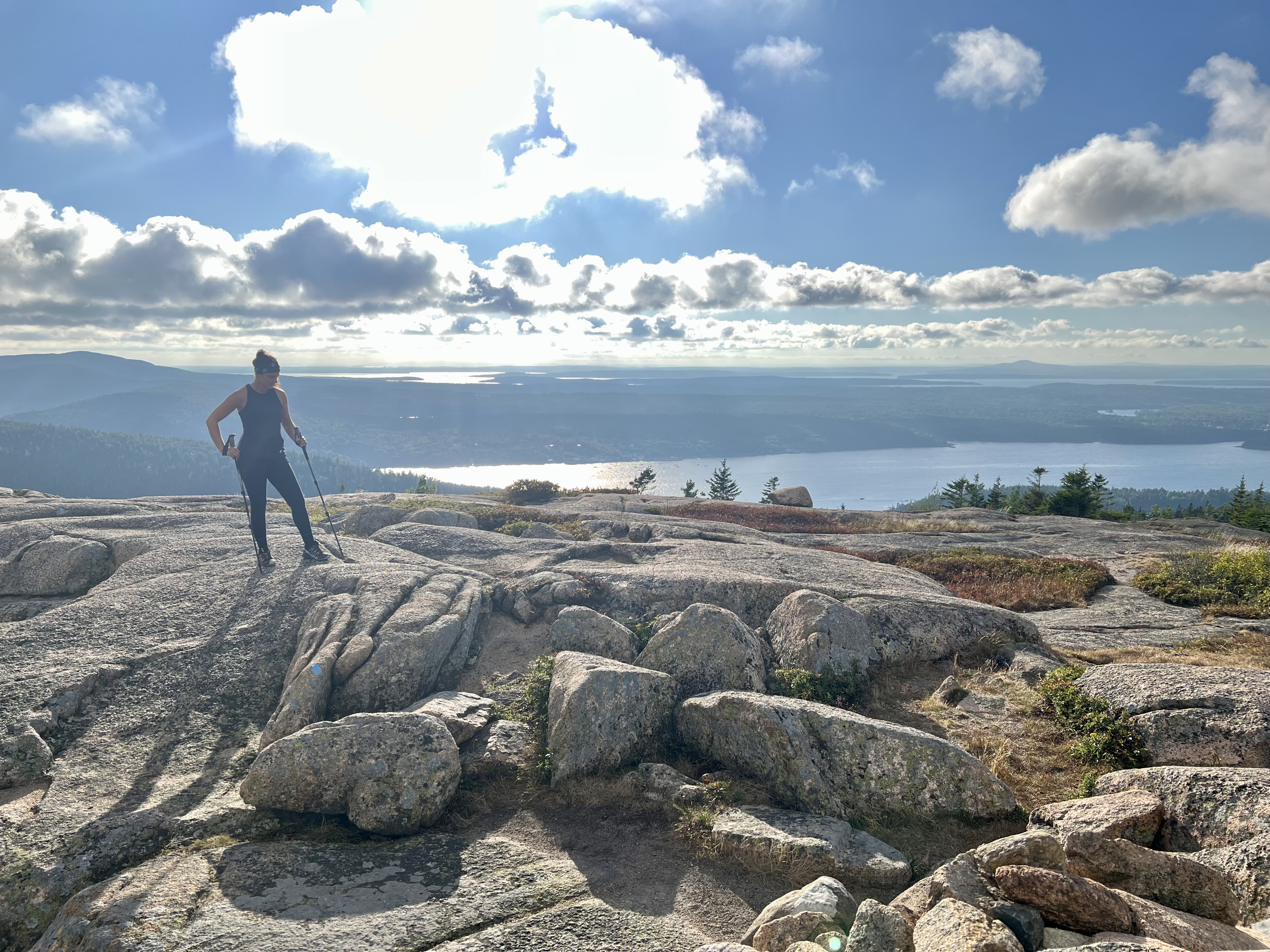
    And while we’re on the subject of photos—how do influencers look effortlessly radiant at the summit? I look like I’m molting. The moment the incline begins, I turn into a sweaty, frizzy, tomato-tinted creature that no filter can save. Any action shot of me requires distance. Dramatic distance.
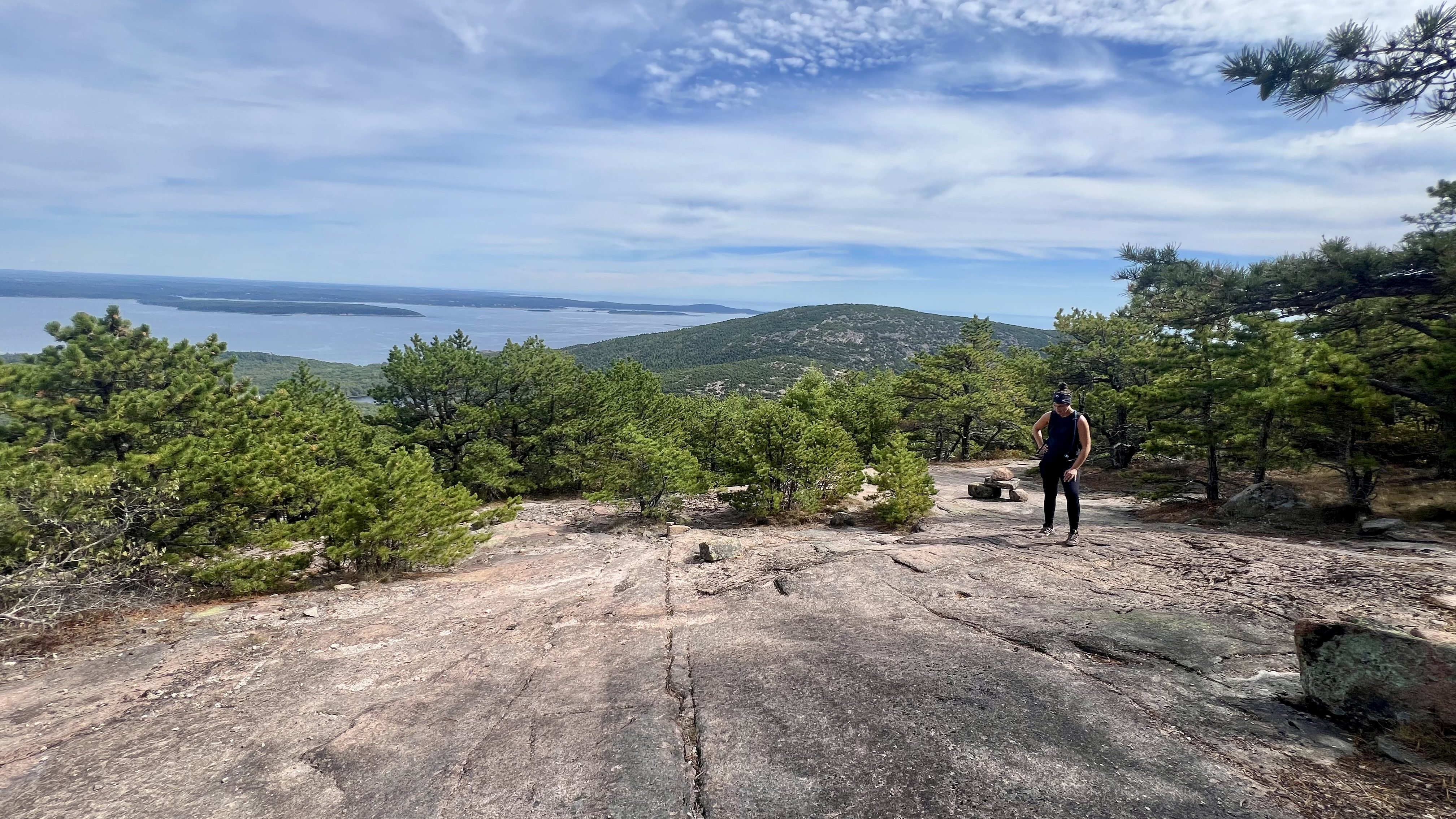
    That’s me. Clearly in the “questioning my life choices” phase of the hike.

    The final leg of the journey wasn’t even on the trail—it was the long walk along the pavement back to the truck, since to Precipice was a one-way climb. Every passing car was a temptation. A tiny part of my brain whispered, “Flag them down. Hitch a ride. No one will judge.” But then the stubborn part kicked in, and we marched on, fueled by the promise of beer and something carb-loaded. My internal mantra became a chant: pizza and beer, pizza and beer, pizza and beer. Sometimes survival looks like determination; sometimes it looks like food-based affirmations.

    By the time we finally spotted our truck in the thinning row of cars, we remembered our questionable parking job. A group of hikers ahead of us noticed too—they paused, laughed, tried to take a picture. Chris, being the embodiment of Minnesota Nice, shouted a joking “Hey! That’s ours!” They burst into laughter, relieved to find the renegade parking belonged to someone whose day had clearly been as long as theirs.

    Like us, they were coming to the end of a long day, some of them barefoot now because their shoes had surrendered earlier. Before I could blink, Chris offered them a ride to their campground. Five of them piled into the truck bed like a scene straight out of a feel-good movie. I could hear their laughter trailing behind us, wind tossing their voices around. When we reached their stop, one of them gave two taps on the roof (classic signal) before hopping out with heartfelt gratitude. In moments like that, the world feels small in a good way.

    And then, finally, the reward: Fogtown Brewery. Live music drifting through warm air, tiny pixie lights hanging above the patio like glowing fireflies, the smell of pizza that could revive the dead. We devoured slices, sipped cold drinks, and let the day settle into memory.
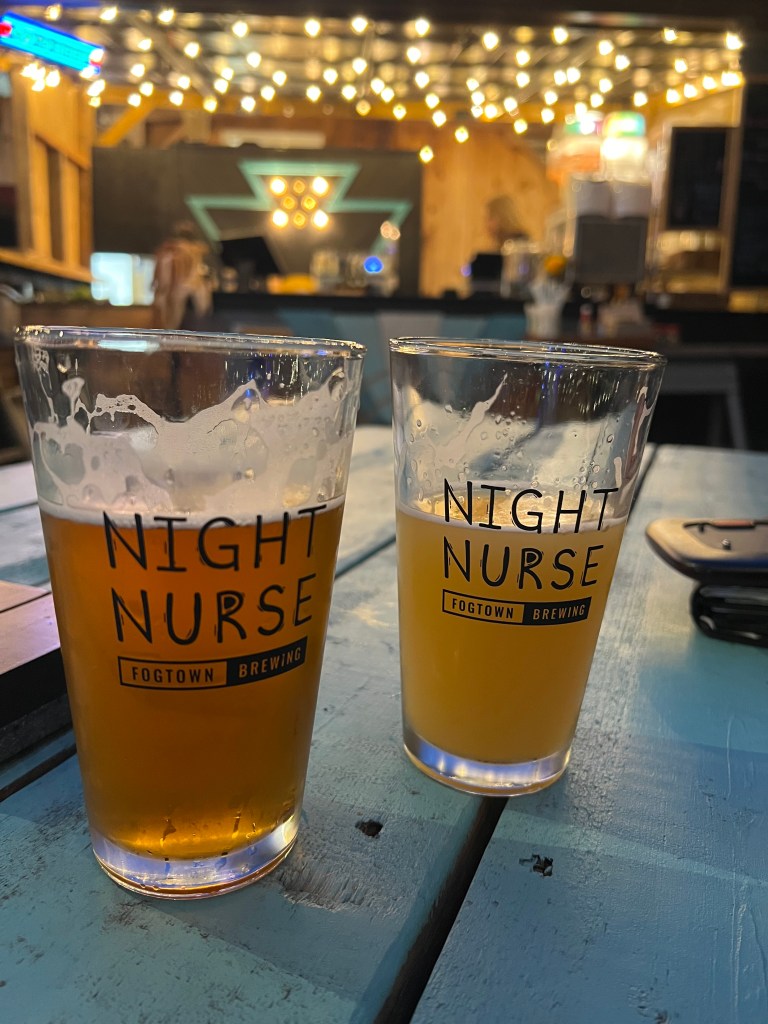
    That meal tasted like victory. Like exhaustion. Like pure contentment.
    It tasted exactly like THE LONG HIKE deserved.

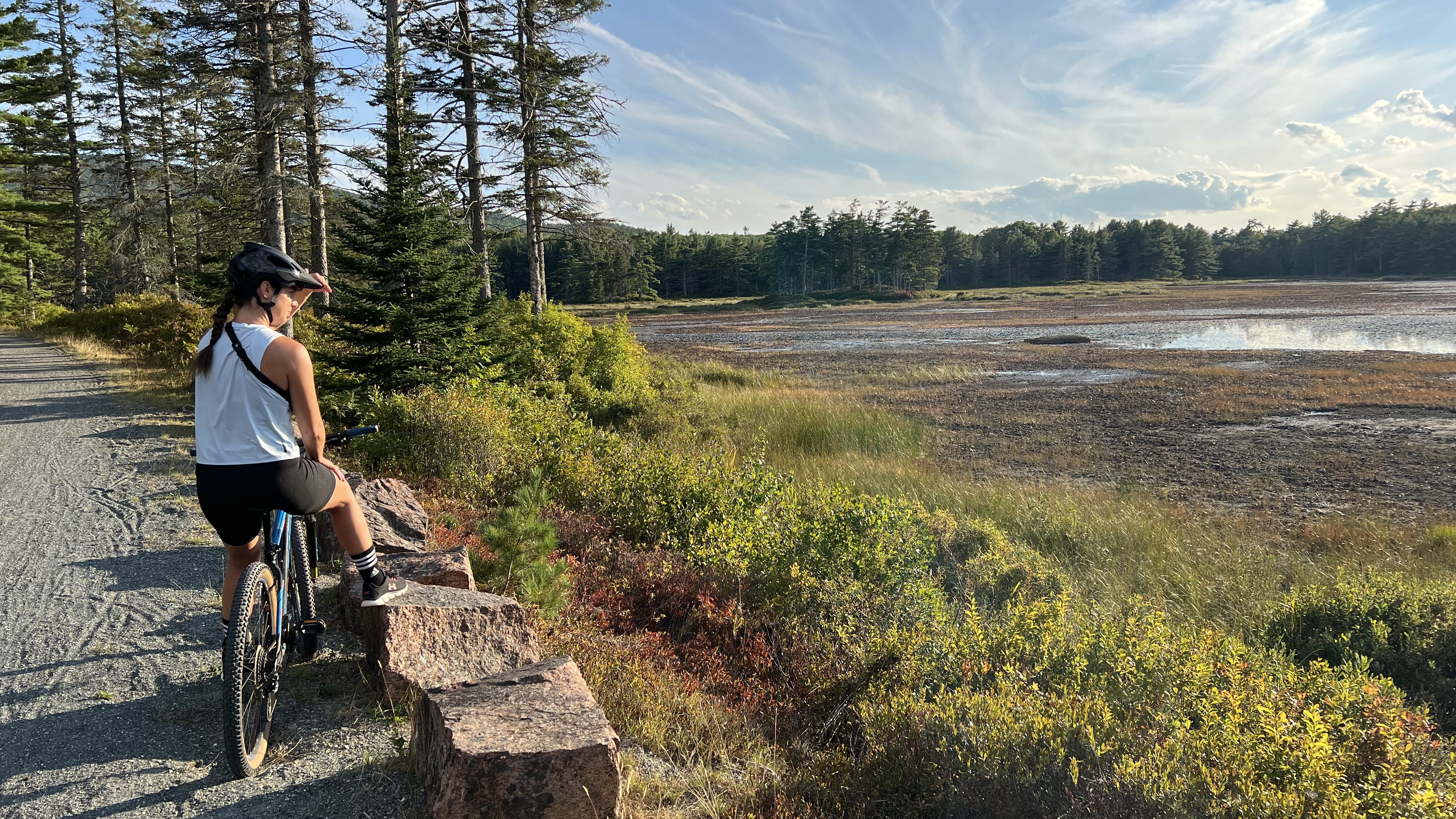
    The next day’s planned hike was quickly forgotten and instead we decided to take a very leisurely bicycle ride on carriage road, where we gave our bodies some well deserved rest, but also kept ourselves moving to keep the streak going.
    The Particularity of Our Campground

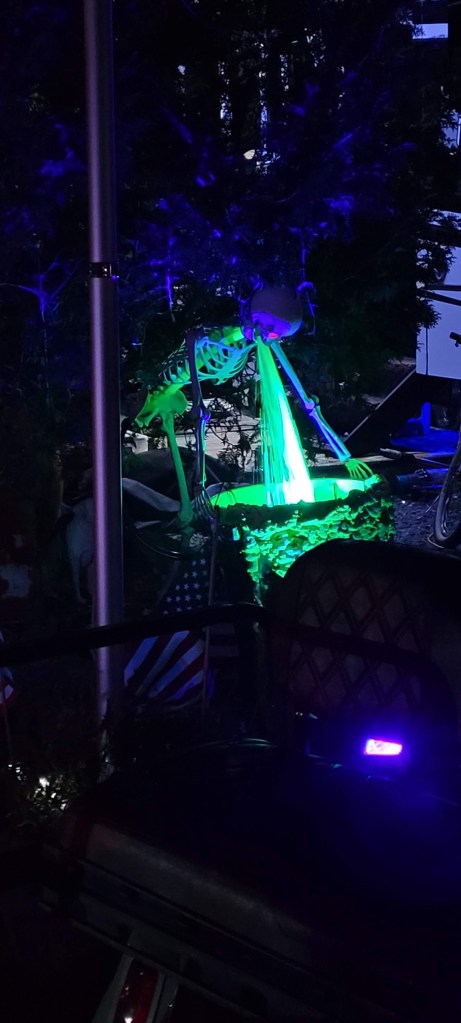
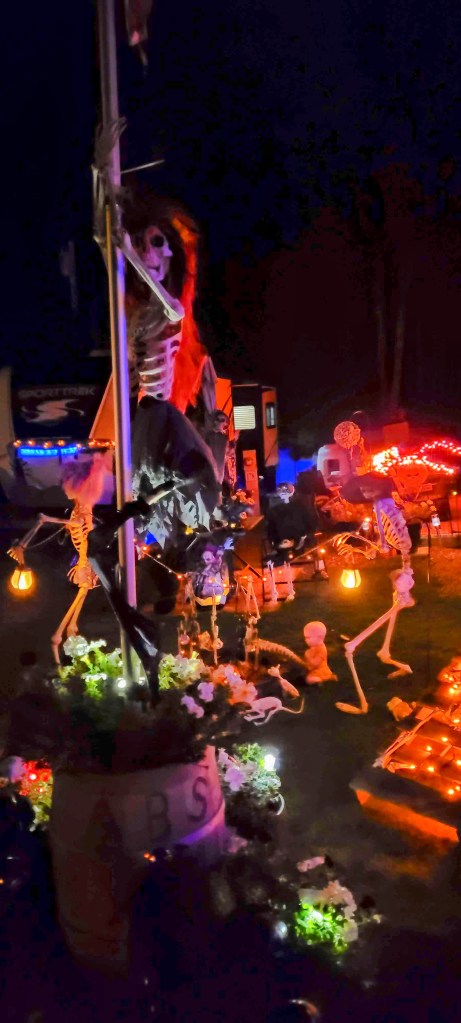
    One thing we quickly learned about campgrounds in Maine is that the calendar runs a little differently—especially when it comes to Halloween. Apparently, Halloween happens in September. Not officially, of course, but in practice. And honestly? As a super-fan of anything spooky, eerie, pumpkin-themed, or glow-in-the-dark, it felt like a cosmic gift.

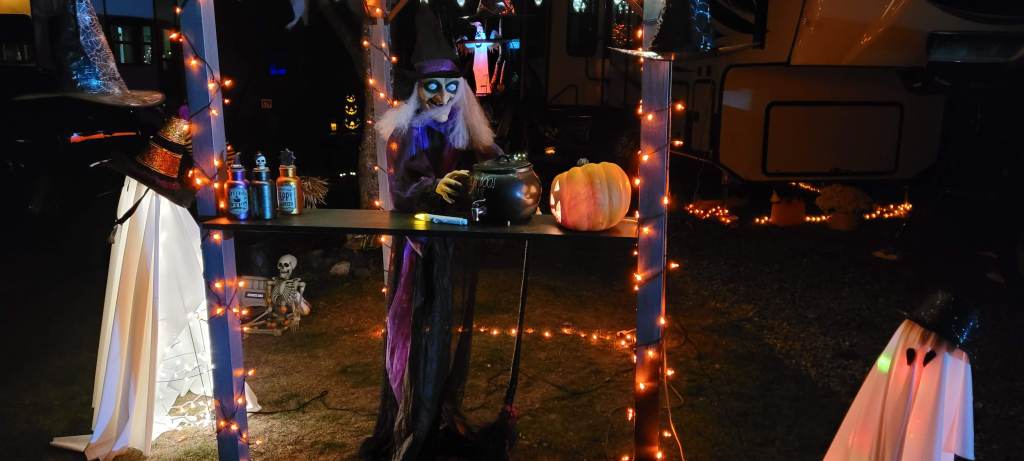
    The first clue was subtle: a few pumpkin lights strung around a camper, a witch’s hat perched suspiciously on a picnic table. At first, I thought people were simply getting an early start. But then the decorations ramped up—fast. Campsites transformed into full-blown Halloween displays overnight. Motion-activated skeletons jerked to life as we walked past, their red eyes glowing like something out of a low-budget horror film. Ghosts swayed in the trees. A fog machine hissed to life in the evenings, rolling smoky tendrils across the gravel like a scene from a haunted carnival.

    By the second night, it became clear this wasn’t just enthusiastic decorating—it was a tradition. Entire families returned each year specifically for “Campground Halloween,” a weekend of spooky lights, potlucks, costume parades, and friendly attempts to outdo each other. And honestly? It was magical. Something about being surrounded by twinkling lights, cackling animatronics, and grown adults who take their skeleton displays very seriously made the whole place feel like a cozy, festive micro-universe.
    Maine Hospitality Comes in a Bowl of Mussels

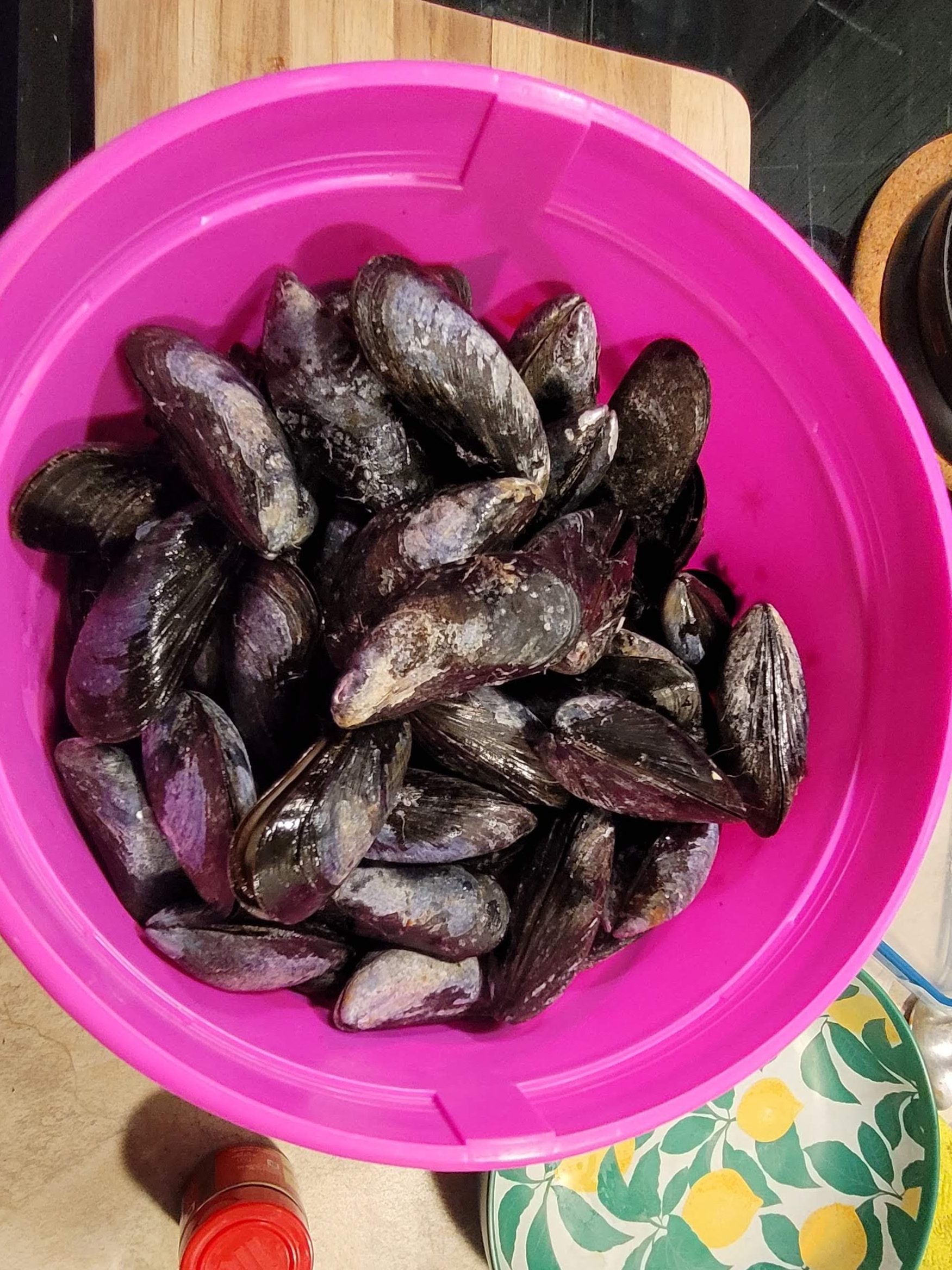
    On our final evening, the universe handed us yet another surprise—this time in the form of food. One of our neighbors, who had been out fishing the day before, knocked on our door holding a bucket the size of a kid’s Halloween candy pail. Inside: mussels. A lot of mussels. Apparently, he had caught far more than he and his family could eat and figured we might be up for a fresh seafood feast.

    Cue me speed-scrolling through Pinterest for a recipe while trying to remember what pots we actually had with us. Remember a few chapters back when I mentioned that we packed minimally? Well, that included bringing only three out of our four pots and pans. Thankfully, one of them happened to be the biggest pot we owned, and it just—just—fit enough mussels for two people.

    The cooking process turned out to be wonderfully simple: clean, steam, and serve. I melted an embarrassing amount of butter, added garlic (for culinary confidence), and crossed my fingers. In minutes, the shells opened, releasing that salty, ocean-fresh aroma that instantly makes you feel like you’re doing something right.

    We sat outside at our little campsite table, surrounded by the glow of Halloween lights and the faint echo of a distant fog machine, digging into a bowl of mussels that tasted like pure East Coast charm. Chris slowly acquired the taste—hesitant at first, then increasingly enthusiastic as he realized dipping anything into butter and garlic is practically cheating.

    By the end, we were full, happy, and deeply grateful. Not just for the food, but for the generosity of strangers and the small, unexpected moments that make travel feel less like being on the road and more like being part of a community.
    Little Motorcycle Rides in Maine

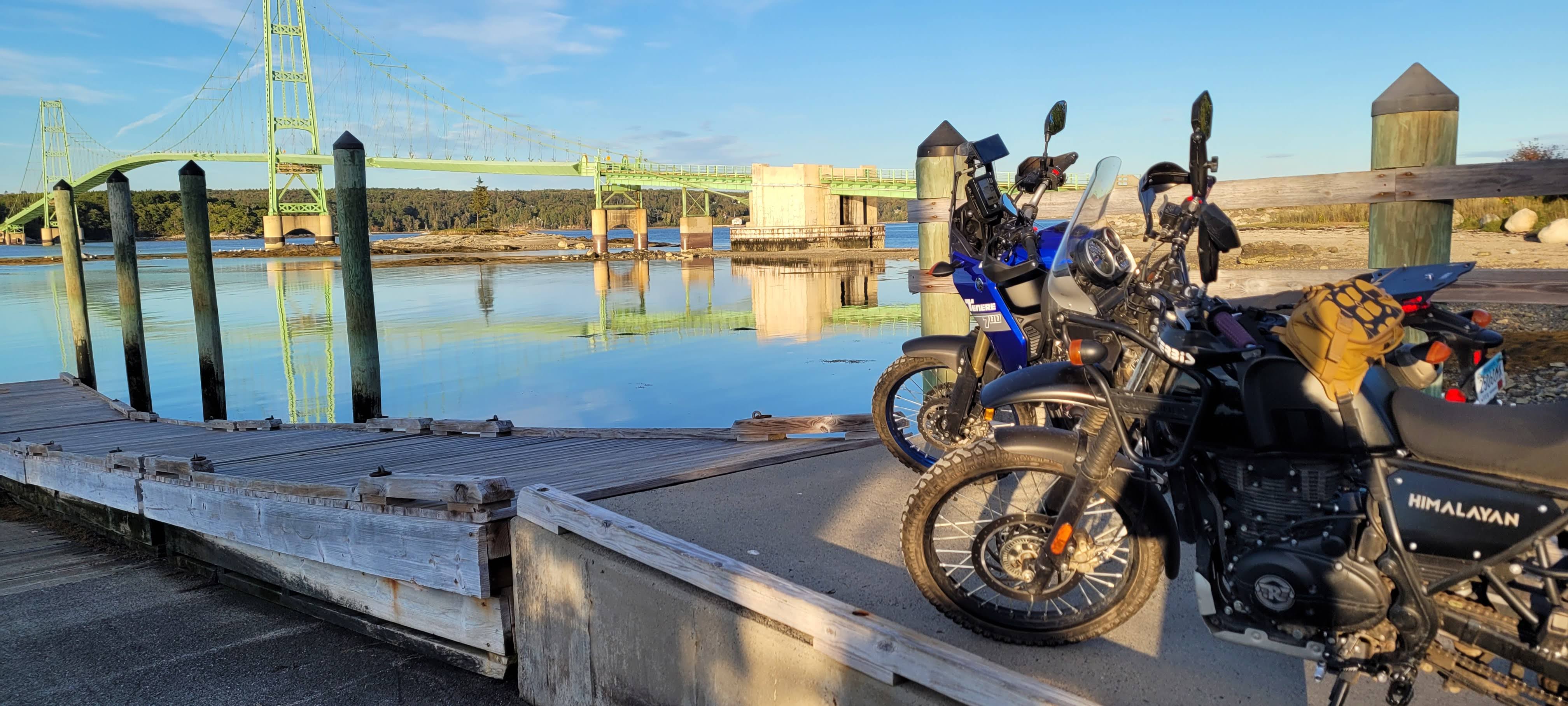
    During our three-week stay, we didn’t end up venturing onto any off-road trails with the bikes—something we usually chase whenever we’re in a new region. But honestly, the paved routes around Acadia National Park, the Schoodic Peninsula, and even Deer Island had their own kind of magic. Sometimes a calm ride is exactly what the moment calls for.

    Riding through Acadia National Park feels like gliding through a moving postcard. The Park Loop Road twists along rugged cliffs and dips into stretches of dense forest where the scent of pine becomes almost heady. Every few miles the trees open up to reveal glittering blue ocean, granite ledges, and distant islands that look like they’re floating. Even at lower speeds, the road’s gentle curves give that satisfying lean that makes a motorcycle feel like the perfect way to experience the landscape. There’s a peaceful rhythm to it—uphill, coastal view, downhill, forest shade, repeat.

    The Schoodic Peninsula was a completely different vibe—quieter, moodier, and more remote. The roads here are wide and smooth, with long stretches where you hardly see another vehicle. It’s the part of Acadia that most people skip, which makes the ride feel like a secret you’ve stumbled upon. Black volcanic-looking rock lines the shoreline, waves constantly crashing against it. We stopped to enjoy the scenery and were greeted by grey seals in the distance. Just a small part of their heads were sticking out of the water. Their eyes followed our movements as we found a comfortable rock to sit on and quietly take in our surroundings. Riding with the sound of the waves in the background, and the salty mist occasionally brushing your face shield, made the whole loop feel cinematic. It’s a place where your mind slows down and your shoulders drop a little without you even noticing.

    Our favorite unexpected ride was Deer Island. The route takes you through small fishing towns, over bridges that hover above quiet inlets, and past clusters of weathered boats anchored close to shore. It’s the kind of ride where you follow the road simply because it’s beautiful, not because there’s a particular destination waiting at the end. The island itself has a slower heartbeat—calm roads, gentle hills, and scenery that feels untouched. No rush. No noise. Just the hum of the engine and the soft roll of the Atlantic in the background.
    Even without the thrill of off-roading, those weeks of riding were memorable for their easy pace. Each route offered something a little different—ocean views, coastal cliffs, fishing villages, forests—but all of them shared the same quiet, grounding charm. Sometimes the best rides aren’t the most technical ones; they’re the ones that simply let you breathe, look around, and enjoy the place you’re in.

    And just like that, our stay in Maine came to an end. Between marathon hikes, coastal motorcycle rides, and unexpected seafood feasts, it’s safe to say the state kept us well-entertained. Tired… but entertained.

    But the road doesn’t slow down for long. With the Bus hitched and the bikes strapped in, we’re pointing our compass toward Pennsylvania next—ready to trade ocean views for forest trails and ride the Backcountry Discovery Route loop we’ve been eyeing for months.

    New terrain. New stories. Same two wandering souls.

  • Unexpected Offerings To The Border Gods

    Unexpected Offerings To The Border Gods

    Our final evening in Pictou crept in quietly, the kind of soft Maritime dusk that makes everything feel a little nostalgic. 

    We’d spent the last weeks slowly settling into this campground. Learning its rhythms, its people, and that signature sulfured salty breeze.

    It was during one of those weeks that we met Kathy and Rob, our next-door neighbors who rumbled into their site with the kind of entrance you feel before you see it. 

    One moment the campground was peaceful; the next, the ground trembled like a small, polite earthquake. We peeked out the window and there it was: their massive semi-truck cab towing their fifth-wheel. It looked like something capable of hauling a mountain.

    Over the days that followed, we got to know them. Two warm, seasoned travelers with endless stories. Rob, a retired long-haul truck driver, let us climb into the cab one afternoon.

    The cockpit was a sea of switches, screens, and dials that looked honestly as complex as that of an airplane. He walked us through them with the ease of someone who had crossed countries more times than most people cross intersections. At their picnic table, he shared the gold we didn’t know we needed: border-crossing advice. What to declare, what to toss, what could cause delays. By the time we were finished, Kathy had relieved us of most of our fruits and veggies, saving us from an unexpected audience with customs officers (or so we thought).

    Morning came quickly. Our last one in Nova Scotia. The Bus all packed up, we were mentally prepared for the next chapter of our travels as we headed toward Maine. 

    The weather was calm, the kind of steady that lulls you into thinking maybe today will be smooth. Mistake.

    Just as we fired up the truck and started pulling out of the site, Chris decided to check the tire pressure “one last time.” Wouldn’t you know it: The head of a nail was sticking out of one of the tires. Perfect. Exactly the type of suspenseful plot twist we love to experience right before a long drive ahead. 

    Since when had it been there? Who knows. And because one problem is never lonely, two of the trailer tires looked a little low as well. Fantastic.

    Before leaving the campground, we stopped by the main office to say goodbye to Cameron—our unofficial “8th wonder of the world.” His red truck was parked out front, and he was as reliably present as he had been during our stay. To us, Cameron had become the heartbeat of the place, the kind of person who greets you like an old friend within minutes of meeting. His hospitality set a new benchmark for campgrounds everywhere. We joke now about the “Cameron Meter of Hospitality” we carry with us. Spoiler alert: So far no other campground host has even come close.

    Once we finally hit the highway, we made it as far as the town of Au Lac, New Brunswick before deciding to top up the tires. A big truck stop appeared on the left, and we naturally assumed the next exit curved that way. It did not. The highway looped in the opposite direction, sending us down a cloverleaf detour while Rascal Flatts shouted “Life is a Highway” through the speakers like it was mocking our choices. Ten bonus minutes added to the side quest before we found our way back.

    At the gas station, Chris pulled up beside the air pump. A universal confidence-draining machine that transforms fully functioning adults into confused teenagers. No two pumps are ever the same, and this one had mystery energy. I watched from the passenger seat as he fiddled with the controls, then noticed a man approaching him. They talked briefly—lips moving, gestures evident—and then the man ran off. Just sprinted away. Okay then.

    Moments later he returned carrying a big red Milwaukee box like a hero in the final act of a movie. 

    Curiosity won, so I hopped out and walked around. Turns out his name was André, and he was not only incredibly kind, but also a Milwaukee super fan. He had the most impressive portable air compressor we’d ever seen. With pride, he demonstrated how it worked, walking us through its features like a brand ambassador. No jokes—if Milwaukee ever stumbles across this story, they should find André immediately and hire him on the spot. He even proudly wore a Milwaukee baseball cap, I’m not even exaggerating.

    (And yes, that exact air pump has been sitting in our online shopping cart ever since. Still waiting for it to go on sale.)

    How to Successfully Import Your Motorcycle… but Have Your Potatoes Confiscated

    Because honestly, what travel story ever goes exactly the way you imagine?

    After a few hours on the road, we began approaching the border crossing into Maine. That’s always when your brain decides to play “Did we forget something?” on repeat. We pulled our passports out, double-checked our paperwork, and eased into the lineup. Thankfully it was Labor Day, which meant the crossing was steady but not chaotic.

    We rolled up to the tiny booth, handed over our documents, and answered the first question:
    “Anything to declare?”

    I reply, “Yes! My motorcycle, which needs to be imported.”
    So far, so good.

    Then came the second question:
    “Any food in the vehicle?”

    I confidently listed the easy items: Three bananas… a grapefruit…
    And then my mind went entirely blank.
    What do we have? Where did it come from? What even counts as food at this point?

    The agent gave a small, polite smile, waved us through, and told us to park and head into the customs building for a secondary check. Perfect. Because this day needed additional suspense to spice up a border crossing.

    Inside, we were greeted by a very kind officer who began the Great Food Review of 2025. We told him we’d given most of our produce away before leaving the campground, but weren’t certain what technically needed to be declared. With saint-like patience, he pulled out a printed checklist and began running through it with the gravitas of someone about to reveal whether we could keep our snacks.

    Citrus? Not allowed.
    Okay, goodbye lone grapefruit.
    Bananas? Surprisingly fine.
    Potatoes?
    Ah. Trouble.

    Potatoes from PEI were a no-go because of soil concerns. I informed him that ours came from a grocery store in Nova Scotia but had no idea where they were originally grown. “Not a problem, he said.  I’ll inspect them.” (Which is not a sentence I thought I’d ever hear at a border crossing.)

    Frozen meat? Approved.
    We started to relax.

    Then he asked the question that froze my soul:
    “Are you transporting any live plants?”

    Anything but that.

    We were.
    I had my little basil plant and more importantly my pothos. The very first plant I got when I moved to the United States. A plant with memories. A plant with personality. A plant I had successfully kept alive through multiple moves, a bus conversion, and my own questionable watering schedule. This was not just a plant; this was a green, leafy emotional support companion.

    Chris saw my expression crumble and jumped in, asking if there were any workarounds—any permit, any exception, any universe where my plants could stay with me. But unless I had proof they originally came from the U.S., there was no option. Soil and pests are a serious deal.

    Then, in a moment of pure plant-parent desperation, I asked,
    “Will the plants be… rehoused? Taken care of?”
    (Yes, I realize they are plants. But also: they are my plants.)

    The agent hesitated—clearly weighing how to give an honest answer without making me cry in the lobby—and I followed his gaze to a large dumpster behind him.
    Oh no.
    No no no.

    While the plant-confiscation mission was underway, the motorcycle importation process shifted gears. Literally. The importation agent asked me to bring him inside the camper so he could inspect the compliance stickers directly on my bike. As we stepped inside, we crossed paths with the food-inspection agent, who was now half-buried in our fridge, making sure everything left on board was approved for entry into the U.S.

    Without looking up he asked, “Where are the potatoes stored?”
    Top left cabinet, I pointed.
    He opened it, pulled out the bag, and confirmed the verdict: they were indeed from PEI. Into the confiscation bag they went, their fate sealed.

    Meanwhile, the motorcycle inspection continued. A few minutes passed as the importation agent crouched beside the bike, locating each required sticker and checking off his list. Once everything was verified, he looked around the space, and broke into a grin.

    “This is a really nice trailer,” he said. “Is it new?”

    And just like that, I started explaining that no, it definitely wasn’t new, and launched into the origin story of our renovations. Floors, paint, cabinets, the chaos and triumphs of converting a fifth-wheel into our home on wheels. Before long, I’m sharing our blog with him, giving a quick tour of the “before and afters,” turning the border-inspection moment into an unexpected mini open-house.
    Back into the customs office, he stamped each page with slow, satisfying precision.
    THUMP.
    Next page.
    THUMP.
    It was the kind of bureaucratic rhythm that feels weirdly reassuring. Like yes, this is happening, this is official.

    By the time we were done, the motorcycle was successfully imported, our bananas survived, and everything else—grapefruit, potatoes, and my beloved plants—had been claimed by the border gods.

    Not quite the seamless crossing we’d imagined… But definitely one we’ll never forget.

    Welcome to Maine

    Off we went, back into the States and heading toward our next temporary home in Ellsworth, Maine. We chose this destination as we had wanted to explore Acadia National Park properly. We’d driven briefly through Maine and we’d promised ourselves that we would come back to hike it one day. That day had finally arrived.

    We chose Timberland Acres RV Park for one very strategic reason: proximity. It was close enough to several trailheads without plunging us into the busy and overly touristy atmosphere of Bar Harbor. When we pulled in, the size of the campground struck us immediately. Rows of rigs stretched in every direction, almost like a small movable city. Fortunately, our site was tucked in front of a set of trees, offering a little pocket of shade that softened the midday heat. It was a small detail but it made settling in much more comfortable.

    Once we settled, I drove to the main visitor center at Acadia National Park to get our entrance pass. What started as an in and out transaction, quickly turned into a travel-changing purchase when we acquired the America the Beautiful annual pass. With how often we planned to visit national parks, it felt like the smartest choice for the year ahead.

    The visitor center was about thirty minutes from the campground, and a quick look at the park map showed that several trailheads were nearby. Between the official map and the AllTrails app, I started planning our daily mini adventures. Chris finishes work around 4:30, so we still had a couple of hours of daylight each day to squeeze in a short hike. The challenge was finding routes that would not overwhelm me. My fitness level lags behind Chris’, so I was searching for routes that were beautiful but manageable. I figured if we did a small hike every evening, I would unlock a new level of cardio in no time.

    Of course, our first attempt did not go according to plan. AllTrails indicated the trailhead was in a specific spot, but when we arrived there was no parking area and no clear indication that it was an official start. We drove a little farther and found a designated parking lot, but it belonged to a completely different route. We abandoned our original plan and chose a safer option near Eagle lake. The loop was mostly flat and slightly rocky. It was not strenuous and offered beautiful views. 

    We quickly learned it is a multi use path that is also popular with gravel cyclists, something that we would definitely use on future visits.

    By the end of our three weeks, we had completed an impressive amount of hiking. We reached nineteen of Acadia’s thirty-two peaks and logged just over forty miles. Not bad for a mix of weekend and after-work adventures.

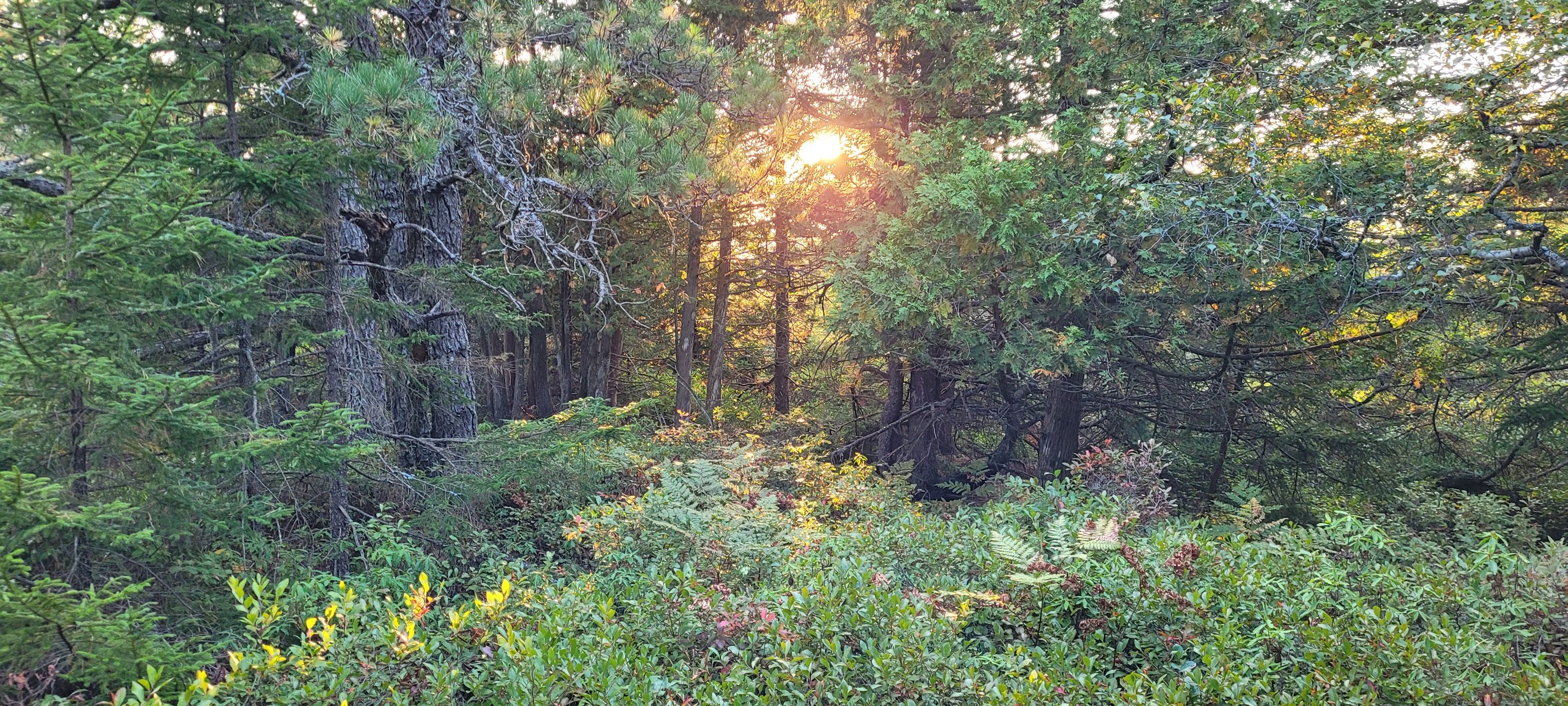
    What truly made the hikes unforgettable, however, were the forests themselves. Towering cedar trees lined many of the trails, their bark patterned like fingerprints, each one unique. Sunlight filtered through the dense canopy, casting shifting patterns of light and shadow on the forest floor. The air smelled faintly of pine and damp earth, a crisp, clean scent that seemed to slow time as we walked. Alongside, the cedars, maples, birches, and spruce added layers of color and texture, while patches of ferns, moss, and wildflowers created a soft, green carpet beneath our feet. It felt almost mystical; quiet and secluded except for the occasional bird call or the rustle of leaves in the wind. Walking among these noble giants, I finally understood the appeal of Tolkien’s lengthy forest descriptions in The Lord of the Rings. I used to scoff at the detail, but now I see it—these forests are magical enough to warrant every word. I should really give those chapters another read.

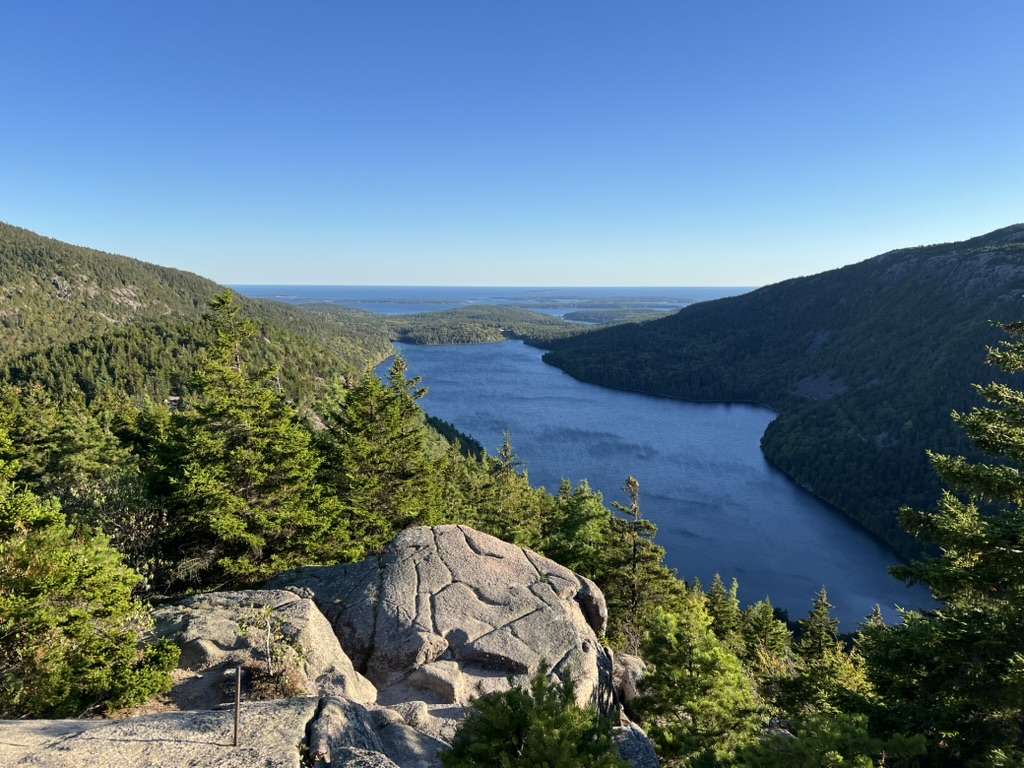
    At every peak, Chris and I took a moment to pause, sit, and enjoy a small snack, usually a peanut butter flavored Cliff Bar, while admiring the views around us. From those heights, we could see hidden harbors glinting in the sunlight, distant mountain tops layered in shades of green and blue, and on the evenings we hiked late, spectacular sunsets painted the sky in shades of pinks, oranges, and purples. 

    These pauses became a ritual, a way to mark our progress, soak in the scenery, and let the quiet majesty of Acadia sink in. The combination of challenging trails, lush forests, and breathtaking vistas made each hike not just an adventure, but a deeply immersive experience in one of the most beautiful corners of the East Coast.

    Acadia quickly became one of our favorite stops of this journey. The landscape is rugged, demanding, and rewarding, and we left knowing there was so much more still waiting for us to discover.

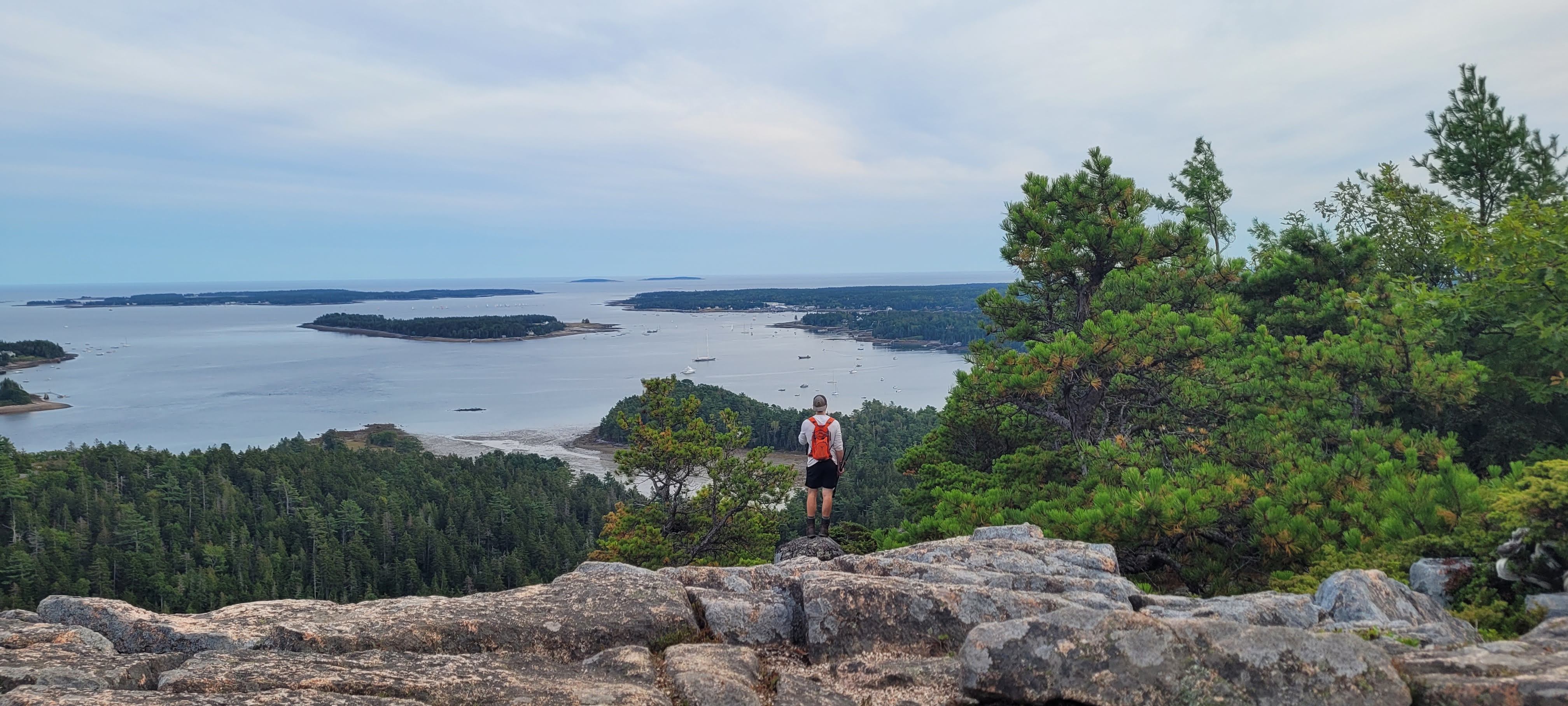
    Top of mountain Bald Peak in Acadia National Park

    There’s Always a Learning Curve

    Because we’d gotten used to filling up our water jugs at the local grocery store back in Nova Scotia—because of the slightly sulfuric smell of the campground water—we just assumed this would be the routine everywhere we parked. 

    So when we started running low on drinking water in Ellsworth, I headed to the main office to ask whether they had a fill station or if I needed to make a run to the local grocery store or big-box place.

    I walk in and find four women: Two working behind the counter and two who look like they’re mid-conversation. I’m expecting some local wisdom or at least a straightforward answer. Never.

    The minute I ask about getting drinking water, all four heads swivel toward me with the same expression you’d give someone who just asked where gravity comes from.

    “Do you have a site here?” the woman behind the desk asks, her brow furrowed.

    “Yah!” I say, smiling because I still think this is going somewhere helpful.

    “And you’re asking about getting drinking water?” she repeats.

    “Yah…” I say again, slower this time.

    “Are you in a tent site?” she presses.

    (Where is she going with this? Why is this so difficult?)

    “No, we’re in a camper. On site 202,” I answer.

    She leans slightly forward. “Do you have a sink in your camper?”

    “Yes?” I reply, now fully confused. Is she serious?

    Suddenly one of the other women jumps in, all warmth and Southern charm: “Oh, bless your heart! You want to know if the water is potable.” She places extra emphasis on “potable” as if that will solve everything. “Yes, you can drink the water right from your sink. Now, we drive home and fill up our jugs there because we prefer the taste of our well water. But you can absolutely drink it here!”

    Great. Now I get to explain that we actually don’t have a “home” to drive to because the Bus is our home. But the good news is that we can drink straight from the faucet—something that absolutely did not require the level of interrogation I just endured.

    As I walk back to the bus, shaking my head and laughing at the surreal exchange, I also remember that while I’m not American, I’ve lived here long enough to know that when someone begins a sentence with “Bless your heart,” it’s rarely as sweet as it sounds.

    I could handle nail-studded tires, miles of steep trails, and border agents with more patience than me. But asking a simple question about water? Apparently, that was my Everest. At least now I know: in RV life, it’s never the mountains you climb but it’s the tiny questions that leave you questioning your sanity.

  • Welcome to Lac Belanger

    Welcome to Lac Belanger

    The road has paused for a while. Two unhurried weeks stretch ahead of us. The cabin is stocked with a mountain of food and the promise of loud and happy conversations. The first night sets the tone: Glasses clinking, voices rising, and the cabin already echoing with the kind of overlapping chatter only my family can produce. As the sun dips toward the tree line before supper, Chris wanders out to the dock with his fly rod, savoring the quiet rippling of the water. His patience pays off with a modest triumph: A bass so small it barely bends the line, yet it’s enough to make him grin like he’s landed a trophy. 

    Much needed family time

    Being with my parents is never quiet; the air itself seems to hum with their forty-four years of lively sparring. They’re less like graceful dance partners and more like a bickering comedy duo—one part kitchen chaos, one part standup comedians. The night of the “pineapple incident” was peak performance.

    Dad, intent on mixing his legendary piña coladas, clanged through cupboards with theatrical urgency. Mom, already exasperated, barked from across the kitchen: “Check the top shelf!” Within seconds they were arguing over the mysterious whereabouts of a can of pineapple chunks.

    Chris and I were out on the deck, windows open, quietly listening as the volume climbed. Then the truth surfaced: the pineapple wasn’t even for the blender, just for the garnish. Mom’s voice sliced through the evening air, sharp enough to rattle the ice: “Is it just for decoration, Robert?!

    Later, Dad confessed half grin, half shrug that he’d left that little detail out on purpose. “If I’d said it was just for garnish, she wouldn’t have gone on the hunt,” he recounted, clearly delighted with the chaos he’d stirred. Chris and I burst out laughing, and we still laugh out loud every time we retell it, the echo of her outrage and his sly triumph replaying like our own sitcom rerun.

    Seeing my sister in person, after a year of nothing but phone calls and awkward time-zone math (for some reason, the 1 hour time zone difference was difficult to comprehend) and hugging without a screen between us made me realize how much I’d missed her. One hug and we were right back to our usual nonsense, trading inside jokes before our bags even hit the floor.

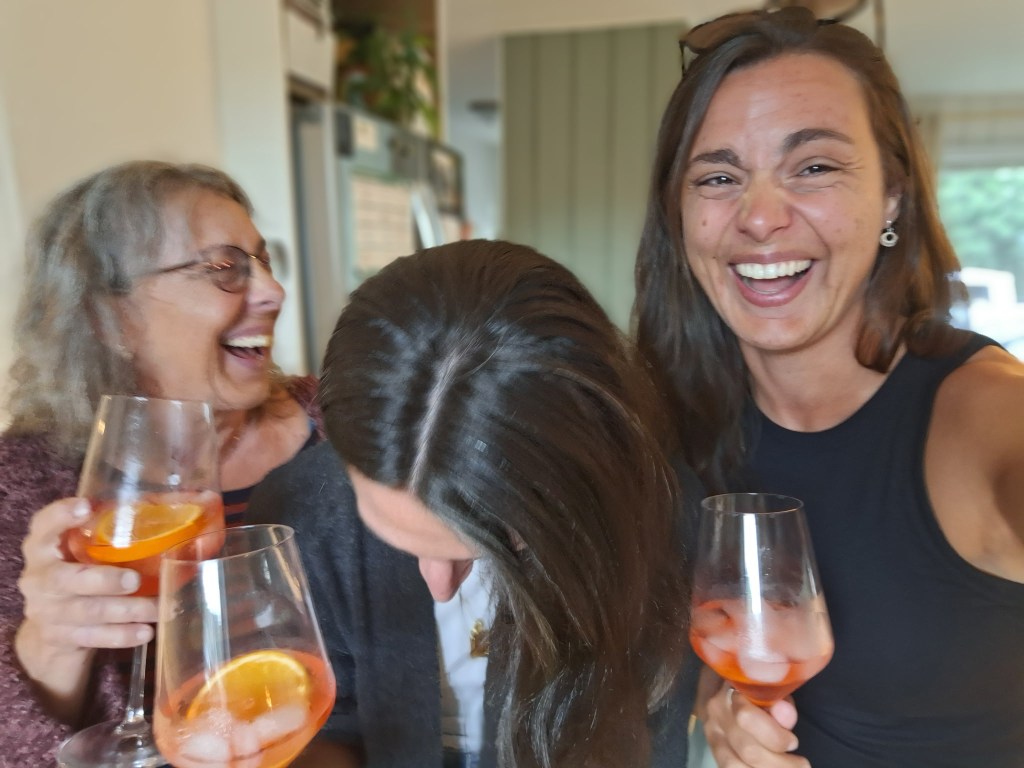
    We all gathered at their house, which she and her partner have remodeled into something out of a design magazine: clean lines, cozy corners, sunlight spilling across every room. We wasted no time popping open the Aperol and prosecco, clinking glasses of spritz that glowed like orange sunsets. The grill never got a break: skewers sizzling, vegetables charring, someone always sneaking “just one more” piece of bread off the cutting board.

    The night stretched into a happy blur of laughter, teasing, and “try this, it’s amazing” bites passed across the table. After a year apart and a big move across the border, it felt ridiculously good to be loud together again, the kind of family evening that leaves you sticky with citrus, full of food, and a little giddy from both the cocktails and the company.

    The Internet Debacle

    As peaceful as the lake is, a reliable connection is our lifeline. The afternoon’s to-do list includes pointing the dish and checking speeds in time for tomorrow’s work calls. The reality of setting up an internet connection at every stop demands quite the imagination. Finding a clear line for the satellite is less about technology and more about choreography, I soon discover. 

    Considering what the equipment cost, I certainly didn’t expect us to audition for a connectivity dance recital. Yet there was Chris, circling the property with his phone held out, app open, muttering about signal strength and north-facing skies. Every few feet he’d stop, squint at the treeline, and sigh. The challenge escalated when we realized that the sacred direction was a solid wall of pine. That’s when the creativity dial went to full MacGyver mode. I turned away for all of five seconds, maybe to swat a mosquito. When I looked back, Chris had vanished. 

    “Hello?” I called, scanning the yard as though he were a runaway toddler. “Over here!” came the faint reply, like a voice drifting from another dimension. 

    It finally dawned on me to look up. And there he was: Balanced on the slanted roof, cellphone still in hand, walking slow circles like some tech-obsessed moonwalker in his camo crocs. The scene was straight out of those early-2000s cell-service ads: “Can you hear me now?” I have no idea how he even got up there, no ladder in sight, just the stubborn determination of a man promised decent internet connection. 

    At that point I surrendered to the inevitable. Let the rooftop satellite whisperer chase his bars. I retreated to the cabin, finished the unpacking and hoped our next stops would have unobstructed views of the sky, or at least, a less acrobatic tech support department. 

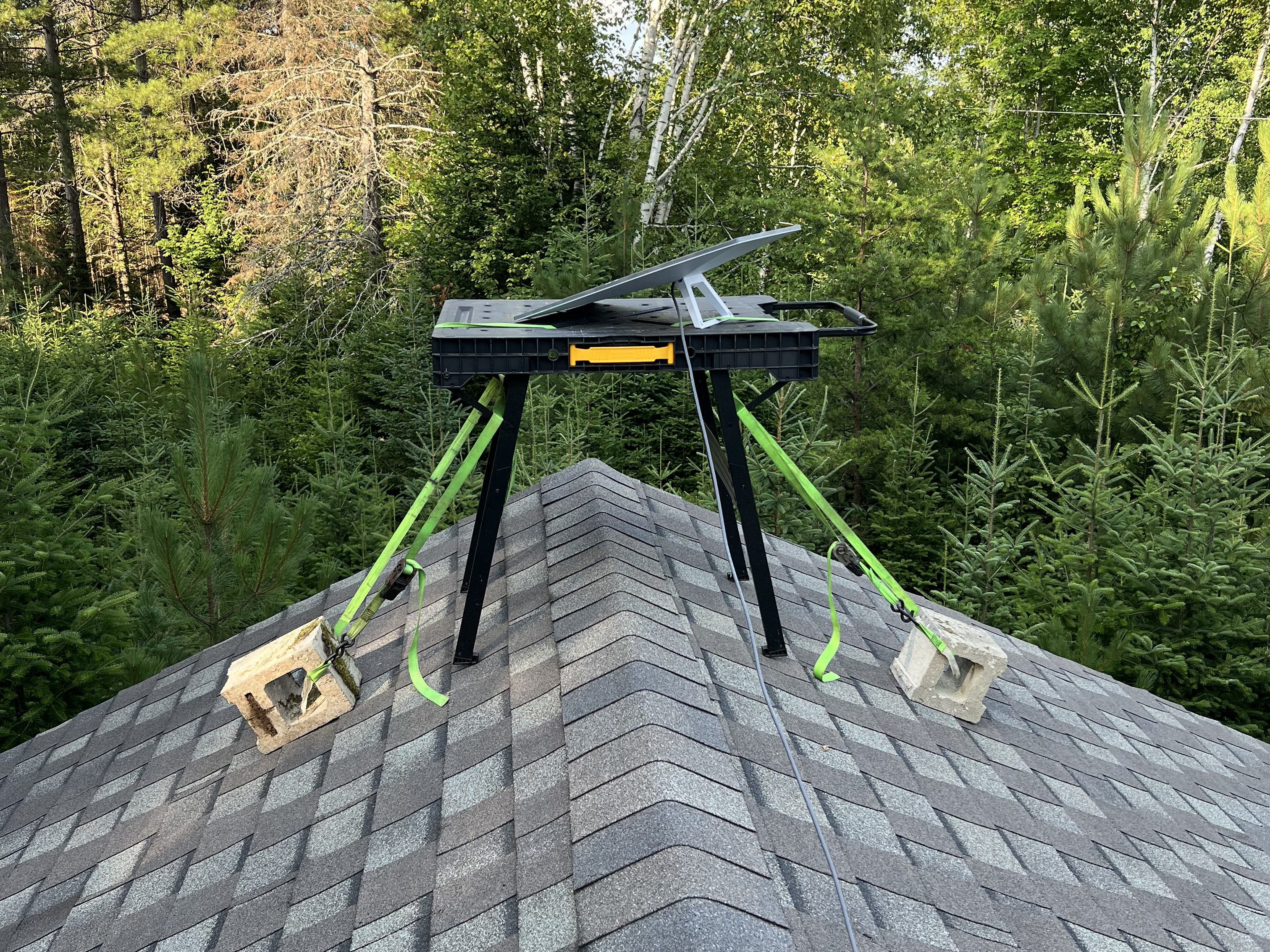
    A few hours later Chris comes back down and shares the accomplishment of having successfully set up the satellite internet. He had taken the foldable worktable, brought it up on the roof, had secured it with some green straps and cinder blocks. “Where did you even find those?” I ask. “Around.” is the answer I get. I nod, impressed. I retreat inside, marveling at how a simple need for Wi-Fi can turn a quiet lakeside day into an episode of Survivor. At this point, I’m convinced of two things: One, Chris has a mysterious talent for turning ordinary objects into engineering marvels; and two, I will never, ever, look at a satellite dish the same way again. 

    Mont-Tremblant Village 

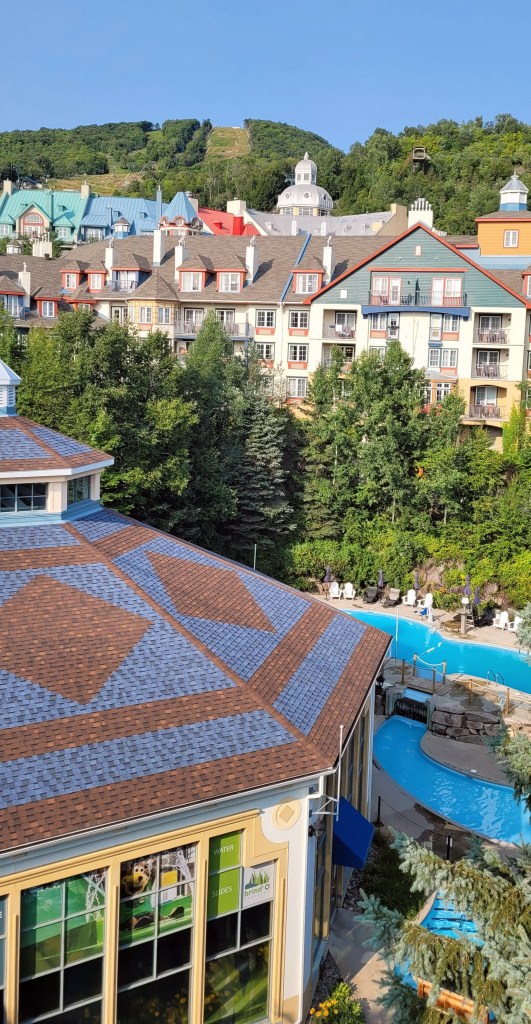
    Mont-Tremblant really does feel like someone air-mailed a snippet of a European mountain town to the Laurentian Mountains. The pedestrian village unfolds in a cheerful palette with its buildings dressed in bright reds, yellows, and blues, while cobblestone lanes wind uphill like something out of an alpine storybook. Boutiques spill light onto the walkways, restaurant patios hum with people, and every turn seems to frame a new postcard view. 

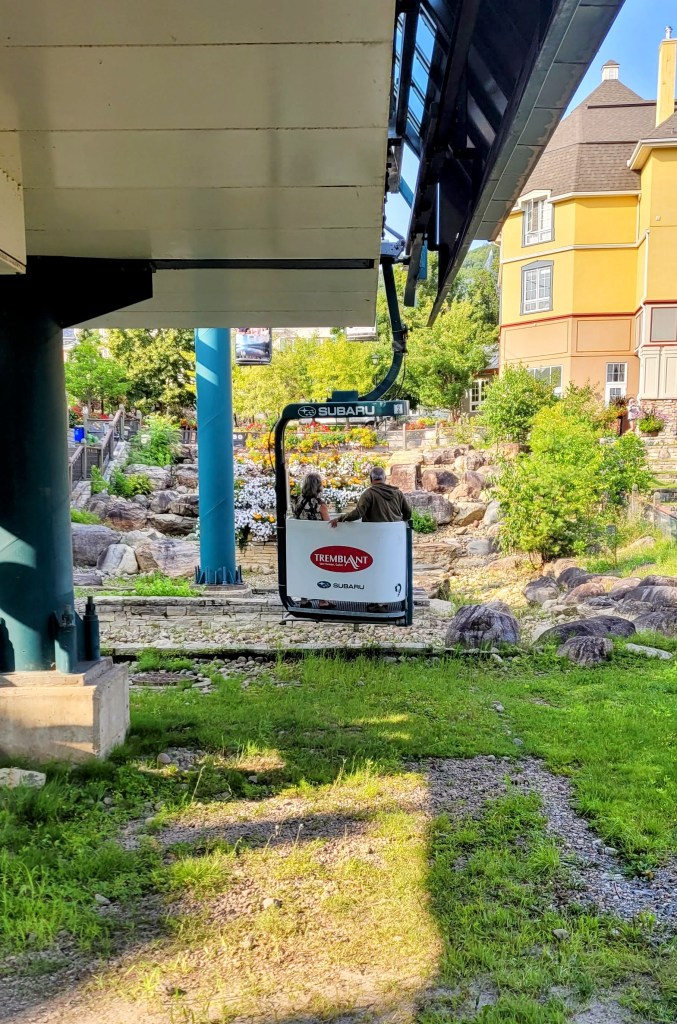
    From the lower plaza, you can hop on the Cabriolet, a free open-air gondola that glides slowly above the rooftops. As the breeze catches your hair, you’re lifted toward the base of the mountain itself. Looking up, and the summit stretches skyward 932 meters (about 3,058 feet for my American friends), its slopes etched with evergreens and ski runs. 

    In the years we’ve been together, Mont-Tremblant Village never made it onto my “must-show-Chris” list. I always assumed throngs of selfie sticks and souvenir shops would be an automatic nope for him, the kind of place he’d give a single glance to before retreating to the nearest quiet trailhead. 

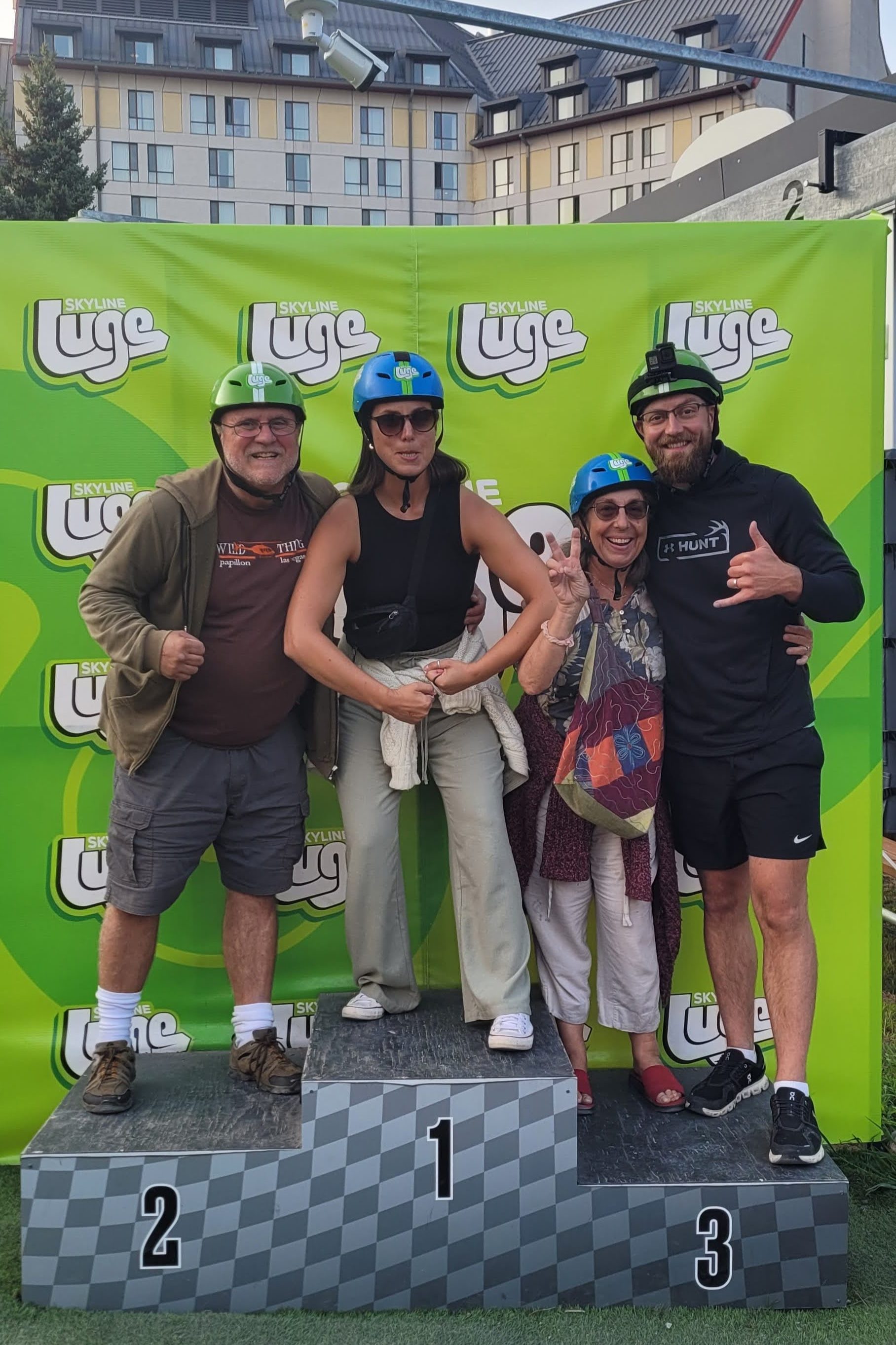
    The moment we rounded the corner and the Luge course came into view, my assumptions cracked. His eyes lit up, his shoulders straightened, his stride quickened and suddenly I was the one trying to keep up. The man who usually side-steps anything touristy was practically bouncing on his toes, scanning the track, already plotting which run would be fastest. 

    For those of you who don’t know, luging has two different definitions. On the one hand, it’s a scenic, fun-filled ride in a 3-wheeled sled that uses gravity and gives the rider full control. On the other hand, and as it pertains to my family, picture a pack of over-caffeinated sled dogs, launching themselves down the track as if a prize was waiting at the bottom, hollering for anyone ahead to move it!, while simultaneously plotting small acts of sabotage on each other. Every bend becomes an opportunity to run into one another’s bumpers and send the sleds fishtailing off the track. The only rule is: NO RULES. 

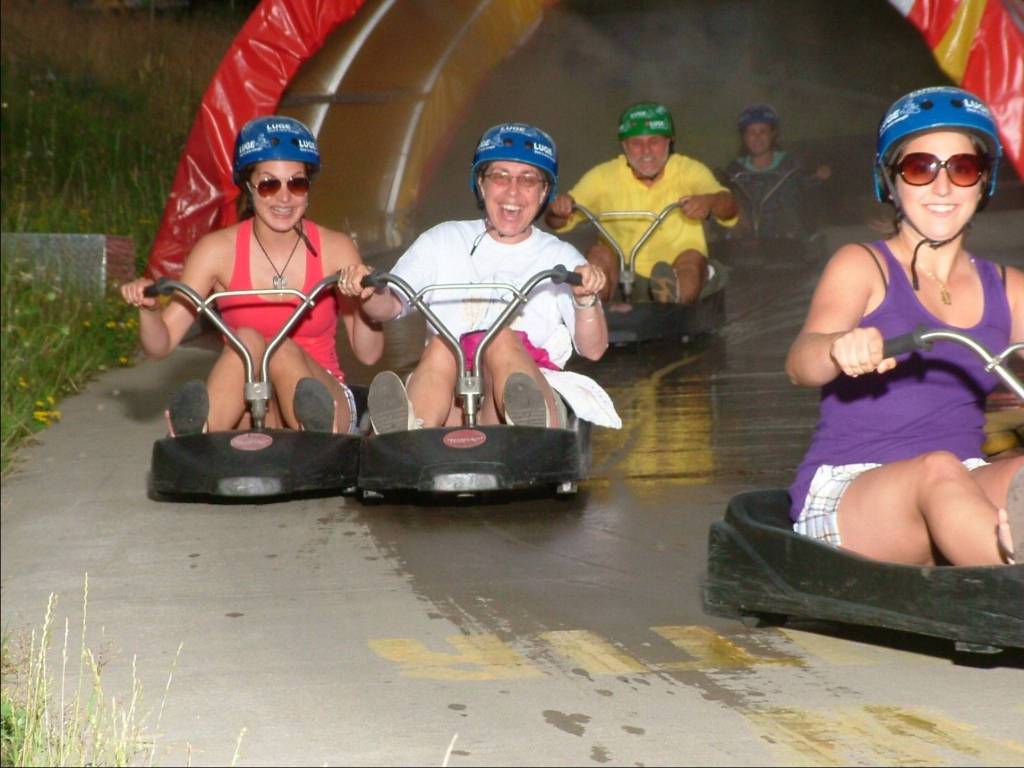
    Luging with my family circa 2006

    One summer, fifteen-year-old me discovered just how ruthless my own father could be. He gave a perfectly timed nudge that sent my luge skittering sideways with me skidding, arms windmilling, across a strip of gravel. The sound of fabric tearing met the crunch of stones under my palms. My jeans ripped open at the knee, the sting immediate. 

    And yet we howled with laughter. By the time we reached the bottom, tears of hilarity mixed with the grit on my face. We waved down the on-site paramedics, who dutifully cleaned my scraped knee while we recounted the epic move like it was a family legend in the making. 

    When I think of it, I can’t believe I’d never thought to bring Chris here to try this activity before! 

    Flying high in Mont-Tremblant 

    Two days after our first luge victory laps together, the craving for another adrenaline hit was impossible to ignore. We called Ziptrek Tremblant, snagged a reservation, and spent the rest of the day with that delicious, restless buzz that comes from knowing something wild is waiting. 

    Back in the picture-perfect village again, our inner daredevils quickly spot the office. With our nerves already humming, waivers are signed and harnesses are cinched. 

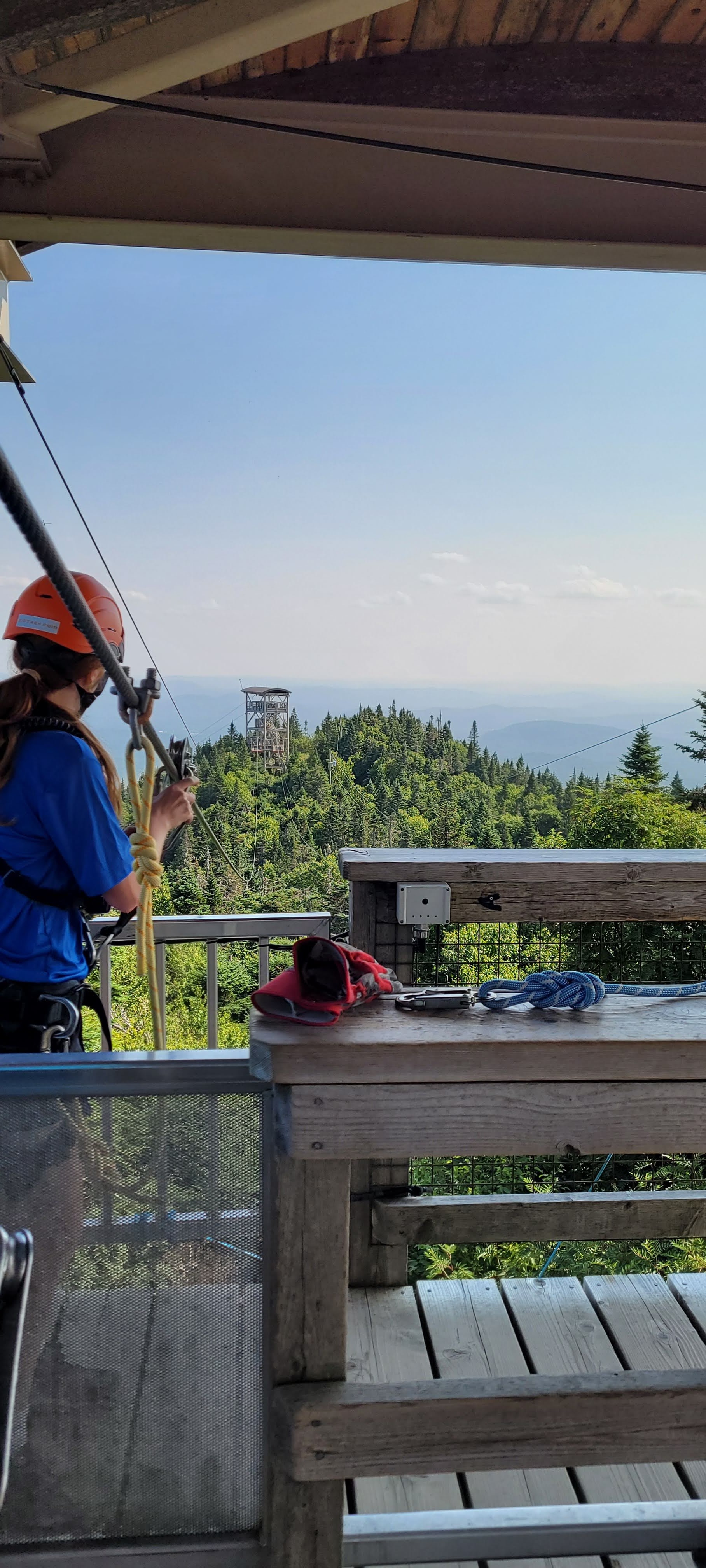
    The afternoon is clear and bright, perfect for a ride on the mountain’s Panoramic Gondola. This is basically a floating glass elevator that glides over the treetops, lifting you higher and higher until the village below is the size of a toy town. At the summit, the view is pure postcard. The layered mountain sides fade from dark to pale blue. It’s the kind of 360-degree view that makes you wonder if someone’s turned the saturation dial just for you. 

    The sense of calm quickly dissipates as the first leap up ahead has you questioning your life choices. A tiny metal gate opens. You step down two see-through stairs and launch. Gravity takes the reins and the wind roars in your ears as you twist over an ocean of evergreens. Two of the five lines stretch more than a kilometer—long enough to wonder if you packed a spare set of nerves. 

    Three hours later, after five zip lines and a surprisingly pleasant trail hike between runs, we coasted back into the village, hair thoroughly wind-styled and grins we couldn’t shake. If you’re after heart-in-your-throat thrills wrapped in jaw-dropping scenery, Ziptrek Tremblant is worth every Canadian dollar. 

    First Off-Road of the Season

    Our first off-road motorcycle adventure of the season took us into the Laurentians’ Réserve faunique Rouge-Matawin, and, I’ll admit, I was feeling a little nervous. My heart thumping, I eased onto the first stretch of gravel. The bikes crunched beneath us as we rolled into the wildlife reserve. Right out of the gate, I was questioning my confidence—what kind of terrain would greet us? 

    Turns out, it was everything a short day-trip should be: soft, rolling gravel roads, hills packed hard enough to give traction but still a little bounce, and a few rocky sections that demanded full attention and careful line choices.  

    motorcyclist overlooking stream on wood bridge

    A covered bridge arched overhead, like an old friend welcoming us to the dirt, and the forest opened up to glimpses of wild camping spots tucked in among the pines. Streams glittered in the sunlight, cutting across the track and offering the occasional playful tire splash. 

    By the time we headed back to our cabin, the nerves had melted into pure satisfaction. Short, sweet, and just the right mix of challenge and scenery, it reminded us exactly of why we chase these little adventures on two wheels. 

    After two weeks, the road pulled us onward again, the cabin shrinking in the rearview like a photograph you’re not ready to put away. Homecoming is sweet, but the horizon has its own pull as we continue to our next destination. 

  • Home Purgatory

    Home Purgatory

    Making our way back to the campground after what we considered a moderately successful soft launch around Northern Minnesota, it was time to pack up and head back home. Being that we’re still not used to loading up the camper, it still took us a couple of hours of disorganized scrambling. We should really think about having a written checklist to minimize the back and forth. 1

    “But wait, Julia!” You’re probably asking, “You said you had given your notice to the apartment and that you were living out of the Bus now. Where is this home you speak of?”  

    Let’s call this phase of the trip home purgatory. It’s where there are a few loose ends we need to tie up and certain additions we need to make to our setup before setting sail for real. So back to central Minnesota at Chris’ family lakefront lot we go. 

    For the second time, we load up our two motorcycles, double and triple check all the attachments, lock the doors and we’re ready to go. This time doubt doesn’t creep in, and this becomes THE MISTAKE. We’re overly confident in our skills too early in the game! We don’t check in the cargo area as much, thinking that everything is under control.  

    We discover the crime scene at the end of our 4-hour drive. Literally. We were 23 minutes away from our destination, when we realized that one of the straps holding my motorcycle had loosened and she had tipped and fallen onto Chris’ bike.  

    At this point I’m thinking there should be an entire segment on this blog about how my poor motorcycle has been mishandled by my inexperience and its ever-growing list of broken parts needing replacement. In this instance, the already partially broken front blinker came completely undone and looked eerily similar to an eye out of its socket. The right mirror became even more bent, rendering it completely useless in seeing anything behind me (the left mirror had already broken off earlier in the season when Chris tried using vice grips to fix its already bent angle).  

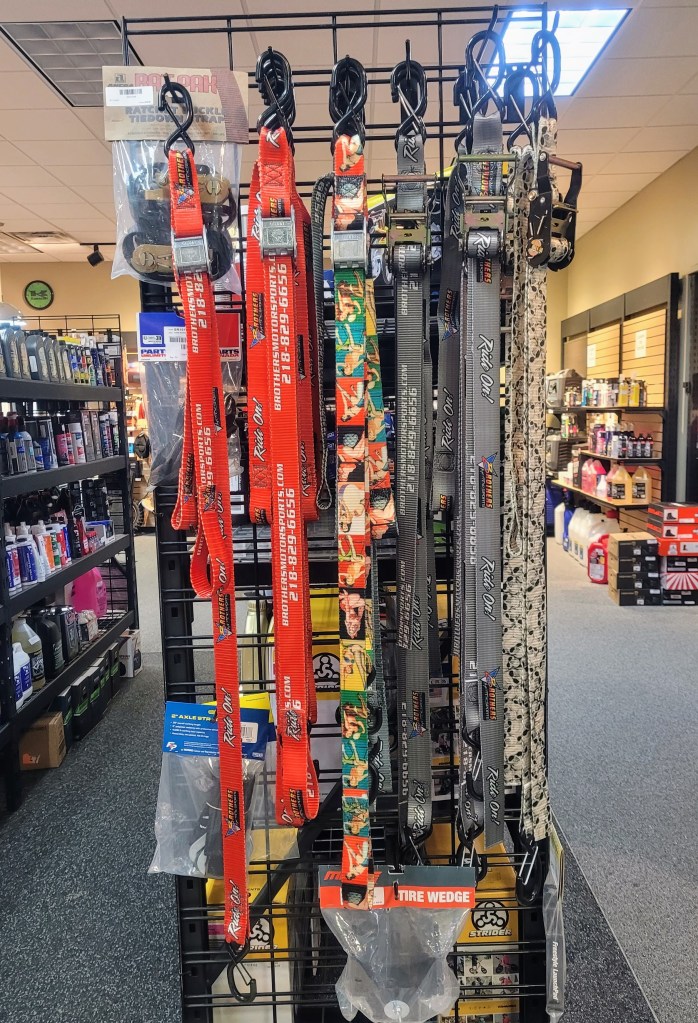
    I will also add that seeing my motorcycle leaning against Chris’ felt like a metaphor for our relationship. My husband is such a calm and dependable person while I have a chaotic personality and appreciate being able to lean on him for support in times of need. Truth be told it all seemed very poetic. But also horrifying, thinking that some of the narrower straps can get loose during transportation. This was a very clear sign from the universe that things can go wrong. It didn’t have catastrophic consequences yet, but if we didn’t change something, we might not be so lucky next time. Add “more straps” to the list of expenses. 

    Shout out to Brothers Motorsports for all the straps.

    Minnesota summer weather is on the unpredictable side. Before arriving at the lake there had been quite a bit of rainfall, making us wonder how difficult the grassy terrain was going to be to navigate without getting our wheels stuck. Just what we needed. Another source of anxiety as we drive around with the Bus. I can’t help but wonder if everyone who owns a trailer is driving around in a perpetual state of angst? No wonder the world has such a severe anxiety crisis.  

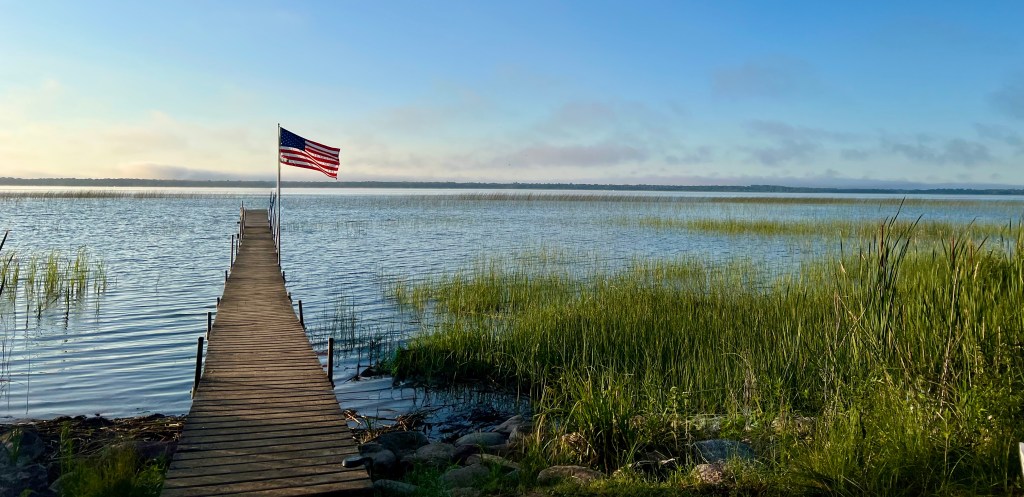
    As we were arriving right before the July 4th weekend, Chris’ uncle was already on site with his tractor to better assist us in placing the Bus in our selected spot with the least amount of damage possible. Worked like a charm! During our stay here, we woke up to the view of a calm lake. “This is something we could get used to,” we tell ourselves one morning while having coffee and looking out into the distance. 

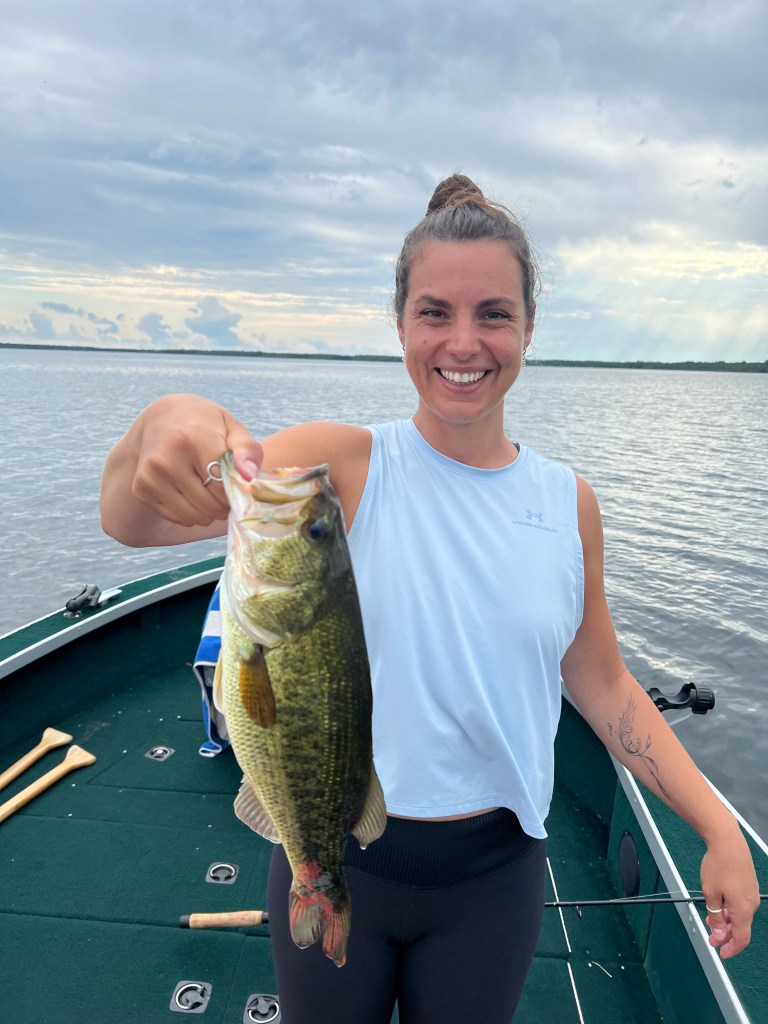
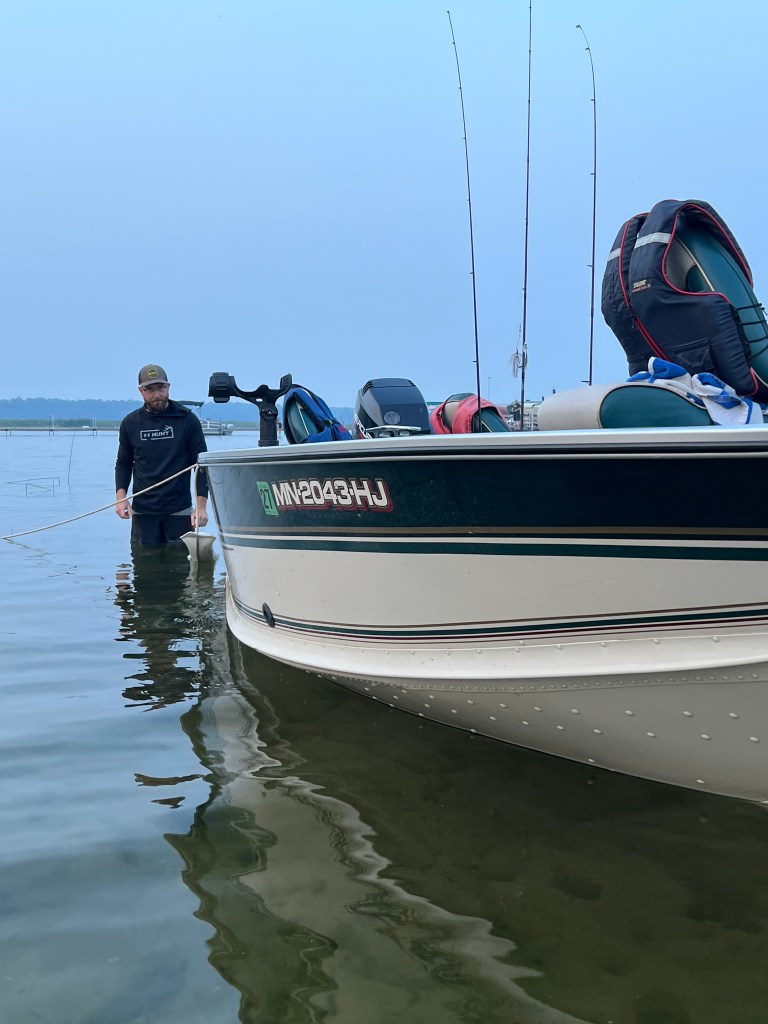
    What a phenomenal long weekend filled with family fun, boat rides, fishing excursions, floating around on the lake and making smores by the campfire. The weather was definitely on our side, as we found out just how hot a camper gets when being hit by the midday sun.  

    Side note: I grew up with Italian grandparents who believed that air conditioning or any form of draft on a person is the root cause of all illnesses (un colpo d’aria, commonly called in Italian). This, combined with the fact that none of my apartments before moving to the States had A/C have translated into a love-hate relationship with the buttons on the thermostat. Although, I’ve been known to secretly turn on the A/C in the truck when no one is around and basking in the relief that the cool air provides. Deep shame follows for letting down my ancestors, who are probably yelling about how I’m going to catch a cold or a pneumonia breathing in the processed air. Yes, I know this is not how catching a cold works. But the old European ways hold a tight grip on me. 

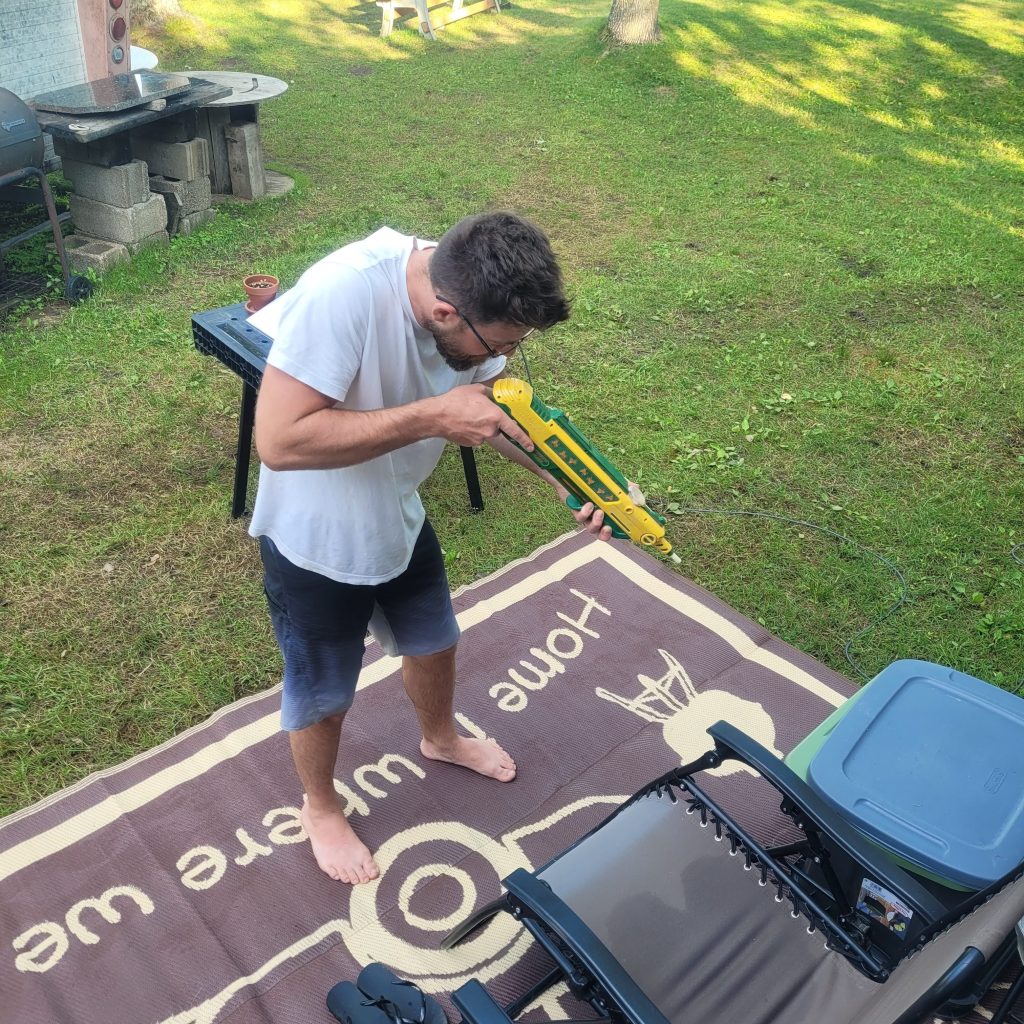
    In order to keep the air flowing in the Bus during the hot summer days, one must develop techniques to remain comfortable. Keeping the back door of the toy hauler open is the most effective. However, this leaves a gaping hole that exposes us to every insect with wings becoming interested in visiting the inside of our space. The subtle sound of buzzing wings quickly activates Chris’ primal hunter instincts. His initial weapon of choice was a rubber band. Because who owns a fly swatter under the age of 45? After a few days of having to duck and cover to avoid the wild rubber band hitting me in the forehead, I expressed my concern over this erratic behavior to a friend. 

    She, who has been married a good deal longer than I have, clearly holds secret survival strategies I’ve yet to discover. Today’s gem: the perfect fix for my fly-swatting misery. She casually pulls a salt gun from her garage (basically a shotgun for flies) and hands it over like it’s the most normal gift in the world. I can’t decide if this is peak practicality or peak comedy, but either way, the flies don’t stand a chance.  

    When I get home and give the salt gun to Chris, his face completely lights up. His inner child had been awakened, and I couldn’t have expected a more luminous smile. It all escalated so quickly from there: Commando style, war paint, helicopters, explosions. Death surrounds us and he feels a pang of delight for the carnage that unfolds as he shoots down these winged intruders. Like a wild child playing space invaders, he has that crazed look in his eye and I express exasperation over the ungodly number of carcasses left to be disposed of in such a small living quarter.  

    To clarify, when we bought the Bus a bug screen was already installed, but we didn’t like the old “zipper-vinyl-roll up-mesh” system. We ordered a retractable rear screen door and the arrival date was right before our departure date. We were required to send in the exact measurements with no refund possible should the installation not work. We hoped that our previous experience with measuring twice and cutting three times didn’t happen. Way to live on the edge. 

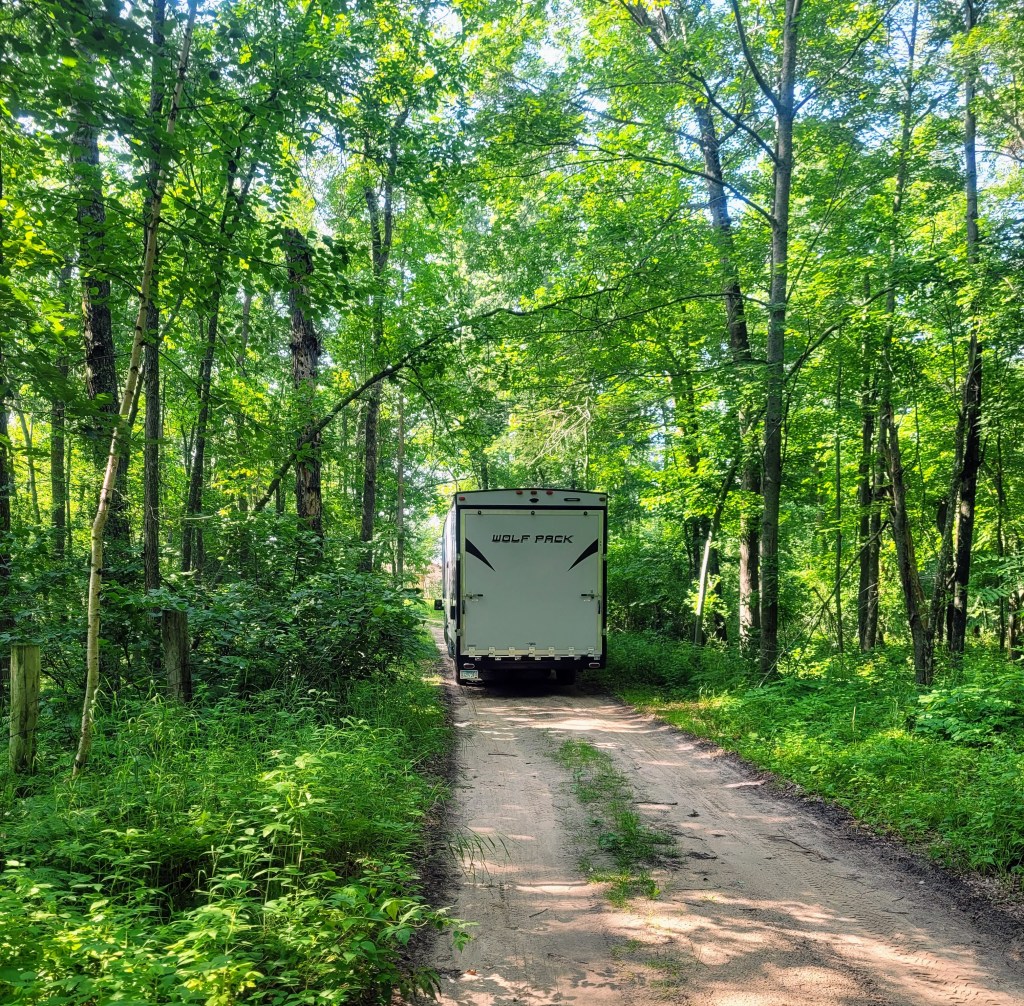
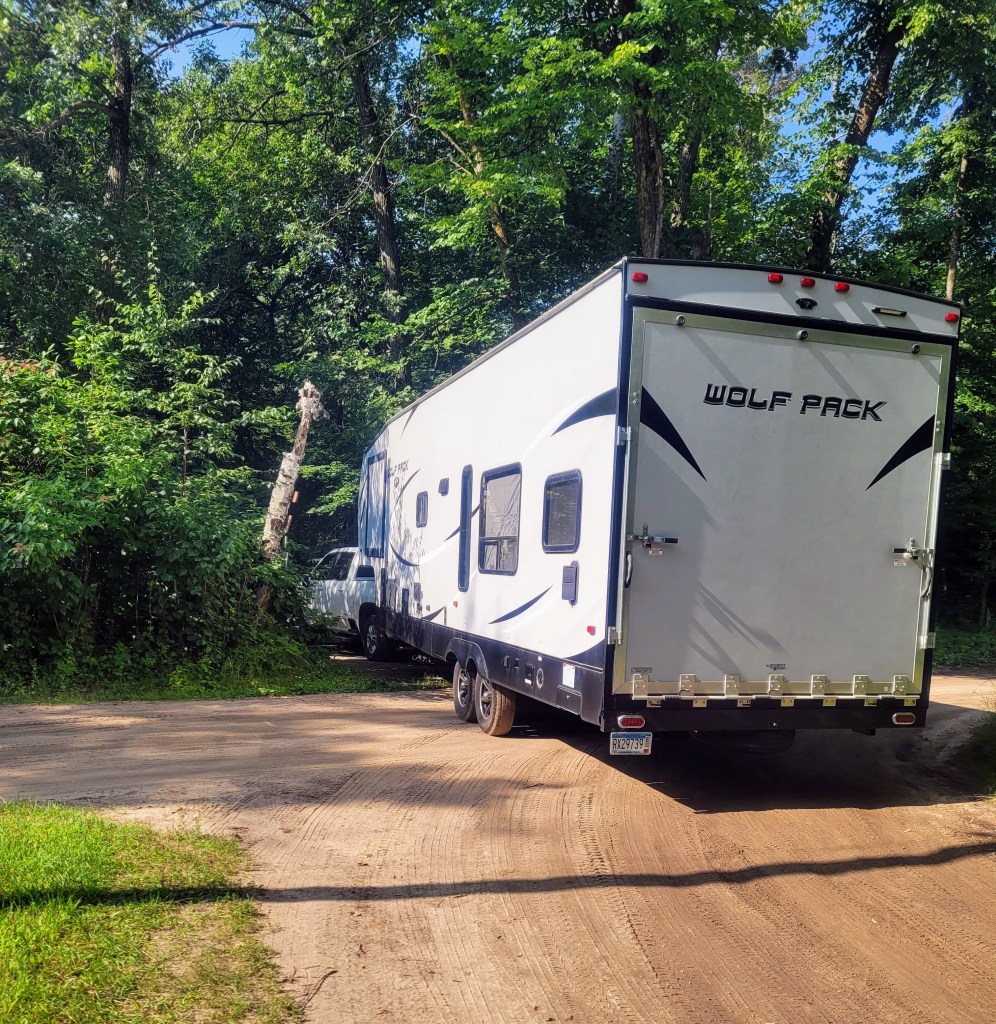
    Speaking of living on the edge. In order to get back on the main road from the lake, we needed to back the truck and trailer all the way down the single lane dirt road before being able to drive off into the sunrise. To those who have seen me attempt to back up a vehicle with any sort of trailer, you won’t be surprised to hear that I wasn’t considered for the role of main driver for this adventure. I am the equivalent of that person on the construction site, who stands on the side and holds the sign while maybe looking in the direction of the workers every so often. 

    The 1200 miles to our next destination 

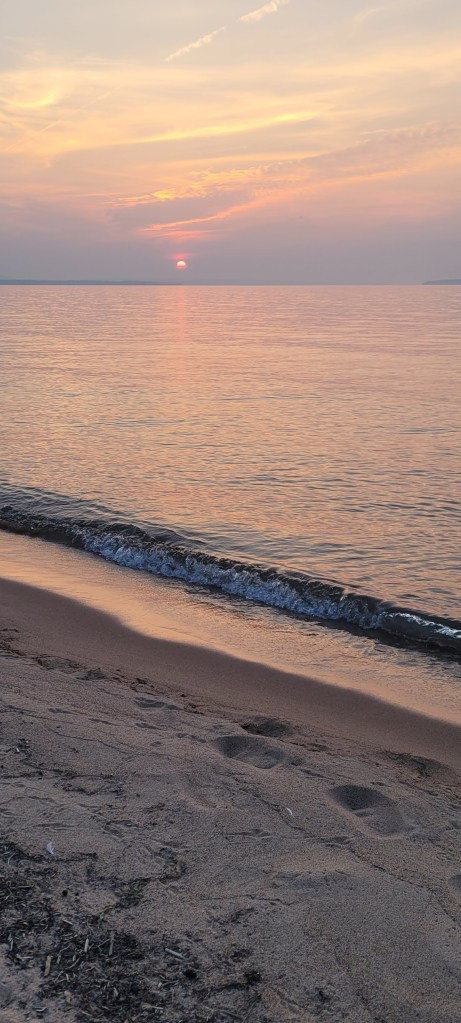
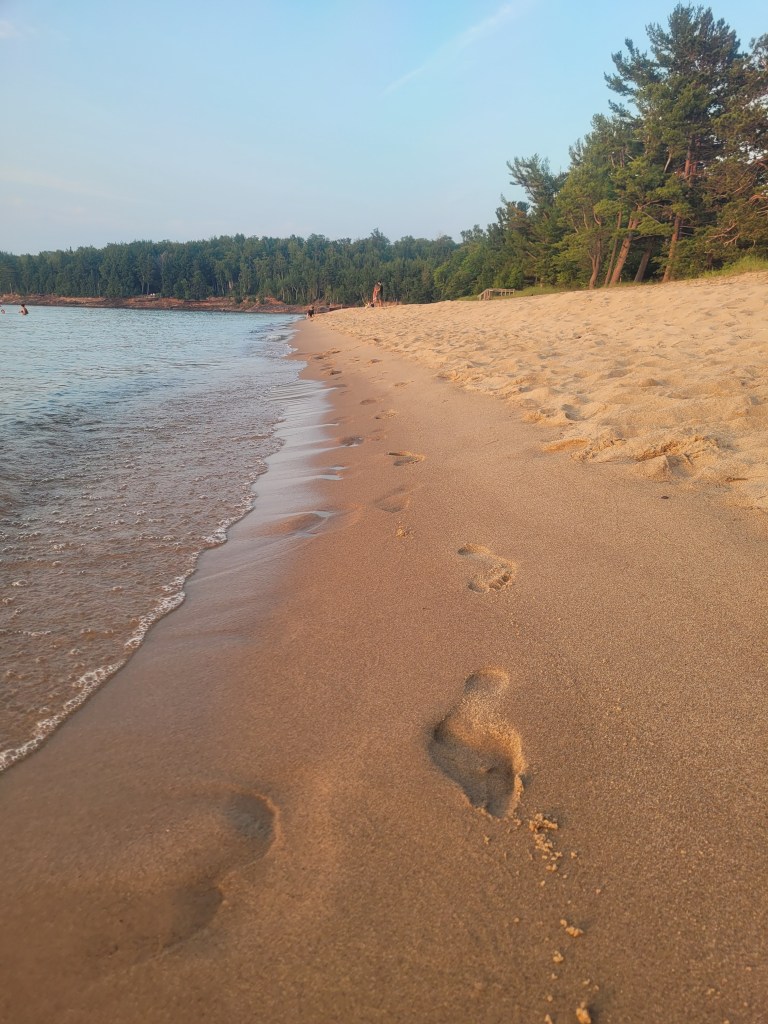
    The first thing Chris noted after our first day on the road was that 8-10 hours in the vehicle is way too long. I believe that this statement shouldn’t even have to be uttered out loud —it’s a no brainer. Our first pit stop was in Michigan: Pictured Rocks RV Park. As we near, we see Lake Superior to our left with lovely sandy beaches. At this point my main focus is to sink my toes in the sand as fast as possible. Since we are only staying the night, no major set up is required and this saves us the remaining daylight hours for a nice sunset walk along Sandy Public Beach. The sand sounded squeaky as we walked along the shore. It was delightful. These “singing” sands are caused by vibrations in the sand and require a combination of round sand grains, silica content, and humidity to emit a variety of sounds. A strong urge to run across the sandy beach and into the water overcame us. I mean, if you haven’t stripped down to your underwear and jumped in a frigid lake at least once in your life, have you even lived at all? 

    The next morning it was time to make our way to the Canadian border by crossing the Sault Ste. Marie International bridge: A 2.8-mile steel truss arch bridge where the long line up of cars spanned all the way from Michigan to Ontario. Once at the border, we didn’t know what they would ask about the Bus. Should we have taken out the registration papers? What did we need to declare? Was the frozen pack of chicken in our freezer going to be considered a national threat and be confiscated? Nope. Instead, it was a simple “How many bottles of alcohol do you have with you?” Confounded by such a question, we stuttered: “Eh, 2 or 3?” The agent asks again: “More specifically, how many bottles of alcohol are you bringing with you?” Oh my! Why is this so difficult? Do they have to be full or do you have to count the halves and make a whole? Or does a half count as one? “Three.” Chris finally says, “ish” He sheepishly adds. This must be because we are driving to Quebec, and the customs agent assumes we are transporting enough wine bottles to put an army into a coma. We should probably check on the customs website what is the maximum quantity of alcohol one can import into a country. 3

    Another mistake we made on this trip was blindly listening to the GPS route. As we drive away from customs, we notice that the roads we are taking are not going towards a highway. The residential streets are getting narrower. And then it hits us. We are approaching downtown Ottawa. Here we go with the breath holding again. Because aging 10 years between 3 blocks of sky rise buildings isn’t enough, there are traffic poles that make the streets even narrower. If there were 3 inches on each side of the Bus as we passed them, it was a stretch. 

    After another full day of driving, our second stop was in North Bay, Ontario. Although I’d called to reserve our spot a few days earlier, I should have seen the red flag. I never received a confirmation email.  

    As we rolled into the dusty campground, a figure shuffled out to meet us. He was all angles and shadows—tall but rail-thin, his clothes hanging loose like like they’d been handed down to him by a much larger, older brother. His long arms swung awkwardly at his sides, and a cigarette smoldered between his fingers, sending up a thin thread of smoke that curled around his hollow cheeks and sunken eyes. He greeted us with a quick, twitchy smile and immediately launched into a ramble, words tumbling over each other as he tried to make the place sound better than it was. He waved his cigarette toward a crooked patch of dirt and gravel, insisting it would be perfect, though the guilt in his voice gave him away. “Yeah, yeah, you’ll be good here—sorry, we’re a little overbooked, y’know how it is—but this’ll work out just fine, real fine.” His tone was overeager, almost apologetic, like a man desperate to sell a lie he didn’t believe himself.  

    We backed up into this unleveled site that at least had a pretty view of the lake. He dragged deep on his cigarette and pointed down the lane, talking fast, his voice all reassurance. “Easy out in the morning,” he said, flicking ash without looking. “You just turn right, follow the nice gentle curve through the campground—no problem about your rig, it’ll for sure fit—and off you go through the exit.” He grinned like he’d just handed us a golden secret. 

    But when the smoke cleared and we traced his directions with our eyes, the “gentle curve” he promised was anything but. It was a hard turn that led straight into a steep upward slope, low branches clawing overhead like they were waiting to tear strips off our roof. The aisles were pinched tight, hemmed in by crooked curbs and parked rigs. Worse yet, the only way to swing wide enough meant dragging wheels across the edge of someone’s permanent-looking site—right over the patch of lawn where they’d set up patio lights, lawn chairs, and a ceramic gnome staring blankly at the chaos to come. 

    By six in the morning, the “gentle curve” our chain-smoking campground greeter had promised us looked more like a booby trap set for unsuspecting RVers. No way were we feeding the trailer through that angle of doom. Instead, we invented our own exit plan. A back-and-forth shuffle that probably looked like we were trying to parallel park a semi in a phone booth. 

    Every shift from drive to reverse was loud enough to wake the dead—or at least the poor souls whose camper window we were idling directly in front of. Curtains wide open, lamp still on. We couldn’t see them, but you just knew someone was in there, sipping coffee and silently judging. Honestly, they had front-row seats to the show: “Watch as this couple attempts to escape a campground designed by a sadist.” Finally, after a few nerve-wracking shuffles, the truck and trailer lined up straight. No branches overhead, no curbs, no neighbors’ lawns. Just a clean shot out the gravel lane. We eased forward, the tires crunching louder than seemed possible in the morning quiet and rolled back onto the open road—half relieved, yet half certain someone was still watching us through that open window. 

    And then we crossed into Quebec. There’s no mistaking it—your rig tells you before the road signs do. Everything starts rattling like a tin can full of bolts the moment the tires hit those legendary potholes. It’s almost like the province is saying “Bienvenue (welcome), now let’s see what your suspension is made of.” 

    The driving style shift is instantaneous too. As a native Quebecer, I say this with love: we drive like it’s a competitive sport. Blinkers are more of a suggestion, tailgating is practically a handshake, and if you don’t accelerate like you’re escaping a crime scene, someone will let you know. And then there are the bridges. I don’t know what civil engineer declared them “finished,” but clearly nobody tested them in an actual vehicle. Every overpass comes with its own personal launch ramp at the start, followed by a bone-rattling drop on the other side. I’ve started to believe it’s less poor construction and more public safety strategy: Jolt drivers awake at the beginning and end to make sure they don’t doze off while crossing. Cheap caffeine, Quebec-style. All the while, the memory of my motorcycle tipping over in transit was still fresh. The PTSD of watching my trusty steed fall still makes my stomach drop. So, we turned it into a ritual—stop every hour, walk the rig, tug on the straps, check and re-check that everything is upright. The trailer probably thought we didn’t trust it. We didn’t. 

    And then there was the gas. My God, the gas prices. Every stop felt like feeding a teenager who’d just discovered the carnivore diet comprised only of filet mignon. Add in the fact that the hills got steeper, the climbs longer, and suddenly our truck was roaring like it was dragging the whole province behind it. That’s when we realized: This is why everyone kept asking if we’d bought a diesel. We should have gotten a diesel. Regret is loud—about 4,000 RPM loud. 

    But the road, as always, eventually led us where we needed to go. The pavement gave way to winding forest roads, and then—just like that—the lake appeared. Lac Bélanger. My parents’ cabin. My favorite place in the world. The sight of it never gets old. The still water reflecting the sky, the trees leaning close as if to guard it, the smell of pine carried in the air. This was the place of childhood summers, of campfires and swimming until the sun went down, of quiet mornings with coffee and loons calling across the water. Every bump, every jolt, every drop of overpriced fuel—it all faded the second we pulled in. 

    Backing up the Bus into one of the lots was still a comedy routine, of course. And yes, carrying essentials down to the cabin meant another round of unloading, hauling, and moving. But this time it wasn’t just a chore. This was a homecoming. Each trip down the path to the cabin felt like stepping back into memory, a return to the one place in the world that never seemed to change no matter how far we’d gone or how long we’d been away. 

    As I write this article, 2 months later: 

    1 A written checklist has still not been produced. We somewhat still struggle our way through the process, albeit much less than in the earlier days, but still. 

    2 Thank you, Abbie, for the gift that keeps on giving as Chris continues to hunt every fly that dares to enter our personal space. 

    3 We still haven’t looked it up. We probably should do that soon, as we prepare to cross another border.