The morning air carries a hint of salt and goodbye as we load the bikes for one last Maritime ride. The camping gear is packed, coffee cups emptied, and there’s that familiar buzz that always hums before the road unfolds. Our time out east is almost over, but before we turn the page, we have one more chapter to write.
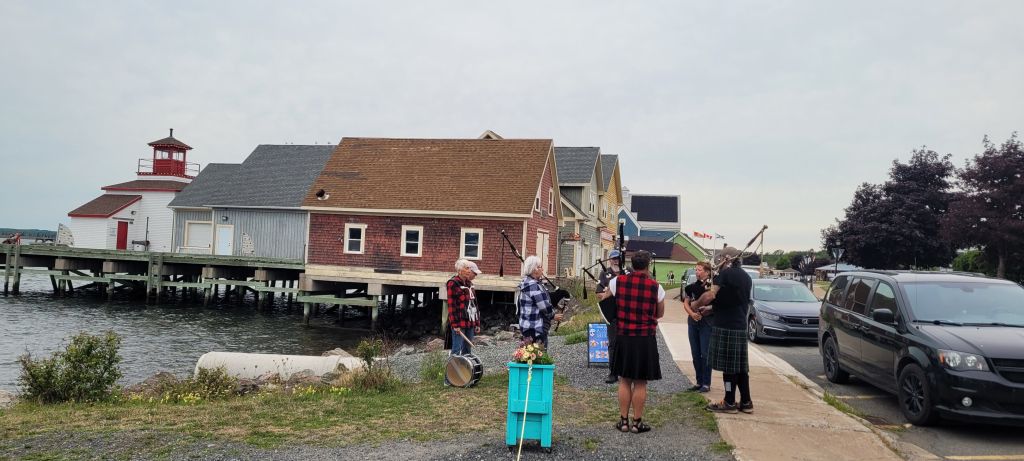
Leaving early from Pictou, we follow quiet backroads lined with fall-tipped trees, the kind of roads that make you slow down just to take them in. The pavement unwinds through open farmland and sleepy towns, each turn framed by bursts of golden light as the sun climbs higher. As the coast gets closer, the air thickens with salt, and the horizon opens up wide, a reminder that the ocean is never far away in the Maritimes.
As we near the Confederation Bridge, an overlook offers the first glimpse of it: A ribbon of concrete stretching impossibly across the ocean. From a distance, it doesn’t even look real, just a delicate line connecting two worlds. It’s wild to think that in a few minutes, we’ll be riding into another province on one of the longest bridges in the world.

Crossing the bridge is something else entirely. Heading toward Prince Edward Island, the view feels endless, water and sky melting together in every direction. We stand on the pegs to catch it all, the horizon rising on both sides, the wind tugging at our jackets, the steady rhythm of the bikes echoing between the rails. Going this way, it feels lighter, freer, like the start of something new rather than the end of a journey.
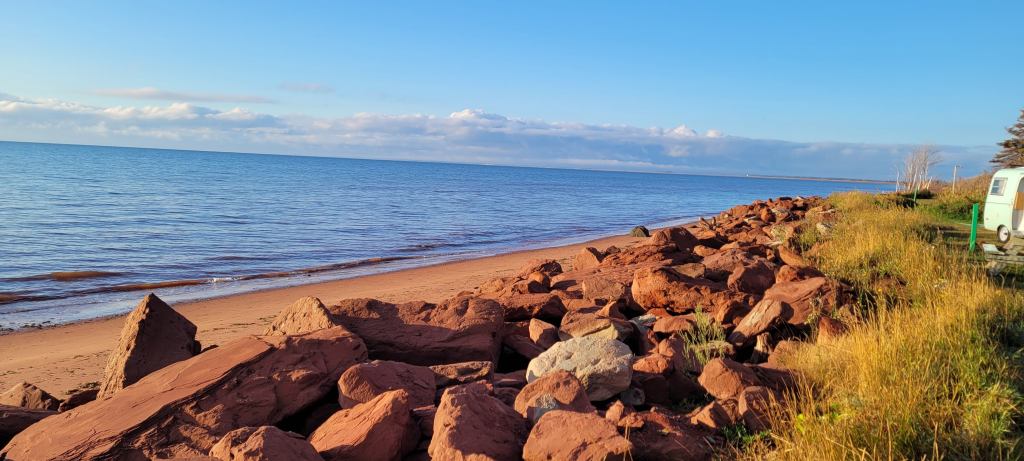
The moment our tires touch down on the island, the landscape changes. The soil here is unmistakable, a deep, rusty red that stains our boots and glows under the afternoon sun. It owes its color to iron oxide in the sandstone, a natural pigment that seeps into everything, from the roots of the potato plants to the rhythm of island life itself. Red earth, blue skies and green fields is a palette worthy of the greatest artists.
We roll in from the southwest corner of Prince Edward Island, aiming to trace the island’s edges like a ribbon and follow the road wherever it leads. The ride takes us through wide expanses of farmland, rows of potato plants stretching endlessly in neat, earthy rows. Tractors rumble in the distance, and a few farmstands sit unmanned, jars for coins left on wooden counters.
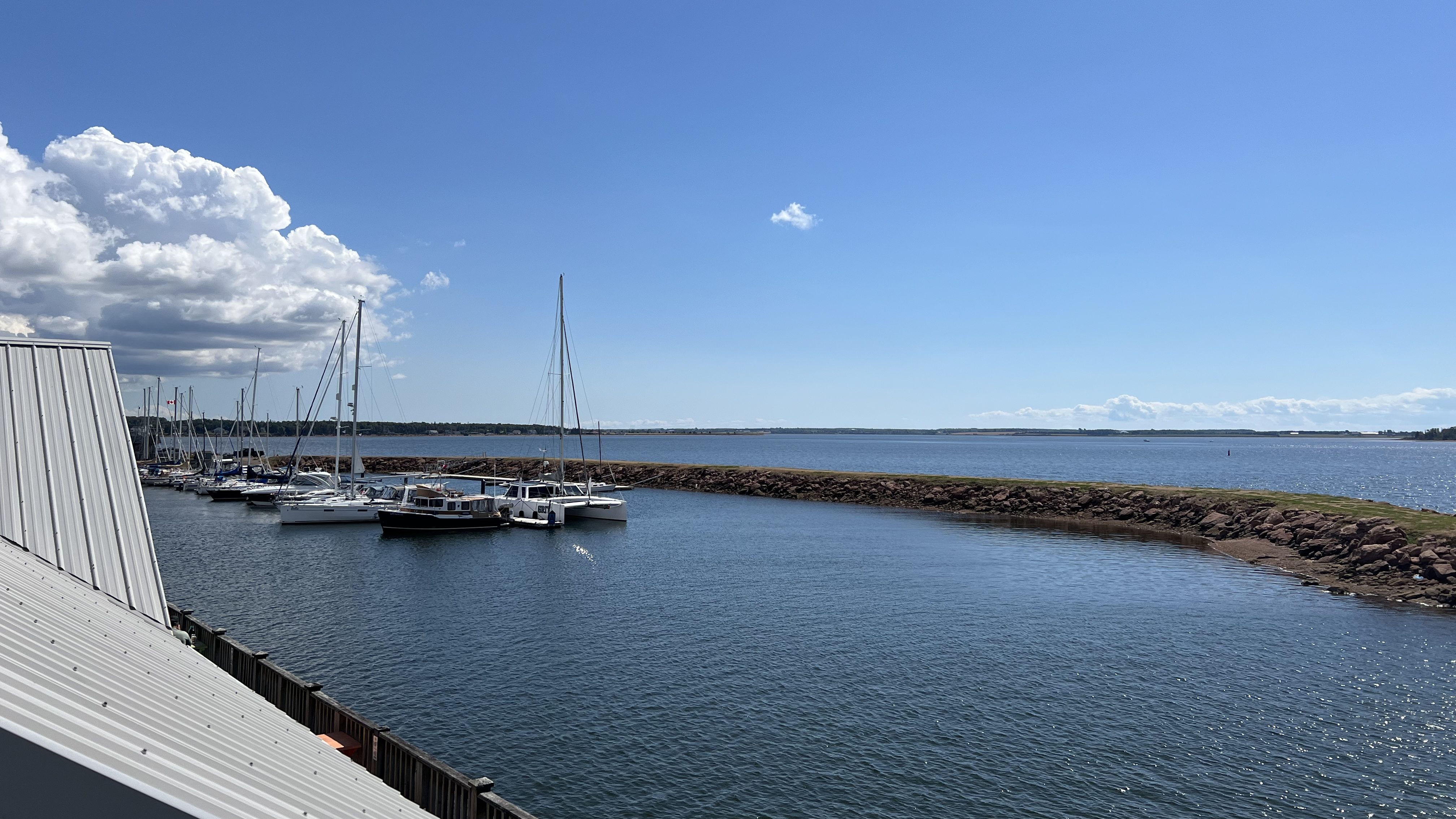
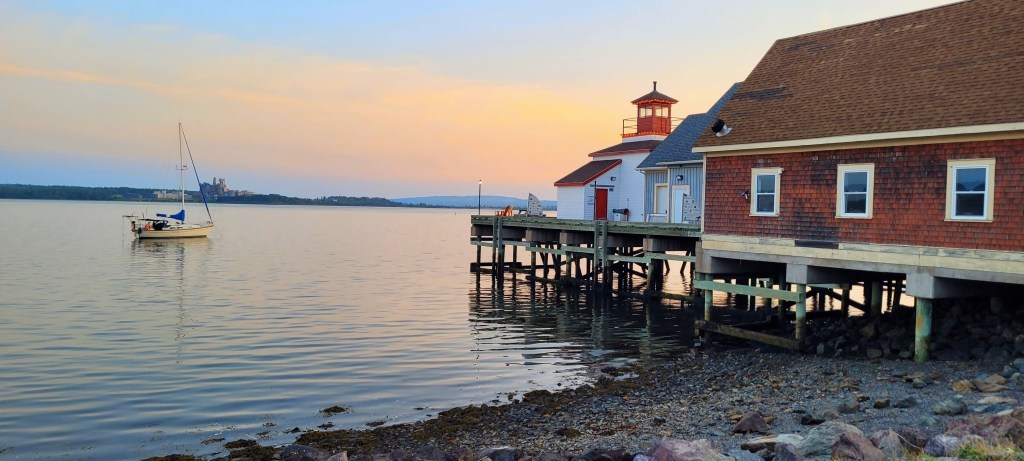
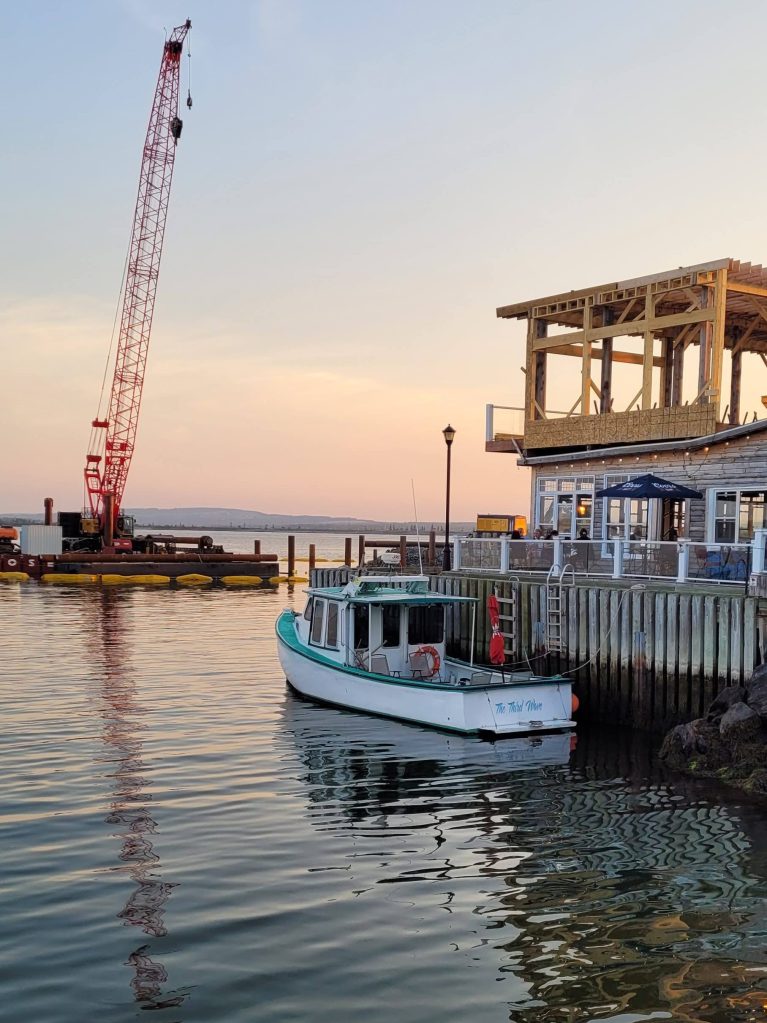
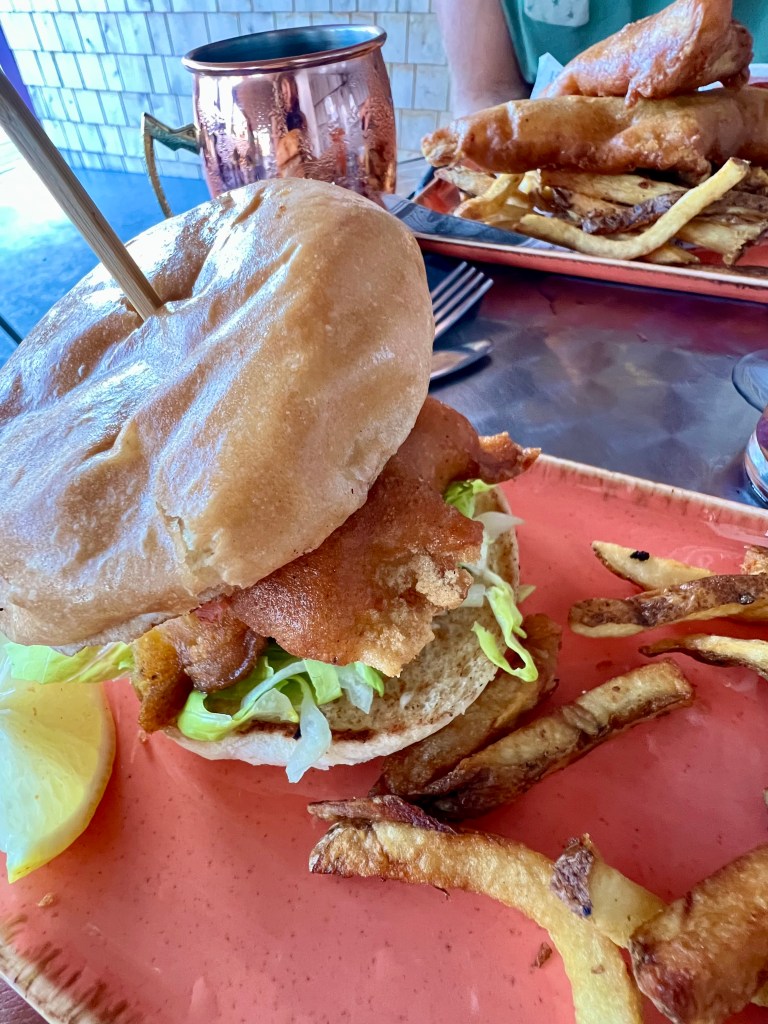
Our first stop is in Summerside, where the Deckhouse Pub & Eatery makes for a perfect mid-day break. We park the bikes at Spinnakers Landing, a colorful boardwalk market built on the water. The area is lined with boutiques, ice cream stands, and hand-painted signs swaying in the breeze. The harbor is calm, the sunlight soft. A cold cider and a plate of nachos never taste as good as they do after a long morning in the saddle. From the patio, we watch the sailboats rock gently in the marina, that easy kind of movement that makes time stretch a little longer.
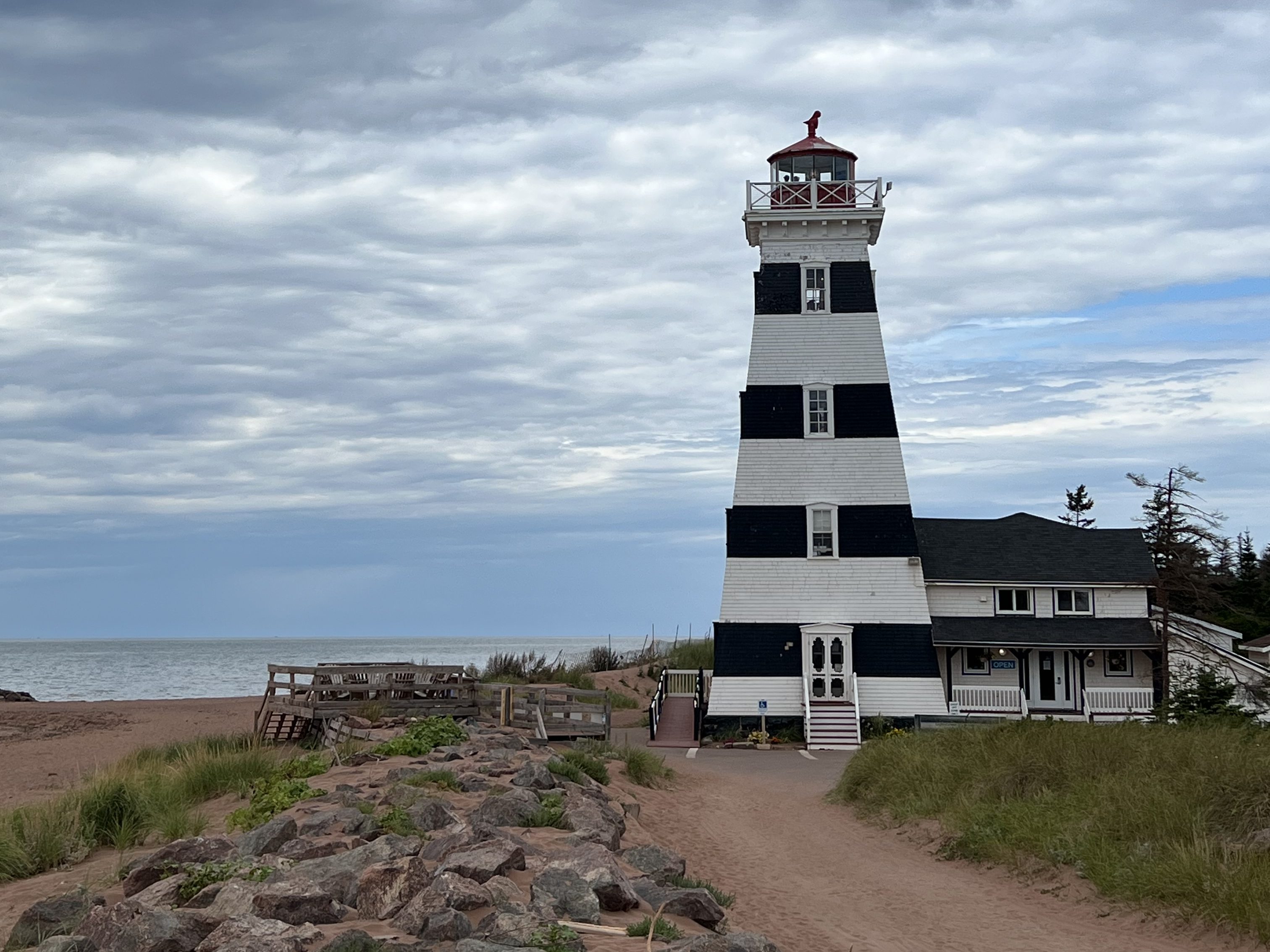
From there, we push west toward the tip of the island until the road narrows and brings us to Cedar Dunes Provincial Park, home of the iconic black-and-white West Point Lighthouse. It rises from the dunes like a painted sentinel, overlooking miles of empty beach. The air smells faintly of salt and pine, and the sand here carries the same red hue that defines the island, soft underfoot and glowing against the dark bands of the lighthouse tower.
We turn north, winding our way toward the island’s uppermost coast. The roads here are quieter and narrower, sometimes paved, sometimes not. At one point, we turn onto a red dirt road that cuts sharply toward the water. The front tire slides slightly where compact soil gives way to looser ground. A tight right-hand turn reveals a wide and sudden view: tall grass swaying in the wind, the ocean just beyond, and a line of weathered coastal homes standing proud against the horizon.
The rhythm of Prince Edward Island’s rural charm feels both familiar and distinct. The houses echo the Maritime spirit, with their wooden siding silvered by salt air; and yet they have their own unique character. Blue and red roofs brighten the muted landscape while wide porches face the sea.
The road narrows farther north, curling along the coast where fishing boats rest on shore and the landscape grows wilder, quieter too, as if the island itself is tapering off into the sea. A sudden rise in the horizon reveals the unmistakable silhouette of a windmill turning slow and steady against the sky. One becomes two, then a line of them, their blades cutting through the coastal wind in perfect sync.
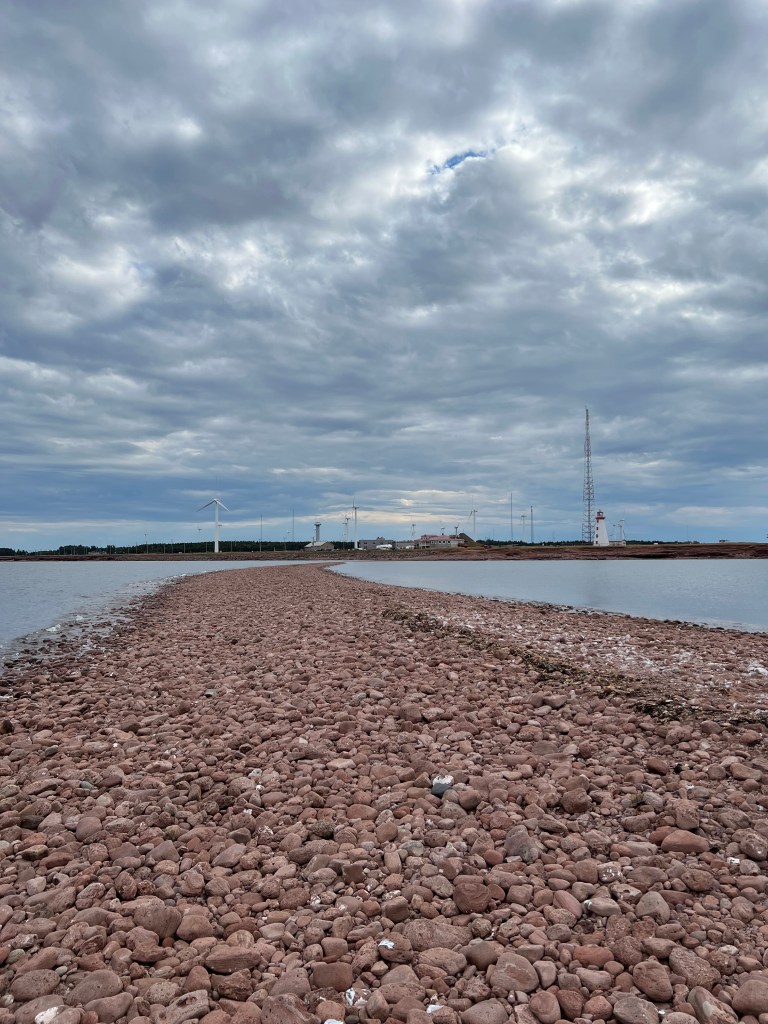
Route 12 carries us all the way to North Cape, the northwestern tip of Prince Edward Island, where the Gulf of St. Lawrence presses in from one side and the Northumberland Strait from the other. Their waters meet in a restless dance that never truly ends. The cliffs are carved deep and red, layered like the pages of time. From the edge, we can see the reef stretch far into the distance, a long spine of rock disappearing two kilometers into the sea. When the tide is low, you can walk along it, seeing a few grey seals in the distance.
The lighthouse at North Cape stands quietly among it all, weathered by years of salt spray and shifting seasons. Its white walls catch the last light of day, glowing against the copper earth. Waves curl and crash along the reef while gulls wheel overhead. Every sound feels amplified — the wind, the surf, the creak of metal on the turbines turning behind us. If you time it right, you can see the moment the two bodies of water meet, their currents twisting in a pattern that looks alive.


Fuel for Thought: When to Turn Back
After leaving North Cape, the afternoon light fades faster than expected. The air feels heavier, the colors flatter. What was once a bright stretch of coastal road is now a shade of gray that signals change. The clouds over the Gulf darken, and we both know what’s coming.
We push on, hoping to find a place to stay farther down the coast. Jacques Cartier Provincial Park flashes by on our left but we keep going, convinced something better lies ahead. The towns grow smaller, the houses more scattered. Gas stations and motels become rare, and it becomes clear that “ahead” may not hold much at all.
The first bed and breakfast we find has no vacancy. The next town doesn’t have accommodations at all. The dark gray clouds roll in low and fast, and a few raindrops tap our visors as we pull over, helmets off, weighing our options.
If we keep going, we’ll ride straight into the storm. We’ll end up wet, with nowhere to dry our gear, and no guarantee of shelter. It is the tug-of-war every motorcycle rider faces: Wanting to keep moving forward while knowing it is time to turn back.
We pause and realize the answer is obvious. Turning back feels like defeat, but logic wins out. We retrace our path to Jacques Cartier Provincial Park, watching the sky change from gray to slate as we ride.
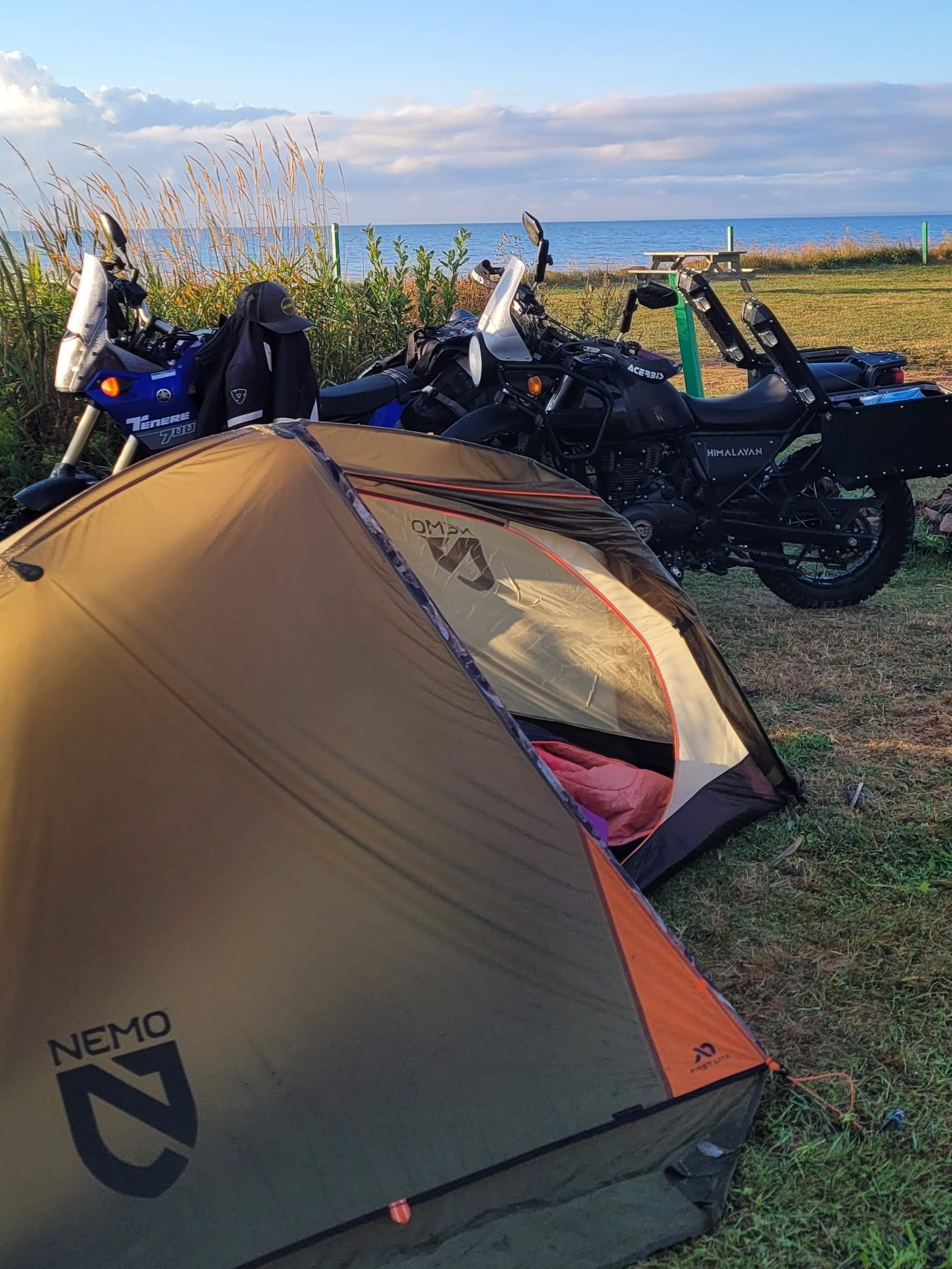
Happily, luck is on our side: A tent site is still available, right by the ocean. We smile at the irony. Another night beside the waves — round two after our sleepless Cabot Trail storm. Hopefully, this one treats us better.
The clouds are almost on top of us now, dark and heavy, moving fast. We waste no time. The tent goes up in record speed (under five minutes flat) poles snapping into place, gear tossed inside, rainfly clipped down just as the first drops begin to fall. Within moments, the patter of rain becomes a full symphony against the fabric roof. We climb inside, damp around the edges, but dry where it counts.

It rains most of the night. The sound of wind and water blends into a rhythm that eventually lulls us to sleep. By morning, the world feels washed clean. The sun breaks through, the ocean sparkles, and the smell of wet earth hangs in the air. Our gear is dry, spirits lighter, and the road around the island waits once again.
Day Two: Cavendish to Pictou
We wake to clear skies and the promise of a full day on the island. After yesterday’s storm and a long night of rain, we know we won’t be able to circle the entire island. Instead, we head for Cavendish Park, one of the most celebrated corners of Prince Edward Island.
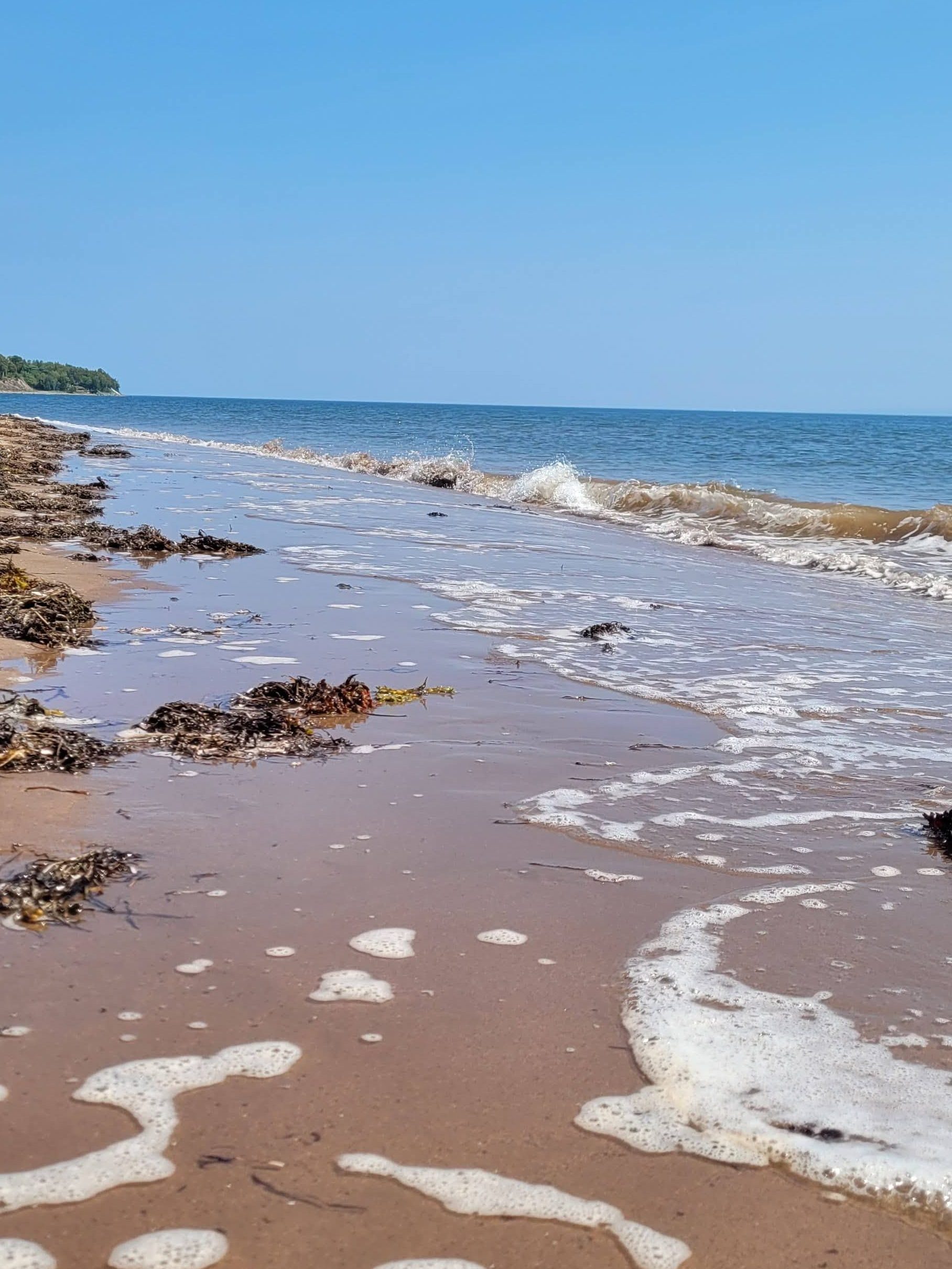
The landscape opens up in soft, rolling hills of emerald green, dotted with white fences and small farmhouses. Cavendish Park is a study in contrasts: rugged red cliffs plunging into the Northumberland Strait, waves crashing at their base, juxtaposed with wide stretches of sandy beaches that curve toward the horizon. Hiking trails weave through the dunes, tall grasses swaying in the breeze, and the air carries a faint mix of salt, pine, and the subtle sweetness of late-season flowers. We pause often to take it all in — the cliffs, the beaches, and the expansive dunes that feel almost endless under the bright sky.
Eventually, we push on, passing through Morell as we make our way south toward the ferry. Our plan is simple: grab tickets at the gate, maybe eat in town depending on timing, and catch the next ferry of the day. Easy enough, we think.
It is not easy.
At the ticket booth, chaos awaits. The clock reads 1:27 p.m., and the boat departs at 1:30. There is no time to second-guess. Motorcycles are easier to load than cars, apparently, so we’re hustled to the ferry. The lady at the booth radios ahead to confirm we can go, and suddenly it’s a race. The horn blares, the motors roar, and the massive door begins to close just as we roll forward. The ferry leaves the shore before we’ve been able to turn off the bikes.
Down on the lower deck, the cacophony of engines, metal, and shouted instructions is deafening. A crew member calls out that we need to strap down our bikes. I freeze. How exactly do you strap down a motorcycle? Chris, calm as ever, grabs the hanging straps and quickly secures his bike. Then he straps mine. Done. Smooth. Efficient. I marvel at his composure.
Once the bikes are secure, we make our way to the top deck. Wind hits us, saltwater spray in the air, and the island falls away behind us. Waves churn alongside the hull, the ship slicing through the channel with a power that is impossible to ignore. We settle into the moment, watching the coastline fade.

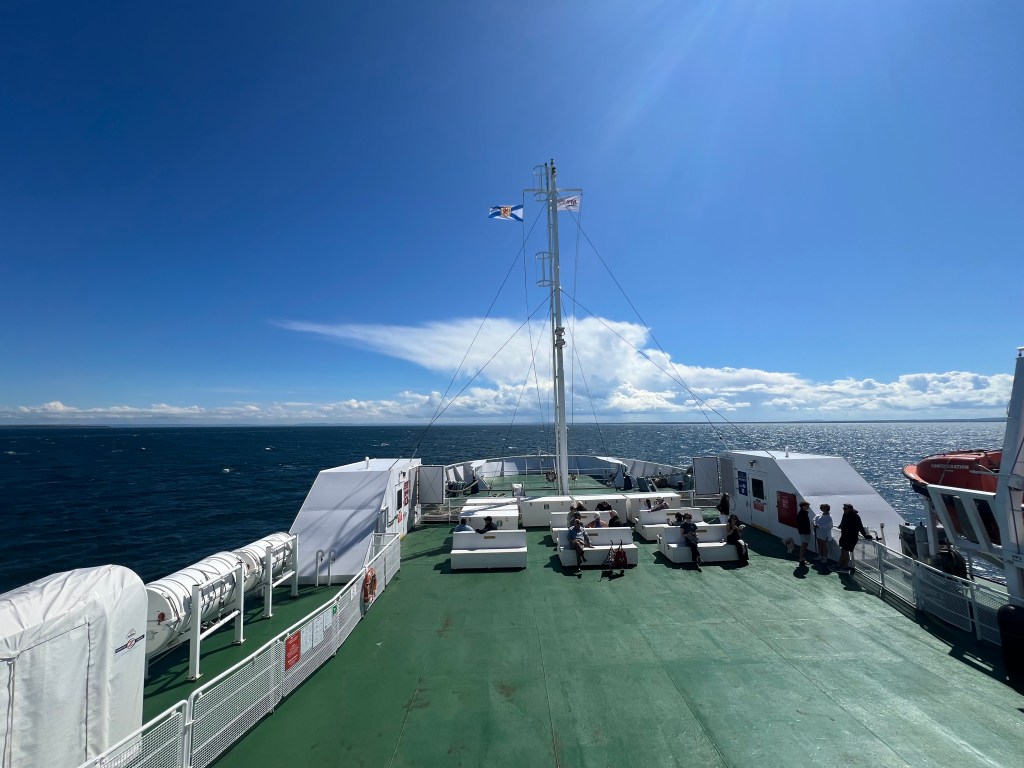
Eventually, the horn sounds again — time to return to the vehicles. Pictou comes into view. The crew instructs us to go to the front of the ferry and exit first. My stomach tightens. The deck looks slick, and the slightest misstep could send a bike and rider sprawling. Chris remains calm, while a crew member offers to help.
“Easy does it,” the man says, pushing my bike backward slowly. I tiptoe alongside him, holding just enough to balance.
“Thank you, sir,” I say. “I really didn’t want to end up on the floor as things get busy.”
“Ah, don’t worry,” he replies. “You wouldn’t be the first or the last to drop your bike here.”
“Good to know,” I murmur, trying to steady my nerves. “But still, I don’t want to become part of those stats.”
The bike touches asphalt, the ferry door swings open, and just like that, we are back on solid ground. Adrenaline still humming, we roll away, grinning at the equal measure of chaos and relief we experienced.
As the day winds down, we make our way to the campground, the last stop before we pack up for our departure from the Maritimes and prepare for the next leg of our journey. The Maritimes have given us cliffs and beaches, windmills and reefs, storms and sun, and enough small adventures to fill volumes. As we ride these quiet final stretches, it’s impossible not to feel grateful for the roads we’ve traveled, the moments we’ve shared, and the lessons we’ve learned along the way.
This chapter closes, but the road, as always, is waiting.





 NOMADIC ADV