
The hum of our engines cuts through the morning fog as the first light spills over our campsite in Pictou. The world is quiet except for the low rumble of anticipation and caffeine kicking in. We’re gearing up for our first multi-day motorcycle trip, the beginning of The Kickstand Chronicles, a collection of rides, reflections, and fleeting moments that remind us of why we chase horizons on two wheels.
Our destination is the legendary Cabot Trail. One hundred and eighty-five miles of winding asphalt carved through cliffs, forests, and sea spray. It’s the worst-kept “hidden gem” among motorcyclists, a bucket-list ride we’ve dreamed about for years. Today, it’s finally happening.
But before a wheel even turns, the age-old debate arises: Clockwise or counterclockwise? Ask any local, and you’ll hear passionate arguments for both. After hours of forum scrolling, campground chats, and a fair bit of indecision, we settle on counterclockwise. That route hugs the coastline, keeping the ocean to your right, the edge so close you can taste the salt in the air. Some say it can trigger vertigo. I call that a front-row seat to the Atlantic. Besides, I tend to romanticize everything, remember?
Panniers packed, GPS loaded, comms charged, we roll toward Cape Breton Island. The drive takes just over an hour, and we avoid the highway whenever possible. When we finally cross the causeway, signs boast about the world-famous Cabot Trail. Unsure how far apart gas stations might be, we fill up and set off.
The plan is clear. Counterclockwise it is.
Except, within twenty minutes, it isn’t.
Something feels off. “This doesn’t look right,” I mention through the comms.
“This is definitely the way,” Chris replies, his voice full of confidence.
Given my less-than-stellar navigation record, I let it go—until a few miles later, I hear a faint “Crap” through my helmet.
“What is it?” I ask. Silence. His blinker flashes, and he pulls to the shoulder.
“What is it?” I repeat, louder this time.
A pause, then a half-laugh, half-sigh. “You were right.”
Did I hear that correctly? I was right?
Too stunned to celebrate, I ask, “Wait, what do you mean I’m right?”
Turns out we had turned too soon and were heading clockwise the whole time. My carefully plotted route and dream coastal views vanished with one wrong turn.
We consider doubling back but quickly dismiss it. The road ahead is open, the day young, and retracing steps has never been our style. This is how we always travel: Part plan, part instinct, and a generous dose of improvisation.
How many miles we cover in a day depends on the weather, temperature, and how often I stop to admire the view (which is often). The only real rule is to keep moving forward, wherever the road decides to take us.
At the entrance to Cape Breton Highlands National Park, a ranger waves us down to share tips on the best lookouts. This year, there’s no park fee, and thanks to a fire ban, campsites are easier to find. The gate lifts, and we shift into first gear, winding upward through curves that reveal spectacular ocean vistas. Steep cliffs drop vertically into blue depths. Just when we think we’ve seen the best view, the next corner proves us wrong. Choosing which lookout to stop at becomes a battle with FOMO.
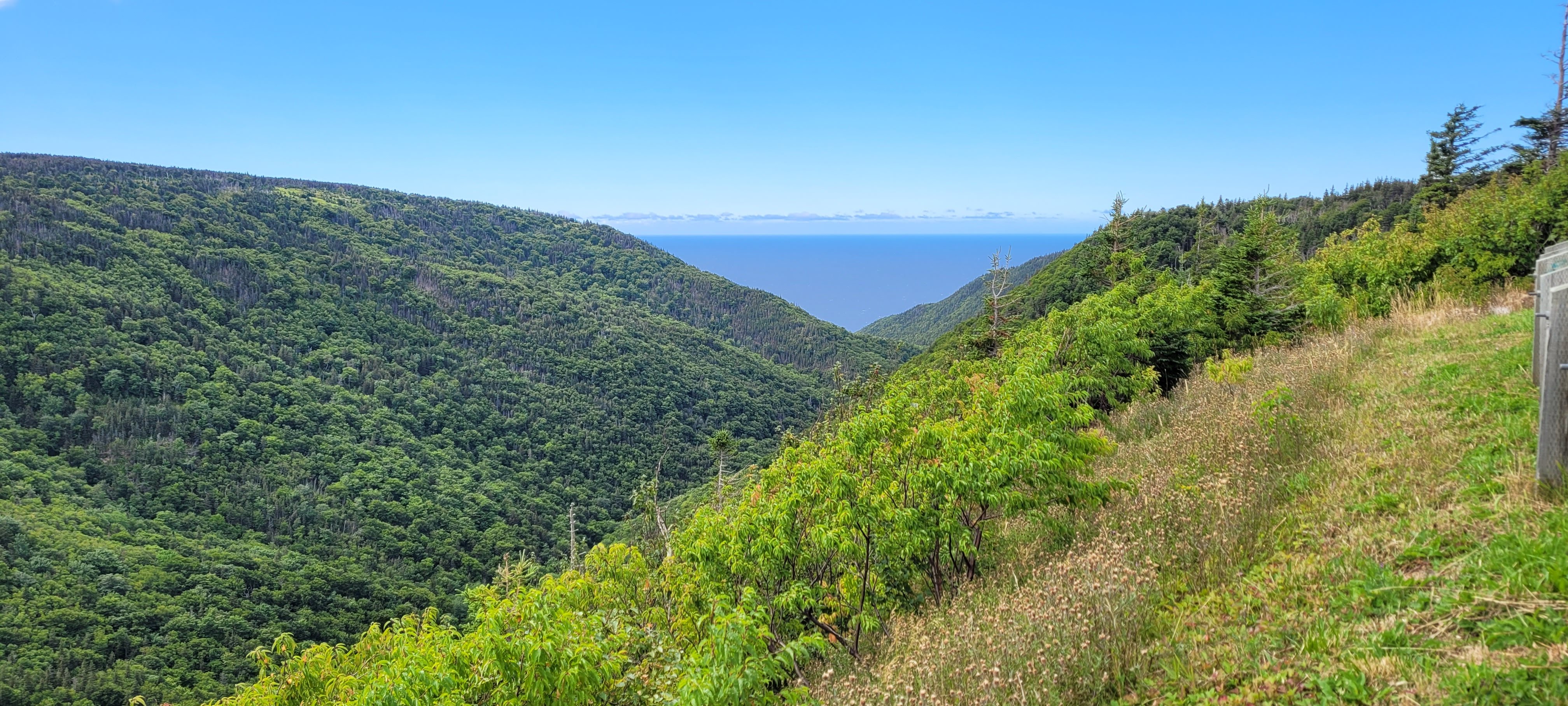
As everything feels perfect—the bikes humming, the sun warm on our shoulders, the road unfurling ahead—we pull over at a scenic curve along MacKenzie Mountain. From here, the coastline stretches endlessly into the Atlantic, rugged cliffs stand proud beneath a sky too blue to be real. Tourists gather at the viewpoint, laughter and camera shutters carried by the wind.
MacKenzie’s turns sweep down the mountain in wide arcs, but the parking lot sits on a noticeable slant. Not much, just enough.
When it’s time to leave, I swing my leg over the seat and feel it: that slow, sinking shift. “No, no, no…” I whisper, but gravity has already decided. In slow motion, the bike leans, wobbles, and with a loud splat hits the asphalt.
Unfortunately, I go down too. My body flings sideways like a ragdoll in a bad stunt reel, landing flat on my back, arms sprawled out as I stare up at the sky in disbelief through the rectangle of the helmet visor.
In my ear, Chris’ sigh comes through, one part patience, one part prophecy. He had already noticed the slope and parked me in a safer spot. And here I am, proving him right again.
Tourists rush to help, their concern comically disproportionate to my bruised ego. Together, we heave the bike upright, her shiny new handguard scuffed, my pride thoroughly demolished.
“You good?” Chris asks, his tone halfway between concern and amusement.
“Yep,” I answer. “Now please help me lift this thing so I can die of embarrassment somewhere else.”
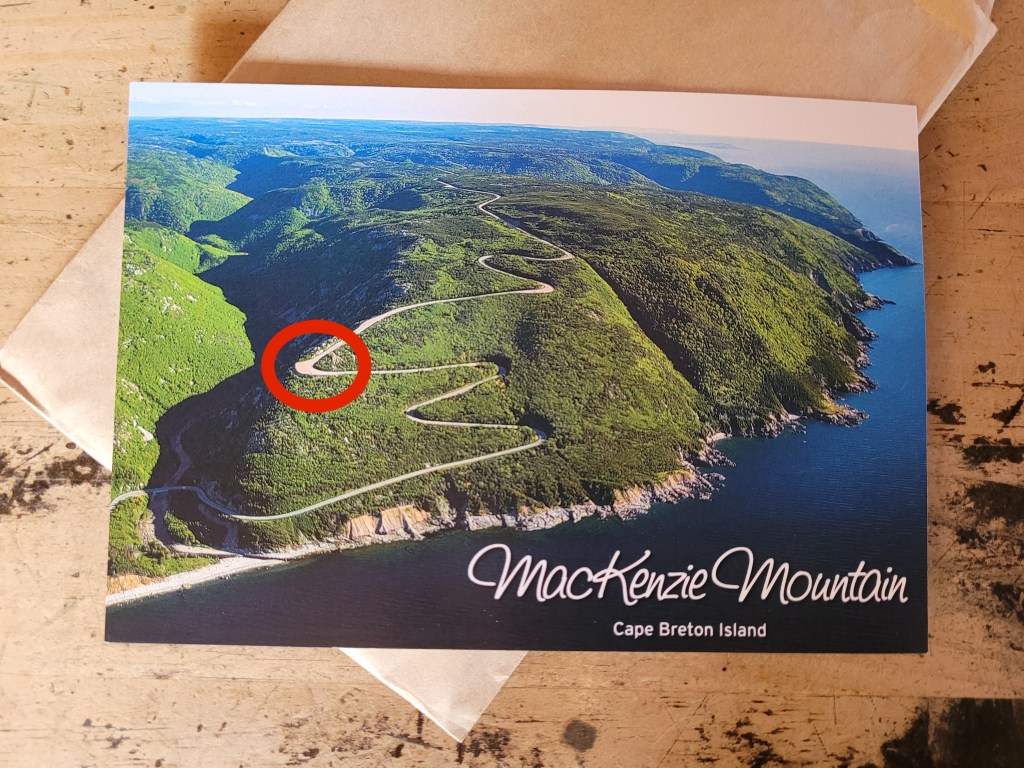
And just like that, the perfect ride has its first mishap, the kind that becomes a favorite story later. Or a cautionary tale. Whichever one calls to you best.
We continue through the valleys of Cape Breton Highlands, the scenery still surreal. Cliffs plunge into the sea, winding roads weave through dense trees, and every curve reveals another picture-perfect moment. As the sun dips low, we start scanning for a campsite.
We find a quiet spot near the mountains, nothing but rustling leaves and a babbling brook nearby. Our only neighbor is a small tent with a lone bicycle parked beside it. We had seen the same bike earlier, the rider grinding up a steep incline while we cruised past, impressed and a little guilty.
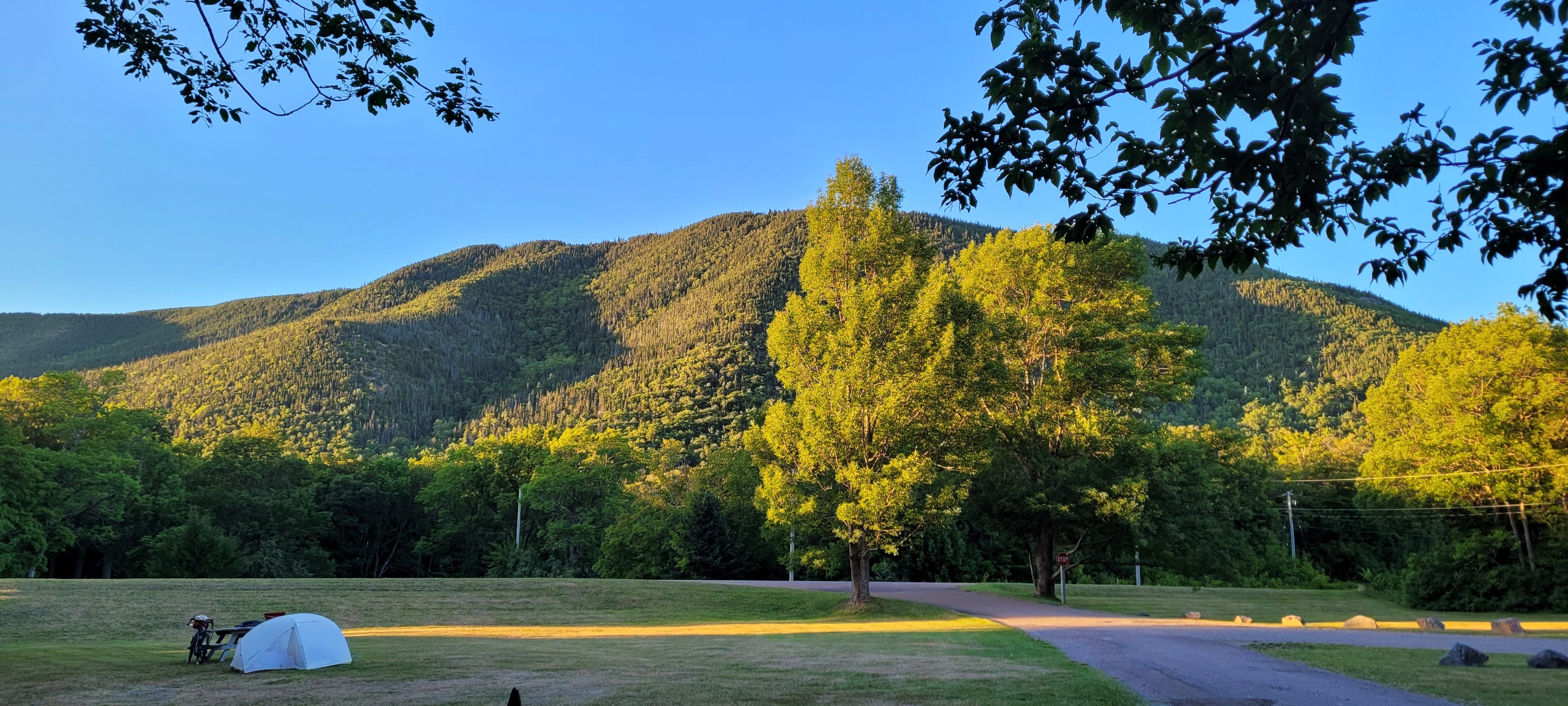
Curiosity wins, and we wander over. That’s how we meet Johan from Lyon, France, who is cycling across Canada, from Vancouver to Newfoundland. By now, he has pedaled nearly five thousand miles, averaging 70 a day and surviving on Knorr meal packs. Genius, really. We have spent far too much on dehydrated camping meals, and here he is proving the cheaper ones taste just as good.
As we walk back to our tent, I sigh dreamily.
“Wow,” I say. “I want to try that kind of travel someday.”
Without missing a beat, Chris replies, “You couldn’t ride from here to the road without getting winded.”
Touché.
The next morning greets us with stiff backs but another golden sunrise over the mountains. Sleep wasn’t great, but the view makes up for it. We pack our gear, stretch our sore muscles, and head to Pleasant Bay for a long-anticipated whale-watching excursion.
At the dock, Captain Mark welcomes us aboard a small zodiac. His energy is contagious, his stories blending fact and folklore with effortless charm. As we head out, the sea greets us with gentle swells and salt spray. Before long, a pod of pilot whales surfaces nearby, sleek and curious. Mothers and calves glide between the waves, unbothered by our presence.

Above us, Northern Gannets dive like arrows into the sea. Closer to shore, cliffs rise in jagged layers, their edges carved by time. Captain Mark points out “The Old Man,” a rock face shaped by nature into a profile both haunting and human. Grey seals pop their heads above the water, watching us with curious eyes before slipping beneath the waves again.
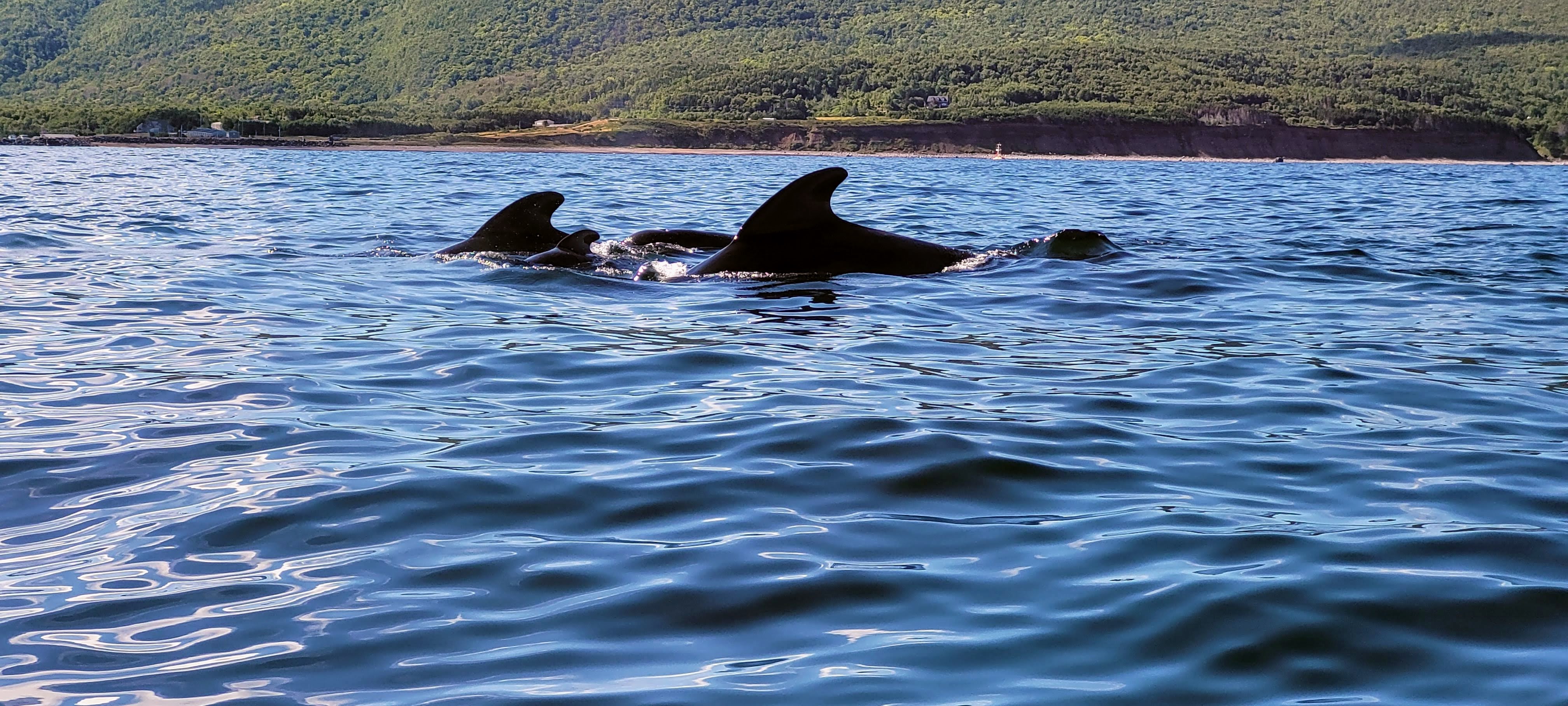

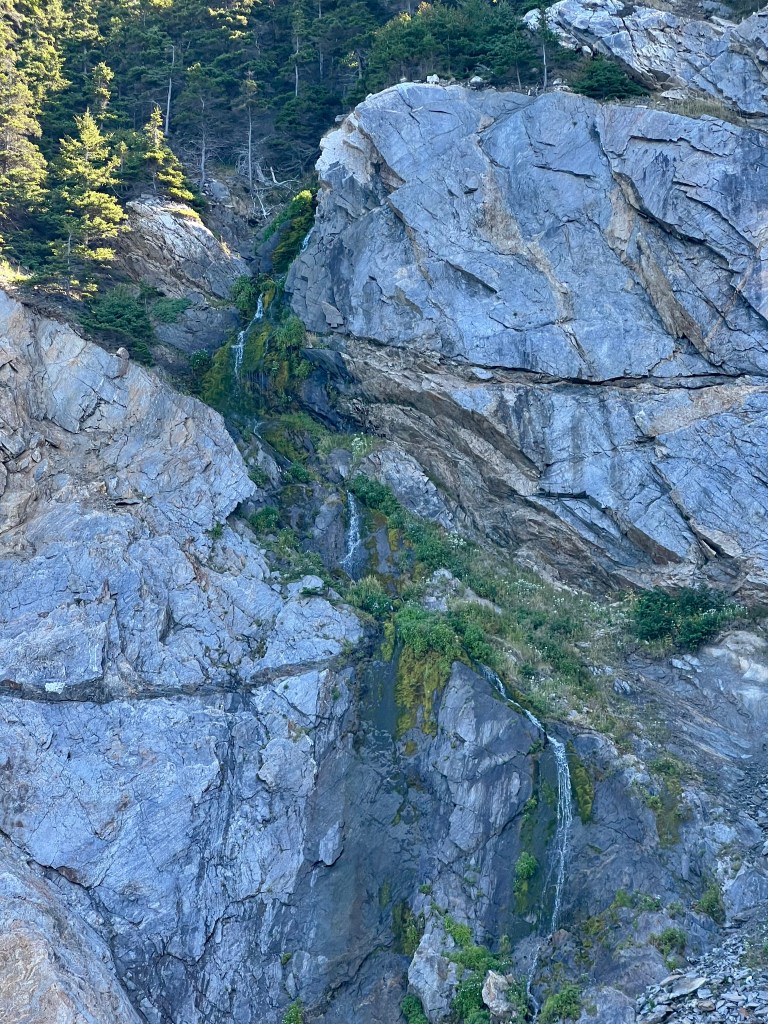
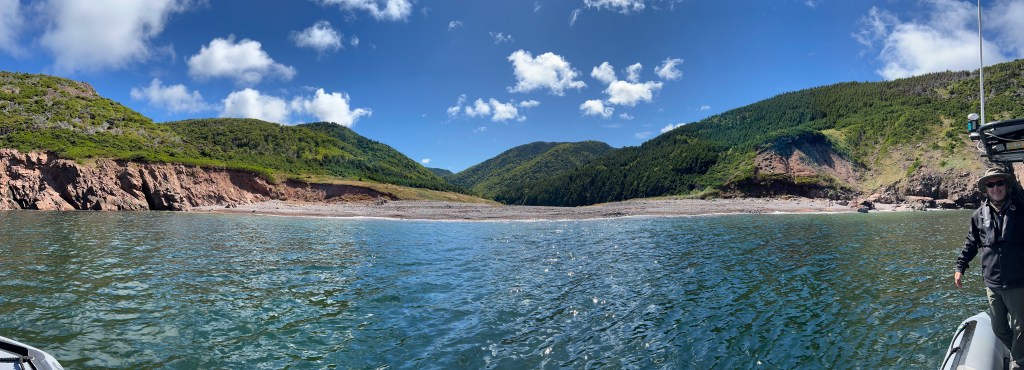
After two hours on the water, we return to shore, salt-streaked and grinning. It’s the kind of experience that lingers long after you’re back on land.
Side note: our GoPro didn’t survive the adventure. In a burst of enthusiasm, Chris dunked it underwater for the perfect whale shot. Minutes later, it blinked, sputtered, and died. Saltwater, as it turns out, isn’t forgiving. Another casualty of curiosity.
Later that day, we follow a small dirt path toward a Buddhist temple we spot on a roadside sign. The trail twists through trees and opens to a clearing where a white and gold stupa gleams under the sunlight, prayer flags fluttering in the breeze. The air feels still and sacred. Carved messages speak of peace and presence, a quiet reminder to slow down.

Captain Mark had mentioned that each year, monks here buy a local lobster catch, bless the lobsters, and release them back into the sea. It’s their way of giving life another chance, just in case one of their brothers has returned in shellfish form. The story lingers with us as we ride away, engines blending with the hum of the forest.
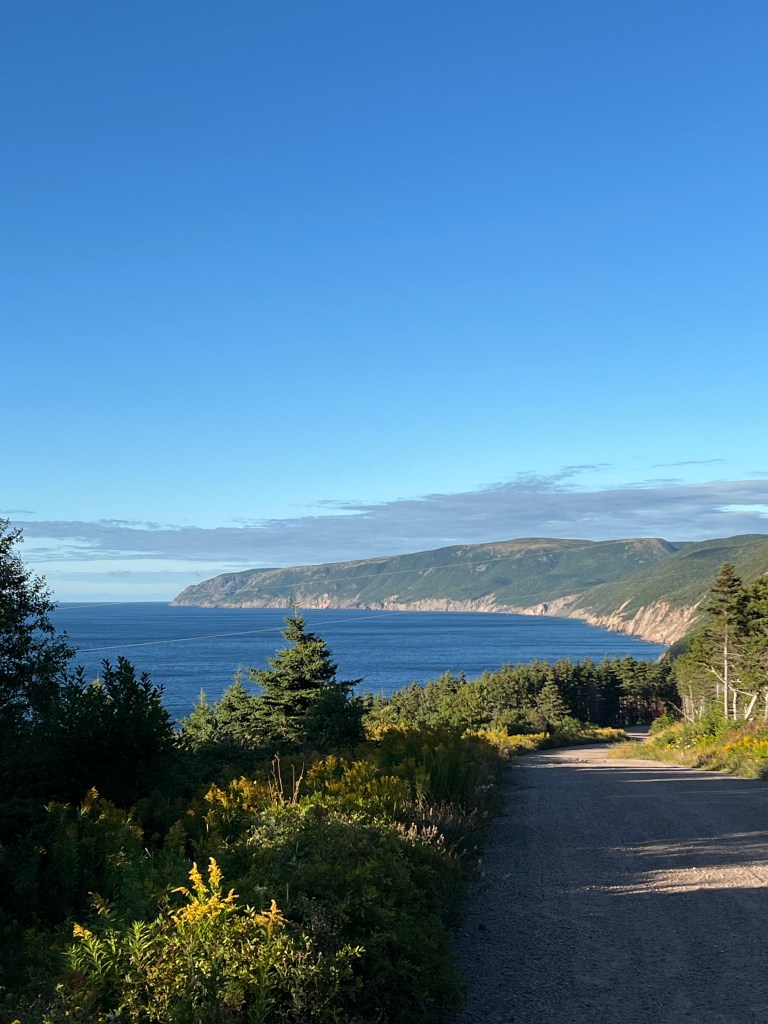
From Pleasant Bay onward, the Cabot Trail feels like it opens up at every turn. The road clings to the mountainside, the Atlantic stretching endlessly below. Each curve offers something new: a burst of wildflowers, a sliver of beach far below, a rush of wind that smells like pine and salt. The trail demands our focus but rewards us with awe.
Before leaving Pictou, our campground neighbor Dwayne had warned us with a grin, “Watch out for the hill people up north. You’ll know when you get there.” What we find instead is Meat Cove, a windswept, cliffside campsite where ocean and sky meet in spectacular fashion. It’s less remote wilderness and more adventurer’s resort, full of tents, camper vans, and laughter drifting through the salt air. We can’t help but laugh at the irony.
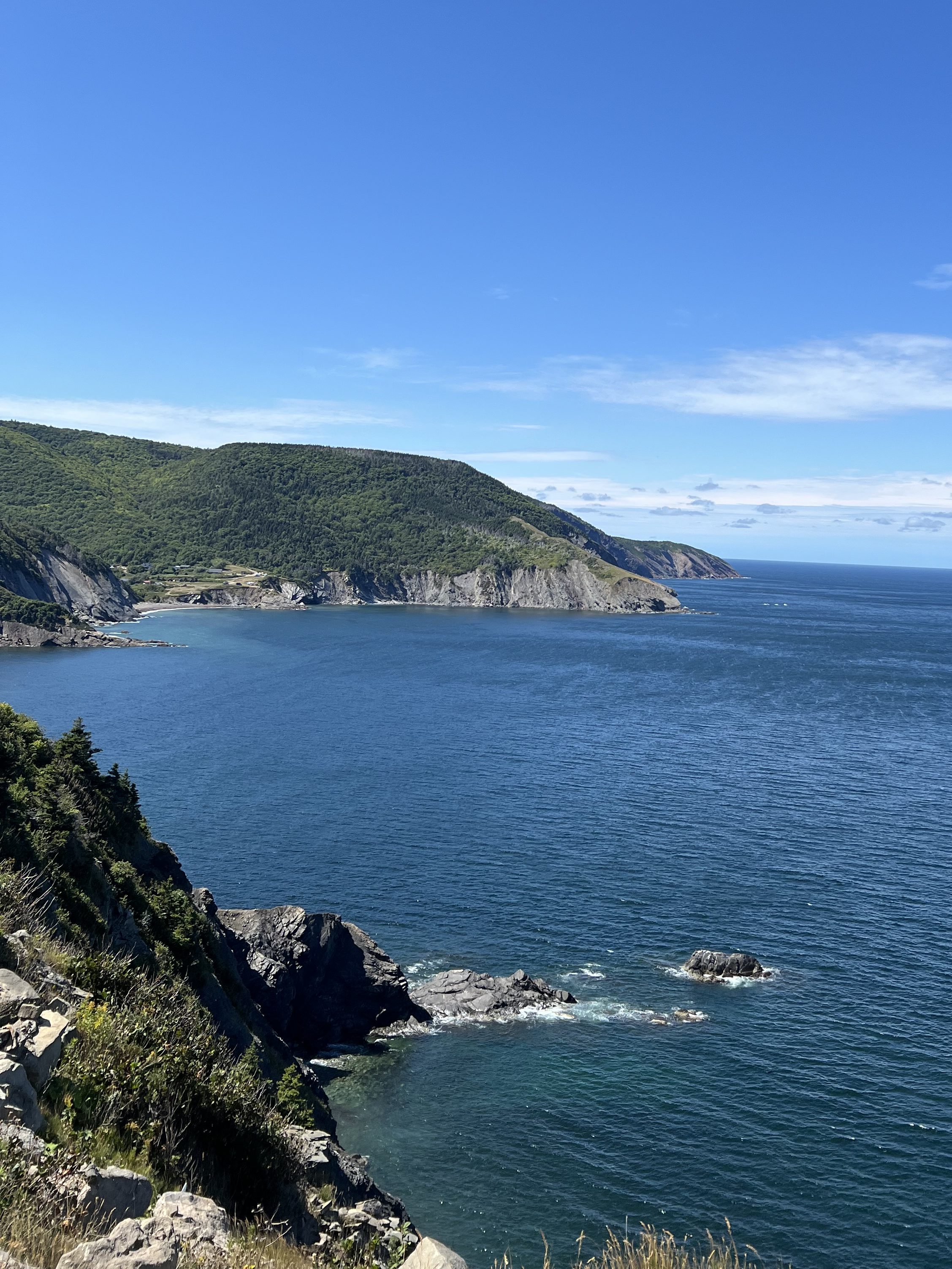
As the sun dips into the horizon and the waves crash below, the beauty of it all leaves us silent.
We rarely plan campgrounds ahead, so our options often depend on timing and our sore backsides. Balancing the choice between riding longer or settling for what’s available has led us to some of our best surprises. Sometimes the gamble lands us somewhere extraordinary, like a stretch of beach framed by forest and ocean.
That’s how we find our next stop: A literal beachside campground. I imagine a magical night by the sea, the kind of place you see in travel magazines. For the first hour, it’s just as whimsical as I’d imagined. The sky turns from gold to deep indigo, the waves hum softly, and the tent glows warm from lantern light. Then the wind shifts.

What starts as a breeze becomes a gale. The tent walls whip and snap, and sleep becomes a distant dream. Then comes the rain. We scramble to zip the fly shut, sealing ourselves in a humid cocoon that feels half sauna, half shelter. By morning, we’re bleary-eyed and delirious, the night officially filed under “memorable disasters.”
Coffee is non-negotiable, so we roll onto a small cable ferry and ride straight across without dismounting in Englishtown. Breakfast follows, along with the inevitable conversation about why we do this to ourselves, hauling gear, chasing weather, and sleeping on noisy, slippery fabric.

Refueled and restless, we continue east to circle the island completely. The wind roars against our helmets as we ride through stretches of empty coastline, windswept trees bending inland. On this side, there are fewer tourists, more “for sale” signs, and a quiet stillness that feels both freeing and slightly eerie.
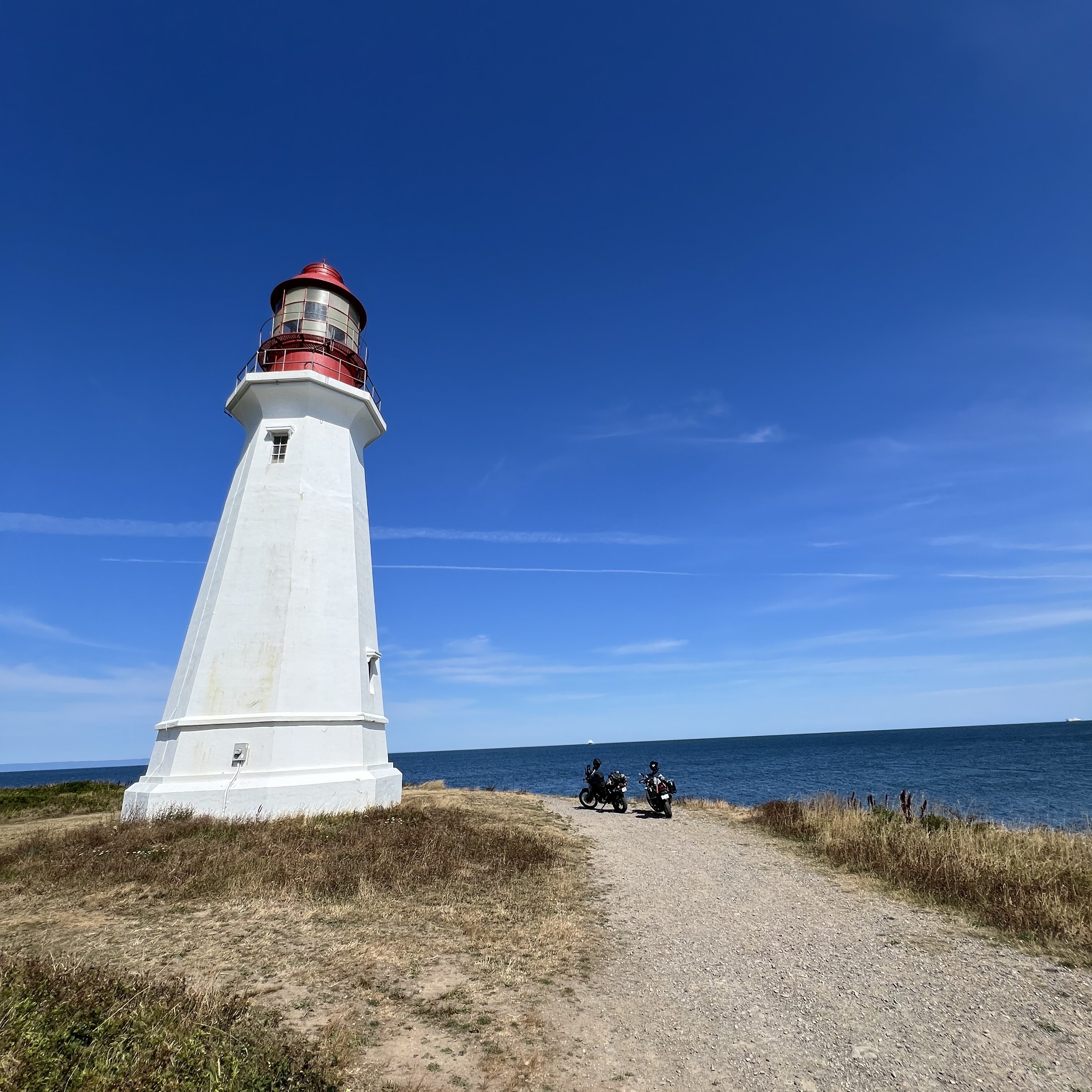
Lighthouses dot the shoreline, white and red against the blue horizon. Even after a dozen of them, their silhouettes never lose their magic. They are symbols of endurance, quiet keepers of the Maritimes.
Further south, we reach Isle Madame and the village of Petit-de-Grat, a serene fishing community shaped by the sea. The road meanders along the coast, where pastel homes rest close to the water and boats sway gently at their docks. The air smells faintly of salt and seaweed, touched with the clean smell of linens hanging on clotheslines.
The pace here is unhurried. Every bend reveals another cove, another weathered shed, another moment worth remembering. Locals wave as we pass, their gestures warm and familiar. Isle Madame feels humble, proud, and deeply rooted—a place where the sea is both companion and teacher. Riding here isn’t about distance; it’s about simply being present.

We end our loop at a small pub, toasting the ride with a local specialty: the donair fried roll. Crispy, rich, and exactly what tired riders need. Once again, the sun dips below the horizon, and though a few hours still stand between us and the Bus, the pull of our soft bed wins out.
Helmet hair, rosy cheeks, and road dust—signs of an adventure well lived. The Cabot Trail has earned its place in the Chronicles.
 NOMADIC ADV