Tag: camping

  • Kickstand Chronicles, Vol. 2: The Island Ride

    Kickstand Chronicles, Vol. 2: The Island Ride

    The morning air carries a hint of salt and goodbye as we load the bikes for one last Maritime ride. The camping gear is packed, coffee cups emptied, and there’s that familiar buzz that always hums before the road unfolds. Our time out east is almost over, but before we turn the page, we have one more chapter to write.

    Leaving early from Pictou, we follow quiet backroads lined with fall-tipped trees, the kind of roads that make you slow down just to take them in. The pavement unwinds through open farmland and sleepy towns, each turn framed by bursts of golden light as the sun climbs higher. As the coast gets closer, the air thickens with salt, and the horizon opens up wide, a reminder that the ocean is never far away in the Maritimes.

    As we near the Confederation Bridge, an overlook offers the first glimpse of it: A ribbon of concrete stretching impossibly across the ocean. From a distance, it doesn’t even look real, just a delicate line connecting two worlds. It’s wild to think that in a few minutes, we’ll be riding into another province on one of the longest bridges in the world.

    Crossing the bridge is something else entirely. Heading toward Prince Edward Island, the view feels endless, water and sky melting together in every direction. We stand on the pegs to catch it all, the horizon rising on both sides, the wind tugging at our jackets, the steady rhythm of the bikes echoing between the rails. Going this way, it feels lighter, freer, like the start of something new rather than the end of a journey.

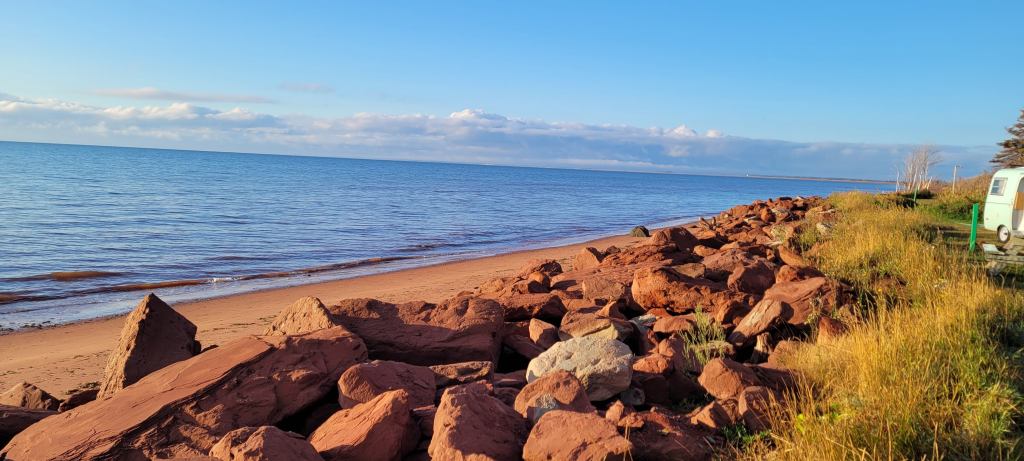
    The moment our tires touch down on the island, the landscape changes. The soil here is unmistakable, a deep, rusty red that stains our boots and glows under the afternoon sun. It owes its color to iron oxide in the sandstone, a natural pigment that seeps into everything, from the roots of the potato plants to the rhythm of island life itself. Red earth, blue skies and green fields is a palette worthy of the greatest artists. 

    We roll in from the southwest corner of Prince Edward Island, aiming to trace the island’s edges like a ribbon and follow the road wherever it leads. The ride takes us through wide expanses of farmland, rows of potato plants stretching endlessly in neat, earthy rows. Tractors rumble in the distance, and a few farmstands sit unmanned, jars for coins left on wooden counters.

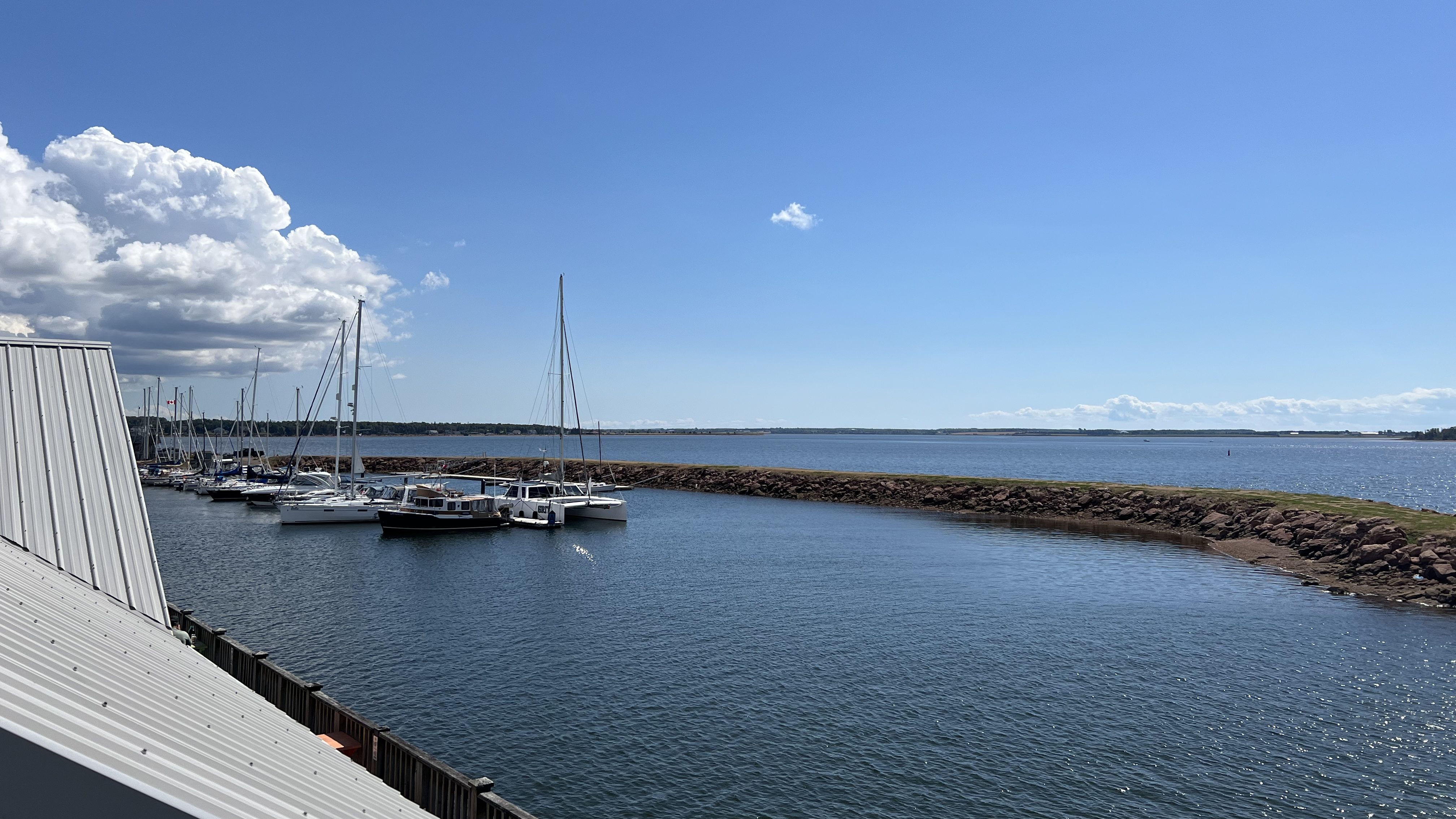
    Our first stop is in Summerside, where the Deckhouse Pub & Eatery makes for a perfect mid-day break. We park the bikes at Spinnakers Landing, a colorful boardwalk market built on the water. The area is lined with boutiques, ice cream stands, and hand-painted signs swaying in the breeze. The harbor is calm, the sunlight soft. A cold cider and a plate of nachos never taste as good as they do after a long morning in the saddle. From the patio, we watch the sailboats rock gently in the marina, that easy kind of movement that makes time stretch a little longer.
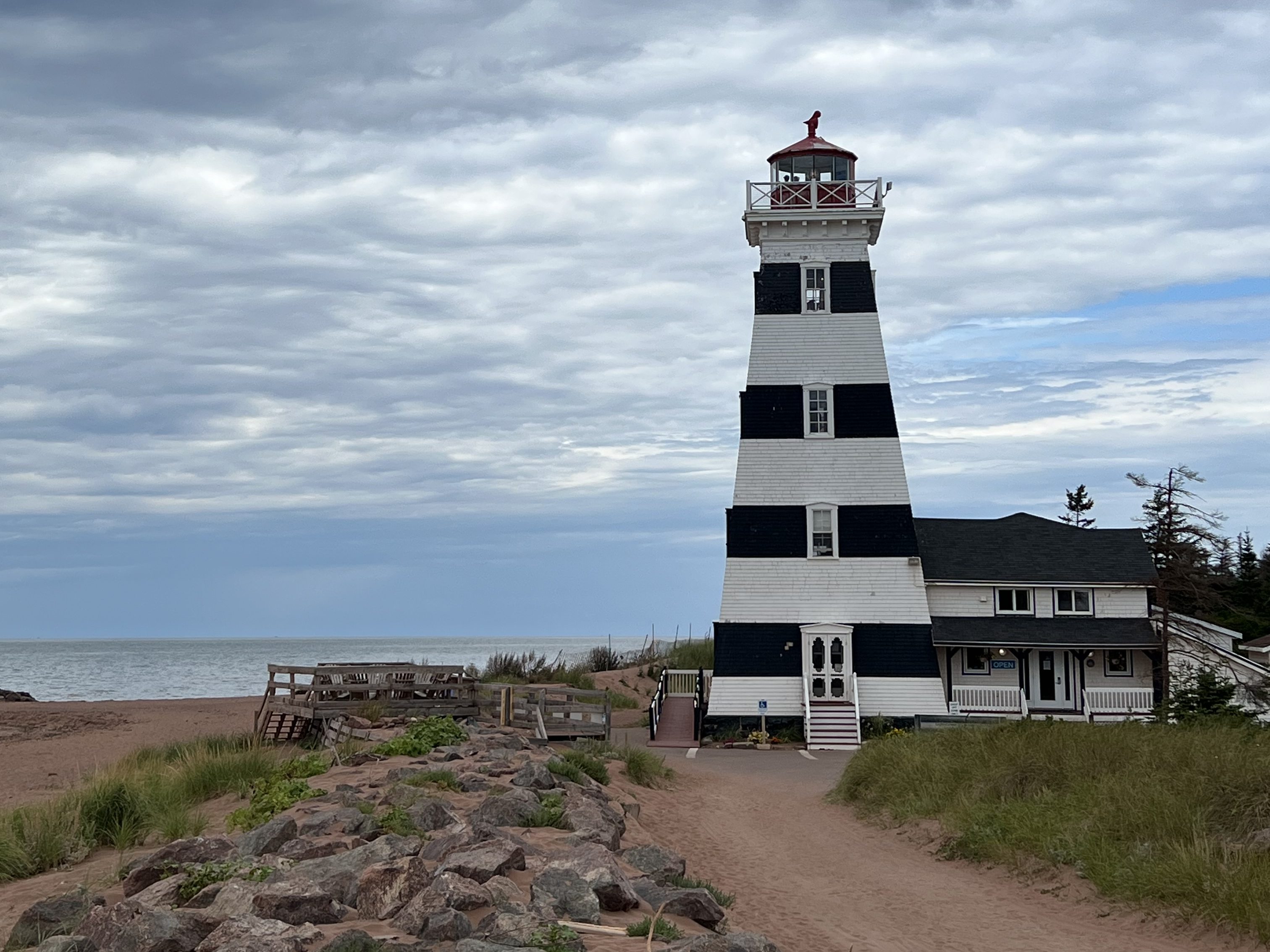
    From there, we push west toward the tip of the island until the road narrows and brings us to Cedar Dunes Provincial Park, home of the iconic black-and-white West Point Lighthouse. It rises from the dunes like a painted sentinel, overlooking miles of empty beach. The air smells faintly of salt and pine, and the sand here carries the same red hue that defines the island, soft underfoot and glowing against the dark bands of the lighthouse tower.
    We turn north, winding our way toward the island’s uppermost coast. The roads here are quieter and narrower, sometimes paved, sometimes not. At one point, we turn onto a red dirt road that cuts sharply toward the water. The front tire slides slightly where compact soil gives way to looser ground. A tight right-hand turn reveals a wide and sudden view: tall grass swaying in the wind, the ocean just beyond, and a line of weathered coastal homes standing proud against the horizon.

    The rhythm of Prince Edward Island’s rural charm feels both familiar and distinct. The houses echo the Maritime spirit, with their wooden siding silvered by salt air; and yet they have their own unique character. Blue and red roofs brighten the muted landscape while wide porches face the sea.

    The road narrows farther north, curling along the coast where fishing boats rest on shore and the landscape grows wilder, quieter too, as if the island itself is tapering off into the sea. A sudden rise in the horizon reveals the unmistakable silhouette of a windmill turning slow and steady against the sky. One becomes two, then a line of them, their blades cutting through the coastal wind in perfect sync.

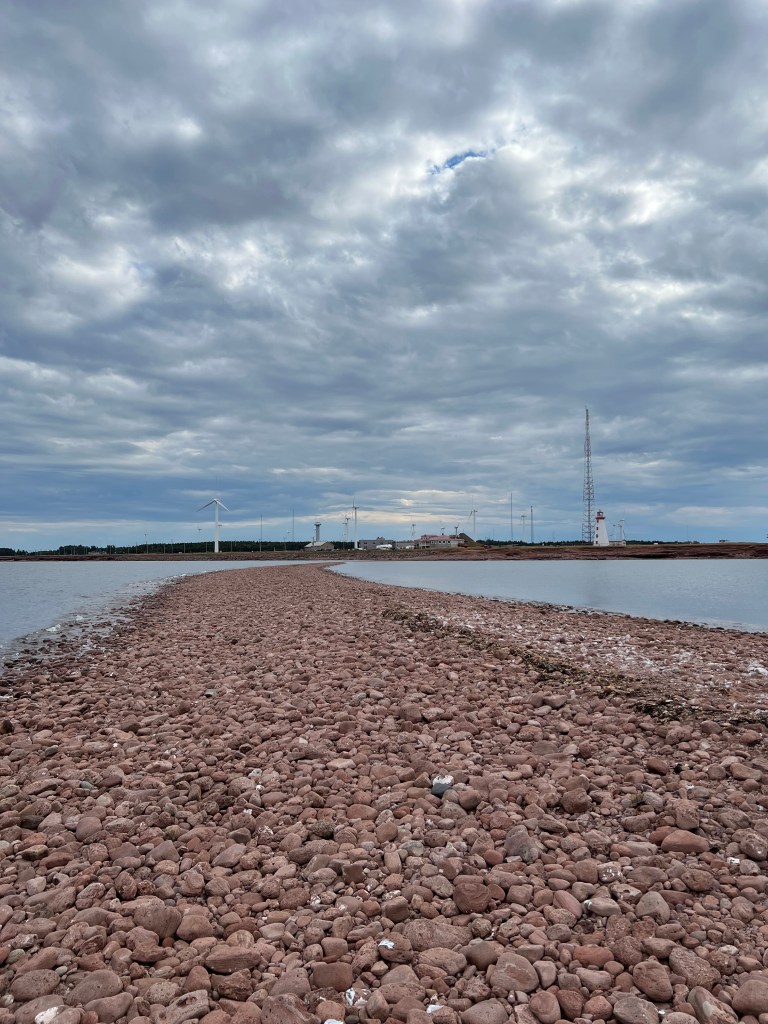
    Route 12 carries us all the way to North Cape, the northwestern tip of Prince Edward Island, where the Gulf of St. Lawrence presses in from one side and the Northumberland Strait from the other. Their waters meet in a restless dance that never truly ends. The cliffs are carved deep and red, layered like the pages of time. From the edge, we can see the reef stretch far into the distance, a long spine of rock disappearing two kilometers into the sea. When the tide is low, you can walk along it, seeing a few grey seals in the distance. 

    The lighthouse at North Cape stands quietly among it all, weathered by years of salt spray and shifting seasons. Its white walls catch the last light of day, glowing against the copper earth. Waves curl and crash along the reef while gulls wheel overhead. Every sound feels amplified — the wind, the surf, the creak of metal on the turbines turning behind us. If you time it right, you can see the moment the two bodies of water meet, their currents twisting in a pattern that looks alive.

    Fuel for Thought: When to Turn Back

    After leaving North Cape, the afternoon light fades faster than expected. The air feels heavier, the colors flatter. What was once a bright stretch of coastal road is now  a shade of gray that signals change. The clouds over the Gulf darken, and we both know what’s coming.

    We push on, hoping to find a place to stay farther down the coast. Jacques Cartier Provincial Park flashes by on our left but we keep going, convinced something better lies ahead. The towns grow smaller, the houses more scattered. Gas stations and motels become rare, and it becomes clear that “ahead” may not hold much at all.

    The first bed and breakfast we find has no vacancy. The next town doesn’t have accommodations at all. The dark gray clouds roll in low and fast, and a few raindrops tap our visors as we pull over, helmets off, weighing our options.

    If we keep going, we’ll ride straight into the storm. We’ll end up wet, with nowhere to dry our gear, and no guarantee of shelter. It is the tug-of-war every motorcycle rider faces: Wanting to keep moving forward while knowing it is time to turn back.

    We pause and realize the answer is obvious. Turning back feels like defeat, but logic wins out. We retrace our path to Jacques Cartier Provincial Park, watching the sky change from gray to slate as we ride.

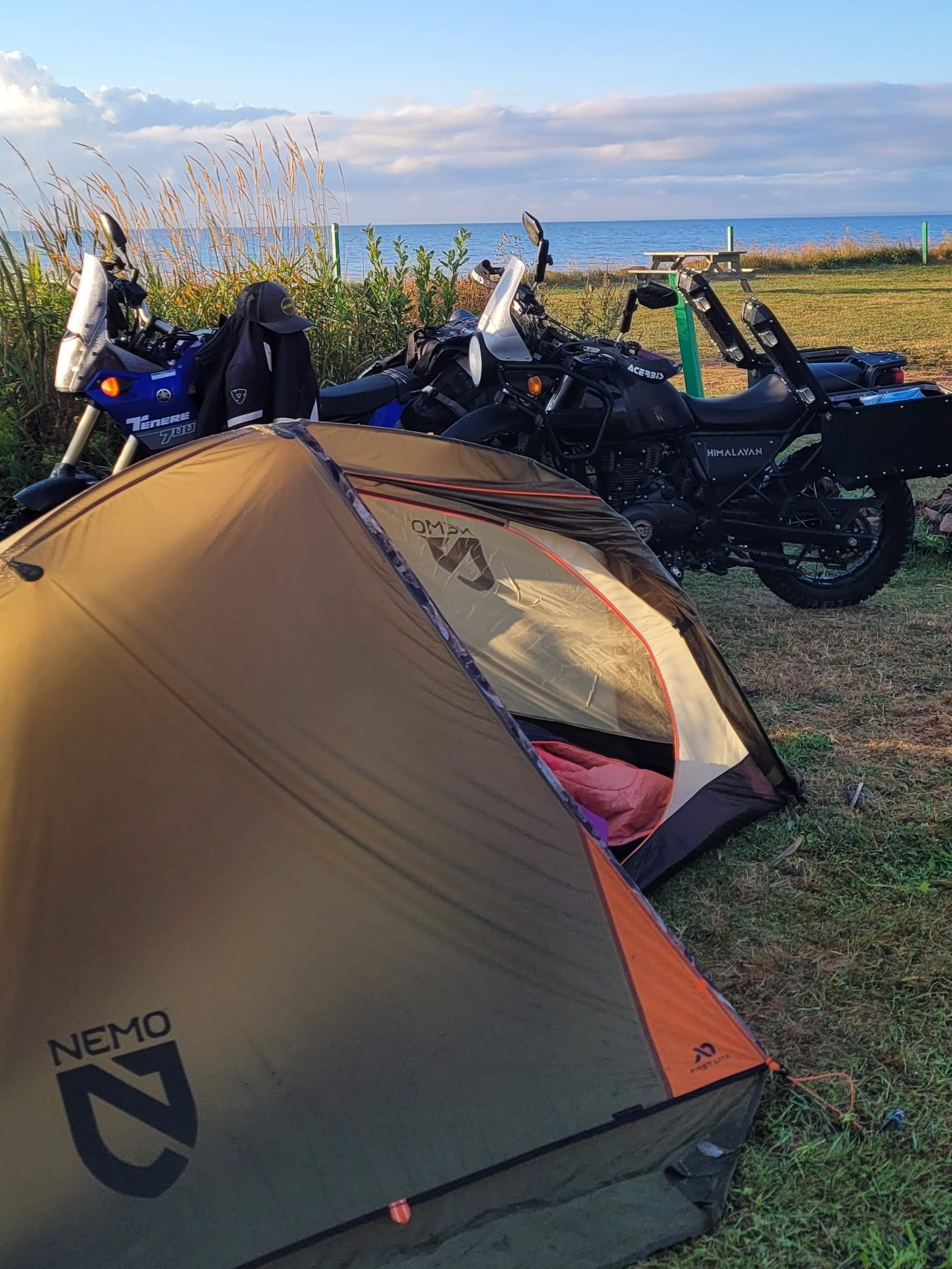
    Happily, luck is on our side: A tent site is still available, right by the ocean. We smile at the irony. Another night beside the waves — round two after our sleepless Cabot Trail storm. Hopefully, this one treats us better.

    The clouds are almost on top of us now, dark and heavy, moving fast. We waste no time. The tent goes up in record speed (under five minutes flat) poles snapping into place, gear tossed inside, rainfly clipped down just as the first drops begin to fall. Within moments, the patter of rain becomes a full symphony against the fabric roof. We climb inside, damp around the edges, but dry where it counts.

    It rains most of the night. The sound of wind and water blends into a rhythm that eventually lulls us to sleep. By morning, the world feels washed clean. The sun breaks through, the ocean sparkles, and the smell of wet earth hangs in the air. Our gear is dry, spirits lighter, and the road around the island waits once again.

    Day Two: Cavendish to Pictou

    We wake to clear skies and the promise of a full day on the island. After yesterday’s storm and a long night of rain, we know we won’t be able to circle the entire island. Instead, we head for Cavendish Park, one of the most celebrated corners of Prince Edward Island.
    The landscape opens up in soft, rolling hills of emerald green, dotted with white fences and small farmhouses. Cavendish Park is a study in contrasts: rugged red cliffs plunging into the Northumberland Strait, waves crashing at their base, juxtaposed with wide stretches of sandy beaches that curve toward the horizon. Hiking trails weave through the dunes, tall grasses swaying in the breeze, and the air carries a faint mix of salt, pine, and the subtle sweetness of late-season flowers. We pause often to take it all in — the cliffs, the beaches, and the expansive dunes that feel almost endless under the bright sky.

    Eventually, we push on, passing through Morell as we make our way south toward the ferry. Our plan is simple: grab tickets at the gate, maybe eat in town depending on timing, and catch the next ferry of the day. Easy enough, we think.

    It is not easy.

    At the ticket booth, chaos awaits. The clock reads 1:27 p.m., and the boat departs at 1:30. There is no time to second-guess. Motorcycles are easier to load than cars, apparently, so we’re hustled to the ferry. The lady at the booth radios ahead to confirm we can go, and suddenly it’s a race. The horn blares, the motors roar, and the massive door begins to close just as we roll forward. The ferry leaves the shore before we’ve been able to turn off the bikes.

    Down on the lower deck, the cacophony of engines, metal, and shouted instructions is deafening. A crew member calls out that we need to strap down our bikes. I freeze. How exactly do you strap down a motorcycle? Chris, calm as ever, grabs the hanging straps and quickly secures his bike. Then he straps mine. Done. Smooth. Efficient. I marvel at his composure.

    Once the bikes are secure, we make our way to the top deck. Wind hits us, saltwater spray in the air, and the island falls away behind us. Waves churn alongside the hull, the ship slicing through the channel with a power that is impossible to ignore. We settle into the moment, watching the coastline fade.

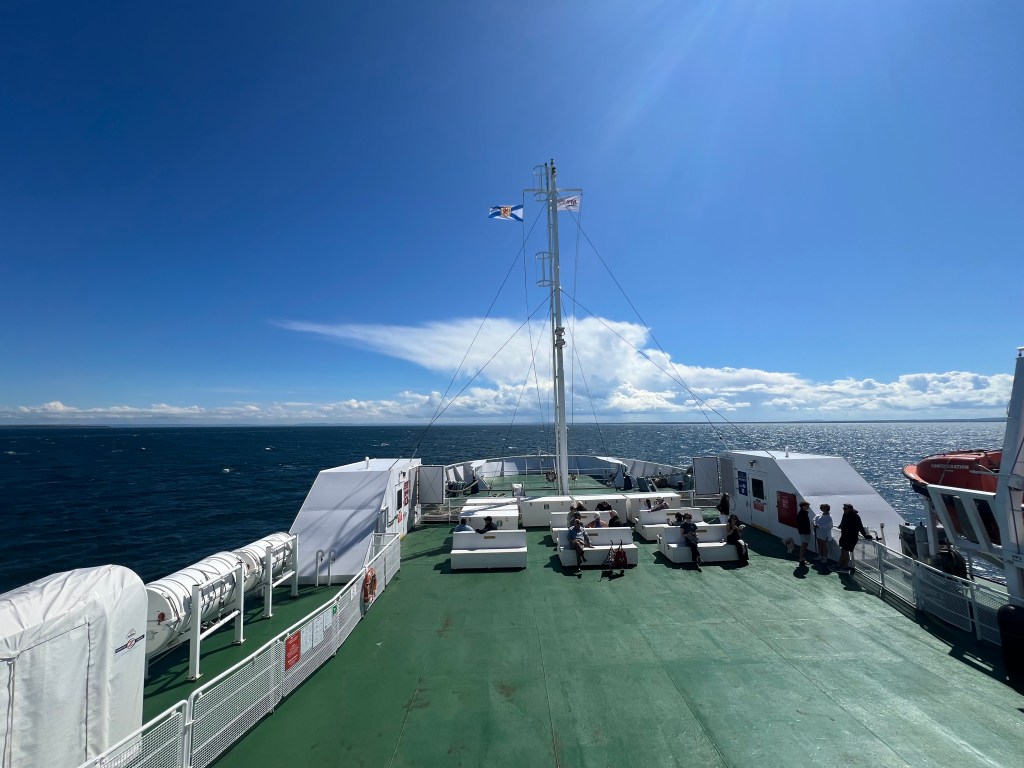
    Eventually, the horn sounds again — time to return to the vehicles. Pictou comes into view. The crew instructs us to go to the front of the ferry and exit first. My stomach tightens. The deck looks slick, and the slightest misstep could send a bike and rider sprawling. Chris remains calm, while a crew member offers to help.

    “Easy does it,” the man says, pushing my bike backward slowly. I tiptoe alongside him, holding just enough to balance.

    “Thank you, sir,” I say. “I really didn’t want to end up on the floor as things get busy.”

    “Ah, don’t worry,” he replies. “You wouldn’t be the first or the last to drop your bike here.”

    “Good to know,” I murmur, trying to steady my nerves. “But still, I don’t want to become part of those stats.”

    The bike touches asphalt, the ferry door swings open, and just like that, we are back on solid ground. Adrenaline still humming, we roll away, grinning at the equal measure of chaos and relief we experienced. 

    As the day winds down, we make our way to the campground, the last stop before we pack up for our departure from the Maritimes and prepare for the next leg of our journey. The Maritimes have given us cliffs and beaches, windmills and reefs, storms and sun, and enough small adventures to fill volumes. As we ride these quiet final stretches, it’s impossible not to feel grateful for the roads we’ve traveled, the moments we’ve shared, and the lessons we’ve learned along the way.

    This chapter closes, but the road, as always, is waiting.

  • Kickstand Chronicles, Vol. 1: The Cabot Trail

    Kickstand Chronicles, Vol. 1: The Cabot Trail

    The hum of our engines cuts through the morning fog as the first light spills over our campsite in Pictou. The world is quiet except for the low rumble of anticipation and caffeine kicking in. We’re gearing up for our first multi-day motorcycle trip, the beginning of The Kickstand Chronicles, a collection of rides, reflections, and fleeting moments that remind us of why we chase horizons on two wheels. 

    Our destination is the legendary Cabot Trail. One hundred and eighty-five miles of winding asphalt carved through cliffs, forests, and sea spray. It’s the worst-kept “hidden gem” among motorcyclists, a bucket-list ride we’ve dreamed about for years. Today, it’s finally happening. 

    But before a wheel even turns, the age-old debate arises: Clockwise or counterclockwise? Ask any local, and you’ll hear passionate arguments for both. After hours of forum scrolling, campground chats, and a fair bit of indecision, we settle on counterclockwise. That route hugs the coastline, keeping the ocean to your right, the edge so close you can taste the salt in the air. Some say it can trigger vertigo. I call that a front-row seat to the Atlantic. Besides, I tend to romanticize everything, remember? 

    Panniers packed, GPS loaded, comms charged, we roll toward Cape Breton Island. The drive takes just over an hour, and we avoid the highway whenever possible. When we finally cross the causeway, signs boast about the world-famous Cabot Trail. Unsure how far apart gas stations might be, we fill up and set off. 

    The plan is clear. Counterclockwise it is. 

    Except, within twenty minutes, it isn’t. 

    Something feels off. “This doesn’t look right,” I mention through the comms. 
    “This is definitely the way,” Chris replies, his voice full of confidence. 

    Given my less-than-stellar navigation record, I let it go—until a few miles later, I hear a faint “Crap” through my helmet. 

    “What is it?” I ask. Silence. His blinker flashes, and he pulls to the shoulder. 
    “What is it?” I repeat, louder this time. 
    A pause, then a half-laugh, half-sigh. “You were right.” 

    Did I hear that correctly? I was right? 
    Too stunned to celebrate, I ask, “Wait, what do you mean I’m right?” 

    Turns out we had turned too soon and were heading clockwise the whole time. My carefully plotted route and dream coastal views vanished with one wrong turn. 

    We consider doubling back but quickly dismiss it. The road ahead is open, the day young, and retracing steps has never been our style. This is how we always travel: Part plan, part instinct, and a generous dose of improvisation. 

    How many miles we cover in a day depends on the weather, temperature, and how often I stop to admire the view (which is often). The only real rule is to keep moving forward, wherever the road decides to take us. 

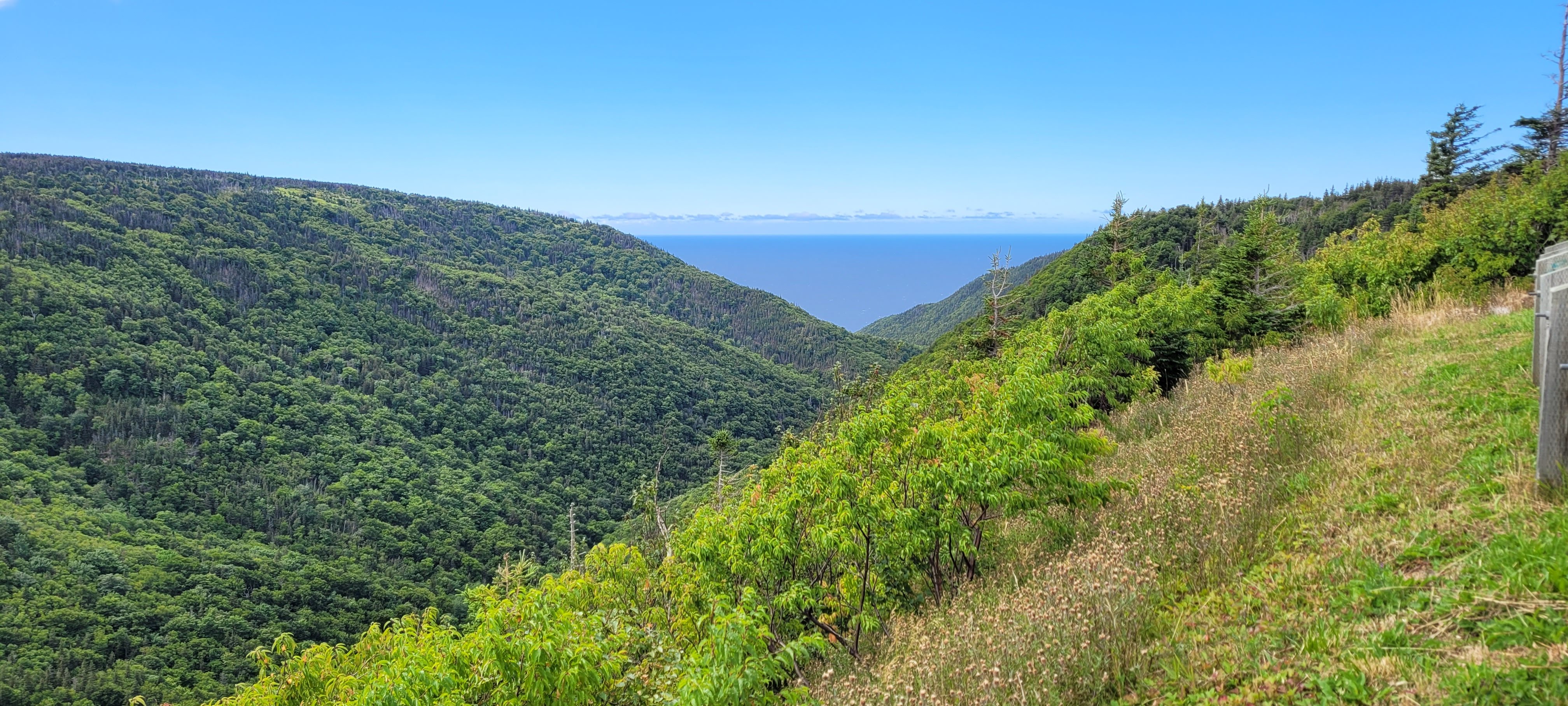
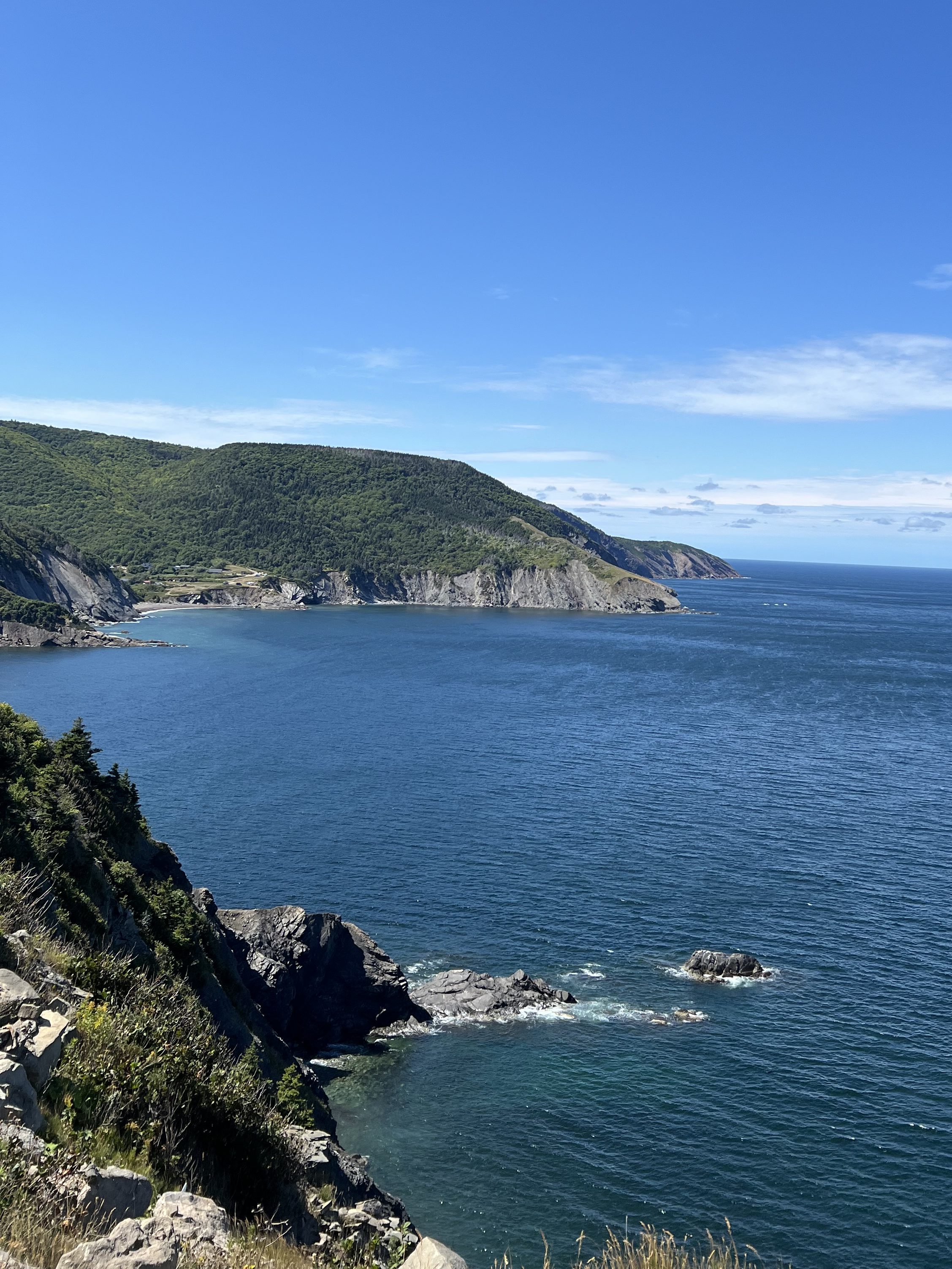
    At the entrance to Cape Breton Highlands National Park, a ranger waves us down to share tips on the best lookouts. This year, there’s no park fee, and thanks to a fire ban, campsites are easier to find. The gate lifts, and we shift into first gear, winding upward through curves that reveal spectacular ocean vistas. Steep cliffs drop vertically into blue depths. Just when we think we’ve seen the best view, the next corner proves us wrong. Choosing which lookout to stop at becomes a battle with FOMO. 

    As everything feels perfect—the bikes humming, the sun warm on our shoulders, the road unfurling ahead—we pull over at a scenic curve along MacKenzie Mountain. From here, the coastline stretches endlessly into the Atlantic, rugged cliffs stand proud beneath a sky too blue to be real. Tourists gather at the viewpoint, laughter and camera shutters carried by the wind. 

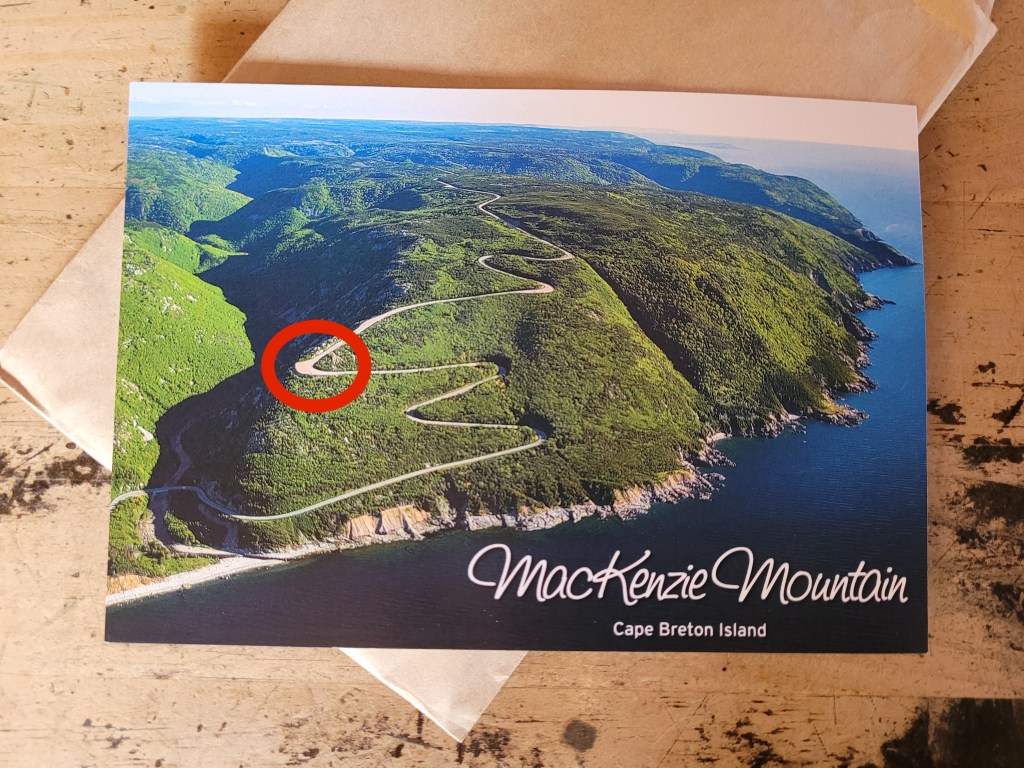
    MacKenzie’s turns sweep down the mountain in wide arcs, but the parking lot sits on a noticeable slant. Not much, just enough. 

    When it’s time to leave, I swing my leg over the seat and feel it: that slow, sinking shift. “No, no, no…” I whisper, but gravity has already decided. In slow motion, the bike leans, wobbles, and with a loud splat hits the asphalt. 

    Unfortunately, I go down too. My body flings sideways like a ragdoll in a bad stunt reel, landing flat on my back, arms sprawled out as I stare up at the sky in disbelief through the rectangle of the helmet visor. 

    In my ear, Chris’ sigh comes through, one part patience, one part prophecy. He had already noticed the slope and parked me in a safer spot. And here I am, proving him right again. 

    Tourists rush to help, their concern comically disproportionate to my bruised ego. Together, we heave the bike upright, her shiny new handguard scuffed, my pride thoroughly demolished. 
    “You good?” Chris asks, his tone halfway between concern and amusement. 
    “Yep,” I answer. “Now please help me lift this thing so I can die of embarrassment somewhere else.” 

    The “I fell here” memento I made from a postcard bought in a nearby shop.

    And just like that, the perfect ride has its first mishap, the kind that becomes a favorite story later. Or a cautionary tale. Whichever one calls to you best. 

    We continue through the valleys of Cape Breton Highlands, the scenery still surreal. Cliffs plunge into the sea, winding roads weave through dense trees, and every curve reveals another picture-perfect moment. As the sun dips low, we start scanning for a campsite. 

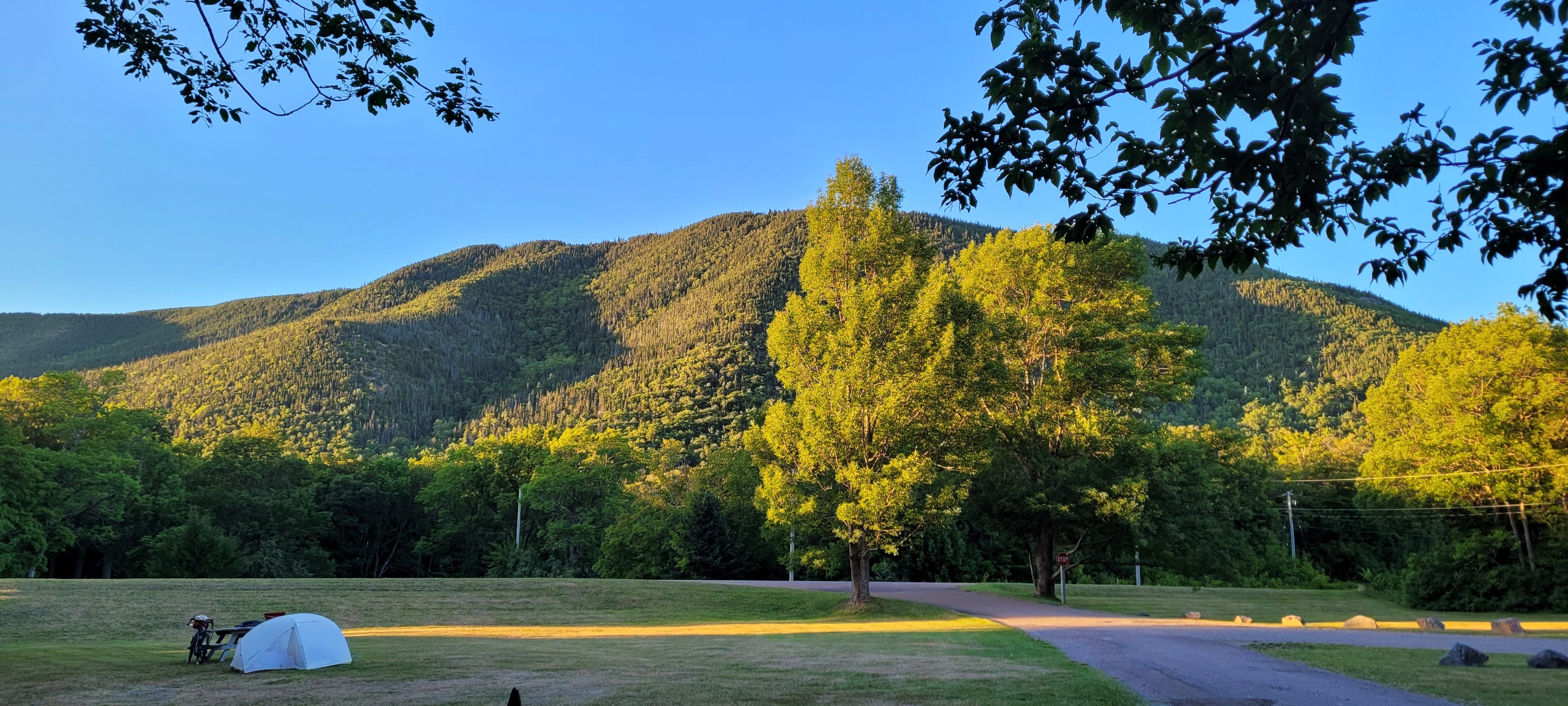
    We find a quiet spot near the mountains, nothing but rustling leaves and a babbling brook nearby. Our only neighbor is a small tent with a lone bicycle parked beside it. We had seen the same bike earlier, the rider grinding up a steep incline while we cruised past, impressed and a little guilty. 

    Curiosity wins, and we wander over. That’s how we meet Johan from Lyon, France, who is cycling across Canada, from Vancouver to Newfoundland. By now, he has pedaled nearly five thousand miles, averaging 70 a day and surviving on Knorr meal packs. Genius, really. We have spent far too much on dehydrated camping meals, and here he is proving the cheaper ones taste just as good. 

    As we walk back to our tent, I sigh dreamily. 
    “Wow,” I say. “I want to try that kind of travel someday.” 
    Without missing a beat, Chris replies, “You couldn’t ride from here to the road without getting winded.” 
    Touché. 

    The next morning greets us with stiff backs but another golden sunrise over the mountains. Sleep wasn’t great, but the view makes up for it. We pack our gear, stretch our sore muscles, and head to Pleasant Bay for a long-anticipated whale-watching excursion. 

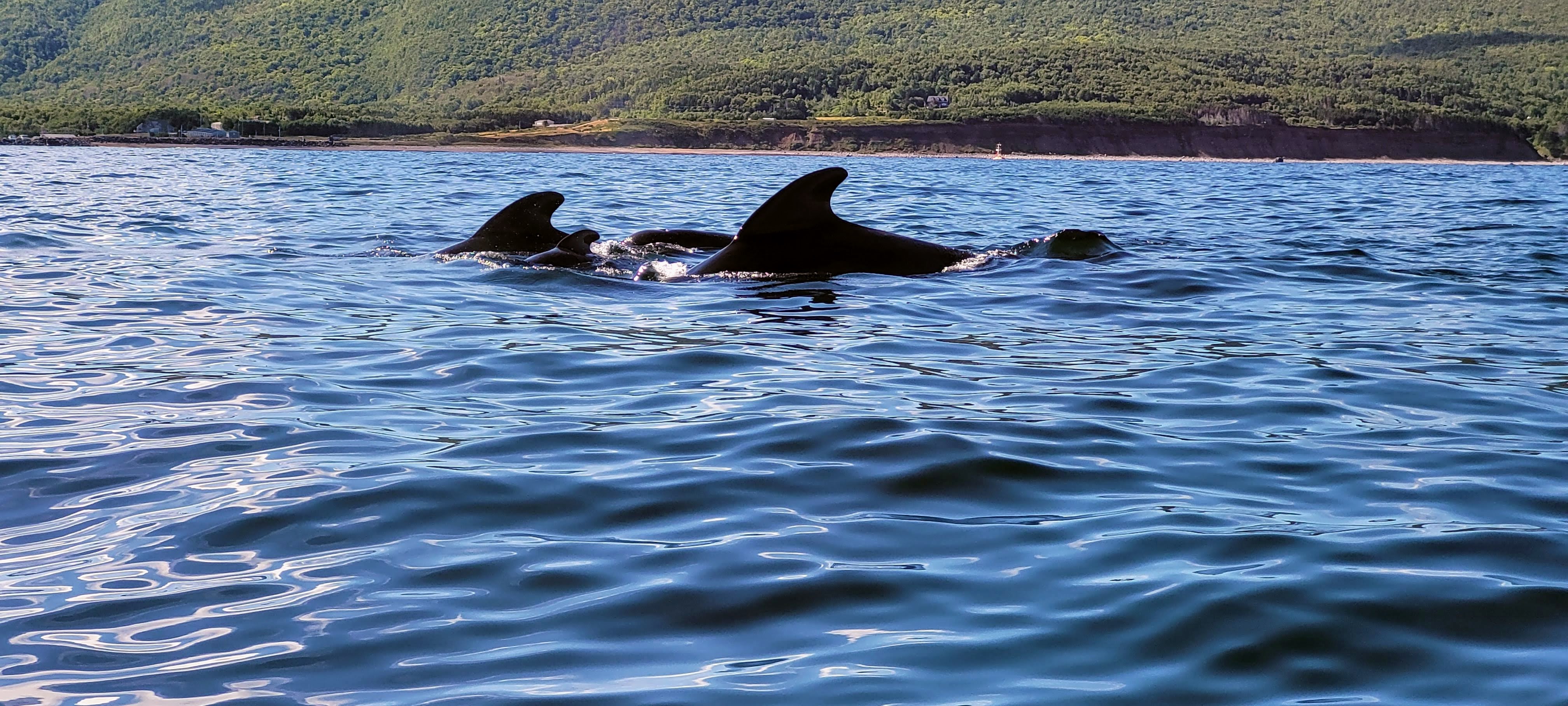
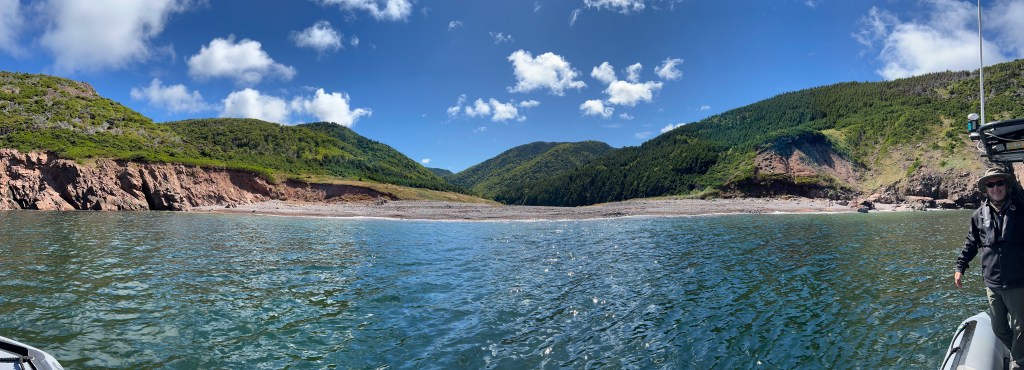
    At the dock, Captain Mark welcomes us aboard a small zodiac. His energy is contagious, his stories blending fact and folklore with effortless charm. As we head out, the sea greets us with gentle swells and salt spray. Before long, a pod of pilot whales surfaces nearby, sleek and curious. Mothers and calves glide between the waves, unbothered by our presence. 

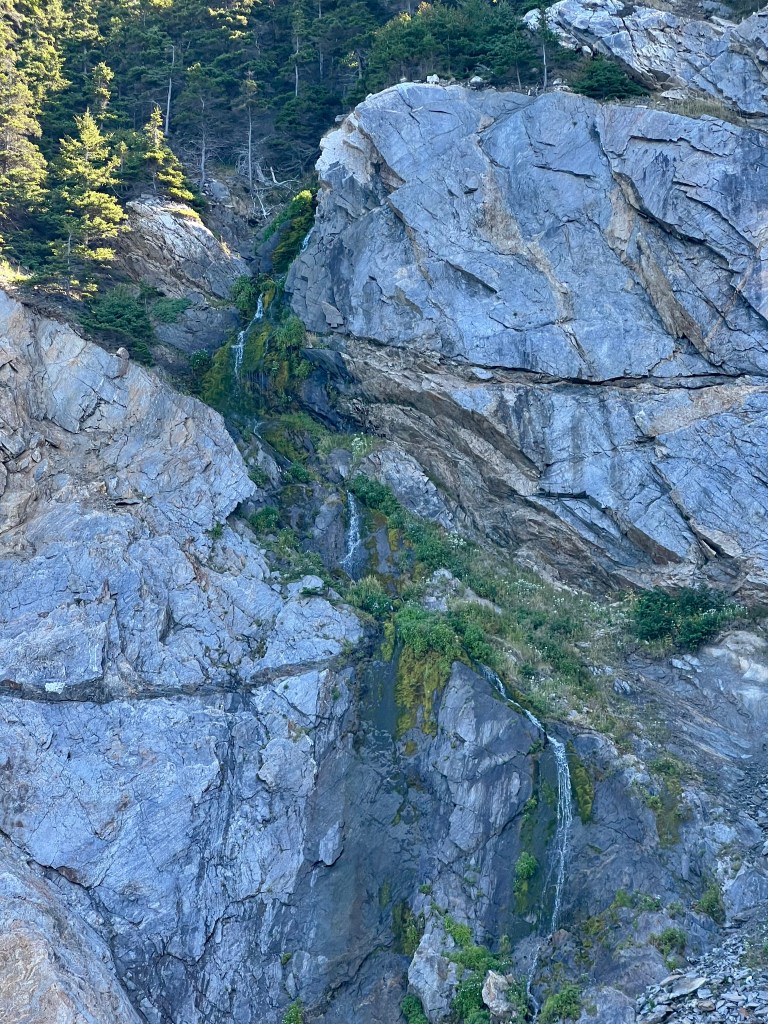
    Above us, Northern Gannets dive like arrows into the sea. Closer to shore, cliffs rise in jagged layers, their edges carved by time. Captain Mark points out “The Old Man,” a rock face shaped by nature into a profile both haunting and human. Grey seals pop their heads above the water, watching us with curious eyes before slipping beneath the waves again. 

    After two hours on the water, we return to shore, salt-streaked and grinning. It’s the kind of experience that lingers long after you’re back on land. 

    Side note: our GoPro didn’t survive the adventure. In a burst of enthusiasm, Chris dunked it underwater for the perfect whale shot. Minutes later, it blinked, sputtered, and died. Saltwater, as it turns out, isn’t forgiving. Another casualty of curiosity. 

    Later that day, we follow a small dirt path toward a Buddhist temple we spot on a roadside sign. The trail twists through trees and opens to a clearing where a white and gold stupa gleams under the sunlight, prayer flags fluttering in the breeze. The air feels still and sacred. Carved messages speak of peace and presence, a quiet reminder to slow down. 

    Captain Mark had mentioned that each year, monks here buy a local lobster catch, bless the lobsters, and release them back into the sea. It’s their way of giving life another chance, just in case one of their brothers has returned in shellfish form. The story lingers with us as we ride away, engines blending with the hum of the forest. 

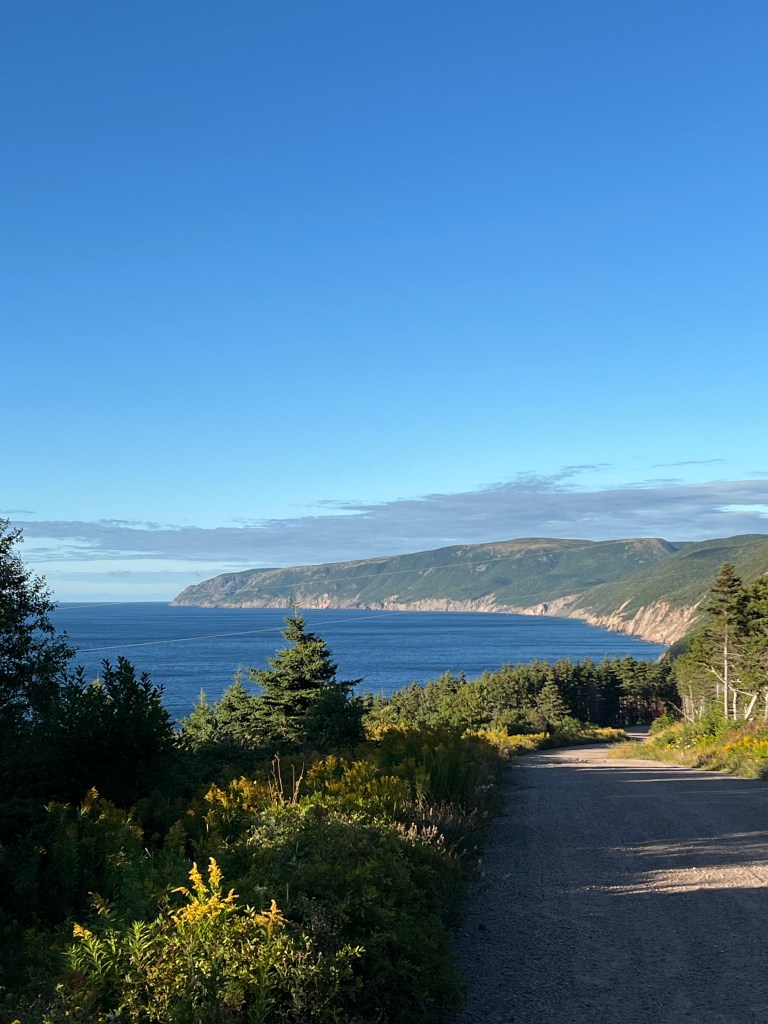
    From Pleasant Bay onward, the Cabot Trail feels like it opens up at every turn. The road clings to the mountainside, the Atlantic stretching endlessly below. Each curve offers something new: a burst of wildflowers, a sliver of beach far below, a rush of wind that smells like pine and salt. The trail demands our focus but rewards us with awe. 

    Before leaving Pictou, our campground neighbor Dwayne had warned us with a grin, “Watch out for the hill people up north. You’ll know when you get there.” What we find instead is Meat Cove, a windswept, cliffside campsite where ocean and sky meet in spectacular fashion. It’s less remote wilderness and more adventurer’s resort, full of tents, camper vans, and laughter drifting through the salt air. We can’t help but laugh at the irony. 

    As the sun dips into the horizon and the waves crash below, the beauty of it all leaves us silent. 

    We rarely plan campgrounds ahead, so our options often depend on timing and our sore backsides. Balancing the choice between riding longer or settling for what’s available has led us to some of our best surprises. Sometimes the gamble lands us somewhere extraordinary, like a stretch of beach framed by forest and ocean. 

    That’s how we find our next stop: A literal beachside campground. I imagine a magical night by the sea, the kind of place you see in travel magazines. For the first hour, it’s just as whimsical as I’d imagined. The sky turns from gold to deep indigo, the waves hum softly, and the tent glows warm from lantern light. Then the wind shifts. 

    What starts as a breeze becomes a gale. The tent walls whip and snap, and sleep becomes a distant dream. Then comes the rain. We scramble to zip the fly shut, sealing ourselves in a humid cocoon that feels half sauna, half shelter. By morning, we’re bleary-eyed and delirious, the night officially filed under “memorable disasters.” 

    Coffee is non-negotiable, so we roll onto a small cable ferry and ride straight across without dismounting in Englishtown. Breakfast follows, along with the inevitable conversation about why we do this to ourselves, hauling gear, chasing weather, and sleeping on noisy, slippery fabric. 

    Refueled and restless, we continue east to circle the island completely. The wind roars against our helmets as we ride through stretches of empty coastline, windswept trees bending inland. On this side, there are fewer tourists, more “for sale” signs, and a quiet stillness that feels both freeing and slightly eerie. 

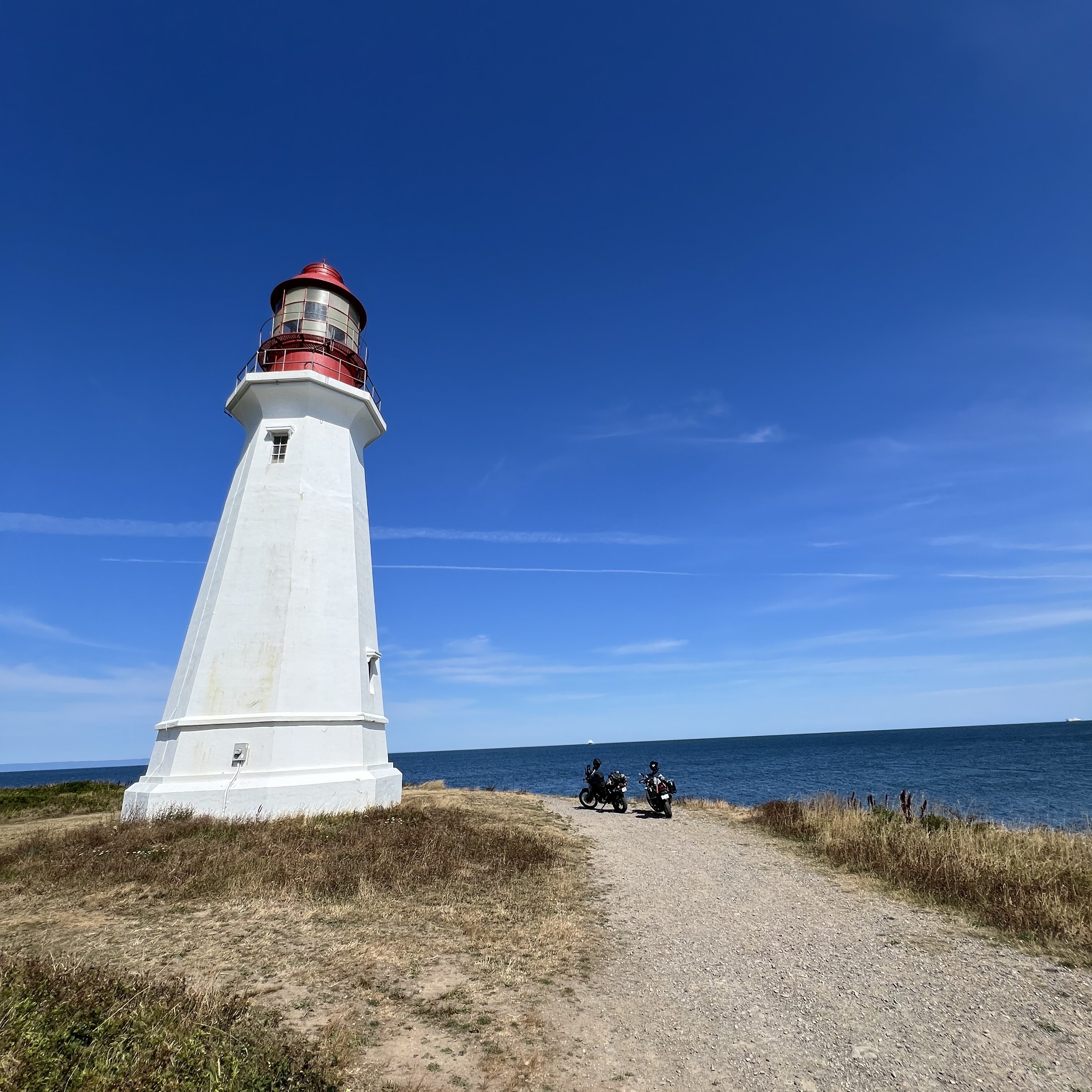
    Lighthouses dot the shoreline, white and red against the blue horizon. Even after a dozen of them, their silhouettes never lose their magic. They are symbols of endurance, quiet keepers of the Maritimes. 

    Further south, we reach Isle Madame and the village of Petit-de-Grat, a serene fishing community shaped by the sea. The road meanders along the coast, where pastel homes rest close to the water and boats sway gently at their docks. The air smells faintly of salt and seaweed, touched with the clean smell of linens hanging on clotheslines. 

    The pace here is unhurried. Every bend reveals another cove, another weathered shed, another moment worth remembering. Locals wave as we pass, their gestures warm and familiar. Isle Madame feels humble, proud, and deeply rooted—a place where the sea is both companion and teacher. Riding here isn’t about distance; it’s about simply being present. 

    We end our loop at a small pub, toasting the ride with a local specialty: the donair fried roll. Crispy, rich, and exactly what tired riders need. Once again, the sun dips below the horizon, and though a few hours still stand between us and the Bus, the pull of our soft bed wins out. 

    Helmet hair, rosy cheeks, and road dust—signs of an adventure well lived. The Cabot Trail has earned its place in the Chronicles. 

  • Home Purgatory

    Home Purgatory

    Making our way back to the campground after what we considered a moderately successful soft launch around Northern Minnesota, it was time to pack up and head back home. Being that we’re still not used to loading up the camper, it still took us a couple of hours of disorganized scrambling. We should really think about having a written checklist to minimize the back and forth. 1

    “But wait, Julia!” You’re probably asking, “You said you had given your notice to the apartment and that you were living out of the Bus now. Where is this home you speak of?”  

    Let’s call this phase of the trip home purgatory. It’s where there are a few loose ends we need to tie up and certain additions we need to make to our setup before setting sail for real. So back to central Minnesota at Chris’ family lakefront lot we go. 

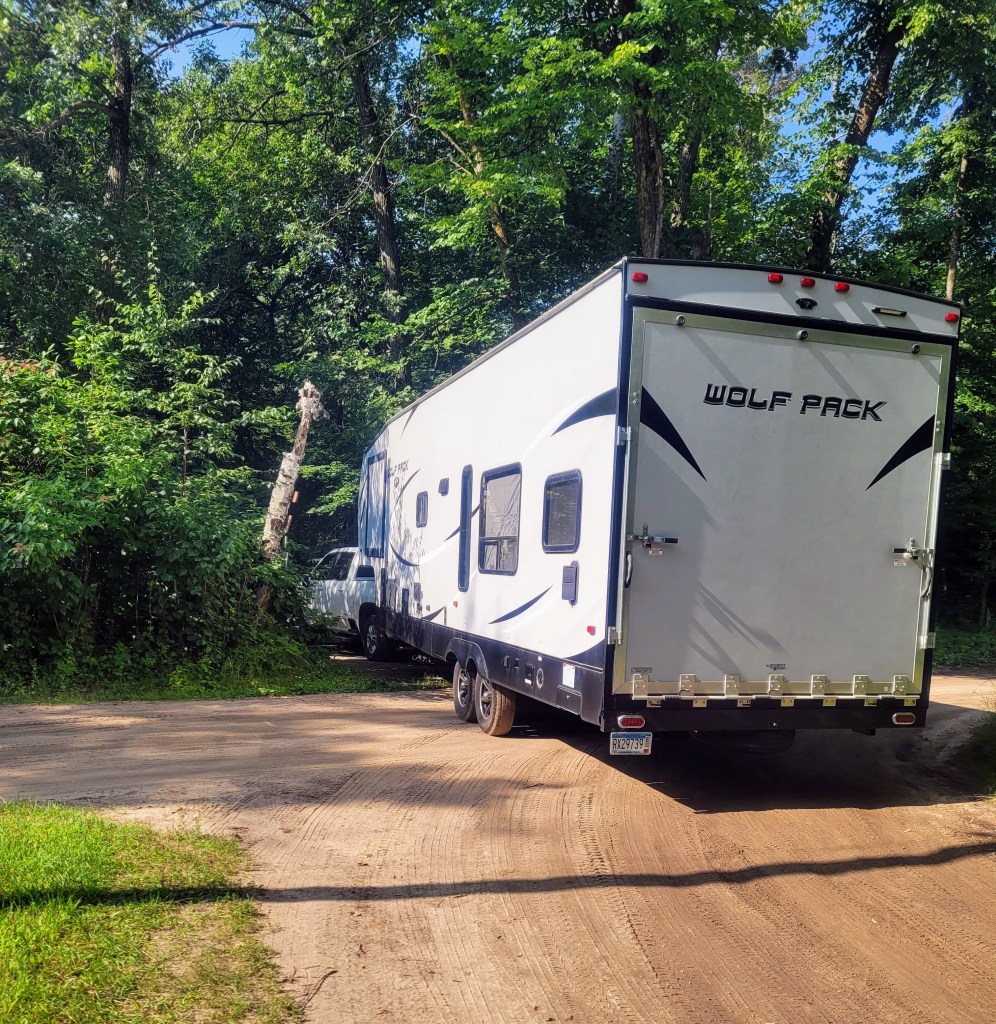
    For the second time, we load up our two motorcycles, double and triple check all the attachments, lock the doors and we’re ready to go. This time doubt doesn’t creep in, and this becomes THE MISTAKE. We’re overly confident in our skills too early in the game! We don’t check in the cargo area as much, thinking that everything is under control.  

    We discover the crime scene at the end of our 4-hour drive. Literally. We were 23 minutes away from our destination, when we realized that one of the straps holding my motorcycle had loosened and she had tipped and fallen onto Chris’ bike.  

    At this point I’m thinking there should be an entire segment on this blog about how my poor motorcycle has been mishandled by my inexperience and its ever-growing list of broken parts needing replacement. In this instance, the already partially broken front blinker came completely undone and looked eerily similar to an eye out of its socket. The right mirror became even more bent, rendering it completely useless in seeing anything behind me (the left mirror had already broken off earlier in the season when Chris tried using vice grips to fix its already bent angle).  

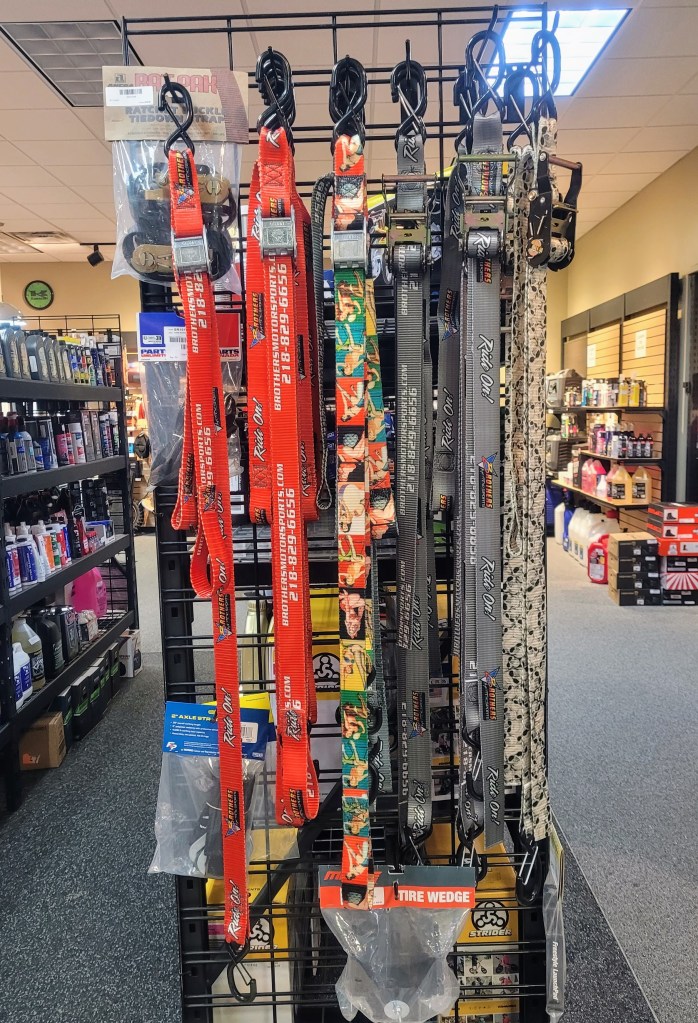
    I will also add that seeing my motorcycle leaning against Chris’ felt like a metaphor for our relationship. My husband is such a calm and dependable person while I have a chaotic personality and appreciate being able to lean on him for support in times of need. Truth be told it all seemed very poetic. But also horrifying, thinking that some of the narrower straps can get loose during transportation. This was a very clear sign from the universe that things can go wrong. It didn’t have catastrophic consequences yet, but if we didn’t change something, we might not be so lucky next time. Add “more straps” to the list of expenses. 

    Shout out to Brothers Motorsports for all the straps.

    Minnesota summer weather is on the unpredictable side. Before arriving at the lake there had been quite a bit of rainfall, making us wonder how difficult the grassy terrain was going to be to navigate without getting our wheels stuck. Just what we needed. Another source of anxiety as we drive around with the Bus. I can’t help but wonder if everyone who owns a trailer is driving around in a perpetual state of angst? No wonder the world has such a severe anxiety crisis.  

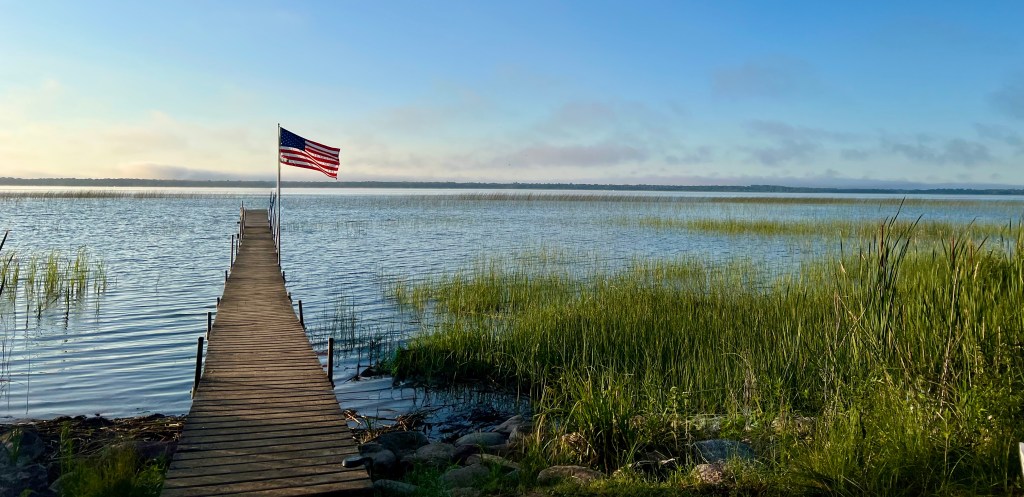
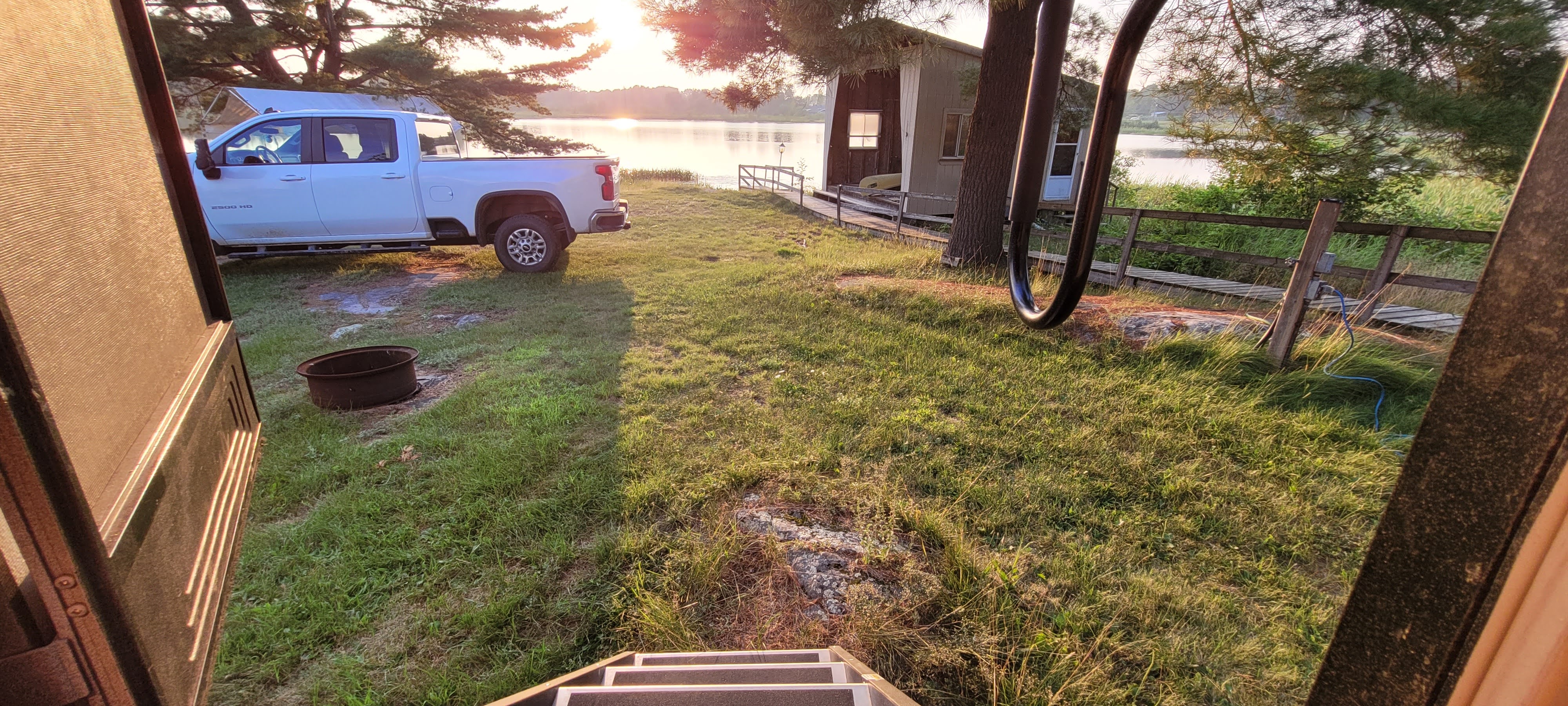
    As we were arriving right before the July 4th weekend, Chris’ uncle was already on site with his tractor to better assist us in placing the Bus in our selected spot with the least amount of damage possible. Worked like a charm! During our stay here, we woke up to the view of a calm lake. “This is something we could get used to,” we tell ourselves one morning while having coffee and looking out into the distance. 

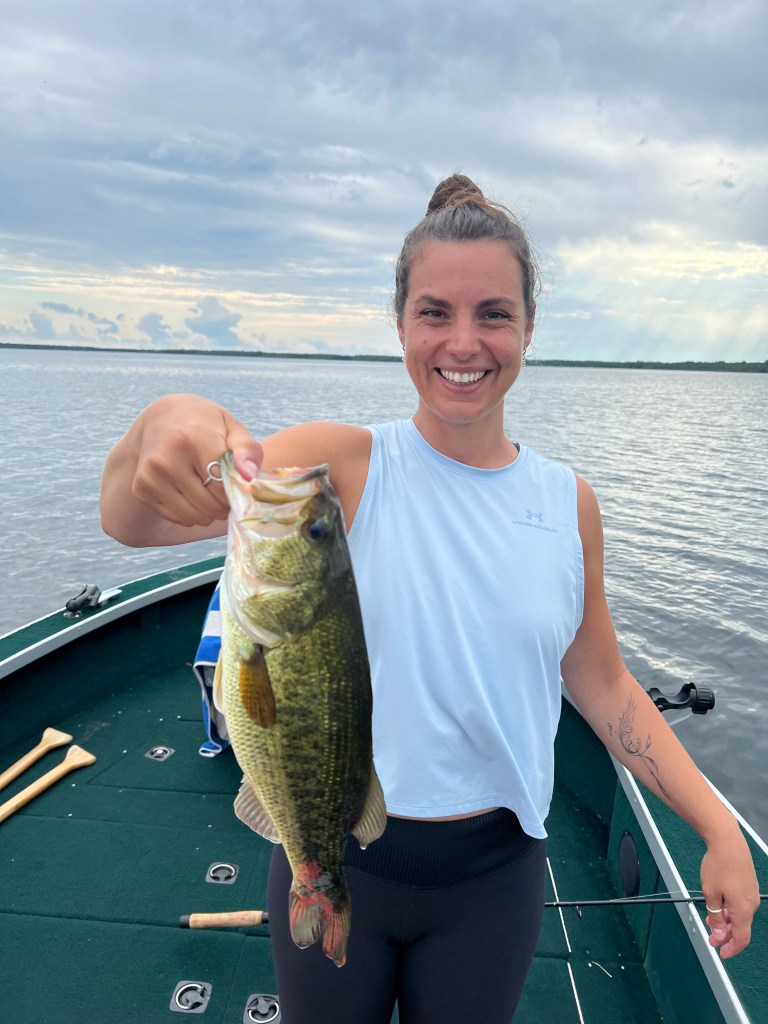
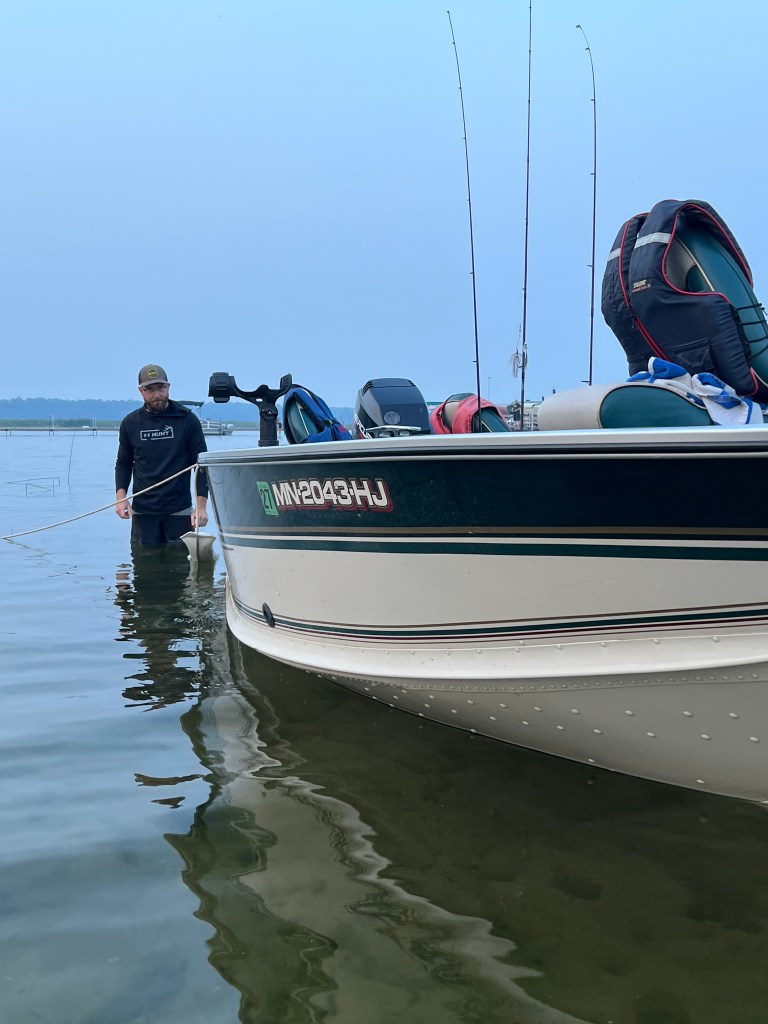
    What a phenomenal long weekend filled with family fun, boat rides, fishing excursions, floating around on the lake and making smores by the campfire. The weather was definitely on our side, as we found out just how hot a camper gets when being hit by the midday sun.  

    Side note: I grew up with Italian grandparents who believed that air conditioning or any form of draft on a person is the root cause of all illnesses (un colpo d’aria, commonly called in Italian). This, combined with the fact that none of my apartments before moving to the States had A/C have translated into a love-hate relationship with the buttons on the thermostat. Although, I’ve been known to secretly turn on the A/C in the truck when no one is around and basking in the relief that the cool air provides. Deep shame follows for letting down my ancestors, who are probably yelling about how I’m going to catch a cold or a pneumonia breathing in the processed air. Yes, I know this is not how catching a cold works. But the old European ways hold a tight grip on me. 

    In order to keep the air flowing in the Bus during the hot summer days, one must develop techniques to remain comfortable. Keeping the back door of the toy hauler open is the most effective. However, this leaves a gaping hole that exposes us to every insect with wings becoming interested in visiting the inside of our space. The subtle sound of buzzing wings quickly activates Chris’ primal hunter instincts. His initial weapon of choice was a rubber band. Because who owns a fly swatter under the age of 45? After a few days of having to duck and cover to avoid the wild rubber band hitting me in the forehead, I expressed my concern over this erratic behavior to a friend. 

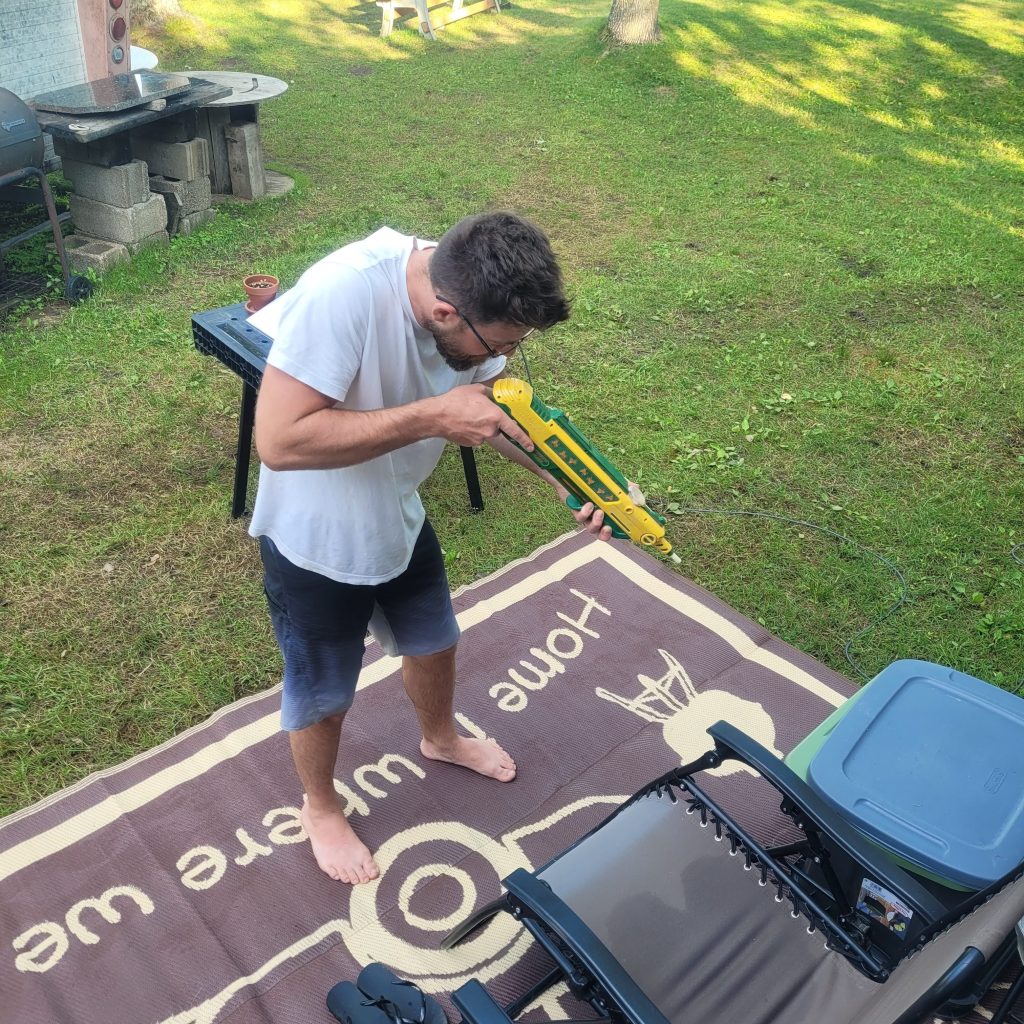
    She, who has been married a good deal longer than I have, clearly holds secret survival strategies I’ve yet to discover. Today’s gem: the perfect fix for my fly-swatting misery. She casually pulls a salt gun from her garage (basically a shotgun for flies) and hands it over like it’s the most normal gift in the world. I can’t decide if this is peak practicality or peak comedy, but either way, the flies don’t stand a chance.  

    When I get home and give the salt gun to Chris, his face completely lights up. His inner child had been awakened, and I couldn’t have expected a more luminous smile. It all escalated so quickly from there: Commando style, war paint, helicopters, explosions. Death surrounds us and he feels a pang of delight for the carnage that unfolds as he shoots down these winged intruders. Like a wild child playing space invaders, he has that crazed look in his eye and I express exasperation over the ungodly number of carcasses left to be disposed of in such a small living quarter.  

    To clarify, when we bought the Bus a bug screen was already installed, but we didn’t like the old “zipper-vinyl-roll up-mesh” system. We ordered a retractable rear screen door and the arrival date was right before our departure date. We were required to send in the exact measurements with no refund possible should the installation not work. We hoped that our previous experience with measuring twice and cutting three times didn’t happen. Way to live on the edge. 

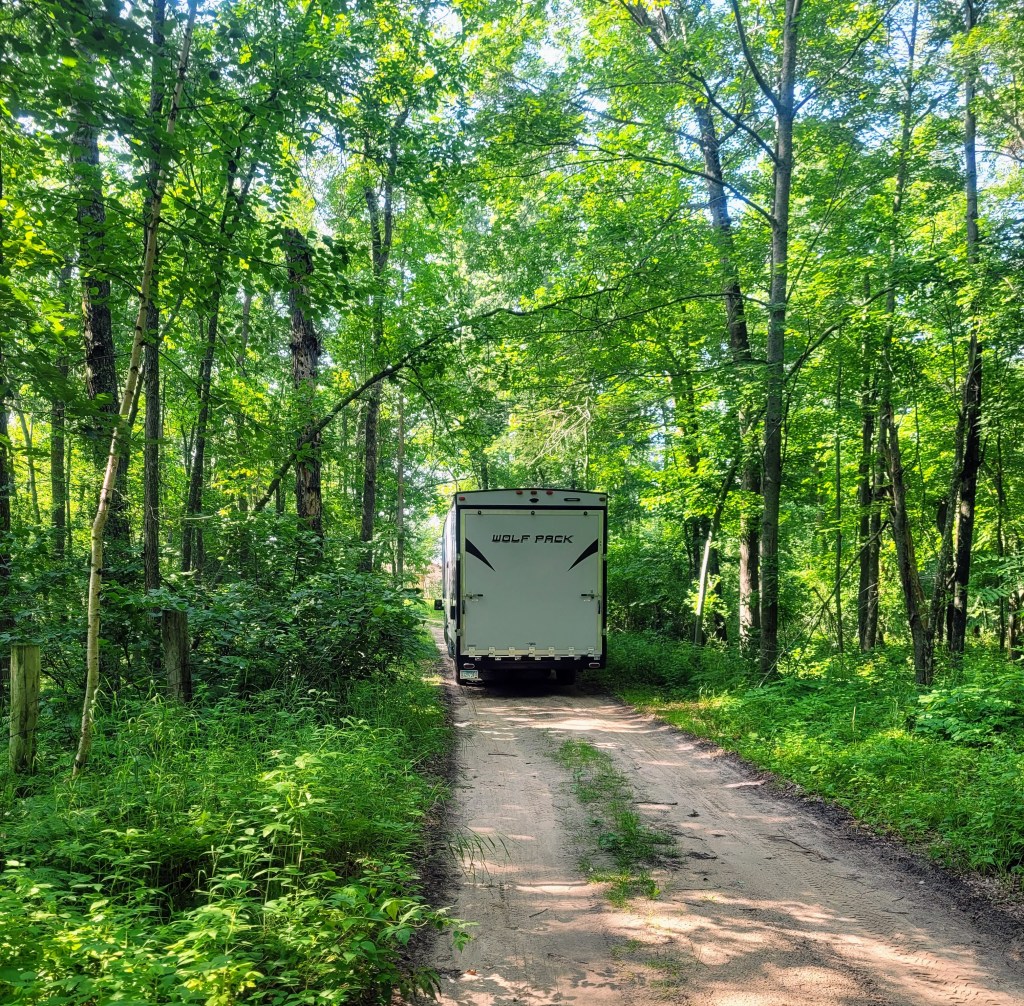
    Speaking of living on the edge. In order to get back on the main road from the lake, we needed to back the truck and trailer all the way down the single lane dirt road before being able to drive off into the sunrise. To those who have seen me attempt to back up a vehicle with any sort of trailer, you won’t be surprised to hear that I wasn’t considered for the role of main driver for this adventure. I am the equivalent of that person on the construction site, who stands on the side and holds the sign while maybe looking in the direction of the workers every so often. 

    The 1200 miles to our next destination 

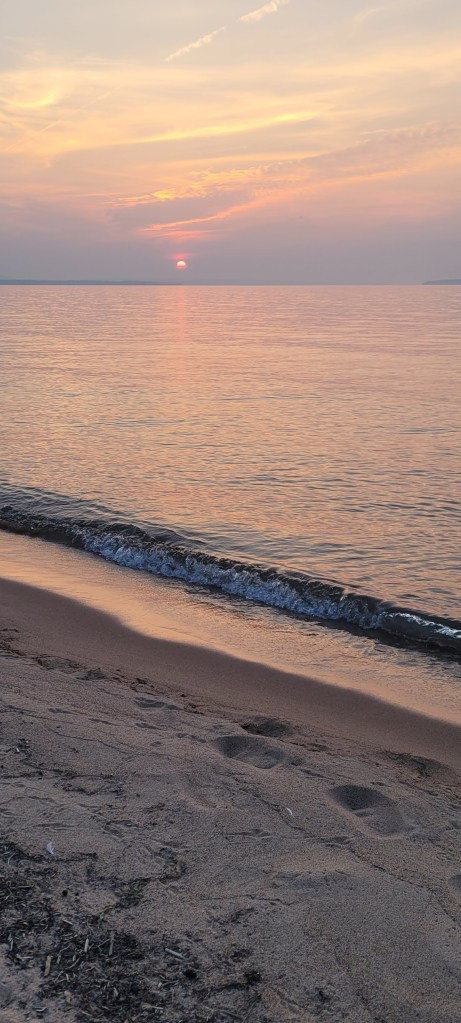
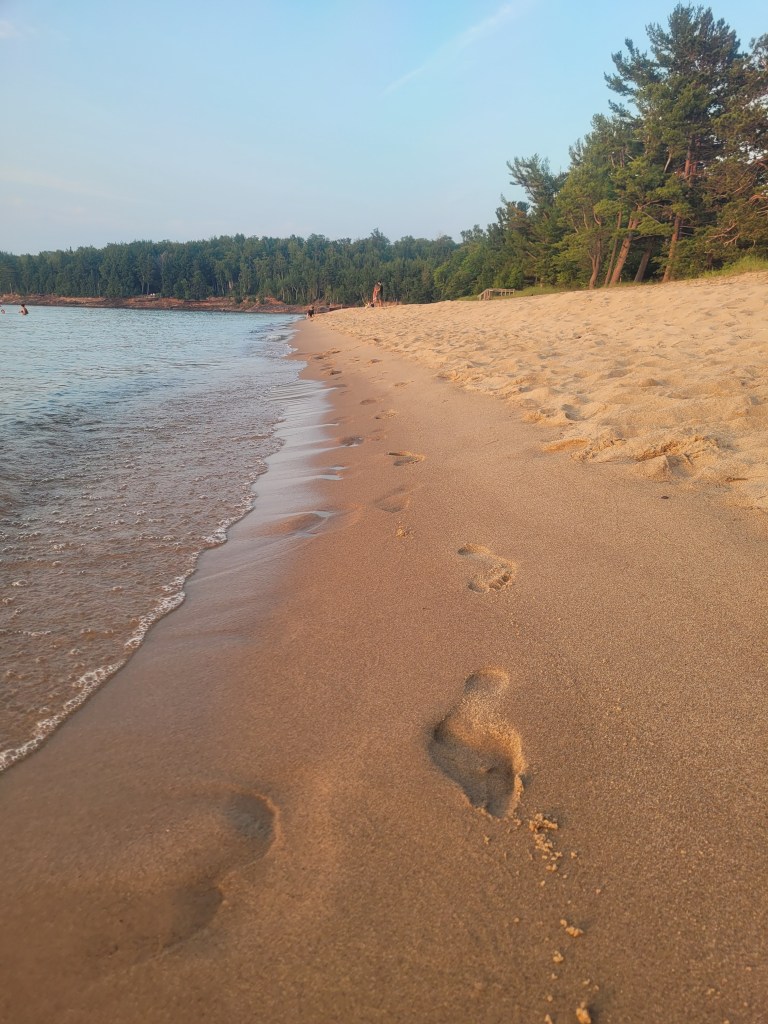
    The first thing Chris noted after our first day on the road was that 8-10 hours in the vehicle is way too long. I believe that this statement shouldn’t even have to be uttered out loud —it’s a no brainer. Our first pit stop was in Michigan: Pictured Rocks RV Park. As we near, we see Lake Superior to our left with lovely sandy beaches. At this point my main focus is to sink my toes in the sand as fast as possible. Since we are only staying the night, no major set up is required and this saves us the remaining daylight hours for a nice sunset walk along Sandy Public Beach. The sand sounded squeaky as we walked along the shore. It was delightful. These “singing” sands are caused by vibrations in the sand and require a combination of round sand grains, silica content, and humidity to emit a variety of sounds. A strong urge to run across the sandy beach and into the water overcame us. I mean, if you haven’t stripped down to your underwear and jumped in a frigid lake at least once in your life, have you even lived at all? 

    The next morning it was time to make our way to the Canadian border by crossing the Sault Ste. Marie International bridge: A 2.8-mile steel truss arch bridge where the long line up of cars spanned all the way from Michigan to Ontario. Once at the border, we didn’t know what they would ask about the Bus. Should we have taken out the registration papers? What did we need to declare? Was the frozen pack of chicken in our freezer going to be considered a national threat and be confiscated? Nope. Instead, it was a simple “How many bottles of alcohol do you have with you?” Confounded by such a question, we stuttered: “Eh, 2 or 3?” The agent asks again: “More specifically, how many bottles of alcohol are you bringing with you?” Oh my! Why is this so difficult? Do they have to be full or do you have to count the halves and make a whole? Or does a half count as one? “Three.” Chris finally says, “ish” He sheepishly adds. This must be because we are driving to Quebec, and the customs agent assumes we are transporting enough wine bottles to put an army into a coma. We should probably check on the customs website what is the maximum quantity of alcohol one can import into a country. 3

    Another mistake we made on this trip was blindly listening to the GPS route. As we drive away from customs, we notice that the roads we are taking are not going towards a highway. The residential streets are getting narrower. And then it hits us. We are approaching downtown Ottawa. Here we go with the breath holding again. Because aging 10 years between 3 blocks of sky rise buildings isn’t enough, there are traffic poles that make the streets even narrower. If there were 3 inches on each side of the Bus as we passed them, it was a stretch. 

    After another full day of driving, our second stop was in North Bay, Ontario. Although I’d called to reserve our spot a few days earlier, I should have seen the red flag. I never received a confirmation email.  

    As we rolled into the dusty campground, a figure shuffled out to meet us. He was all angles and shadows—tall but rail-thin, his clothes hanging loose like like they’d been handed down to him by a much larger, older brother. His long arms swung awkwardly at his sides, and a cigarette smoldered between his fingers, sending up a thin thread of smoke that curled around his hollow cheeks and sunken eyes. He greeted us with a quick, twitchy smile and immediately launched into a ramble, words tumbling over each other as he tried to make the place sound better than it was. He waved his cigarette toward a crooked patch of dirt and gravel, insisting it would be perfect, though the guilt in his voice gave him away. “Yeah, yeah, you’ll be good here—sorry, we’re a little overbooked, y’know how it is—but this’ll work out just fine, real fine.” His tone was overeager, almost apologetic, like a man desperate to sell a lie he didn’t believe himself.  

    We backed up into this unleveled site that at least had a pretty view of the lake. He dragged deep on his cigarette and pointed down the lane, talking fast, his voice all reassurance. “Easy out in the morning,” he said, flicking ash without looking. “You just turn right, follow the nice gentle curve through the campground—no problem about your rig, it’ll for sure fit—and off you go through the exit.” He grinned like he’d just handed us a golden secret. 

    But when the smoke cleared and we traced his directions with our eyes, the “gentle curve” he promised was anything but. It was a hard turn that led straight into a steep upward slope, low branches clawing overhead like they were waiting to tear strips off our roof. The aisles were pinched tight, hemmed in by crooked curbs and parked rigs. Worse yet, the only way to swing wide enough meant dragging wheels across the edge of someone’s permanent-looking site—right over the patch of lawn where they’d set up patio lights, lawn chairs, and a ceramic gnome staring blankly at the chaos to come. 

    By six in the morning, the “gentle curve” our chain-smoking campground greeter had promised us looked more like a booby trap set for unsuspecting RVers. No way were we feeding the trailer through that angle of doom. Instead, we invented our own exit plan. A back-and-forth shuffle that probably looked like we were trying to parallel park a semi in a phone booth. 

    Every shift from drive to reverse was loud enough to wake the dead—or at least the poor souls whose camper window we were idling directly in front of. Curtains wide open, lamp still on. We couldn’t see them, but you just knew someone was in there, sipping coffee and silently judging. Honestly, they had front-row seats to the show: “Watch as this couple attempts to escape a campground designed by a sadist.” Finally, after a few nerve-wracking shuffles, the truck and trailer lined up straight. No branches overhead, no curbs, no neighbors’ lawns. Just a clean shot out the gravel lane. We eased forward, the tires crunching louder than seemed possible in the morning quiet and rolled back onto the open road—half relieved, yet half certain someone was still watching us through that open window. 

    And then we crossed into Quebec. There’s no mistaking it—your rig tells you before the road signs do. Everything starts rattling like a tin can full of bolts the moment the tires hit those legendary potholes. It’s almost like the province is saying “Bienvenue (welcome), now let’s see what your suspension is made of.” 

    The driving style shift is instantaneous too. As a native Quebecer, I say this with love: we drive like it’s a competitive sport. Blinkers are more of a suggestion, tailgating is practically a handshake, and if you don’t accelerate like you’re escaping a crime scene, someone will let you know. And then there are the bridges. I don’t know what civil engineer declared them “finished,” but clearly nobody tested them in an actual vehicle. Every overpass comes with its own personal launch ramp at the start, followed by a bone-rattling drop on the other side. I’ve started to believe it’s less poor construction and more public safety strategy: Jolt drivers awake at the beginning and end to make sure they don’t doze off while crossing. Cheap caffeine, Quebec-style. All the while, the memory of my motorcycle tipping over in transit was still fresh. The PTSD of watching my trusty steed fall still makes my stomach drop. So, we turned it into a ritual—stop every hour, walk the rig, tug on the straps, check and re-check that everything is upright. The trailer probably thought we didn’t trust it. We didn’t. 

    And then there was the gas. My God, the gas prices. Every stop felt like feeding a teenager who’d just discovered the carnivore diet comprised only of filet mignon. Add in the fact that the hills got steeper, the climbs longer, and suddenly our truck was roaring like it was dragging the whole province behind it. That’s when we realized: This is why everyone kept asking if we’d bought a diesel. We should have gotten a diesel. Regret is loud—about 4,000 RPM loud. 

    But the road, as always, eventually led us where we needed to go. The pavement gave way to winding forest roads, and then—just like that—the lake appeared. Lac Bélanger. My parents’ cabin. My favorite place in the world. The sight of it never gets old. The still water reflecting the sky, the trees leaning close as if to guard it, the smell of pine carried in the air. This was the place of childhood summers, of campfires and swimming until the sun went down, of quiet mornings with coffee and loons calling across the water. Every bump, every jolt, every drop of overpriced fuel—it all faded the second we pulled in. 

    Backing up the Bus into one of the lots was still a comedy routine, of course. And yes, carrying essentials down to the cabin meant another round of unloading, hauling, and moving. But this time it wasn’t just a chore. This was a homecoming. Each trip down the path to the cabin felt like stepping back into memory, a return to the one place in the world that never seemed to change no matter how far we’d gone or how long we’d been away. 

    As I write this article, 2 months later: 

    1 A written checklist has still not been produced. We somewhat still struggle our way through the process, albeit much less than in the earlier days, but still. 

    2 Thank you, Abbie, for the gift that keeps on giving as Chris continues to hunt every fly that dares to enter our personal space. 

    3 We still haven’t looked it up. We probably should do that soon, as we prepare to cross another border.