One thing to know before the story begins: Planning our next destinations is rarely rocket science to us.
We’re often asked what state or region we’ll be visiting months down the line. When we answer them honestly, “We don’t know yet. We’ll have a better idea one to two weeks before we leave,” we’re met with polite nods and a faint flicker of panic.
While scouring our Atlas for possible November destinations, the only obvious criteria is warmer. So Southbound I look. A bit of internet research for temperatures hovering around the comfortable mid-60s points us to an unexpected spot: Welcome to Arkansas!
Neither of us had any reference points to speak of. As I started looking into what there was, I learned quickly that Arkansas is dominated by two major upland regions: the Ouachitas to the south and the Ozarks to the north. The Ozarks was the only one I recognized, mostly from a TV series I’d never watched. Which didn’t help clarify expectations.
Somewhere in the back of my mind sat a warning from someone in our wider circle before we left Minnesota. Something about “hill people” in the Ozarks being hostile to outsiders. It made me laugh. This was the second time we’d been cautioned about remote communities. After our experience in Nova Scotia, we’d learned those warnings spoke more about perceptions than reality. We filed it away, determined to document any interactions and be prepared to give a detailed report of people we would meet along the way.
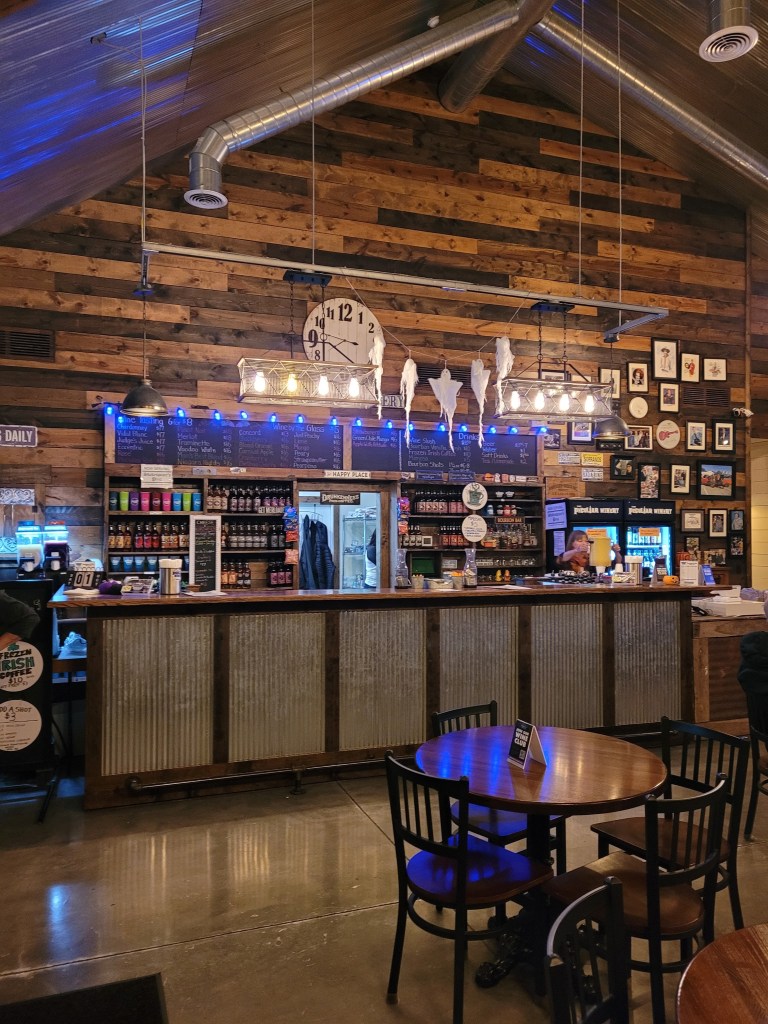
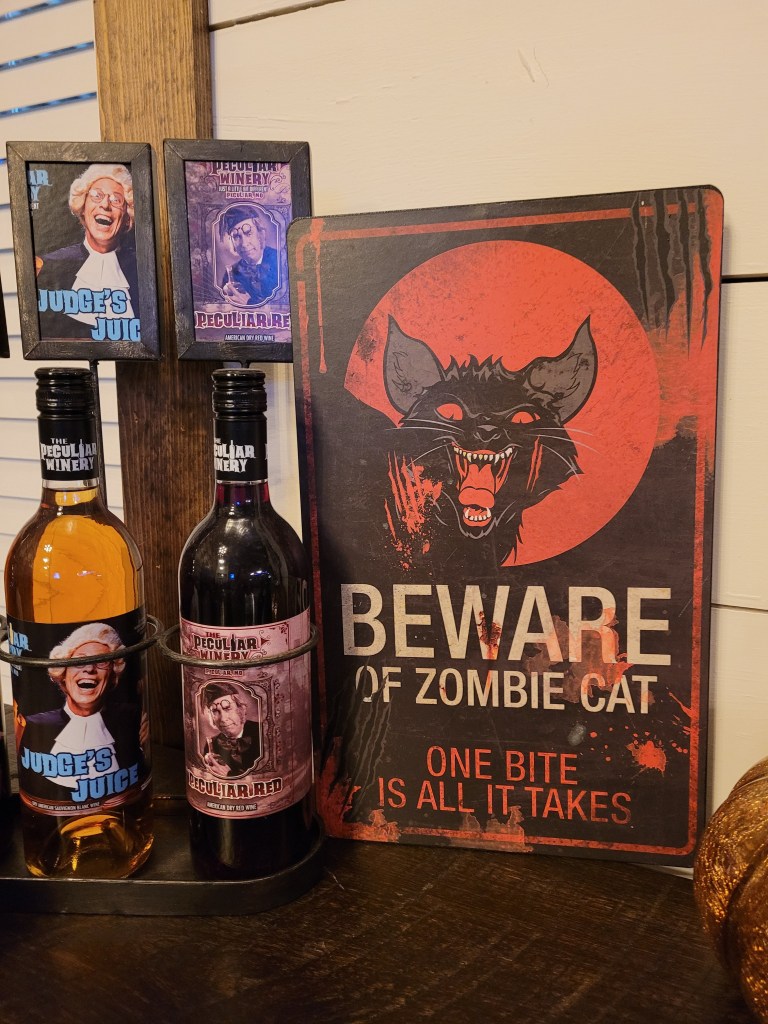
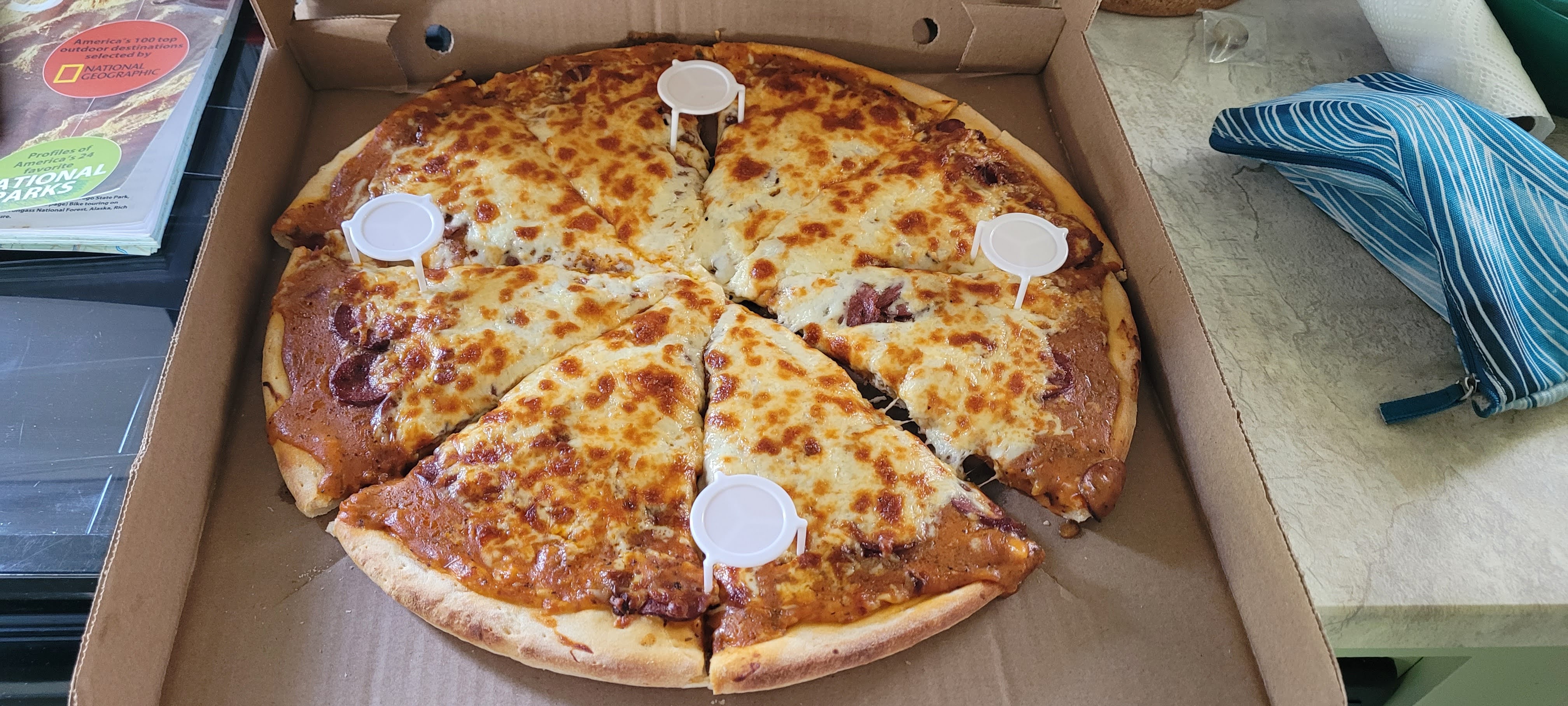
The drive South took us through Missouri. Thanks to the Harvest Host app, we stopped for the night at the Peculiar Vineyard (Yes, the town and vineyard were both called Peculiar.). We parked the Bus in the nearby field and headed inside the restaurant for dinner: a delicious pizza and a flight of wines each, all made on site. The place was eclectic and welcoming. Warm lights, a mismatched décor, and people lingering without checking the time. Between the wine and the comfort of gluten, we assumed the night would be an easy one.

It wasn’t.
Temperatures dropped below freezing, and the surrounding fields came alive with cows bellowing through the night. At some point, half-asleep and shivering, I genuinely wondered if cows ever slept at all. Morning arrived with frozen mist clinging to the grass, our breath visible in the air. Suddenly, Arkansas didn’t feel quite as far south as we’d hoped.
Still, we pressed on.
Crossing the border between Missouri and northern Arkansas, the landscape began to shift almost immediately. The land folded in on itself with rolling hills turning into long ridgelines, valleys opening unexpectedly between dense forests. The Ozarks aren’t sharp or dramatic like Western mountains are; they’re softer, and heavily wooded. Oak, hickory, and shortleaf pine dominate the hillsides, with maples adding flashes of muted reds and golds late into fall. Limestone bluffs peek out along road cuts and creek beds, and everything feels layered—trees on trees on trees, stretching into the distance.
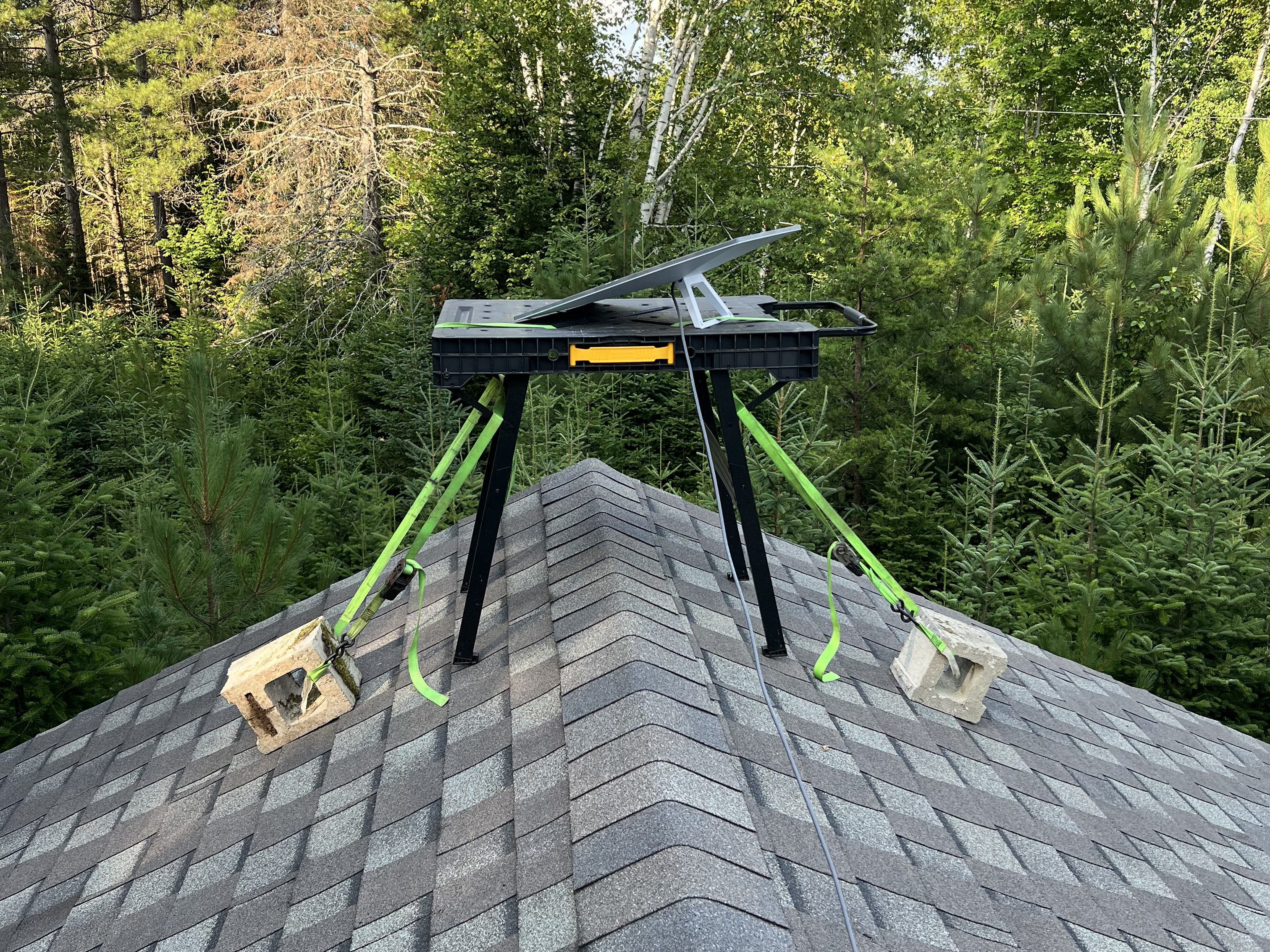
When we arrived at the campground I’d reserved, reality set in quickly. The site looked nice, but the tree line sat directly in the path of our satellite internet’s line of sight. Chris was determined to make it work; shuffling the rig back and forth, but the forest won. For all its advantages, living full-time on the road still comes with a few non-negotiables.
Although slightly unnerved by this last minute change of plans, we opened Google Maps and started over.
A handful of campgrounds appeared nearby, scattered along the Ozarks. One stood out: the Ozark Ridge Campground. The map showed open skies, distance from main roads, and elevation. Chris called. There was availability. We were in luck.
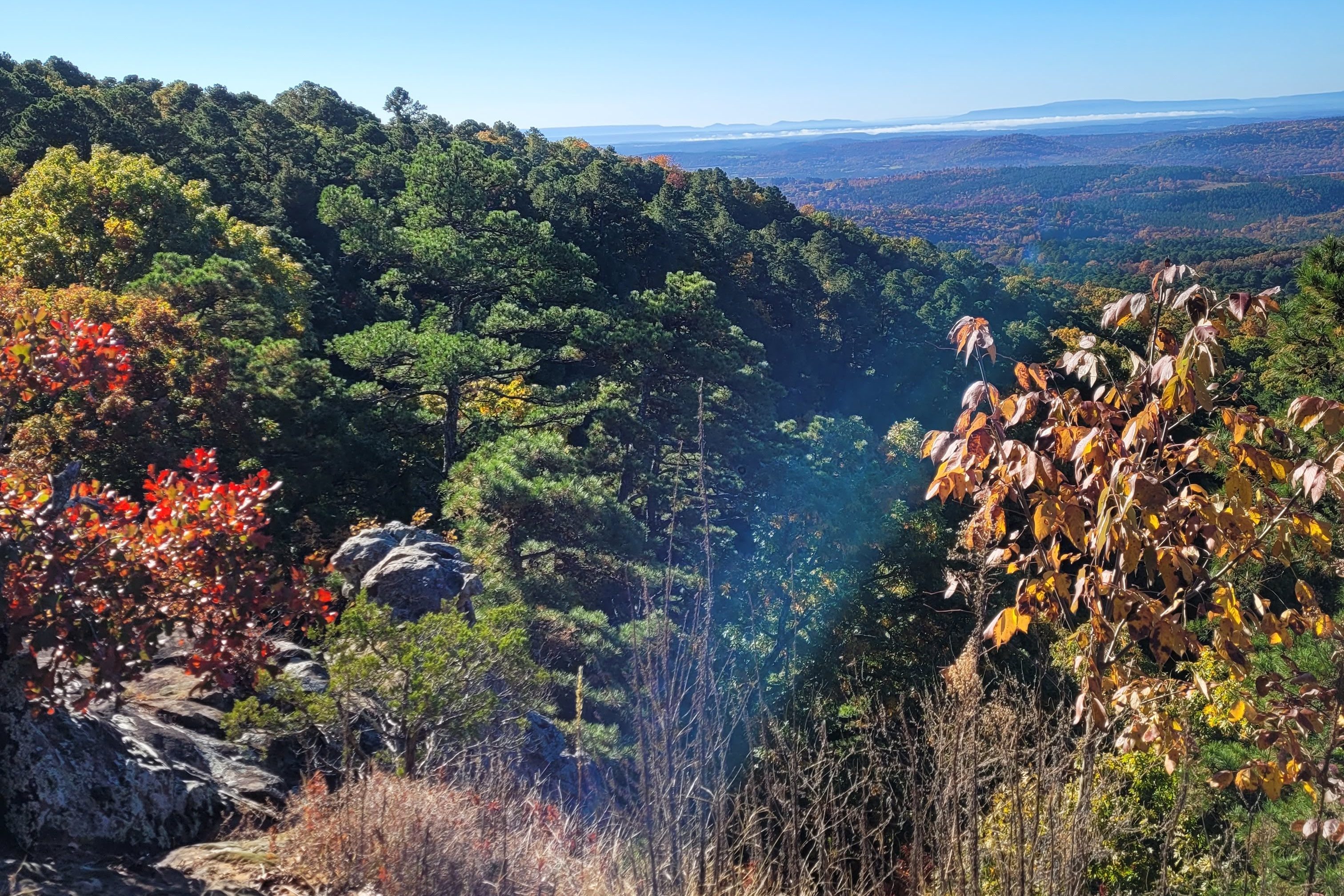
Getting there meant climbing along narrow, winding mountain roads. The views were expansive and unexpected. Forested hills rolled away into blue-gray layers, broken occasionally by pastureland.
The climb also came with a quiet realization: this new-to-us diesel truck had been a fabulous decision. The steady pull uphill, without the strain and roar we’d grown used to with our previous truck, brought a shared sigh of relief from both seats.
At the campground, we were greeted by Tracy and her gentle giant of a dog, Brady. We settled onto a site perched along a ridge, open fields stretching out in one direction, and dense forest in the other. Cows grazed in the neighboring pasture, unbothered by our arrival. It felt remote without being lonely.
As we got the Bus parked in our new home, I found myself lingering with Tracy. We chatted about where we’d come from, what there was to explore nearby, and the rhythms of the area. The warmth of Southern hospitality revealed itself immediately in our easy conversation and genuine interest. At some point I realized Chris had finished setting up the rig entirely on his own. Oops.
With an hour of daylight left, we couldn’t resist. We geared up and rolled out of the campground with our motorcycles. Within minutes, pavement turned to gravel. The road dipped into thick forest, the ground carpeted with fallen leaves, trails branching off in every direction. We didn’t know where any of them led or how technical they might be, so we stayed on the main route, riding conservatively but excited with possibility.
The next day, we stopped by our hosts’ trailer to ask about trail access. The answer was better than expected. The campground sat right in the middle of a sprawling network of off-road trails that stitched together the Ozark National Forest and beyond. Side-by-sides and adventure motorcycles all shared the space. GPX files made it easy to gauge difficulty and distance. What we hadn’t anticipated was how much this region felt designed for riding.
Highways coil through valleys, two-lane roads crest ridges and disappear again, and gravel spurs branch off in every direction. Forest roads, unmarked trails, and access points seem endless. This wasn’t just a warmer place, it was a motorcycle playground.
As full-time travelers, we’ve learned to trust certain moments, especially the ones shaped by serendipity. A last-minute decision, a plan that didn’t work out, a small pivot that quietly placed us exactly where we needed to be.
When South Bound Doesn’t Mean More Daylight And Other Hard Truths When Living On The Bus
At this point, I’m choosing to be completely honest with you. I was under the assumption that “Southbound” automatically meant closer to the equator and therefore longer days. This theory was swiftly and brutally dismantled by a double dose of reality: the end of daylight saving time, and the revelation that my understanding of how the sun works is… flawed at best.
One challenge we face as travelers with a full-time job schedule, is the idea that exploration happens neatly after business hours or on weekends, weather permitting. In the early throes of fall, however, the sun clocks out with remarkable punctuality at 5:12 p.m. on the dot. It can quietly mess with morale. You arrive somewhere new, bursting with curiosity, only to realize the clock is already working against you. The possibilities feel endless, the directions overwhelming, and suddenly FOMO has reared its ugly head once again.
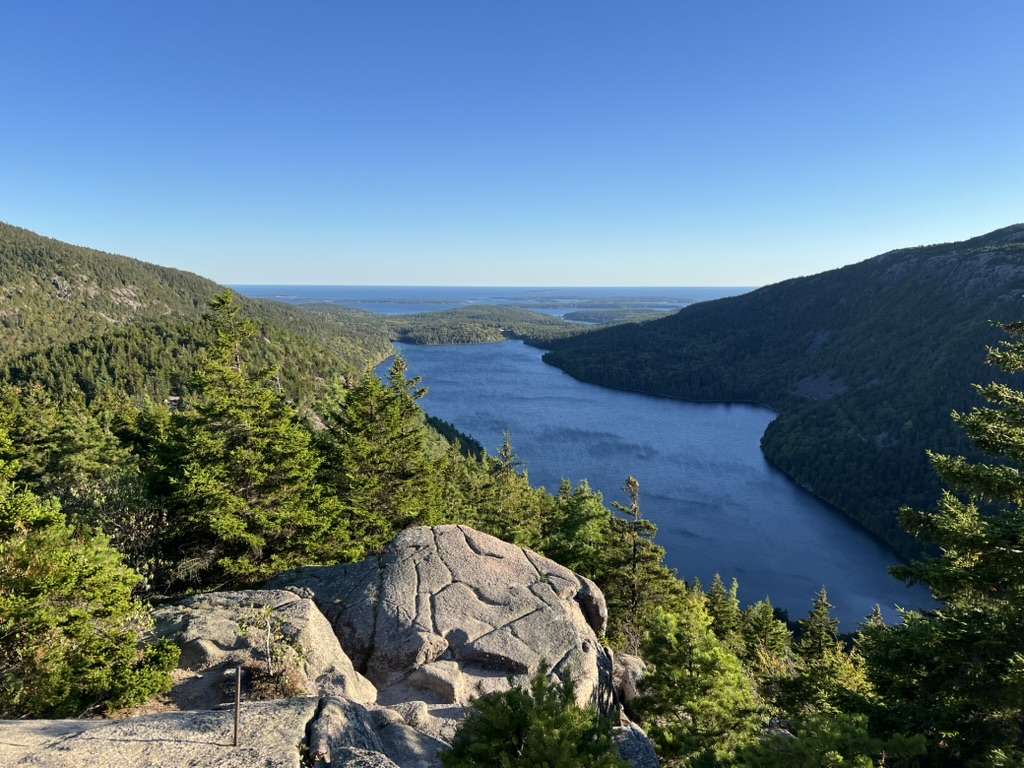
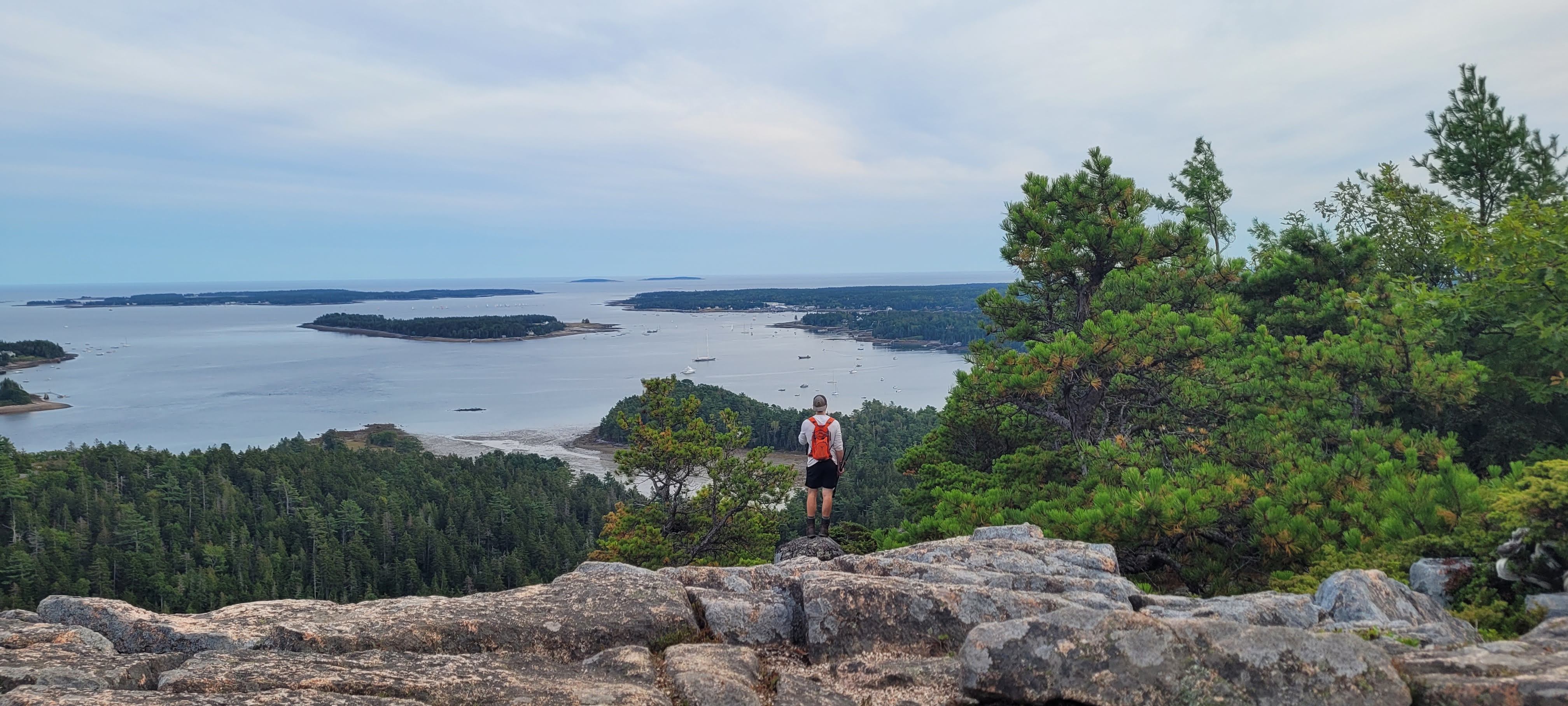
To help maximize our exploration time, I make a daily habit of scanning maps and plotting what can reasonably be explored after hours versus what deserves a full, unrushed weekend commitment (remember the strategic hike selection we mastered in Maine). That’s when I spot a trailhead just eleven minutes from our campground that’s part of the Ozark Highlands Trail (OHT), a long-distance backcountry route winding through the Ozark–St. Francis National Forest. The closest established access point in this section of the forest is near Ozone Campground, which doubles as a trailhead. It seems manageable, so we load up and head over.
The hike itself delivers muted colors, crunchy leaves underfoot, and that quiet, reflective atmosphere. On the drive back, though, we pass something unexpected: what looks suspiciously like a motorcycle training ground. That immediately grabs our attention. A little digging later, we realize we’ve stumbled straight into an adventure motorcycle jackpot. In a completely unscripted twist, we discover that the So Live So Ride Motorcycle Ranch offers classes, guided tours, and camping for motorcyclists. Needless to say, we’re very excited about the possibility of weaving this into our Arkansas stay. Spoiler alert: this deserves its own Kickstand Chronicle volume.
Where There’s A Leak, There’s A Way
As mentioned earlier, weather plays an outsized role in our lives. For the most part, Arkansas weather was nearly flawless during our stay. But it’s the transition from sunny skies to biblical amounts of rain that delivers surprise lessons in RV maintenance you hadn’t signed up for.
One night, it starts raining. Hard. We crawl into bed, finally warm and settled. We hear it: the soft, unmistakable plip of water droplets… inside the Bus. We scramble out of bed and flip on the bathroom light. The inspection is brief and deeply unsettling. Just a few inches from the ceiling fan, a slow but steady drip is making its presence known. Maybe the vent is open? Of course not. I press on the ceiling and it responds by squishing out even more water. Excellent.
At this point, there’s not much to do. Towels go down and we officially label this a “hopefully it stops raining tomorrow and we can investigate the roof” problem.
Thankfully, the rain lets up the next day. Because we don’t own a ladder tall enough to access the roof, I text our campground host to ask if we can borrow one of theirs.
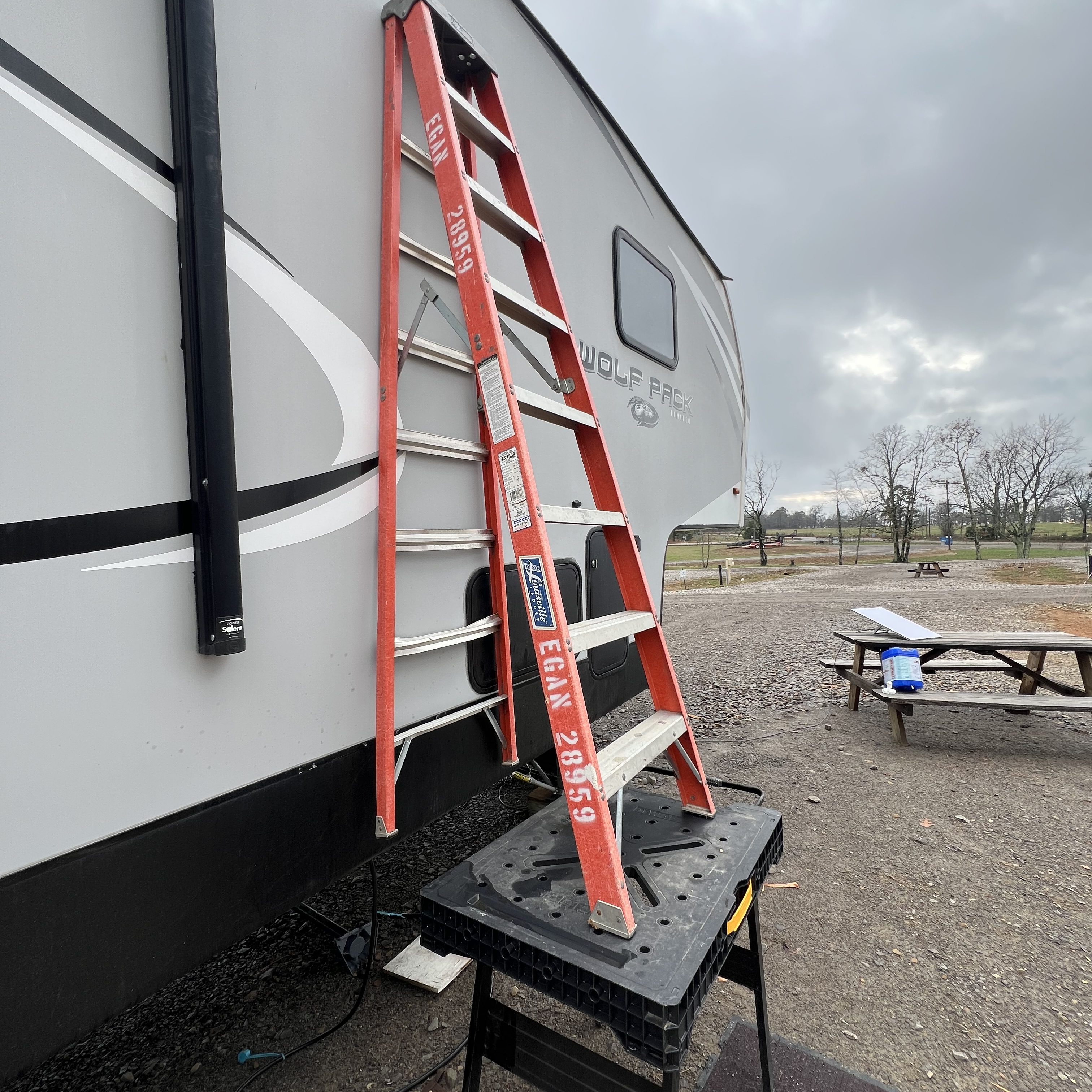
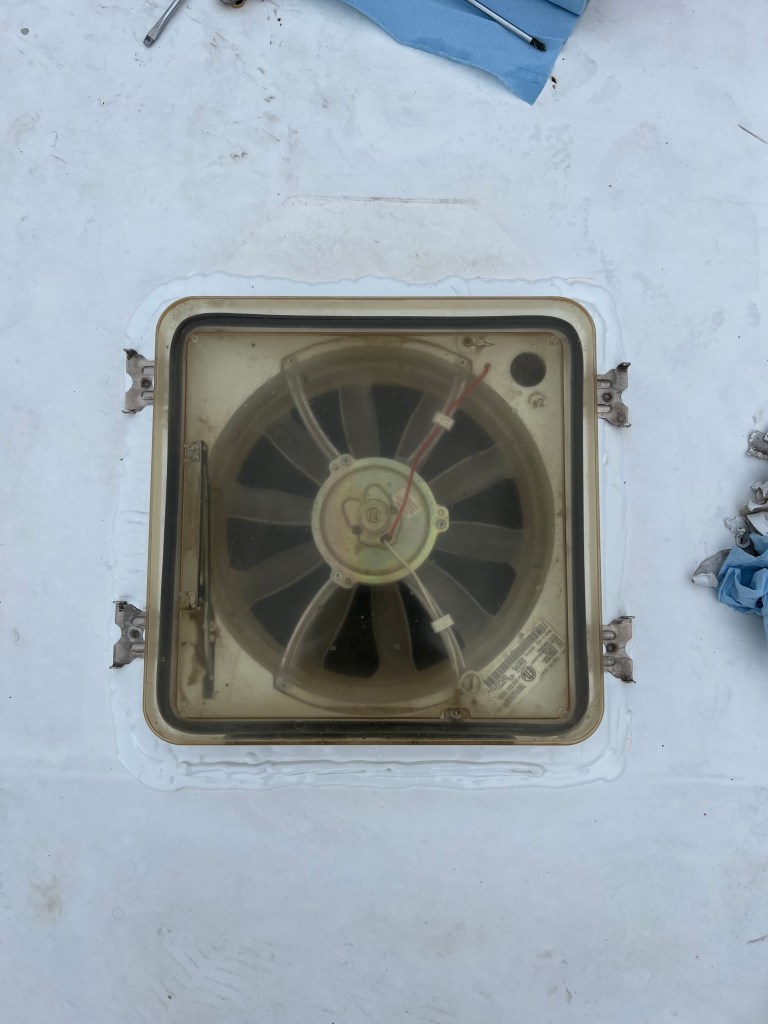
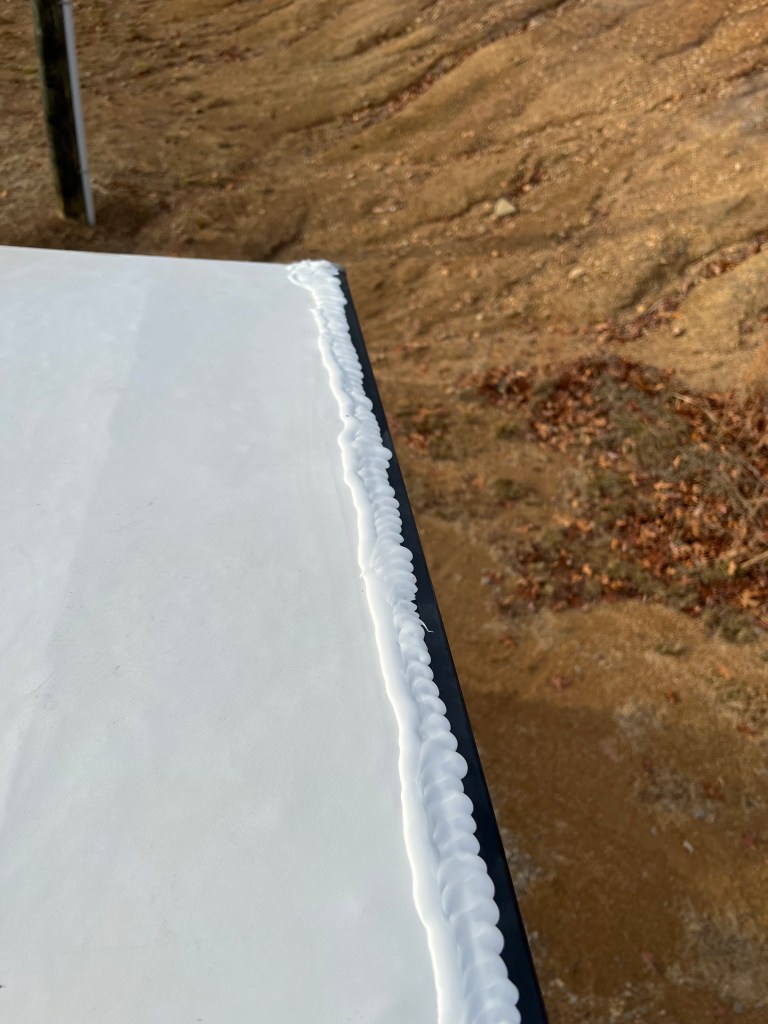
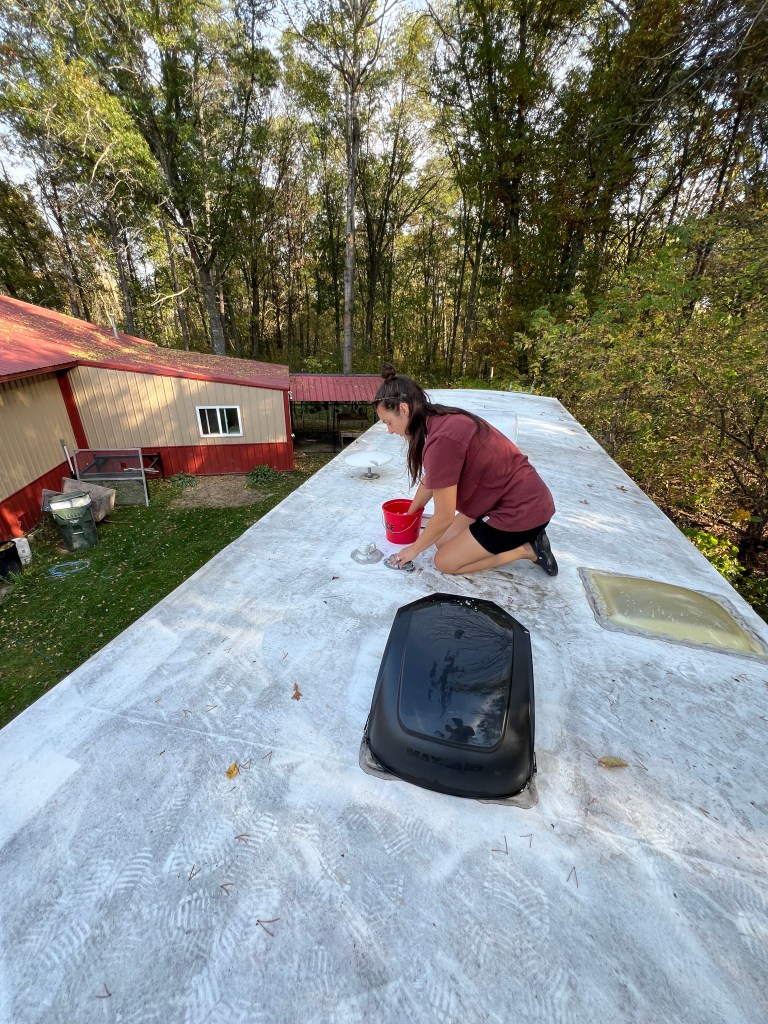
Chris climbs up and immediately finds the culprit: every corner of the sealant around the bathroom vent is old, dry, and cracked. It’s impressive, really, how bad it is. We both wonder how we washed the roof just weeks ago and somehow missed this. Then again, if you don’t know what you’re looking for, you’re very likely to miss it. Another day, another Bus-ownership lesson unlocked.
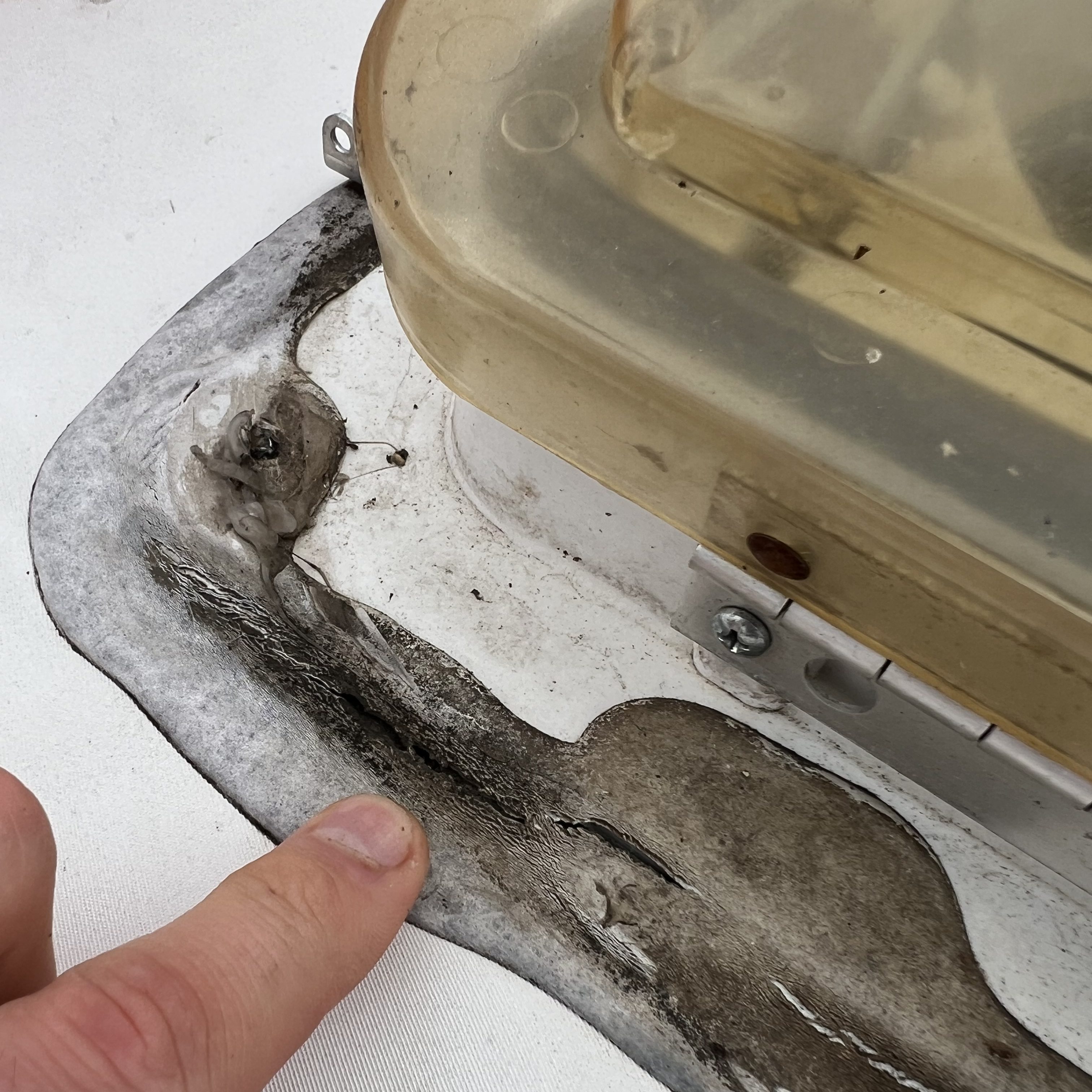
I’m sent on a mission to the nearest town that has RV supplies – about 45 minutes each way – to procure lap sealant.
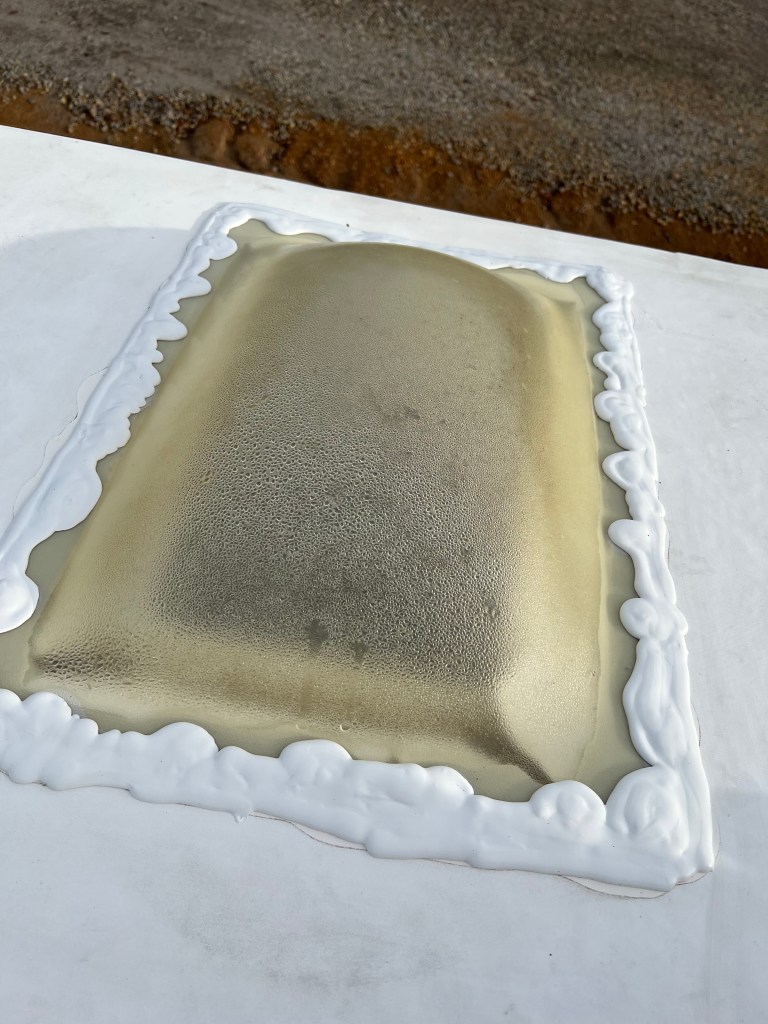
I return victorious with a couple of tubes. I triumphantly hand them to Chris, who has since discovered that all the sealant on the roof is bad. Every last bit of it needs replacing. Well, that was short lived.
As he examines the tubes, his eyebrows draw together.
“I thought they looked bigger in the pictures,” he mutters.
“They’re not going to be enough.”
The next day, I make a second pilgrimage to the RV store and buy six more tubes. Now we have enough to finish the job and some extra for future surprises. Because apparently that’s just part of the deal.
Clearly, the difference between fresh, new sealant and old, cracked sealant, is unmistakable. You just have to know what to look for.
Greasing the Fifth Wheel Hitch, and Pushing Chris to His Physical Limits
Another lesson learned the hard way is starting a maintenance project with the assumption that this will not take much time.
What should have been a simple enough task ends up consuming the better part of the afternoon, made longer by our very limited set of tools.
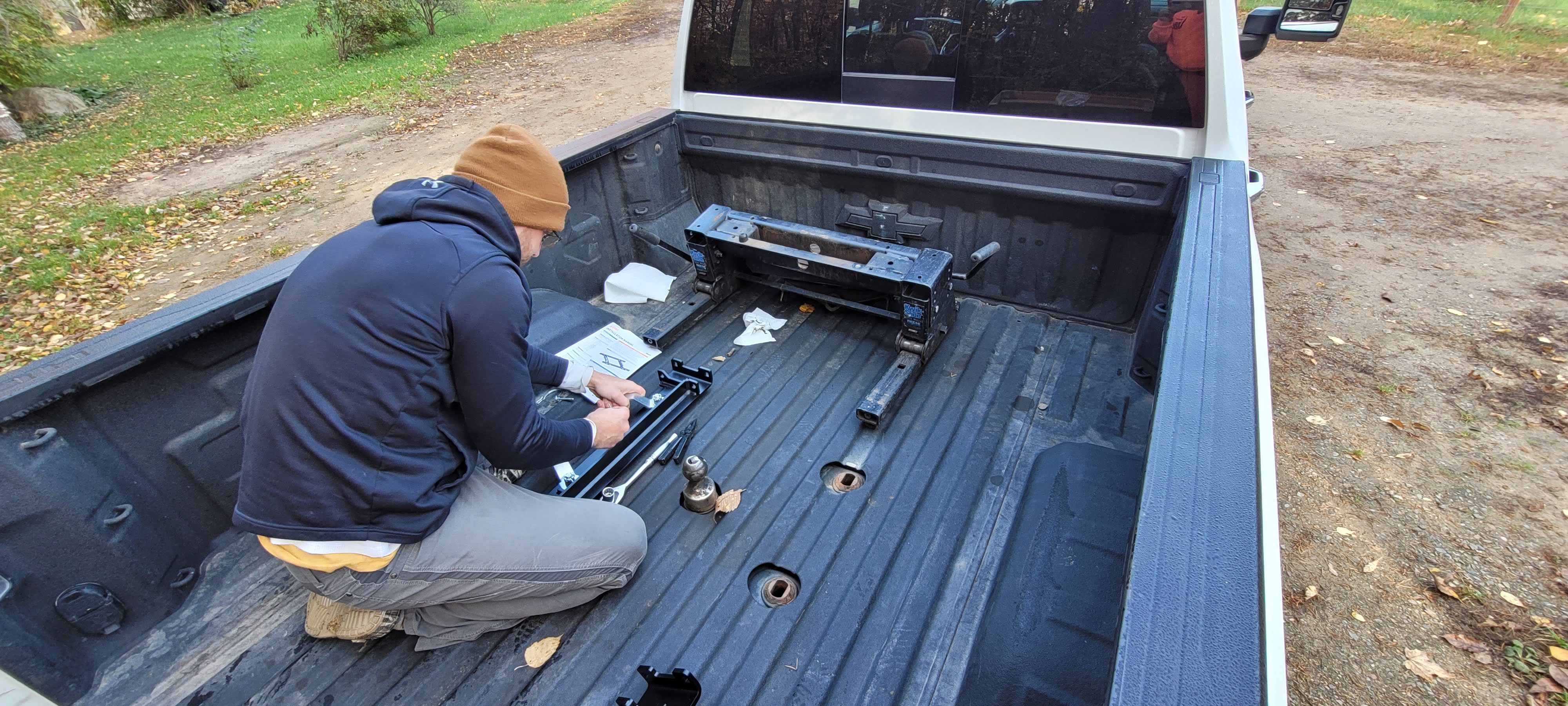
Chris decides to take on the job of dismantling the fifth wheel hitch so it can be properly cleaned and coated with fresh lithium grease, a task that sounds straightforward enough until you realize just how stubborn months of grime and pressure can be.
The hitch components are fused together in places they absolutely should not be, and separating them requires an impressive amount of elbow grease, leverage, and patience. Our “toolbox” consists of wood planks for prying, a hammer, a small axe, and sheer determination. In short, nothing remotely resembling the kind of mechanical garage setup that would make this easier.
While Chris hammers, wedges, and mutters every swear word he knows and possibly invents a few more, I do my duty as a loving wife. I offer moral support while sitting in a lawn chair, soaking up the sun and telling him words of encouragement.
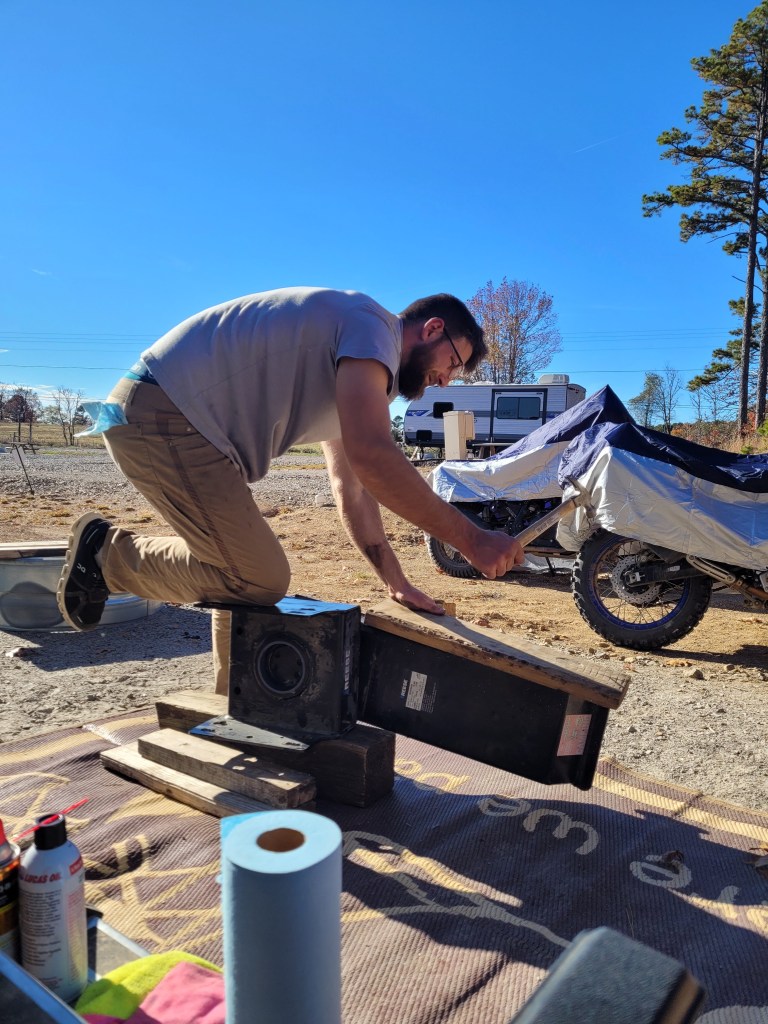
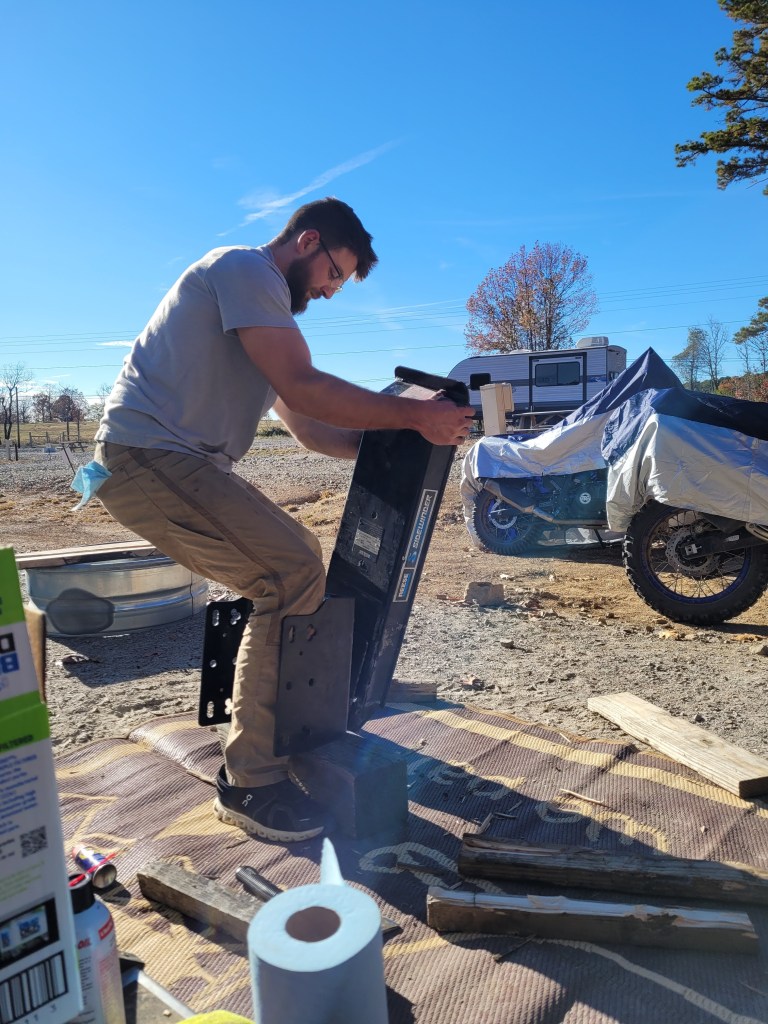
Eventually, after wrestling the metal apart, wiping away old blackened grease, and working fresh lithium grease into every moving surface, the hitch begins to cooperate again. It is unclear how much time actually passes before the main components finally give way, but the dark sweat stains spreading across the back of Chris’s t-shirt tell the story well enough.
Field Notes Observation: People Will Go To Remarkable Lengths To Stand On The Edge Of Something Beautiful.
On one particularly sunny Saturday, we set out with plans to explore a few hikes and points of interest. It was, however, chilly and windy enough to make riding the motorcycles less appealing, so we opted to take the truck instead. We’ve learned that unfavorable weather doesn’t have to mean staying put or postponing exploration, it just means changing the method.
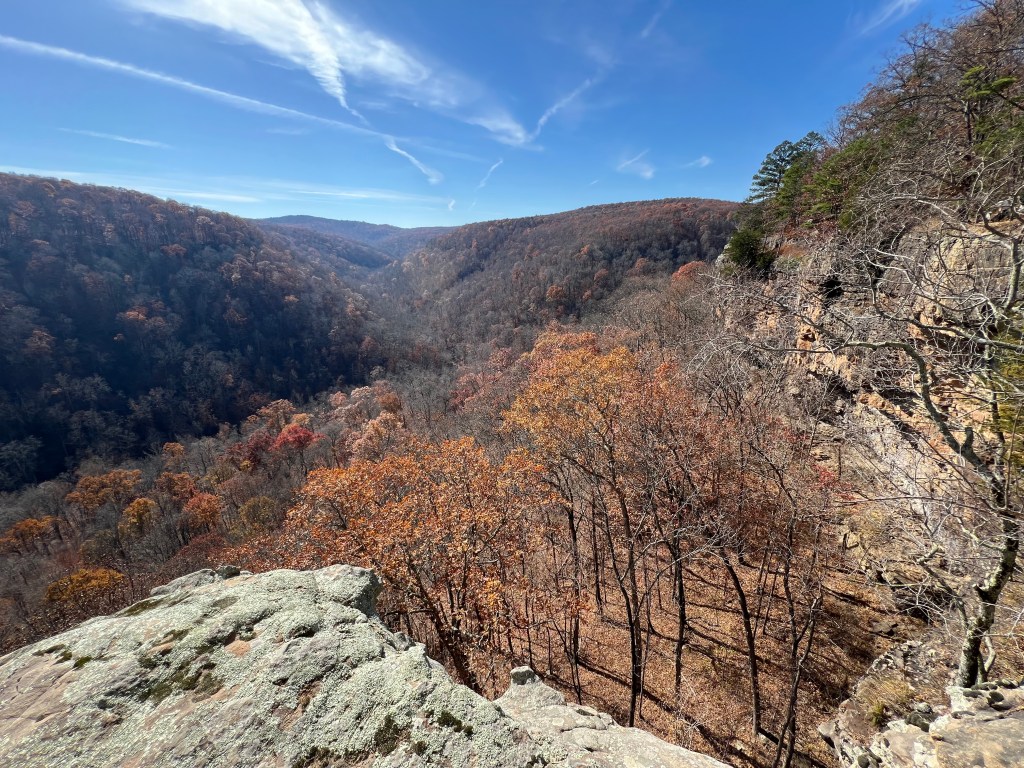
Our loose plan revolved around Whitaker Point, also known as Hawksbill Crag—Arkansas’s most iconic overlook in the Ozark National Forest near the Buffalo National River. The dramatic rock ledge, shaped unmistakably like a hawk’s bill, juts out over a sweeping view that has become something of a pilgrimage site for visitors to the area, according to a tourism website.
As we approached, the road transitioned from asphalt to dirt. Not casual dirt, but minimal-maintenance dirt—the kind that sends the truck into a full-body rattle and makes you acutely aware of your undercarriage. A few bone-jarring minutes in, we realized we still had miles of this ahead of us. Chris declared this an unacceptable form of mechanical abuse and announced we’d be coming back on the motorcycles instead. I didn’t argue. We executed a careful, dignity-preserving U-turn and retreated.
As we bounced our way back, I distinctly remember thinking this must be one of the Ozarks’ best-kept secrets. Surely not many people would willingly subject their vehicles to that kind of road just to stand on the edge of a cliff. I filed it away as something we’d properly tackle later on adventure bikes.
A few weeks later, we did just that.
We geared up and headed back, this time on motorcycles, ready to finally see the famous viewpoint. It’s worth noting that my riding gear is not lightweight and certainly not mistaken for hiking attire. Still, I optimistically packed a spare pair of sneakers in one of my panniers, assuming there might be a short climb involved.
What we did not anticipate was arriving at a trailhead parking lot that was completely full. Not with motorcycles. With cars. So much for the “well-kept secret” theory.
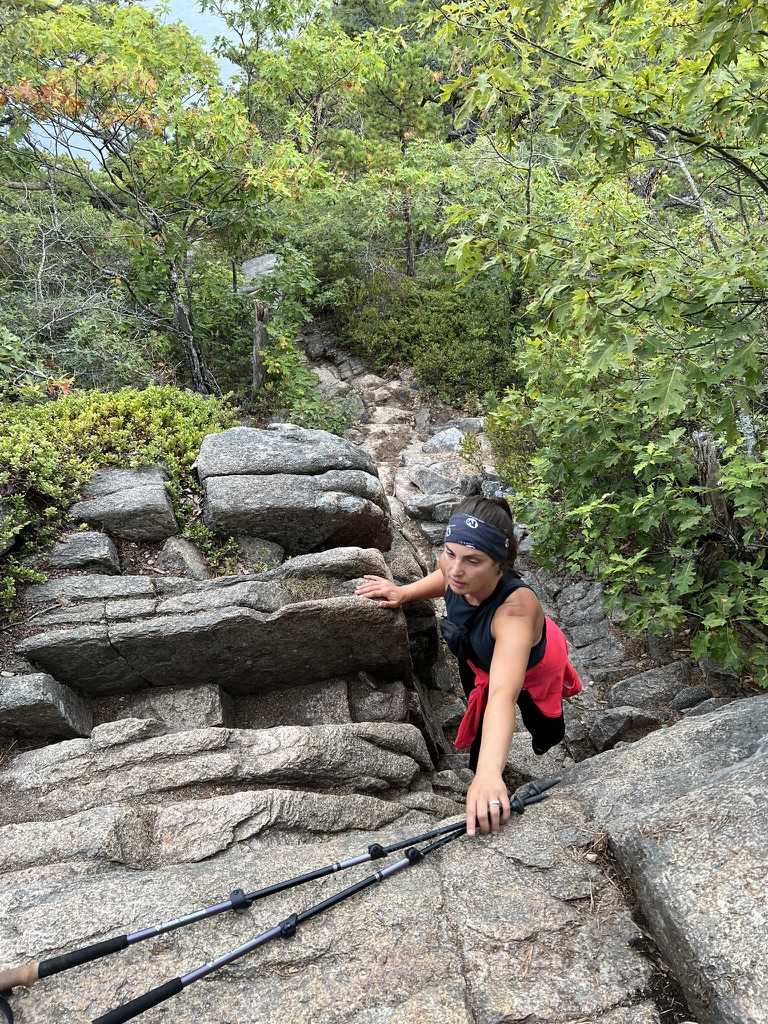
I swapped boots, left our jackets on the bikes, and we set off into the forest. That’s when the next plot twist occurrred: Whitaker Point requires a hike. A three-mile loop. And we were wildly unprepared. No water. No snacks. No walking sticks. Long pants, base layers, and entirely too much confidence for a perfectly sunny, midday hike.
Walking in line with well-prepared people with backpacks, hydration systems, and purpose, we must have looked like we had wandered off the wrong activity entirely. I quickly became grateful that modern fashion norms allow for sports bras to exist as acceptable outerwear, because the black, long-sleeved base layers were not doing me any favors.
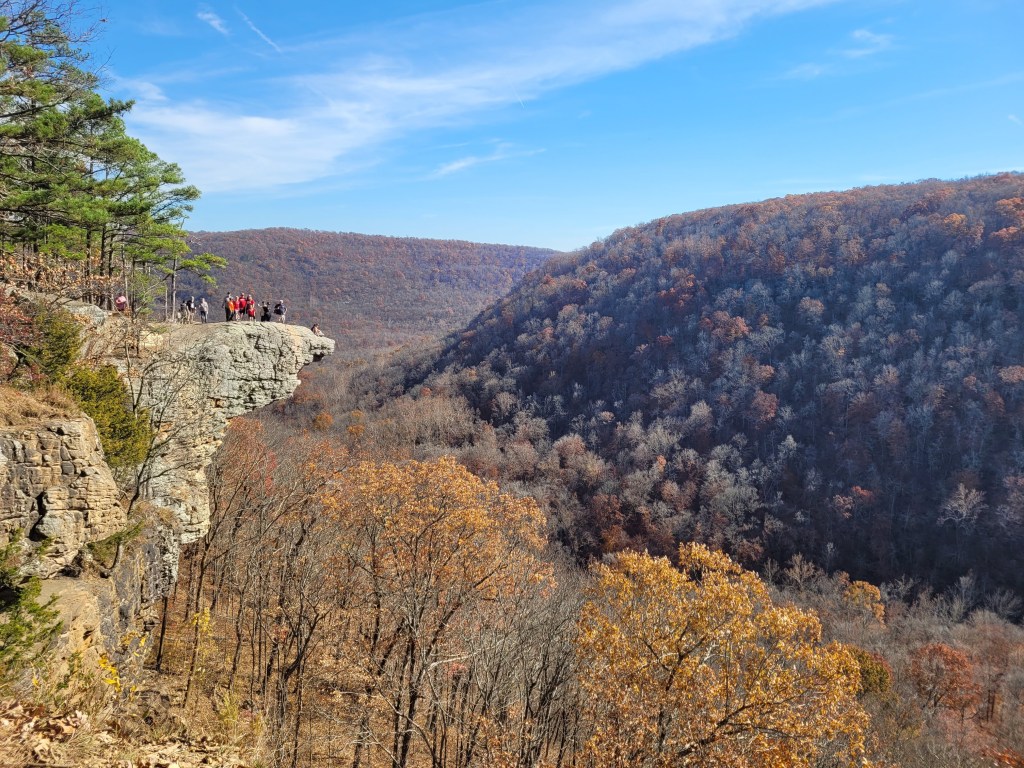
When we finally reached the overlook, the view was undeniably spectacular. Layers of forested ridgelines stretched endlessly, the rock ledge dramatic and imposing. Unfortunately, the magic was slightly diluted by the sheer number of people packed around it, all angling for the same photo.
Back at the bikes and once again armored in our protective gear, we decided to exit via a different route. Partly to avoid retracing our steps, but mostly because we needed to confirm that the road everyone else had used was, surely, more forgiving than the one we’d abandoned weeks earlier.
It wasn’t.
If anything, it was worse. Deep potholes, washed-out ruts, tight twists, and miles of slow, punishing riding before the dirt finally gave way to pavement. We rode in stunned silence—equal parts horrified and impressed. Because while the road was brutal, it was also clear: people will go to remarkable lengths to stand on the edge of something beautiful.
Elk Sightings & Other Points of Interest Around The Ozarks
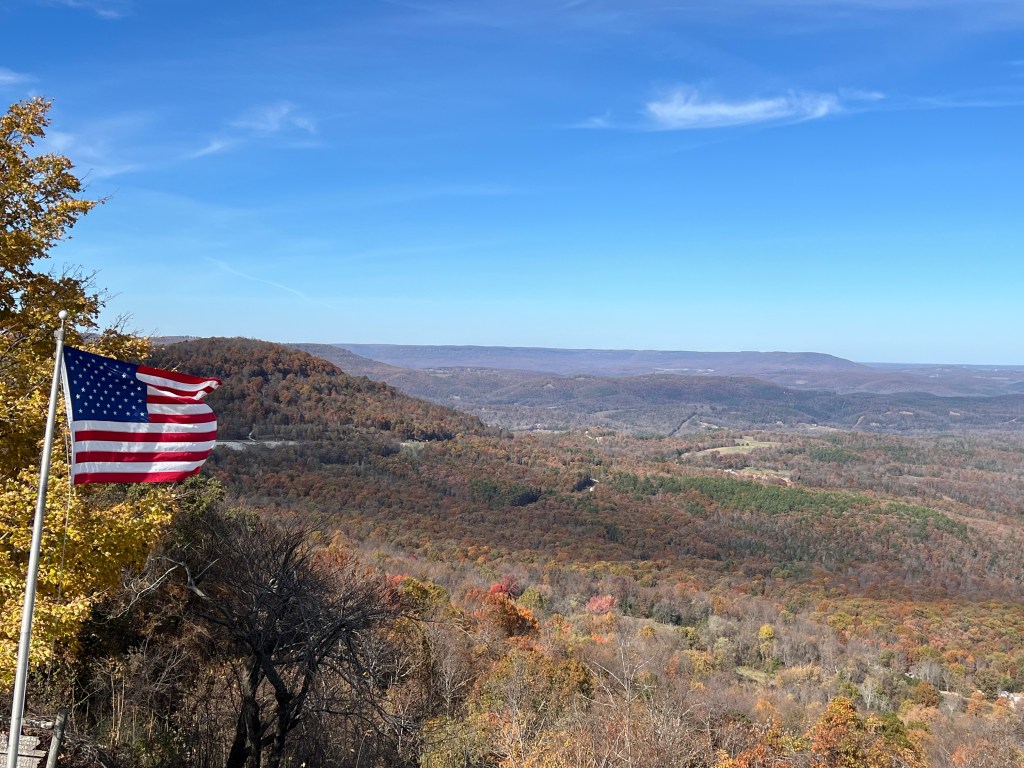
As a highly rated paved road for motorcyclists, the Pig Trail Highway carried us deeper into the Ozarks, the pavement twisting and rising through thick forest. Trees pressed close on either side, opening occasionally to glimps rolling hills and valleys below. Eventually, the road led us to the Grand Canyon of Arkansas, where layered cliffs stretch wide and deep, their reds, browns, and greens softened by distance. From the overlook, the canyon opens wide, its ridges dissolving into the distance until Arkansas gives way to Missouri. The mere scale of it all made conversation fall away naturally as we stood and took it in.
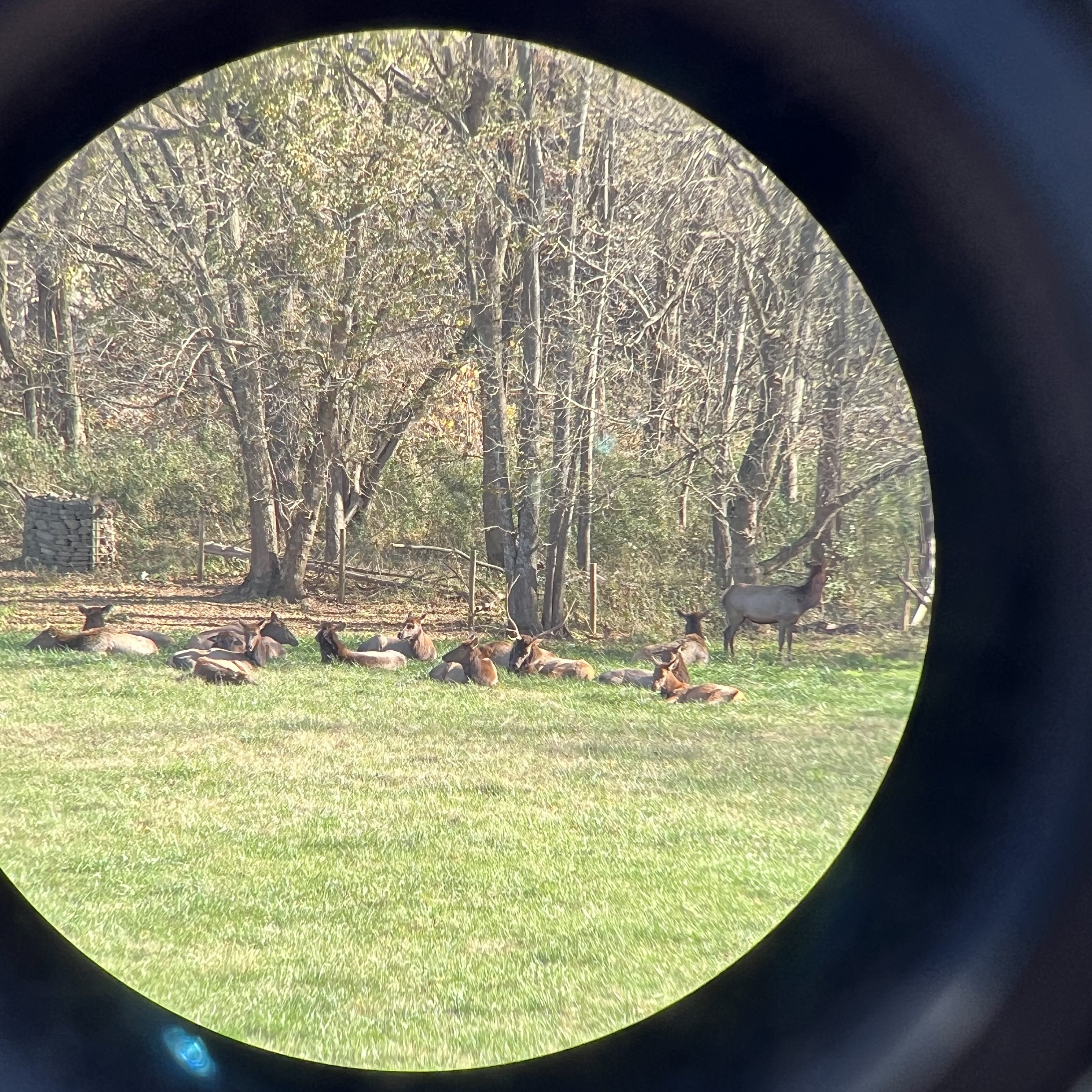
Driving through the winding roads of Arkansas, we were lucky enough to spot a small herd of wild elk gathered just off the shoulder of the road. Their tawny bodies lying into the grass and trees, almost easy to miss if you were not looking closely. We pulled over and watched them through binoculars, taking in the stillness of the group as they napped and lifted their heads in slow, deliberate movements. It felt like a quiet reward for simply being present and paying attention.
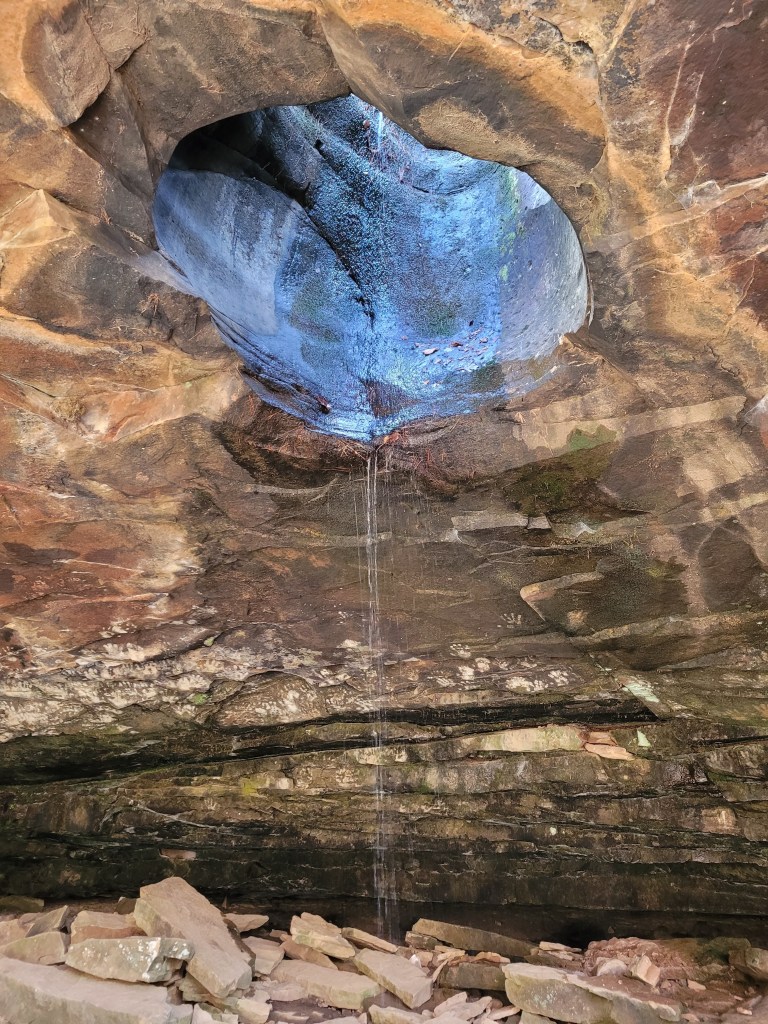
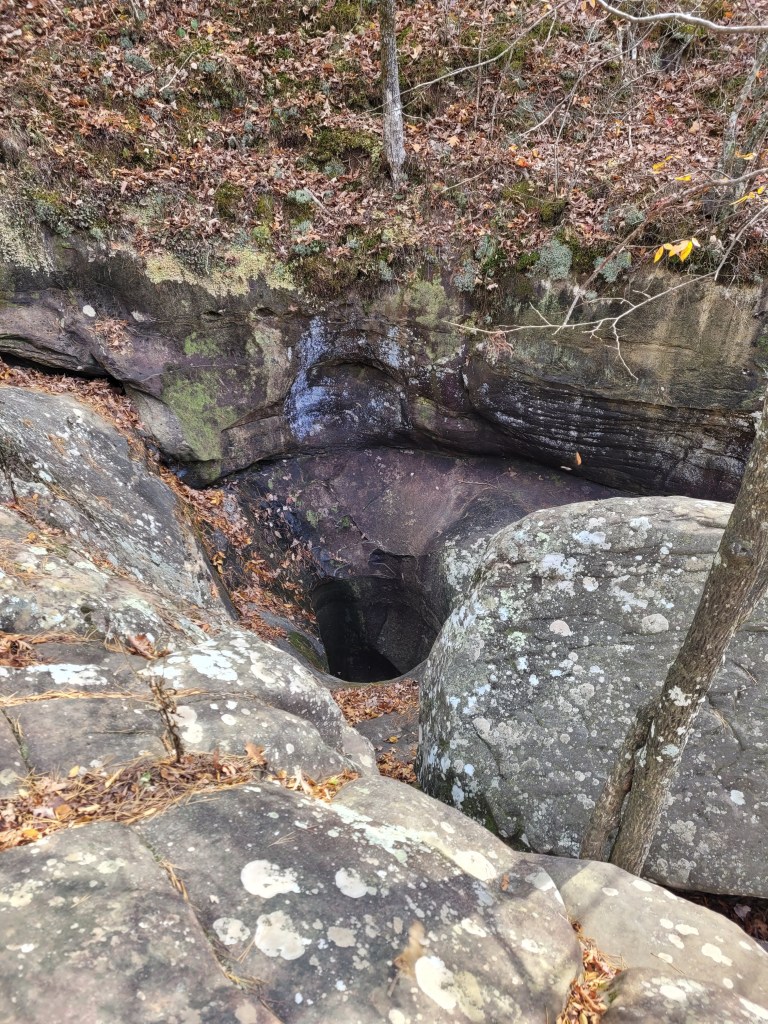
At Glory Hole Falls, we parked along the roadside and followed a short hike into the woods. The trail led over smooth rock formations marked with handprints worn into the stone by years of visitors. Water trickled gently through a circular opening in the rock, steady and calming. The cool shade and muted sounds made the place feel tucked away, even though it was only a short walk from the road.
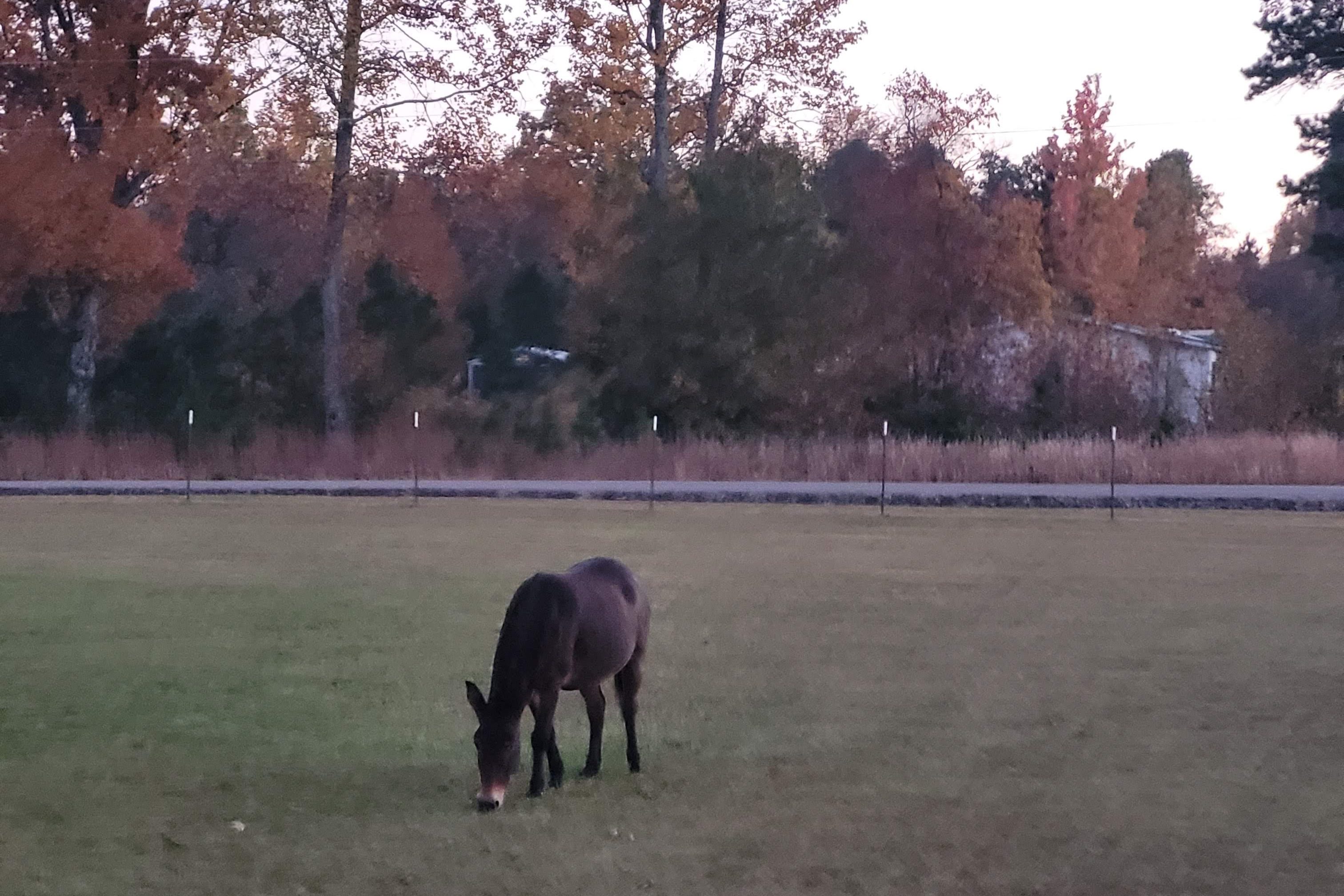
One morning, I went for a walk outside our campground while talking on the phone with my friend Ashley. Suddenly, three friendly dogs wandered out of a nearby driveway. I stopped to pet them, and before long an older couple and their granddaughter followed, striking up a conversation despite my pointing to my earbuds. Ashley, being from West Virginia, laughed quietly and explained in my ear that this was pure Southern hospitality. Sure enough, they continued chatting to me with Ashley on the other end listening in. We learned they were professional adopters with fourteen roosters, five dogs, several cats, and a rescued mule named Ruth who sometimes escapes her pen to visit the neighbors.
A few days later, we spotted Ruth grazing calmly on the front lawn of our campground, completely unbothered by the attention she drew. We laughed at how freely animals seem to roam in the Southern states without anyone reacting with panic, as if this kind of wandering was simply part of everyday life.
In many ways, Arkansas turned out to be an unexpected gift. We did not come here chasing anything in particular, yet we found ourselves lingering, drawn in by warm days, quiet roads, and evenings that settled comfortably into routine. Our ongoing cribbage streak became part of that rhythm, a small marker of time passing and skills improving, game after game. While the sun may not set any later here, the days themselves feel generous, full of light and warmth, as if fall has agreed to stay a little longer just for us.





































 NOMADIC ADV