Category: Kickstand Chronicles

  • Kickstand Chronicles, Vol. 4: Adventure Rallies & A Journey Of Self Confidence

    Kickstand Chronicles, Vol. 4: Adventure Rallies & A Journey Of Self Confidence

    Welcome back to the Kickstand Chronicles. If you caught the spoiler in the last entry, you already know Arkansas wasn’t just a pit stop. We’d stumbled upon a full-blown adventure motorcycle paradise. It was compelling enough to make our plans revolve around this as we were curious to see just how deep this Arkansas rabbit hole would go.

    A few days after settling in, a big A-class camper rolled into the campground, unloading some adventure motorcycles and a side-by-side. My internal radar immediately went off. Before I could overthink it, I was already halfway out the door and smiling. Chris looked up from his computer monitor, just in time to offer a gentle warning. Something along the lines of maybe don’t overwhelm them. A fair concern, considering my well-documented enthusiasm for meeting new people and my occasional blind spot when it comes to social cues.

    Still, curiosity won.

    I wandered over and launched into the usual rider small talk with our new neighbors, Roger and Sara. What do you ride? Where are you from? How often do you ride here? I then get asked a question I wasn’t expecting. Are you here for the ADV Rally?

    I explain that this is the first I’m hearing of it, but that I am extremely interested in knowing more. Turns out that the So Live So Ride Moto Ranch we’d spotted a few days earlier is hosting its Fall Adventure Rally. Well I’ll be! 

    Before long, another van pulled into the campground. A couple hopped out and began unloading their adventure bikes. My heart did a little fist pump at the prospect of making more friends.

    That’s how I met Angga and Lee, visiting from Kansas. As we swapped motorcycle stories and compared setups, Lee casually mentioned he was heading over to the Moto Ranch to sign up for the weekend and see what the schedule looked like. Then he asked, almost as an afterthought, if I wanted to come along.

    I gleefully agree, heading back to our camper to throw on my gear, and sprinting (yes, sprinting like a child) back to the Bus to deliver the news to Chris. “I’m heading to a moto ranch with the nice man I just met over there,” pointing towards their camper van, “to get information about the motorcycle rally. I’ll be back!”

    Chris barely had time to process this before replying, “Uh. Okay. Be safe! See you later.”

    And just like that, I was on my motorcycle, driving off with the nice man. All this courtesy of campground timing, adventure bikes, and the kind of coincidences that seem to appear only when you’re already exactly where you’re supposed to be.

    Pulling into the So Live So Ride Moto Ranch, the back field is already dotted with camping tents and Sprinter vans. A white pop-up tent greets us near the entrance, surrounded by adventure bikes and clusters of riders swapping stories. Off to the right, another field is set up with obstacles: barrels, cones, a series of evenly spaced, consecutive mounds of dirt bike whoops. 

    I park near the tent and introduce myself to the folks under the tent: Kate and Kim. Kate and her husband Dustin1 own the ranch and organize this event. They are casual legends, in their own right, I soon find out.

    We chat about the schedule for the next few days, the organized rides, and how to sign up to explore the surrounding trails. All skill levels are welcome, and a quick glance around confirms it. Every age group, nearly every adventure bike brand, are represented. I ride back to camp buzzing with excitement and fill Chris in. Our very first motorcycle rally!

    Tales From the 3-Day Moto Rally 

    Today is Thursday. After Chris’ workday ends, we head back to the ranch to watch the Cha Cha Trail Time Trial. Riders thread their way through a tight labyrinth that is carved through a high grass field as fast as possible. The ground is slick, the turns are unforgiving. When people fall, they bounce back up and keep going. Skills on full display. As evening settles in, we gather around a campfire where stories are traded and trail maps are discussed. We’re told that the routes are clearly rated by difficulty online.

    The next day, Chris takes a half day from work and we decide to explore on our own before heading back to the Moto Ranch later in the afternoon. When it comes to planning our rides, I’m  not in charge of maps as the GPS screen is set up on Chris’ bike. Plus, my spacial awareness skills are so subpar I would probably get lost if I had directions spelled out for me on my dashboard.

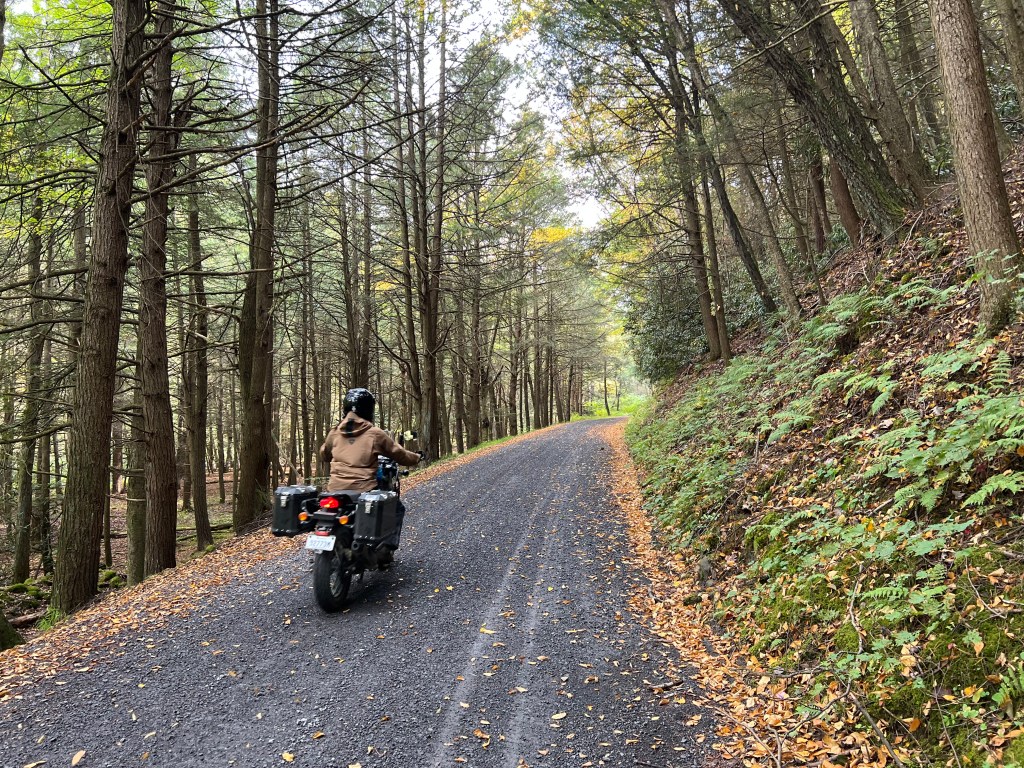
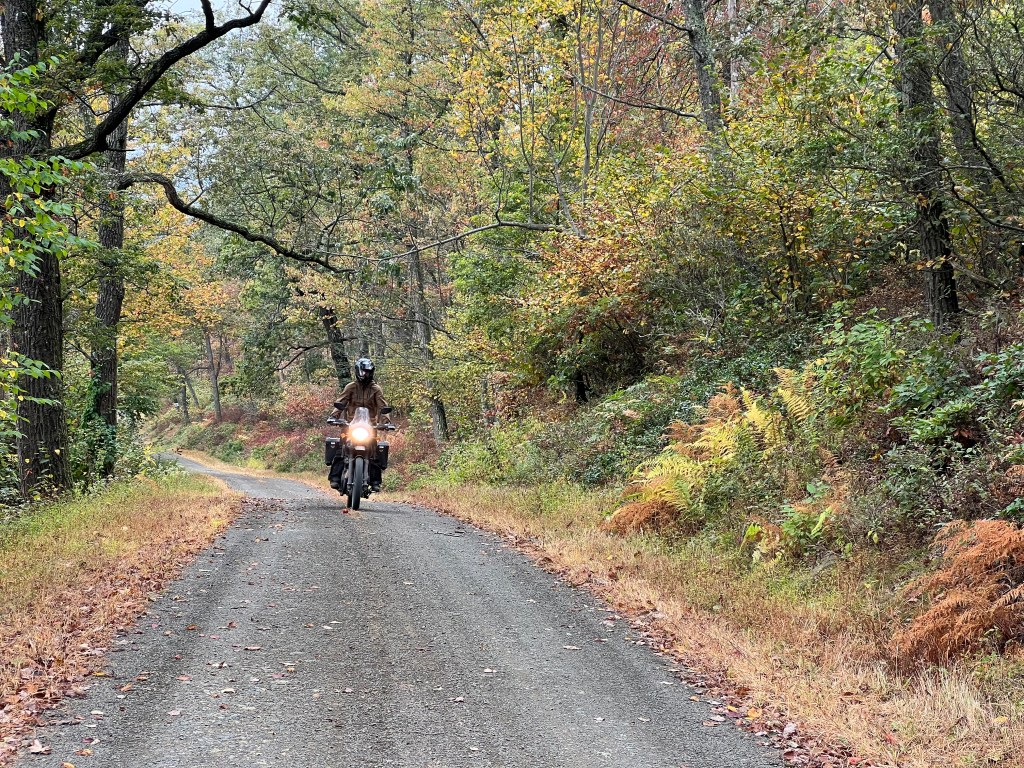
    The ride starts out easy enough, as we wind through smooth gravel roads, that twist as we follow the edge along Ludwig Lake before heading back under the cover of fall colored trees. It’s all so pleasant and fairly easy going. 

    Then Chris casually asks, “Are you up for something a little more challenging?” I can do a little more challenging and so enthusiastically agree without asking a single follow-up question. 

    At the fork in the road, we turn left onto a little more challenging route. Almost immediately the terrain turns rocky, rutted, and slick with mud. Surprisingly, I start off feeling confident and capable. And then the road begins to thoroughly kick my ass. With part of the trail named Fist Fight, I should have known better.

    Chris sails up a steep incline with ease. I follow, unaware that I’m in third gear instead of first. I try to power my way up, stall, and wipe out sideways into the washed-out trail. Everything’s fine, I say over the comms, as Chris rushes back to help me right the bike. We push on.
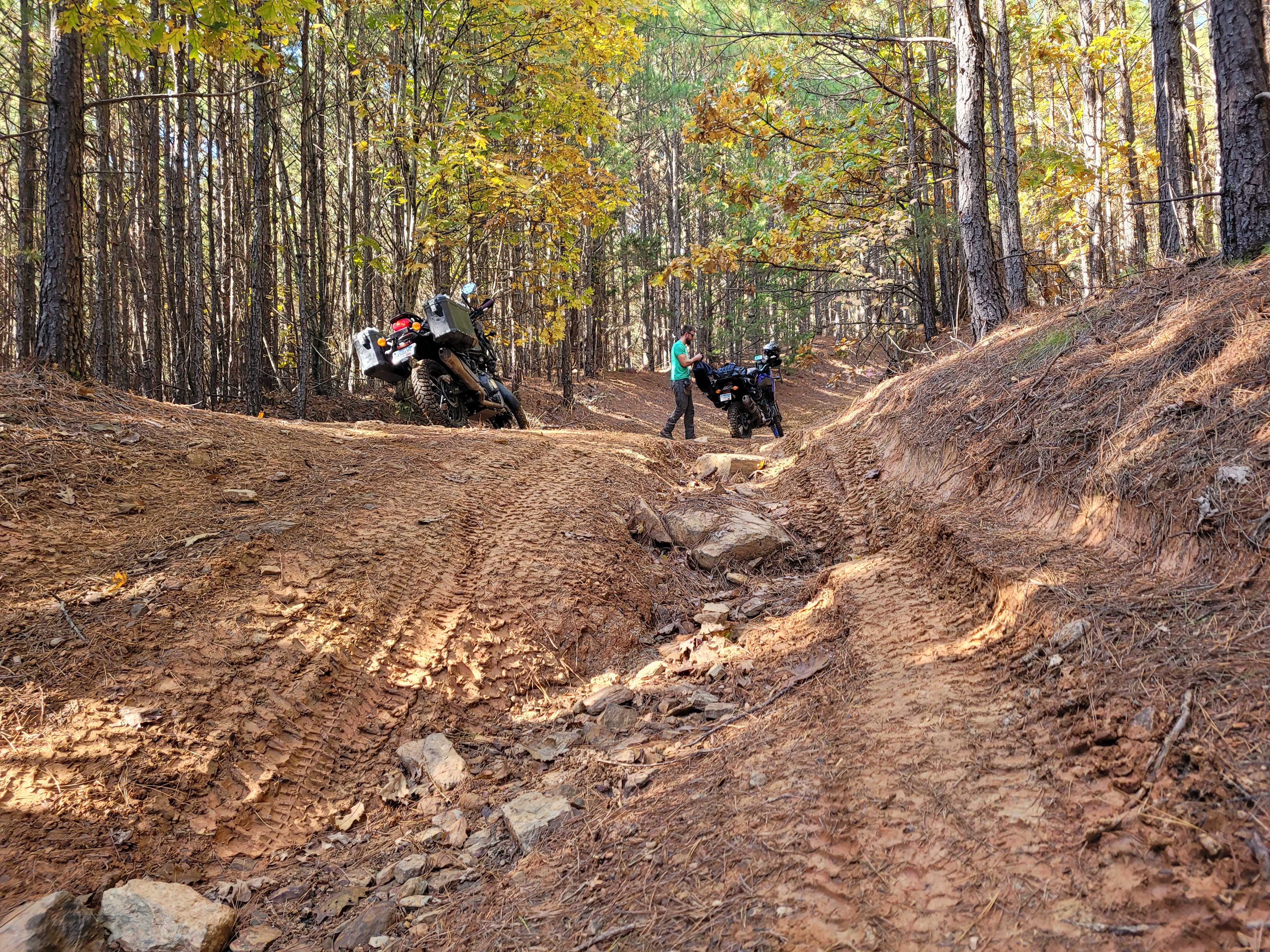
    A bit later, my front tire hits a rock (a fairly large one), the bike stops dead, and I go over the handlebars. This is my first ride wearing the chest protector my brother-in-law insisted I take. Thank goodness for that, because I get the wind knocked out of me as I land on the ground, mirror in hand. This is also when I’m glad to have replaced my stock mirrors with Ram-mounted adventure mirrors that are able to take the brunt of a fall without breaking.

    By the time we reach a particularly rocky and technical section, my energy is fading fast. Chris stops to analyze the line ahead, while I realize that every stop-and-start is draining whatever reserves I have left. Damn you, inadequate cardio! I decide that momentum is the answer. If I don’t stop, I won’t have to restart, right?

    Oh boy.

    I vaguely hear Chris warning me to stop and analyze what’s ahead. I ignore him. He raises his voice, understandably panicked as I barrel toward him. What I attempt to shout between gasps is something like, “If I stop, I won’t be able to start again!” I know it’s absurd, but I commit. For about three bike lengths. Then I crash. Again.

    Chris jogs over, and delivers a firm lecture about if you get hurt, you won’t be able to go anywhere. I push back weakly, questioning whether I should even be on this trail. What level is this damn thing, anyway? It would seem that the first route we passed was rated 1.0. The second was a whopping 3.0. 

    I can confirm that I wasn’t ready to experience such a sudden jump in difficulty level. Nevertheless,  I’m proud of having tried my best and gotten through nearly unscathed with no parts on my bike completely broken off.

    Chris rides my bike to the end of the section while I walk it out, pondering my life choices and wondering if there’s a way to be better at this. Another spoiler alert: there is. 

    We finish the afternoon with a beautiful and much more mellow ride through the Ozark forest before heading back to the ranch to watch more skills challenges. 

    On the way back we stopped at Grumpy’s burger barn to grab some food. Partly because it’s supper time, but mainly because I am in need of comfort food after that afternoon ride. We end up eating the best pulled pork sandwich either of us has ever tasted.
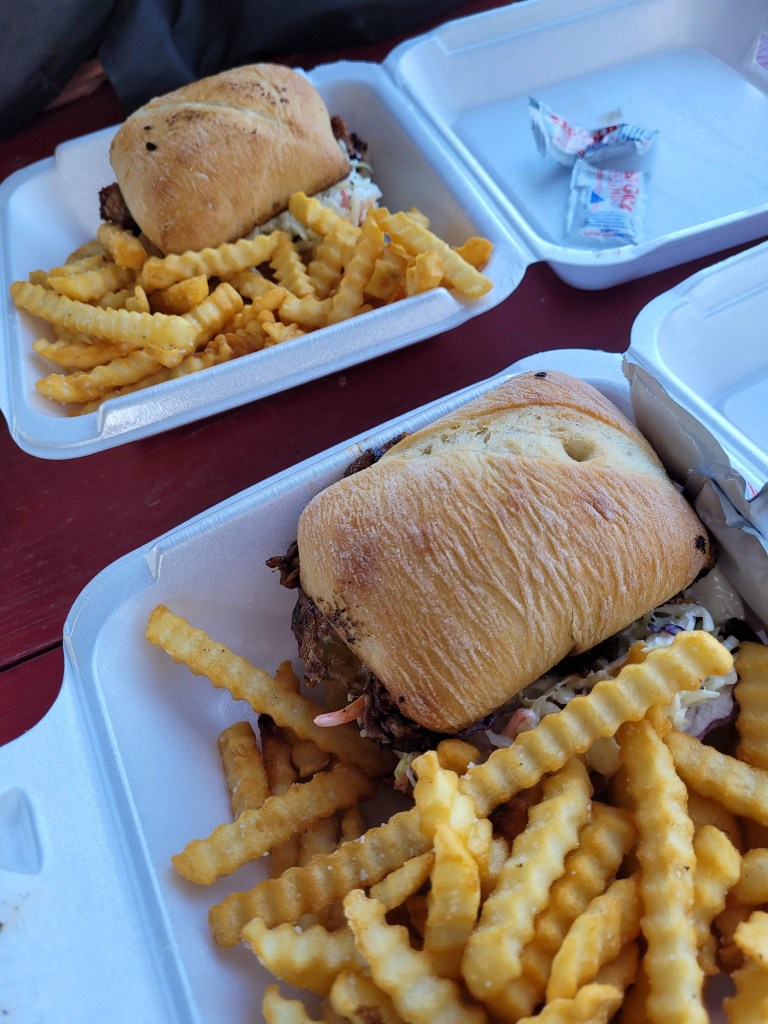
    Grumpy’s is literally a trailer on the side of the road with a big smoker drum right behind it. And for those of you who are wondering, it’s called Grumpy’s because they play their role very well. Taunting clients to order something specific on the menu and giving you a hard time when you seem to want to over complicate things about their menu. It’s perfectly charming!

    As we roll back through the gate at the moto ranch, engines ticking as they cool, the Ozark dusk settles in. We arrive just in time for the evening’s challenges, a kind of moto rodeo that feels equal parts skill clinic and summer camp for grown riders.

    First up are the barrel races.

    It is the same concept as on horseback, except instead of reins and a galloping partner, you rely on throttle control and clutch finesse. You burst out of the gate, dive hard right around the first barrel, cross diagonally to sweep left around the second, then hustle to the center top barrel before launching back toward the finish. Fastest time wins.

    Simple enough on paper.

    On big adventure bikes such as BMW GSs, Africa Twins, and KTMs, it becomes a dance of balance and determination. Even in a groomed arena, the surface is loose gravel over hard-pack, and if you grab too much front brake or hesitate mid turn, you are flirting with gravity. Drop your bike at any point and you are disqualified.

    The engines rev. Tires bite. A few riders come in hot and wide. One misjudged line nearly topples a fully loaded GS. The crowd cheers, half encouragement and half relief.

    Then come the slow races.

    Chris gives it a go and instantly realizes how deceptive “slow” really is. Riding fast feels instinctive. Riding painfully, deliberately slow without putting a foot down requires discipline. The key is clutch control, steady throttle, and tiny body adjustments. On these uneven grassy surfaces, even the smallest rut or incline can tip your balance. Riders wobble. Boots hover nervously above the ground. A single dab of a foot means you are out.

    Dustin remains the undisputed king.

    He inches forward with almost supernatural composure, at times appearing completely motionless. His front wheel trembles but never falters. While others glance sideways to assess their competitors and lose focus just long enough to dab, Dustin rides his own race. Calm and unbothered. He crosses the line at a pace that feels glacial but triumphant.

    Then comes the slow circle showdown. Also known as “knife fight in a phone booth”.

    Cones form a tight ring, roughly 25 feet across, barely enough room to maneuver a bicycle, let alone a 500 pound adventure bike. It is a last rider standing duel. The objective is not speed. It is psychological warfare. You creep toward your opponent, trying to pressure them into losing balance and putting a foot down.

    Big bikes. Tight circle. Zero room for ego.

    The ladies shine here.

    Kate and Kim glide around the circle on their BMW GS bikes as if the machines weigh nothing. Feathering the clutch, subtle counterbalance, steady throttle. Effortless. It is mesmerizing to watch. Strength is not the story. Control is. Confidence is.
    As riders gather around the fire, stories begin to flow. There are creek crossings on Warloop Road, ledgy climbs on Mill Creek, slick descents where red clay behaves like grease. Route recommendations bounce from group to group.

    Chris mentions that we rode Guns and Wiemers and part of Fist Fight. The reaction is immediate. Eyes widen. A few low whistles. Someone mutters that those trails are no joke.

    Both are notorious in the local Ozark riding community. Guns and Wiemers is steep, rocky, and relentless. Loose baby head rocks scatter across off camber climbs where momentum becomes your only friend. Fist Fight earns its name honestly. Tight switchbacks. Jagged limestone shelves. Deep ruts carved by runoff. Climbs that demand total dedication. Congratulations are offered. I quickly clarify that it was a complete struggle and that I had absolutely no business being on that trail. We made it through, but it was deeply humbling. We laugh.

    Waking up on Saturday morning, Chris and I stick to our usual breakfast of oatmeal, knowing we will be out riding for hours before there is any chance of lunch. It feels practical and responsible.

    When we pull into the Moto Ranch, we are immediately greeted with enthusiastic pointing toward the white tent. Breakfast burritos from Grumpy’s are laid out for everyone. Even as I insist I am not that hungry I still walk towards the tent. I grab one because it’s impolite to turn down offered food, right?

    At 8:30 AM sharp, I roll out for the beginner guided group ride, with a planned pit stop at the Strawberry Bluffs viewpoint. 

    Chris has gone off with a group of more experienced riders. Before our group leaves the Moto Ranch, I watch them disappear in a cloud of dust and feel genuinely glad he gets the chance to let the throttle loose a bit more than he does when riding with me. 

    The sound of our ten bikes starting up at once carries differently than when it’s just the two of us heading out alone. There is an energy to it. A sense of shared momentum.

    The gravel roads begin almost immediately. They wind and dip through the folds of the Ozark Mountains, climbing gently before dropping into shaded hollows. Although Chris and I never ride particularly fast while exploring on our own, there is something about being in a larger group that subtly shifts the pace. It’s rhythmic. Corners flow into one another. Dust hangs briefly in the morning light before settling back onto the road.

    Joining a guided group ride with riders at a similar skill level turns out to be pure joy. There is comfort in knowing everyone is reading the terrain the same way, choosing similar lines, trusting the same pace. No pressure to prove anything. No anxiety about holding anyone back.

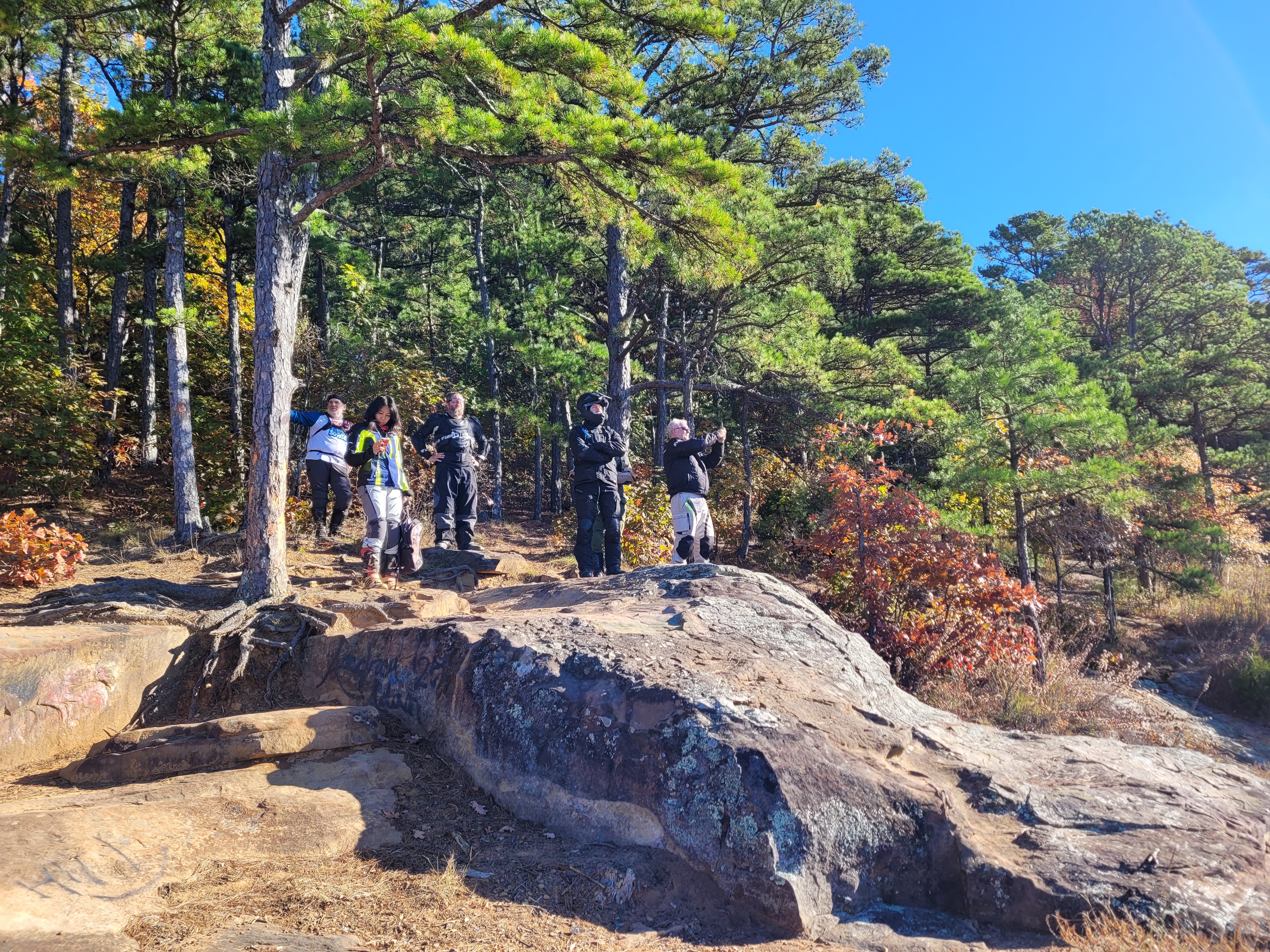
    The Ozarks continue to surprise me. At Strawberry Bluffs, the overlook opens wide. You can see the patchwork of fields and forest below, the subtle blue haze softening the distant ridgelines. 
    Our group rolls into Hagarville Grocery & Deli sometime late in the morning. Inside, the small deli counter hums with the quiet rhythm of a family-run operation. I’m told that the local delicacy is a sandwich called Lipstick on a Pig. I don’t ask questions. I don’t need clarification. 

    Now, context is important here. This is technically my third full meal of the morning. We had our light breakfast, then the surprise burritos, and somehow I’ve found myself here, circling another counter. I am not hungry. Not even remotely. 

    What arrives is no dainty snack. It’s a substantial, warm sandwich wrapped in paper that barely contains it. Fried bologna, edges curled and crisped from the griddle. Melted cheese binding everything together. A soft, homemade bun that somehow holds its own against the grease and glory of it all. It’s unapologetic. It’s perfect.
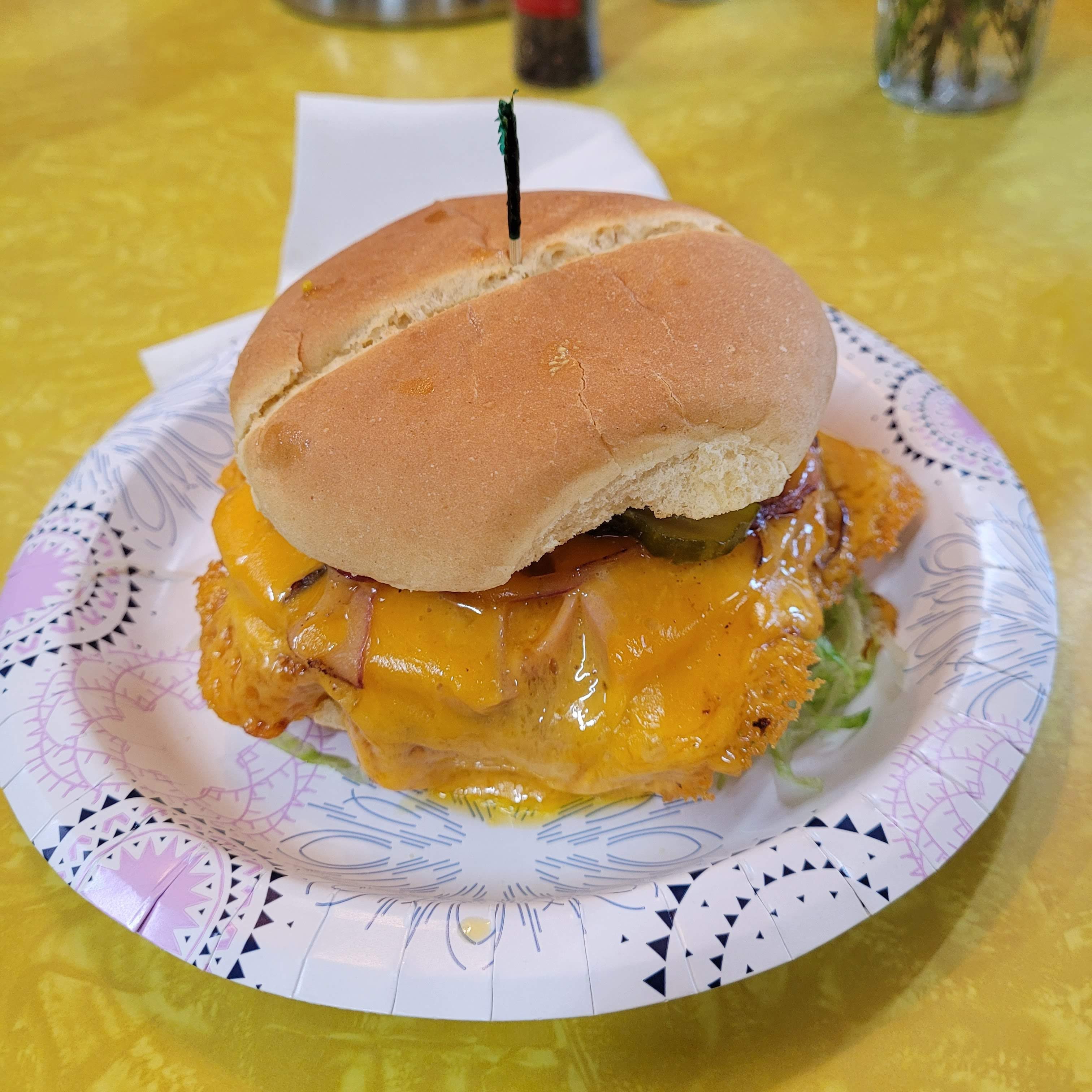
    The first bite confirms it: this is comfort food in its purest form. Despite the very real threat of slipping into a carb-induced stupor, I eat the entire thing. Slowly at first, then with growing determination. Each bite feels like both a victory and a mild act of self-sabotage. By the end, I’m operating at that dangerous edge where one more bite could tip me into a full-blown food coma. 

    And yet, no regrets.

    We roll back into camp just before noon. There is a short reset before the second guided ride heads out at 12:30. This time Chris has signed up, eager for another loop into the folds of the Ozark Mountains.

    The afternoon ride feels softer somehow. We slip back onto forested roads that tunnel through hardwoods and pine, light flickering across visors in rhythmic flashes. One minute we are enveloped in dense woodland, the next we are skirting the edges of wide, open farmland. Expansive fields stretch out beside us, barns weathered, cattle grazing within sight. It feels almost like passing through someone’s backyard, intimate and unfiltered.

    As the miles tick by, puddles begin to collect in the shaded sections of road. They are mostly shallow and friendly, their bottoms visible through murky colored water. Each crossing becomes a quiet lesson in commitment. Steady throttle. Light hands. Eyes up. Trust that whatever lies beneath the water will not deflect you if your body stays loose and your mind stays calm.

    Then, just as we roll off the final stretch of gravel and queue up at a stop sign to rejoin the pavement back to the Moto Ranch, the unexpected happens.

    Our guide, Bryan, has a low speed mishap. His Honda Africa Twin tips over in exactly the wrong position. The impact is minor, but the angle is not. Within seconds, oil begins to leak onto the road. A collective pause.
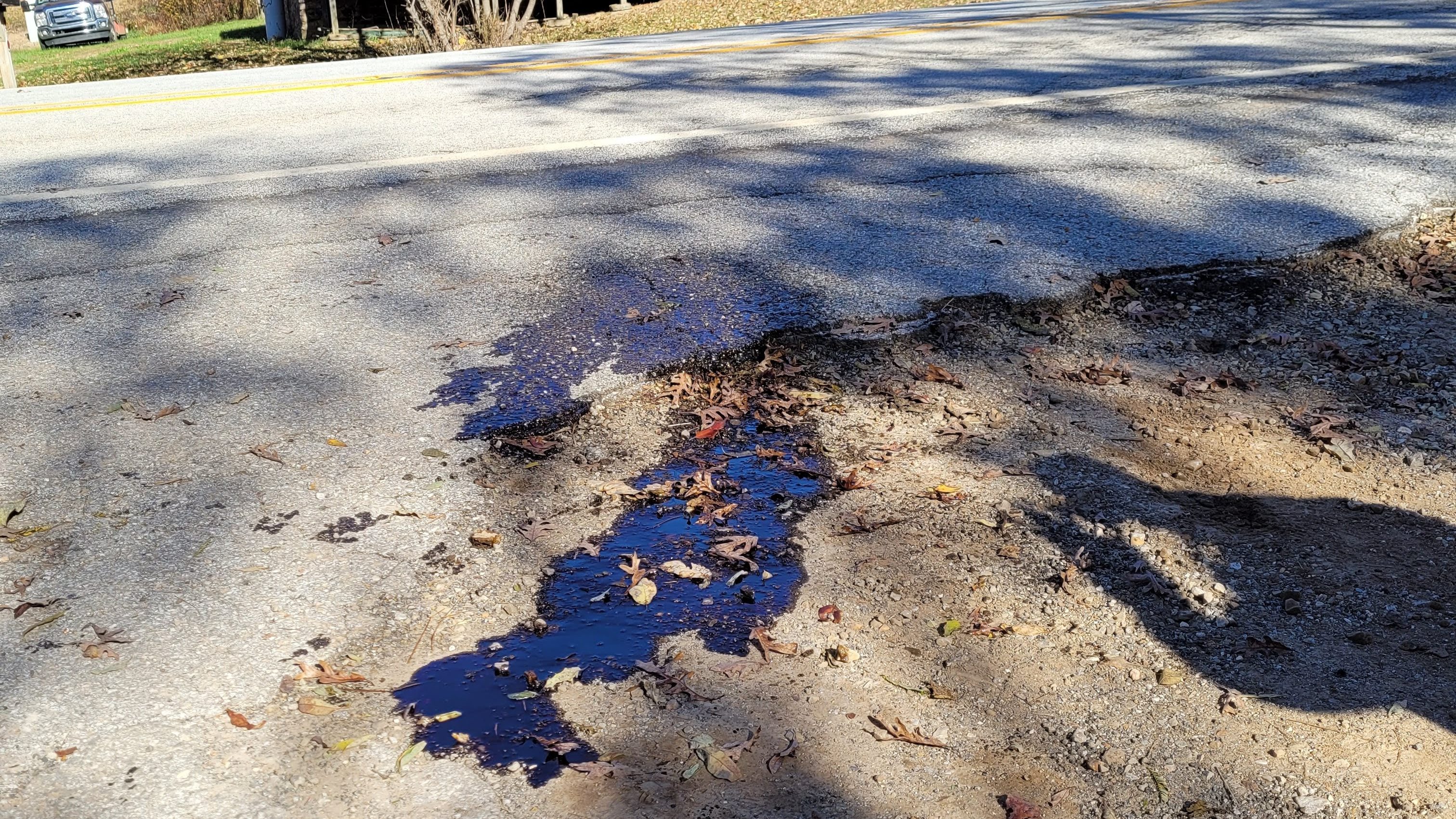
    There is no riding that bike back.

    Phones come out. Reinforcements are called. While we wait, the mood shifts from concern to problem solving. Chris happens to be one of the few riders with a GPS with the return track loaded. Just like that, he is promoted to guide. We remount and follow him back toward camp, the group stretching into a tidy line on the pavement. It feels oddly empowering to navigate ourselves home. When we pull in, the evening skill contests are already beginning. Not long after, Bryan and his wounded Africa Twin return in the bed of Dustin’s pickup truck, greeted with sympathetic applause and a few good natured jokes.

    The Saturday evening events are the centerpiece of the weekend activities. First up: Fun for All Skills Competition. Think of it as a contained obstacle course designed to expose your skills and weaknesses on your motorcycle.

    Riders begin by climbing the teeter tot hill, balancing their weight carefully before rolling down to kick a giant red ball positioned at the base. From there, they weave into a cone maze reminiscent of a GS Garage drill. Three tight S shaped sections demand precision. Drift outside the cones and penalty points stack up quickly.

    Next comes the opposite side of the teeter tot, where a limbo pole waits. Riders must duck low while maintaining forward momentum, then climb a short hill to bump a barrel perched at the top. It has to roll down in a straight line, which means that positioning and controlled speed are everything.

    The course does not let up. A tennis ball balanced on a PVC pipe must be grabbed on the move. Riders turn back toward the red ball they kicked earlier and attempt to throw the tennis ball onto it. Accuracy under pressure is harder than it sounds. The final task appears simple but rarely is. A track stand. Three full seconds of complete stillness before crossing the line.

    Cheers erupt for the single clean run of the night: Lee! Groans follow missed throws and wobbly track stands. It is competitive, but playful. Skillful, but accessible.

    Then comes the Best of the Ozarks ADV Skills Challenge.

    This one raises the stakes.

    Riders launch into a cone section before disappearing into the woods. They weave tightly through trees, climb onto a log bridge known affectionately as Logzilla, and continue into a rocky forested section that looks like it was curated by the terrain itself. Embedded stones, uneven ruts, off camber roots. The objective is simple to state and difficult to achieve. Get through with the fewest foot dabs possible.
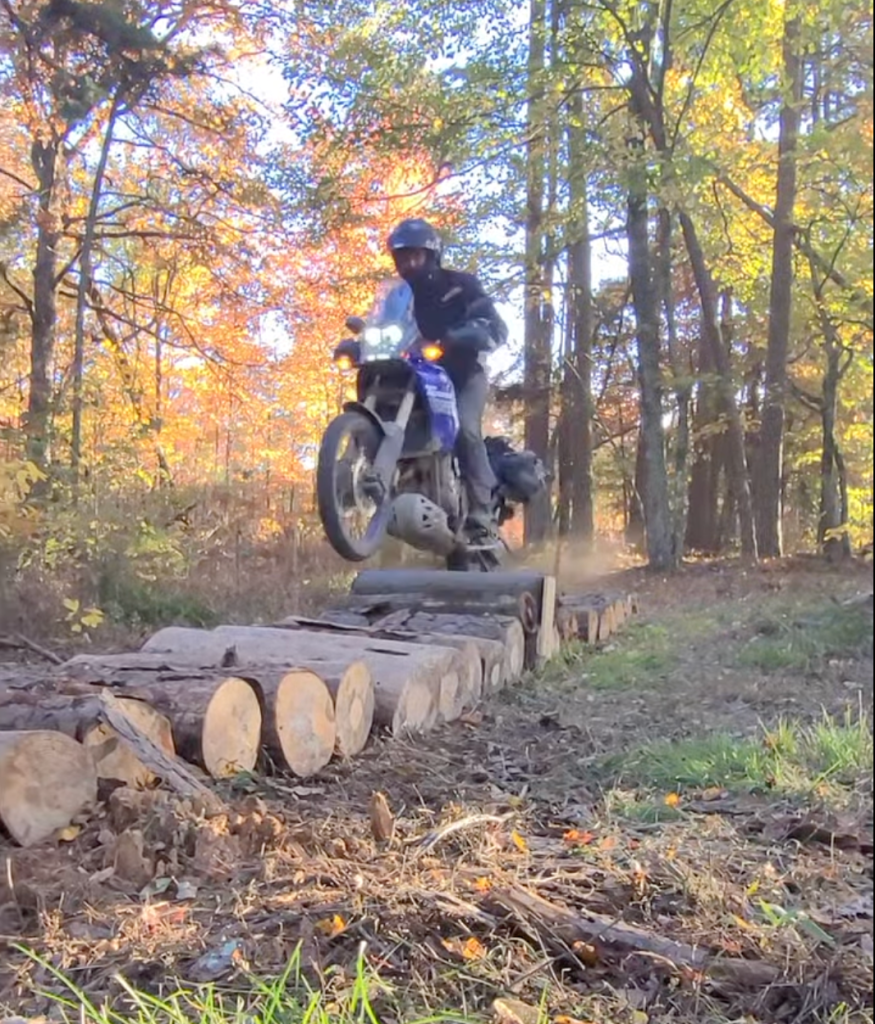
    Chris in total control on LogZilla, during the Best of the Ozarks Challenge.

    The advanced riders make it look almost effortless. Controlled clutch work. Precise body positioning. Eyes always scanning two obstacles ahead.

    Equally impressive is Kate, running between the start and finish lines with her GoPro, capturing footage from every possible angle. She sprints as hard as the riders ride, documenting each success and each near save.

    By the end of the evening, the Ozarks have once again made their point. Speed is fun. Obstacles are humbling. Community makes all of it better. And every rider, no matter their level, leaves having learned something.

    Moto Ranch Adventure Training: A personal Anthem On Getting This Far

    Story time, because this might explain how I ended up here.

    After six years on a perfectly unintimidating Suzuki Boulevard S40, I decided in 2023 that it was time for something different. I bought a Royal Enfield Himalayan. A 411cc single cylinder tractor of a motorcycle that immediately dragged me into an entirely new set of comfort zones. I named her Murphy. As in Murphy’s Law3. It felt realistic.

    If I’m honest, I sometimes miss when paved, winding roads were the only plan. Back when the hardest decision on a ride was which scenic pull off deserved a photo and whether I wanted coffee before or after the twisties. Life was simple. Predictable. Upright.
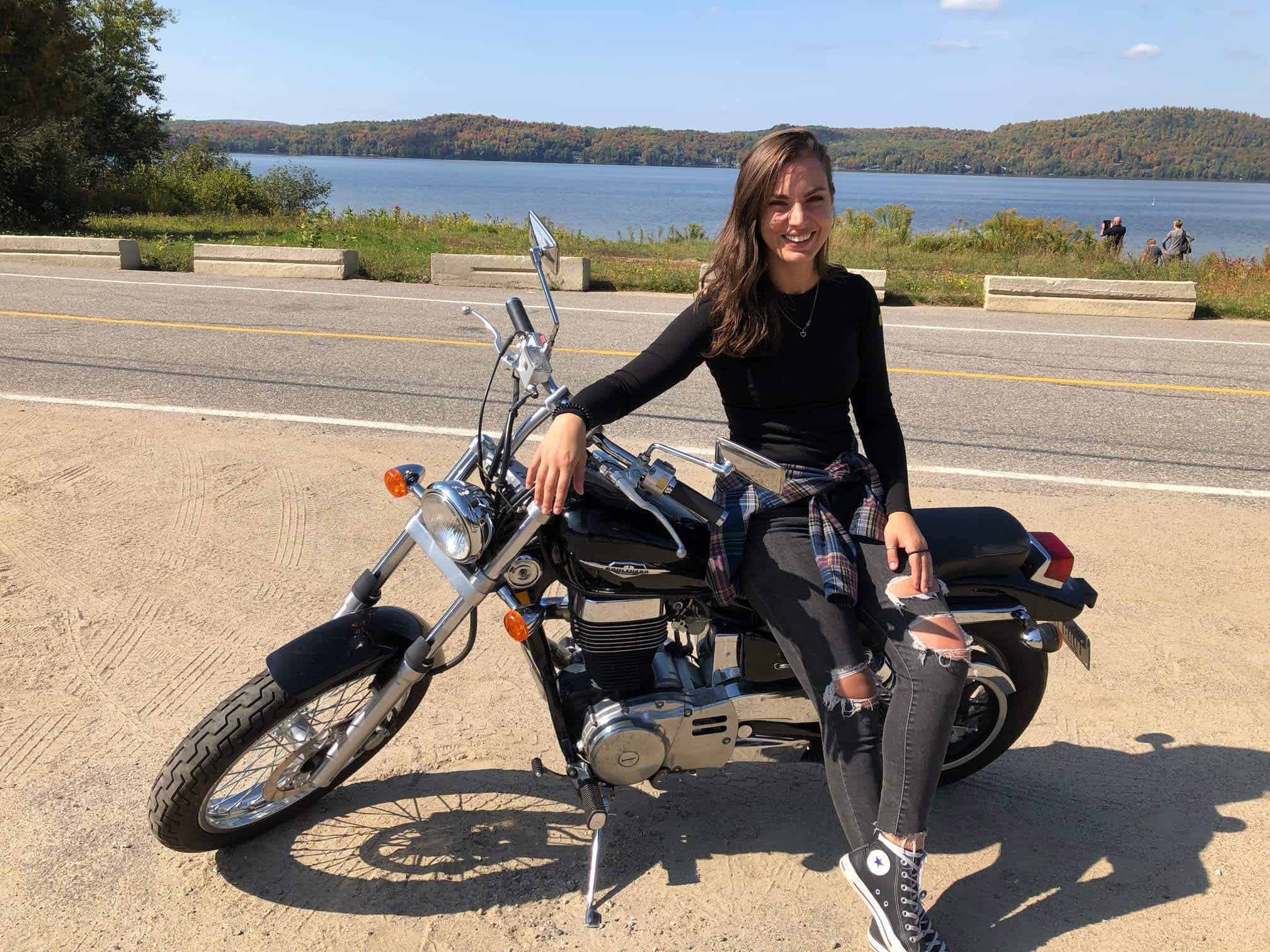
    2019 with my old motorcycle, named “Mike the Bike”

    Owning an adventure bike with zero off road background is sobering in a very public way. I spend a surprising amount of time explaining that yes, I drop my motorcycle. Fairly often. I am actually quite skilled at it. Keeping it upright is still a developing talent.

    Somewhere along the way, downplaying my abilities became a coping mechanism. It is easier to make the joke first than to admit the imposter syndrome that creeps in when I ride with people who make technical terrain look effortless. You know the riders. Balanced. Relaxed. No visible panic. Meanwhile, I am internally negotiating with every rock and rut while pretending my dramatic foot dab was all part of the plan.

    But also, and this is the important part, the places this motorcycle takes me are worth every awkward stall and tip over.

    An adventure bike changes what feels possible. Dirt roads stop being questionable decisions. Forest trails stop being barriers. Forgotten back ways that most travelers never see suddenly feel like invitations. The discomfort expands your world.

    And I would be lying if I did not give credit where it is due. Chris talks me through climbs and descents over our comm system with a calm I barely ever possess. When a section pushes past my current ability, he rides my bike through it without making it feel like a failure. Then he hands it back and tells me to try the next one.

    We all grow differently. I just so happen to have chosen a slightly more demanding way.

    The “How To Fall” Chronicles 

    After the Arkansas Adventure Fall Rally weekend, I knew I had so much learning to do. I signed us up for a training session with Kate and Dustin at the Moto Ranch. Chris agreed that brushing up on slow-speed skills would be good for him too, and that it would be a fun thing to experience together. Understatement of the year. That afternoon turned out to be one of the most valuable riding experiences we’ve had so far.

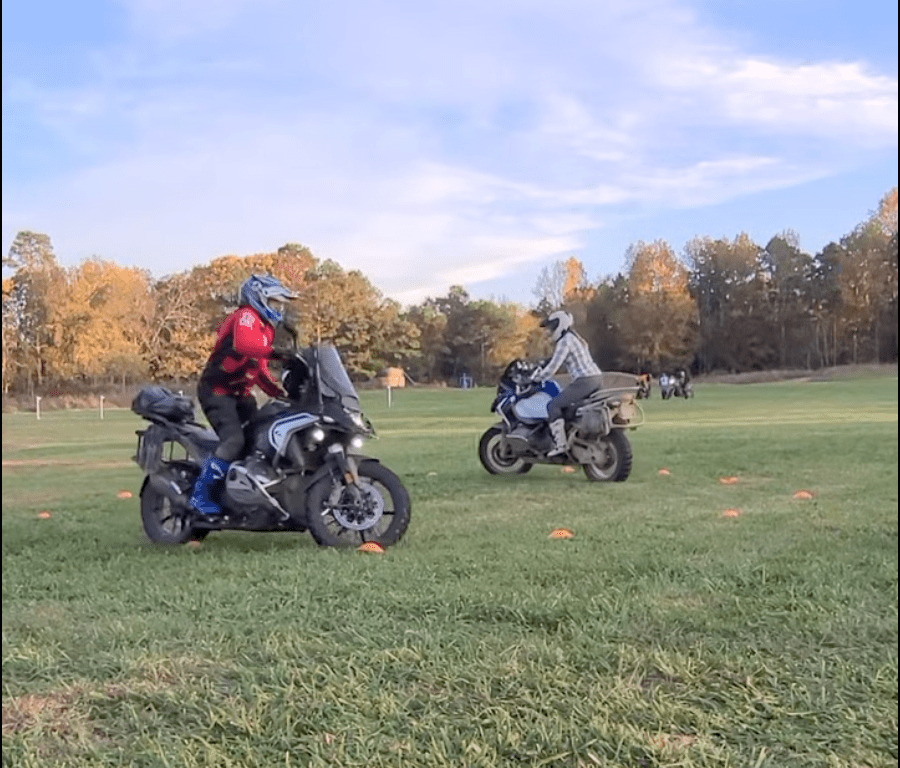
    The course focused on foundational adventure riding skills. The kind that quietly save you from dropping your bike in slow, humiliating ways. We practiced balance, control, and confidence through a series of thoughtfully designed drills. One of the first lessons centered around foot positioning when stopping, affectionately referred to as “dabbing.” Turns out, where and how you place your foot matters far more than I’d ever realized, especially when the ground isn’t flat, dry, or particularly cooperative. This would have been lovely to know in the Fist Fight trail a few days ago, but I digress.

    From there, we worked on slow speed, clutch control, balance, multitasking by riding in first gear while picking up a tennis ball and delivering it to the next PVC platform. One deceptively simple exercise. We practiced emergency braking, learning how to stop quickly and effectively without panic-grabbing the front brake and immediately regretting it.

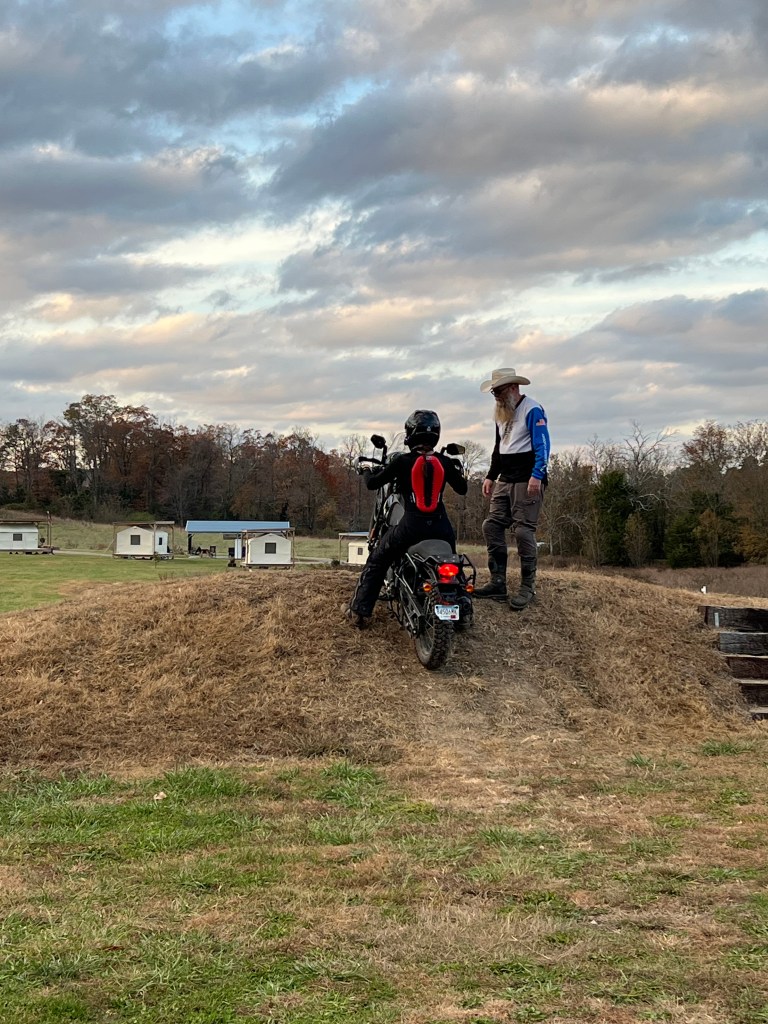
    There were controlled climbs up and down a high dirt mound, emphasizing body position and momentum. We rode through ruts without fighting the bike, practiced full-lock 180-degree turns between cones that gradually moved closer together, and learned how to trust the motorcycle to do what it was designed to do, provided we weren’t actively sabotaging it (Who would have thought?).
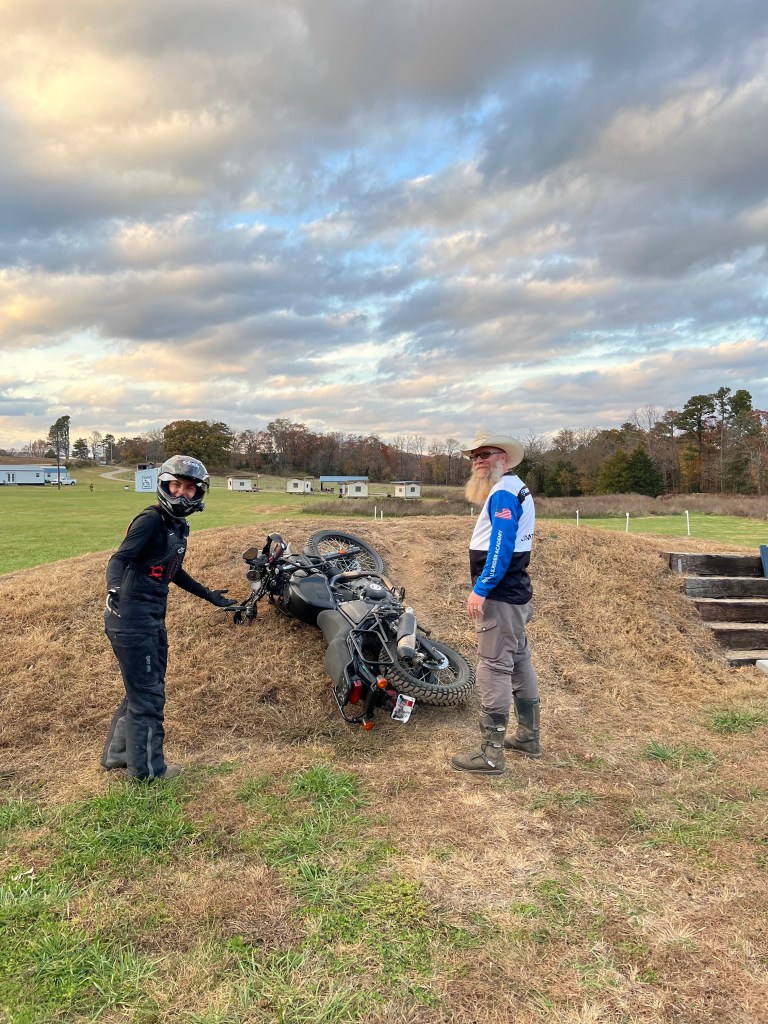
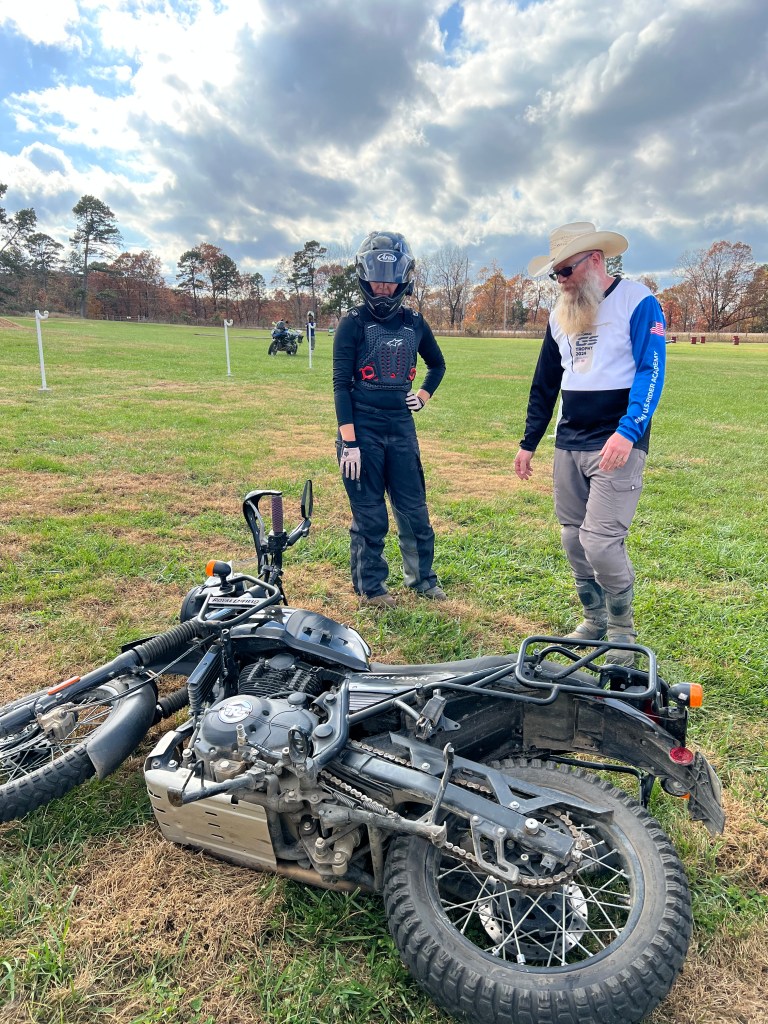
    Another monumental win for my confidence was learning how to pick up my motorcycle by myself. Up until this point, I had never really attempted to lift the 400 lb machine without Chris’ help, so being able to lift it correctly felt like a huge accomplishment in my learning curve.
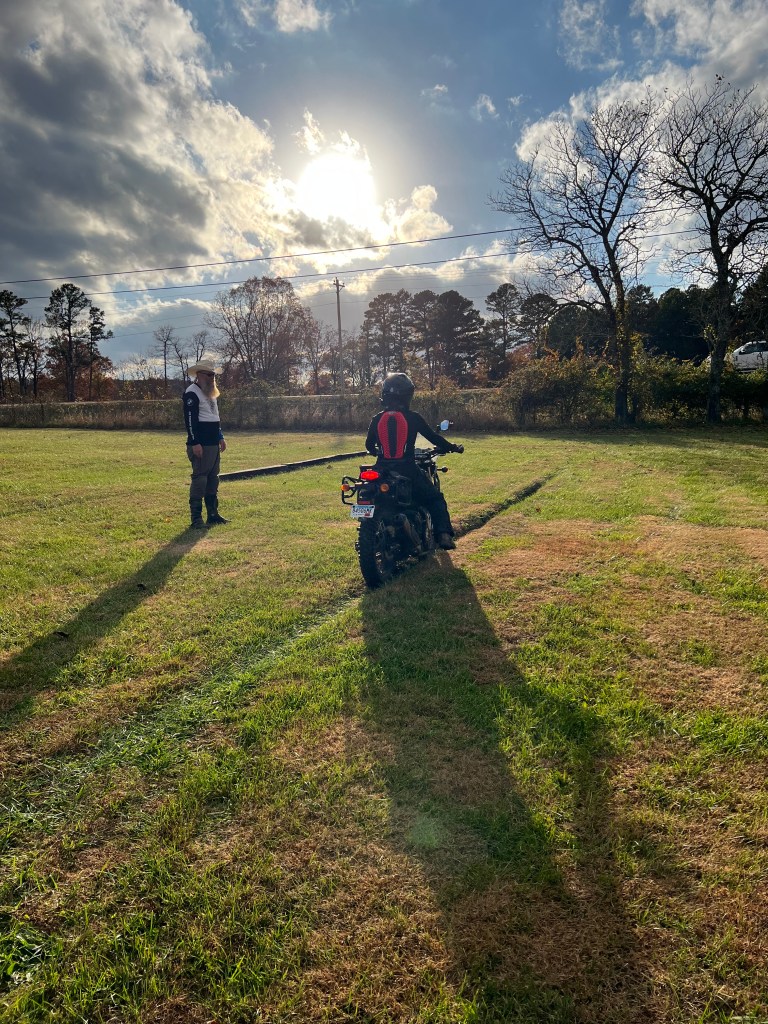
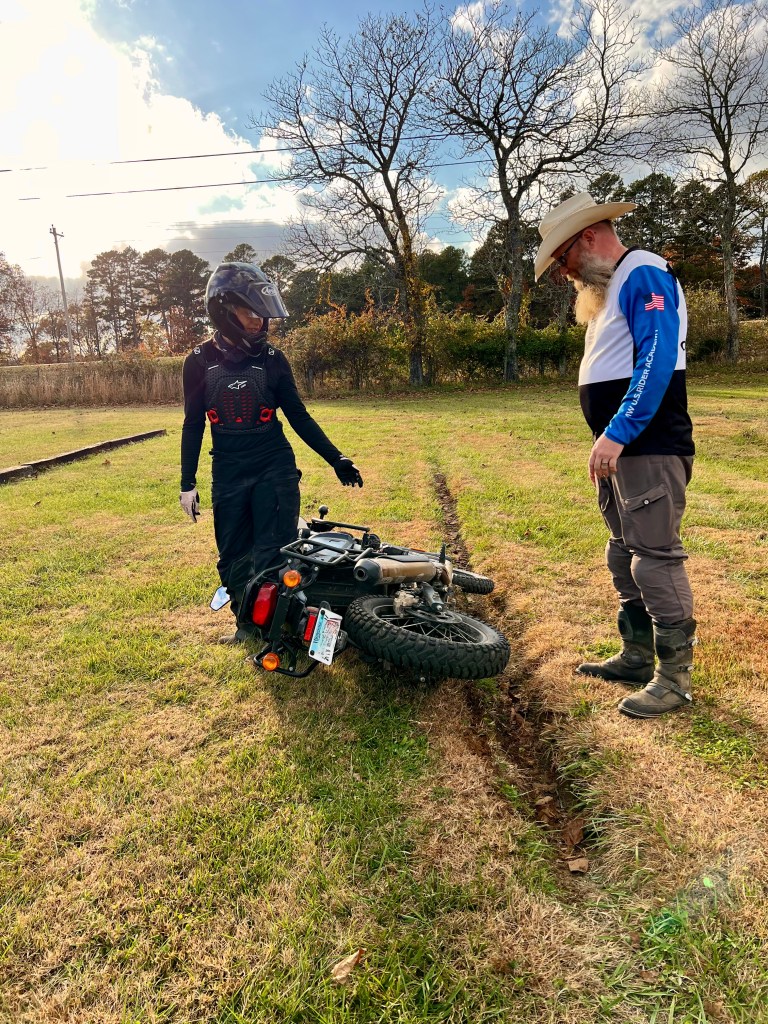
    By the end of the session, everything felt more intentional. Less reactive. The fear didn’t disappear, but it quieted down, replaced by understanding and muscle memory. The kind that gently nudges you toward better decisions.
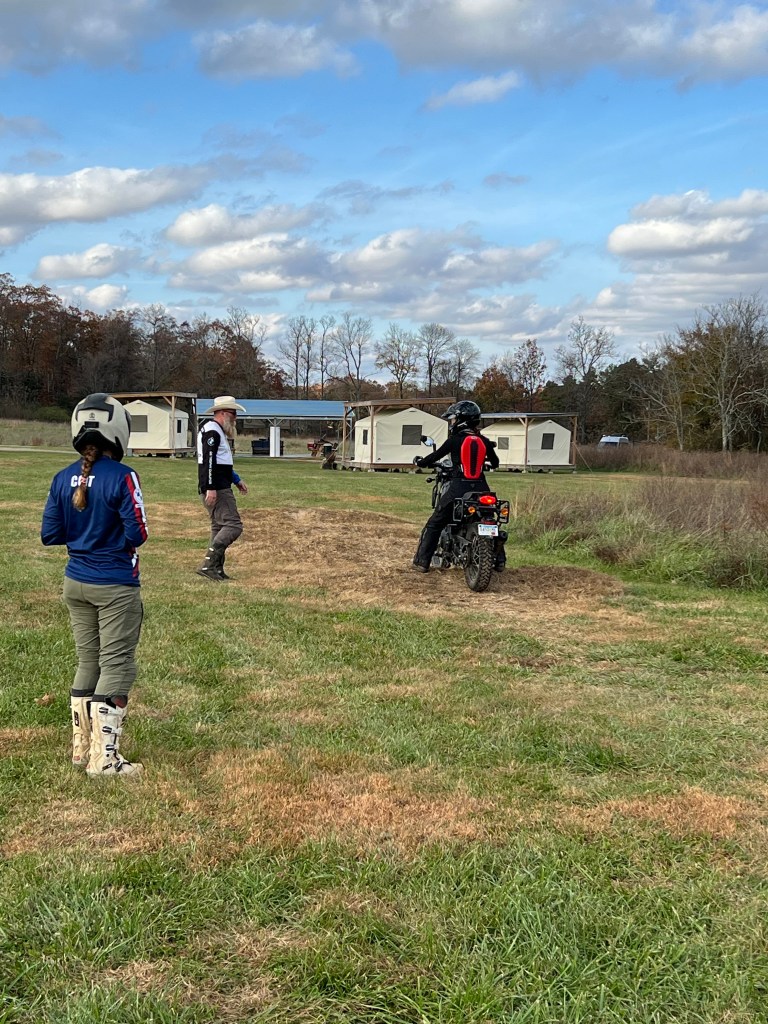
    I left the ranch tired, dusty, and grinning. Still learning. Still falling sometimes. But now, with a few more tools in the toolbox, and a little less reason to doubt that I belong out there at all.
    Water Crossings: A Foot Dabbing Memoir

    At our campground, we met Brett and Nicole, who had just moved to Arkansas from Florida. Brett rode a small dirt bike and was eager to find people to explore with him while they got to know the area. One Saturday afternoon, Chris, Brett, and I headed out for what we thought would be a short, easy ride.

    It did not turn out that way.

    Rain from the night before had transformed the trails. Clay turned slick, ruts deepened, and sections that might have been simple on a dry day suddenly felt far more technical than I had wanted to tackle. We pressed on carefully. At one particularly steep, slippery descent scattered with large boulders, Chris rode my bike down for me while I walked it. No ego, just teamwork.

    Then came the water crossings.

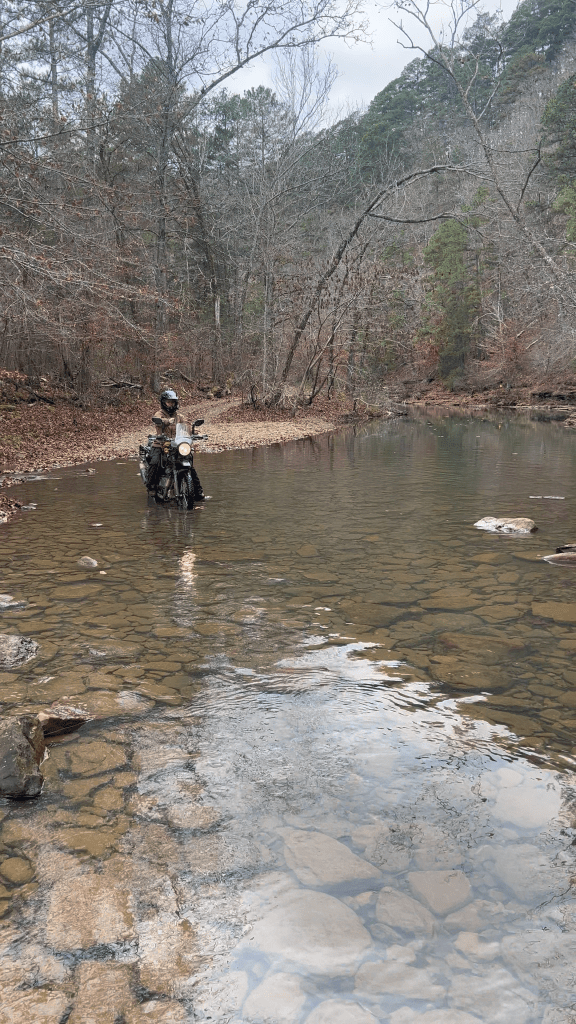
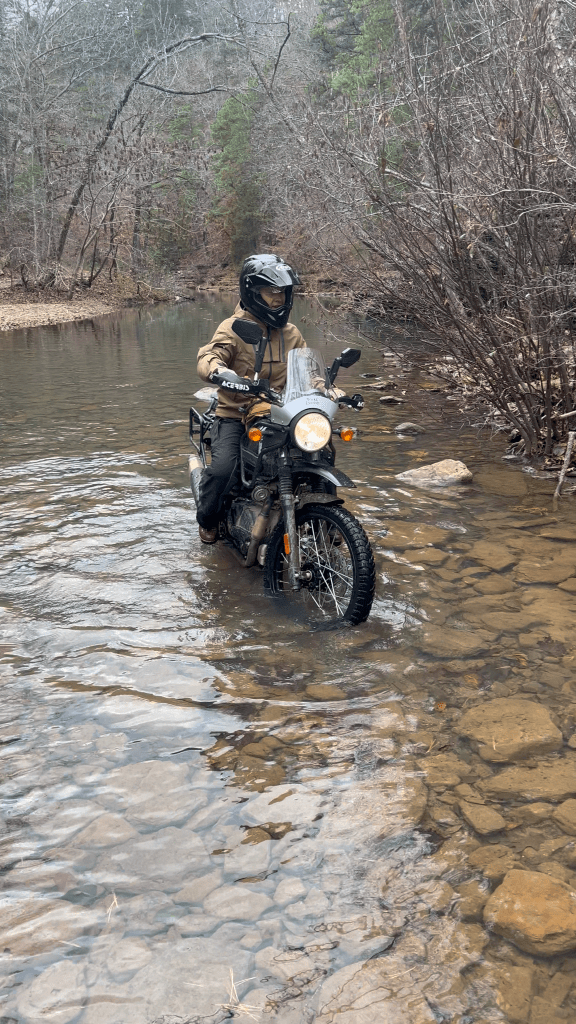
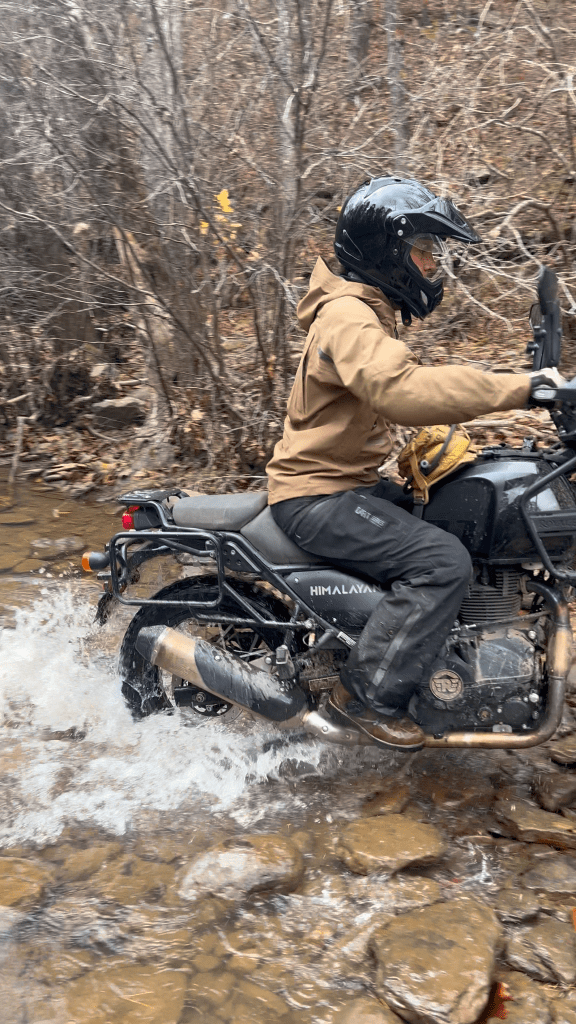
    We rode through more river beds that afternoon than I ever had before. Most were shallow, but deep enough that when I dabbed, my foot and ankle disappeared under water. One crossing stretched long and wide, and I could feel the nerves creeping in.

    Instead of focusing on the far bank, I remembered my training. Pick a point. In this case, a rock sticking out of the water. Ride to it. Stop. Regroup. Choose the next one. I repeated that process three times, steadying my breath and committing to each small section instead of the whole intimidating span.

    And then I was across.
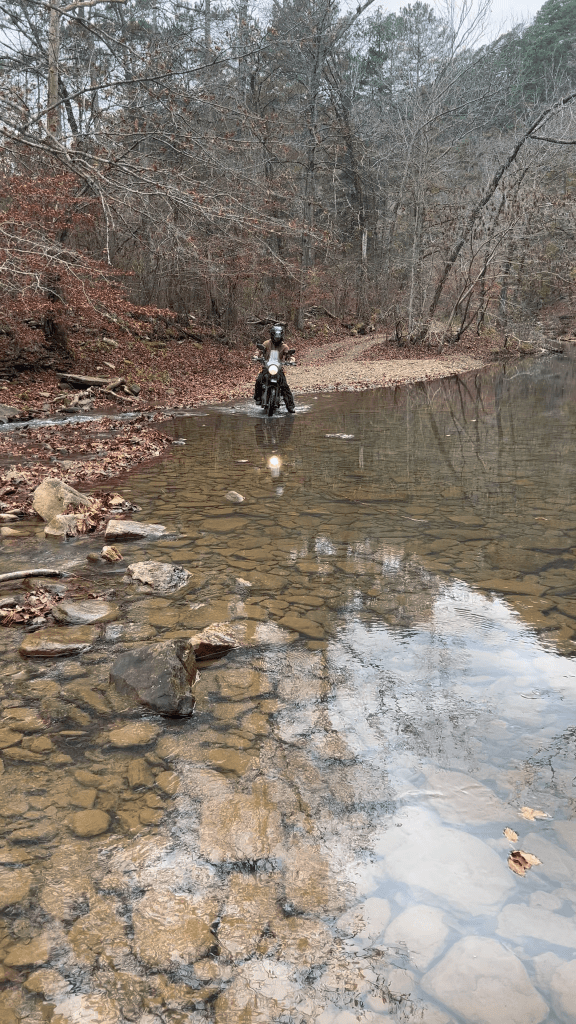
    It was not dramatic. But it felt amazing hearing Chris and Brett cheering about my success. What had felt challenging only hours earlier already sounded like the beginning of a good memory.

    The next evening, the four of us gathered around the campfire. Stories flowed easier than the river had the day before. This is one of my favorite parts of living on the road, meeting new people we can connect and become friends with.

    Honorable Mention To The Boston Blue Hole

    Reaching the Boston Blue Hole feels like earning a secret. 

    The route there is not glamorous. At one point, it leads us straight through an open cow pasture, the kind with no clear boundary between “public road” and “someone’s backyard.” Cattle scatter lazily as we idle past, every head lifting in synchronized suspicion. One massive bull stands apart from the herd, watching us with slow, deliberate focus. For a brief moment, it feels less like a scenic detour and more like a negotiation. We keep our speed steady, respectful, hoping he decides we are not worth the trouble.
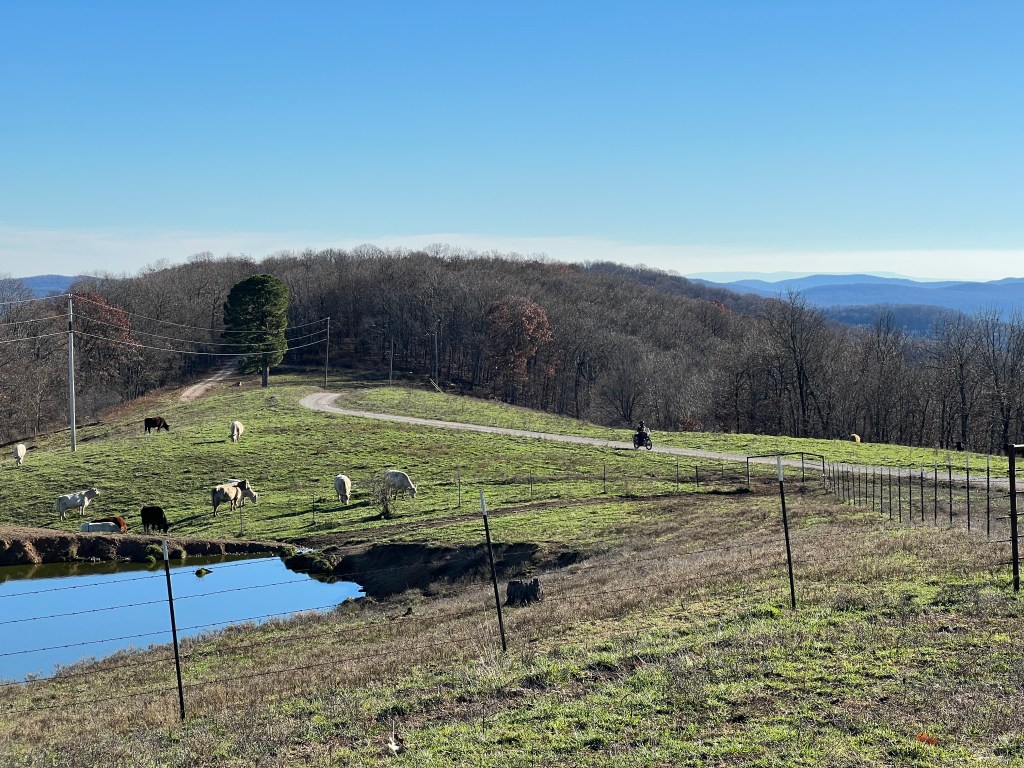
    And then, just beyond the field, the landscape shifts.

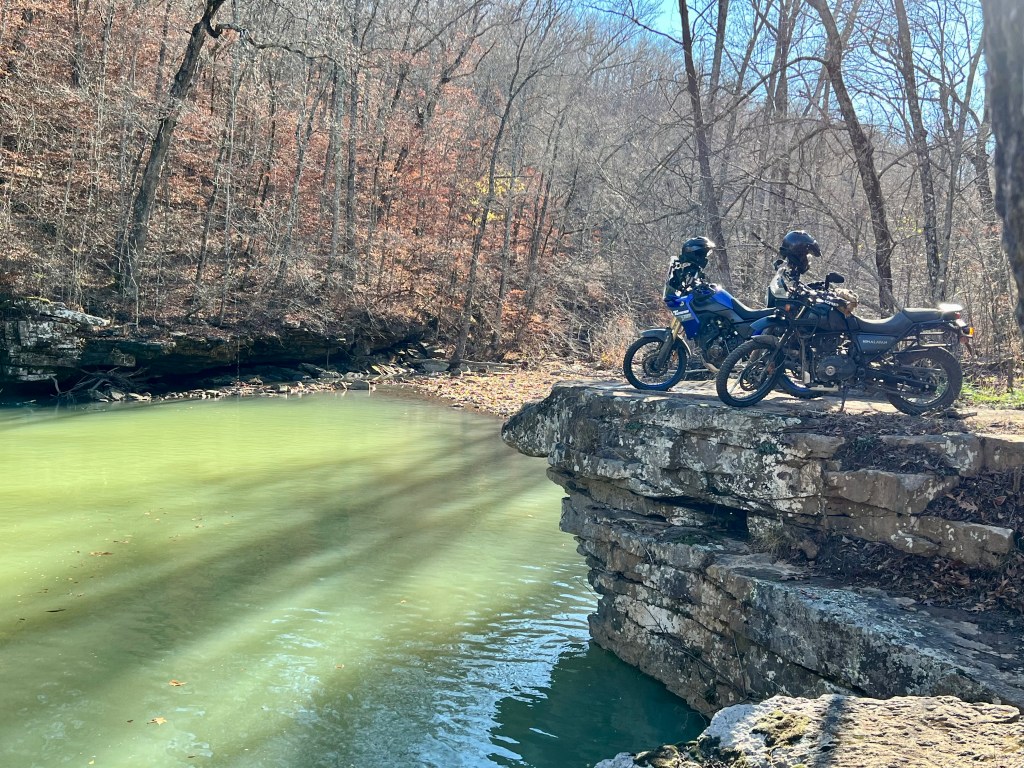
    The Boston Blue Hole sits tucked into the Ozark forest near the community of Boston in northwest Arkansas. Fed by a cold spring and surrounded by limestone bluffs, the pool is known for its striking, almost unreal color. The water is not simply blue. It is milky, luminous, almost unreal against the green canopy overhead.

    That distinct turquoise hue comes from the geology that defines the Ozark Mountains. Sunlight reflects off microscopic calcium carbonate crystals suspended in the water, a byproduct of dissolved limestone filtering through the region’s karst landscape. The result is a soft, opaque blue that seems to glow from within, especially when the light hits it at the right angle.

    Our time in Arkansas has come to an end, and somehow I already feel nostalgic. It has easily become one of my favorite destinations to date. Writing this chapter took longer than I expected2 because I wanted to do it justice, to capture the texture of the trails, the color of the water, and the feeling of riding through hills that constantly surprised me. More than the landscapes, though, it is the people who defined this stop. The friendships formed around campfires, the invitations into homes, the shared rides and shared meals gave us something we had quietly been missing on the road. In Arkansas, we did not just pass through. We belonged.
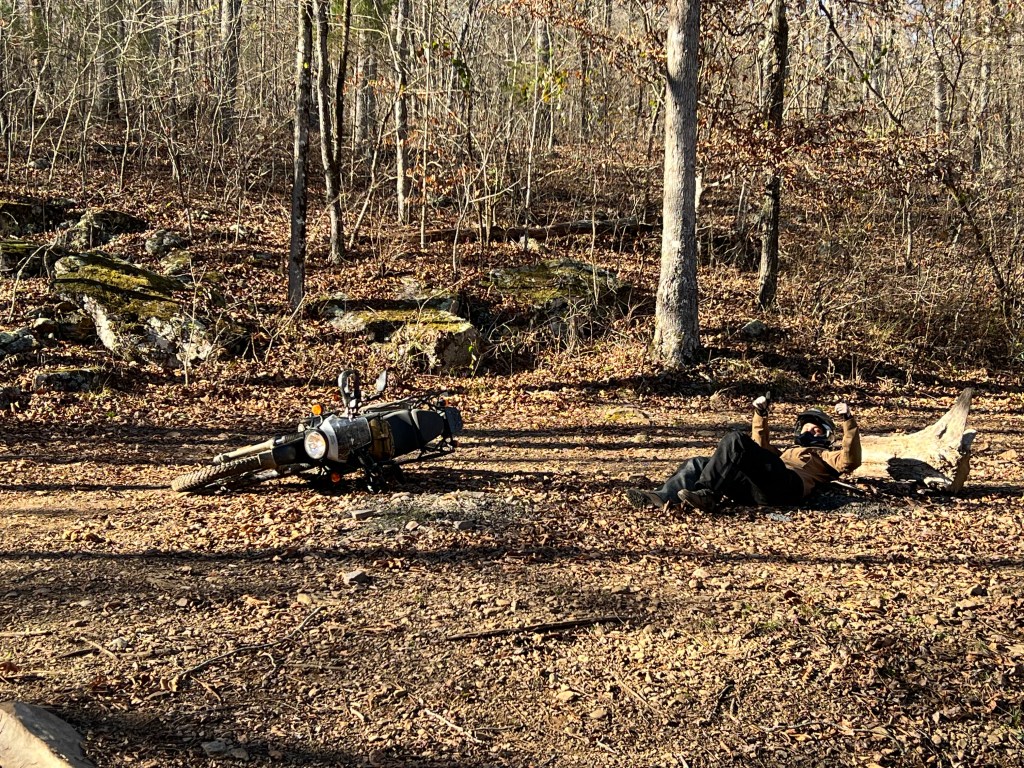
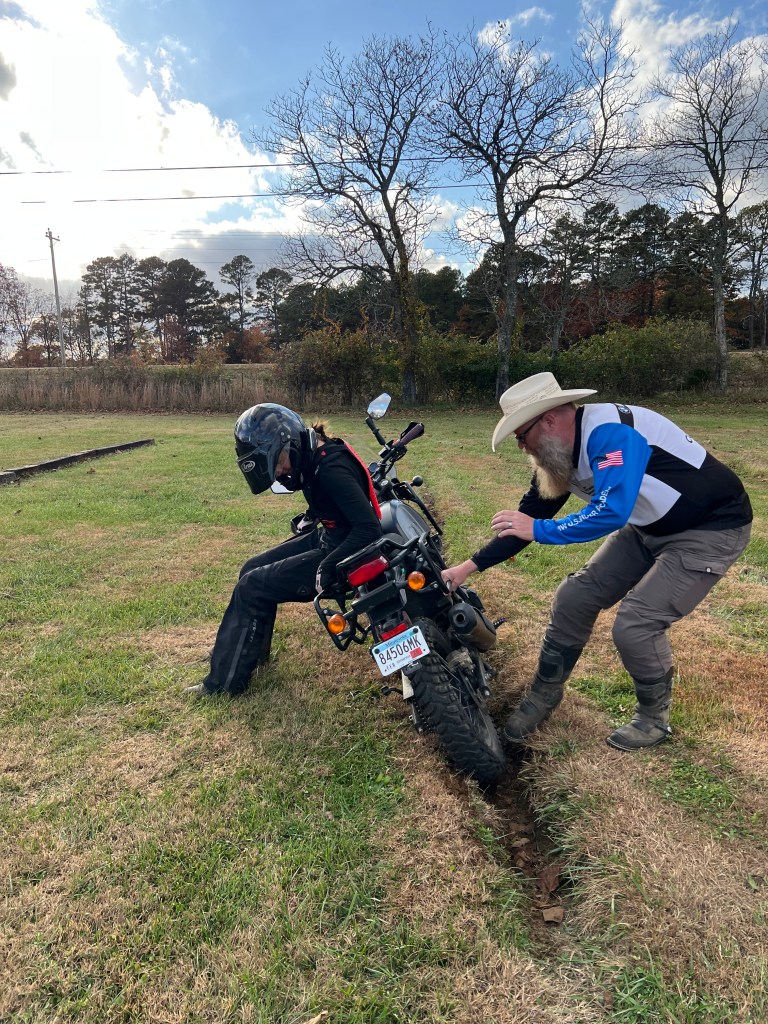
    Just one of the many examples of me falling. Once Chris gets over his initial terror, he takes a picture. (Okay.. but how did I land so far away, though?!)

    Notes:

    1. Kate & Dustin: Just incredible human beings, that became friends over the course of our month in Arkansas. Thank you for welcoming us into your home and shared your passion for adventure riding.
    2. This article took way longer than anticipated to write because of my perfectionism. We had such a blast here, that redundancy wasn’t an option here.
    3. Wikipedia Definition of Murphy’s law is an adage or epigram that is typically stated as: “Anything that can go wrong will go wrong.”
  • Kickstand Chronicles, Vol. 3: Rugged East Coast Americana

    Kickstand Chronicles, Vol. 3: Rugged East Coast Americana

    From YouTube Content to Reality

    The Backcountry Discovery Routes—BDRs for short— had become a regular feature on our YouTube feed as we planned the places we wanted to see during our full-time travels. Watching other riders tackle long stretches of dirt, gravel, and forest roads gave us a sense of what was possible. BDRs are a network of long-distance, mostly off-pavement motorcycle routes that run through different regions of the U.S. Each one highlights public lands, small towns, and remote backcountry areas, offering riders a safe, legal way to experience wilderness travel without guesswork.

    Now we were finally moving from screen to real life. Rolling out of Maine, we followed the last hints of summer southward. The first signs of fall greeted us along the way: cooler air, shifting light, a sense that the season was turning. As we crossed state lines into Pennsylvania, the landscape widened. Farmland opened on both sides of the road, hills rose and fell in long, steady waves, and the rhythm of riding felt effortless.

    Ahead of us was the PA Wilds BDR, the next route on our list. This particular stretch winds through one of the largest undeveloped forests in the eastern United States, connecting state forests, fire roads, small communities, rivers, and overlooks. Riders talk about its mix of terrain—graded gravel, forest lanes, rocky sections—and the way it feels both accessible and remote at the same time. For us, it marked the beginning of a new chapter: more dirt, slower days, and the chance to settle into the kind of travel we’d been preparing for.

    To really slow down and savor all 500 miles of the route, Chris took a full week off from work. We were riding the BDR on its terms: no rushing, no clock-watching, just letting the trail set the pace and allowing ourselves the unhurried joy of stopping whenever something caught our attention.

    Up to this point, the weather had been almost suspiciously cooperative. Warm days, cool nights, clear skies stretching ahead. Which, of course, should’ve been our first warning. A quick forecast check revealed a wall of rain perfectly timed for our start. Classic. Gear would get damp, roads slick, and we would laugh at the universe’s impeccable timing. Bad luck? Maybe. But it had become part of our rhythm. A trademark, if you will. Nearly every story we tell later, over campfires or coffee, begins with clouds gathering behind us.

    So we ride—rain or shine. Because these are the conditions that turn ordinary days into legends.

    Day 1: Weedville to Milroy (164 miles)

    On the first morning of our Pennsylvania adventure, we rolled out fresh and eager. The sun climbed over forested ridges, casting a warm glow across the valley. Today, we start with Section 3 of the PA Wilds BDR: 164 miles of gravel, forest roads, and hidden valleys. Fall was in full swing; maples and oaks flickered reds and golds in the sunlight. Rolling hills and distant ridges appeared and disappeared as the road folded back on itself in a hypnotic rhythm.

    The ride started smoothly, tires skimming over loose stones and nicely maintained gravel roads. Then, just as the rhythm sets in, a road sign appears: “Road Closed – 5 miles ahead.” Classic foreshadowing. Closure, as we know, is rarely absolute. “Road closed?” Chris says. “How closed can it be?”
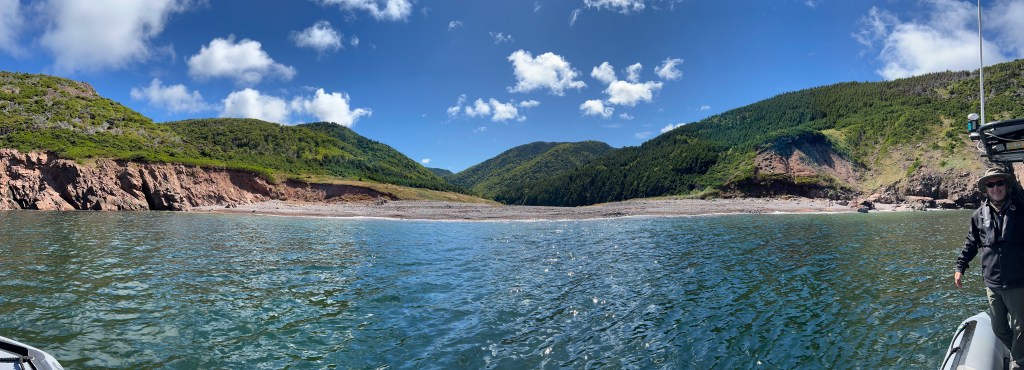
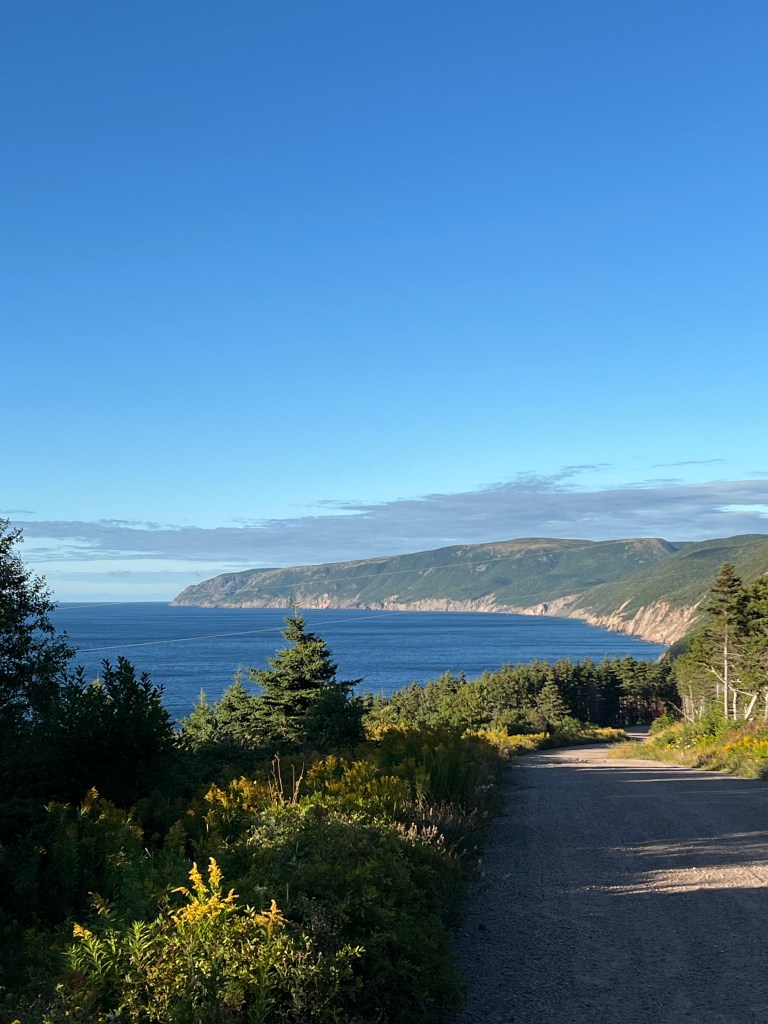
    Not long after, the answer reveals itself. Bridge construction sprawls across the path: Cement barricades litter the road like abandoned chess pieces, rebar juts skyward like skeletal fingers, and a dormant crane crouches in the distance, prehistoric, Jurassic Park–ready. Loose gravel skitters under our boots. Chris becomes pure momentum, sending the bike over rogue construction panels like a hero in a DIY montage. My bike’s turn comes—commitment unwavering as he runs back, jumps right on and does an encore performance. Boots tap, tires slide, adrenaline hums. Meanwhile, I narrate silently from the sidelines, prestige-documentary style, until the inevitable: the walk of shame as I traverse the scene on foot.

    The forest gravel road stretches onward, and that’s when I notice it: a square opening in the remnants of an old stone foundation. Out of the corner of my eye, it looks like nothing. Then suddenly, my imagination kicks in: hobbits, rituals, haunted mini-homes.

    Chris hears my exclamation over the helmet intercom:
    “Oh wow, I wonder where that goes!”

    I quickly park on the side of the road, hop off and jog towards the hobbit hole. Torchlight engaged—phone flashlight trembling like a nervous Android candle—I peer inside. It’s dark, damp, unhelpful. Shadows crawl across jagged stones, soil hints at abandonment, a perfect set for a low-budget horror flick. Chris encourages:
    “Go on inside.”
    “Looks like one of those haunted spaces you see in the movies.”

    I promptly sprint back to the bike. Zero out of ten for comfort, ten out of ten for story potential. Miniature hobbit hole of horrors: highly recommended.

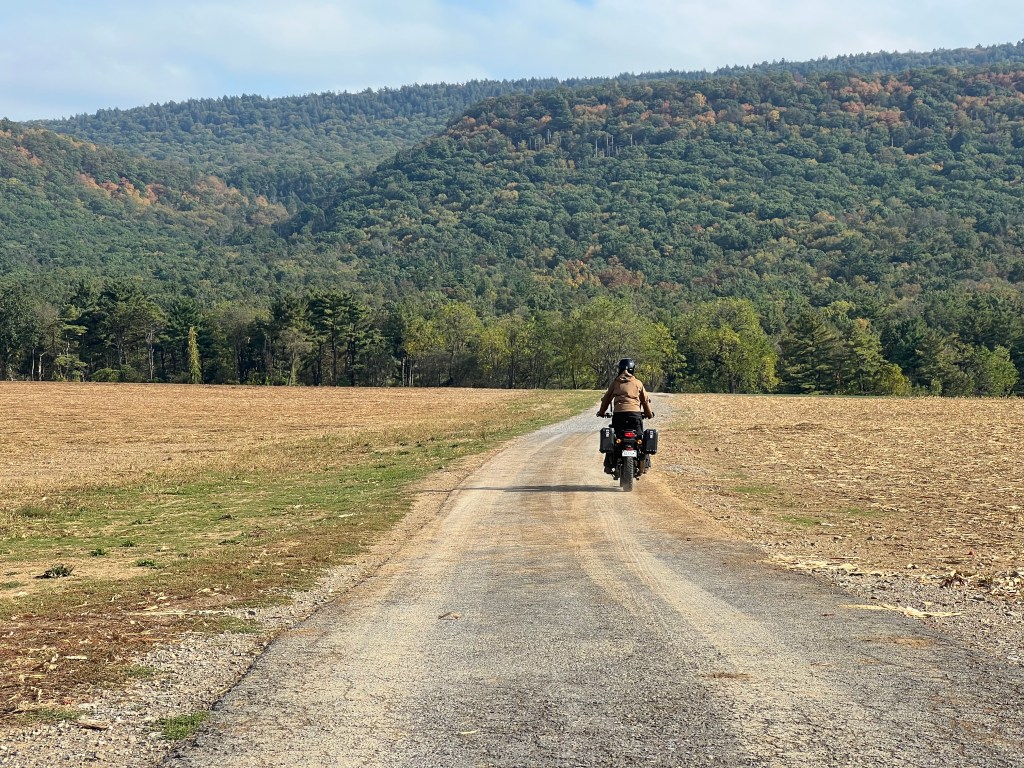
    The afternoon sun is slowly starting to come down. The landscape opens up quickly, and before long the road runs straight through a set of cornfields. It’s flat, smooth riding—just a simple farm road with rows of cut corn stocks on both sides. It’s a brief section, but it stands out because it feels so open compared to the rest of the forested route.

    Once you reach the end of the fields, the terrain changes almost immediately. The road narrows, the gravel gets rougher, and the first rocks start appearing. Within a few minutes, the route becomes a steady uphill section with a mix of loose rock and embedded stone. The climb continues through the trees, with a few spots where the surface gets chunkier and you feel the rear tire slip slightly before catching. A consistent, rocky uphill that keeps you focused until you reach the top.

    After the climb levels out, the road becomes easier again. I stop the bike to catch my breath and take a moment to celebrate the accomplishment of having conquered this section. To the average rider, this isn’t overly difficult, but it does require a bit of line-picking and keeping steady momentum. Being able to see my skills improving is encouraging and gives me some much needed confidence for what the next few days could throw at us.

    By late afternoon, the miles have carried us past forested ridges and narrow valleys, rolling farmland opening the view as we approach Milroy. First order of business: find a place to stay the night. The website promised mini cabins, hot tub included, for $89. However, when we contact the campground management, it turns out that there is an additional $50 cleaning surcharge. Our dream is crushed, in order to respect our budget. Instead we decide to go for a classic tent site for $47.

    Hunger propels us into town. It’s Monday; not much is open. Across from a trailer‑park‑vibe stretch, we spot a bar. Perfect. We clomp inside in full ADV regalia—dusty jackets and boots, helmets under arms. While Chris walks to the bathroom, I head towards the bar area to ask if we can sit on the outside patio.  A man sitting on the nearest stool turns towards me and with a sweeping up/down glance asks:
    “What kind of horse did you ride on into here?”

    His accent catches me completely off guard: Since when does Pennsylvania cosplay the Deep South? My brain responds on autopilot:
    “A really dusty one.”

    My response is promptly rejected with a shoulder turn. He resumes his original position and continues drinking his beer. Okay then. 

    We step onto the patio, order our meals and get to witness a corn hole tournament in full swing. It’s live, loud, and fueled by enough beer to make the rules optional. It’s glorious in a National-Geographic-meets-drunk-backyard way. Our burgers devoured, beers gulped down, we hear thunder rolling in like a cinematic audio cue. If we don’t get back to our campsite soon, the rain will get the better of us.

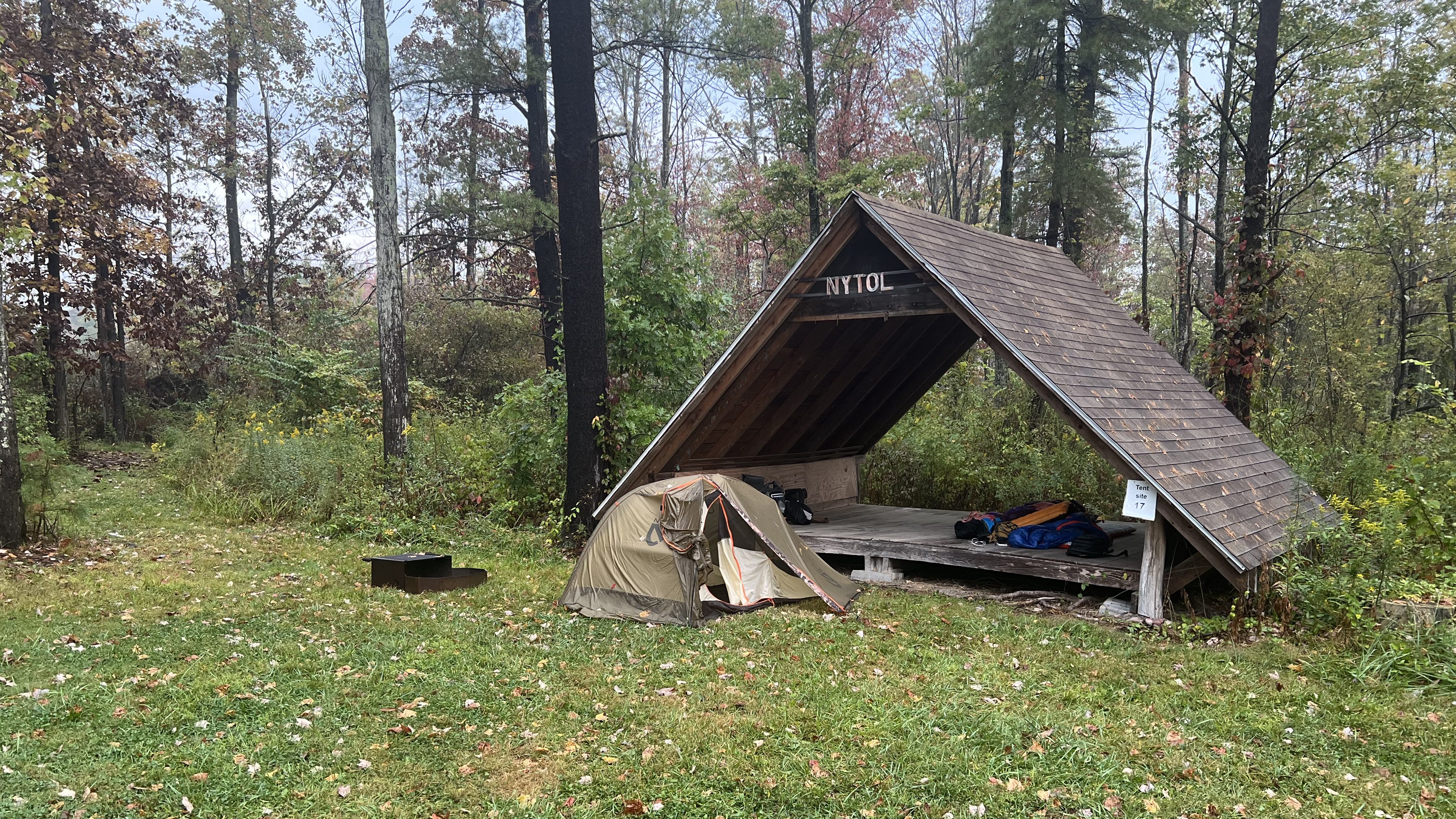
    By the time we retreat to the tent, the sky is darkening and occasional raindrops are pattering on the canvas. Dirt under finger nails, dust in every seam, adrenaline fading into tired contentment. Day one of the PA Wilds BDR: complete. 

    Our next morning’s verdict is… Sore. Unrested. Questioning life choices. We ride past the tiny hot‑tub cabins and wave politely, mourning silently. If there is one regret we will have during our adventure, it’s not having taken advantage of a hot tub after a long day on the motorcycles. This is the price to pay when living on a budget.

    Day Two: Milroy to Waterville (126 miles)

    The second day greeted us, not with a sunrise, but with fog so thick it seemed to blur ambition and destination alike. We packed our gear and made a beeline for the nearest breakfast spot, desperate for caffeine to stir our minds. A hearty morning meal at The Honey Creek Inn did more than fuel us—it sharpened our focus and gave the day ahead a sense of purpose.

    From there, we plunged into the desolate expanse of Bald Eagle State Forest. The gravel twisted and climbed, rising and falling across mountain gaps like the undulating back of some ancient creature. Here, the roads flow with a gentle, forgiving rhythm—perfect for those seeking adventure without the aggression of technical trails.

    Mist clung to us like a living presence as I eased to a stop on the dirt road to take it all in. The forest around held its breath. Every leaf shimmered with the remnants of rain, trembling under water still undecided whether to fall or hold on. The air was thick with the unmistakable scent of damp earth, pine, and something primal I couldn’t name. It filtered through my helmet like a whisper from a dream, both familiar and strange.

    Above, the trees arched in sweeping vaults, their limbs intertwined like the ceiling of a forgotten cathedral. Shadows lingered in their upper reaches, while the forest floor glowed faintly, a diffused light reflecting off the mist. The peace was absolute, yet edged with something sharp, a quiet that felt as if the woods were watching. Beauty here demanded stillness—it pulled you inward, slowed your pulse, and forced reverence.

    For a moment, I stayed there, suspended between calm and unease, breathing in the wet air, letting the hush after the rain sink in. When the engine beneath me rumbled, a low hymn in this sylvan sanctuary. I dropped into gear, twisted the throttle, and let the towering trees swallow me as the trail carried me deeper into the PA Wilds Backcountry Discovery Route.

    The winding gravel roads alternated between ascents, ridge lines, and descents, each offering glimpses of the Pine Ridge Creek valley before climbing back toward the ridges. By early afternoon, the rain had turned relentless. We were approaching Waterville, eyes scanning the GPX map for the Waterville Inn.

    At first, hope faltered: the inn was closed on Tuesdays and Wednesdays. A glance at the other local inn brought no relief—it sat permanently shuttered. We returned to the Waterville Inn, soaked but undeterred, huddling under the porch and pleading with the mist, “Anything but canvas.” We couldn’t handle another sleepless night on the hard ground.

    Then a grey pickup rolled in. A man stepped out, keys in hand, moving toward the locked entrance with the air of someone who belonged. “Who ARE you, rain-key-hobbit-sir?” I muttered under my breath. Minutes later, he returned and looked towards us. “You waiting on a key?”

    We stared. Did he even work here? Not quite. He was a restaurant supplier, and better yet, a friend of the owners. He personally guided us to the country store next door, helping us get in contact with the Inn owner. Within minutes, we secured the last available room. Ritchie, patron saint of last-minute budget redeemers, had saved the day.

    Supper followed, courtesy of Ritchie’s recommendation: homemade deli subs from the Country Store “so good that the Amish boys love them.” Cultural endorsement accepted. While we waited for our subs to be assembled, we wandered the country store aisles—a survivalist candy land of fishing gear, camping necessities, hunting paraphernalia, and taxidermied squirrels in mid-victory poses. A tiny boxing raccoon grinned up at me. Roadside Americana at its finest.

    Soon, the inn owner appeared. We paid for the room and were led upstairs to a space that Pinterest would classify as “Rustic Luxe Meets Log-Cabin Aesthetic.” Gear and baggage were piled near the warmth, a small comfort against the forecasted rain.

    Then came the moment I had imagined all day: collapsing onto the mattress.

    It… boinged.

    Betrayal. Too springy. Too firm. This was supposed to be my night of restorative glory. Chris, meanwhile, was already asleep—lights out, no commentary, a mystery of manly endurance that science may never solve. I lay there instead, listening to the rain drum a steady rhythm on the roof, the forest’s hush now translated into a lullaby of droplets and distant wind.

    Day 3: Waterville to Crossfork (140 miles)

    We leave Waterville behind and dive back into the forest roads. Pine, oak, and hemlock scent the air, a damp, earthy perfume mingling with the faint tang of moss and fallen leaves. Each twist of the road reveals another ridge or hollow, rolling topography that makes your body follow the bike instinctively—lean, lift, a fleeting moment of perfect flow.

    The gravel alternates between smooth stretches and loose patches that keep you honest. Small streams gurgle through rocks, their edges lined with ferns glistening like tiny emerald carpets. Mist clings low in the valleys, wrapping the hillsides in a secretive veil.

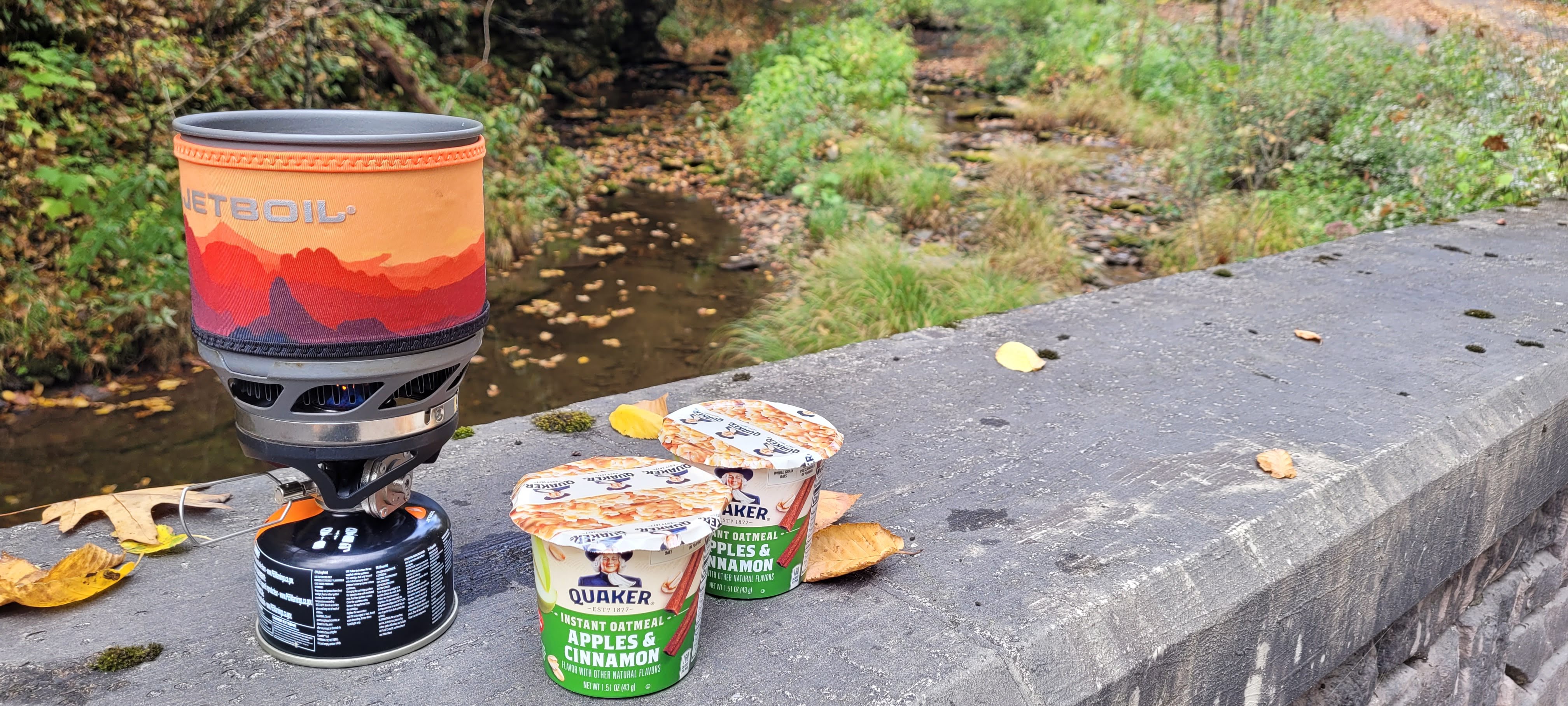
    By midday, a bridge became our impromptu rest stop. We unpacked oats and stirred a pot of oatmeal on our Jetboil stove beneath misty trees. Birds trilled overhead. For a few brief moments, the calm made me consider abandoning civilization entirely, embracing the life of a nature columnist, utterly absorbed in the quiet babble of the brook below.

    As we wrap up our break and head back on the road, we see wildlife flit in and out of sight. A flash of copper marks a red fox; further down, a white-tailed deer freezes at the roadside, weighing our presence before vanishing back into the trees. Bird songs echo faintly, a soundtrack to the solitude. Towns are rare: Duncan is little more than a quiet cluster of homes and a general store—a brief human punctuation before the forest reclaims the road.

    Every mile here is a study in contrasts: steep climbs that test endurance, followed by descents that demand attention and reward riders with glimpses of hidden valleys. The road’s twists mirror the hills’ undulations, a natural choreography that makes you feel less like a visitor and more like a participant in the landscape.

    There’s a small detour to the Colton Point State Park overlook. Before all this, I’m blissfully unaware of what’s about to unfold. Our comm systems are still on, and Chris barely has time to park before he notices me trying to back up like an ungraceful duck attempting to waddle backwards with all 400 pounds of my motorcycle. He sees the disaster forming before I do. Through the headset I faintly hear, “…you’re falling!” which I find ridiculous, because my left foot is already pushing down the kickstand. But then I feel it—that slow, undeniable gravitational pull. Before I can make sense of anything, the bike tips right, taking me with it, and I end up sprawled across the parking lot. How is this happening again? All I can think to say, staring up through my rectangular visor at the tops of the trees, is: “How did you know I was falling!?” The parking lot is barely off-camber—maybe a couple of degrees—but just like on the Cabot Trail, it’s apparently my nemesis.

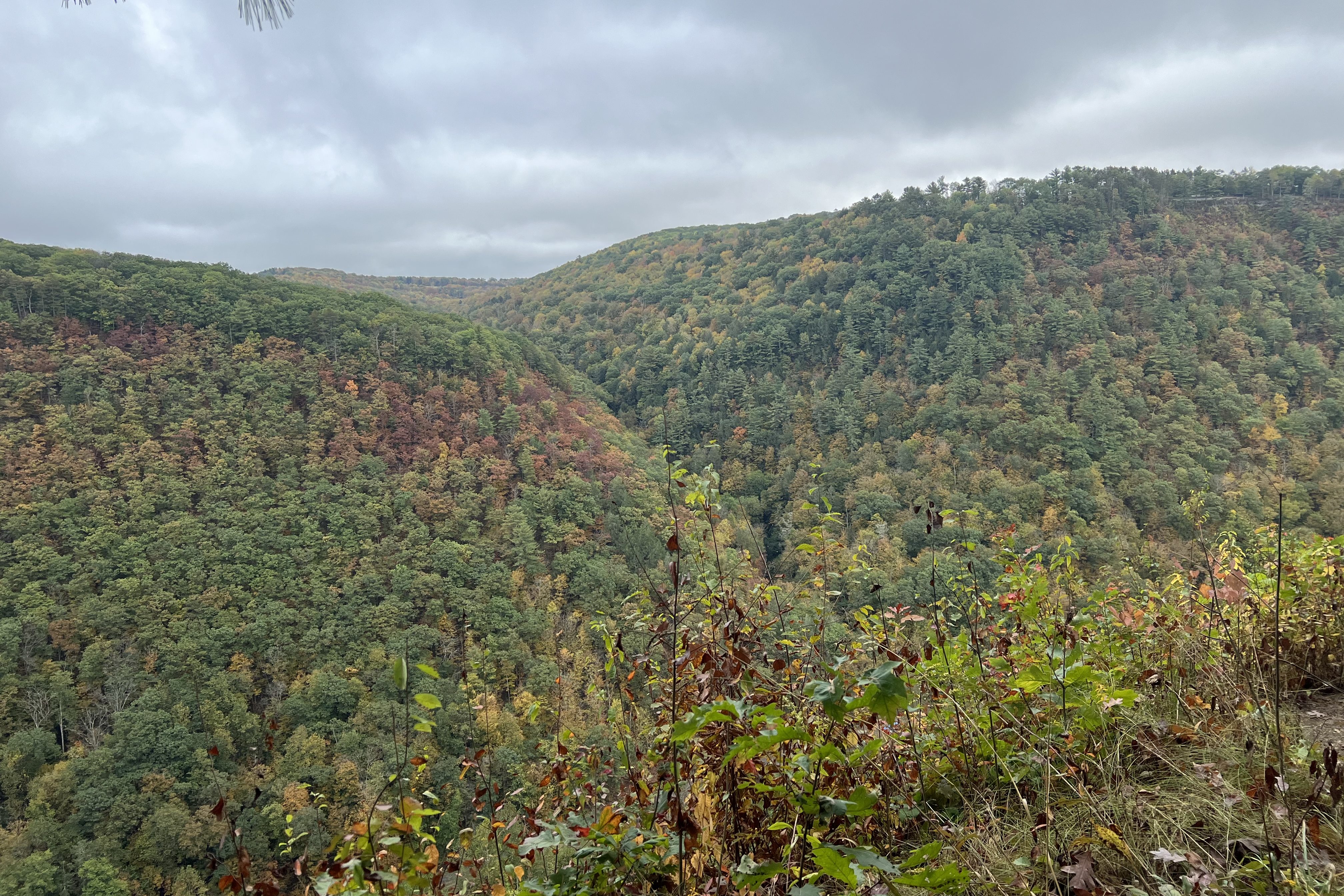
    We walk to the overlook afterward. It’s beautiful: Pine Creek winding far below between two mountain ridges, families scattered along the railing, everyone taking in the view. I try to keep up a strong front, as if I didn’t just tip over in a perfectly normal parking lot, silently hoping no one noticed (at least no one rushed over like during the Cabot Trail episode). To this day, I barely remember the overlook itself—just the flood of adrenaline and the photo that proves I was actually there.

    By the time Cross Fork appears, the forest thins just enough to reveal glimpses of sky and distant ridges. Solitude lingers like a shadow, even as signs of settlement whisper that civilization has not entirely abandoned this stretch.

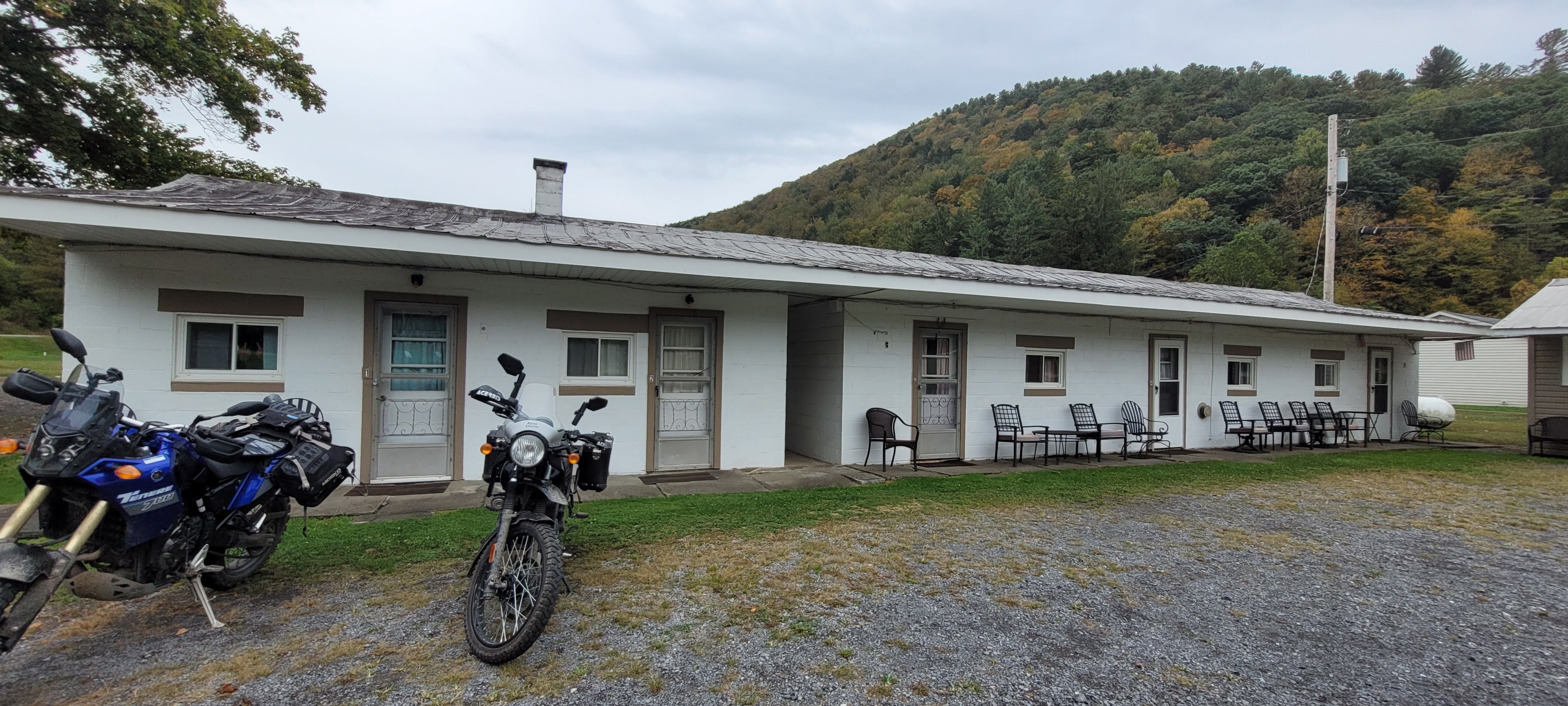
    Outside the bar, we met a man enveloped in a cloud of cigarette smoke. Paul, owner of the modest motel we had passed—its mid-century façade a relic that could belong in a roadside anthropological archive labeled Hunting Grandpa Chic—offered more than a room that day. He offered a rescue arc.

    He accepted only cash or checks. Our situation? Cashless. Town facilities? No cash-back options available. Paul’s solution? “Mail it when you can. I won’t leave anyone stranded by my watch.” Not all heroes wear capes.

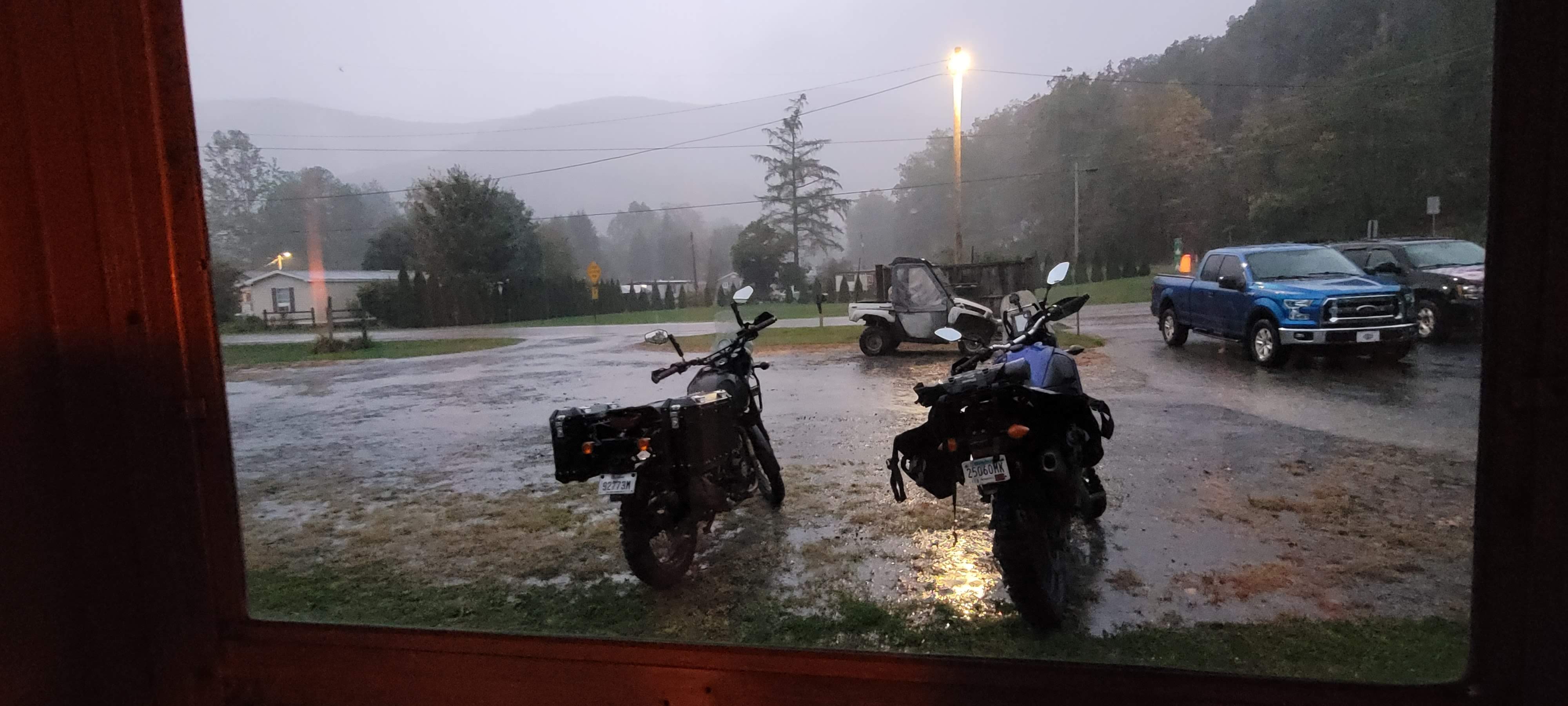
    Rain rolled back in, thunder gathering. Night riding in rain and darkness was a firm no from me, so we accepted Paul’s benevolent loophole hospitality and checked into our retro revival roadside palace.

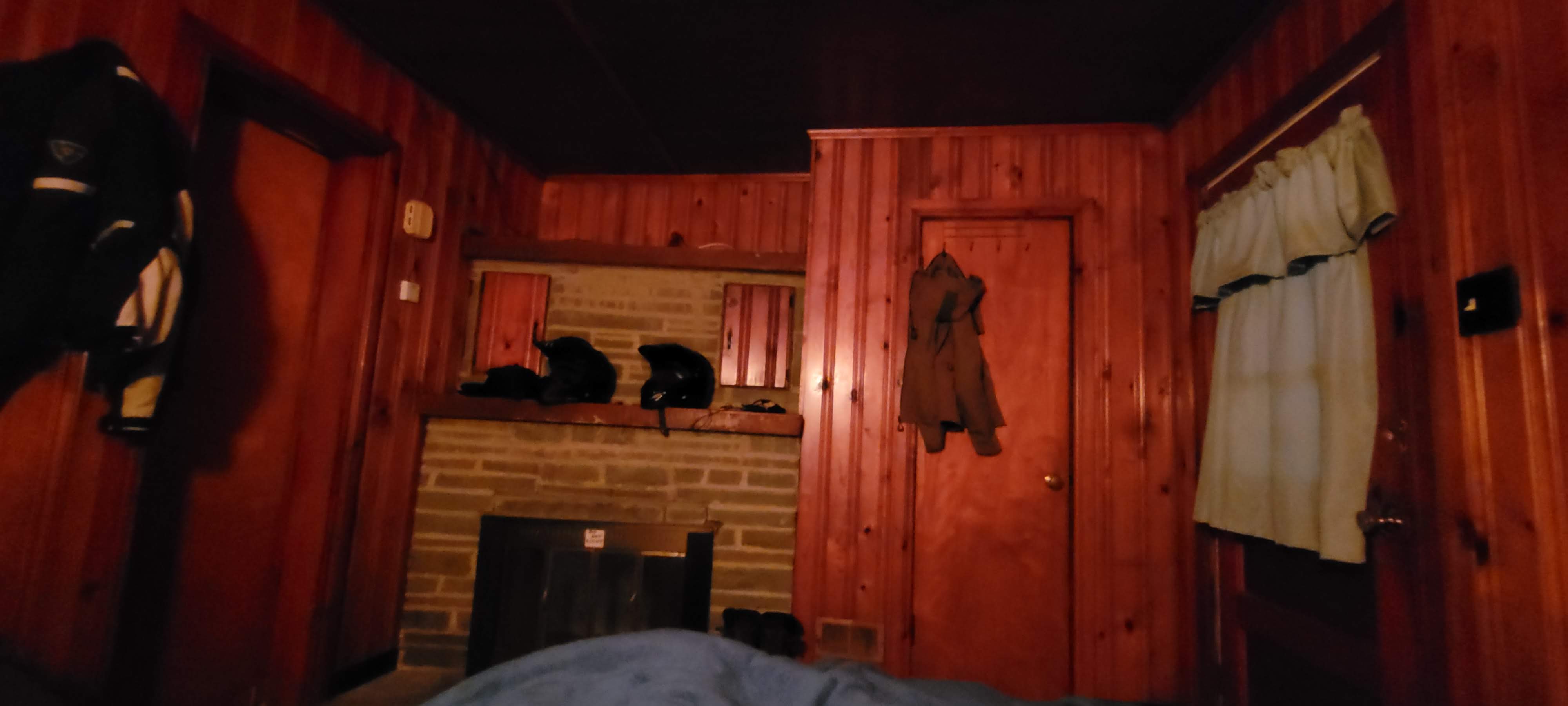
    Inside, the décor looked curated by hunters whose color palette peaked in 1973. The beds? Coils enthusiastic enough to trigger mattress PTSD. Yet I loved it. I reveled in the vintage spectacle like an art critic evaluating motel maximalism. Our bikes stood obediently outside our door, sentinels in the dim light. Paul, an absolute legend in his own way, knocks on our door a little while later to offer us towels to dry off our motorcycles before we leave tomorrow morning.

    The place flirted with mild Bates Motel vibes—but only as autumn flirts with Halloween: slightly ominous, irresistibly moody. If dark literature had décor, this room would be its perfect embodiment.

    Day 4: Crossfork back to Kane (254 miles)

    After all that rain, the next morning arrived softened by mist. The roads ahead twisted in endless S-curves. A few puddles waited, glimmering in the pale light, promising small, sparkling splashes as we crossed. The logging zones were particularly treacherous—earth churned and chewed by heavy machinery, softened into a slick glaze we quickly dubbed “greasy.”

    It wasn’t mud, exactly. I would classify it more like existential doubt—damp loam mixed with sand, shallow but persuasive enough to whisper, “Go on. Slide a little.” Chris rode through it with unshakable steadiness; I rode it like a woman narrating her own survival tutorial. The terrain didn’t feel chaotic, but it was slippery enough, each wheel-spin felt like a negotiation with gravity itself.

    We passed small towns and clusters of farms, roads narrowing and widening, the forest opening in brief glades where mist curled over fields like smoke. Between Cross Fork and Weedville, the route followed winding ridgelines and gentle valleys, punctuated by stream crossings and pine-shrouded hollows. 

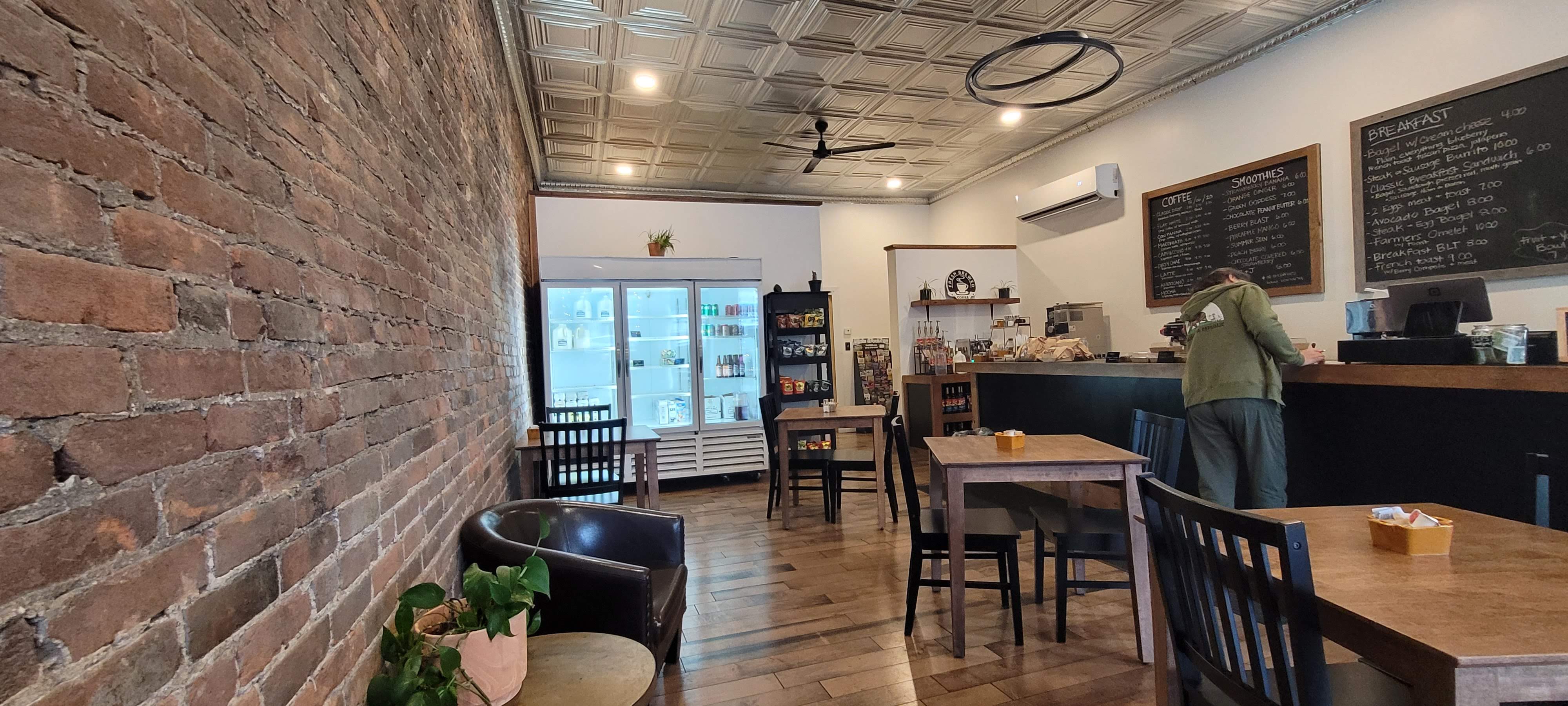
    A welcome distraction appeared in the form of a tiny, inviting café in the town of Emporium: Aroma Café & Market. Outside, rain hammered the roof in steady rhythm. Inside, the warmth, the smell of roasted coffee, and the quiet hum of conversation felt like a small, civilized miracle in the midst of the wilderness. We lingered, letting cups of steaming brew thaw our damp spirits.

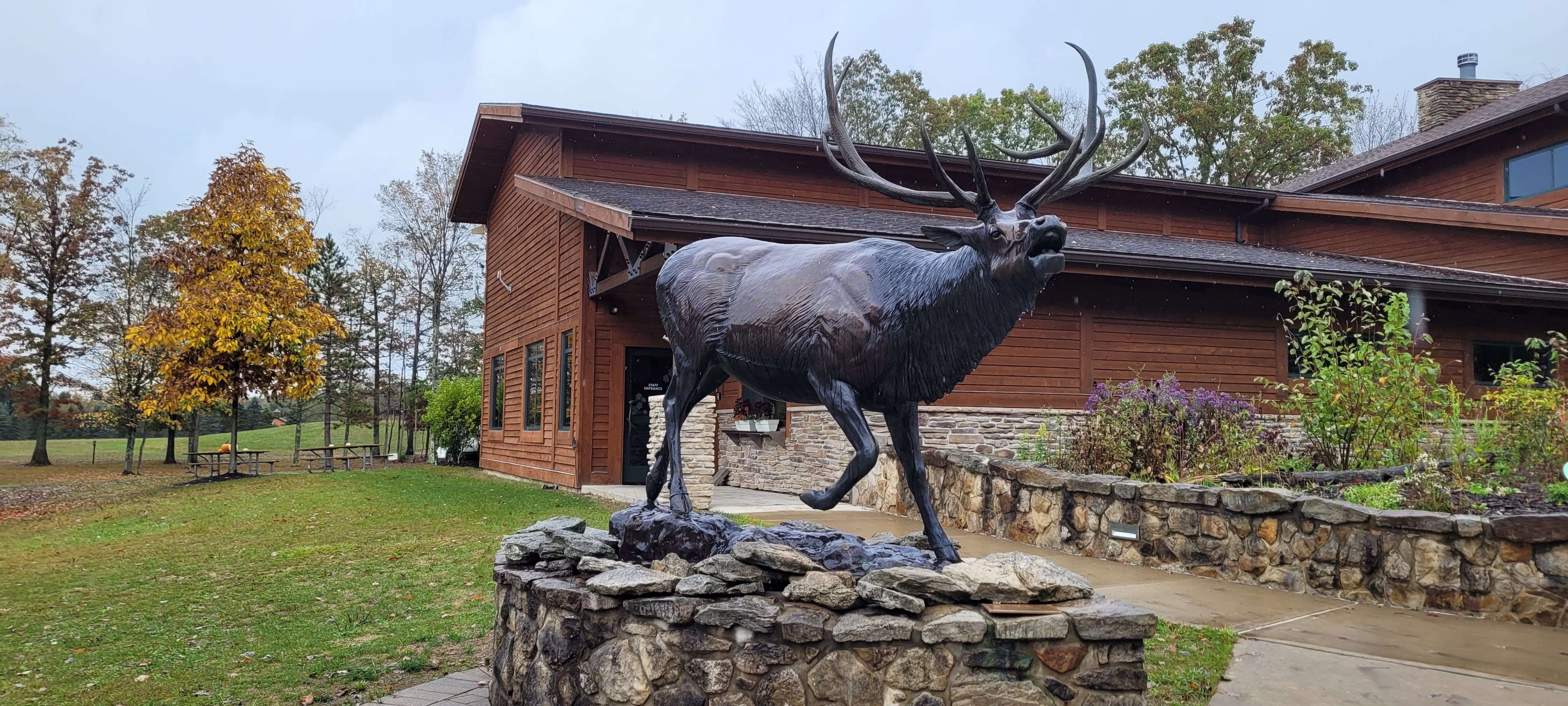
    Later, the Elk Museum and Visitor Center drew us in, though we knew the chances of seeing actual elk at this hour were slim. True enough—no majestic antlers wandering past—but the displays offered a silent reminder of the wildlife inhabiting these forests, and a moment to stretch our legs before the final push.

    From there, gravel and asphalt wound us back toward Weedville, then northwest toward our campground near Kane, PA. The off-road route was traded for highway in order to get back to home base a little quicker. The rain softened, mist lingering in pockets along the road, reflecting the waning daylight in silver patches. By the time we reached the campground, the RV and the familiar comforts it promised felt like a sanctuary after the loop: tires, bikes, and travelers damp but triumphant, ready to dry off and rest, knowing the forest had given all it had to offer.

  • Kickstand Chronicles, Vol. 2: The Island Ride

    Kickstand Chronicles, Vol. 2: The Island Ride

    The morning air carries a hint of salt and goodbye as we load the bikes for one last Maritime ride. The camping gear is packed, coffee cups emptied, and there’s that familiar buzz that always hums before the road unfolds. Our time out east is almost over, but before we turn the page, we have one more chapter to write.

    Leaving early from Pictou, we follow quiet backroads lined with fall-tipped trees, the kind of roads that make you slow down just to take them in. The pavement unwinds through open farmland and sleepy towns, each turn framed by bursts of golden light as the sun climbs higher. As the coast gets closer, the air thickens with salt, and the horizon opens up wide, a reminder that the ocean is never far away in the Maritimes.

    As we near the Confederation Bridge, an overlook offers the first glimpse of it: A ribbon of concrete stretching impossibly across the ocean. From a distance, it doesn’t even look real, just a delicate line connecting two worlds. It’s wild to think that in a few minutes, we’ll be riding into another province on one of the longest bridges in the world.

    Crossing the bridge is something else entirely. Heading toward Prince Edward Island, the view feels endless, water and sky melting together in every direction. We stand on the pegs to catch it all, the horizon rising on both sides, the wind tugging at our jackets, the steady rhythm of the bikes echoing between the rails. Going this way, it feels lighter, freer, like the start of something new rather than the end of a journey.

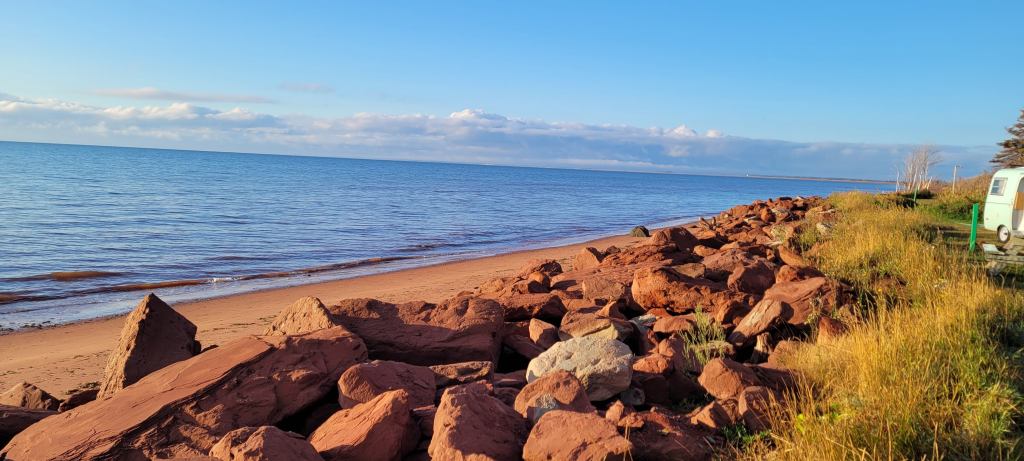
    The moment our tires touch down on the island, the landscape changes. The soil here is unmistakable, a deep, rusty red that stains our boots and glows under the afternoon sun. It owes its color to iron oxide in the sandstone, a natural pigment that seeps into everything, from the roots of the potato plants to the rhythm of island life itself. Red earth, blue skies and green fields is a palette worthy of the greatest artists. 

    We roll in from the southwest corner of Prince Edward Island, aiming to trace the island’s edges like a ribbon and follow the road wherever it leads. The ride takes us through wide expanses of farmland, rows of potato plants stretching endlessly in neat, earthy rows. Tractors rumble in the distance, and a few farmstands sit unmanned, jars for coins left on wooden counters.

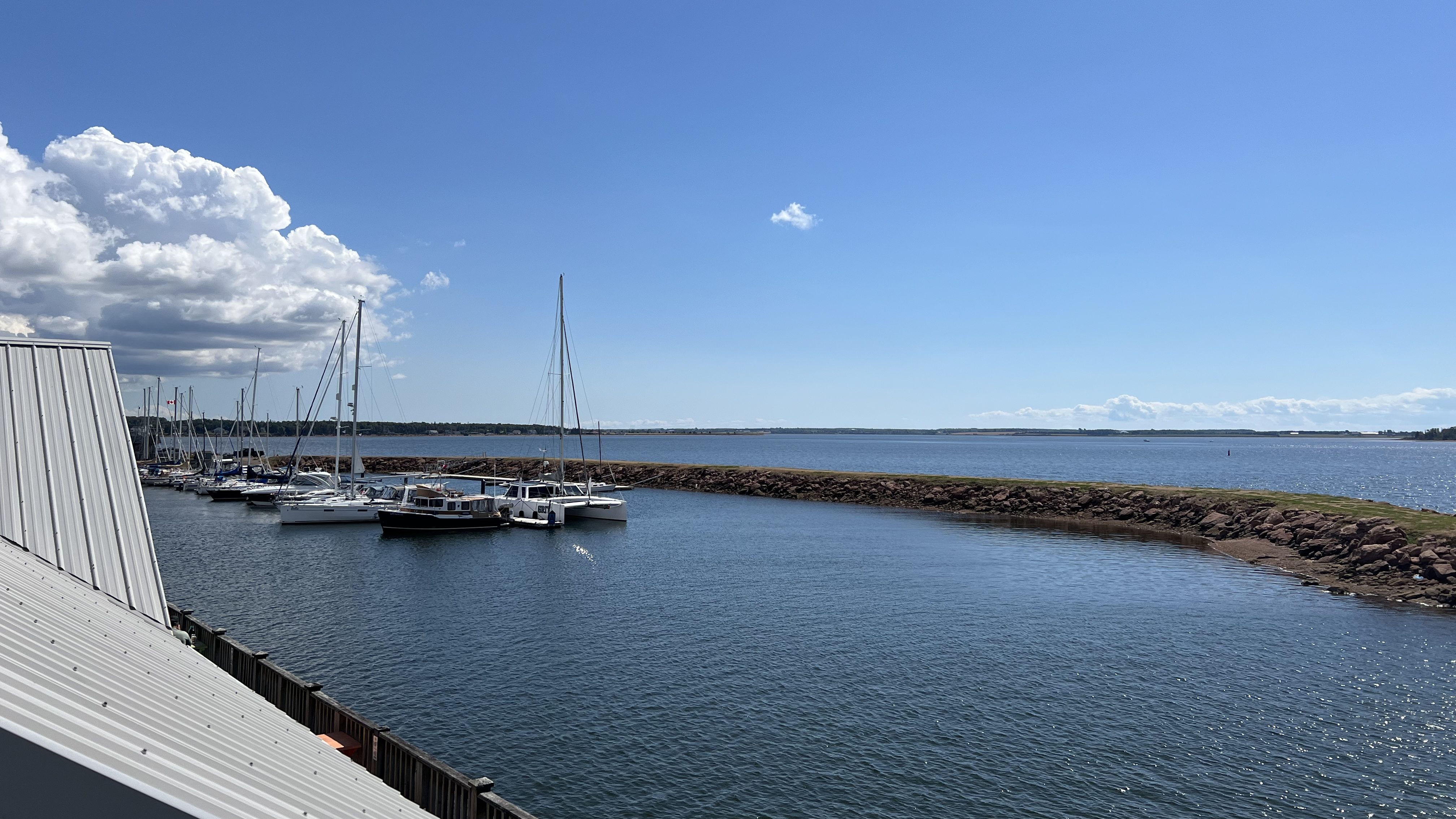
    Our first stop is in Summerside, where the Deckhouse Pub & Eatery makes for a perfect mid-day break. We park the bikes at Spinnakers Landing, a colorful boardwalk market built on the water. The area is lined with boutiques, ice cream stands, and hand-painted signs swaying in the breeze. The harbor is calm, the sunlight soft. A cold cider and a plate of nachos never taste as good as they do after a long morning in the saddle. From the patio, we watch the sailboats rock gently in the marina, that easy kind of movement that makes time stretch a little longer.

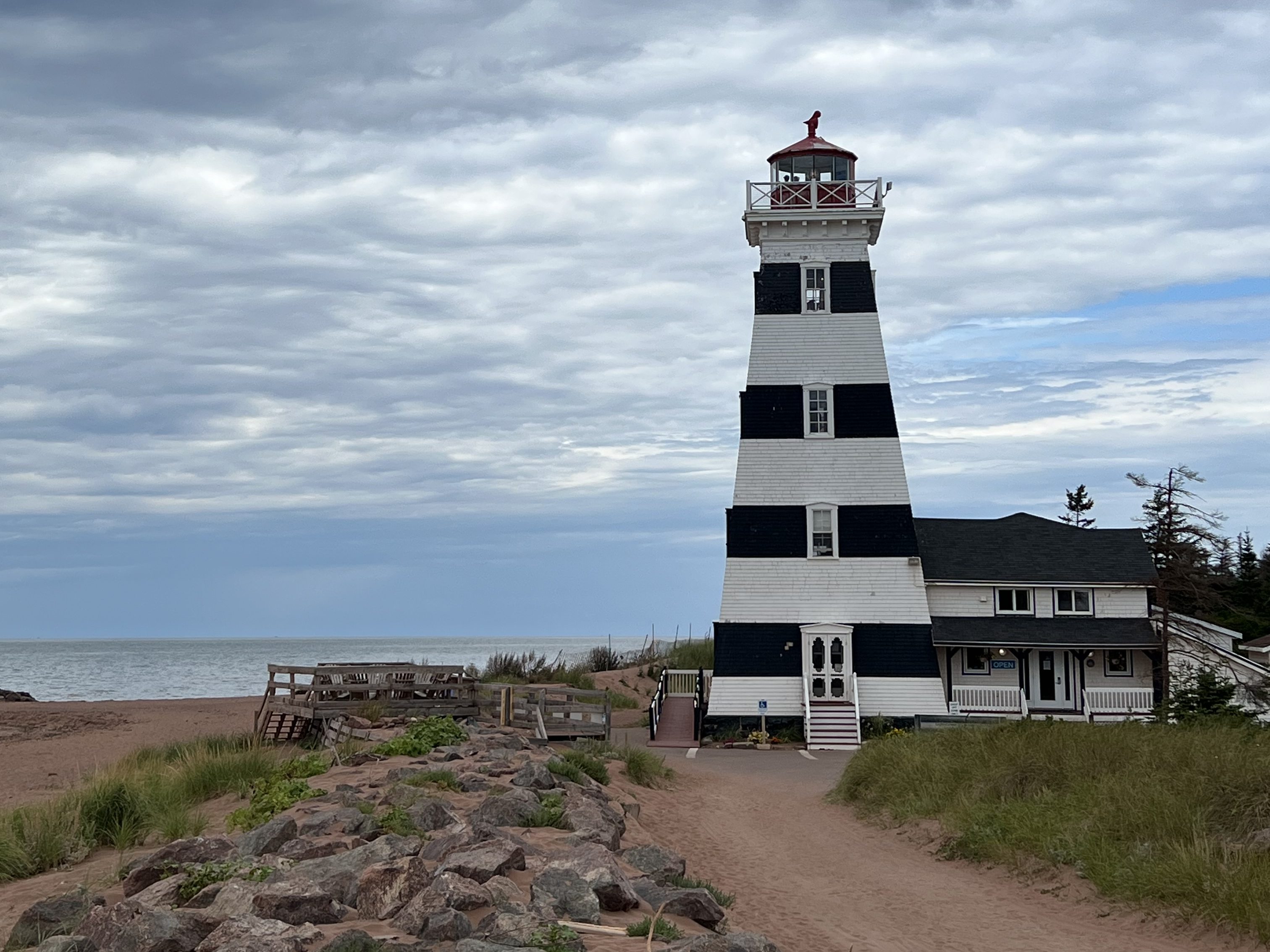
    From there, we push west toward the tip of the island until the road narrows and brings us to Cedar Dunes Provincial Park, home of the iconic black-and-white West Point Lighthouse. It rises from the dunes like a painted sentinel, overlooking miles of empty beach. The air smells faintly of salt and pine, and the sand here carries the same red hue that defines the island, soft underfoot and glowing against the dark bands of the lighthouse tower.

    We turn north, winding our way toward the island’s uppermost coast. The roads here are quieter and narrower, sometimes paved, sometimes not. At one point, we turn onto a red dirt road that cuts sharply toward the water. The front tire slides slightly where compact soil gives way to looser ground. A tight right-hand turn reveals a wide and sudden view: tall grass swaying in the wind, the ocean just beyond, and a line of weathered coastal homes standing proud against the horizon.

    The rhythm of Prince Edward Island’s rural charm feels both familiar and distinct. The houses echo the Maritime spirit, with their wooden siding silvered by salt air; and yet they have their own unique character. Blue and red roofs brighten the muted landscape while wide porches face the sea.

    The road narrows farther north, curling along the coast where fishing boats rest on shore and the landscape grows wilder, quieter too, as if the island itself is tapering off into the sea. A sudden rise in the horizon reveals the unmistakable silhouette of a windmill turning slow and steady against the sky. One becomes two, then a line of them, their blades cutting through the coastal wind in perfect sync.

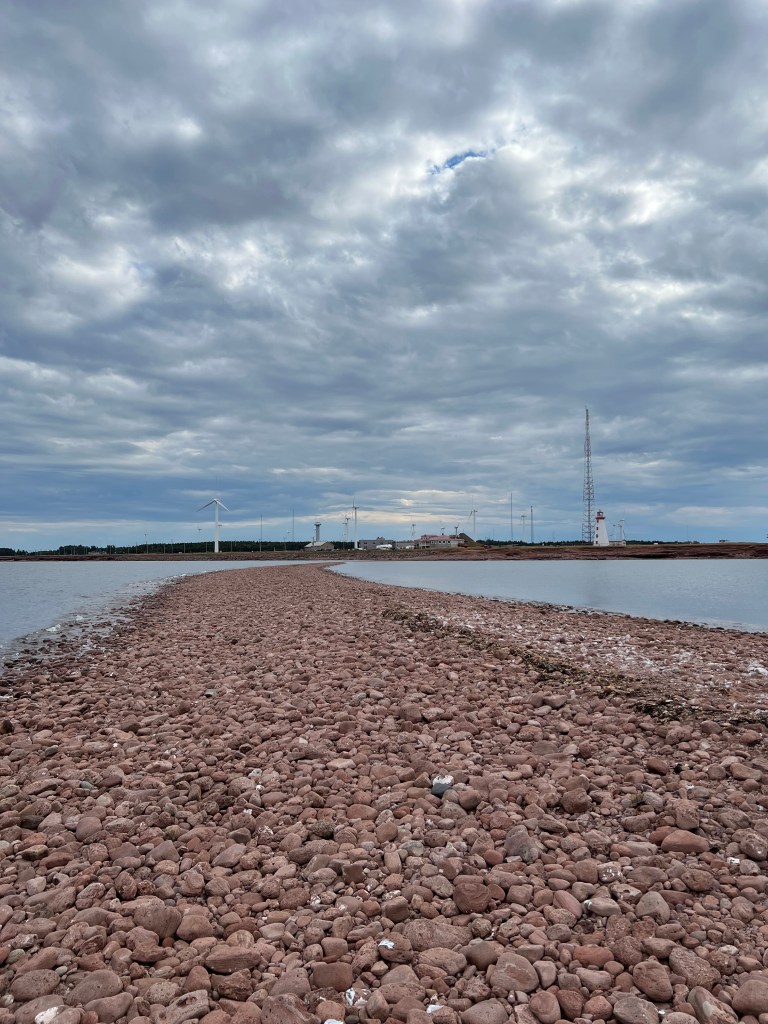
    Route 12 carries us all the way to North Cape, the northwestern tip of Prince Edward Island, where the Gulf of St. Lawrence presses in from one side and the Northumberland Strait from the other. Their waters meet in a restless dance that never truly ends. The cliffs are carved deep and red, layered like the pages of time. From the edge, we can see the reef stretch far into the distance, a long spine of rock disappearing two kilometers into the sea. When the tide is low, you can walk along it, seeing a few grey seals in the distance. 

    The lighthouse at North Cape stands quietly among it all, weathered by years of salt spray and shifting seasons. Its white walls catch the last light of day, glowing against the copper earth. Waves curl and crash along the reef while gulls wheel overhead. Every sound feels amplified — the wind, the surf, the creak of metal on the turbines turning behind us. If you time it right, you can see the moment the two bodies of water meet, their currents twisting in a pattern that looks alive.

    Fuel for Thought: When to Turn Back

    After leaving North Cape, the afternoon light fades faster than expected. The air feels heavier, the colors flatter. What was once a bright stretch of coastal road is now  a shade of gray that signals change. The clouds over the Gulf darken, and we both know what’s coming.

    We push on, hoping to find a place to stay farther down the coast. Jacques Cartier Provincial Park flashes by on our left but we keep going, convinced something better lies ahead. The towns grow smaller, the houses more scattered. Gas stations and motels become rare, and it becomes clear that “ahead” may not hold much at all.

    The first bed and breakfast we find has no vacancy. The next town doesn’t have accommodations at all. The dark gray clouds roll in low and fast, and a few raindrops tap our visors as we pull over, helmets off, weighing our options.

    If we keep going, we’ll ride straight into the storm. We’ll end up wet, with nowhere to dry our gear, and no guarantee of shelter. It is the tug-of-war every motorcycle rider faces: Wanting to keep moving forward while knowing it is time to turn back.

    We pause and realize the answer is obvious. Turning back feels like defeat, but logic wins out. We retrace our path to Jacques Cartier Provincial Park, watching the sky change from gray to slate as we ride.

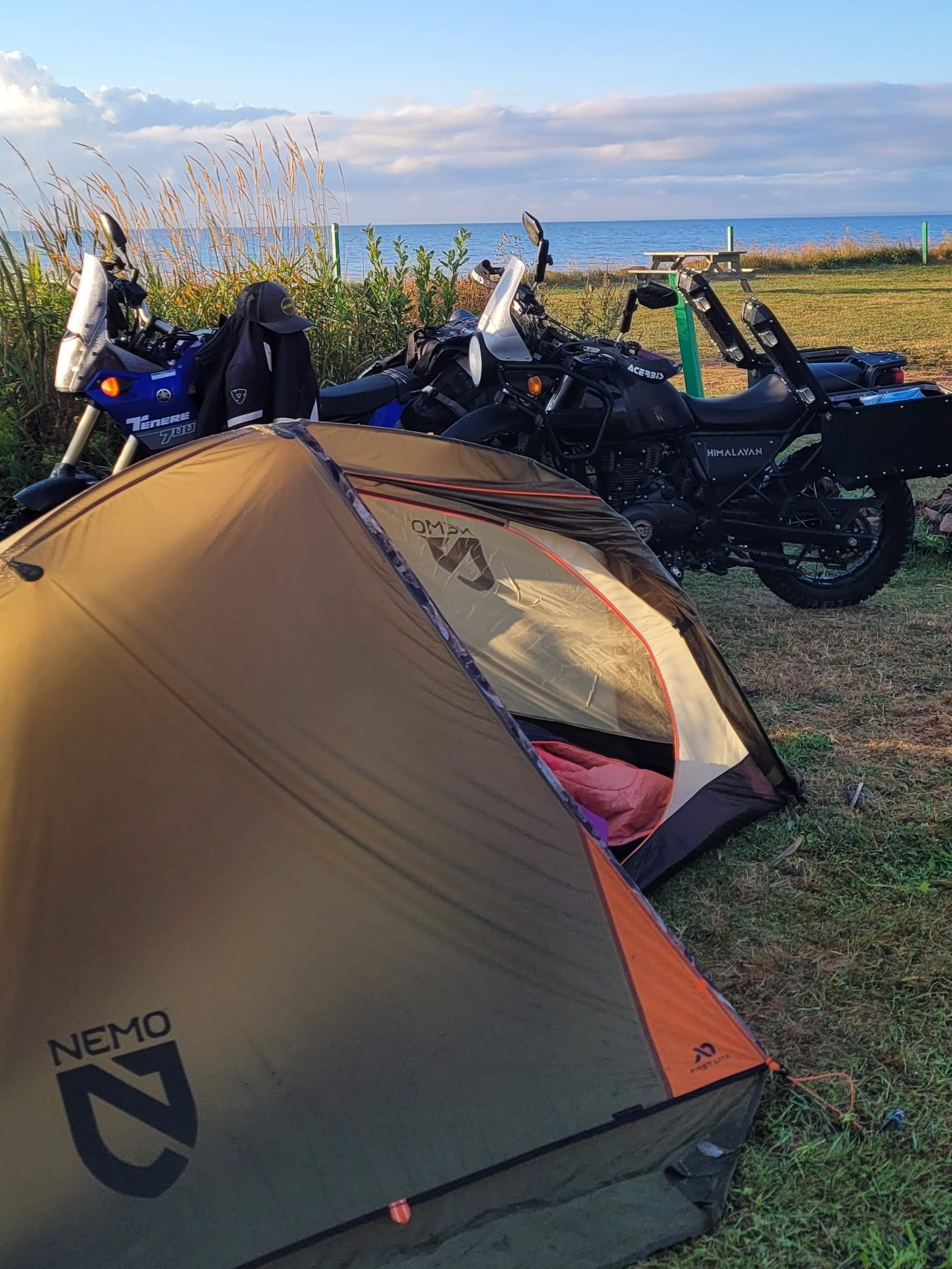
    Happily, luck is on our side: A tent site is still available, right by the ocean. We smile at the irony. Another night beside the waves — round two after our sleepless Cabot Trail storm. Hopefully, this one treats us better.

    The clouds are almost on top of us now, dark and heavy, moving fast. We waste no time. The tent goes up in record speed (under five minutes flat) poles snapping into place, gear tossed inside, rainfly clipped down just as the first drops begin to fall. Within moments, the patter of rain becomes a full symphony against the fabric roof. We climb inside, damp around the edges, but dry where it counts.

    It rains most of the night. The sound of wind and water blends into a rhythm that eventually lulls us to sleep. By morning, the world feels washed clean. The sun breaks through, the ocean sparkles, and the smell of wet earth hangs in the air. Our gear is dry, spirits lighter, and the road around the island waits once again.

    Day Two: Cavendish to Pictou

    We wake to clear skies and the promise of a full day on the island. After yesterday’s storm and a long night of rain, we know we won’t be able to circle the entire island. Instead, we head for Cavendish Park, one of the most celebrated corners of Prince Edward Island.

    The landscape opens up in soft, rolling hills of emerald green, dotted with white fences and small farmhouses. Cavendish Park is a study in contrasts: rugged red cliffs plunging into the Northumberland Strait, waves crashing at their base, juxtaposed with wide stretches of sandy beaches that curve toward the horizon. Hiking trails weave through the dunes, tall grasses swaying in the breeze, and the air carries a faint mix of salt, pine, and the subtle sweetness of late-season flowers. We pause often to take it all in — the cliffs, the beaches, and the expansive dunes that feel almost endless under the bright sky.

    Eventually, we push on, passing through Morell as we make our way south toward the ferry. Our plan is simple: grab tickets at the gate, maybe eat in town depending on timing, and catch the next ferry of the day. Easy enough, we think.

    It is not easy.

    At the ticket booth, chaos awaits. The clock reads 1:27 p.m., and the boat departs at 1:30. There is no time to second-guess. Motorcycles are easier to load than cars, apparently, so we’re hustled to the ferry. The lady at the booth radios ahead to confirm we can go, and suddenly it’s a race. The horn blares, the motors roar, and the massive door begins to close just as we roll forward. The ferry leaves the shore before we’ve been able to turn off the bikes.

    Down on the lower deck, the cacophony of engines, metal, and shouted instructions is deafening. A crew member calls out that we need to strap down our bikes. I freeze. How exactly do you strap down a motorcycle? Chris, calm as ever, grabs the hanging straps and quickly secures his bike. Then he straps mine. Done. Smooth. Efficient. I marvel at his composure.

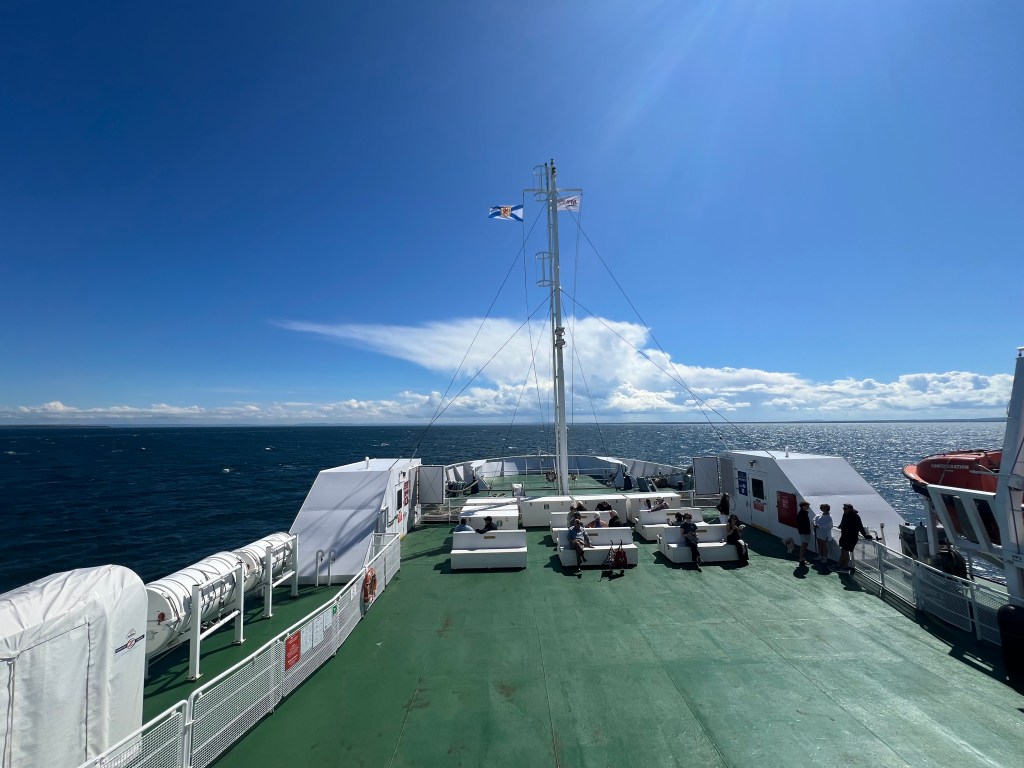
    Once the bikes are secure, we make our way to the top deck. Wind hits us, saltwater spray in the air, and the island falls away behind us. Waves churn alongside the hull, the ship slicing through the channel with a power that is impossible to ignore. We settle into the moment, watching the coastline fade.

    Eventually, the horn sounds again — time to return to the vehicles. Pictou comes into view. The crew instructs us to go to the front of the ferry and exit first. My stomach tightens. The deck looks slick, and the slightest misstep could send a bike and rider sprawling. Chris remains calm, while a crew member offers to help.

    “Easy does it,” the man says, pushing my bike backward slowly. I tiptoe alongside him, holding just enough to balance.

    “Thank you, sir,” I say. “I really didn’t want to end up on the floor as things get busy.”

    “Ah, don’t worry,” he replies. “You wouldn’t be the first or the last to drop your bike here.”

    “Good to know,” I murmur, trying to steady my nerves. “But still, I don’t want to become part of those stats.”

    The bike touches asphalt, the ferry door swings open, and just like that, we are back on solid ground. Adrenaline still humming, we roll away, grinning at the equal measure of chaos and relief we experienced. 

    As the day winds down, we make our way to the campground, the last stop before we pack up for our departure from the Maritimes and prepare for the next leg of our journey. The Maritimes have given us cliffs and beaches, windmills and reefs, storms and sun, and enough small adventures to fill volumes. As we ride these quiet final stretches, it’s impossible not to feel grateful for the roads we’ve traveled, the moments we’ve shared, and the lessons we’ve learned along the way.

    This chapter closes, but the road, as always, is waiting.

  • Kickstand Chronicles, Vol. 1: The Cabot Trail

    Kickstand Chronicles, Vol. 1: The Cabot Trail

    The hum of our engines cuts through the morning fog as the first light spills over our campsite in Pictou. The world is quiet except for the low rumble of anticipation and caffeine kicking in. We’re gearing up for our first multi-day motorcycle trip, the beginning of The Kickstand Chronicles, a collection of rides, reflections, and fleeting moments that remind us of why we chase horizons on two wheels. 

    Our destination is the legendary Cabot Trail. One hundred and eighty-five miles of winding asphalt carved through cliffs, forests, and sea spray. It’s the worst-kept “hidden gem” among motorcyclists, a bucket-list ride we’ve dreamed about for years. Today, it’s finally happening. 

    But before a wheel even turns, the age-old debate arises: Clockwise or counterclockwise? Ask any local, and you’ll hear passionate arguments for both. After hours of forum scrolling, campground chats, and a fair bit of indecision, we settle on counterclockwise. That route hugs the coastline, keeping the ocean to your right, the edge so close you can taste the salt in the air. Some say it can trigger vertigo. I call that a front-row seat to the Atlantic. Besides, I tend to romanticize everything, remember? 

    Panniers packed, GPS loaded, comms charged, we roll toward Cape Breton Island. The drive takes just over an hour, and we avoid the highway whenever possible. When we finally cross the causeway, signs boast about the world-famous Cabot Trail. Unsure how far apart gas stations might be, we fill up and set off. 

    The plan is clear. Counterclockwise it is. 

    Except, within twenty minutes, it isn’t. 

    Something feels off. “This doesn’t look right,” I mention through the comms. 
    “This is definitely the way,” Chris replies, his voice full of confidence. 

    Given my less-than-stellar navigation record, I let it go—until a few miles later, I hear a faint “Crap” through my helmet. 

    “What is it?” I ask. Silence. His blinker flashes, and he pulls to the shoulder. 
    “What is it?” I repeat, louder this time. 
    A pause, then a half-laugh, half-sigh. “You were right.” 

    Did I hear that correctly? I was right? 
    Too stunned to celebrate, I ask, “Wait, what do you mean I’m right?” 

    Turns out we had turned too soon and were heading clockwise the whole time. My carefully plotted route and dream coastal views vanished with one wrong turn. 

    We consider doubling back but quickly dismiss it. The road ahead is open, the day young, and retracing steps has never been our style. This is how we always travel: Part plan, part instinct, and a generous dose of improvisation. 

    How many miles we cover in a day depends on the weather, temperature, and how often I stop to admire the view (which is often). The only real rule is to keep moving forward, wherever the road decides to take us. 

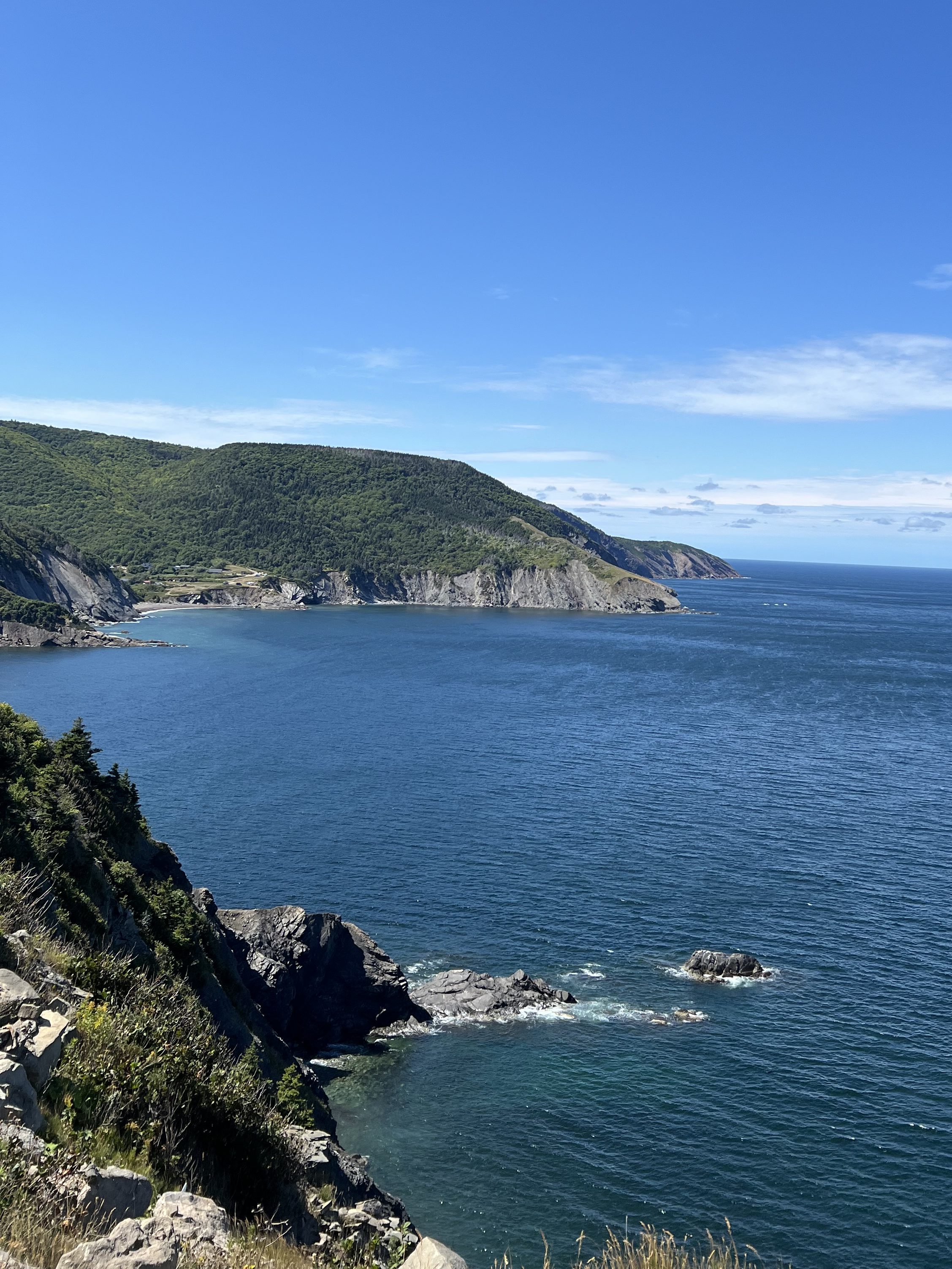
    At the entrance to Cape Breton Highlands National Park, a ranger waves us down to share tips on the best lookouts. This year, there’s no park fee, and thanks to a fire ban, campsites are easier to find. The gate lifts, and we shift into first gear, winding upward through curves that reveal spectacular ocean vistas. Steep cliffs drop vertically into blue depths. Just when we think we’ve seen the best view, the next corner proves us wrong. Choosing which lookout to stop at becomes a battle with FOMO. 

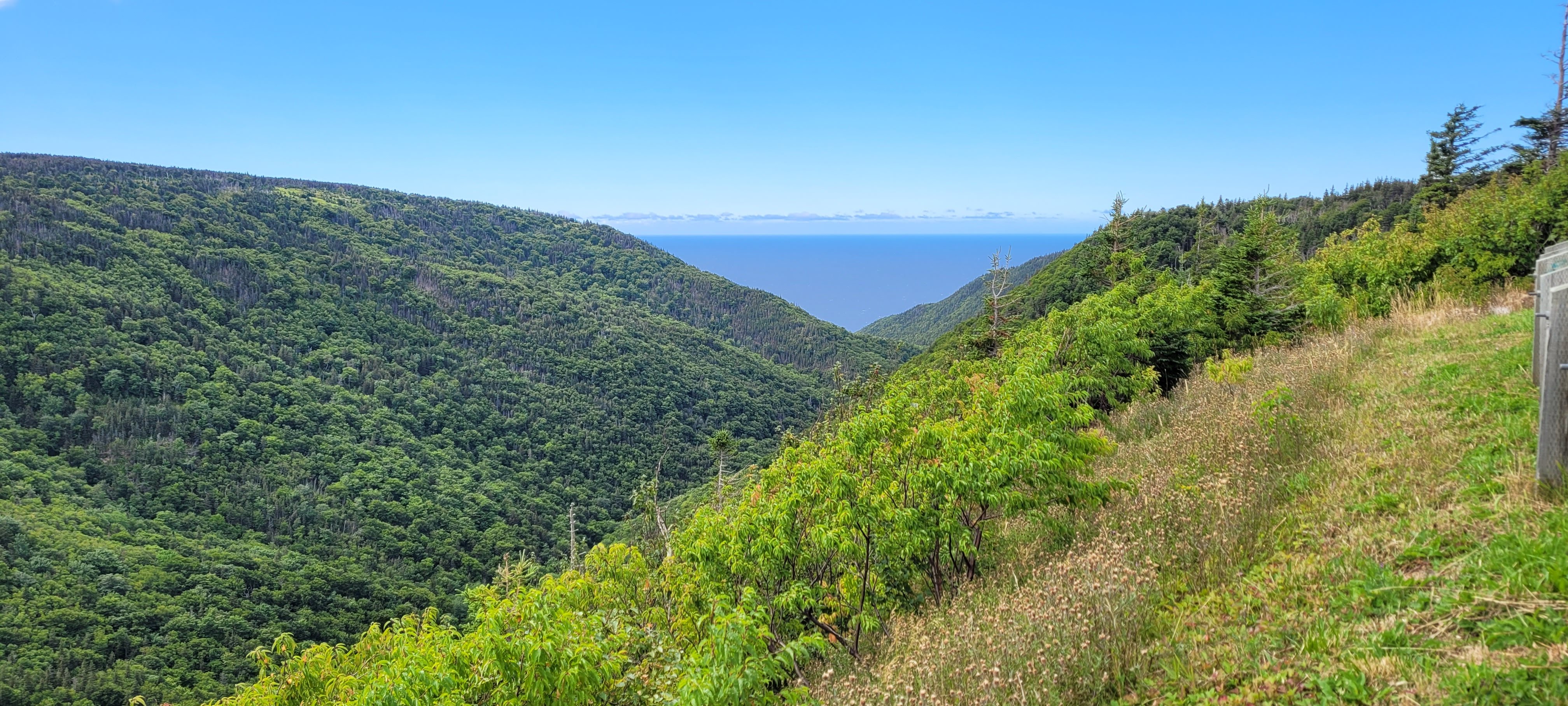
    As everything feels perfect—the bikes humming, the sun warm on our shoulders, the road unfurling ahead—we pull over at a scenic curve along MacKenzie Mountain. From here, the coastline stretches endlessly into the Atlantic, rugged cliffs stand proud beneath a sky too blue to be real. Tourists gather at the viewpoint, laughter and camera shutters carried by the wind. 

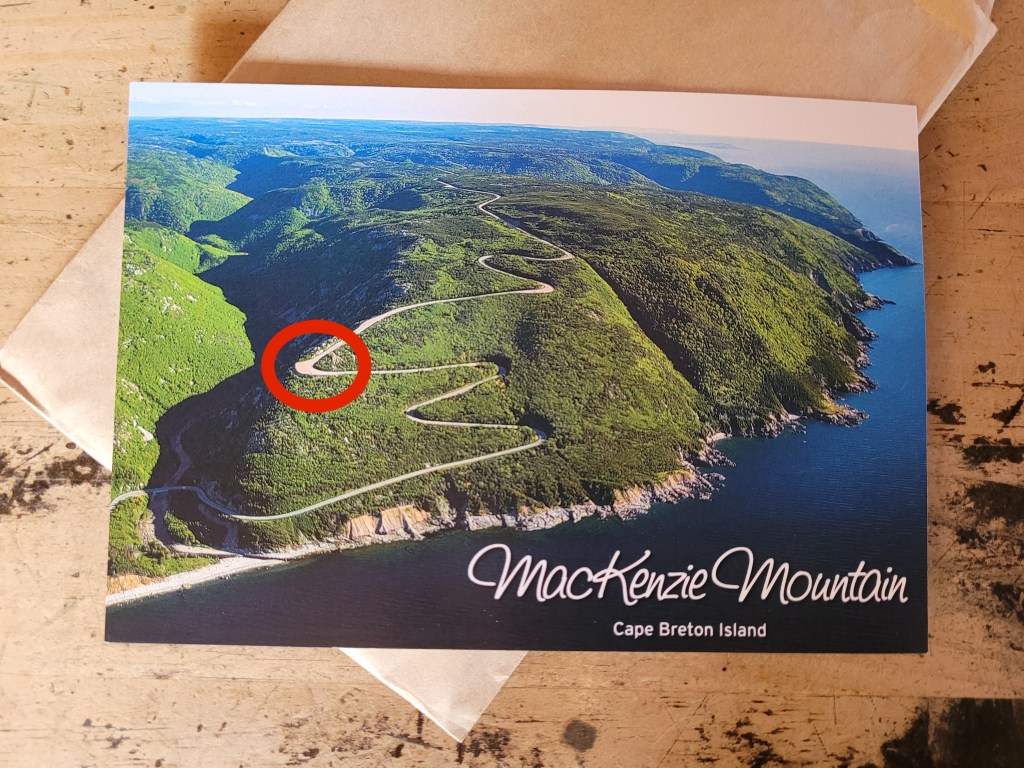
    MacKenzie’s turns sweep down the mountain in wide arcs, but the parking lot sits on a noticeable slant. Not much, just enough. 

    When it’s time to leave, I swing my leg over the seat and feel it: that slow, sinking shift. “No, no, no…” I whisper, but gravity has already decided. In slow motion, the bike leans, wobbles, and with a loud splat hits the asphalt. 

    Unfortunately, I go down too. My body flings sideways like a ragdoll in a bad stunt reel, landing flat on my back, arms sprawled out as I stare up at the sky in disbelief through the rectangle of the helmet visor. 

    In my ear, Chris’ sigh comes through, one part patience, one part prophecy. He had already noticed the slope and parked me in a safer spot. And here I am, proving him right again. 

    Tourists rush to help, their concern comically disproportionate to my bruised ego. Together, we heave the bike upright, her shiny new handguard scuffed, my pride thoroughly demolished. 
    “You good?” Chris asks, his tone halfway between concern and amusement. 
    “Yep,” I answer. “Now please help me lift this thing so I can die of embarrassment somewhere else.” 

    The “I fell here” memento I made from a postcard bought in a nearby shop.

    And just like that, the perfect ride has its first mishap, the kind that becomes a favorite story later. Or a cautionary tale. Whichever one calls to you best. 

    We continue through the valleys of Cape Breton Highlands, the scenery still surreal. Cliffs plunge into the sea, winding roads weave through dense trees, and every curve reveals another picture-perfect moment. As the sun dips low, we start scanning for a campsite. 

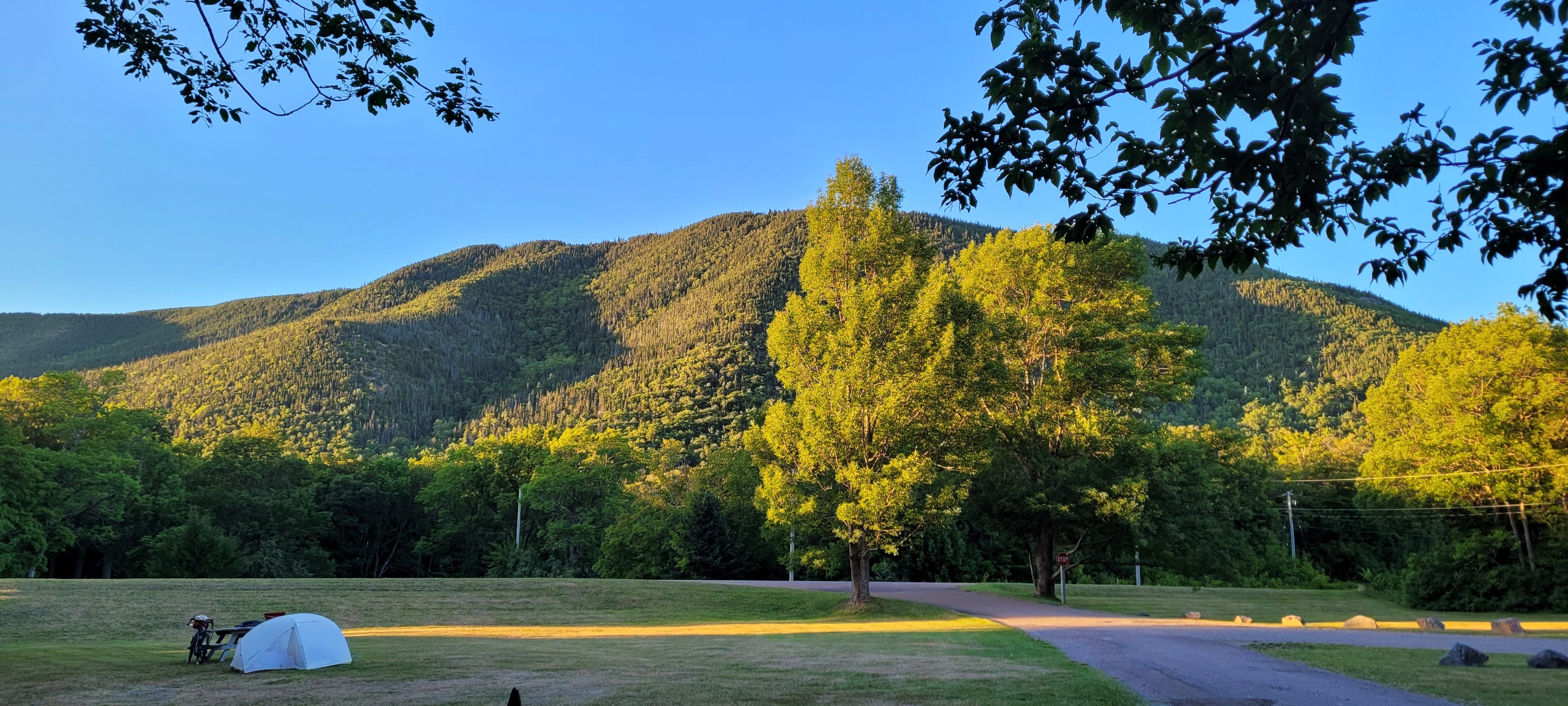
    We find a quiet spot near the mountains, nothing but rustling leaves and a babbling brook nearby. Our only neighbor is a small tent with a lone bicycle parked beside it. We had seen the same bike earlier, the rider grinding up a steep incline while we cruised past, impressed and a little guilty. 

    Curiosity wins, and we wander over. That’s how we meet Johan from Lyon, France, who is cycling across Canada, from Vancouver to Newfoundland. By now, he has pedaled nearly five thousand miles, averaging 70 a day and surviving on Knorr meal packs. Genius, really. We have spent far too much on dehydrated camping meals, and here he is proving the cheaper ones taste just as good. 

    As we walk back to our tent, I sigh dreamily. 
    “Wow,” I say. “I want to try that kind of travel someday.” 
    Without missing a beat, Chris replies, “You couldn’t ride from here to the road without getting winded.” 
    Touché. 

    The next morning greets us with stiff backs but another golden sunrise over the mountains. Sleep wasn’t great, but the view makes up for it. We pack our gear, stretch our sore muscles, and head to Pleasant Bay for a long-anticipated whale-watching excursion. 

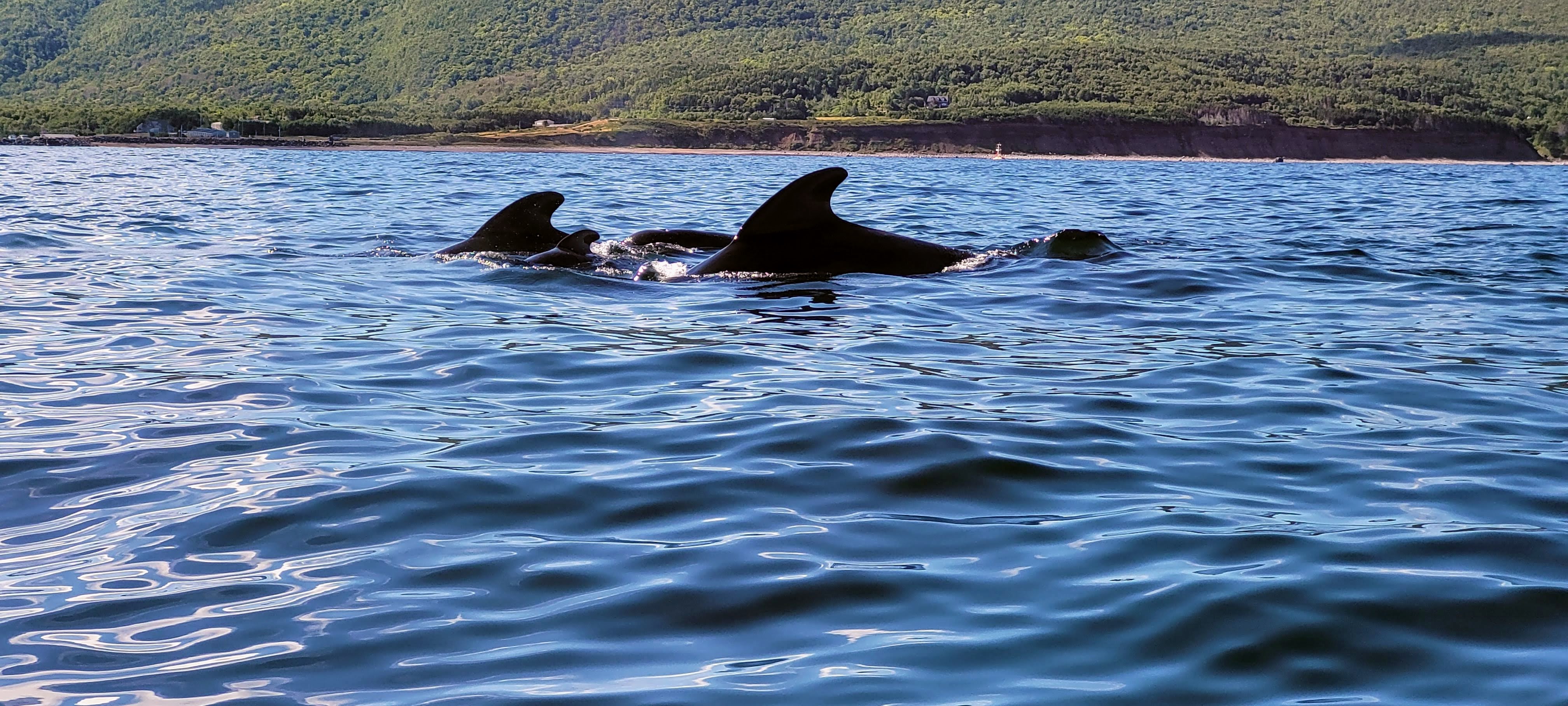
    At the dock, Captain Mark welcomes us aboard a small zodiac. His energy is contagious, his stories blending fact and folklore with effortless charm. As we head out, the sea greets us with gentle swells and salt spray. Before long, a pod of pilot whales surfaces nearby, sleek and curious. Mothers and calves glide between the waves, unbothered by our presence. 

    Above us, Northern Gannets dive like arrows into the sea. Closer to shore, cliffs rise in jagged layers, their edges carved by time. Captain Mark points out “The Old Man,” a rock face shaped by nature into a profile both haunting and human. Grey seals pop their heads above the water, watching us with curious eyes before slipping beneath the waves again. 

    After two hours on the water, we return to shore, salt-streaked and grinning. It’s the kind of experience that lingers long after you’re back on land. 

    Side note: our GoPro didn’t survive the adventure. In a burst of enthusiasm, Chris dunked it underwater for the perfect whale shot. Minutes later, it blinked, sputtered, and died. Saltwater, as it turns out, isn’t forgiving. Another casualty of curiosity. 

    Later that day, we follow a small dirt path toward a Buddhist temple we spot on a roadside sign. The trail twists through trees and opens to a clearing where a white and gold stupa gleams under the sunlight, prayer flags fluttering in the breeze. The air feels still and sacred. Carved messages speak of peace and presence, a quiet reminder to slow down. 

    Captain Mark had mentioned that each year, monks here buy a local lobster catch, bless the lobsters, and release them back into the sea. It’s their way of giving life another chance, just in case one of their brothers has returned in shellfish form. The story lingers with us as we ride away, engines blending with the hum of the forest. 

    From Pleasant Bay onward, the Cabot Trail feels like it opens up at every turn. The road clings to the mountainside, the Atlantic stretching endlessly below. Each curve offers something new: a burst of wildflowers, a sliver of beach far below, a rush of wind that smells like pine and salt. The trail demands our focus but rewards us with awe. 

    Before leaving Pictou, our campground neighbor Dwayne had warned us with a grin, “Watch out for the hill people up north. You’ll know when you get there.” What we find instead is Meat Cove, a windswept, cliffside campsite where ocean and sky meet in spectacular fashion. It’s less remote wilderness and more adventurer’s resort, full of tents, camper vans, and laughter drifting through the salt air. We can’t help but laugh at the irony. 

    As the sun dips into the horizon and the waves crash below, the beauty of it all leaves us silent. 

    We rarely plan campgrounds ahead, so our options often depend on timing and our sore backsides. Balancing the choice between riding longer or settling for what’s available has led us to some of our best surprises. Sometimes the gamble lands us somewhere extraordinary, like a stretch of beach framed by forest and ocean. 

    That’s how we find our next stop: A literal beachside campground. I imagine a magical night by the sea, the kind of place you see in travel magazines. For the first hour, it’s just as whimsical as I’d imagined. The sky turns from gold to deep indigo, the waves hum softly, and the tent glows warm from lantern light. Then the wind shifts. 

    What starts as a breeze becomes a gale. The tent walls whip and snap, and sleep becomes a distant dream. Then comes the rain. We scramble to zip the fly shut, sealing ourselves in a humid cocoon that feels half sauna, half shelter. By morning, we’re bleary-eyed and delirious, the night officially filed under “memorable disasters.” 

    Coffee is non-negotiable, so we roll onto a small cable ferry and ride straight across without dismounting in Englishtown. Breakfast follows, along with the inevitable conversation about why we do this to ourselves, hauling gear, chasing weather, and sleeping on noisy, slippery fabric. 

    Refueled and restless, we continue east to circle the island completely. The wind roars against our helmets as we ride through stretches of empty coastline, windswept trees bending inland. On this side, there are fewer tourists, more “for sale” signs, and a quiet stillness that feels both freeing and slightly eerie. 

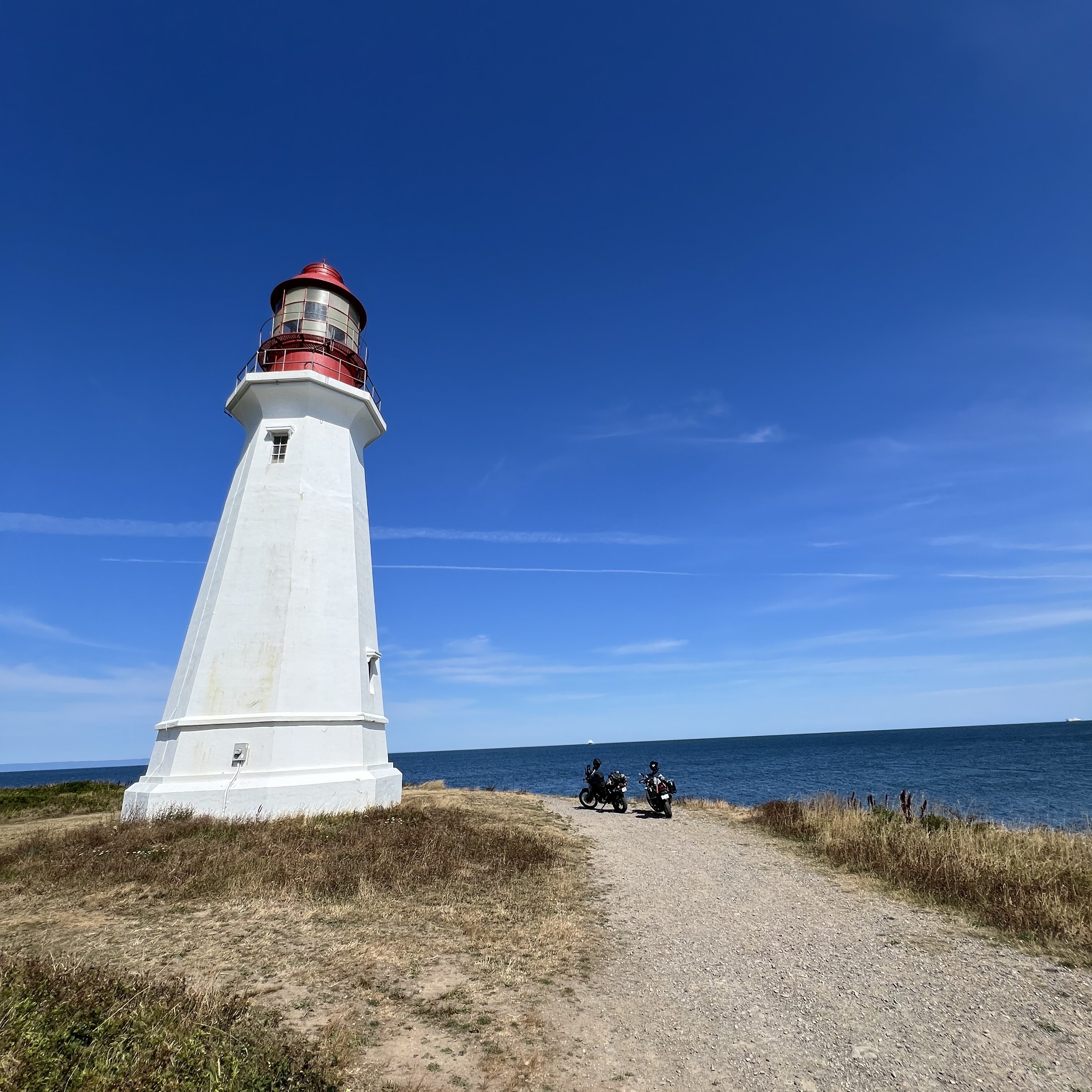
    Lighthouses dot the shoreline, white and red against the blue horizon. Even after a dozen of them, their silhouettes never lose their magic. They are symbols of endurance, quiet keepers of the Maritimes. 

    Further south, we reach Isle Madame and the village of Petit-de-Grat, a serene fishing community shaped by the sea. The road meanders along the coast, where pastel homes rest close to the water and boats sway gently at their docks. The air smells faintly of salt and seaweed, touched with the clean smell of linens hanging on clotheslines. 

    The pace here is unhurried. Every bend reveals another cove, another weathered shed, another moment worth remembering. Locals wave as we pass, their gestures warm and familiar. Isle Madame feels humble, proud, and deeply rooted—a place where the sea is both companion and teacher. Riding here isn’t about distance; it’s about simply being present. 

    We end our loop at a small pub, toasting the ride with a local specialty: the donair fried roll. Crispy, rich, and exactly what tired riders need. Once again, the sun dips below the horizon, and though a few hours still stand between us and the Bus, the pull of our soft bed wins out. 

    Helmet hair, rosy cheeks, and road dust—signs of an adventure well lived. The Cabot Trail has earned its place in the Chronicles.